Magnetic fields
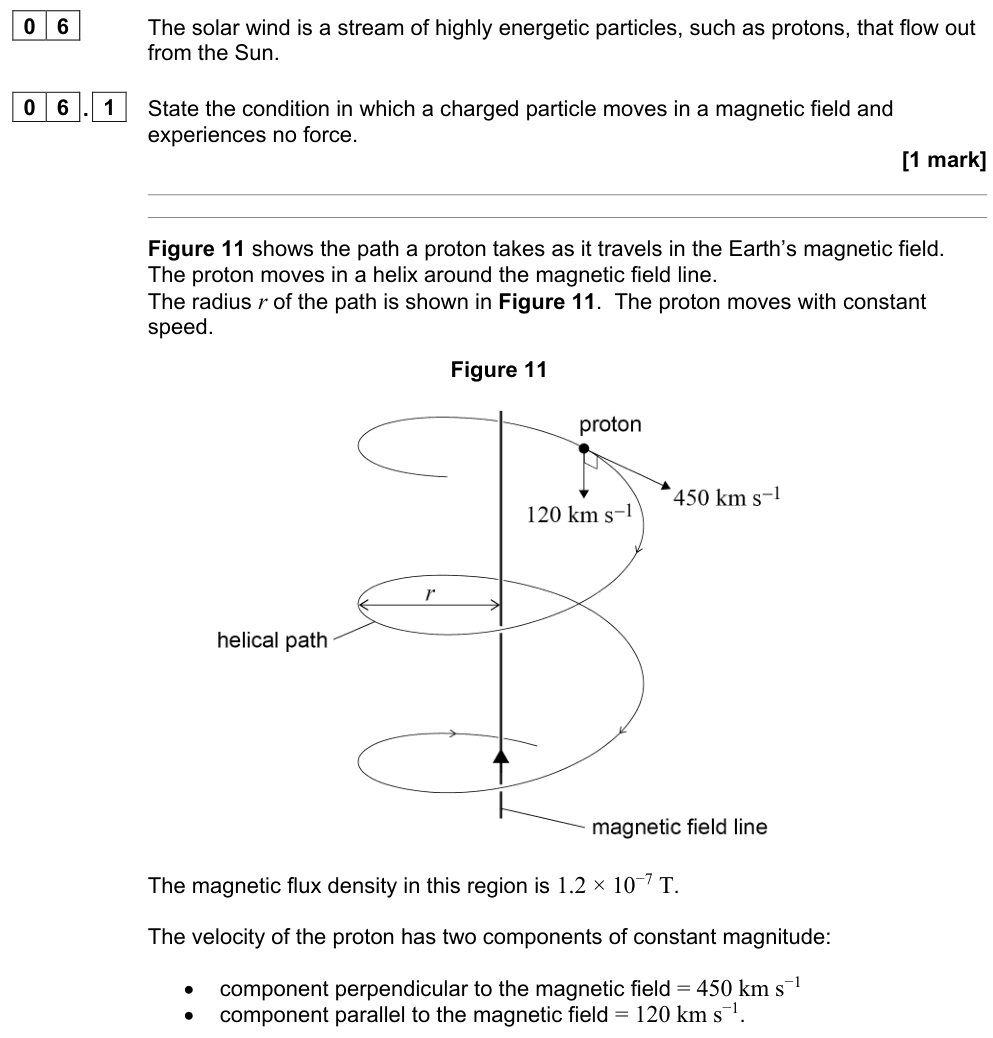
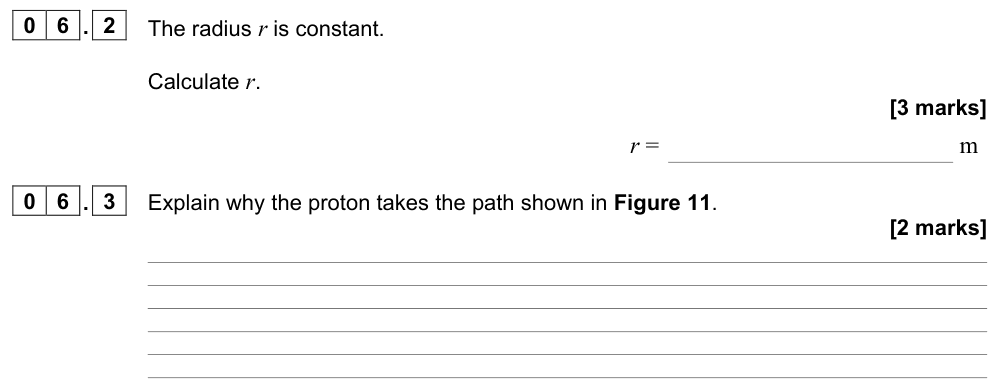
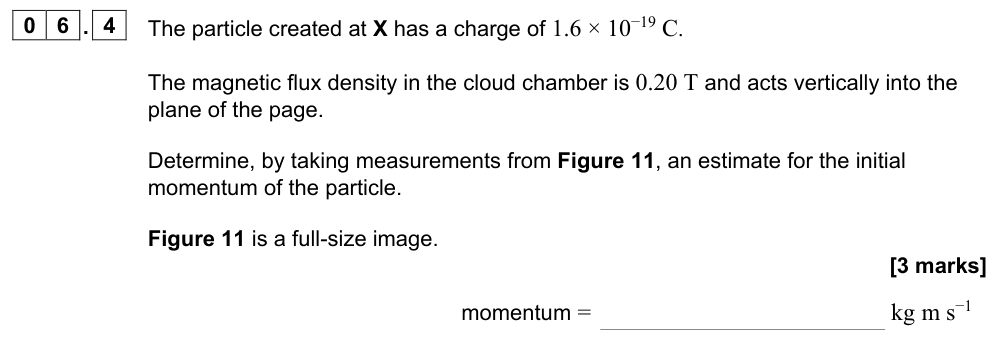
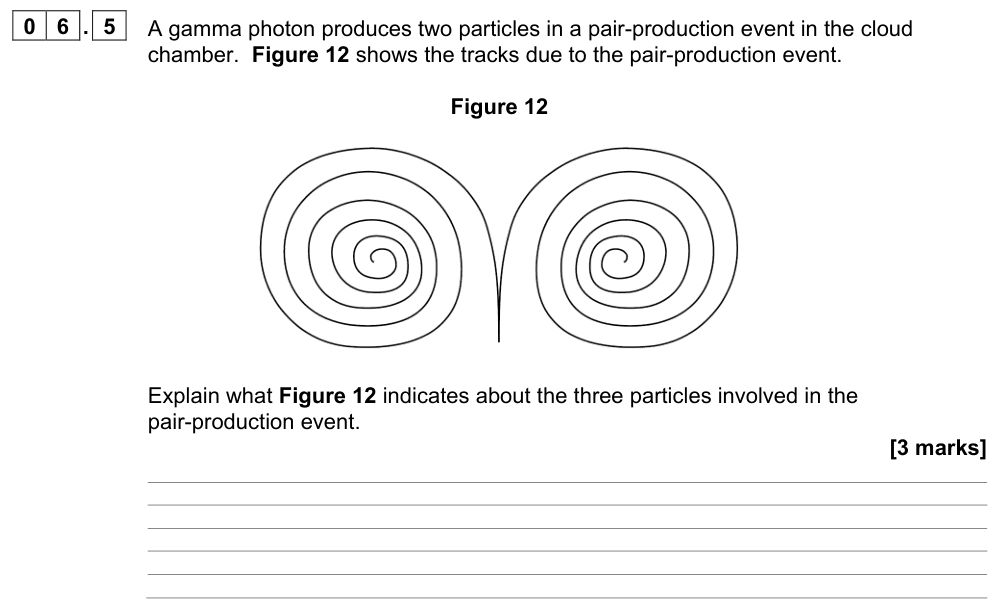
A magnetic field is a region in which a moving charge, a current-carrying conductor or a magnetic material experiences a force. Magnetic field lines go from the north pole to the south pole outside a magnet; the closer the lines, the stronger the field. A uniform field (e.g. between the flat poles of two magnets) has parallel, equally spaced lines.
A current also produces a magnetic field: circular field lines around a straight wire (right-hand grip rule), and a field like a bar magnet's for a solenoid.
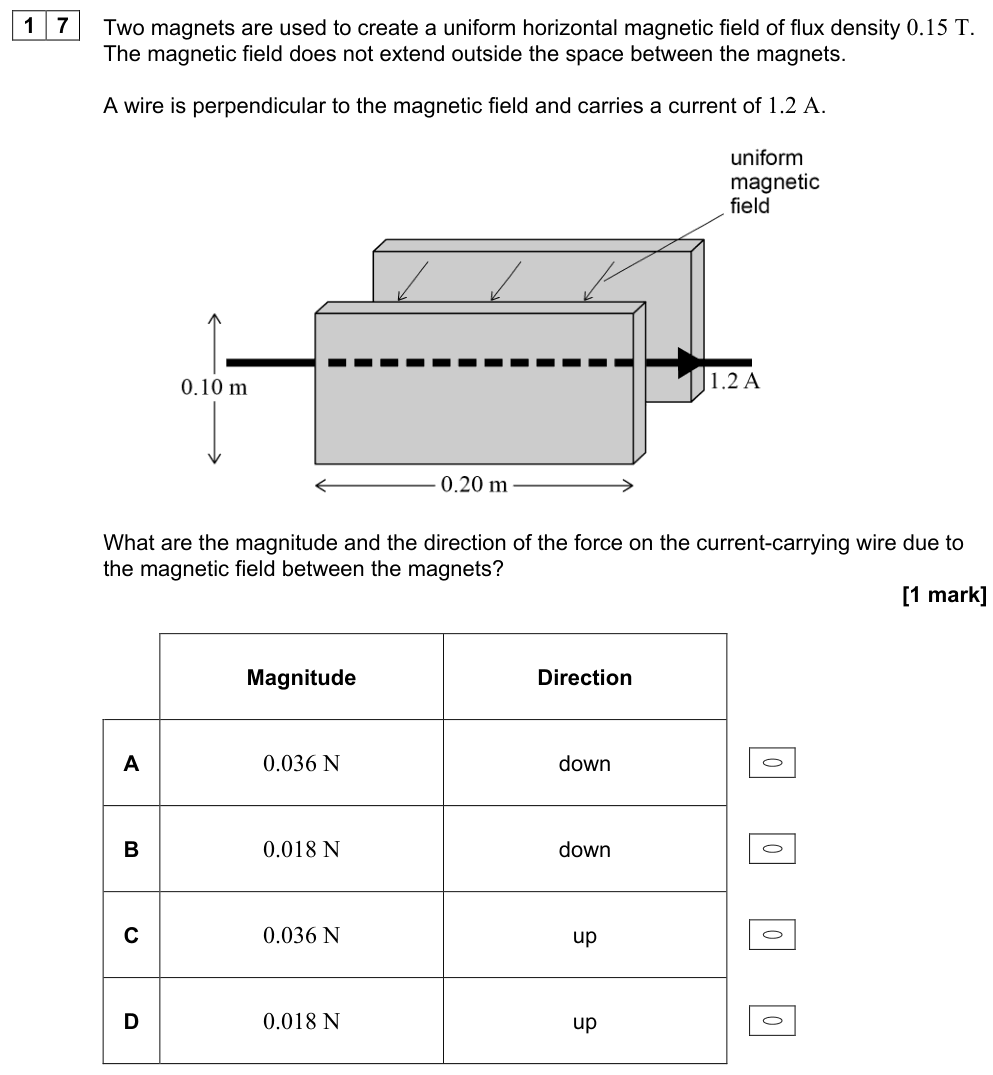
The force on a current-carrying conductor (the motor effect)
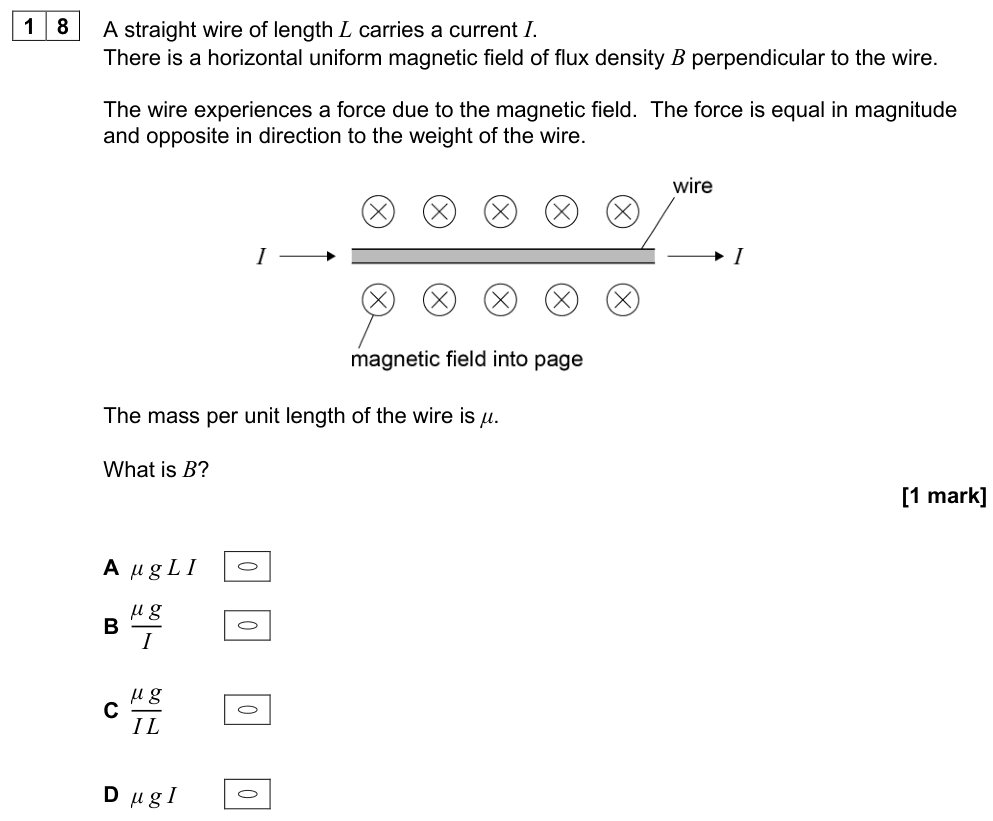
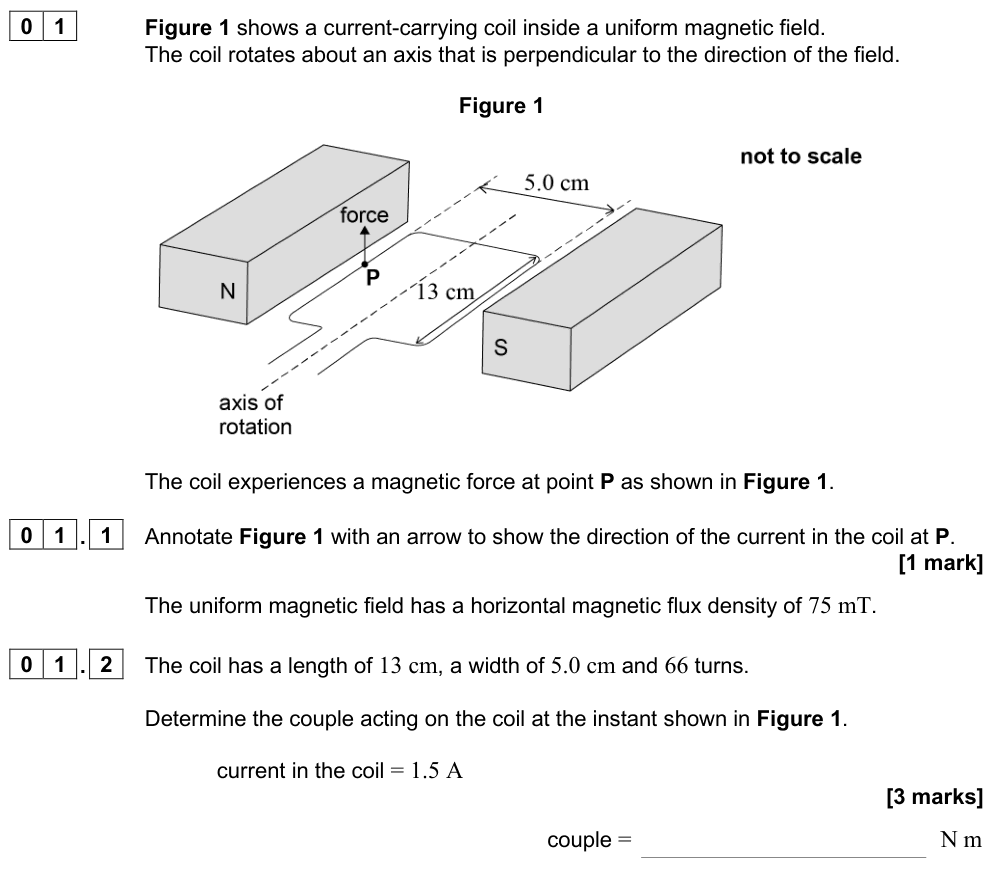
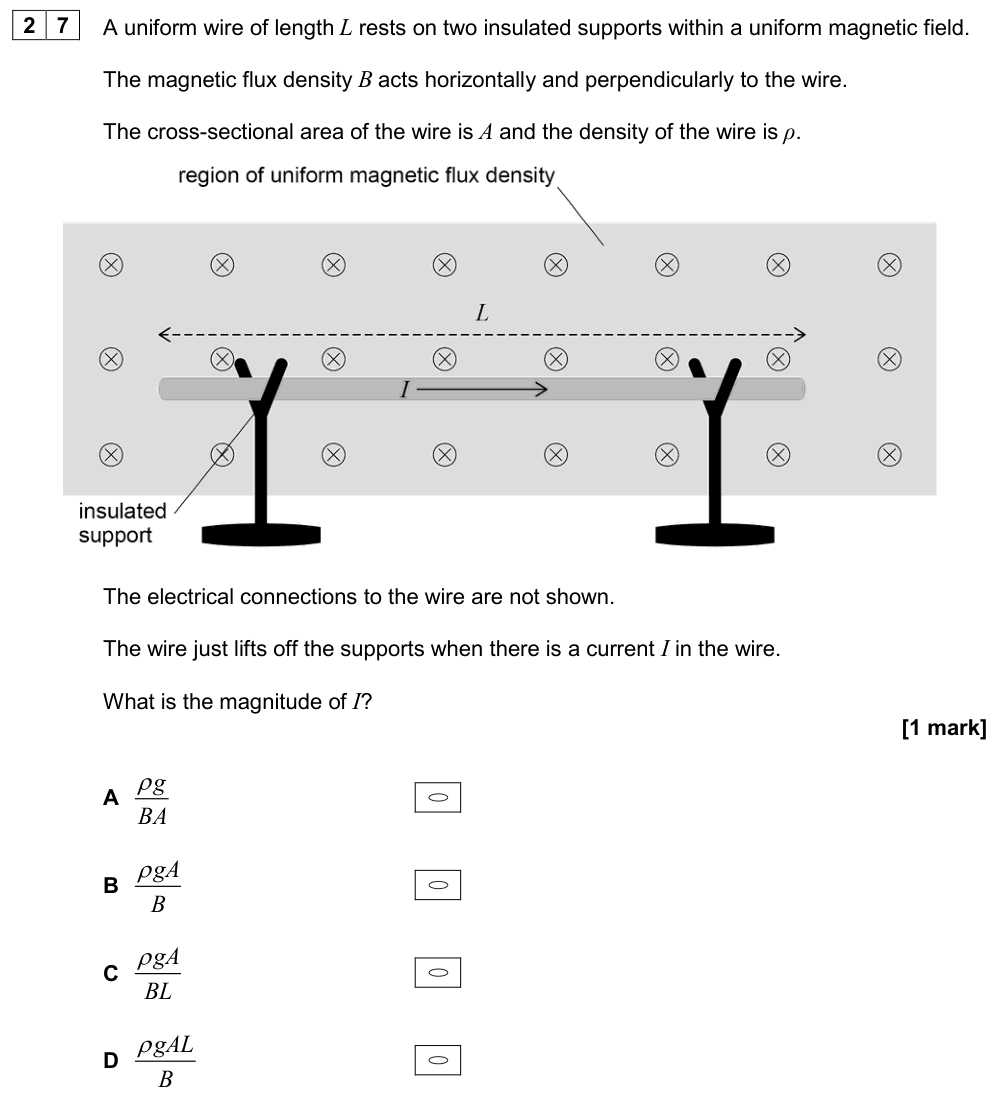
When a wire carrying a current is placed in a magnetic field, the two fields interact and the wire experiences a force.
Force on a current-carrying wire
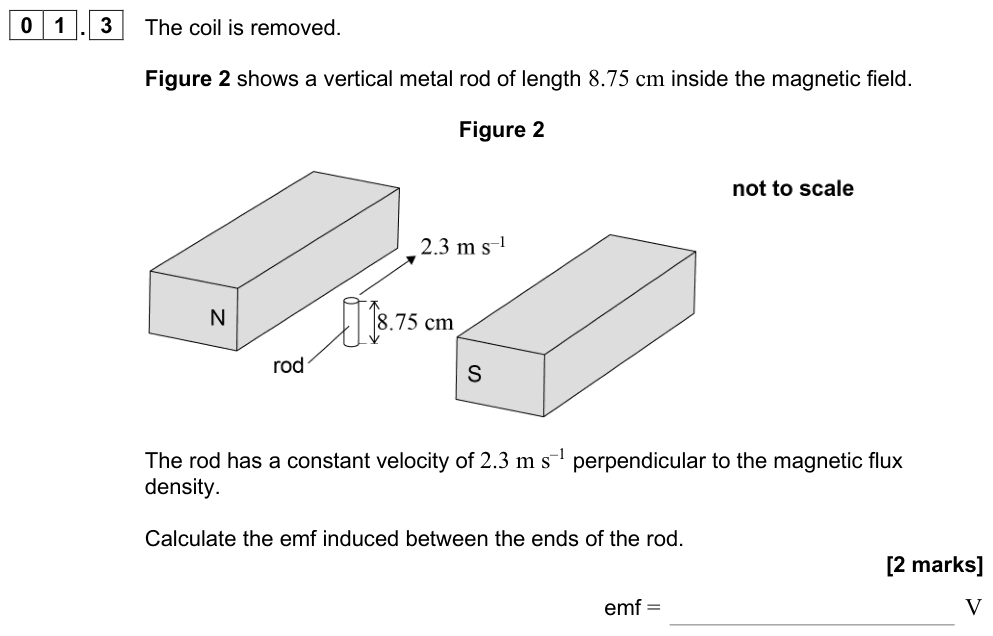
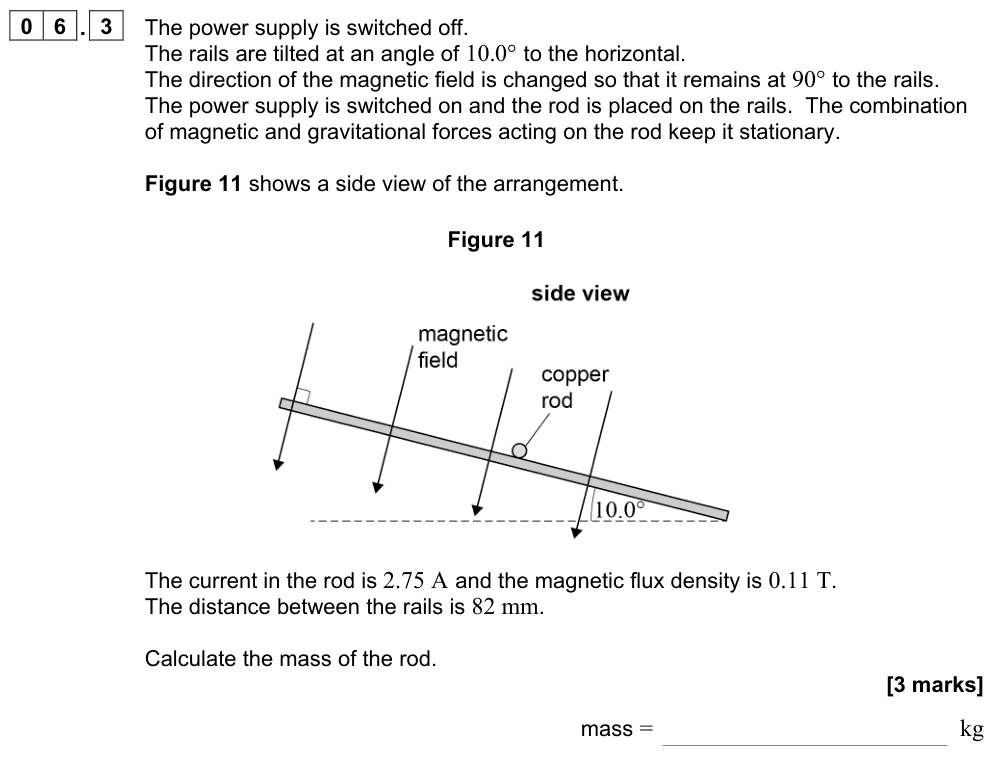
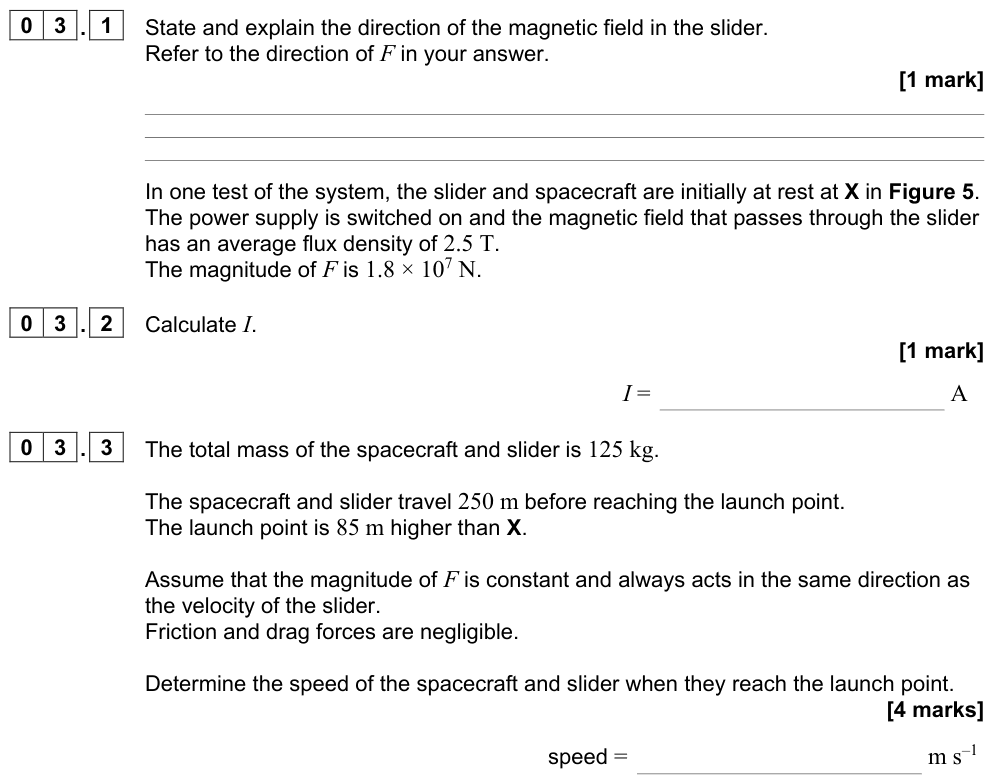
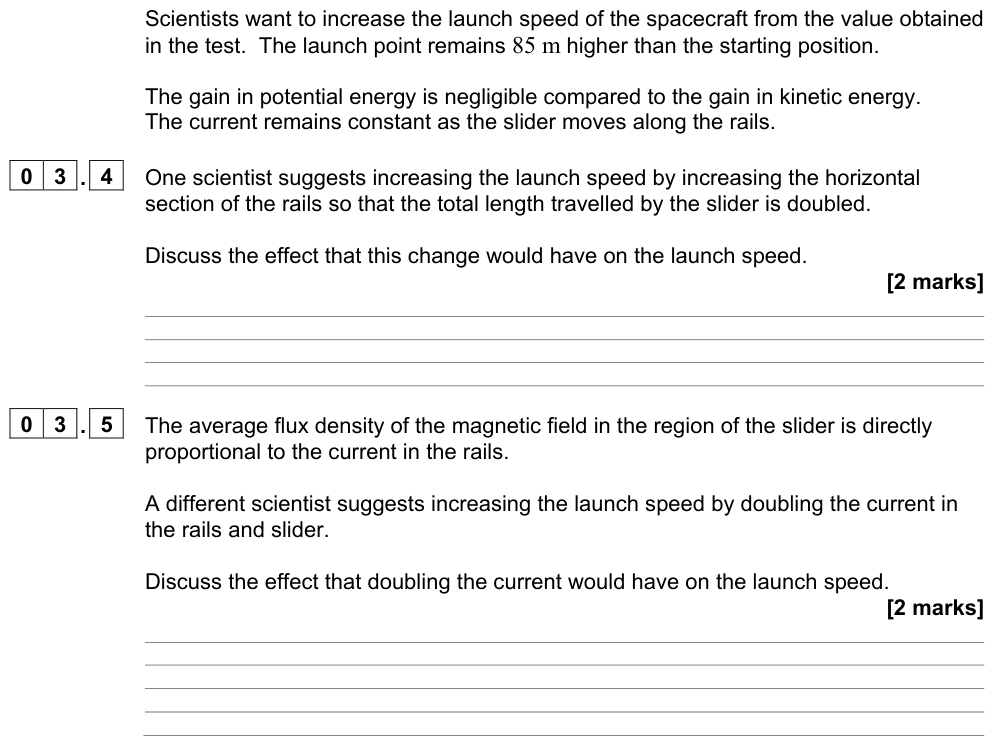
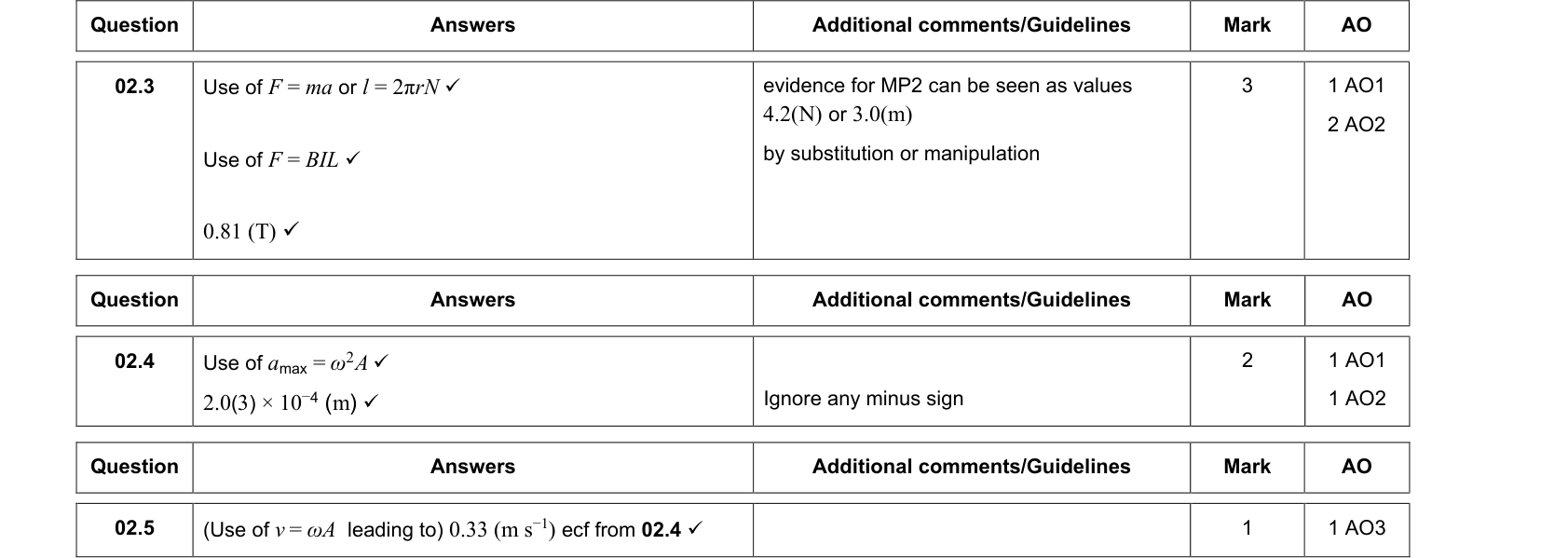
$$F = BIL$$
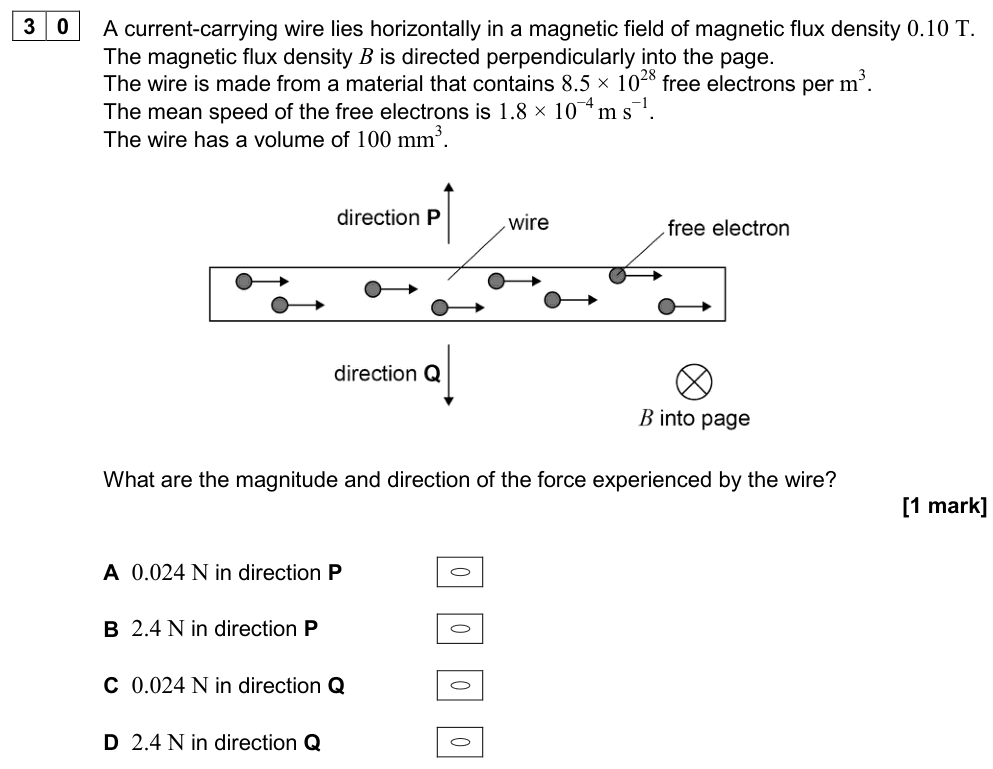
when the field $B$ is perpendicular to the current $I$; $L$ is the length of wire in the field.
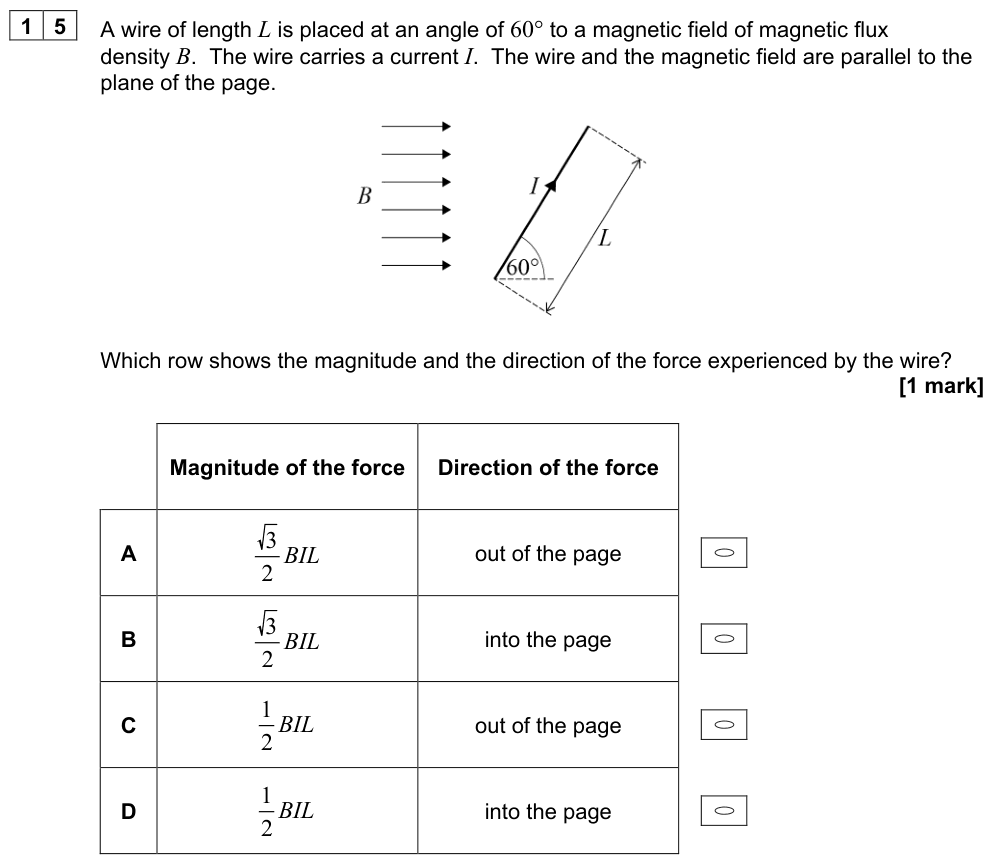
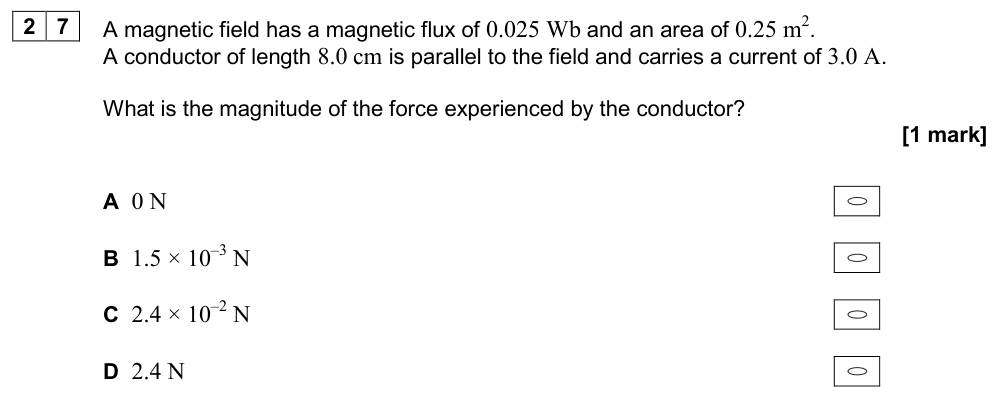
If the wire is at an angle $\theta$ to the field, only the component of $B$ perpendicular to the wire counts: $F = BIL\sin\theta$. A wire parallel to the field experiences no force.
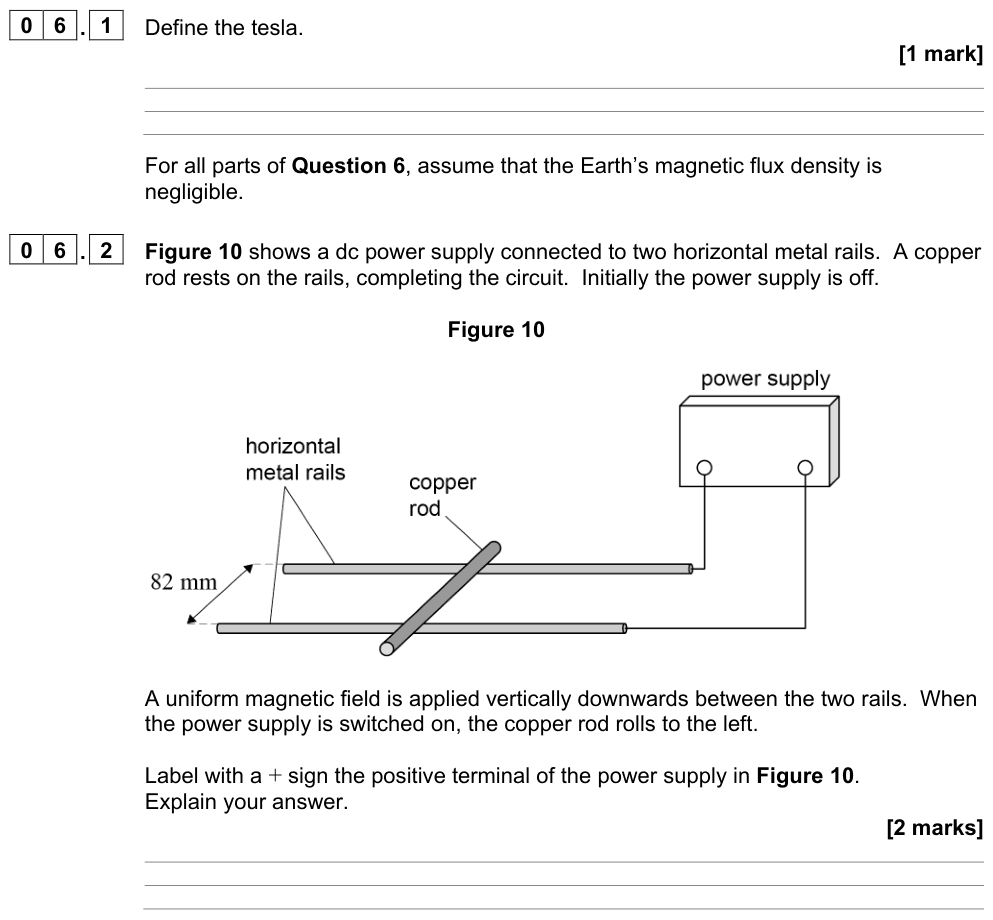
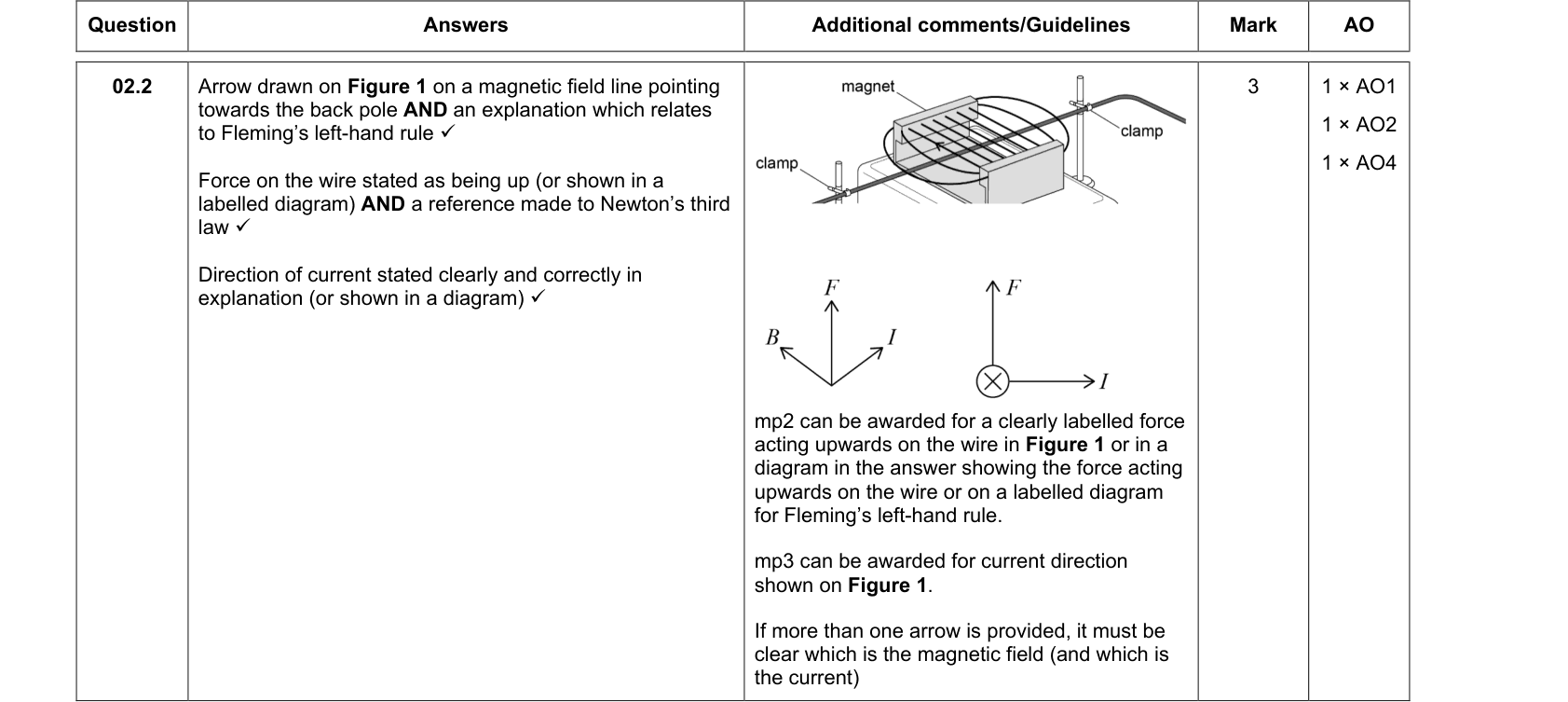
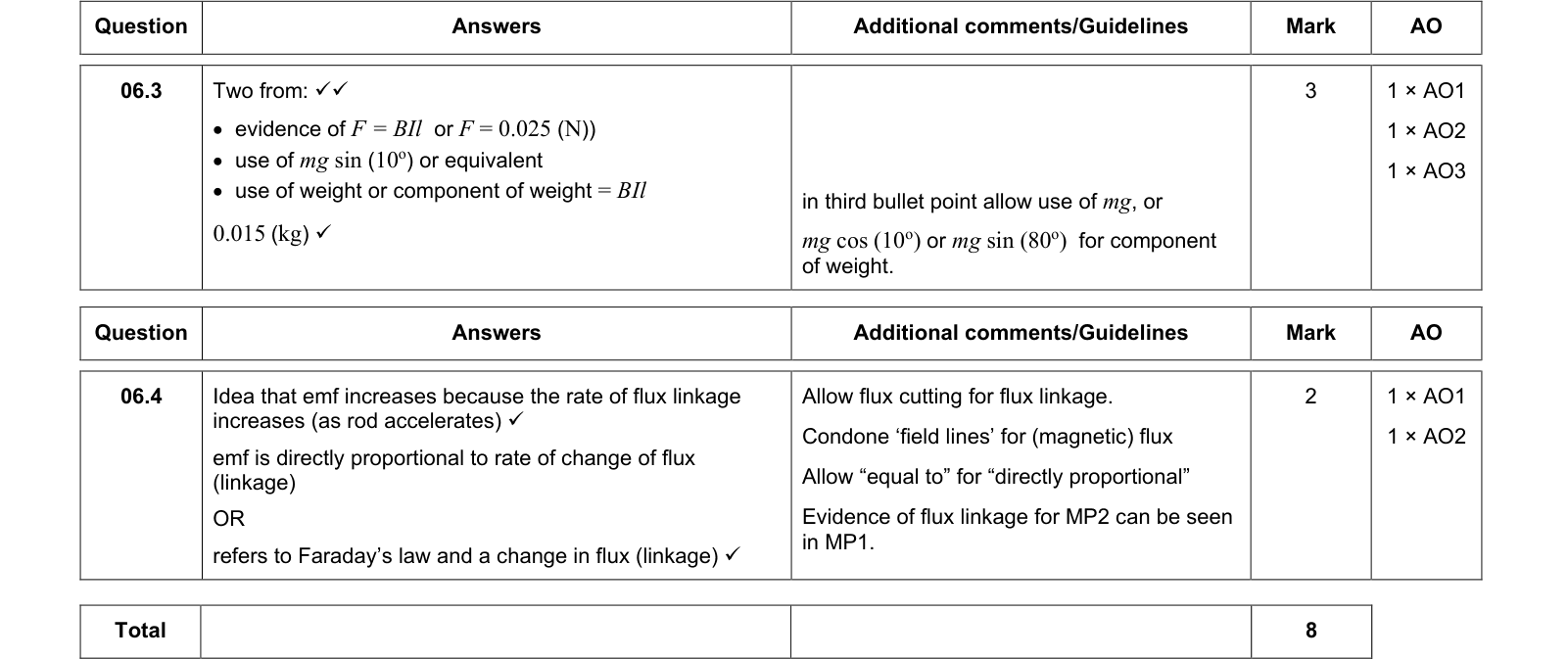
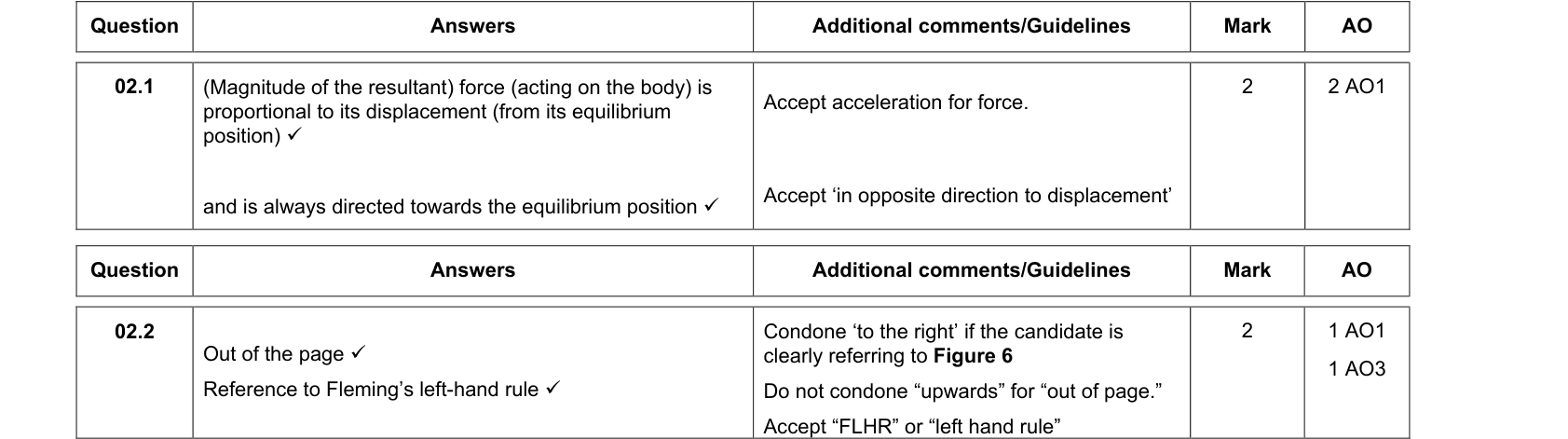
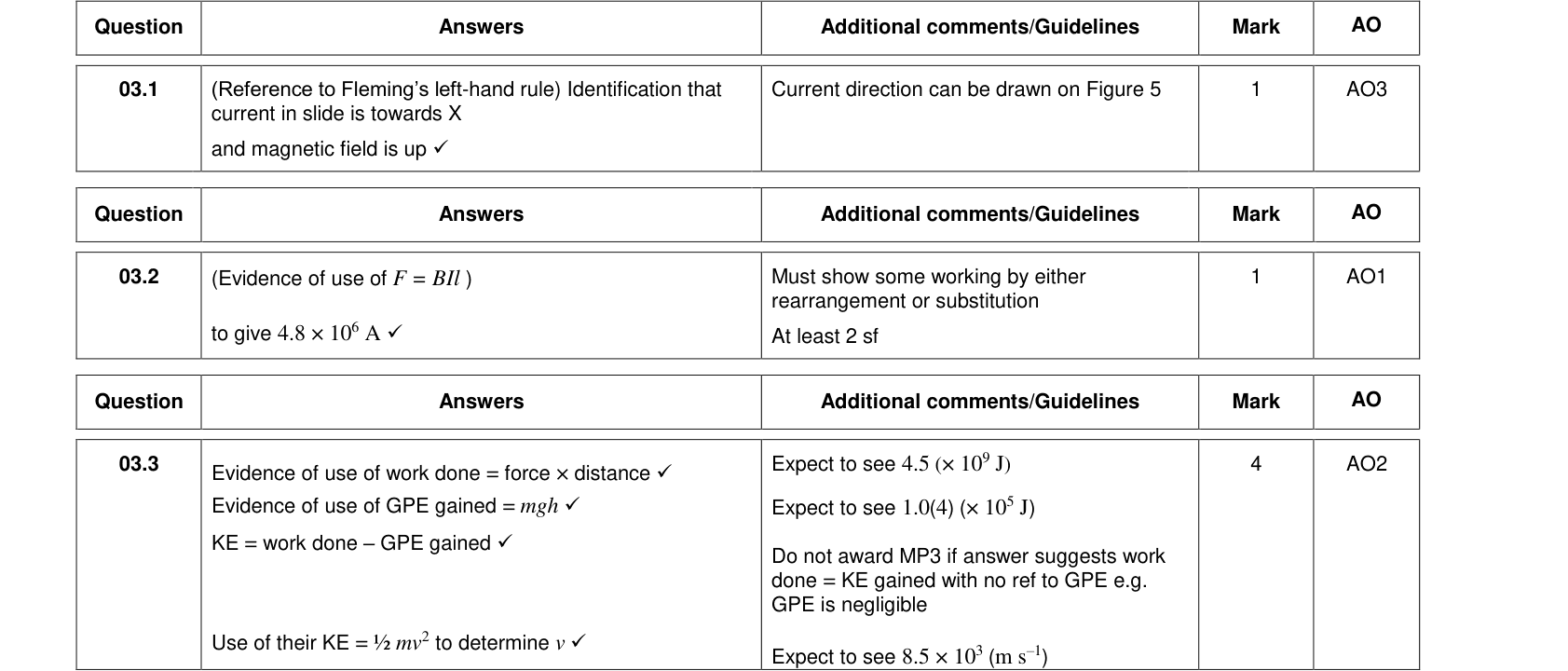
Direction: Fleming's left-hand rule
Fleming's left-hand rule
Hold the thumb, first finger and second finger of the left hand at right angles to each other:
- First finger → Field (N to S)
- seCond finger → Current (conventional, + to −)
- thuMb → Motion (force)
The force is always perpendicular to both the field and the current.
Magnetic flux density and the tesla
The strength of a magnetic field is called its magnetic flux density $B$ (a vector, in the direction of the field).
The tesla
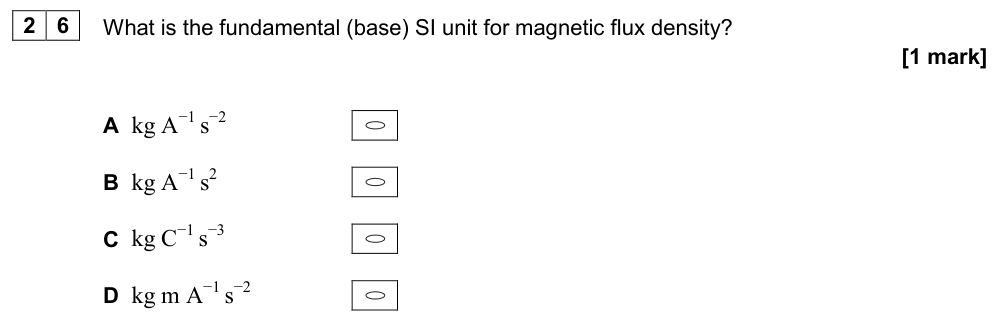
Rearranging $F = BIL$: $B = \dfrac{F}{IL}$.
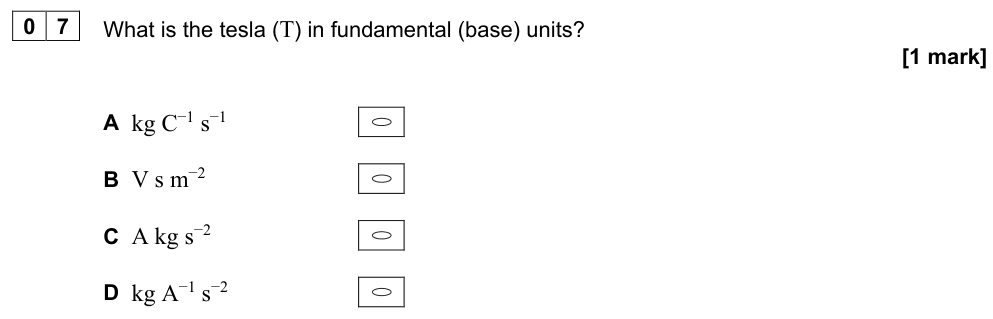
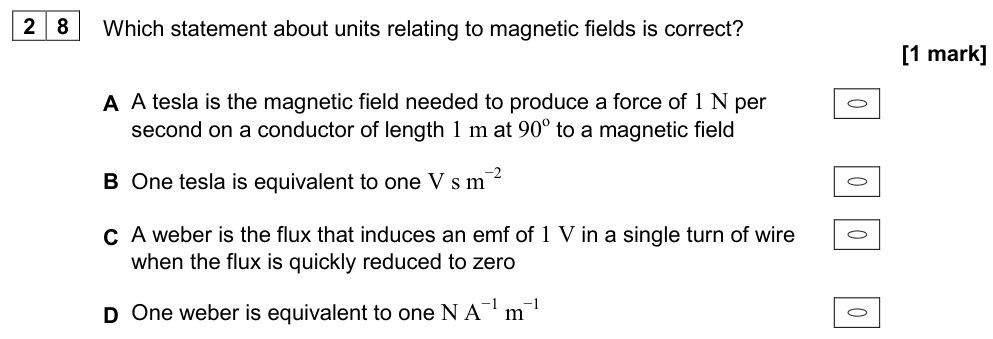
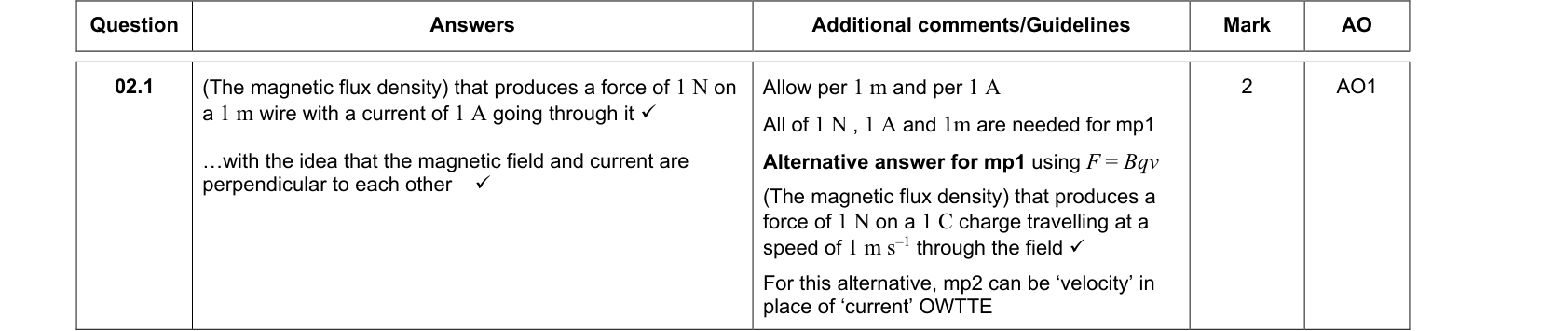
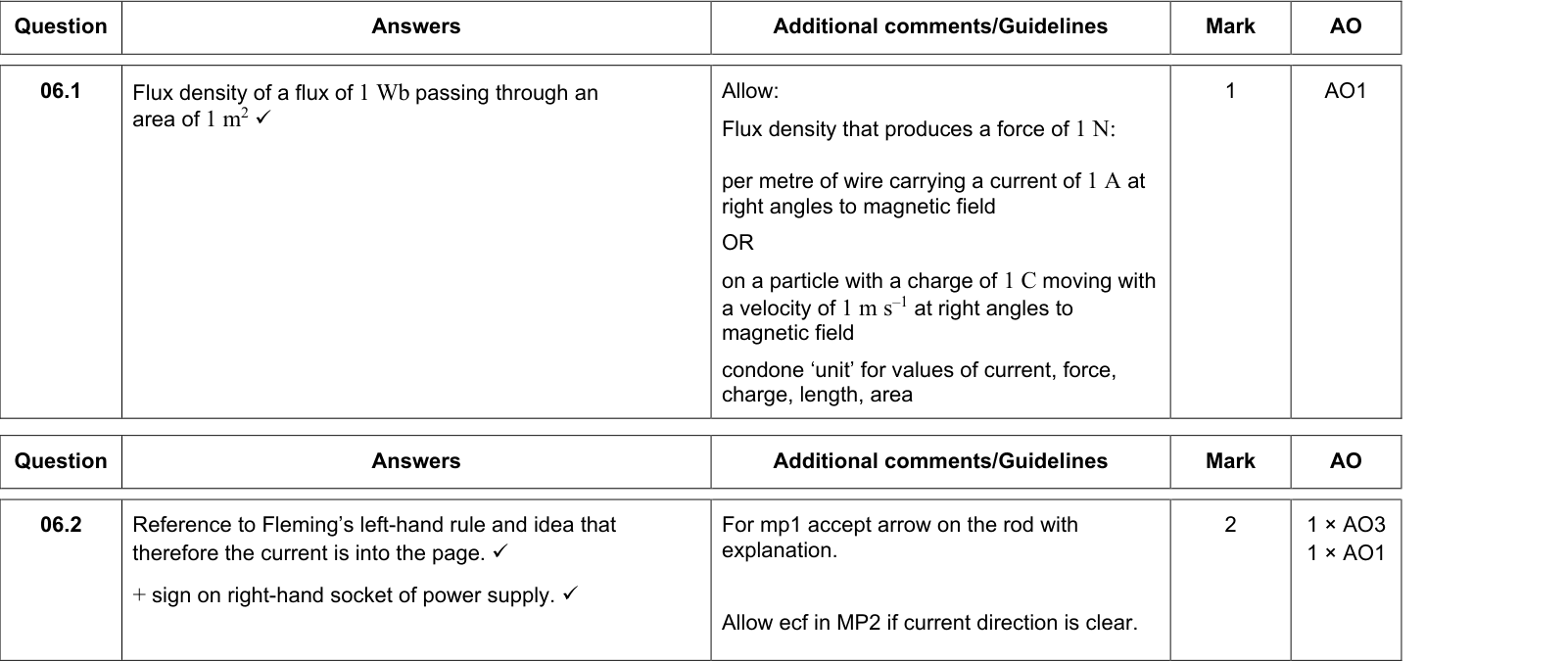
One tesla (T) is the magnetic flux density that produces a force of 1 N on a 1 m length of wire carrying a current of 1 A perpendicular to the field.
$1\ \text{T} = 1\ \text{N A}^{-1}\,\text{m}^{-1} = 1\ \text{kg s}^{-2}\,\text{A}^{-1}$.
Typical values: Earth's field about $5 \times 10^{-5}$ T; a strong school magnet 0.1–0.5 T; an MRI scanner 1.5–3 T (superconducting coils).
Worked example
A 6.0 cm length of wire carries 3.5 A at right angles to a 0.25 T field: $F = 0.25 \times 3.5 \times 0.060 = 0.053\ \text{N}$.
If the wire is turned to 30° to the field: $F = 0.053 \times \sin30^\circ = 0.026\ \text{N}$.
Measuring B with a current balance
Measuring magnetic flux density with a top-pan balance
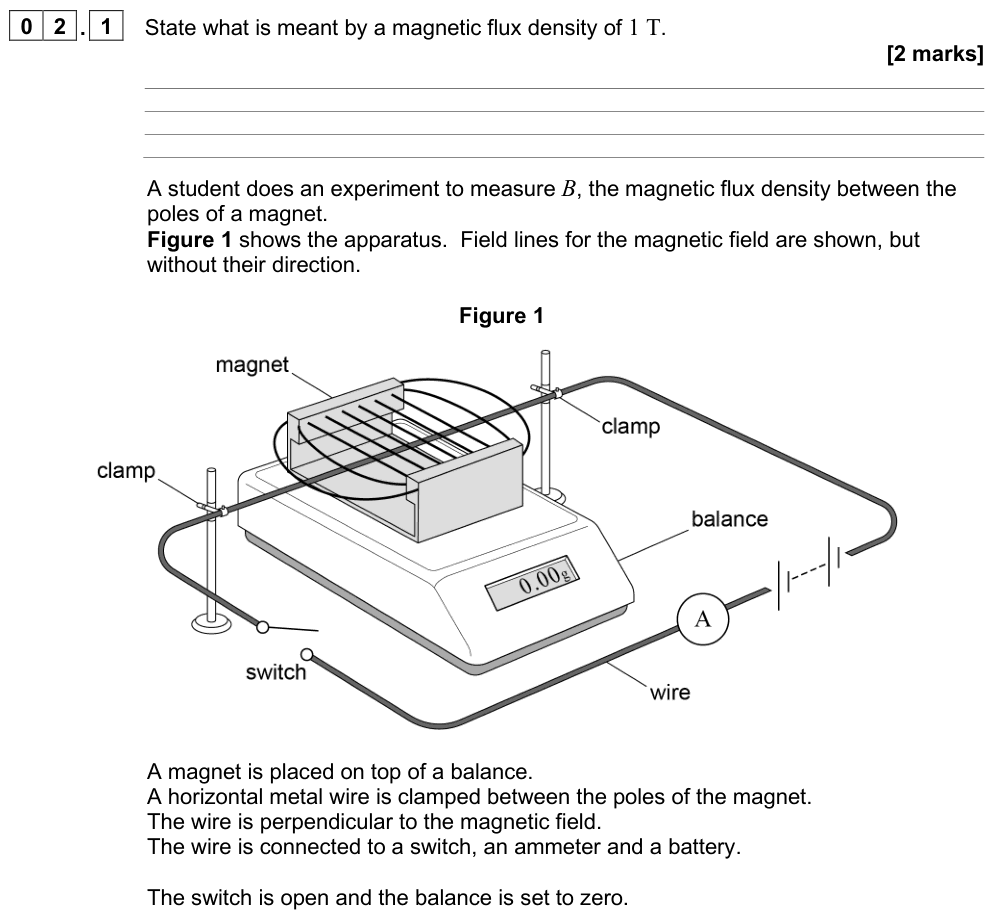
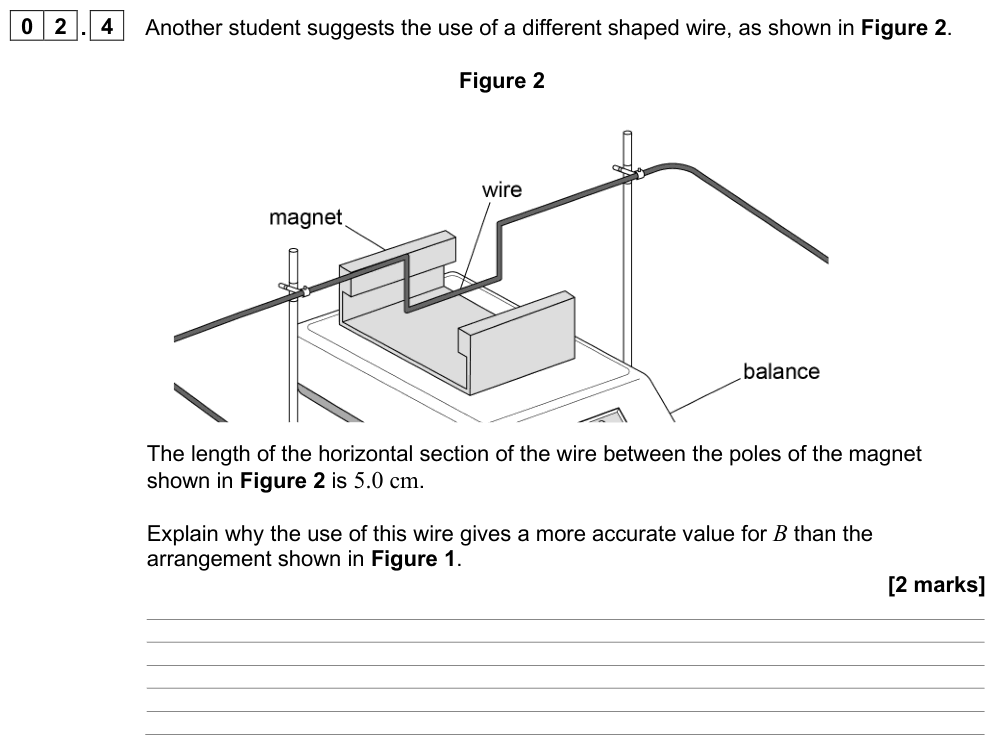
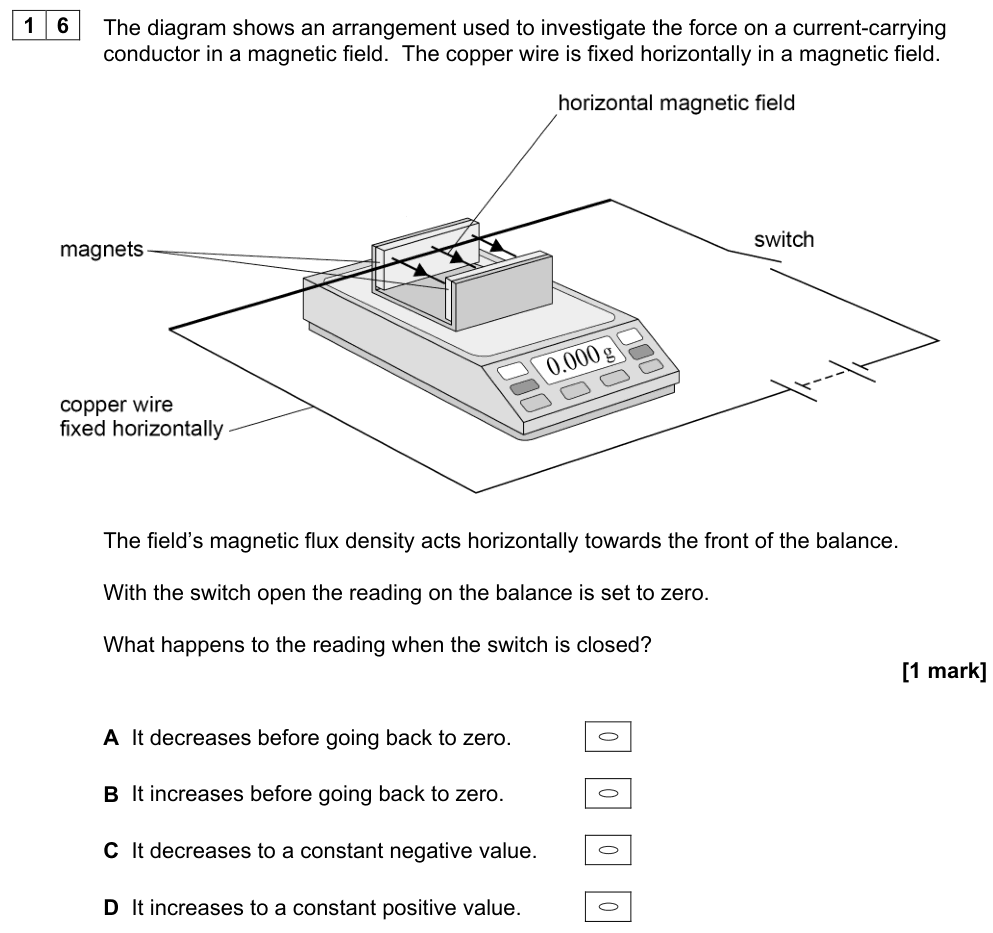
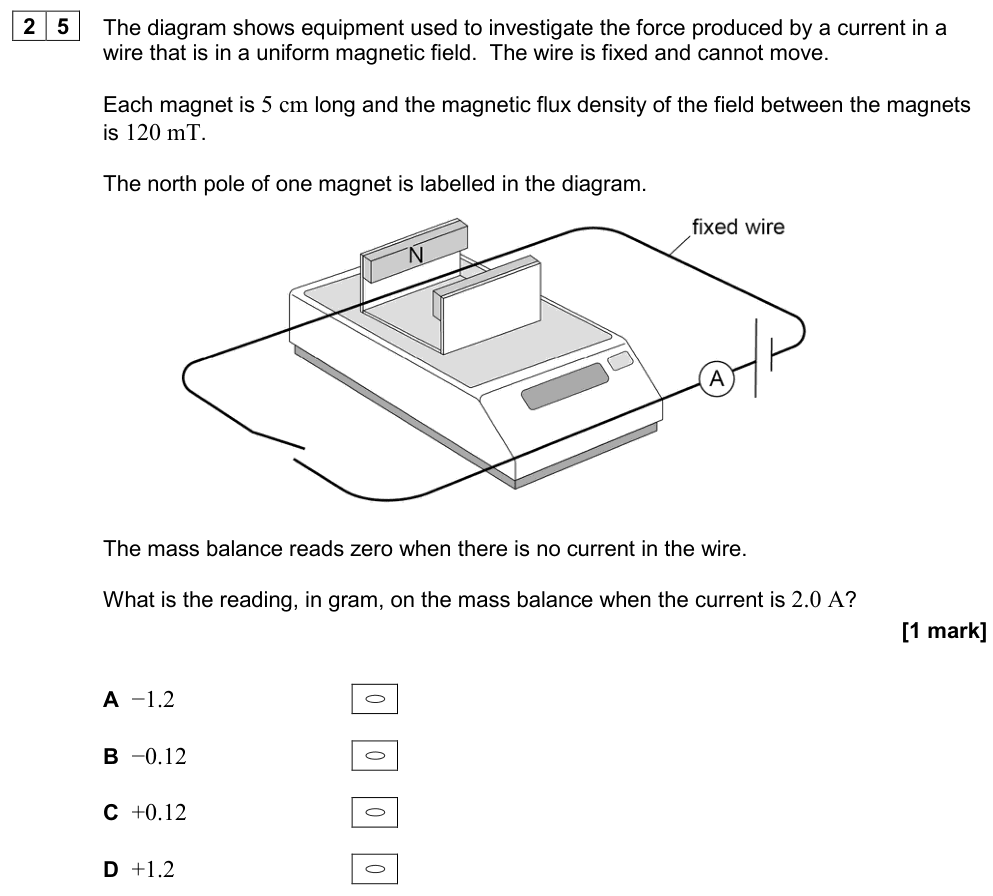
A U-shaped magnet (or two magnadur magnets on a steel yoke) is placed on an electronic balance and zeroed. A stiff horizontal wire, clamped so it cannot move, passes between the poles at right angles to the field and is connected to a variable d.c. supply and ammeter.
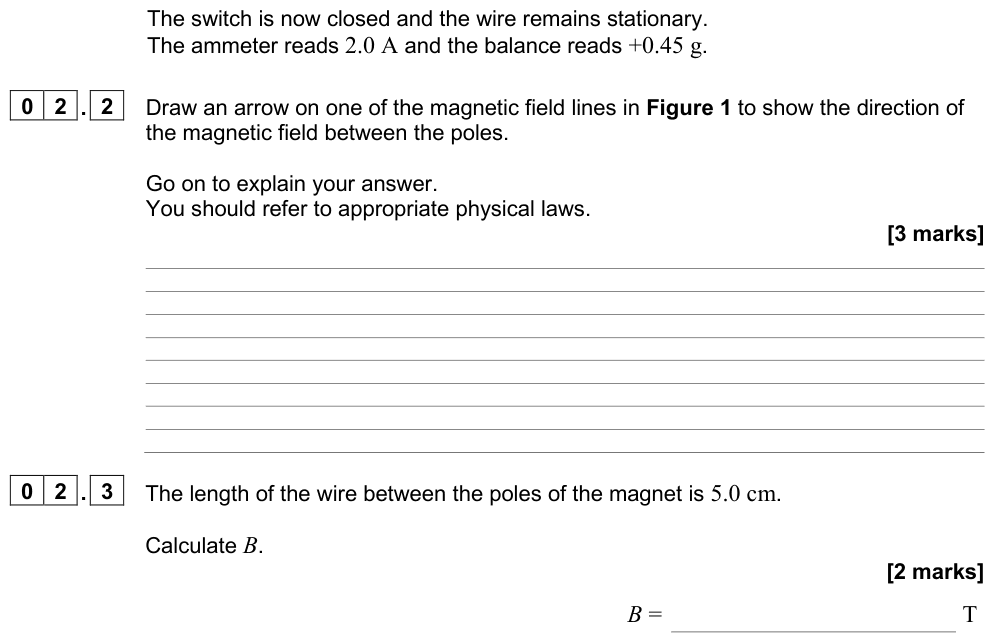
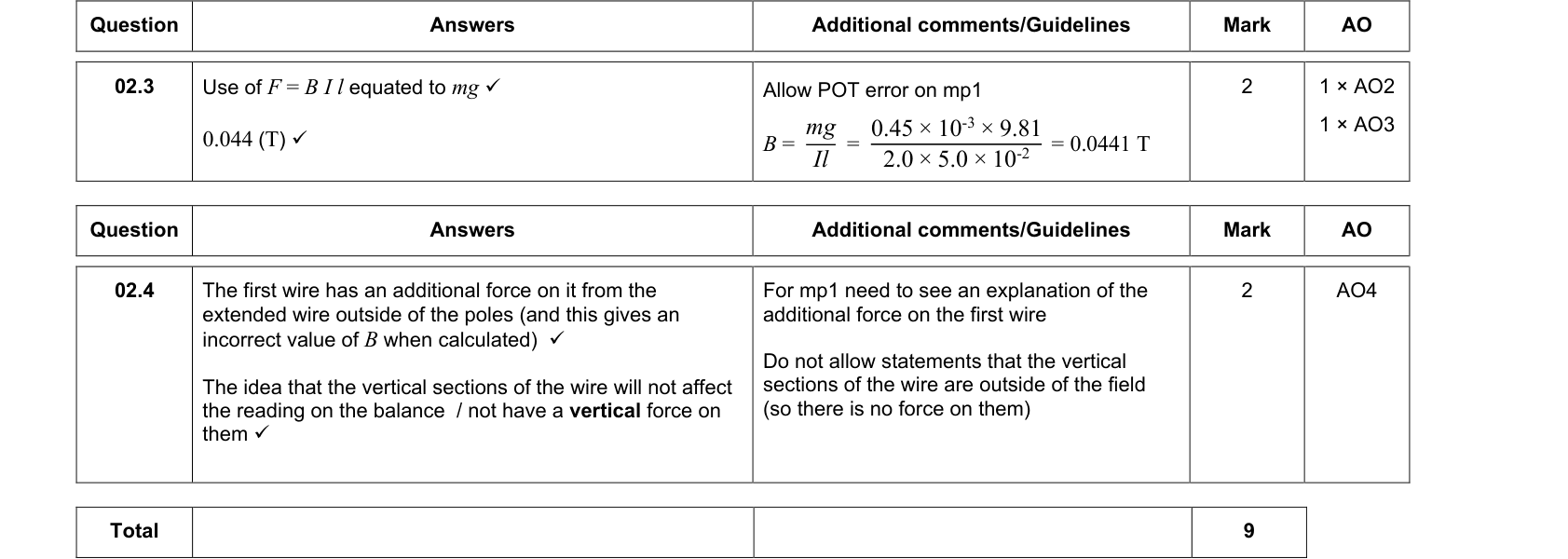
When a current flows, the magnet exerts a force on the wire; by Newton's third law the wire exerts an equal and opposite force on the magnet, which changes the balance reading by $\Delta m$.
$F = (\Delta m)g = BIL$. Plot $F$ against $I$: a straight line through the origin with gradient $BL$, so $B = \text{gradient}/L$, where $L$ is the length of wire in the field (the length of the pole faces).
Reversing the current changes the sign of the reading change, which confirms that the force depends on the current direction.
Applications
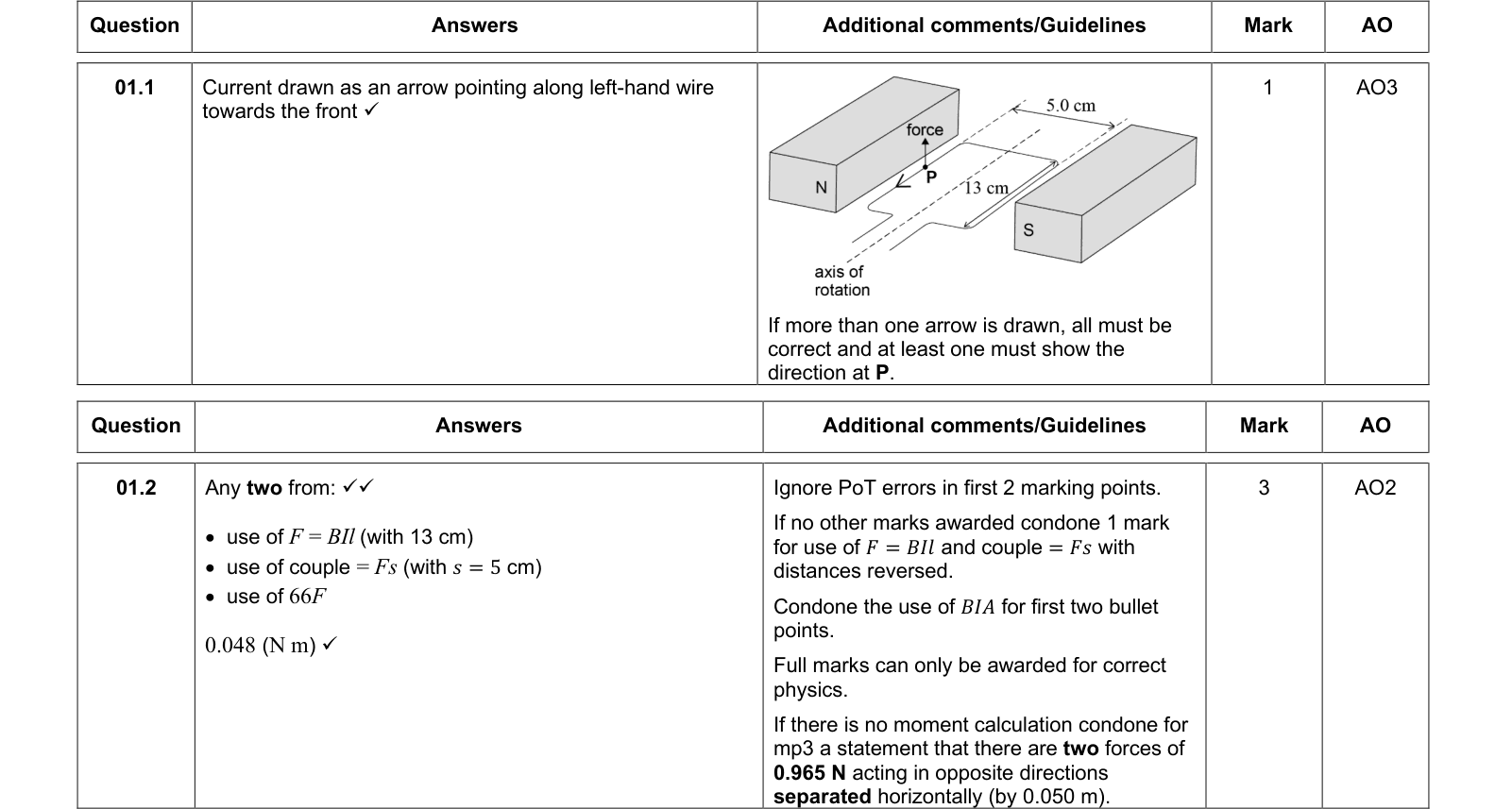
- Electric motors: a coil in a magnetic field experiences forces on its two sides in opposite directions, forming a couple that makes it rotate. A split-ring commutator reverses the current every half turn to keep it turning the same way.
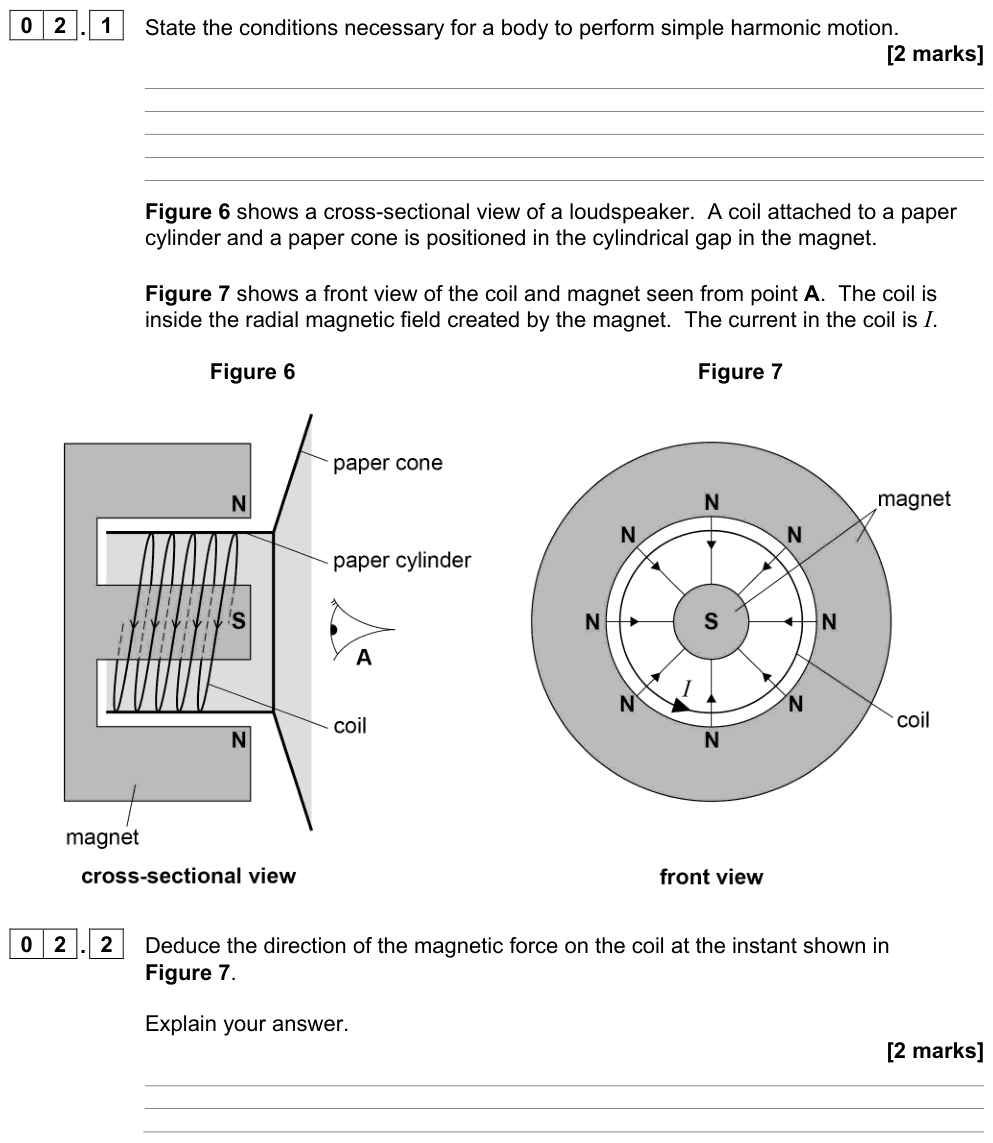
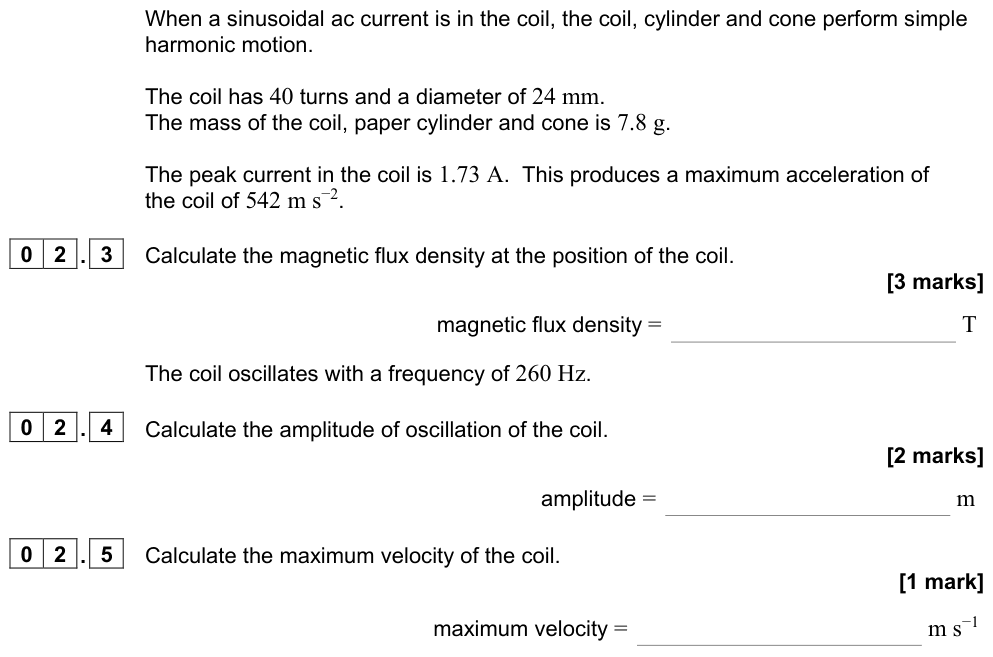
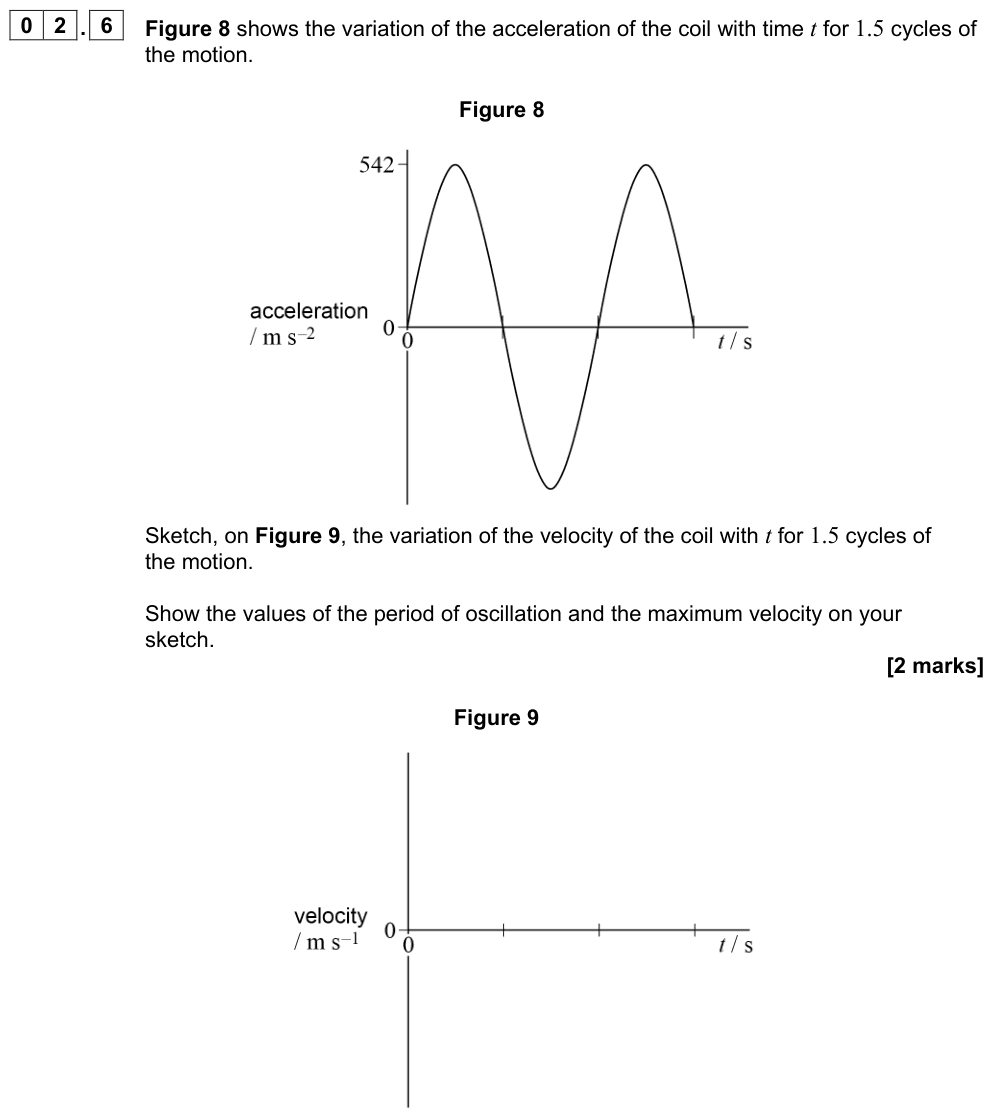
- Loudspeakers: an alternating current in a coil in a radial magnetic field makes the coil and cone vibrate.
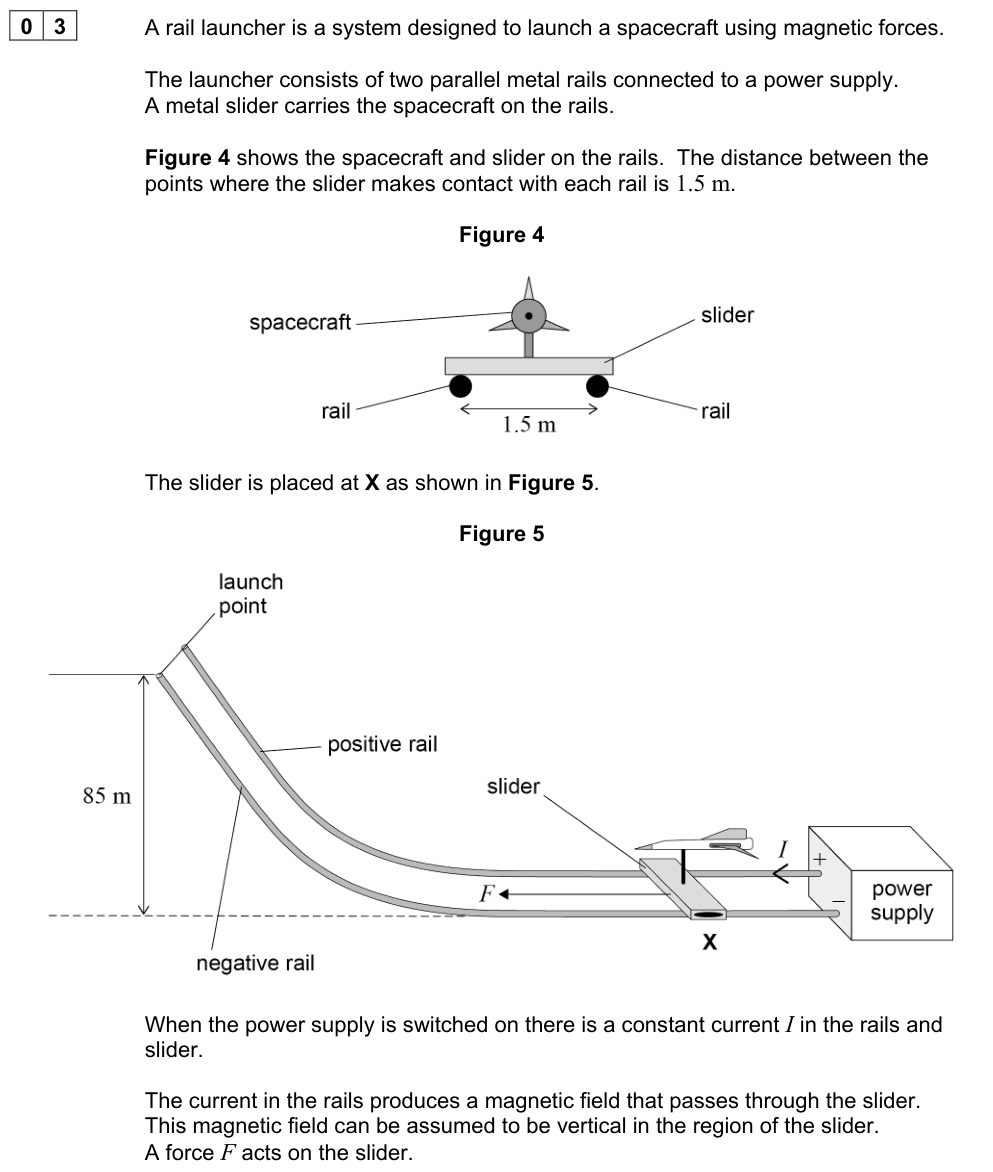
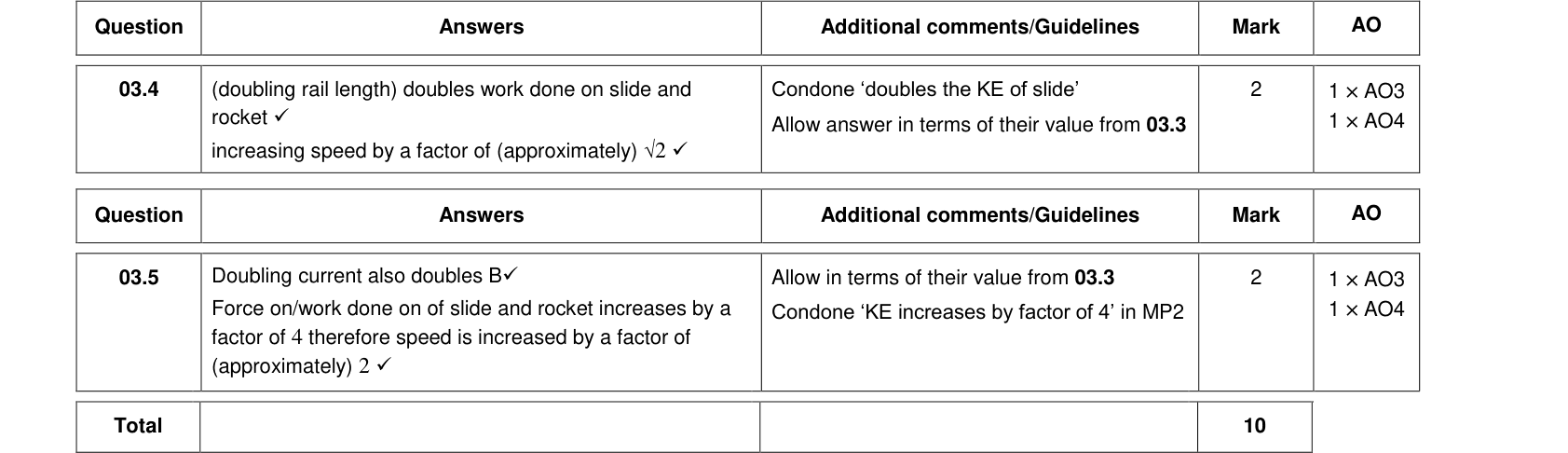
- Electromagnetic rail launchers and moving-coil meters.
Summary
- $F = BIL$ for current perpendicular to the field ($F = BIL\sin\theta$ in general); no force when parallel.
- Direction from Fleming's left-hand rule (Field, Current, Motion).
- 1 T: field giving 1 N on 1 m of wire carrying 1 A perpendicular to it.
- Measure $B$ with a current balance: $\Delta m\,g = BIL$.