Gravitational potential
Gravitational potential
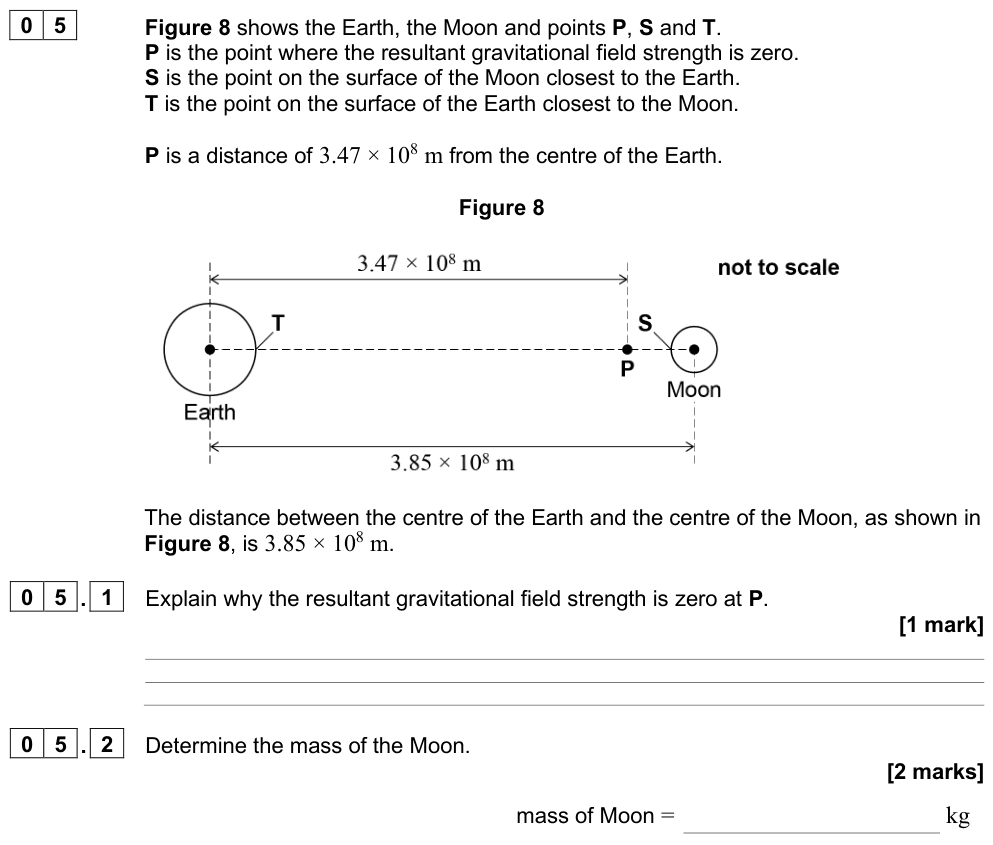
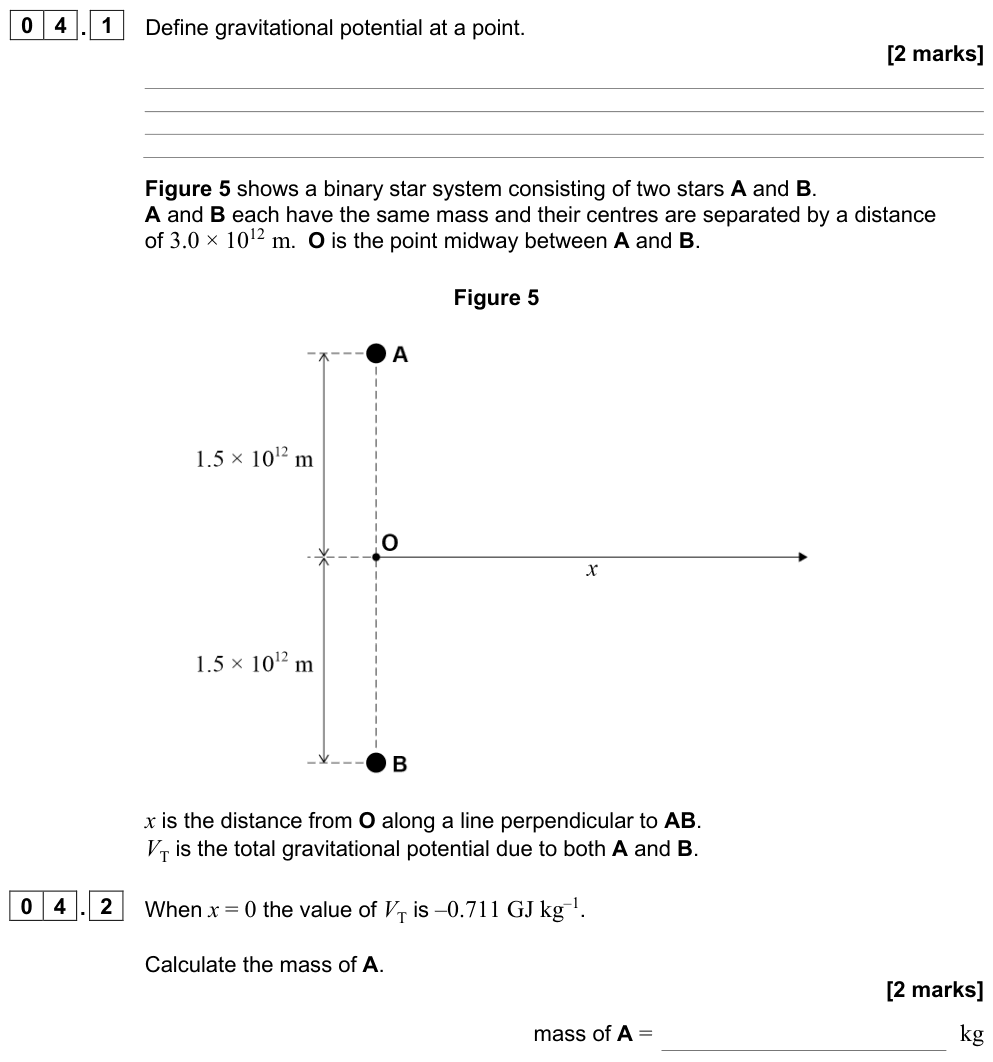
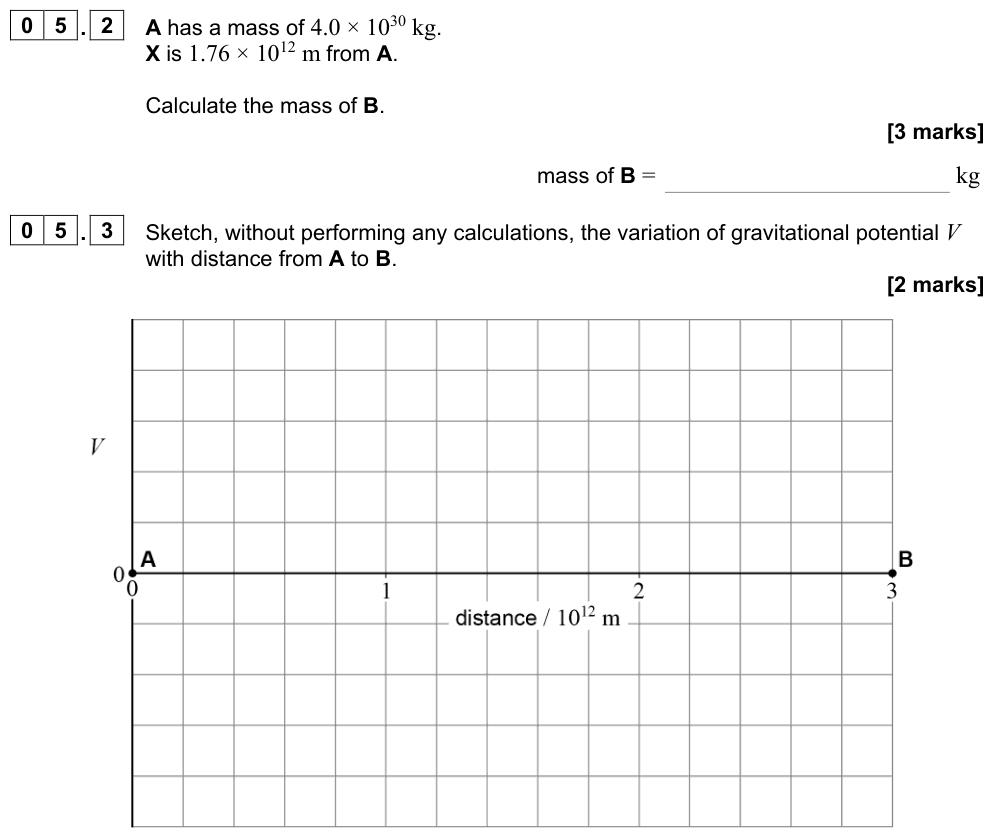
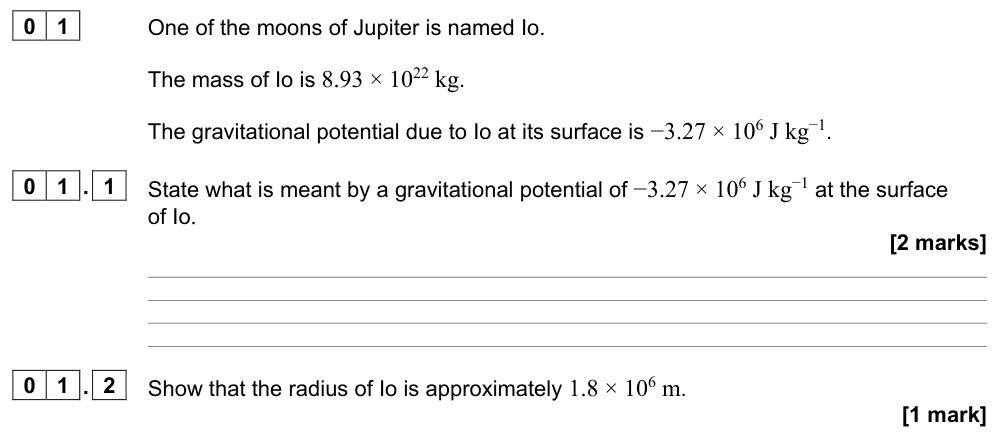
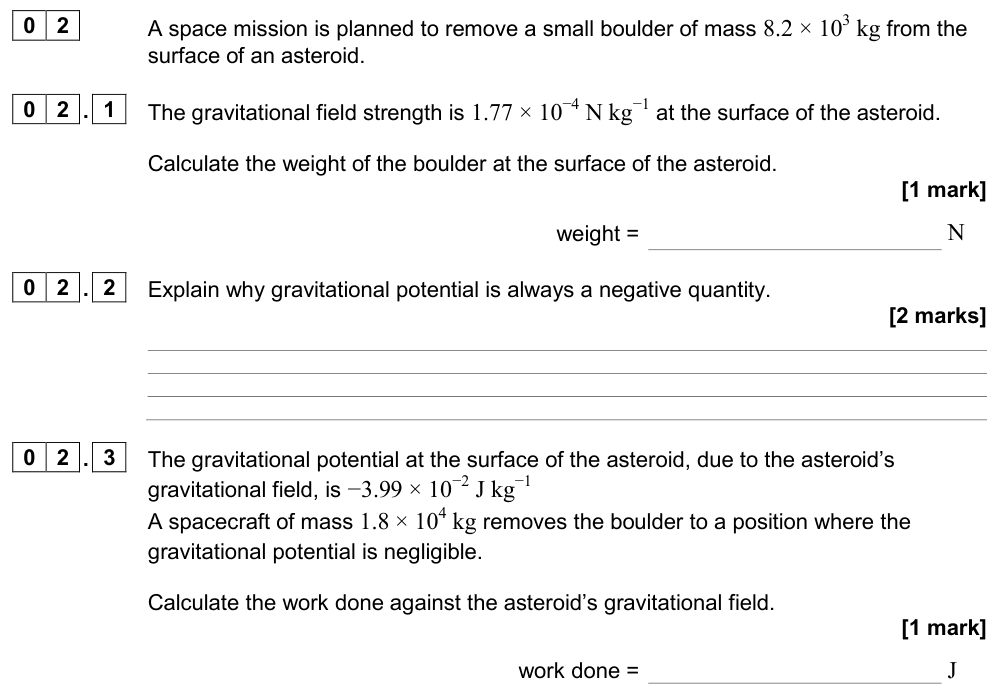
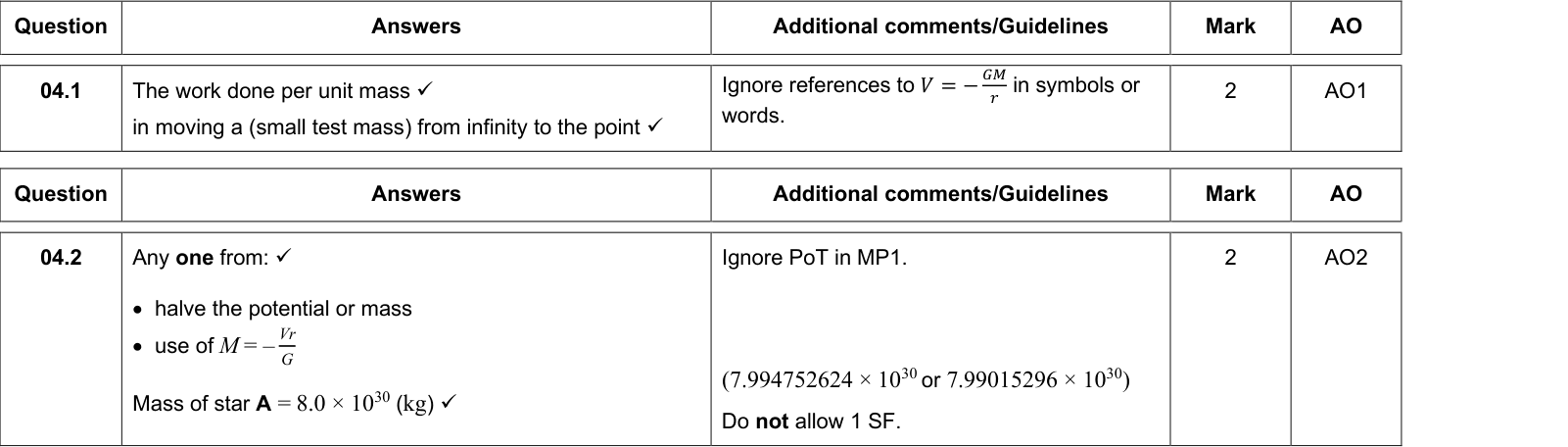
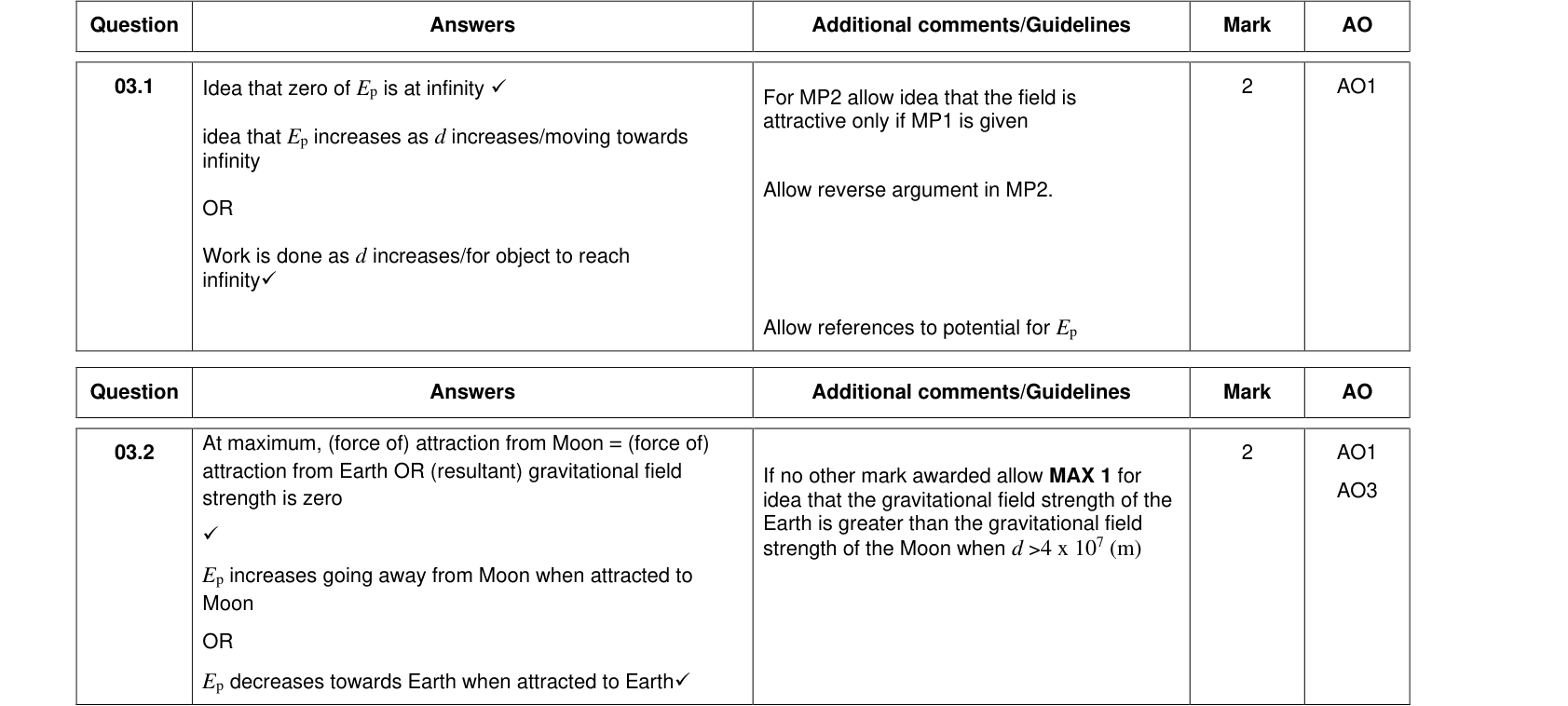
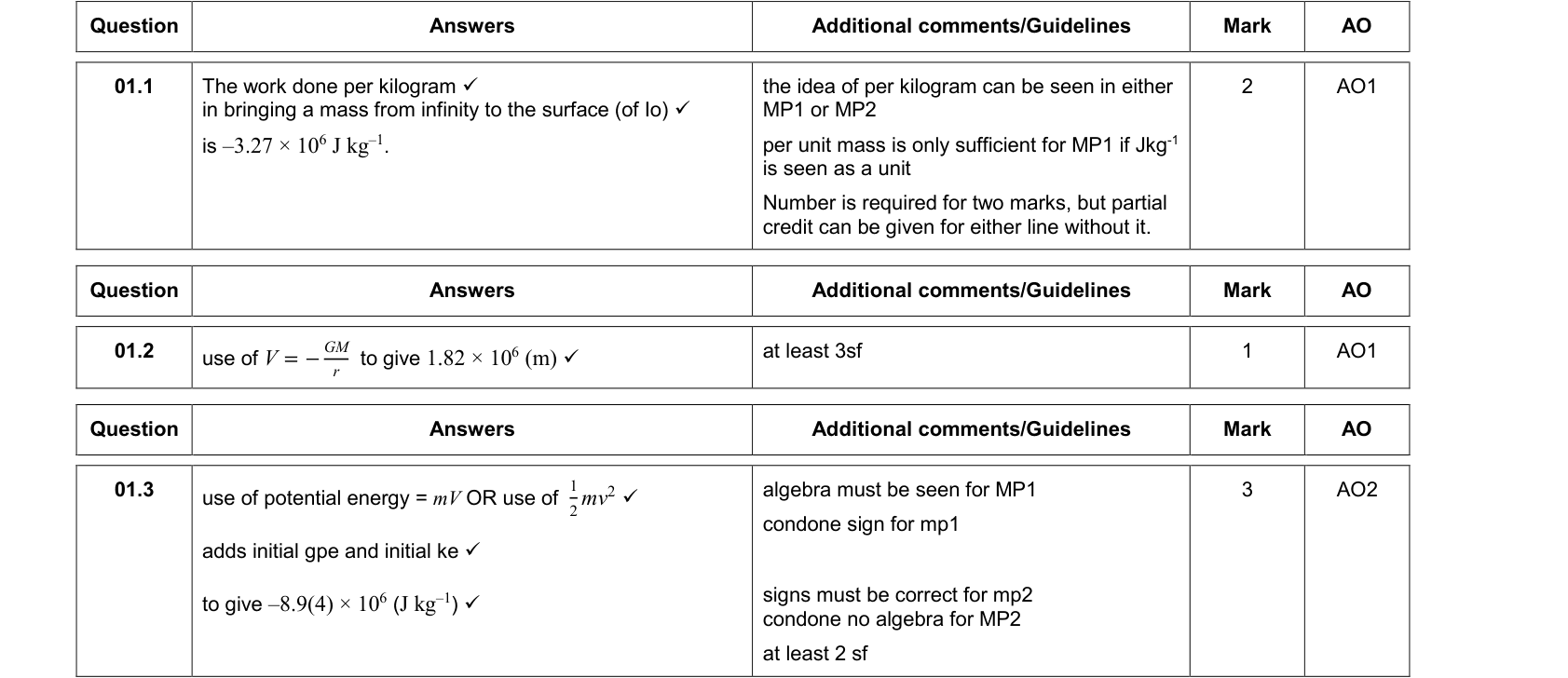
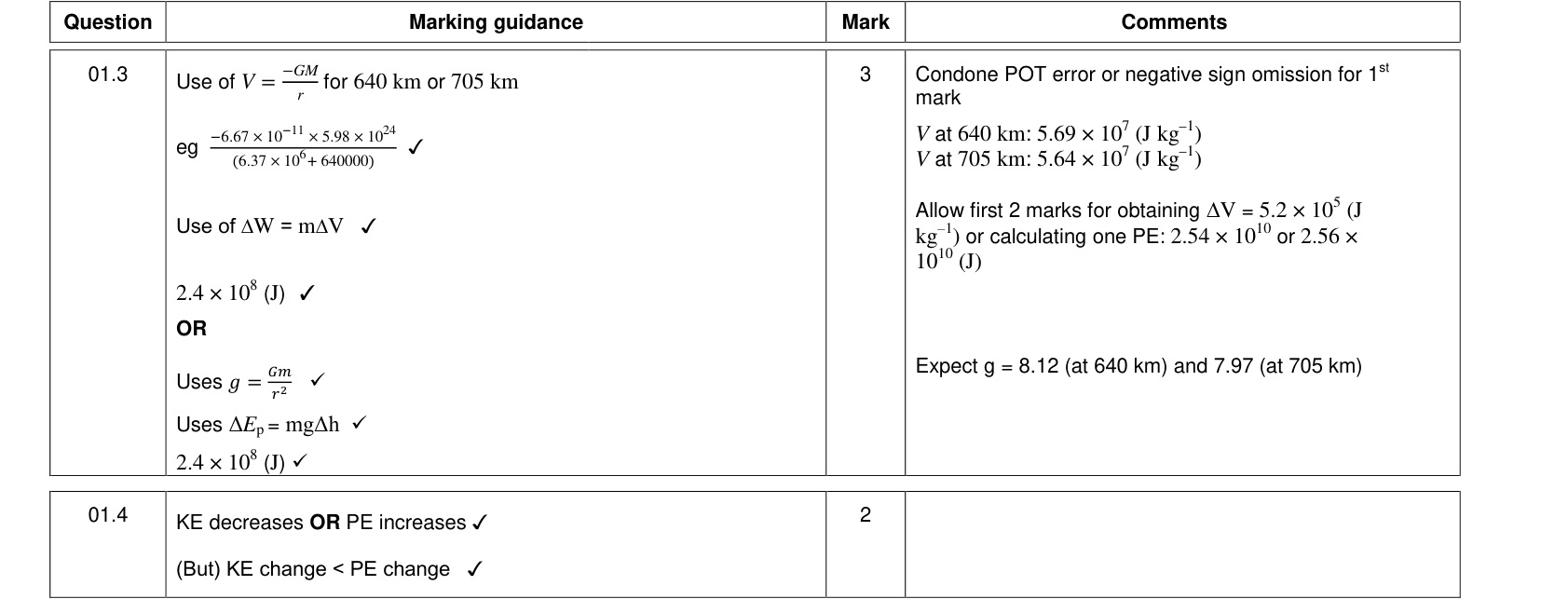
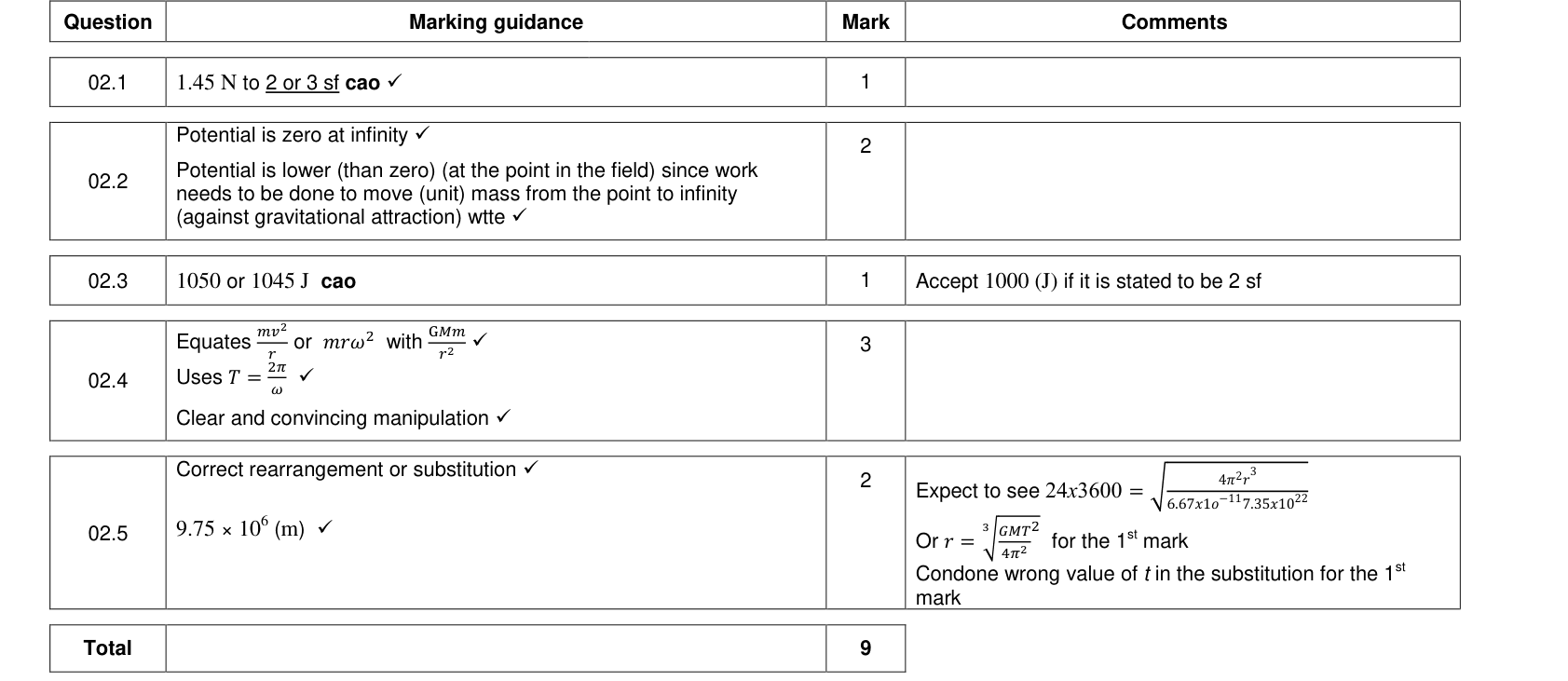
The gravitational potential $V$ at a point is the work done per unit mass in bringing a small test mass from infinity to that point.
Unit: J kg⁻¹. Gravitational potential is a scalar.
- The zero of potential is defined at infinity, where the field is zero.
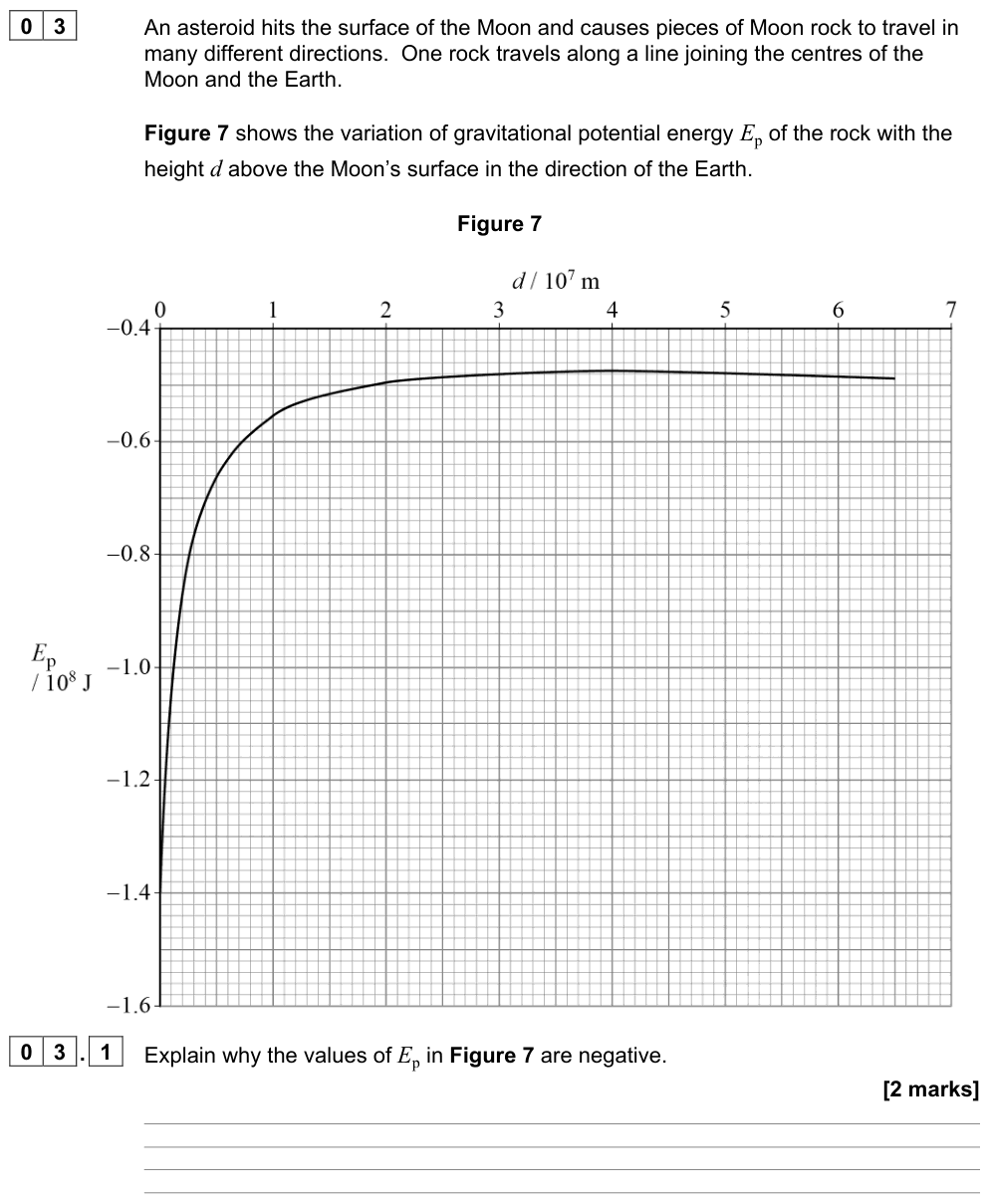
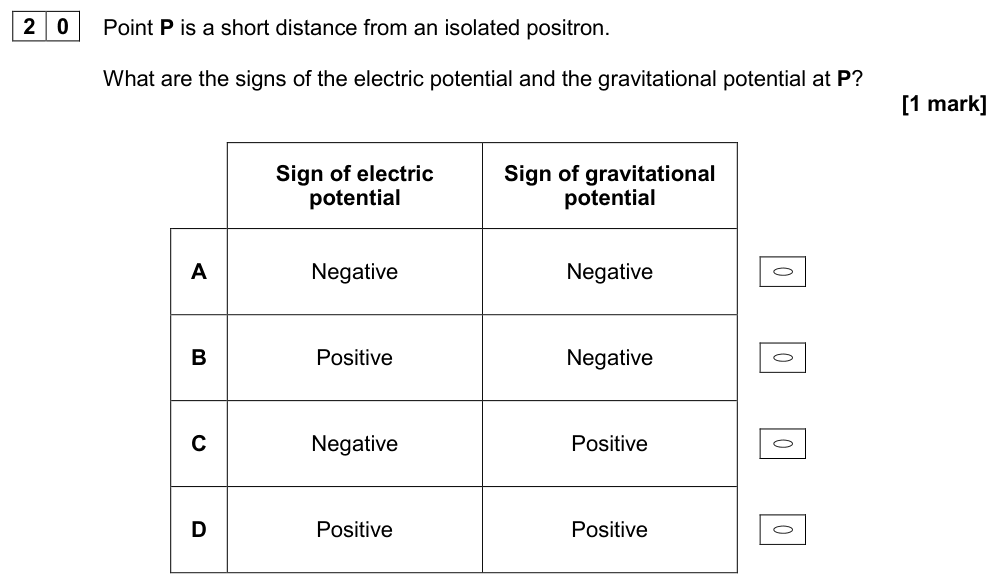
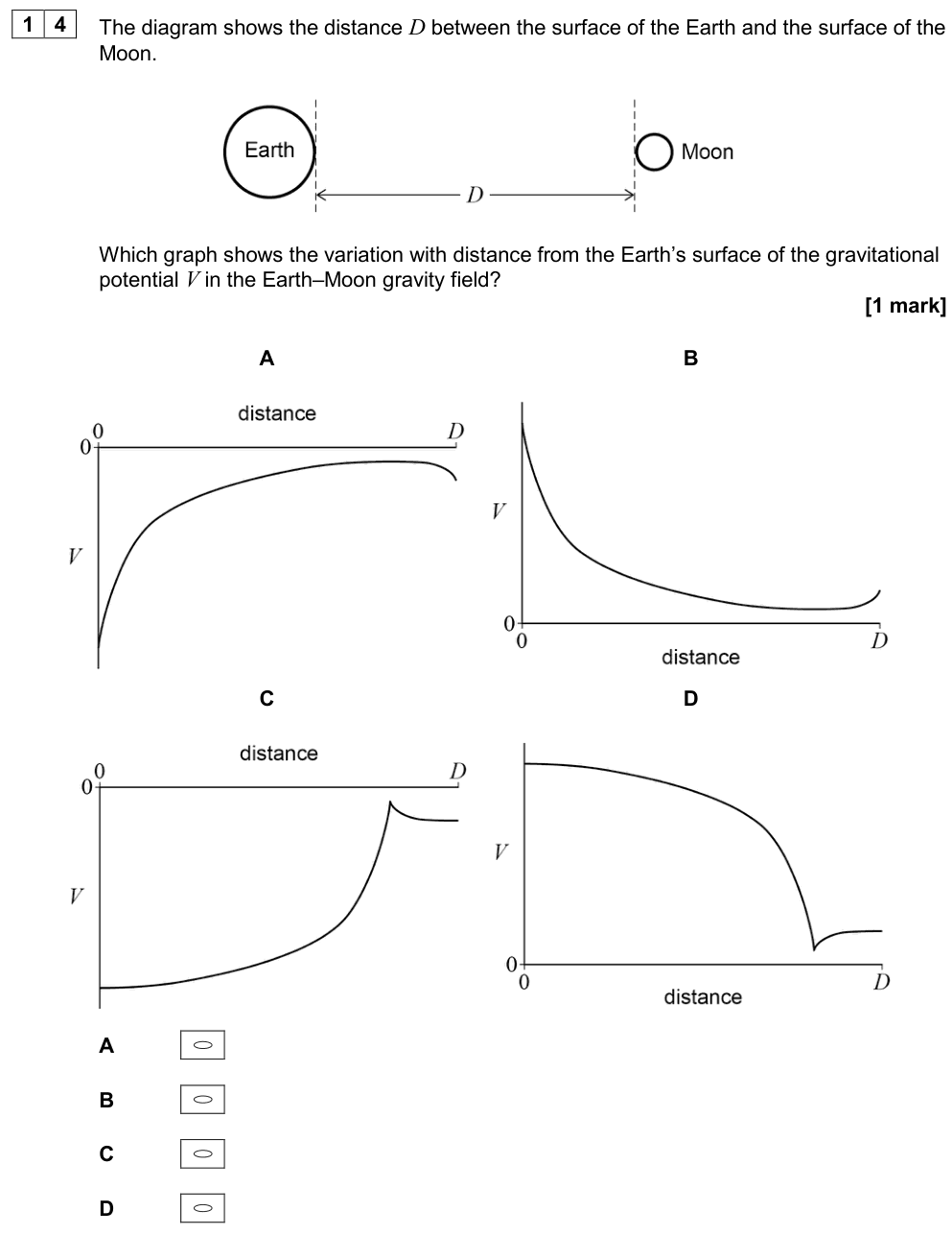
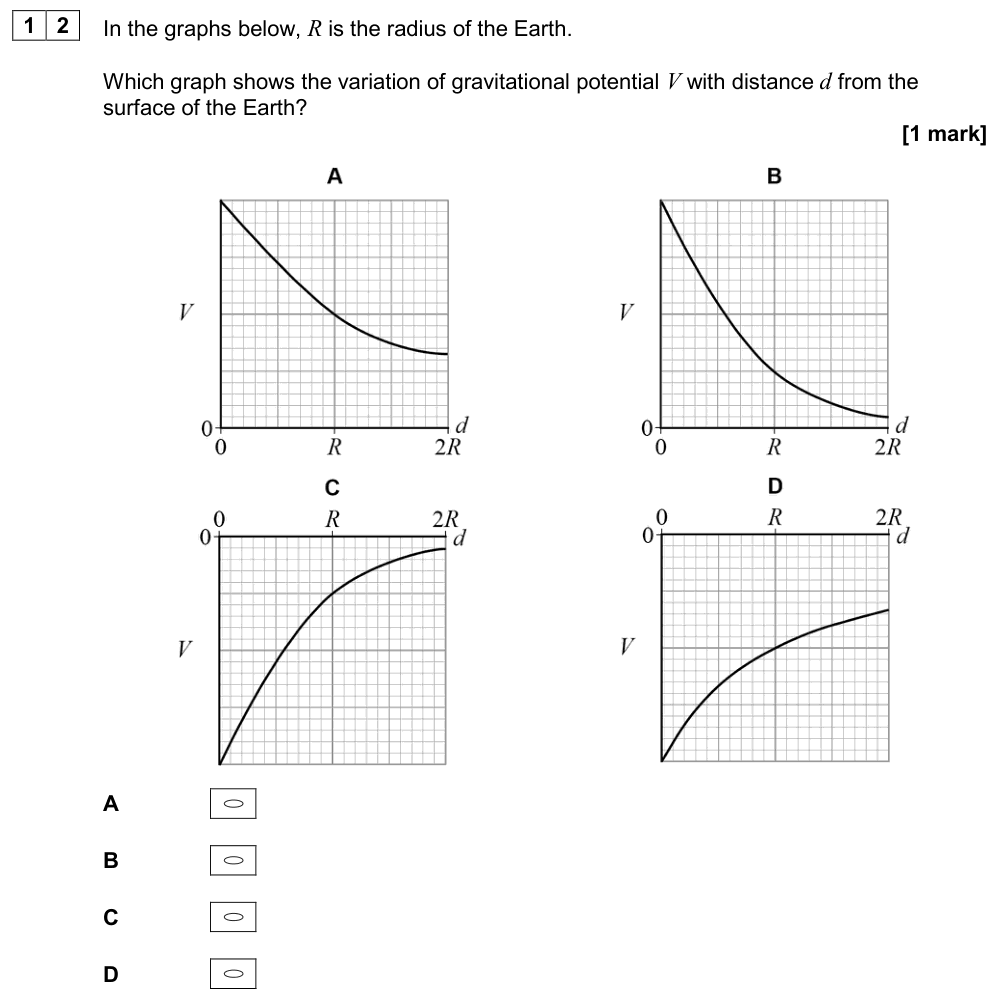
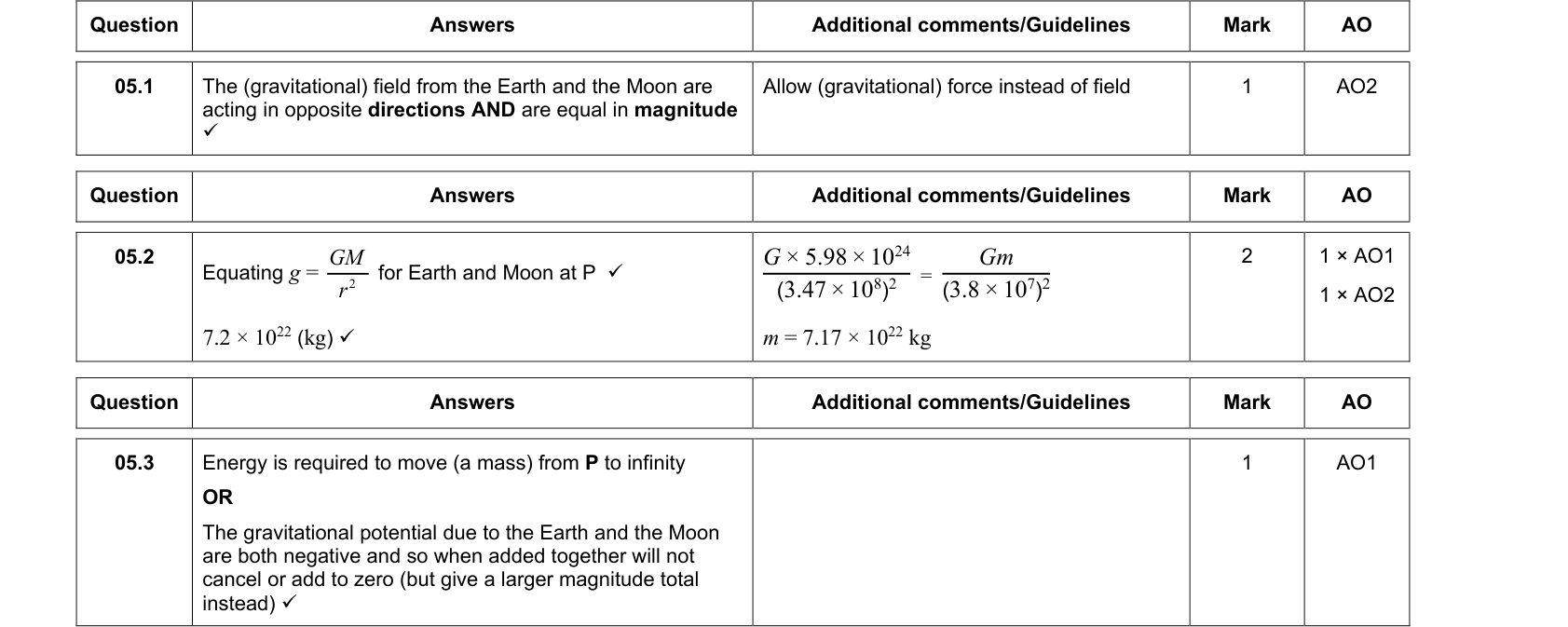
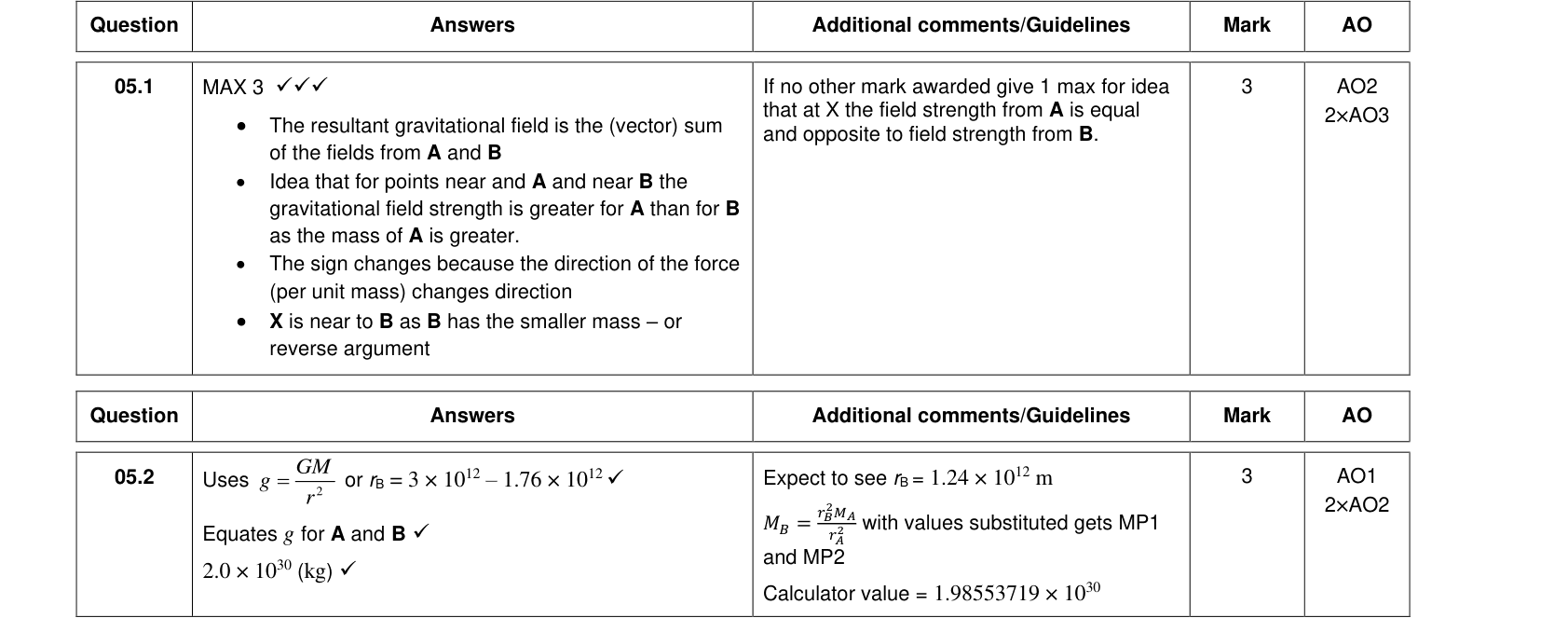
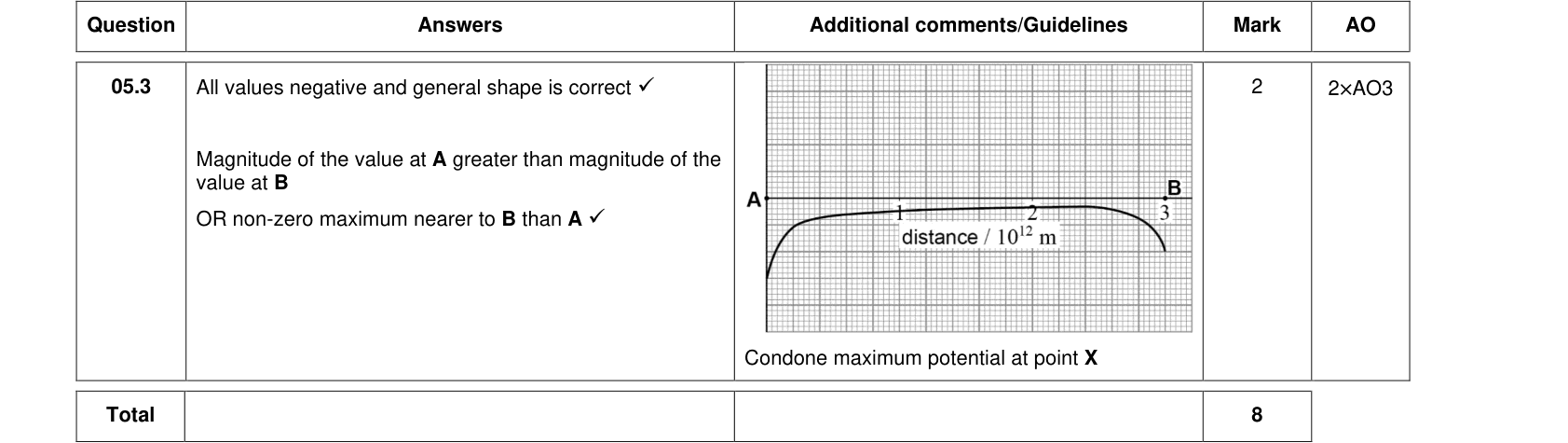
- Gravity is attractive, so the field does work on a mass falling in from infinity: energy is released, not needed. The work done by an external agent bringing the mass in is negative. So gravitational potential is always negative, rising towards zero as you move away from the mass.
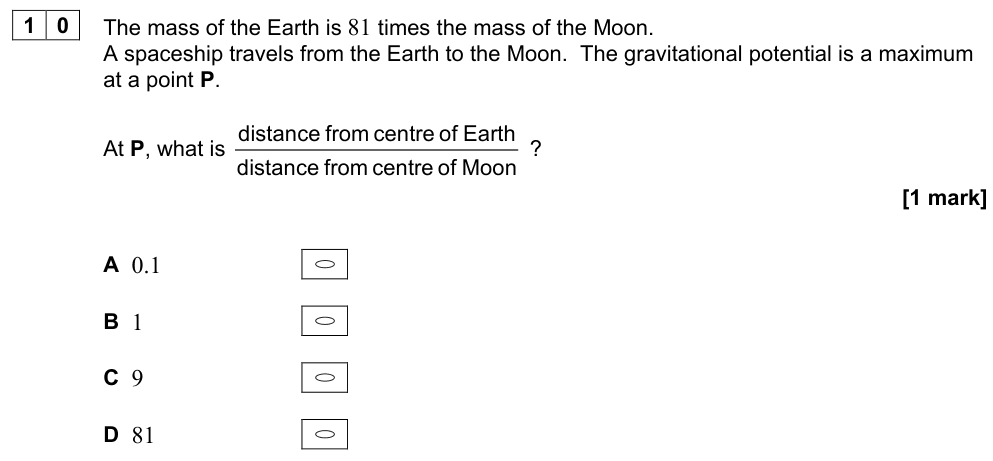
- The closer to a planet, the more negative the potential.
Potential in a radial field
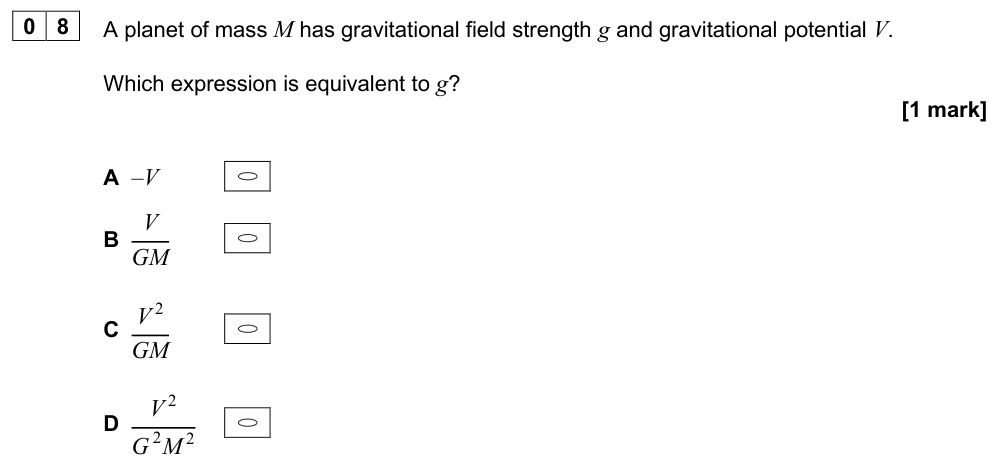
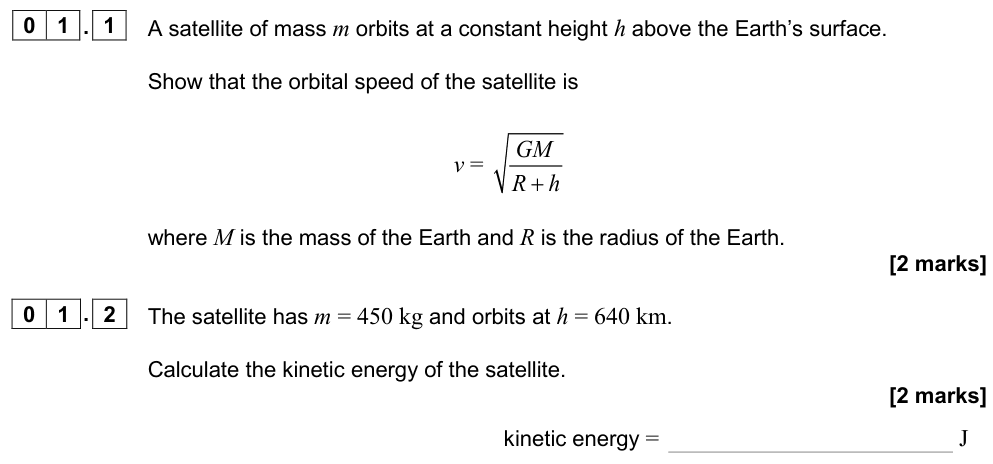
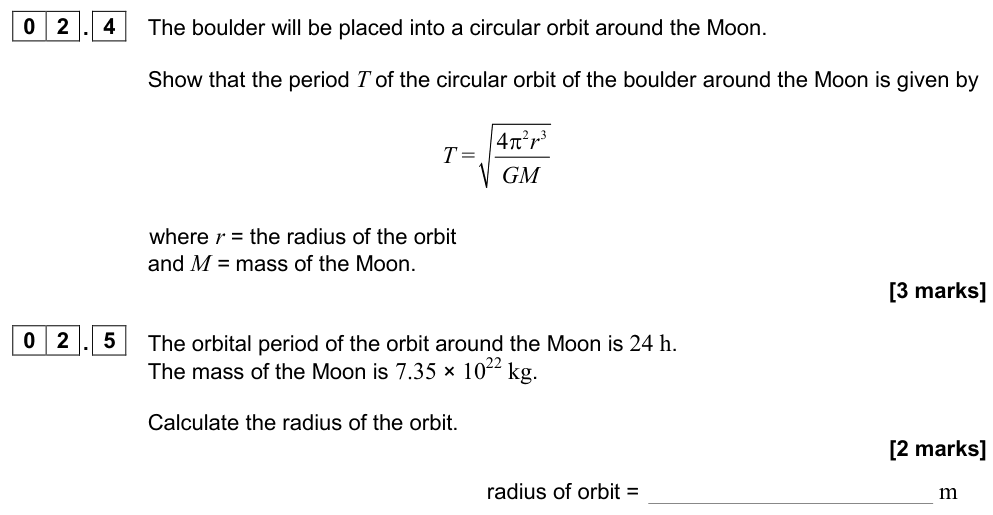
$$V = -\frac{GM}{r}$$
for a point at distance $r$ from the centre of a mass $M$ (outside it).
Potential difference and work done
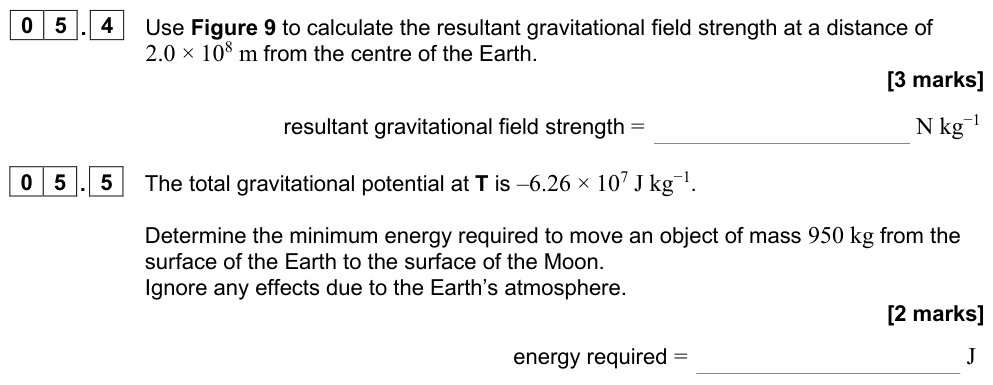
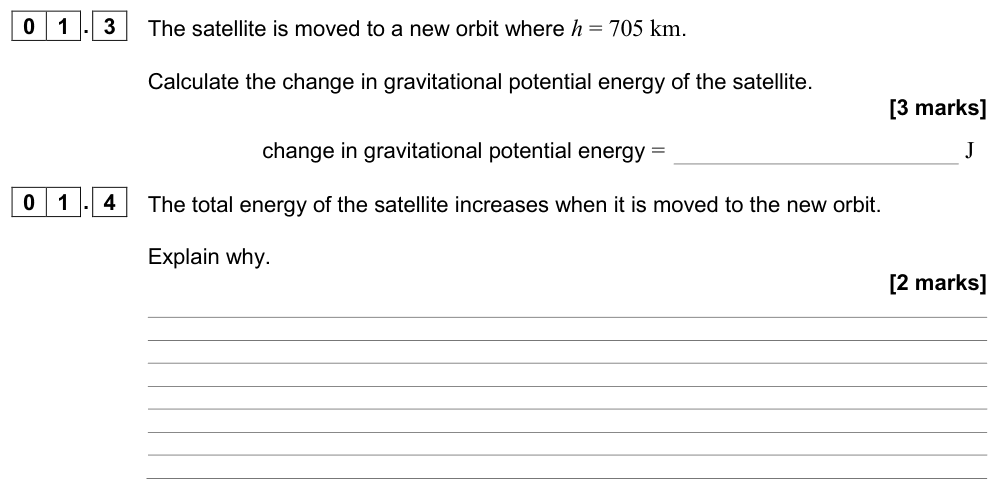
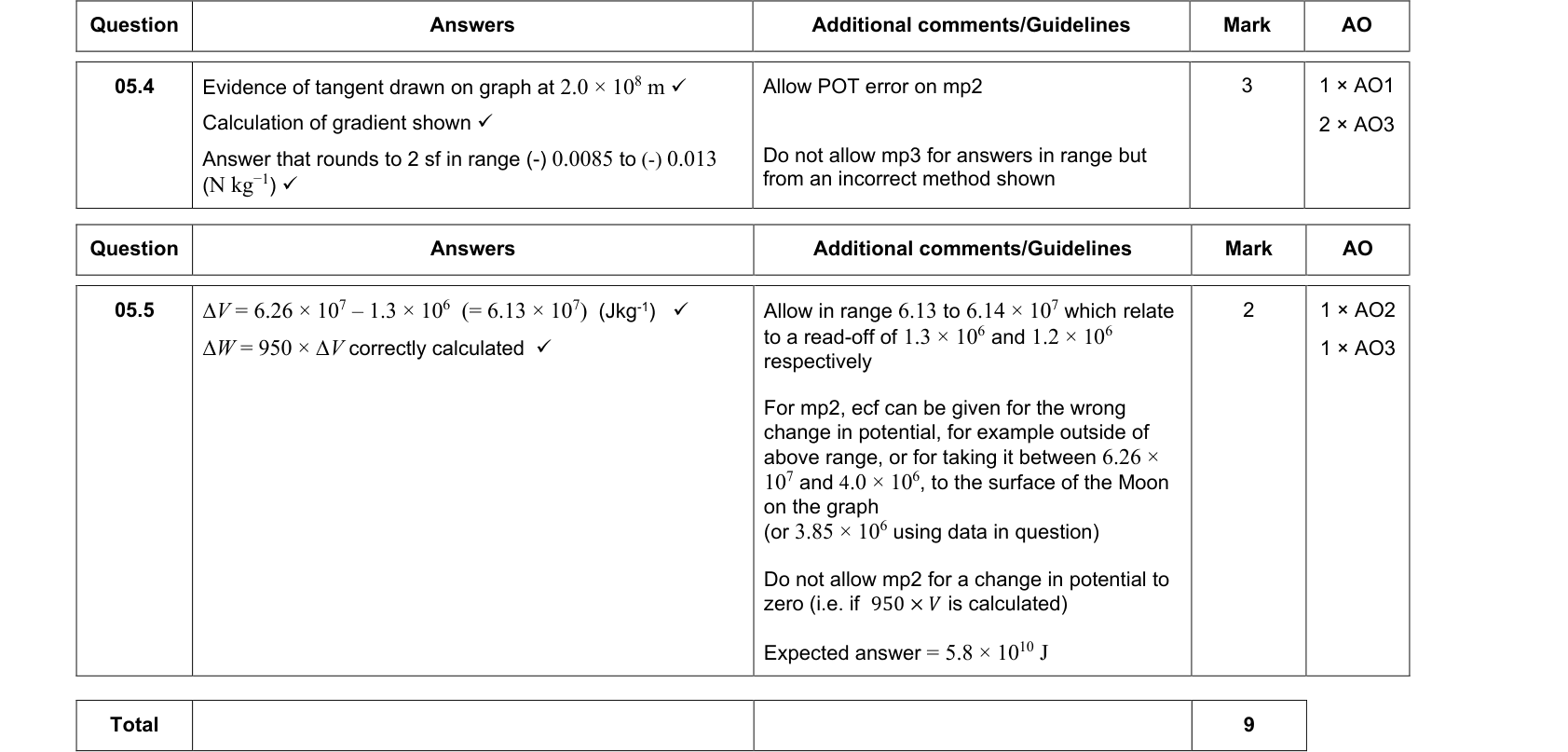
The gravitational potential difference $\Delta V$ between two points is the work done per unit mass in moving between them. The work done moving a mass $m$ is
$$\Delta W = m\,\Delta V$$
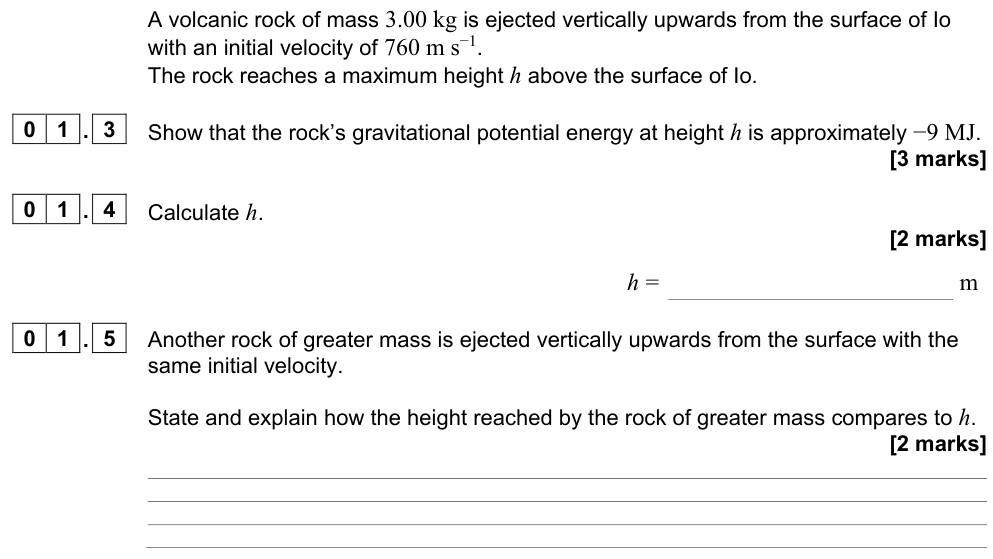
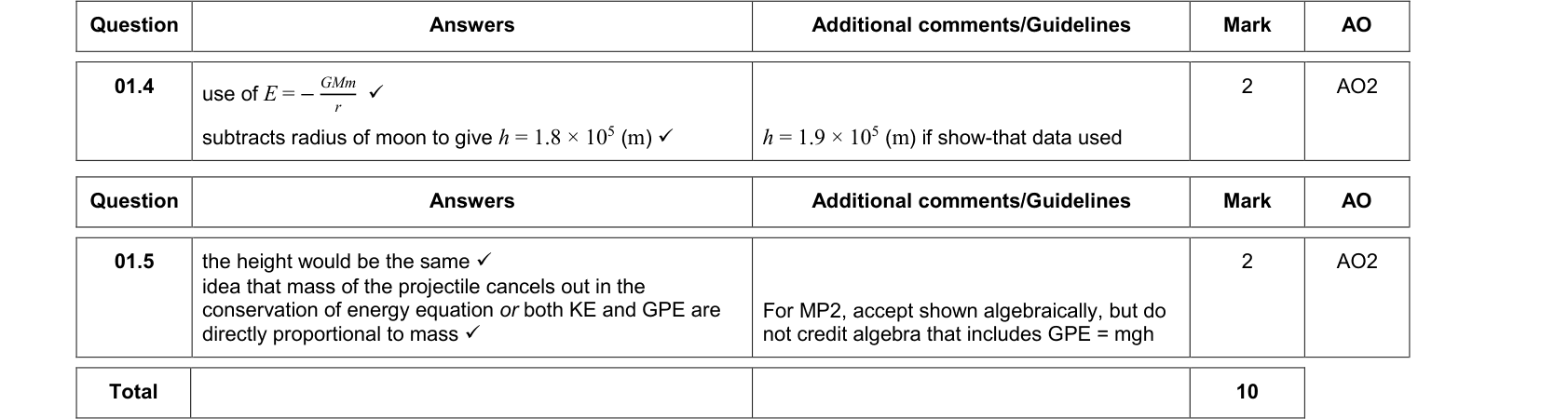
Equivalently, the change in gravitational potential energy is $\Delta E_p = m\Delta V$, and the gravitational potential energy of a mass $m$ at distance $r$ is $E_p = mV = -\dfrac{GMm}{r}$.
Worked example: lifting a satellite
How much energy is needed to raise a 500 kg satellite from the Earth's surface ($r = 6.37 \times 10^{6}$ m) to a height of 600 km?
$V_1 = -\dfrac{6.67 \times 10^{-11} \times 5.97 \times 10^{24}}{6.37 \times 10^{6}} = -6.25 \times 10^{7}\ \text{J kg}^{-1}$
$V_2 = -\dfrac{3.98 \times 10^{14}}{6.97 \times 10^{6}} = -5.71 \times 10^{7}\ \text{J kg}^{-1}$
$\Delta W = m\Delta V = 500 \times (5.4 \times 10^{6}) = 2.7 \times 10^{9}\ \text{J}$ (to lift it; it also needs kinetic energy to orbit).
Why not use $mg\Delta h$?
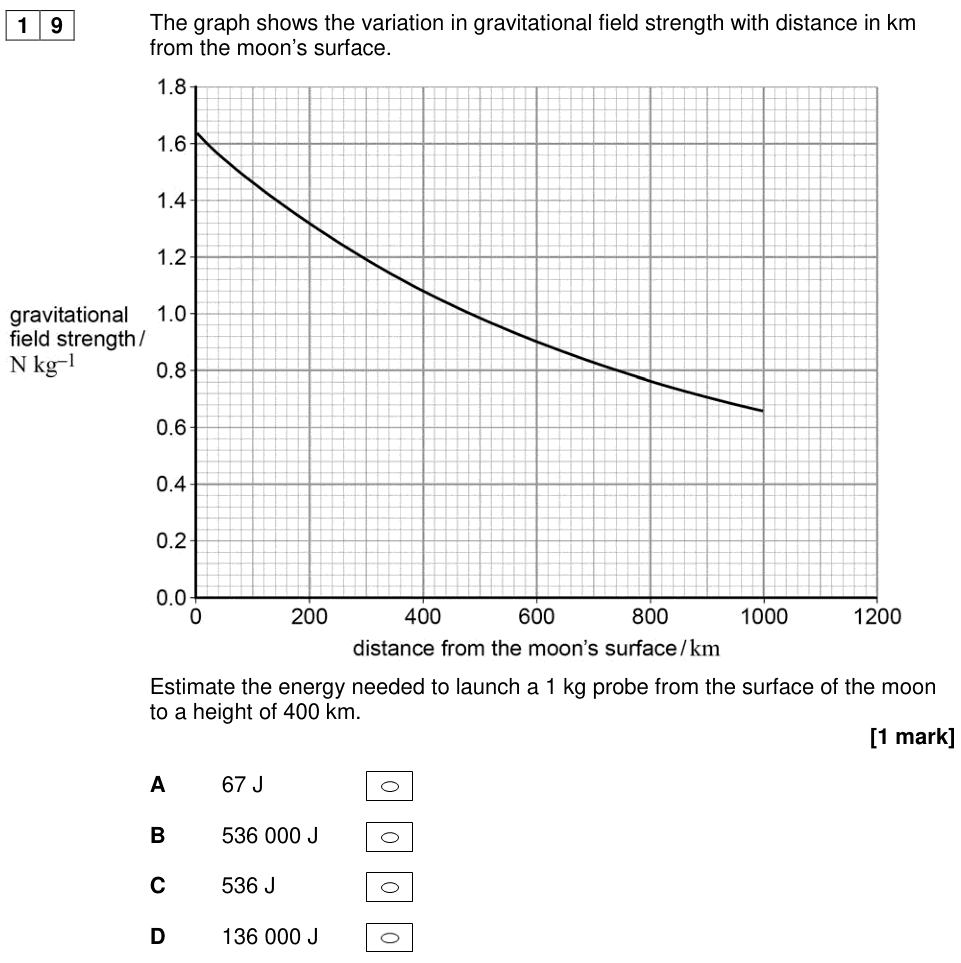
$\Delta E_p = mg\Delta h$ assumes $g$ is constant, which is only true near the surface for small $\Delta h$. Over large distances, use $\Delta W = m\Delta V$ with $V = -GM/r$.
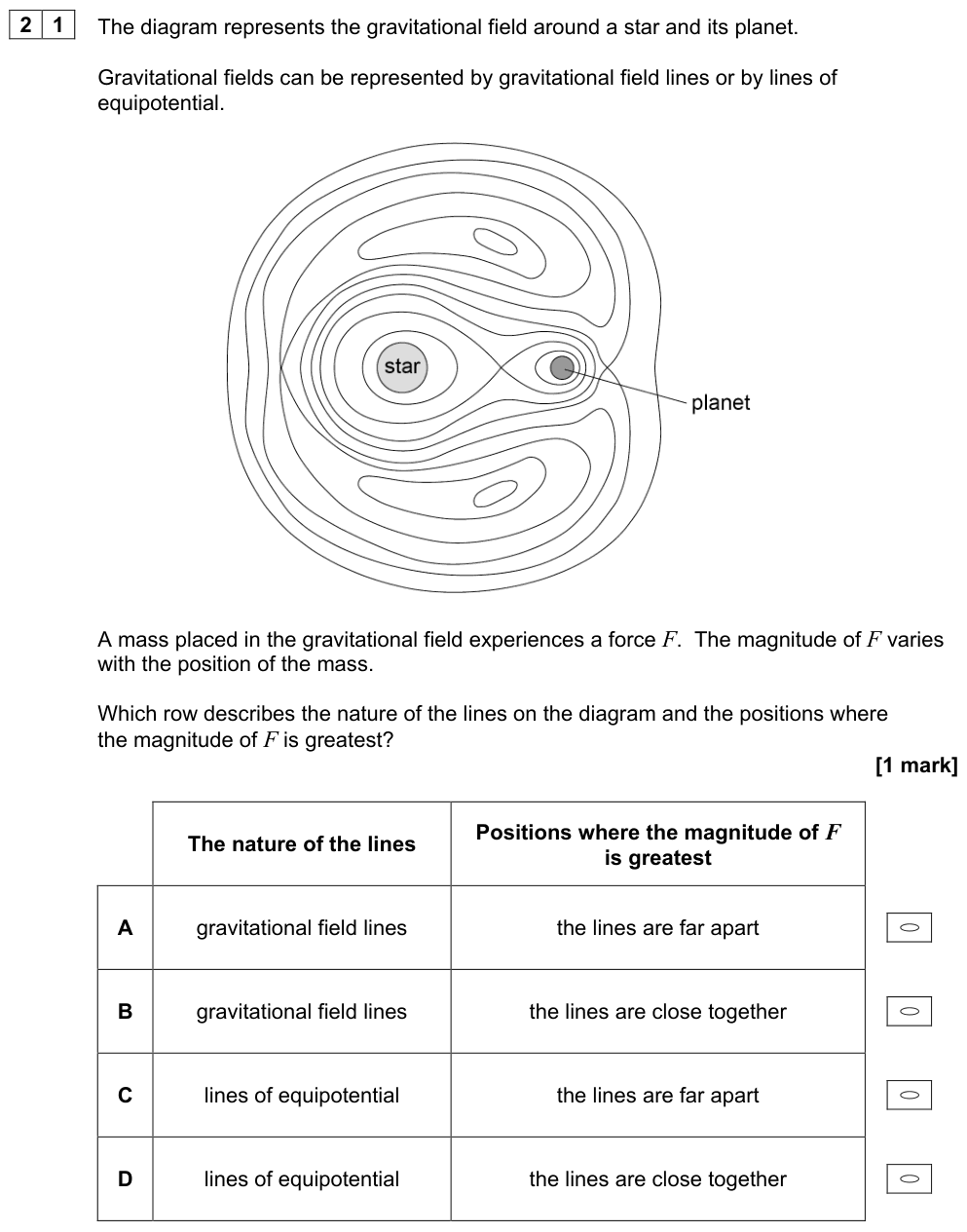
Equipotential surfaces
Equipotential surface
A surface on which every point has the same gravitational potential.
- No work is done moving a mass along an equipotential surface ($\Delta V = 0$).
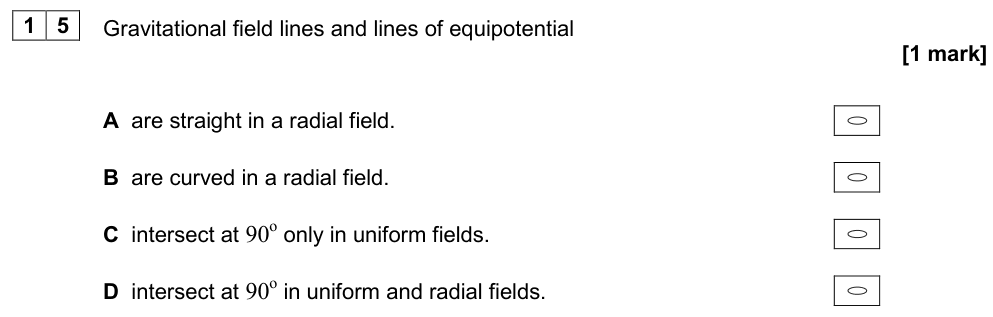
- Equipotentials are always perpendicular to field lines.
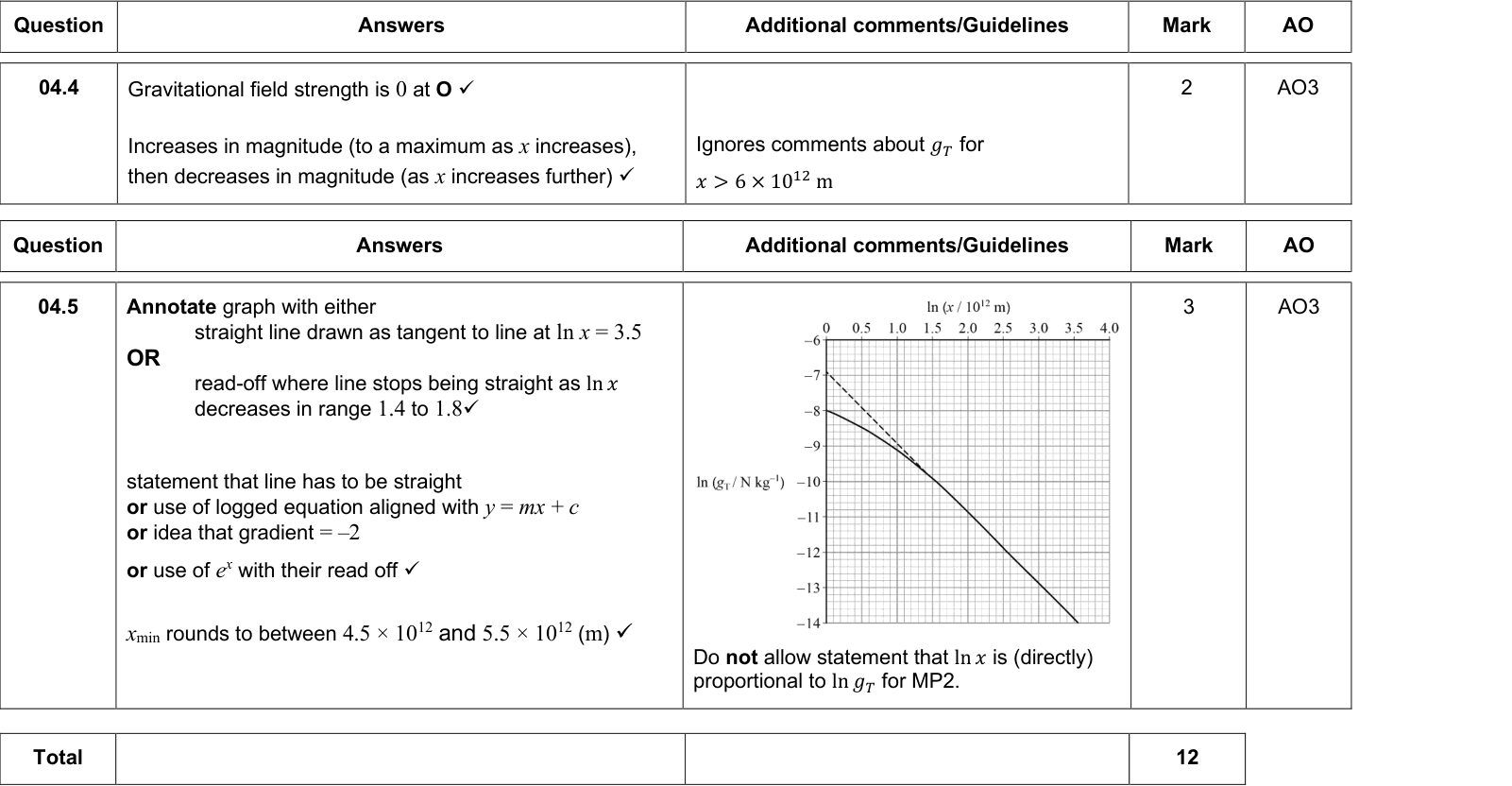
- Around a planet they are concentric spheres. Equal steps of potential are spaced further apart further from the planet, because the field is weaker there.
- In a uniform field they are equally spaced parallel planes (horizontal near the Earth's surface).
Graphs of g and V against r
Linking g and V
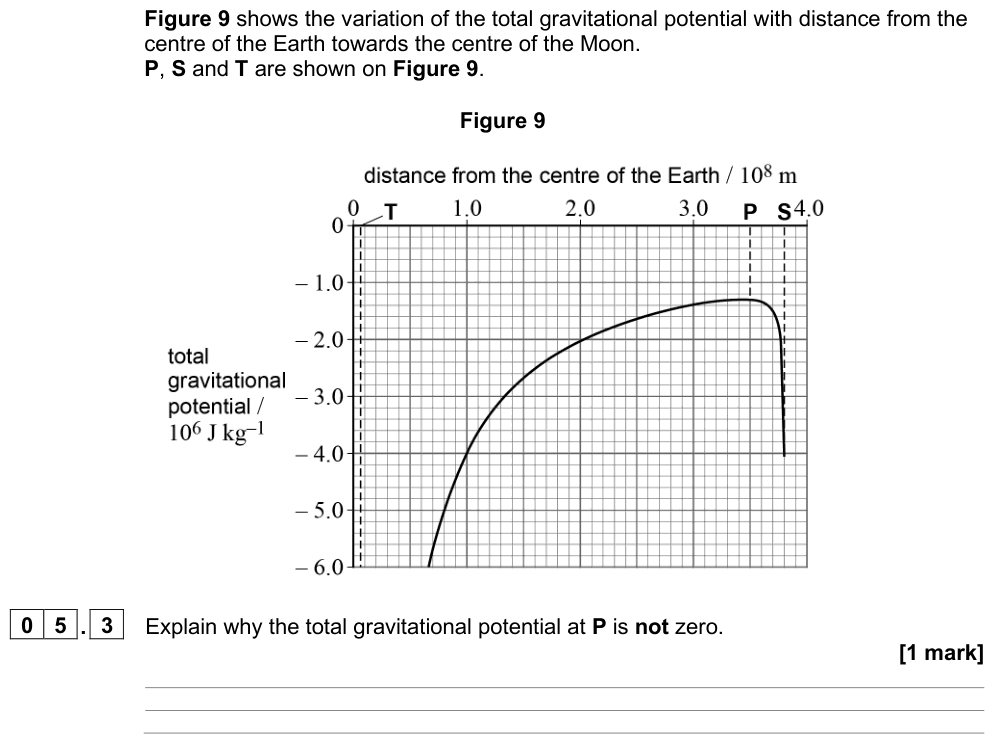
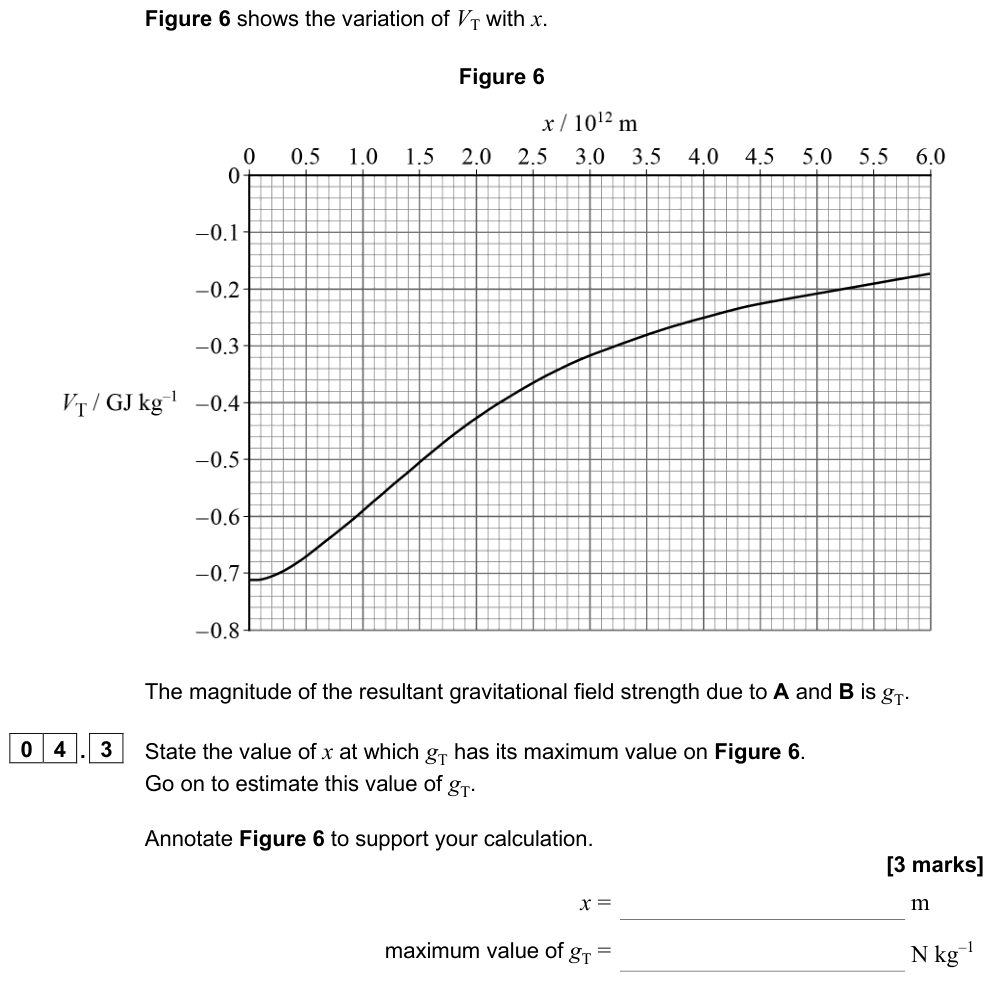
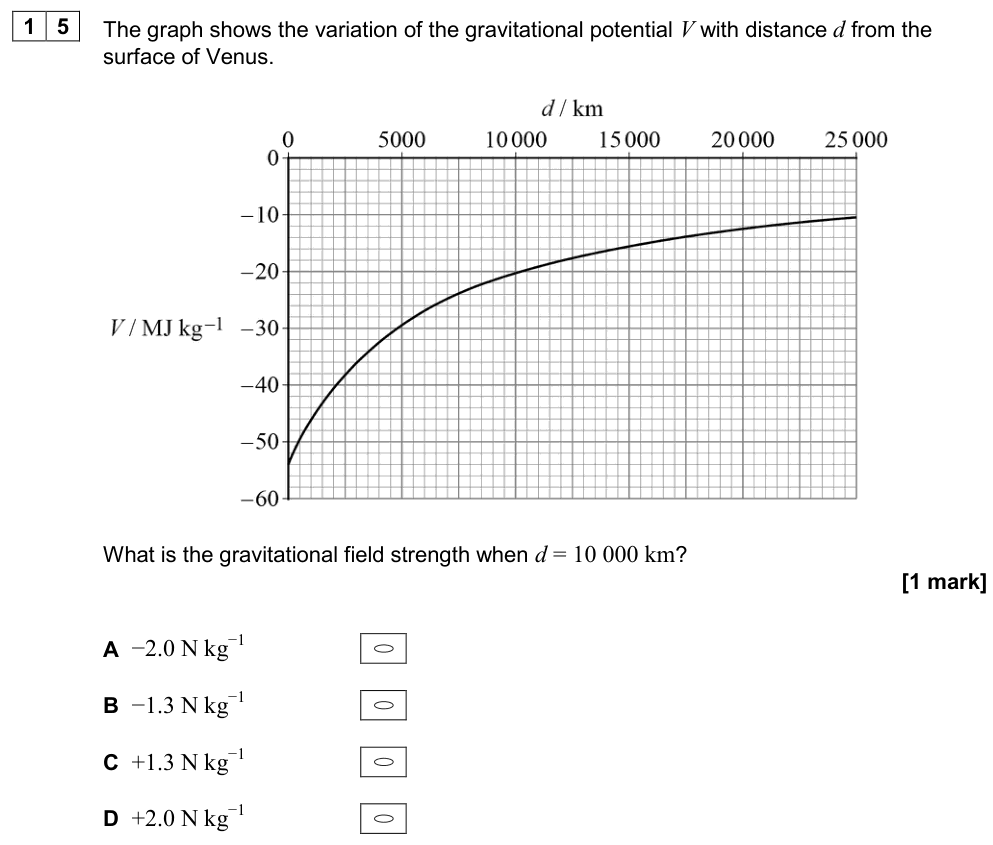
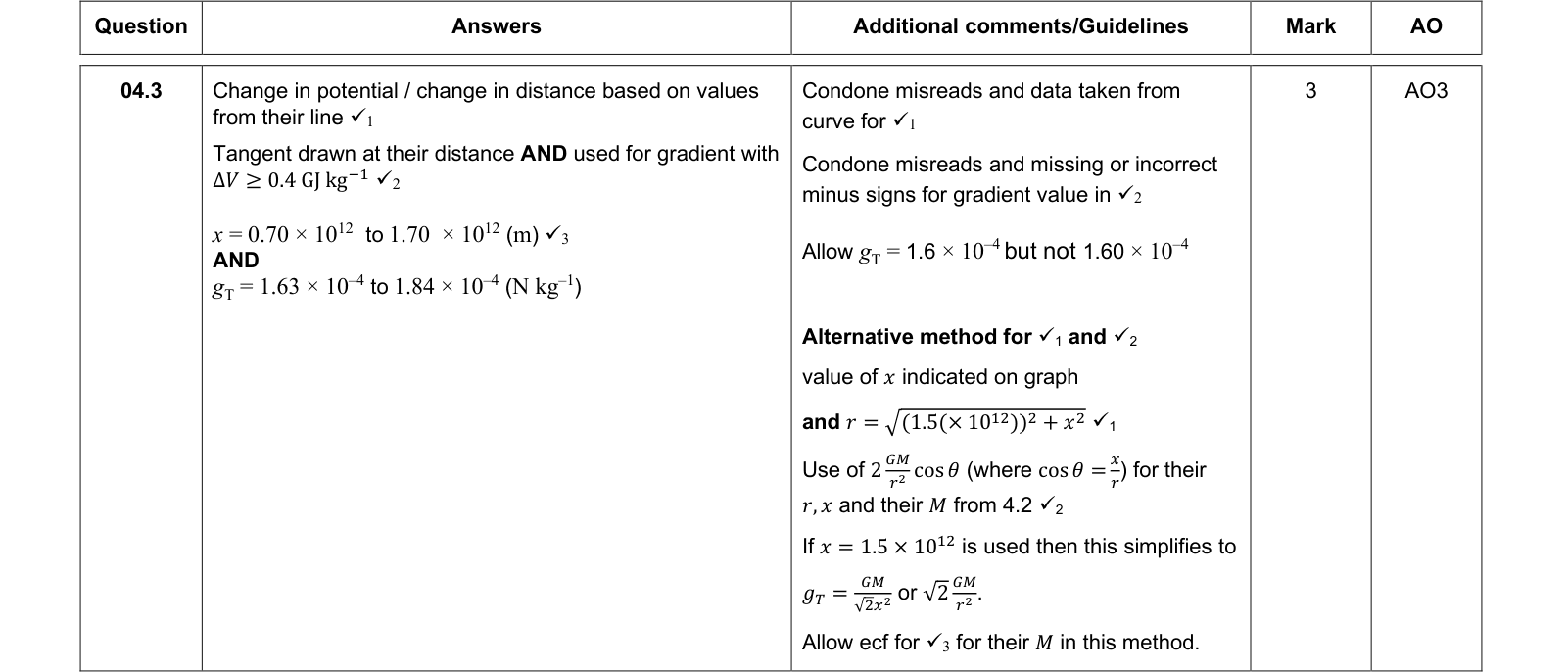
$$g = -\frac{\Delta V}{\Delta r}$$
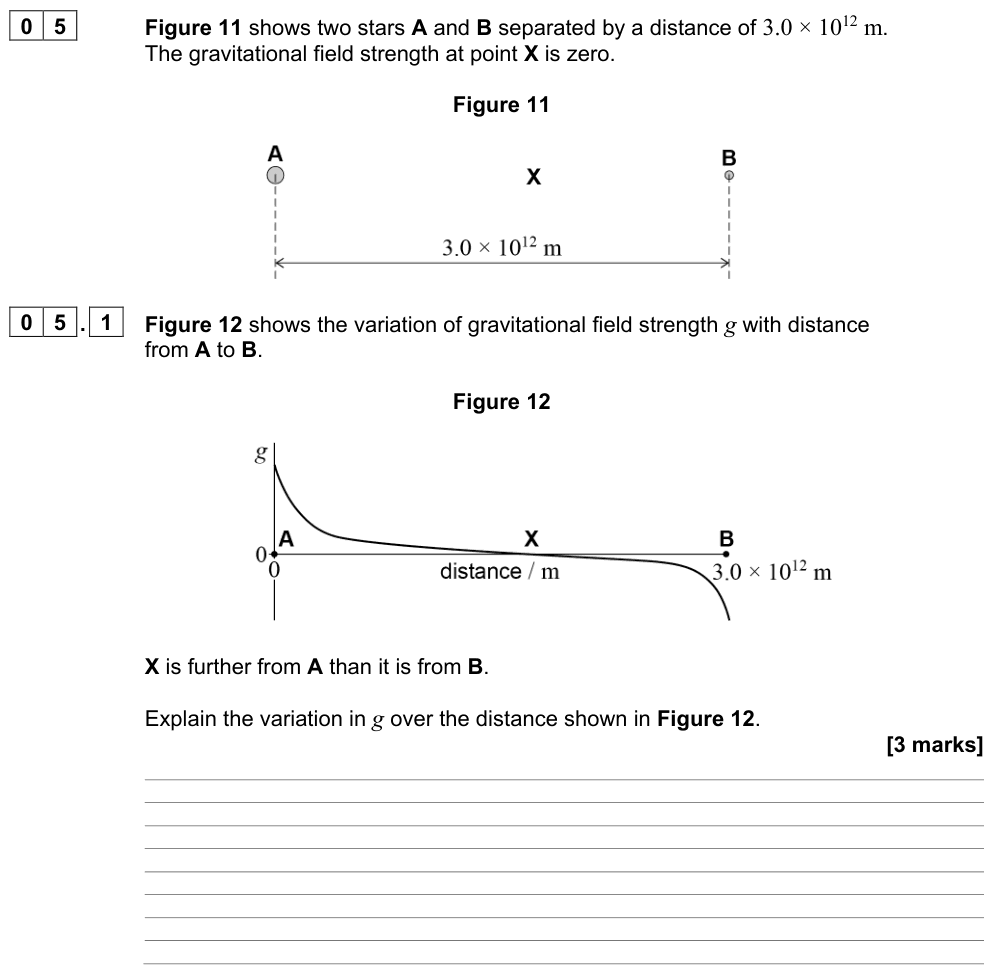
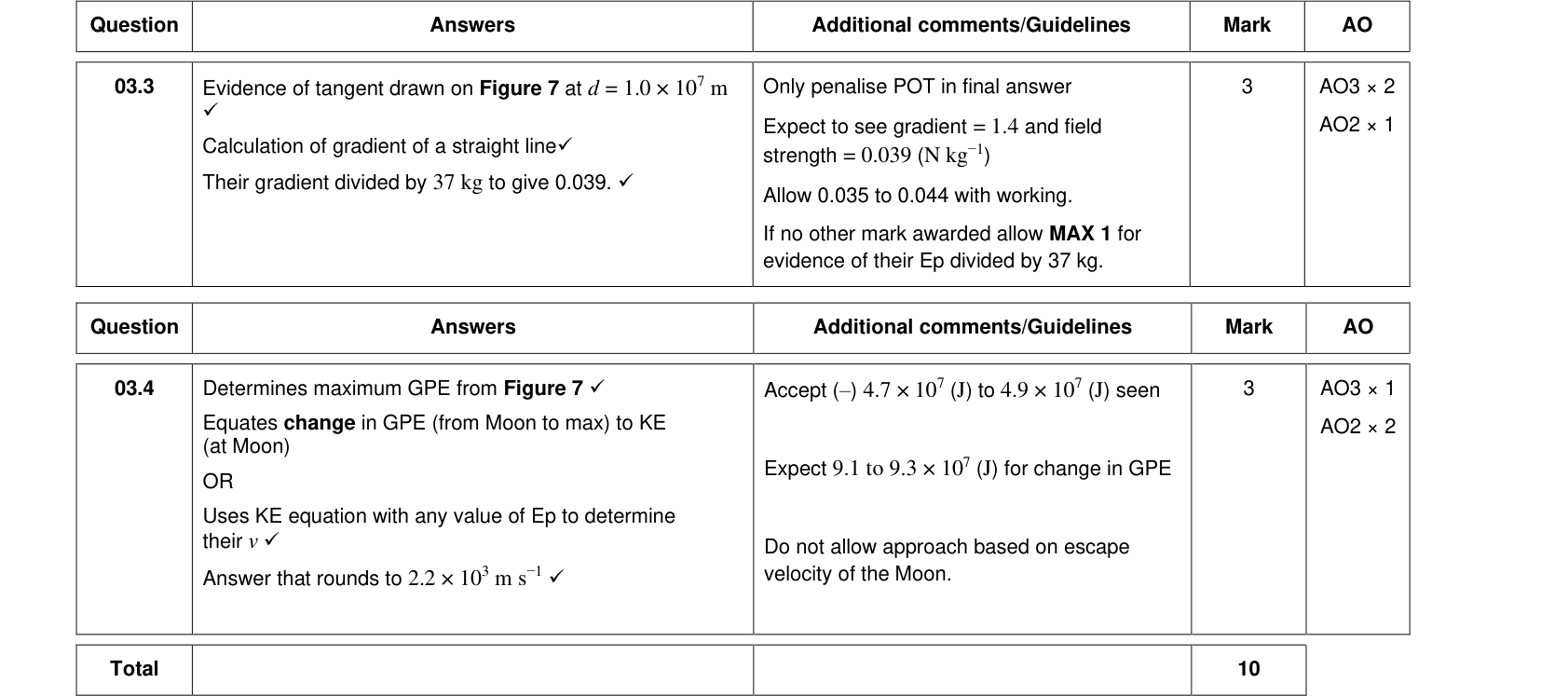
The field strength is the negative of the potential gradient: on a graph of $V$ against $r$, $g$ is minus the gradient of the tangent. The minus sign shows that the field points towards decreasing potential (towards the planet).
Also: the area under a graph of $g$ against $r$ between two distances equals the potential difference $\Delta V$ between them.
Worked example: using a V–r graph
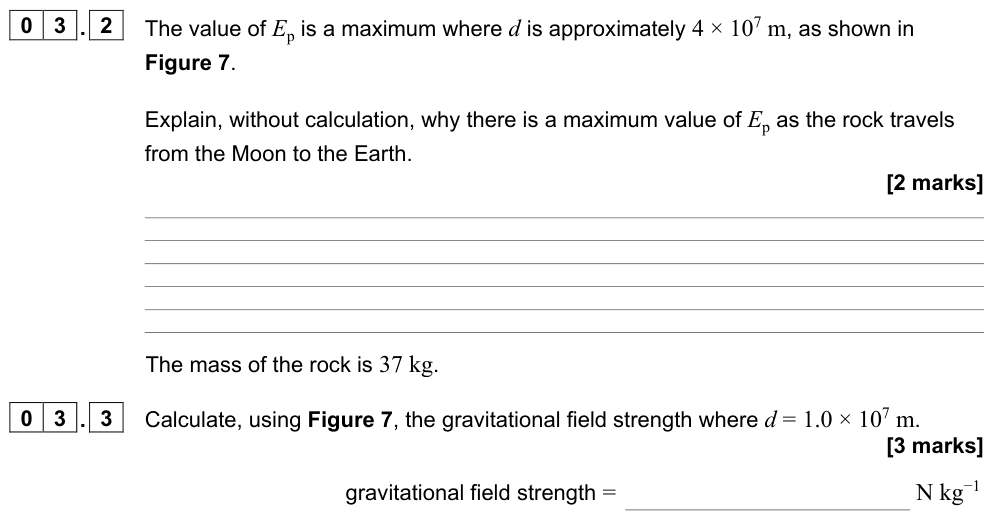
On a $V$–$r$ graph, a tangent at $r = 1.0 \times 10^{7}$ m has a gradient of $4.0\ \text{J kg}^{-1}\ \text{m}^{-1}$ (positive, since $V$ rises towards zero). So $g = 4.0\ \text{N kg}^{-1}$ towards the planet.
Escape velocity
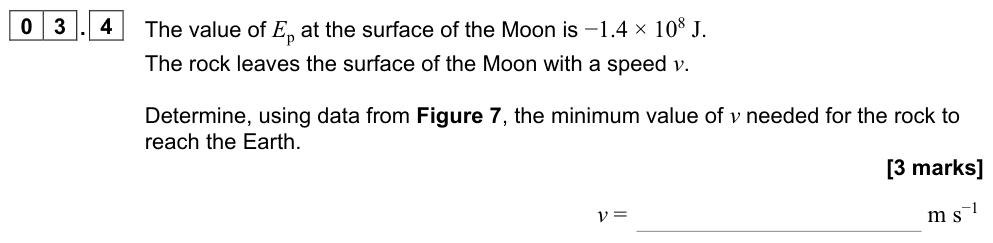
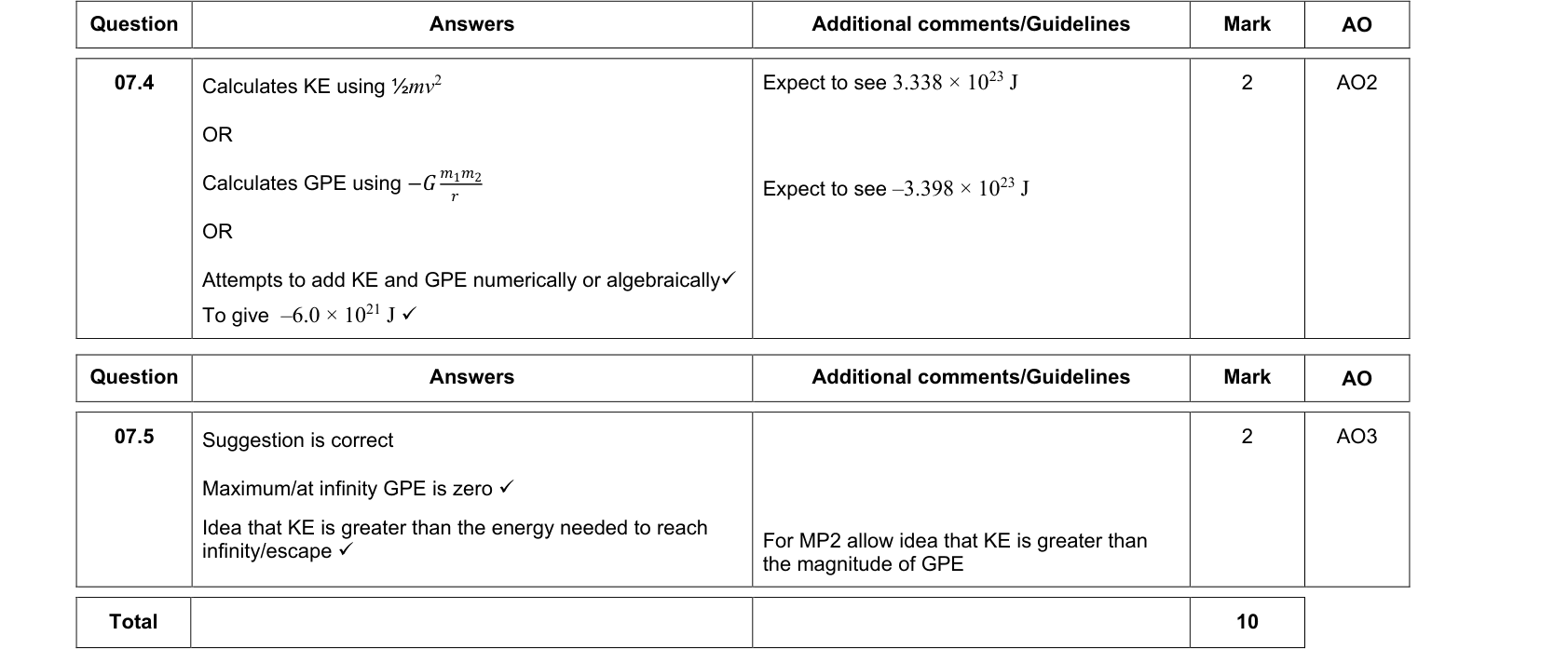
To escape completely from a planet's gravitational field, an object must reach infinity (where $E_p = 0$) with at least zero kinetic energy. The minimum launch kinetic energy must therefore equal the energy needed to go from the surface to infinity:
$$\tfrac12 mv_{\text{esc}}^2 = \frac{GMm}{R} \quad\Rightarrow\quad v_{\text{esc}} = \sqrt{\frac{2GM}{R}} = \sqrt{2g_0R}$$
For the Earth, $v_{\text{esc}} = 11.2\ \text{km s}^{-1}$. It does not depend on the mass of the object (air resistance ignored).
Summary
- Potential $V$: work done per unit mass bringing a mass from infinity; zero at infinity; always negative; $V = -GM/r$.
- $\Delta W = m\Delta V$; $E_p = -GMm/r$.
- Equipotentials: same $V$; no work done moving along them; perpendicular to field lines.
- $g = -\Delta V/\Delta r$; area under $g$–$r$ = $\Delta V$.
- Escape velocity $v = \sqrt{2GM/R}$.