Angular measure: radians
Circular motion uses angles in radians. One radian is the angle subtended at the centre of a circle by an arc equal in length to the radius:
$$\theta\ (\text{rad}) = \frac{\text{arc length } s}{\text{radius } r} \qquad 2\pi\ \text{rad} = 360^\circ$$
Angular speed
Angular speed
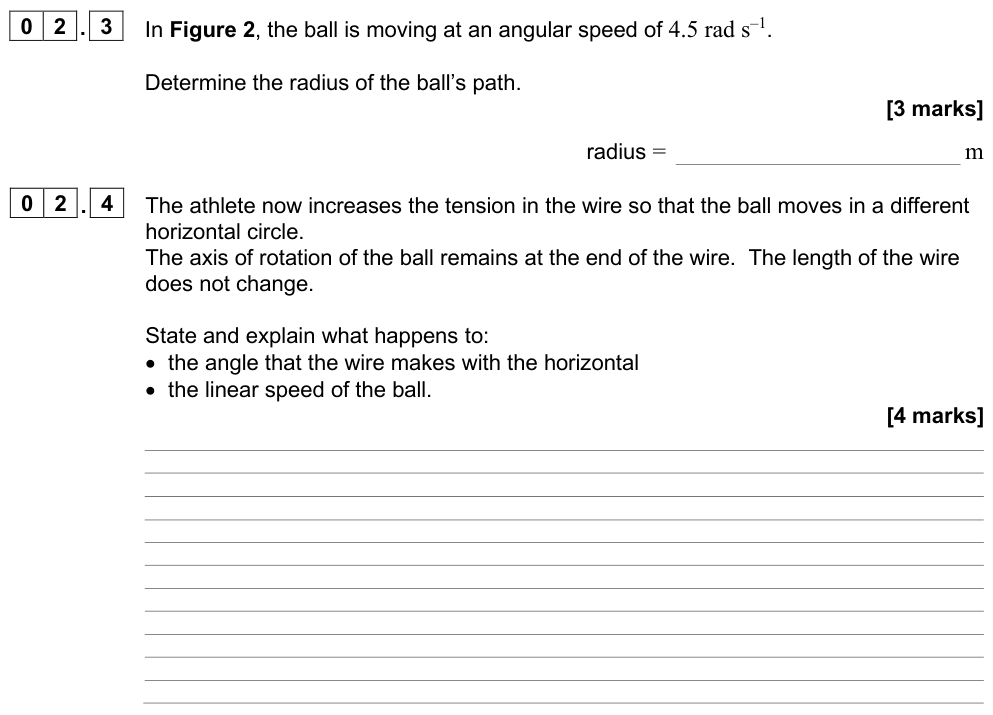
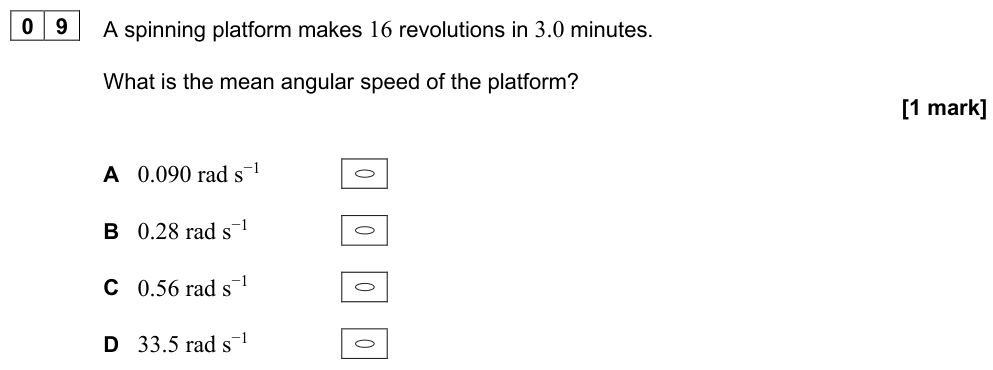
Angular speed $\omega$ is the angle turned through per unit time (the rate of change of angle):
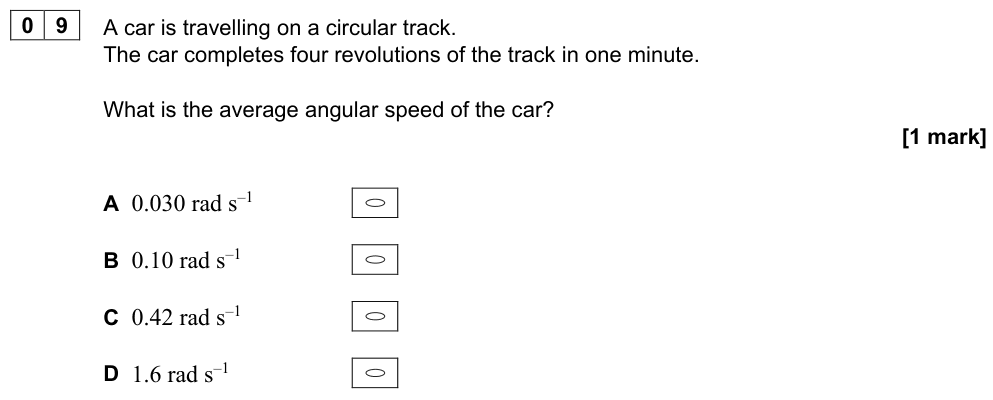
$$\omega = \frac{\Delta\theta}{\Delta t} = \frac{2\pi}{T} = 2\pi f \qquad \text{unit: rad s}^{-1}$$
$T$ = time for one revolution (period), $f$ = number of revolutions per second.
For an object moving in a circle of radius $r$ at speed $v$ (the linear or tangential speed):
$$v = \omega r$$
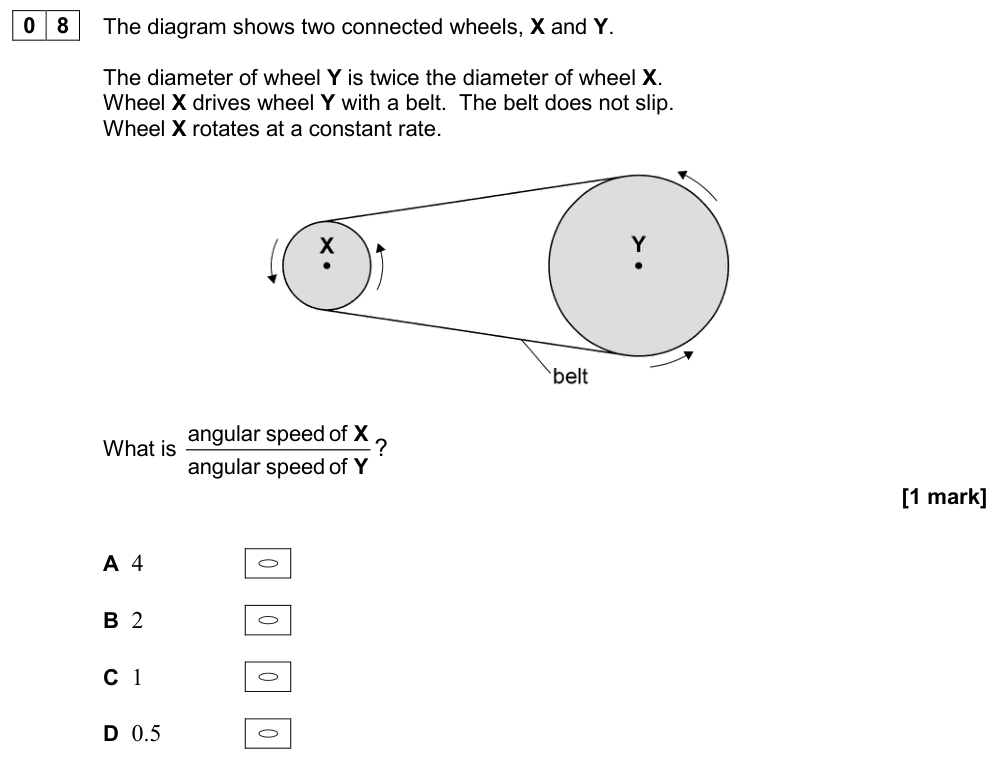
Every point on a rotating rigid object has the same angular speed, but points further from the axis move faster.
Worked example: angular speed of the Earth
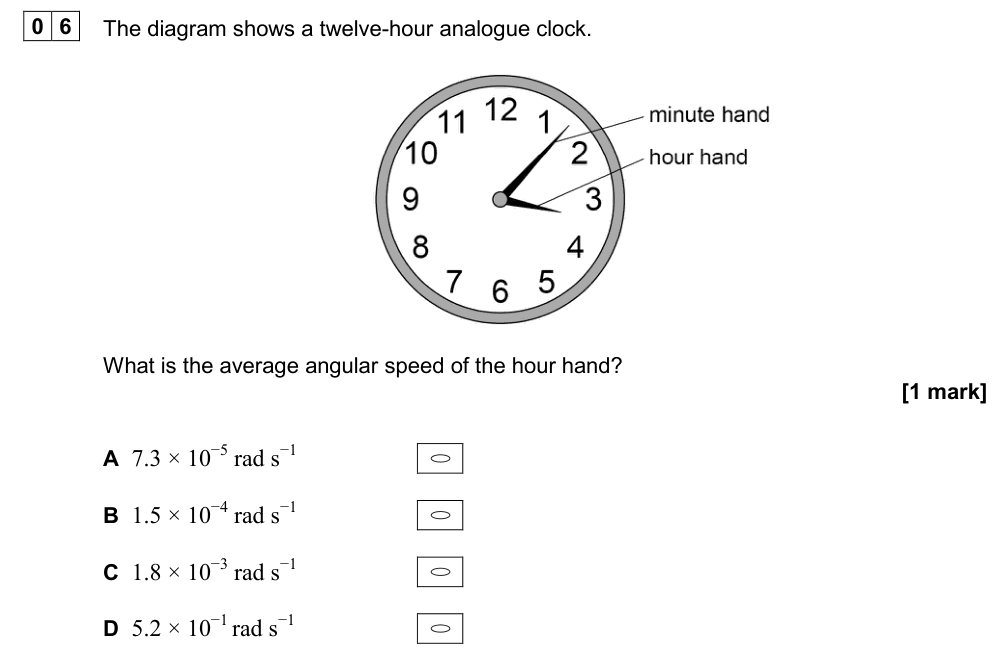
The Earth turns once in 24 hours: $\omega = \dfrac{2\pi}{24 \times 3600} = 7.27 \times 10^{-5}\ \text{rad s}^{-1}$.
A point on the equator ($r = 6.37 \times 10^{6}$ m) moves at $v = \omega r = 463\ \text{m s}^{-1}$.
Exam tip: rpm
Convert revolutions per minute to rad s⁻¹: $\omega = \text{rpm} \times \dfrac{2\pi}{60}$. For example 33 rpm = 3.46 rad s⁻¹.
Centripetal acceleration
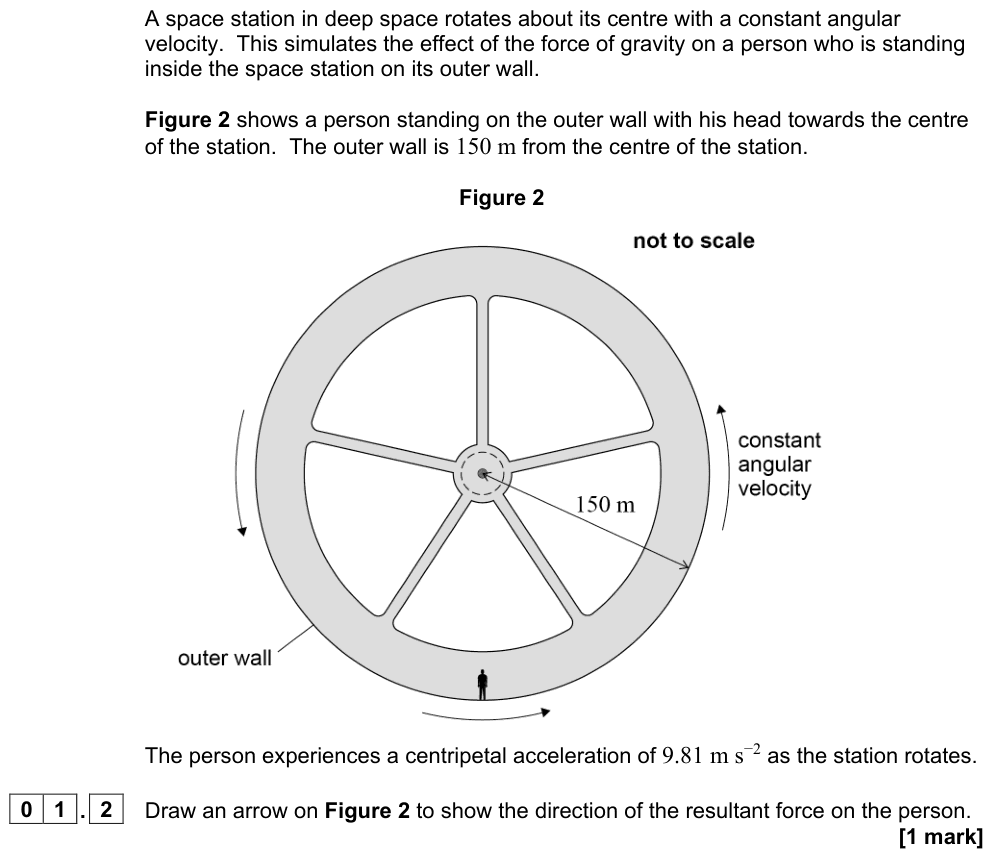
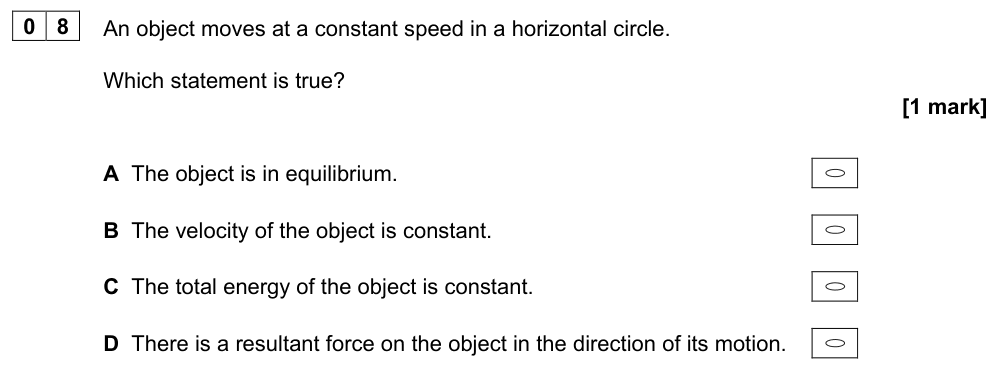
An object moving in a circle at constant speed has a changing velocity, because its direction is always changing. So it is accelerating, even though its speed is constant.
Centripetal acceleration
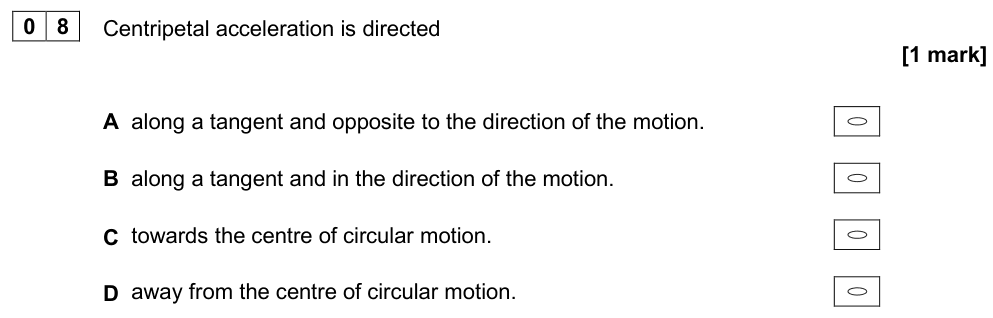
The acceleration is directed towards the centre of the circle (centripetal) and has magnitude
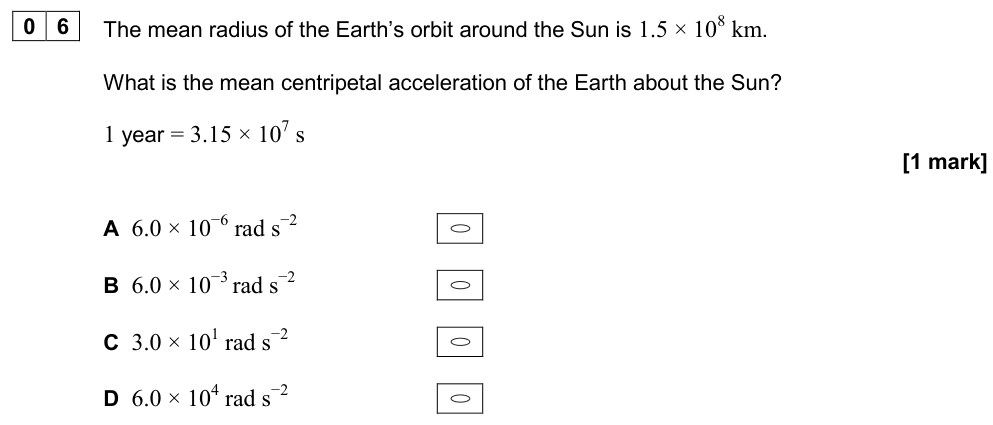
$$a = \frac{v^2}{r} = \omega^2 r$$
(The derivation of $a = v^2/r$ will not be examined.)
Centripetal force
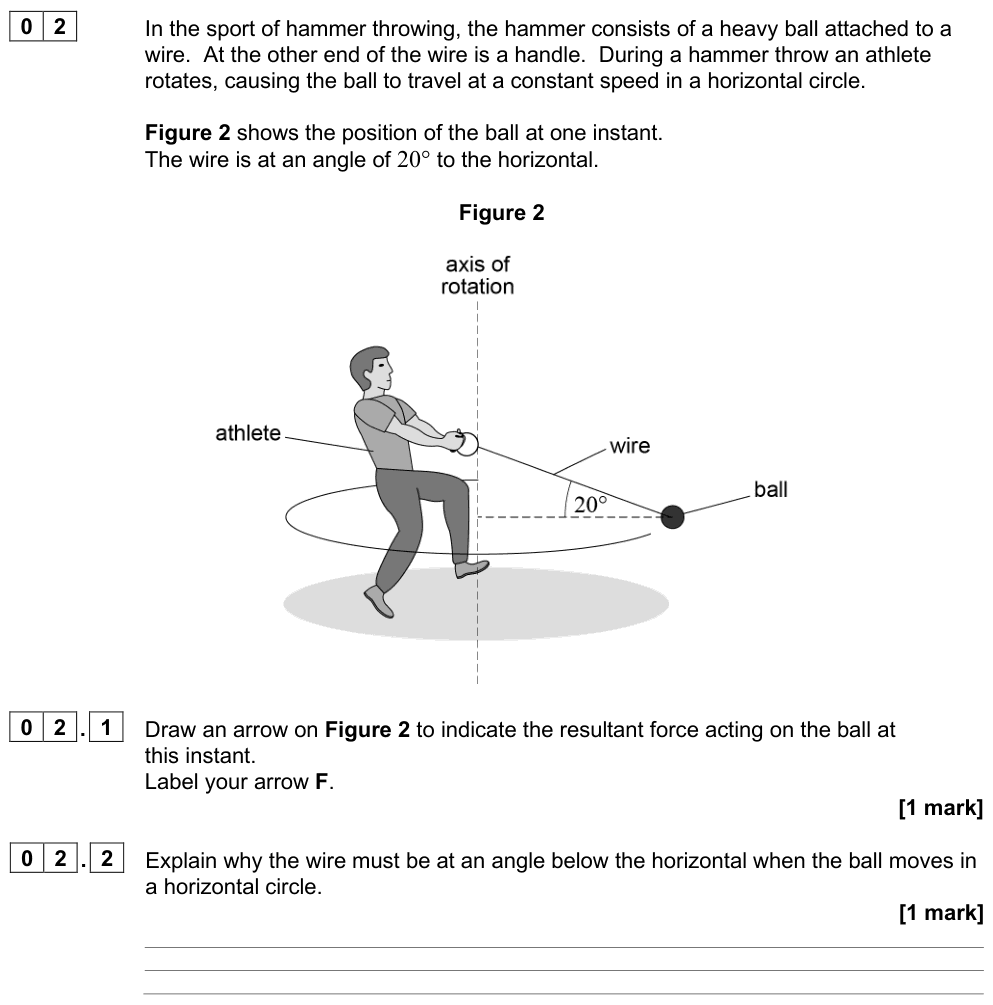
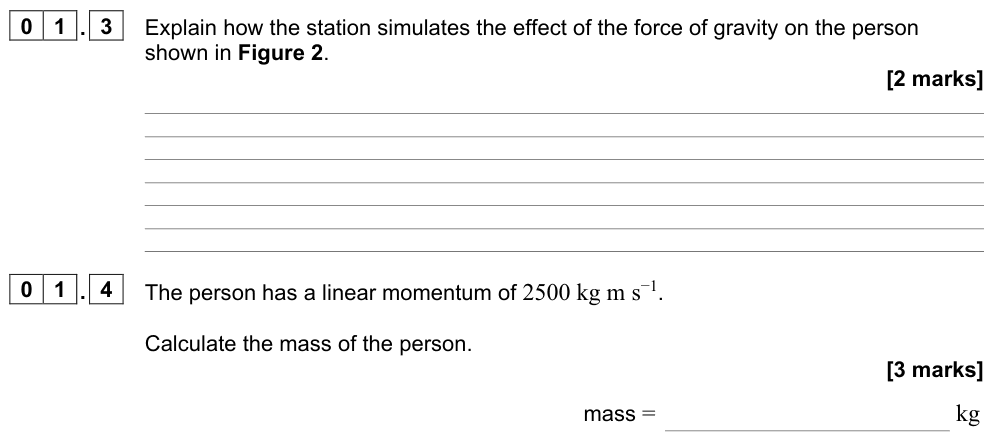
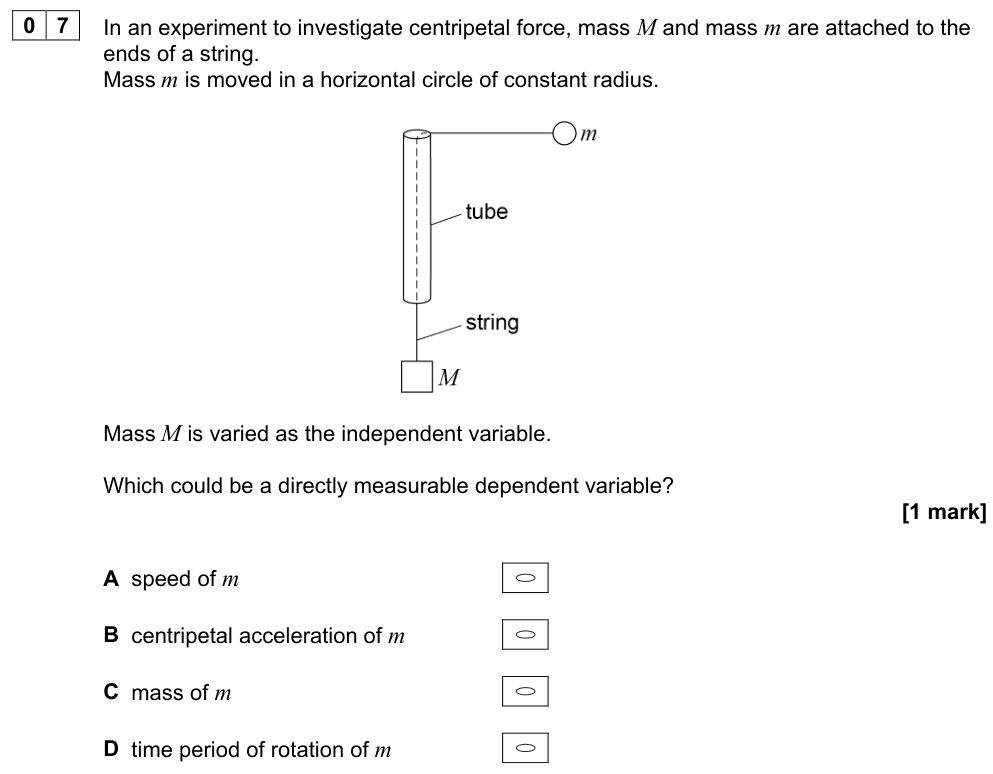
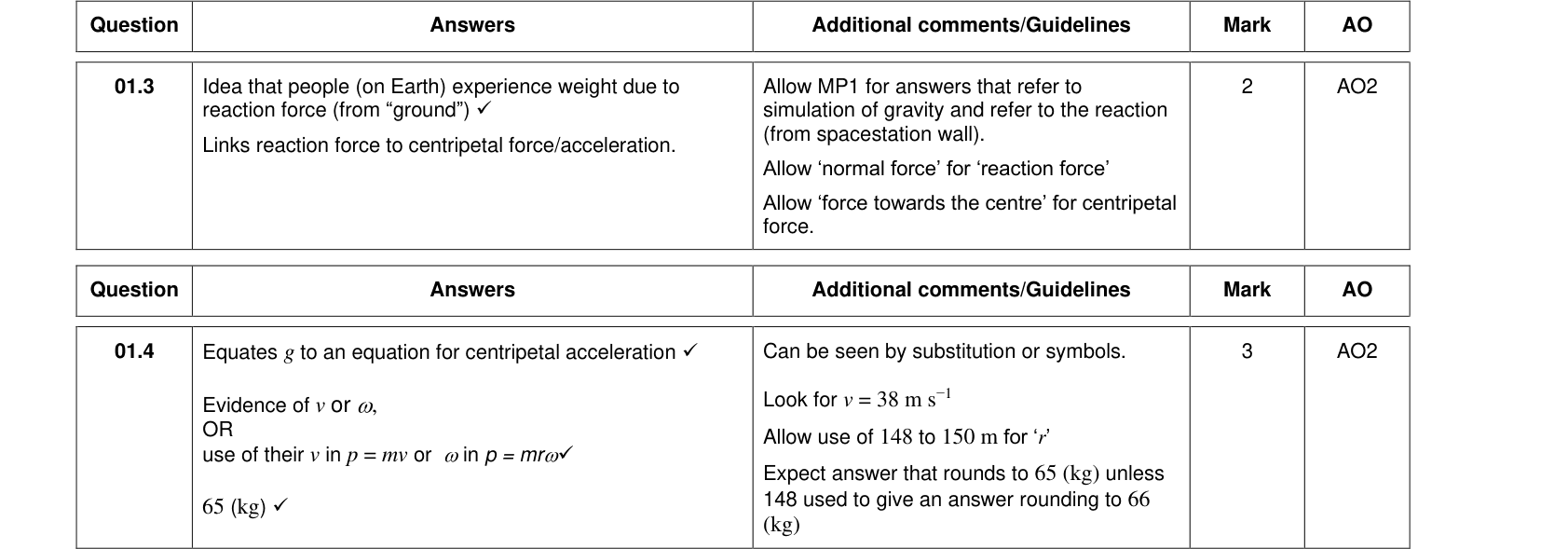
By Newton's second law, an acceleration towards the centre needs a resultant force towards the centre, called the centripetal force:
Centripetal force
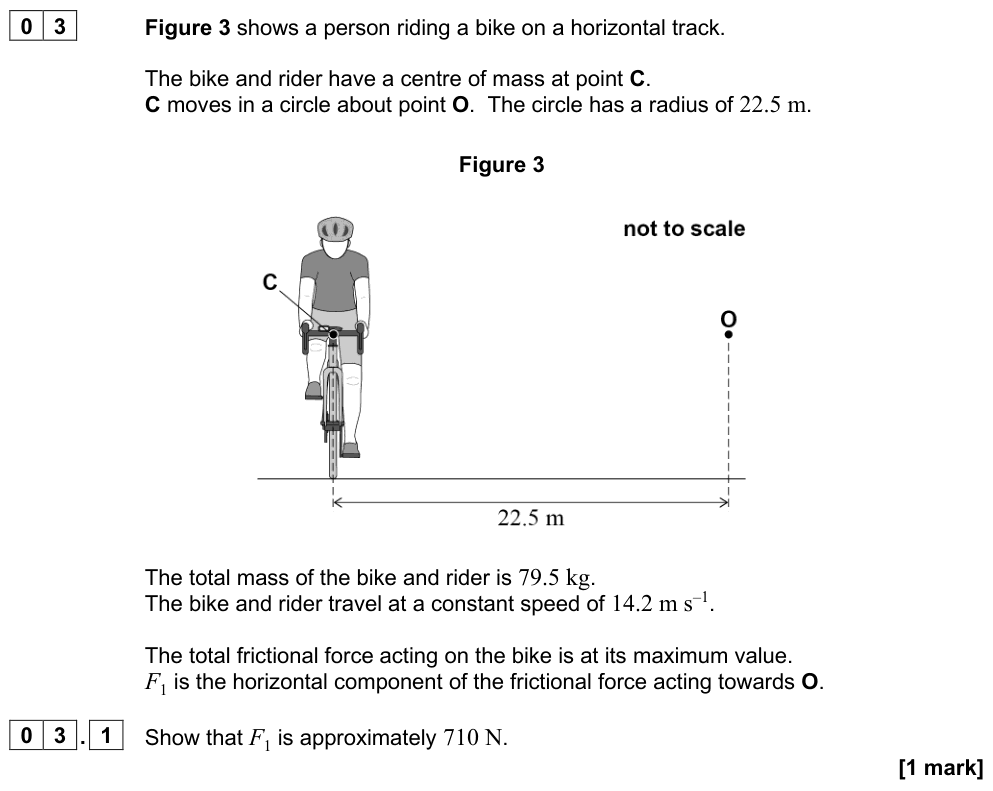
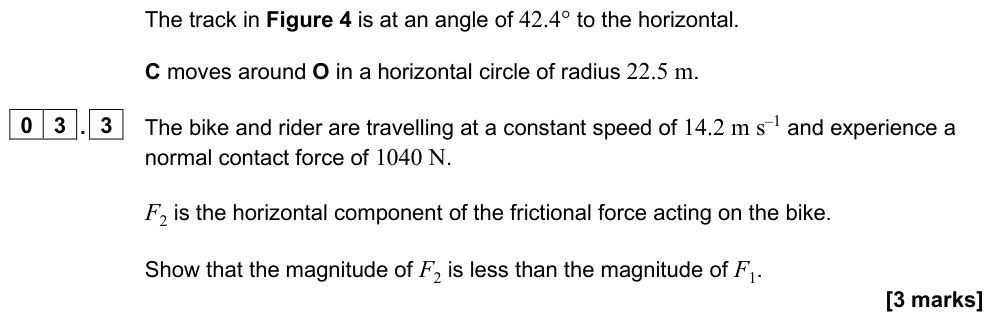
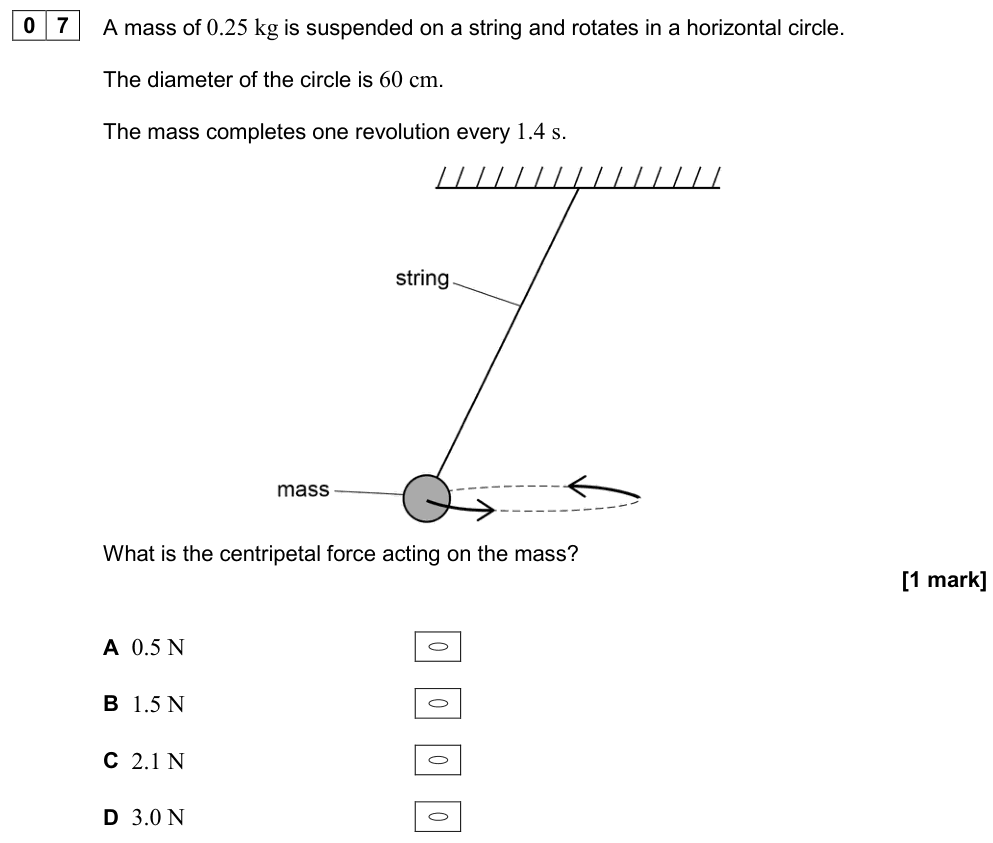
$$F = \frac{mv^2}{r} = m\omega^2 r$$
Common mistake
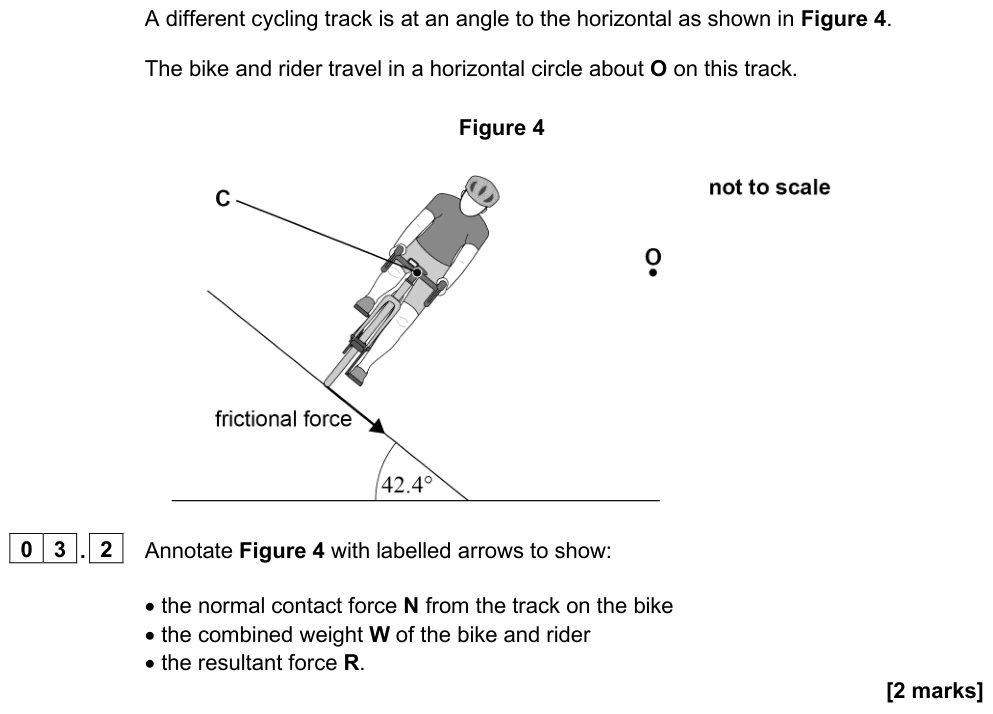
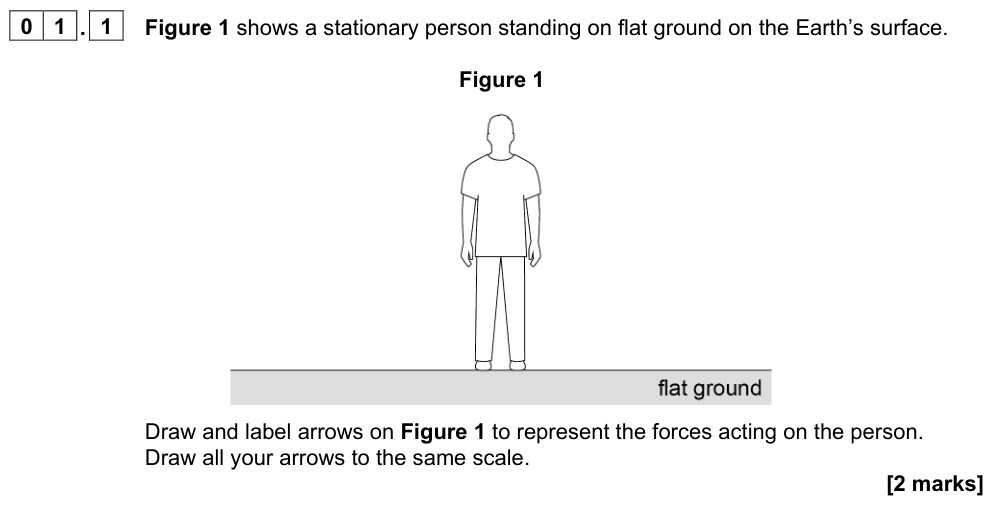
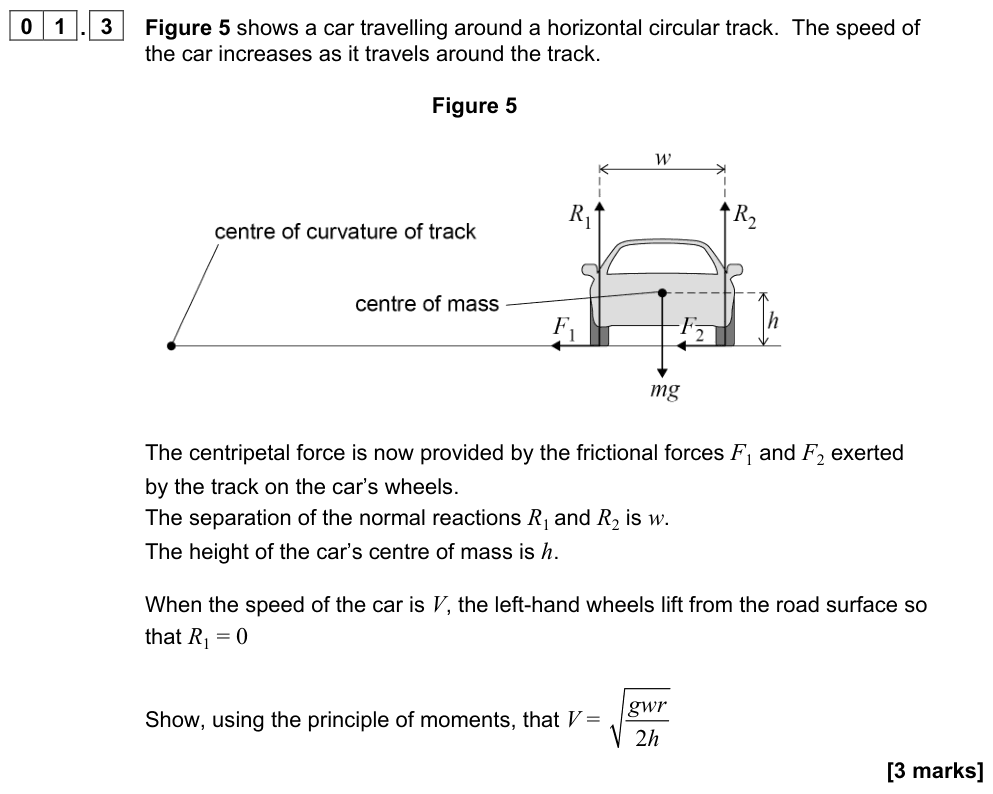
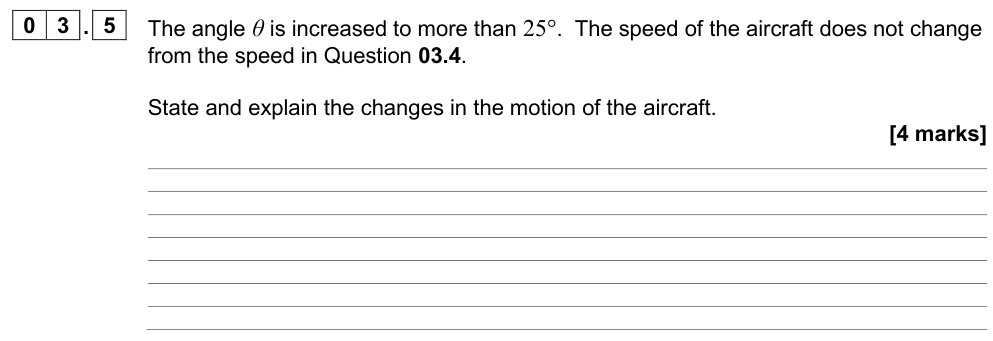
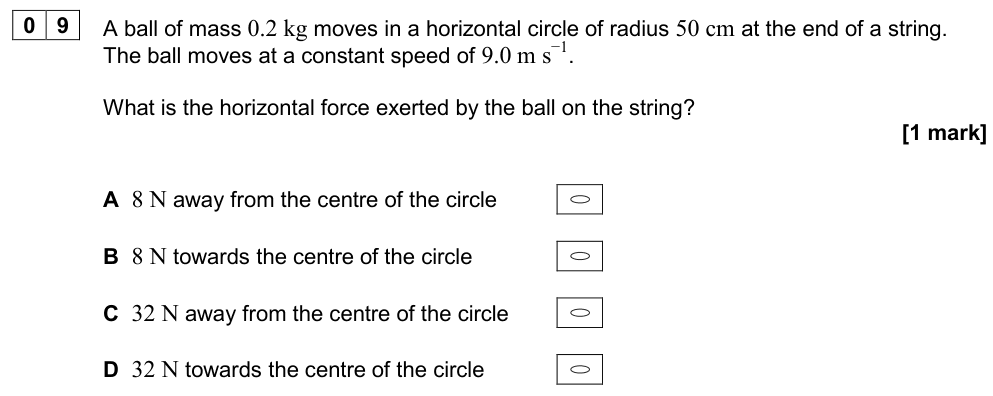
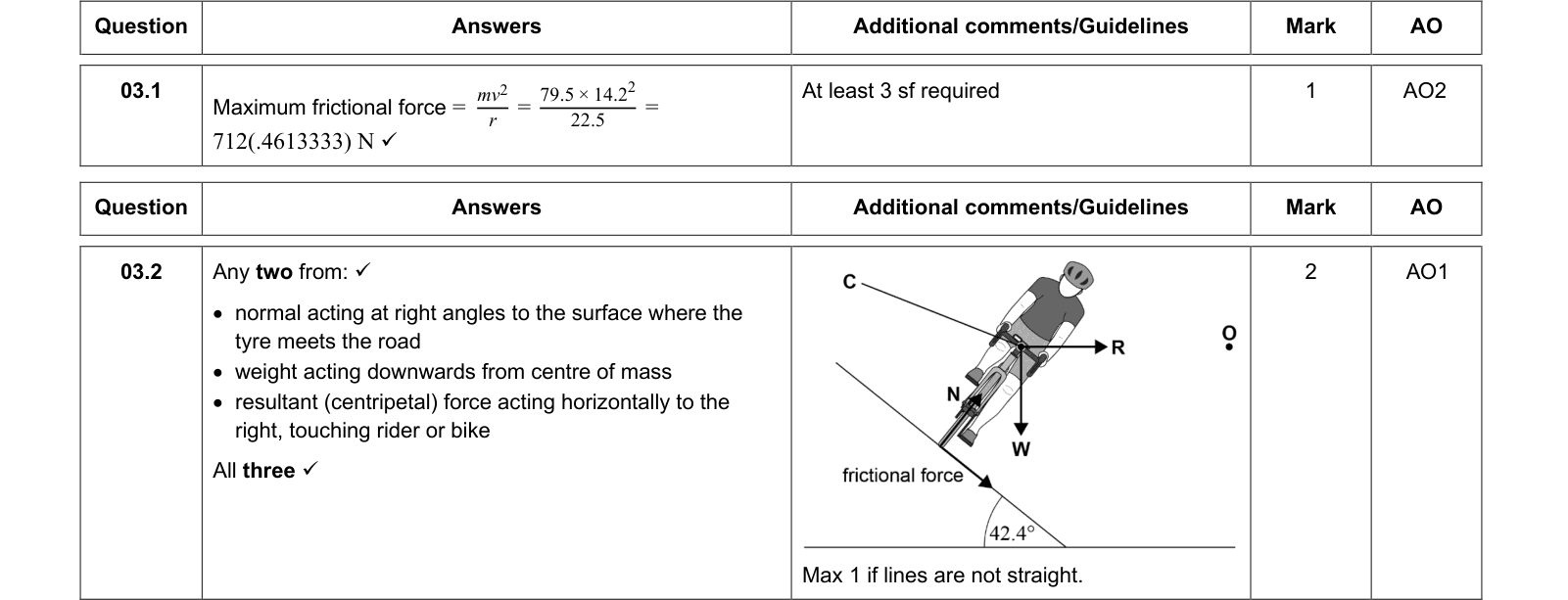
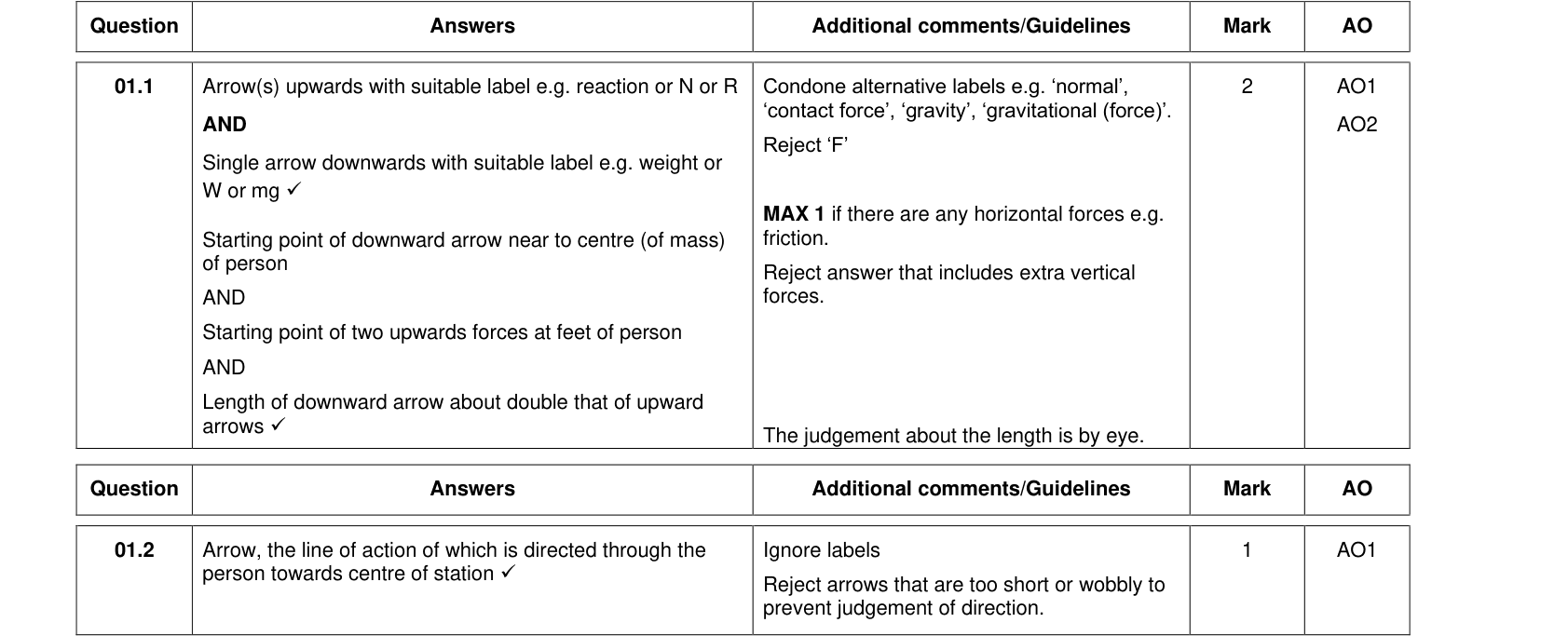
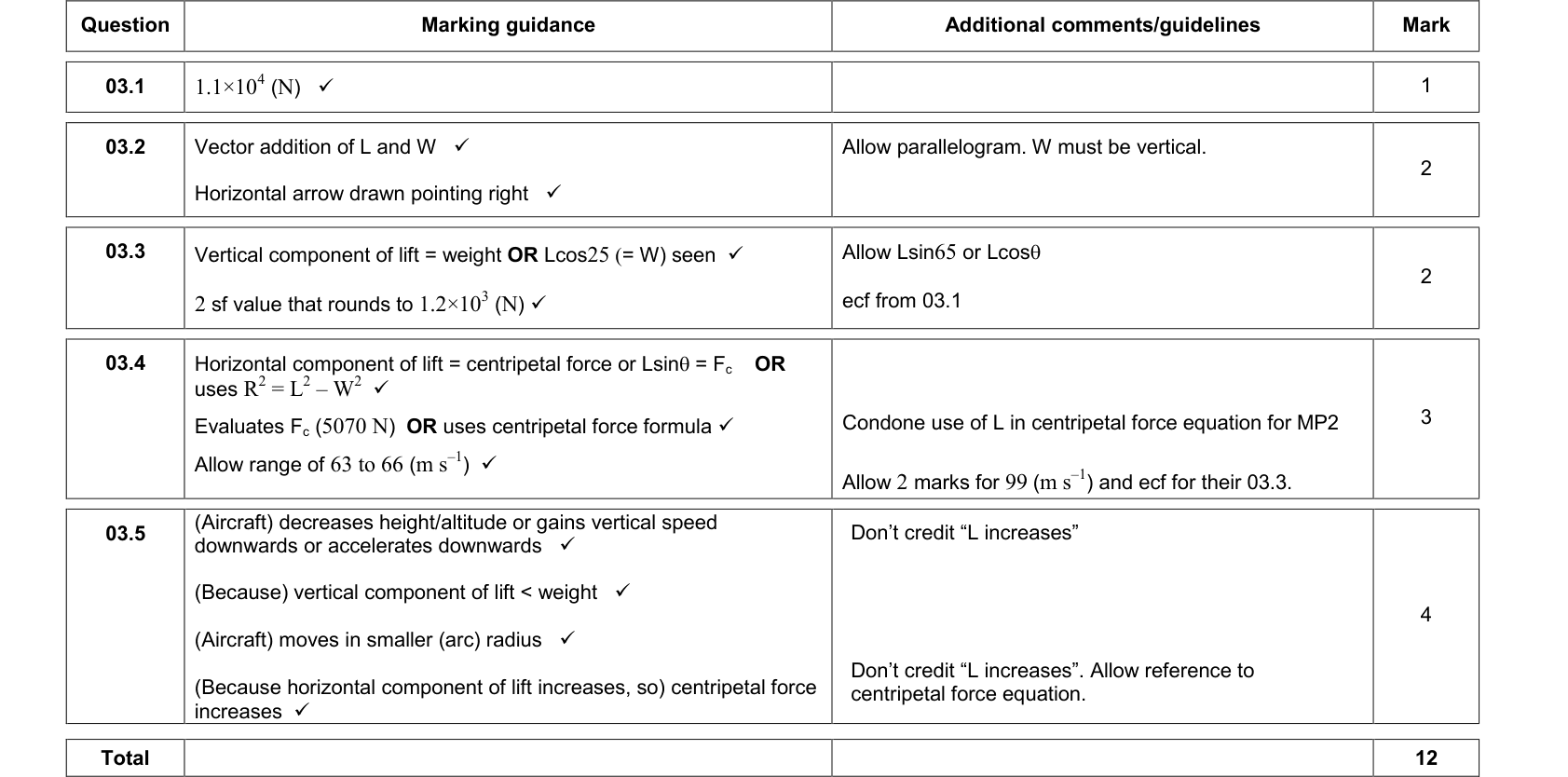
Centripetal force is not an extra force. It is the name for the resultant force towards the centre, which is provided by a real force such as tension (ball on a string), friction (car on a flat bend), gravity (planet, satellite), the normal reaction (wall of a spinning drum), or the magnetic force on a charged particle. Never draw "centripetal force" as an extra arrow on a free-body diagram.
The centripetal force is always perpendicular to the velocity, so it does no work: the kinetic energy and speed stay constant.
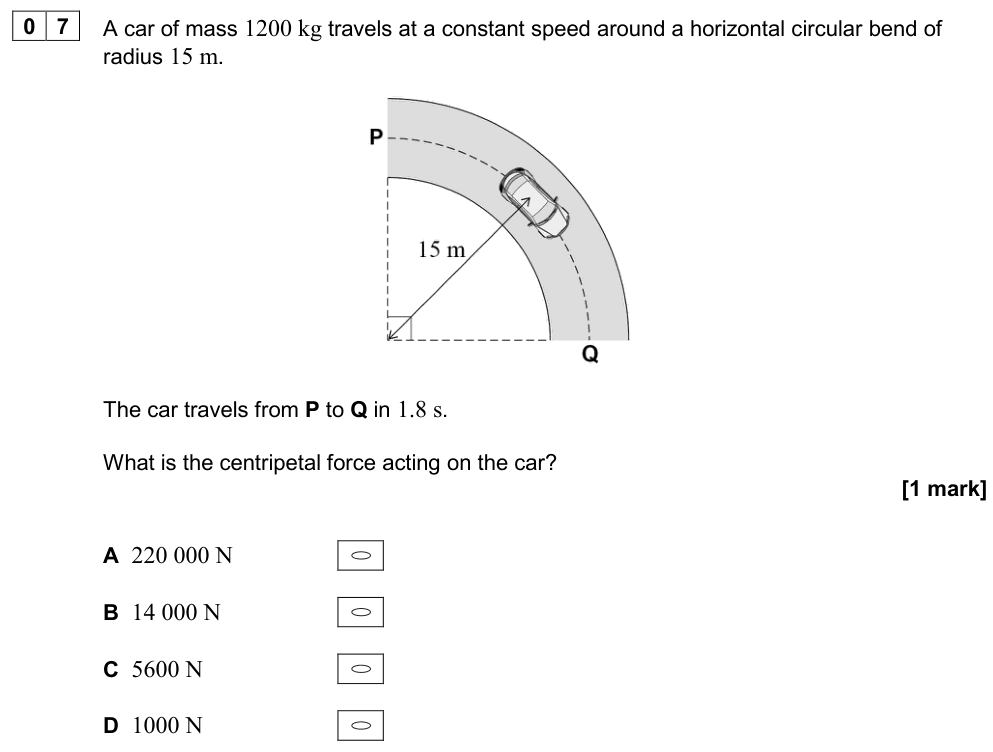
Worked example: car on a bend
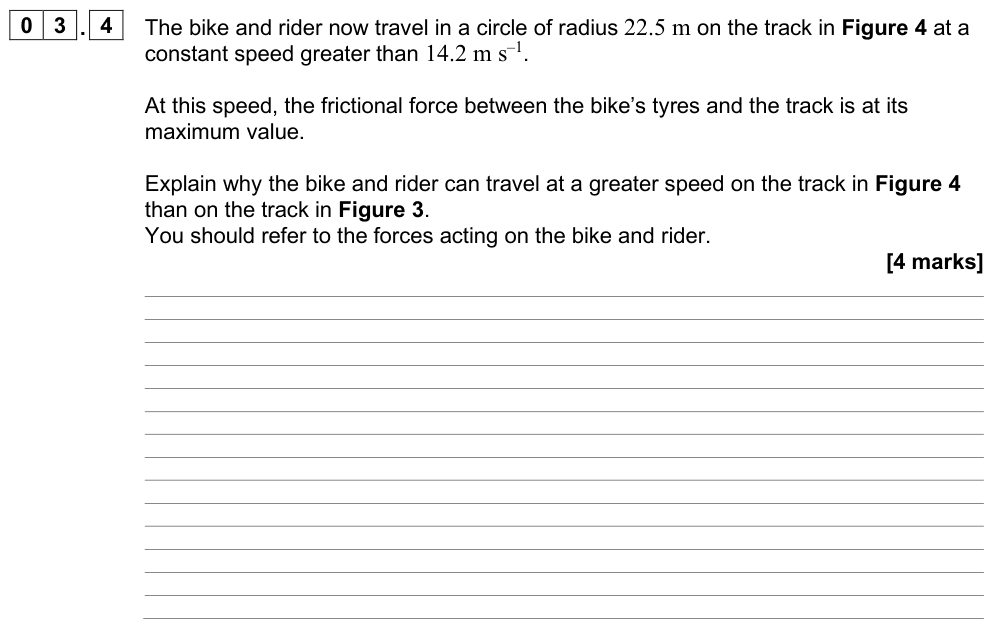
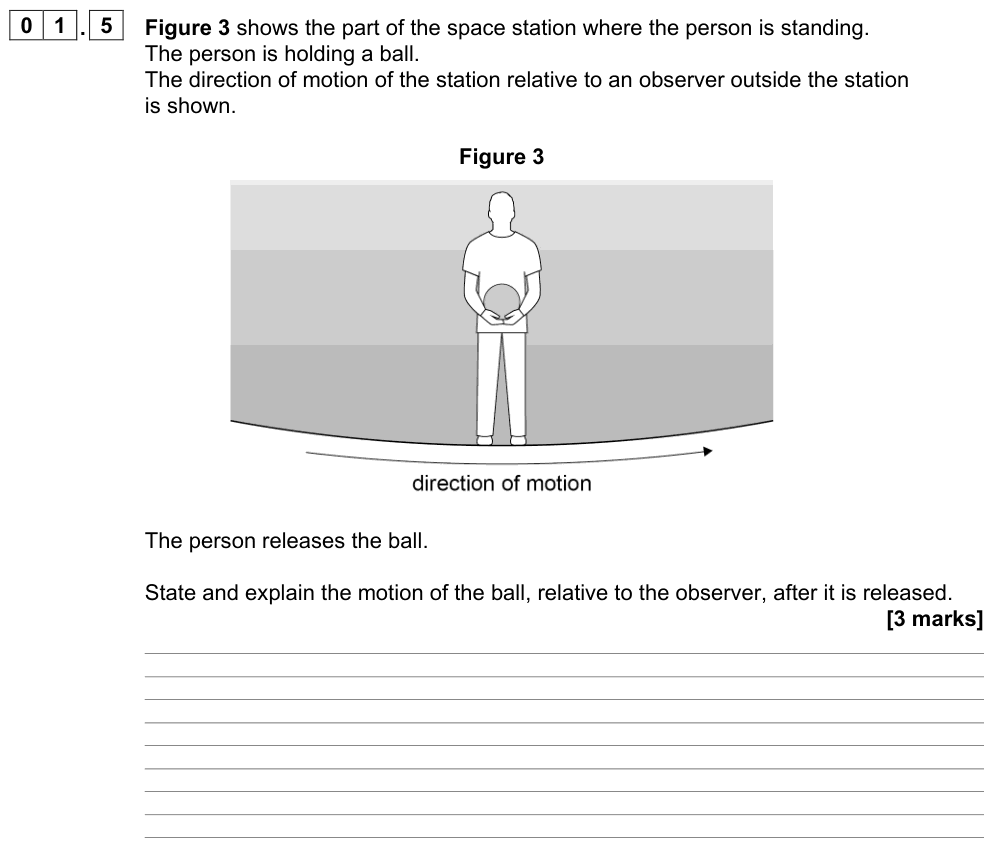
A 1200 kg car goes round a flat bend of radius 50 m at $15\ \text{m s}^{-1}$. Required friction $= \dfrac{mv^2}{r} = \dfrac{1200 \times 15^2}{50} = 5400\ \text{N}$. If the maximum friction is less than this (e.g. on ice), the car cannot follow the curve and skids outwards (in a straight line along the tangent).
Circular motion in a vertical circle
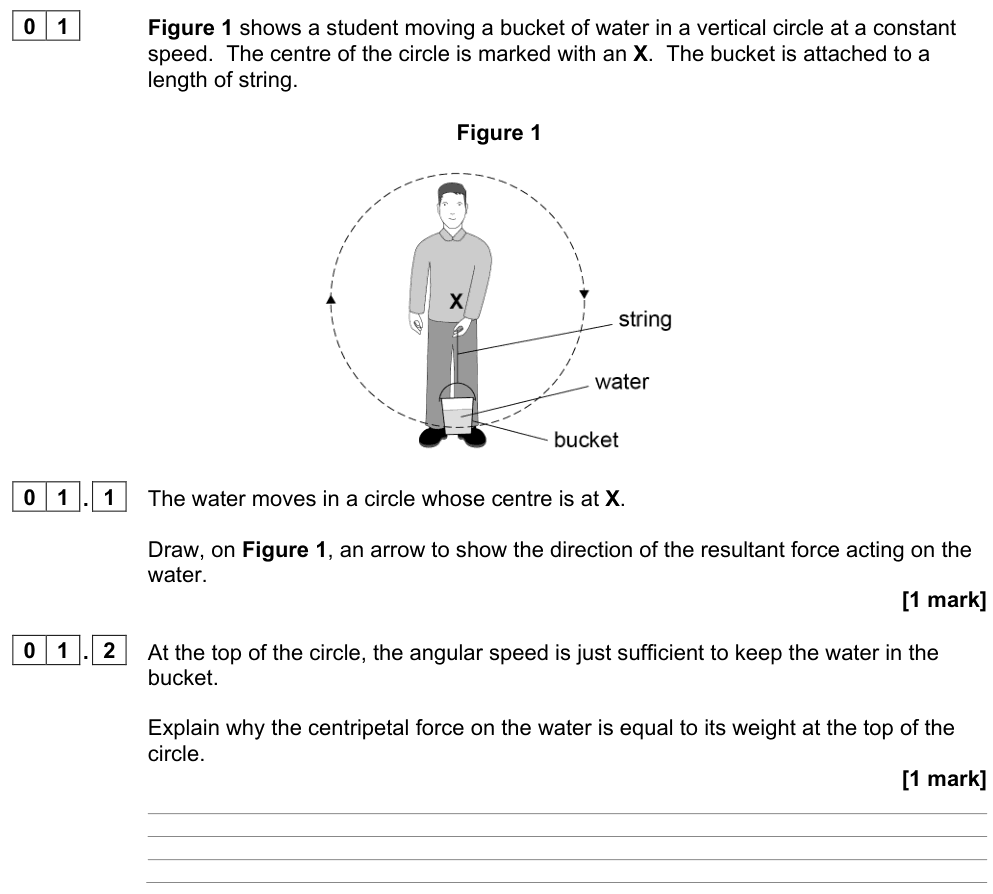
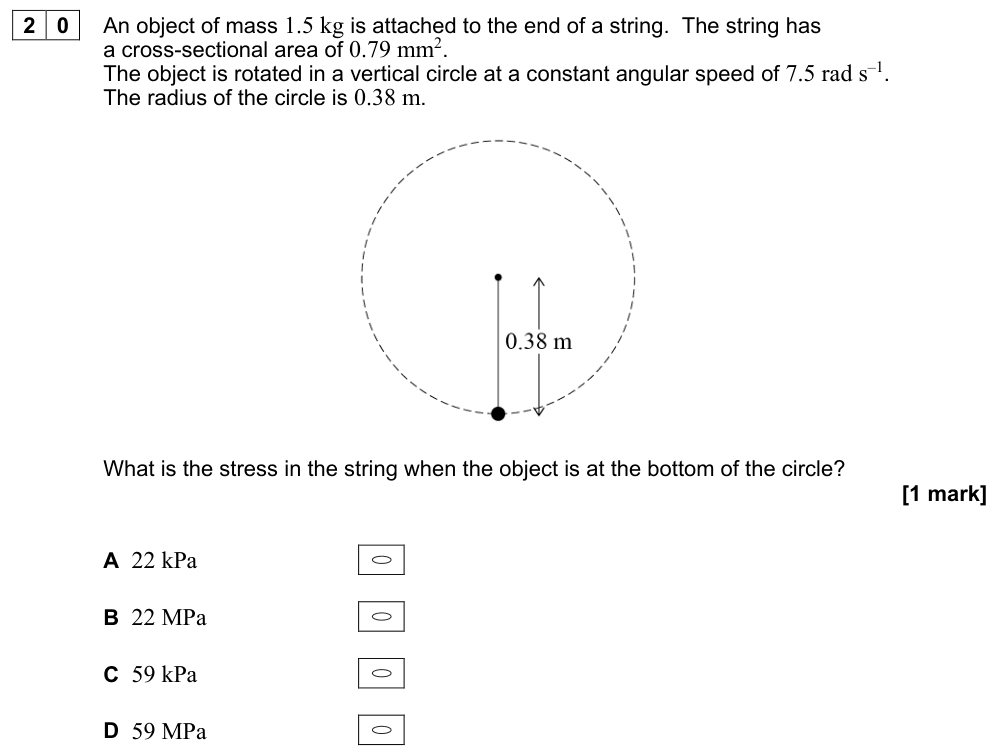
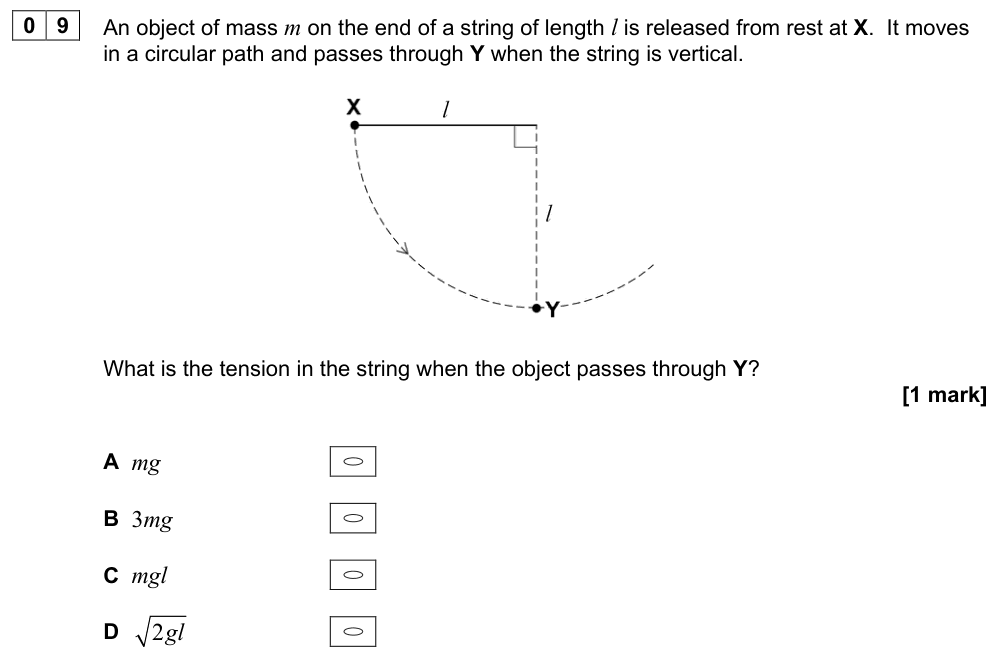
For a ball on a string (or a rollercoaster loop) moving in a vertical circle:
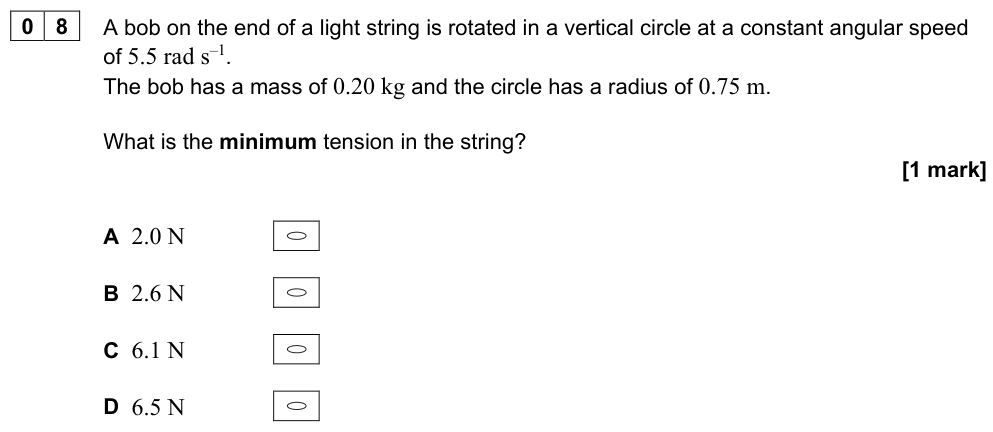
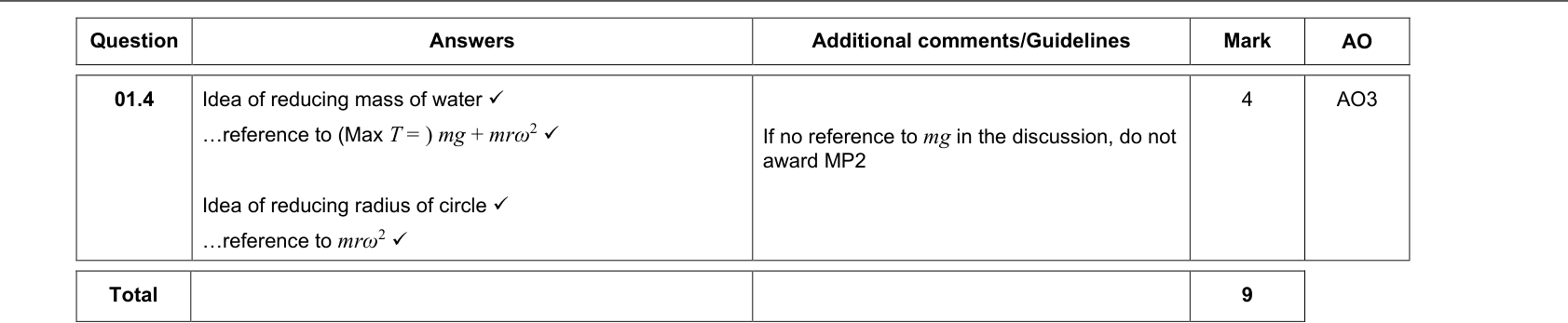
- At the top: weight and tension both act downwards (towards the centre): $$T + mg = \frac{mv^2}{r}$$
- At the bottom: tension acts up (towards the centre), weight acts down: $$T - mg = \frac{mv^2}{r}$$
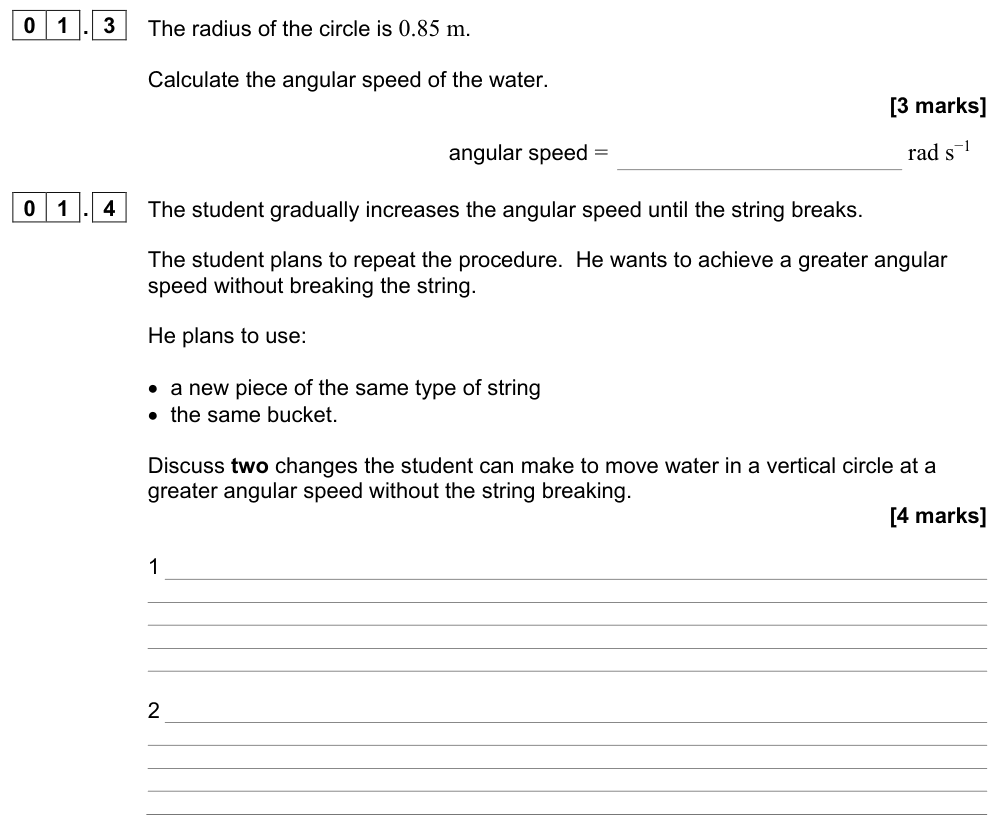
So the tension is greatest at the bottom: the string is most likely to break there. At the top, the string just stays taut when $T = 0$, which gives the minimum speed $v_{\min} = \sqrt{gr}$.
Worked example: bucket of water
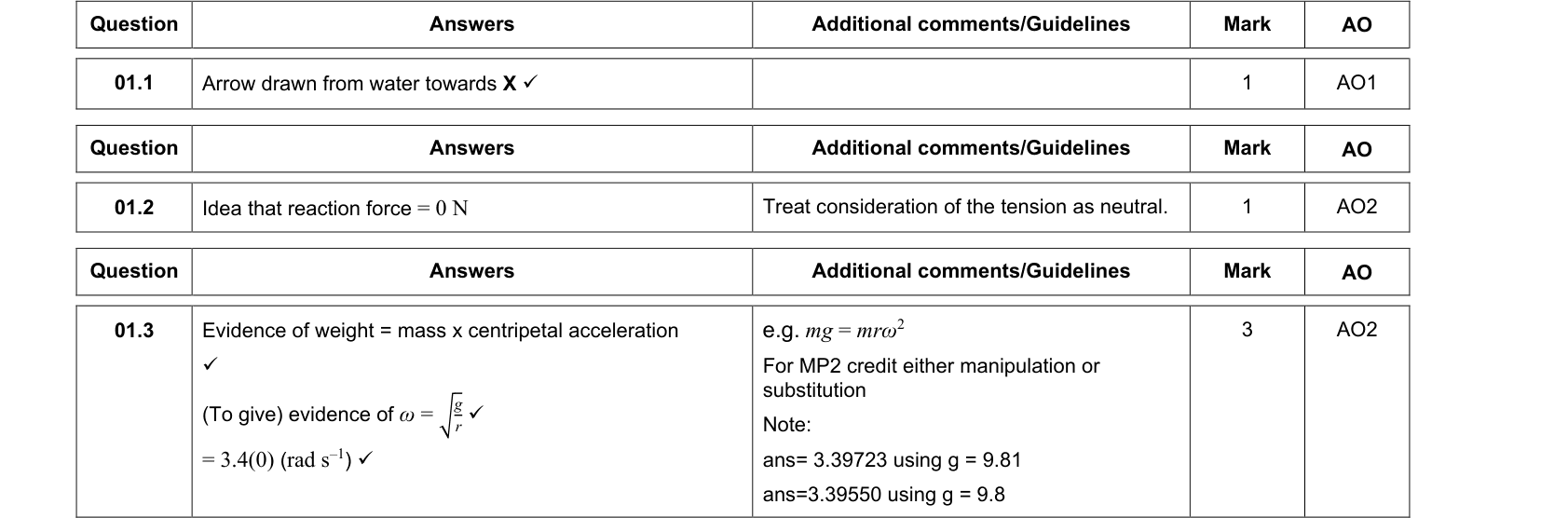
A bucket of water is swung in a vertical circle of radius 0.90 m. The water stays in if, at the top, gravity alone is not enough to supply the centripetal force: $v \ge \sqrt{gr} = \sqrt{9.81 \times 0.90} = 3.0\ \text{m s}^{-1}$.
Other situations
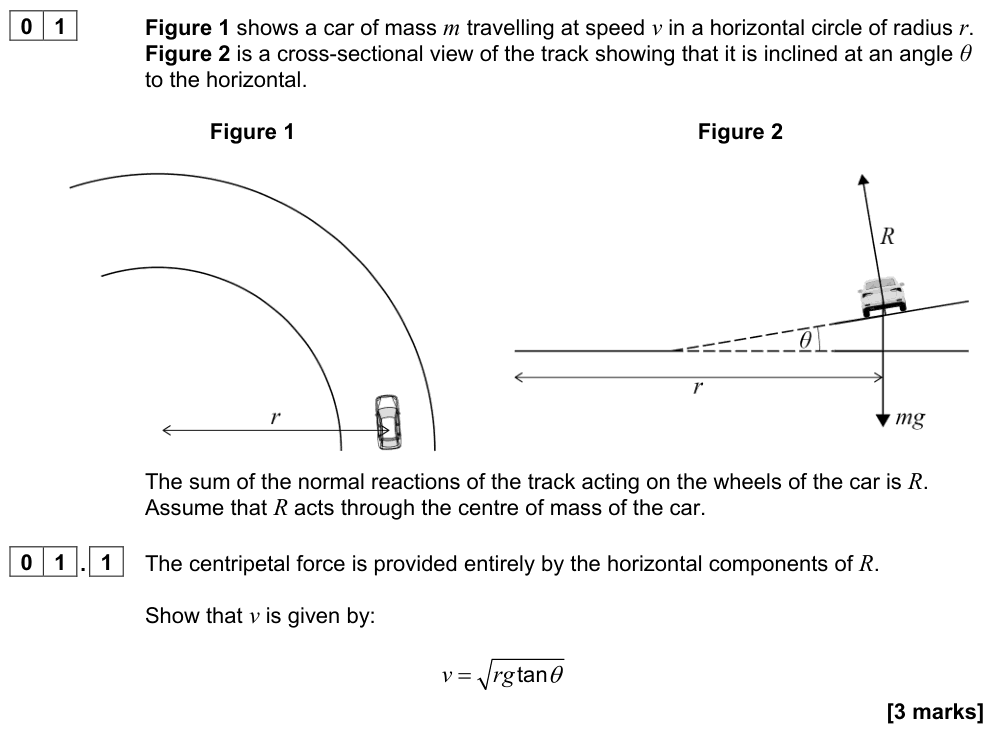
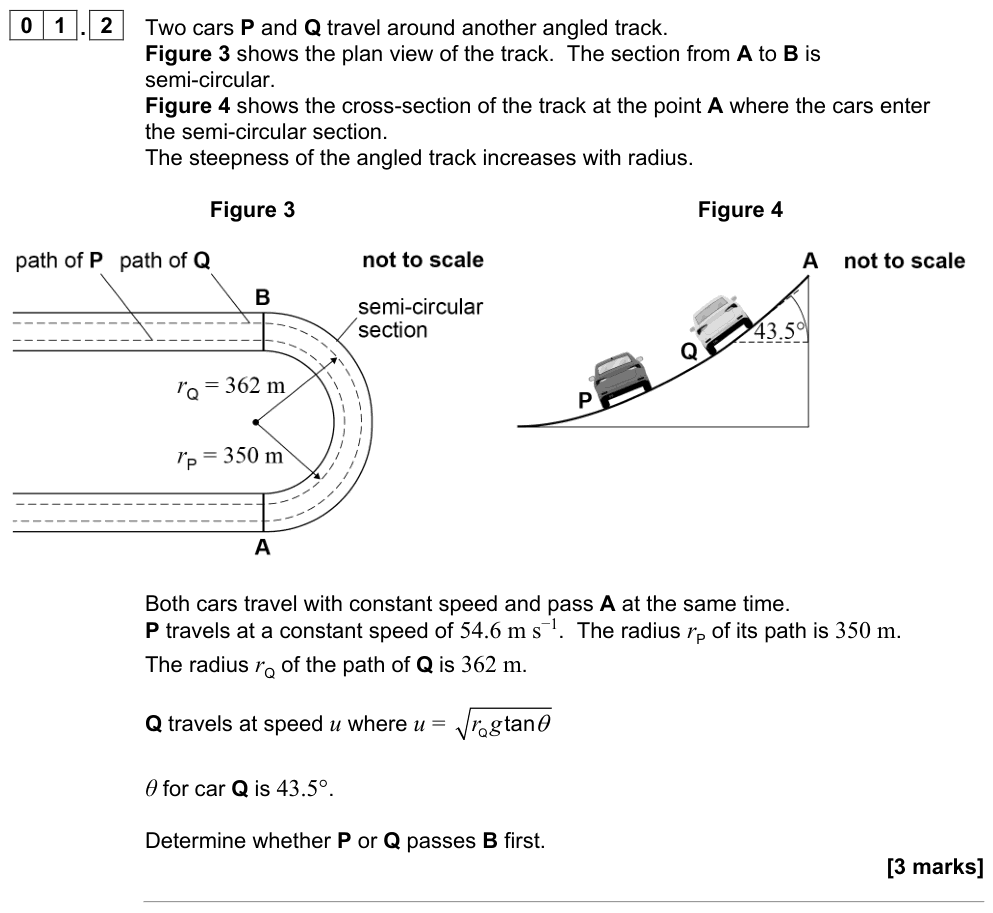
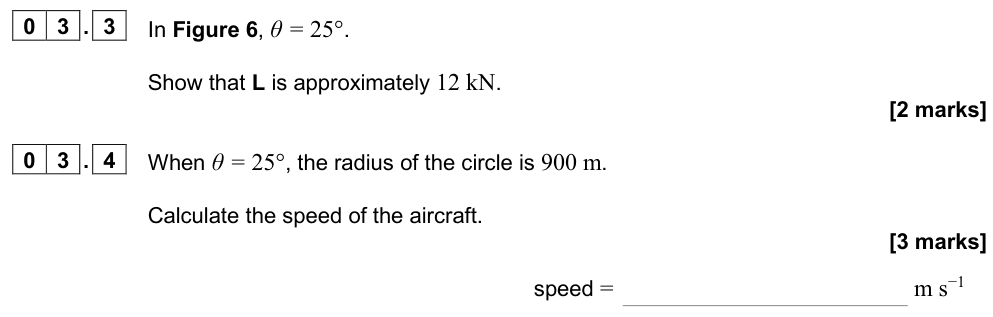
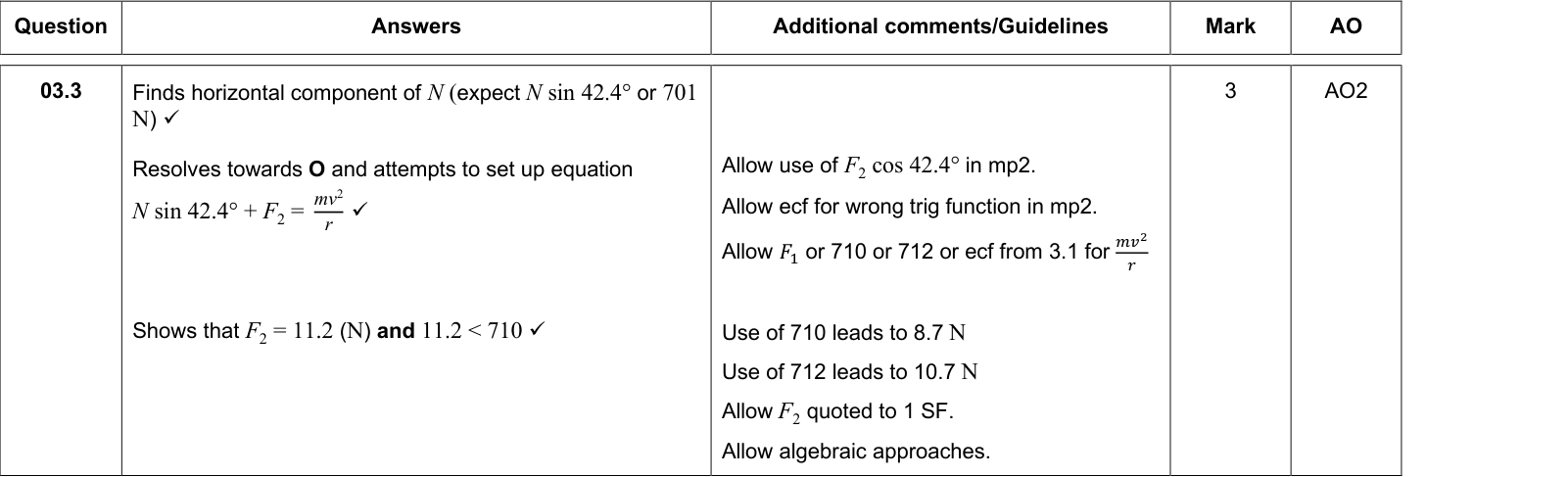
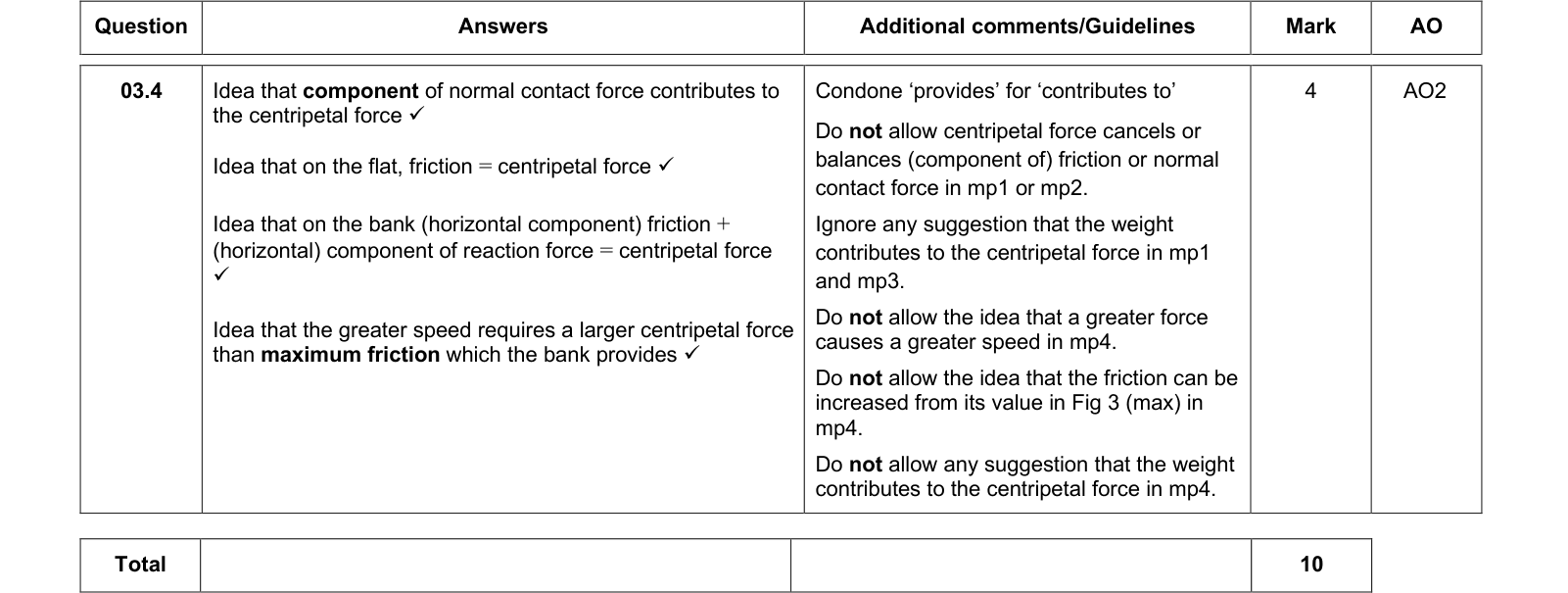
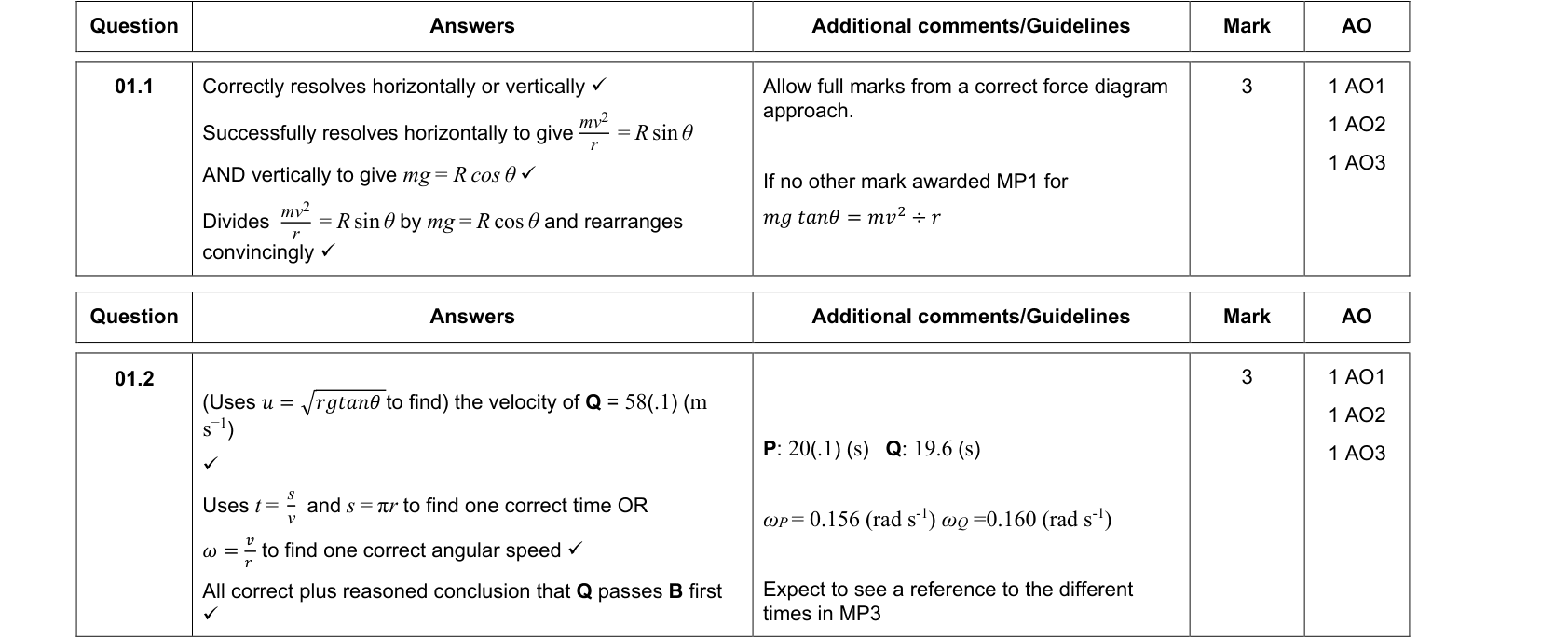
- Banked track: the horizontal component of the normal reaction provides the centripetal force, so a car can turn without relying on friction: $\tan\theta = \dfrac{v^2}{rg}$.
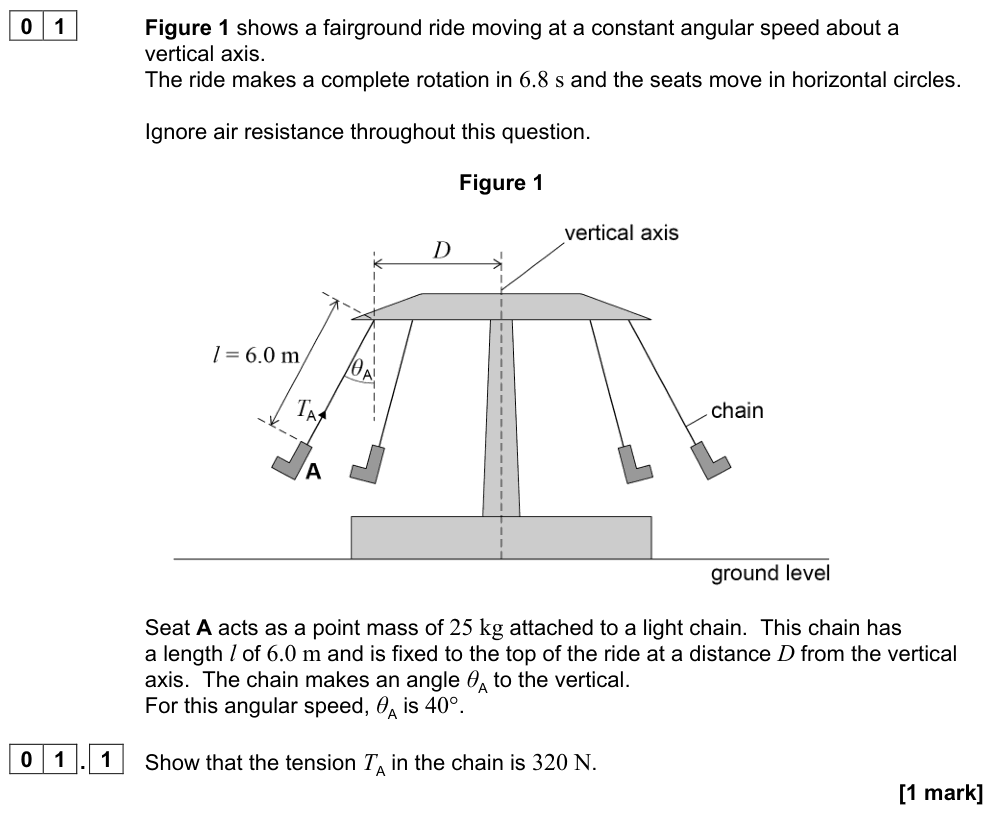
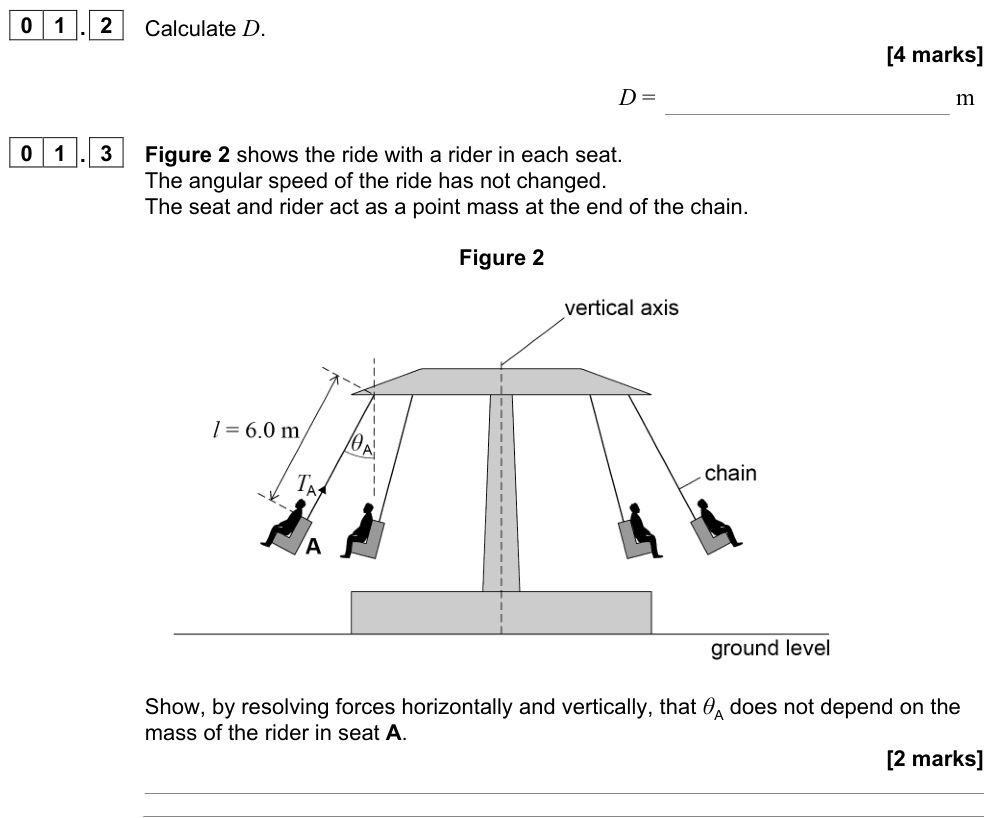
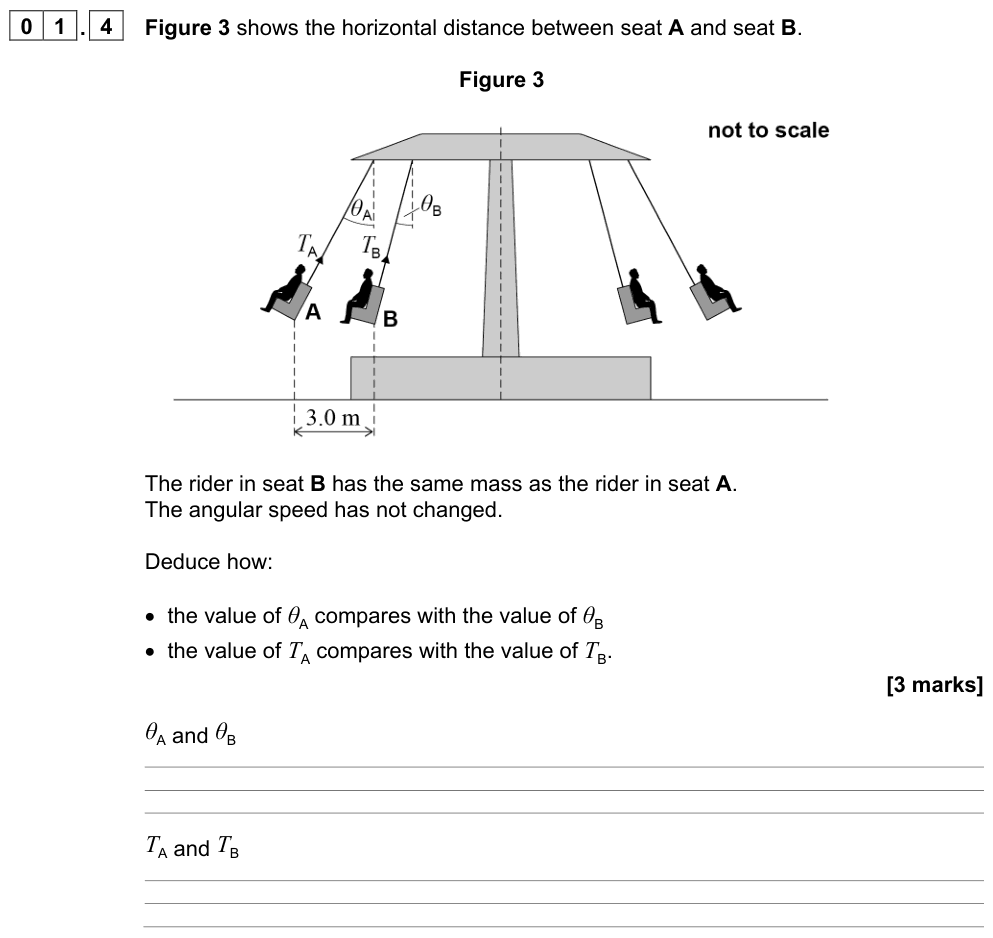
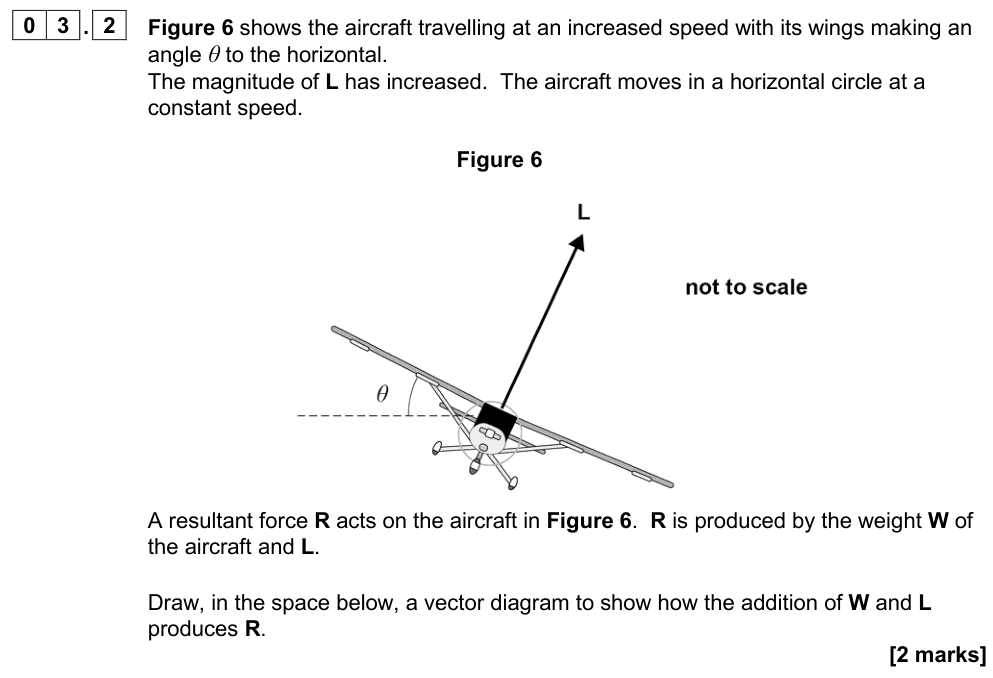
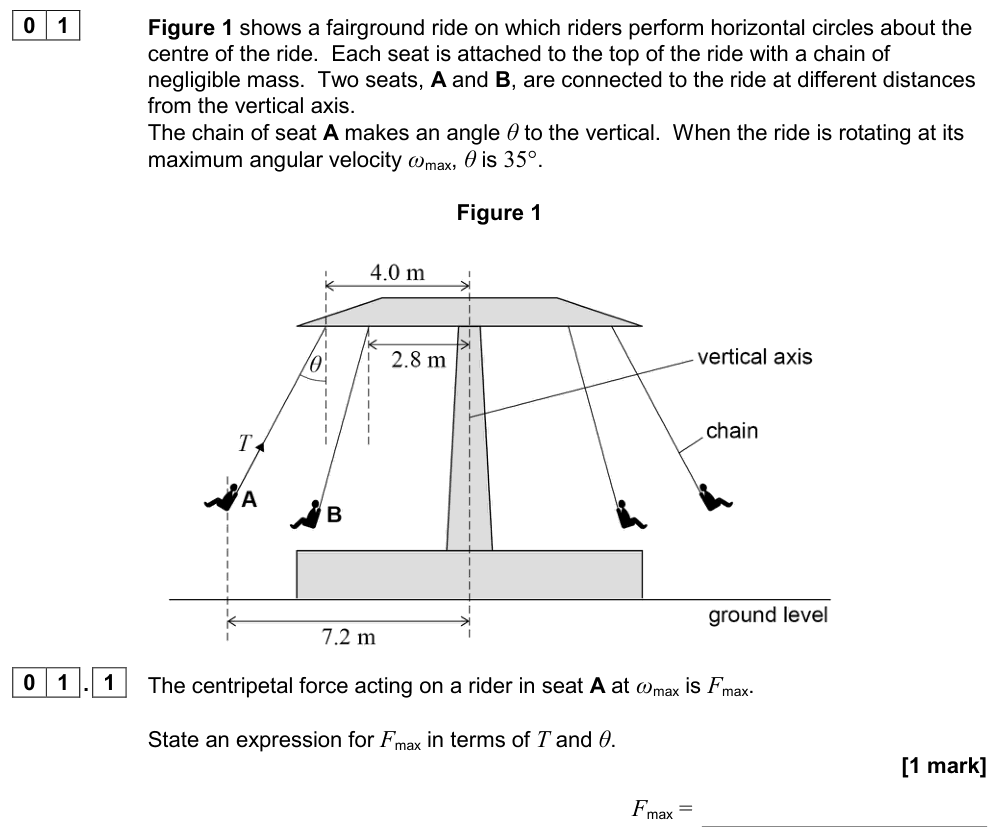
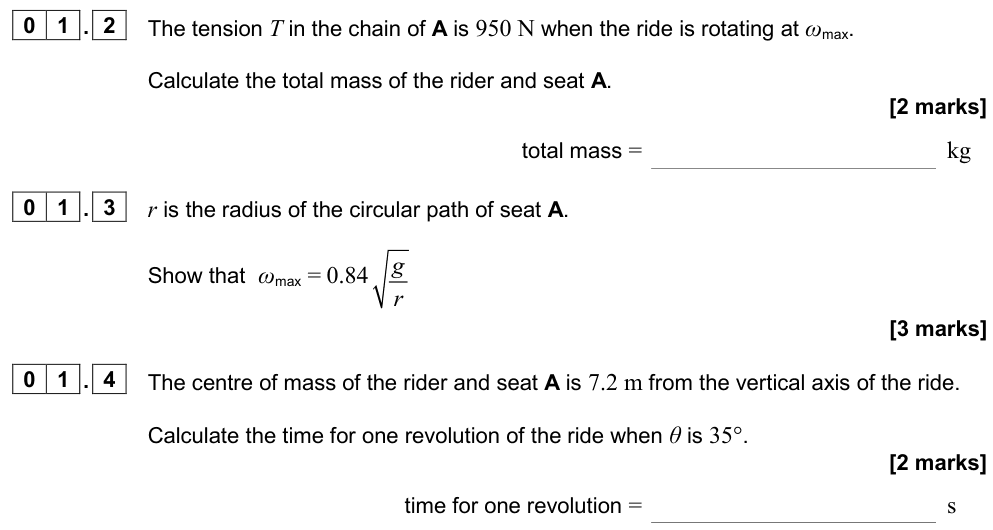
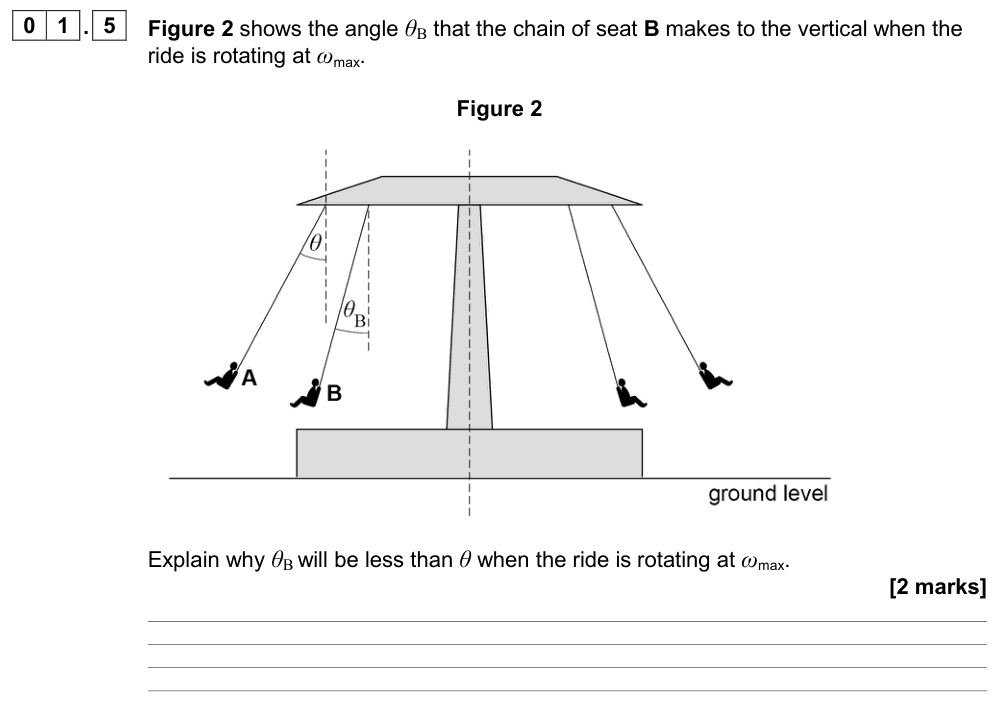
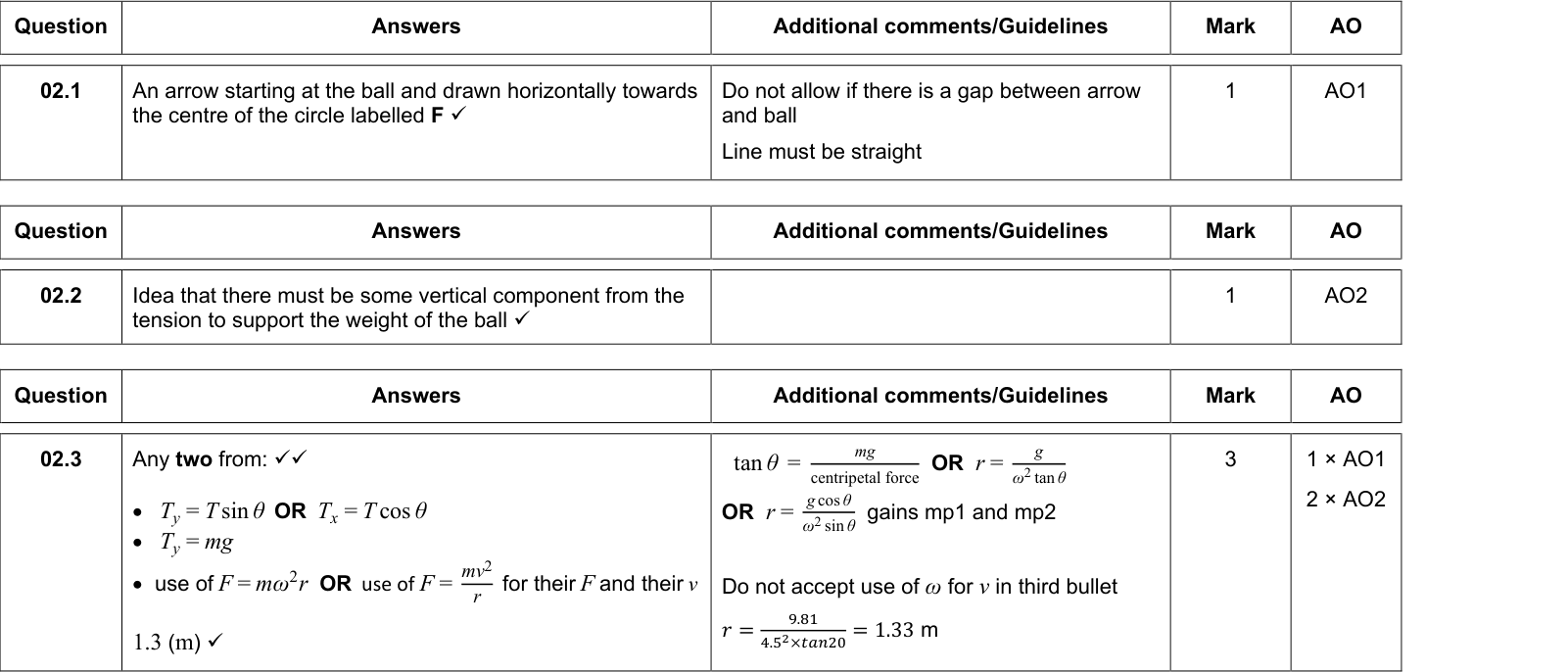
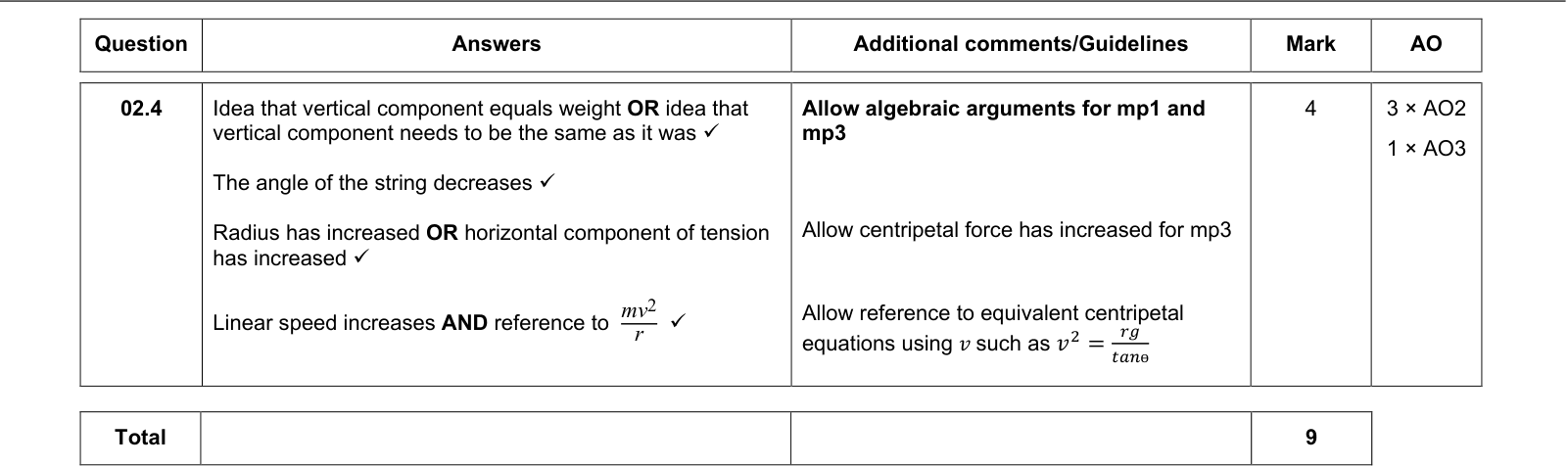
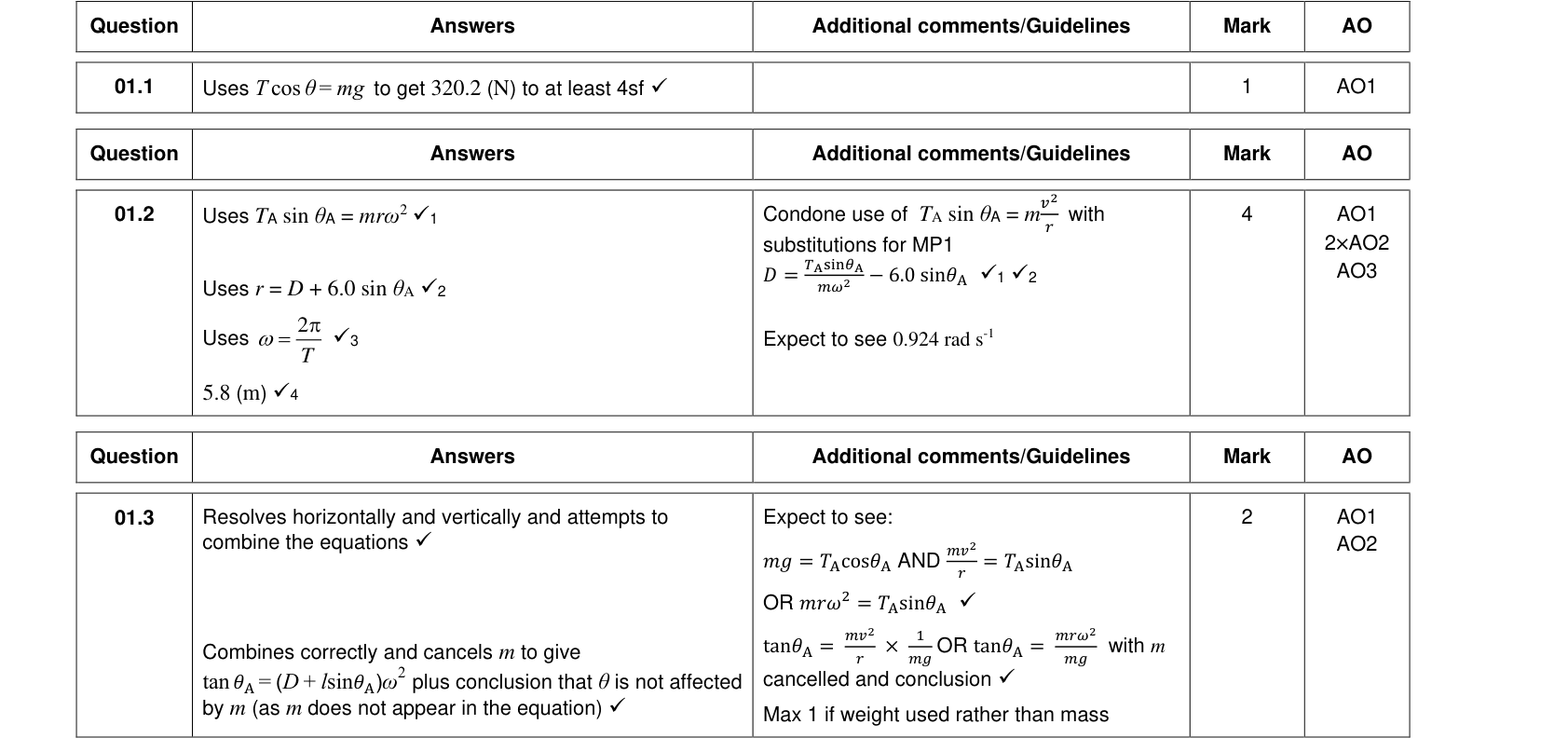
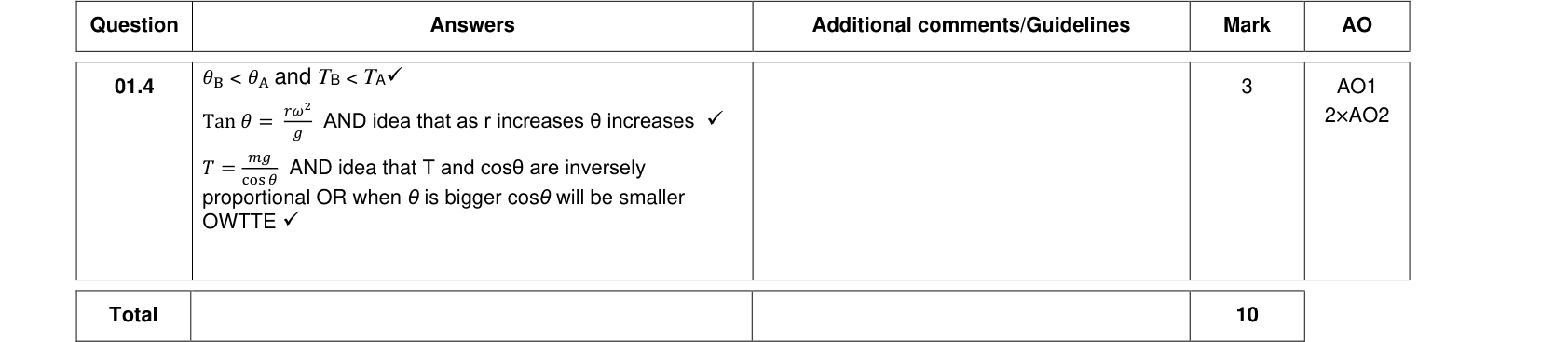
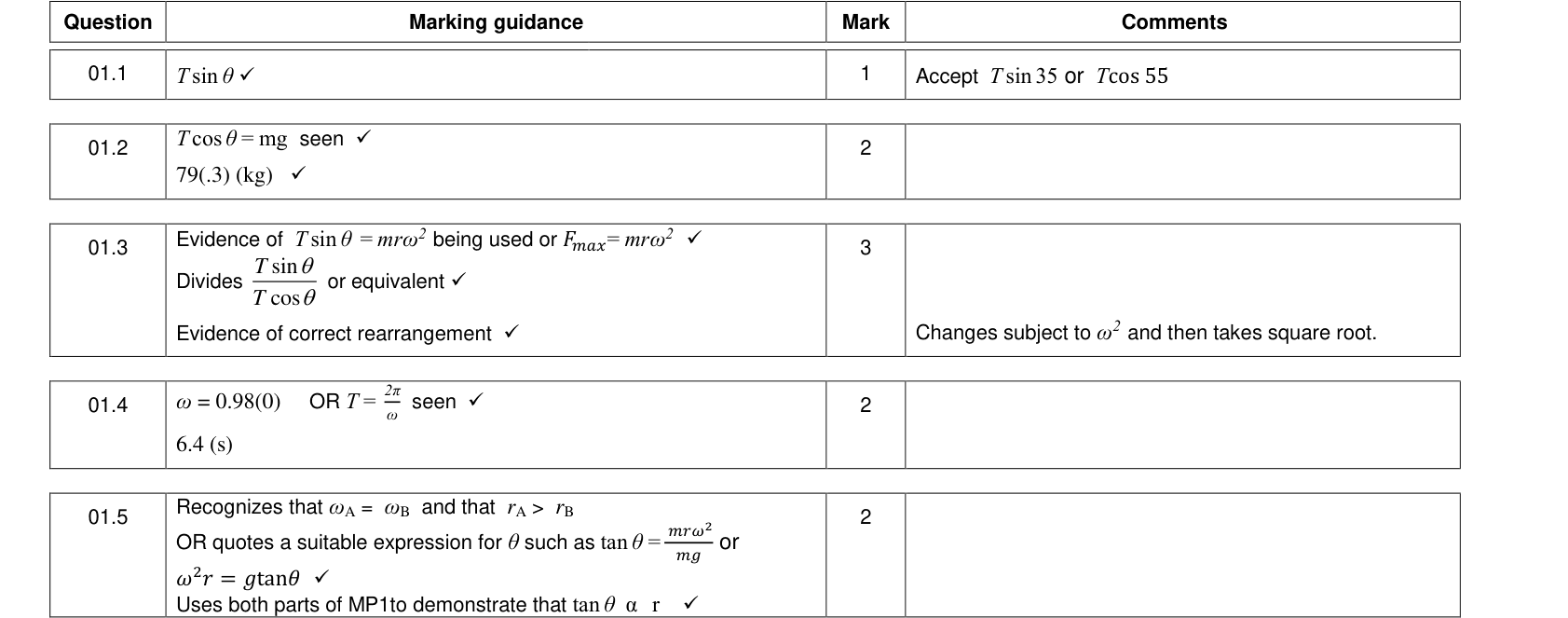
- Fairground "chair-o-plane" / conical pendulum: the horizontal component of the tension provides the centripetal force; the vertical component balances the weight: $T\cos\theta = mg$, $T\sin\theta = \dfrac{mv^2}{r}$.
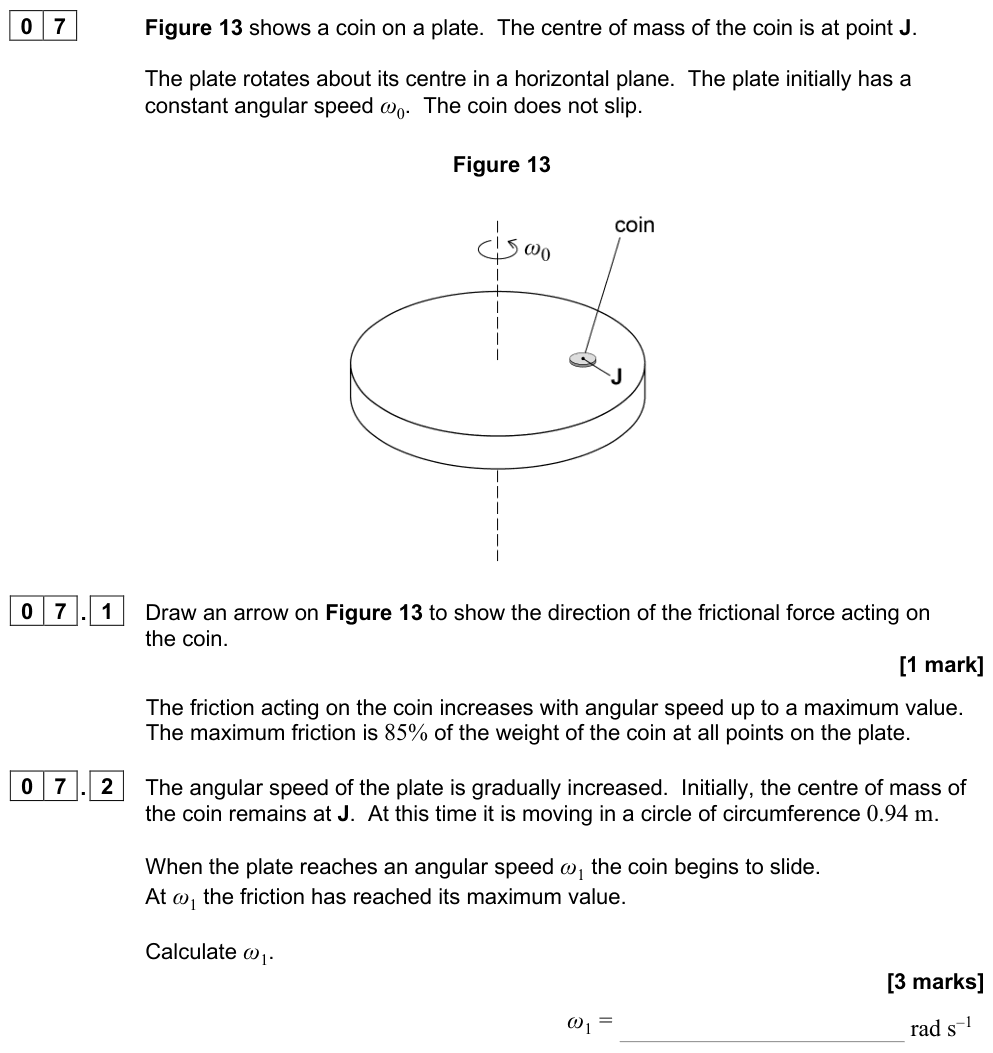
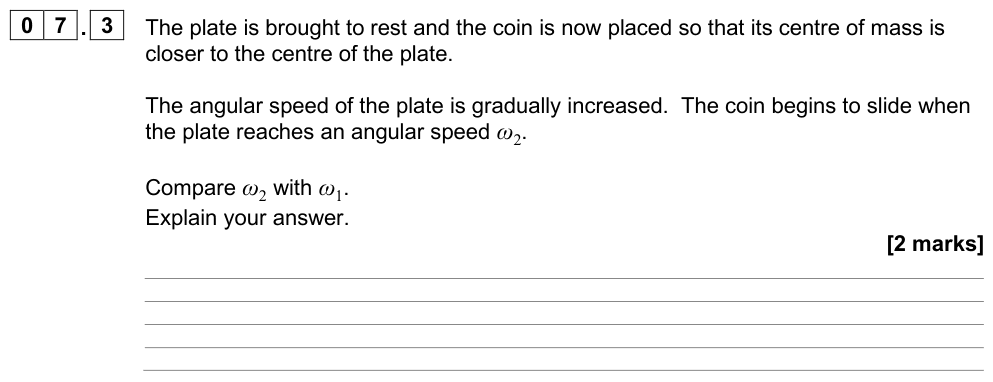
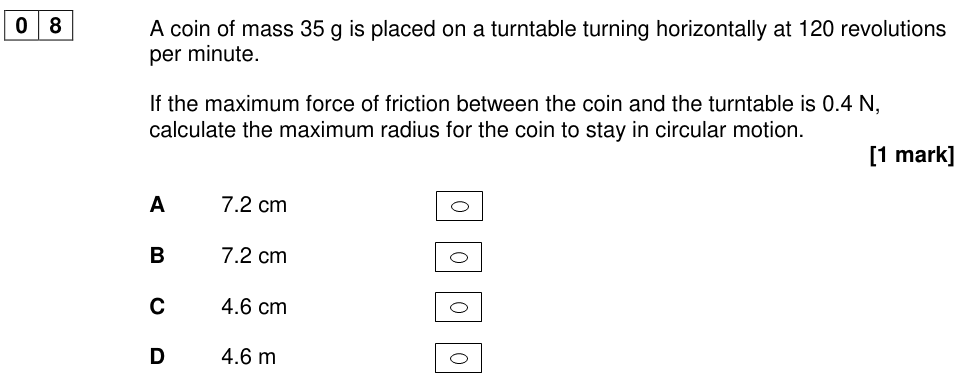
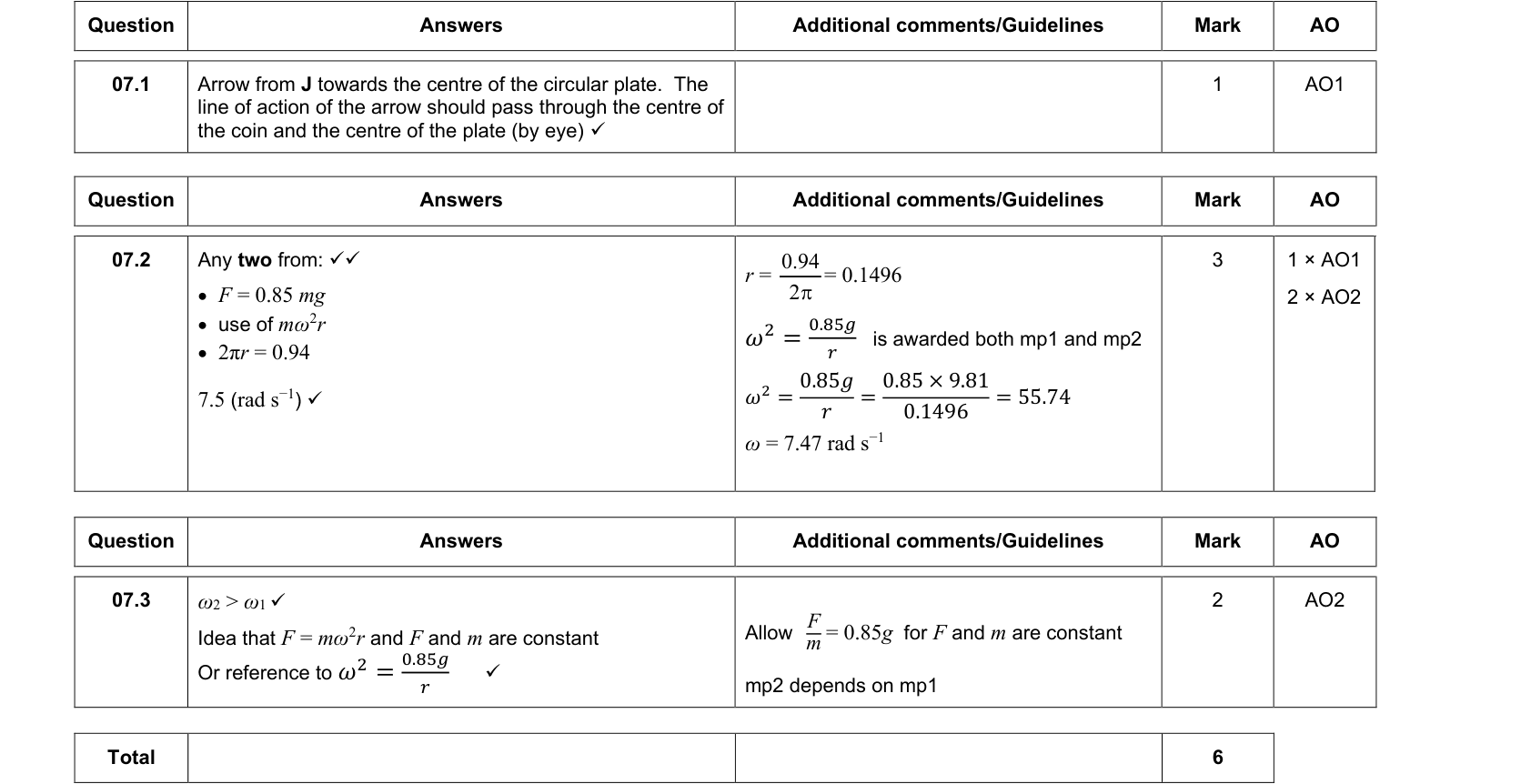
- Coin on a turntable: friction provides the centripetal force. The coin slides off if $m\omega^2 r$ exceeds the maximum friction, so it slides first if placed further out or if the turntable spins faster.
- Apparent weight at the equator: part of your weight provides the centripetal force for the Earth's rotation, so the scales read slightly less there.
Summary
- $\omega = \Delta\theta/\Delta t = 2\pi f = v/r$ (rad s⁻¹).
- Constant speed in a circle = acceleration towards the centre: $a = v^2/r = \omega^2 r$.
- Needs a resultant centripetal force $F = mv^2/r = m\omega^2 r$, provided by tension, friction, gravity, etc.
- Vertical circle: $T + mg = mv^2/r$ at the top, $T - mg = mv^2/r$ at the bottom; $v_{\min} = \sqrt{gr}$ at the top.