Light: wave or particle?
For centuries scientists argued about the nature of light.
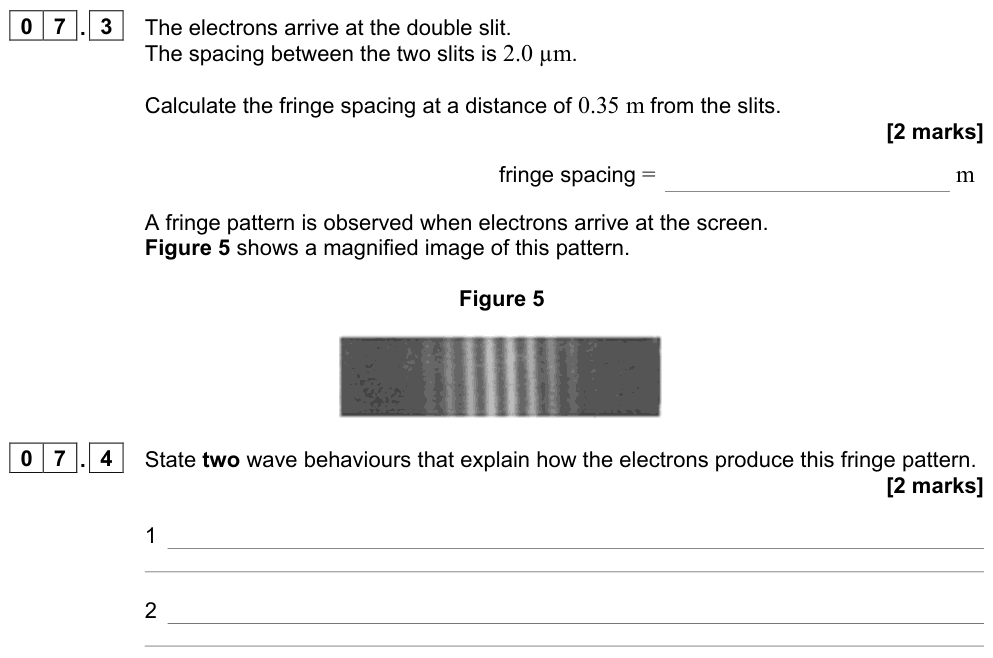
- Wave evidence: light shows diffraction and interference (Young's double slit) and polarisation. Particles cannot explain dark fringes, where light + light = darkness.
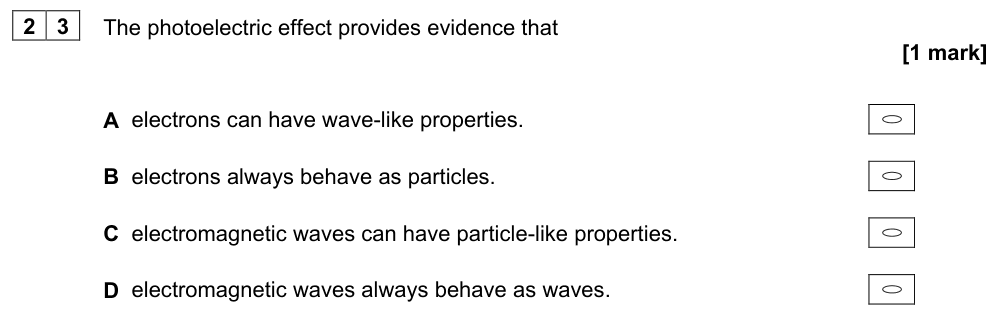
- Particle evidence: the photoelectric effect can only be explained if light arrives as photons, each giving all its energy to one electron.
Wave–particle duality of light
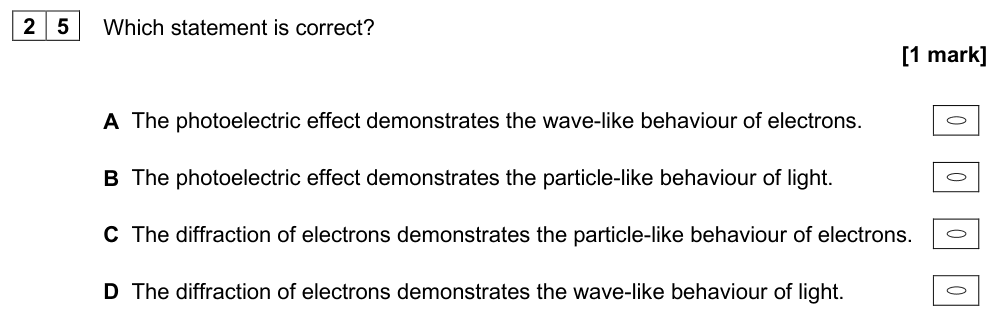
Electromagnetic radiation behaves as a wave when it travels (diffraction, interference) and as a particle (photon) when it interacts with matter (photoelectric effect, absorption and emission by atoms). Neither model on its own explains everything.
Matter waves: the de Broglie hypothesis
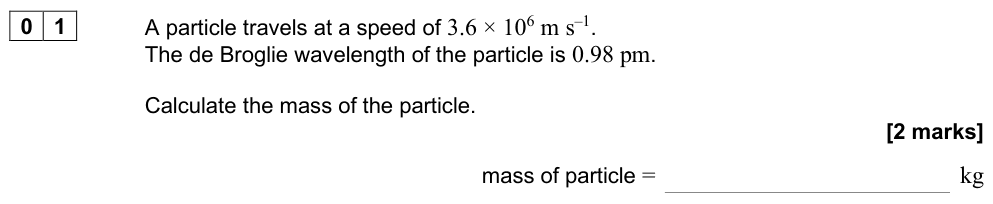
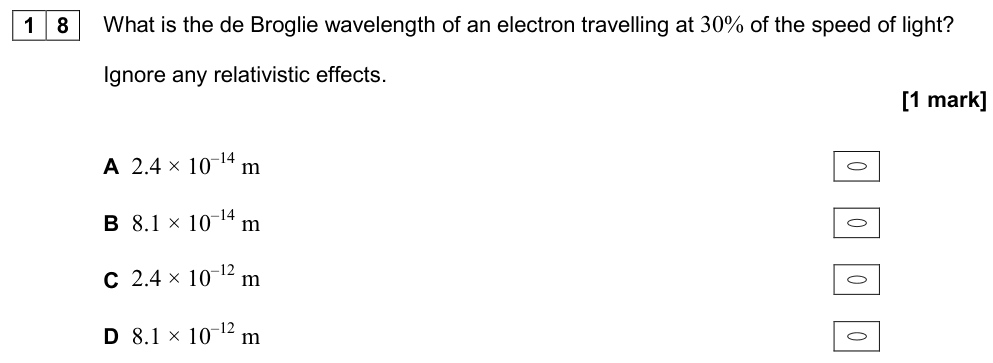
In 1924 Louis de Broglie suggested that if waves can behave like particles, then particles (such as electrons) should behave like waves. He proposed that every moving particle has a wavelength:
The de Broglie equation
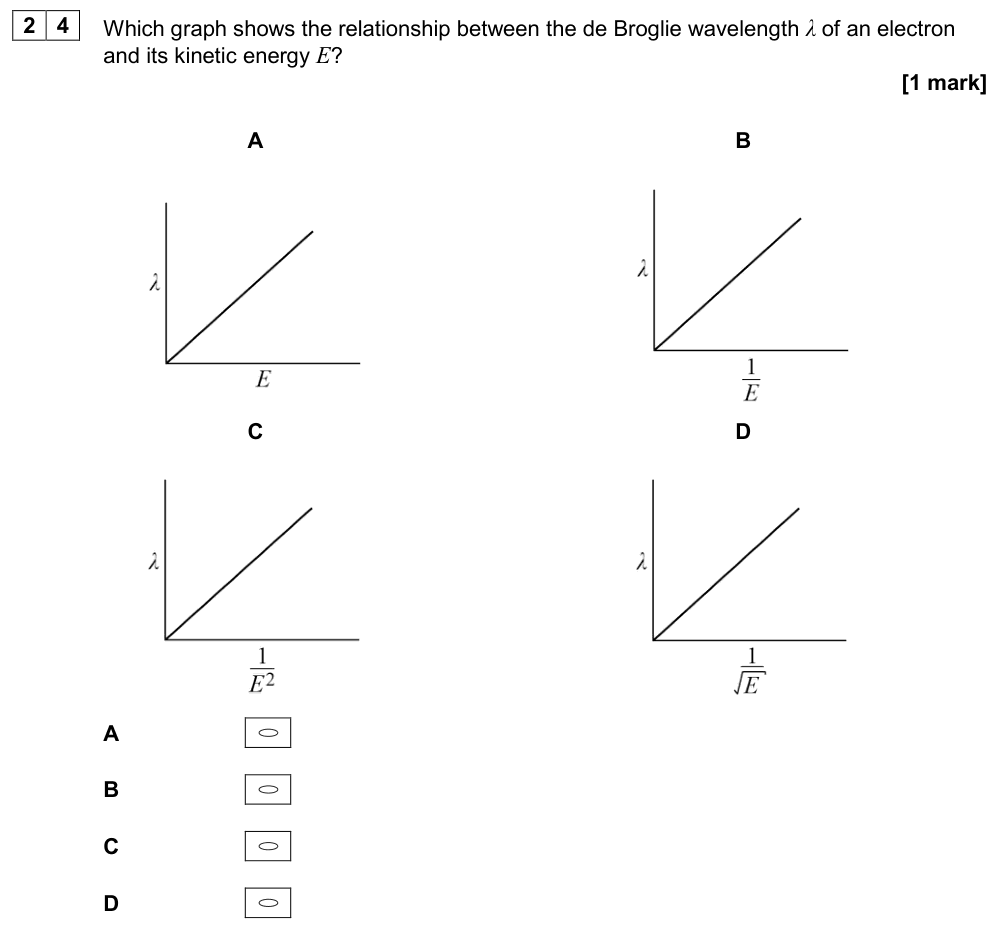
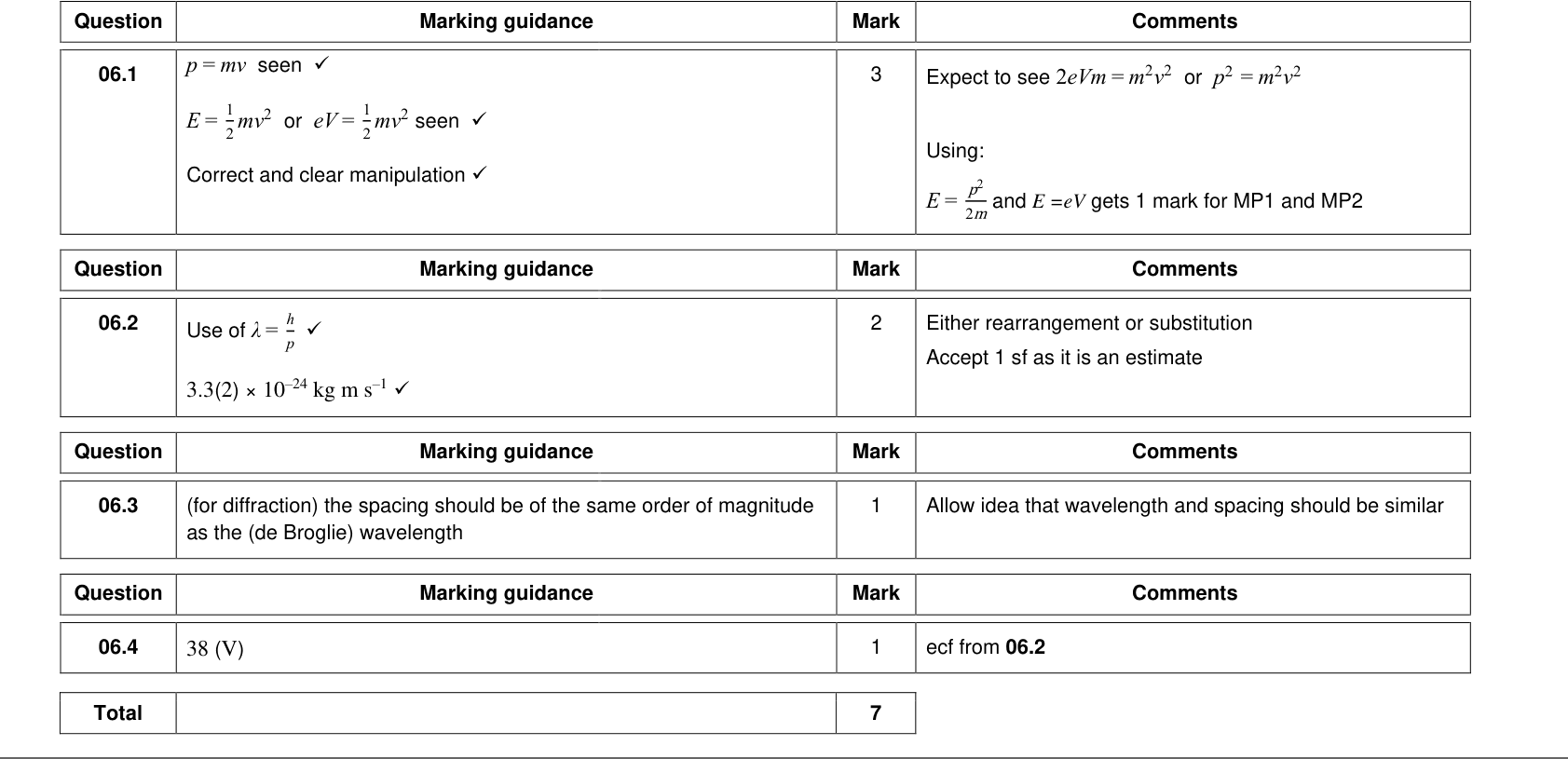
$$\lambda = \frac{h}{mv} = \frac{h}{p}$$
where $mv = p$ is the momentum of the particle and $h$ is the Planck constant.
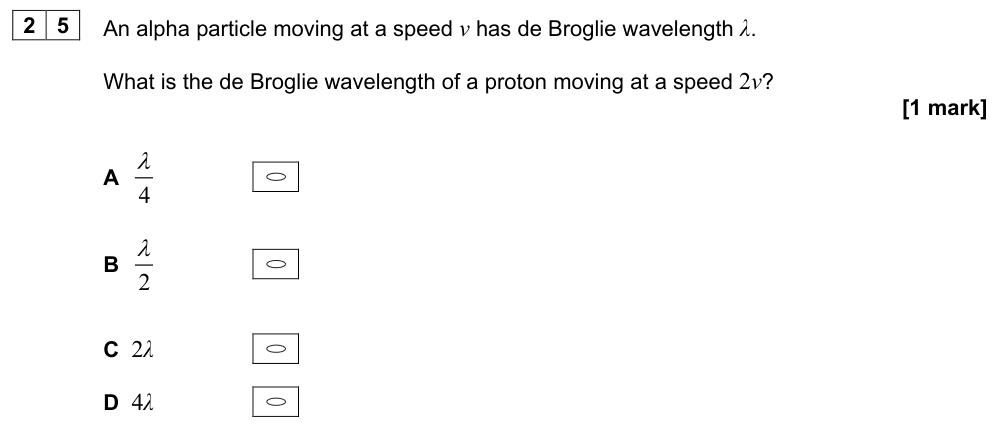
The de Broglie wavelength is inversely proportional to the momentum: faster or heavier particles have shorter wavelengths.
Worked example: an electron
An electron travels at $3.0 \times 10^{6}\ \text{m s}^{-1}$.
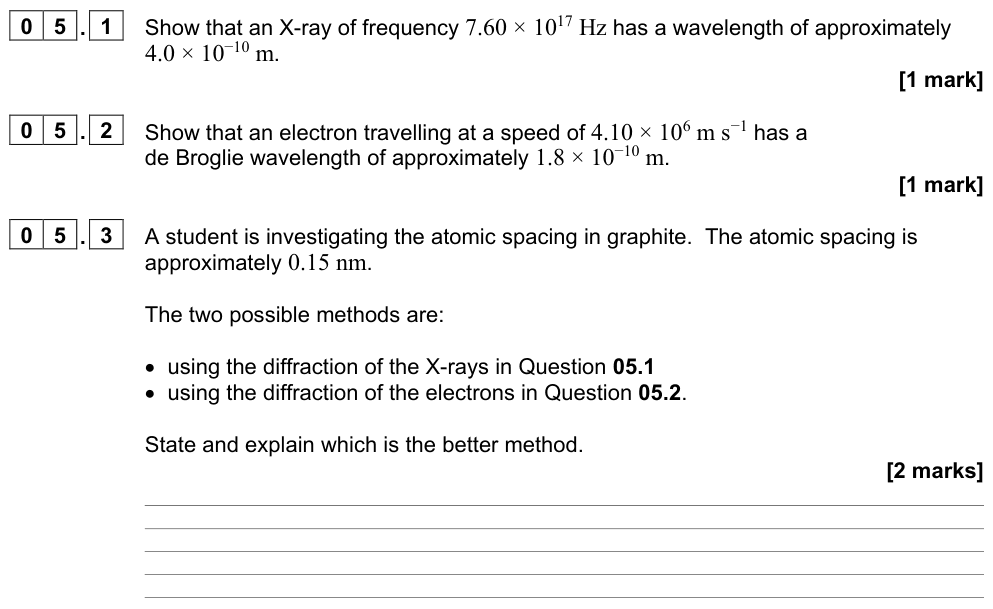
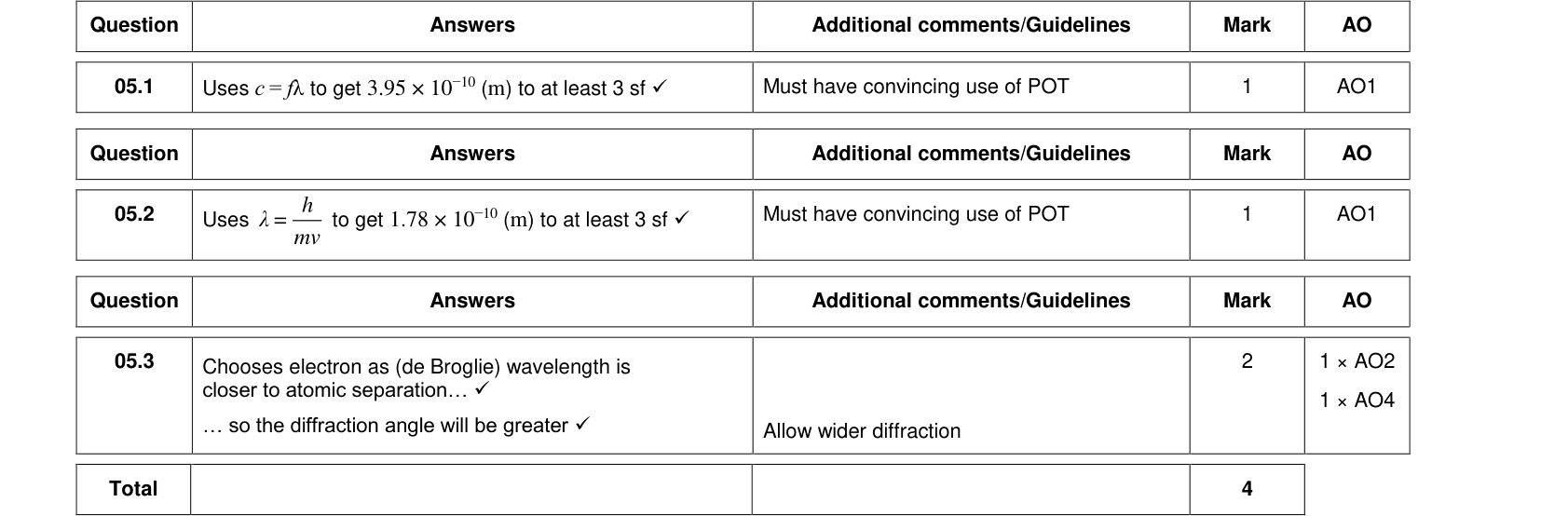
$\lambda = \dfrac{6.63 \times 10^{-34}}{9.11 \times 10^{-31} \times 3.0 \times 10^{6}} = 2.4 \times 10^{-10}\ \text{m}$.
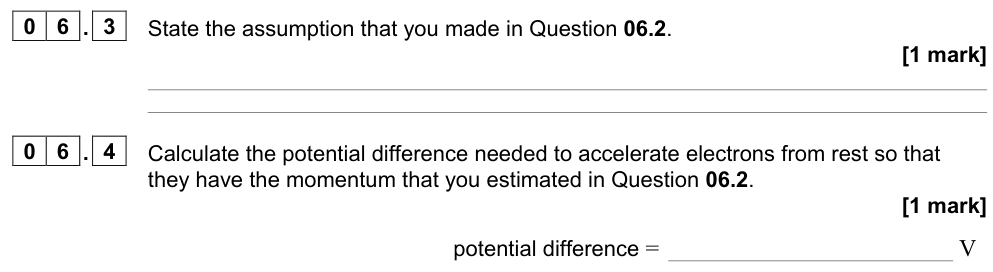
This is similar to the spacing of atoms in a crystal (about $10^{-10}$ m), so electrons at this speed diffract strongly through crystals.
Worked example: a cricket ball
A 0.16 kg ball at $40\ \text{m s}^{-1}$: $\lambda = \dfrac{6.63 \times 10^{-34}}{0.16 \times 40} = 1.0 \times 10^{-34}\ \text{m}$.
This is far too small to observe: no gap is anywhere near this size. That is why we never see everyday objects diffract.
Wavelength of an accelerated electron
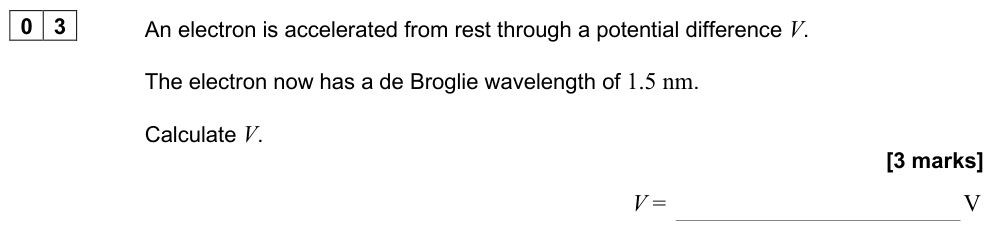
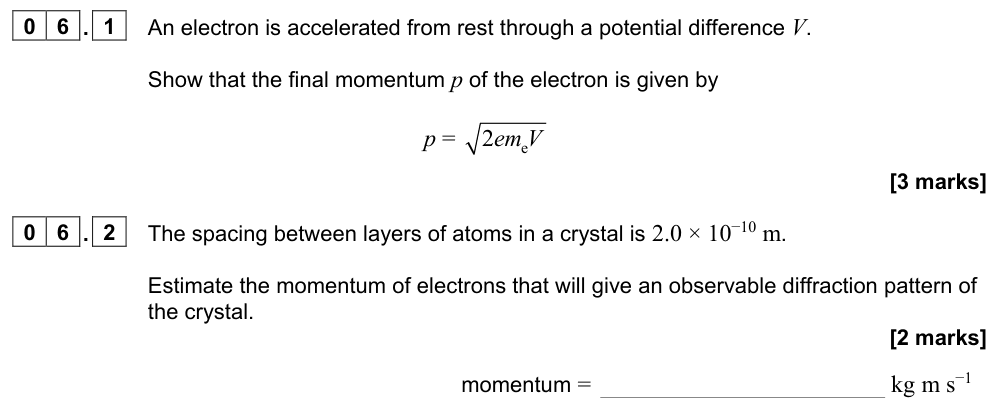
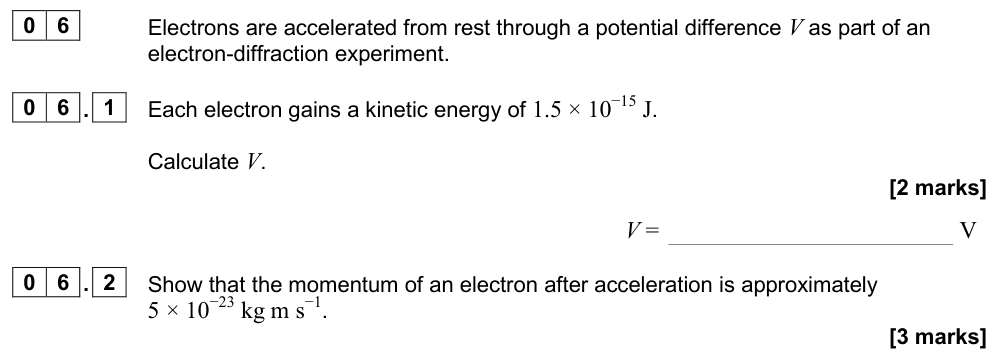
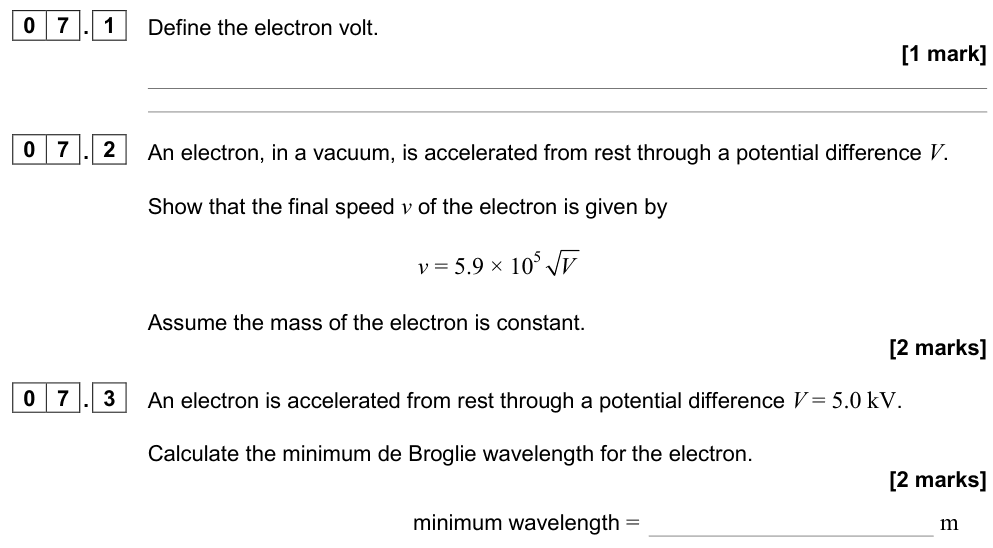
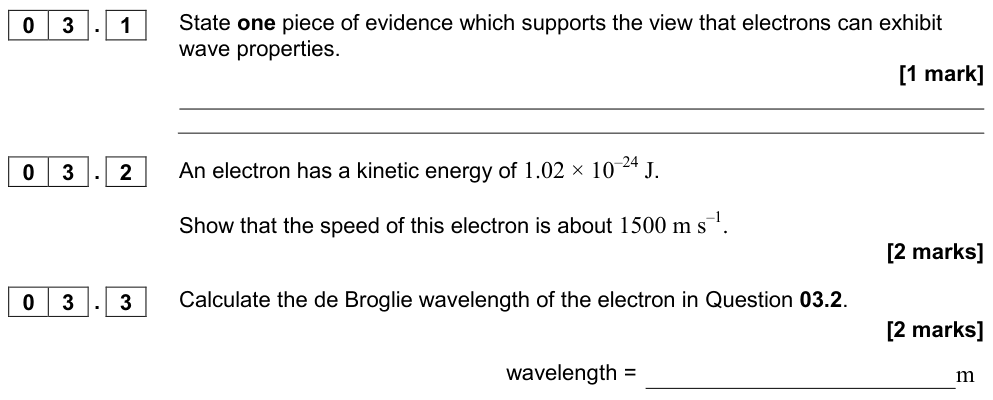
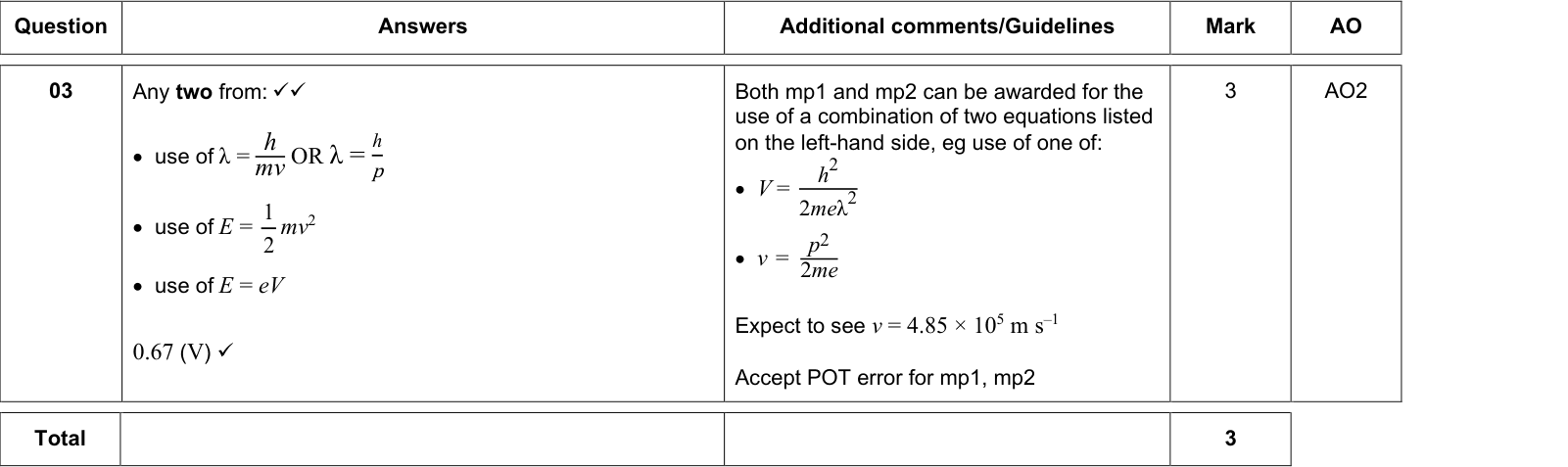
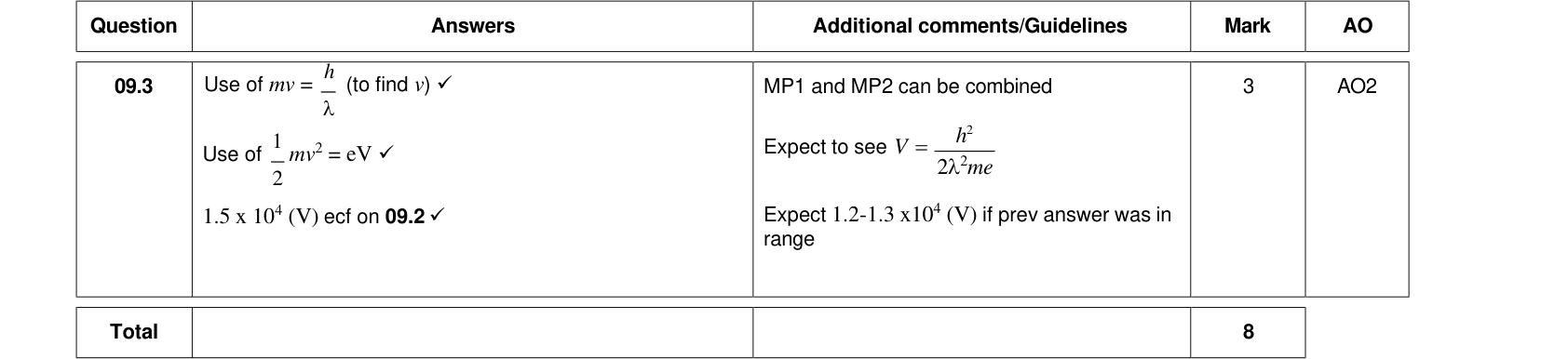
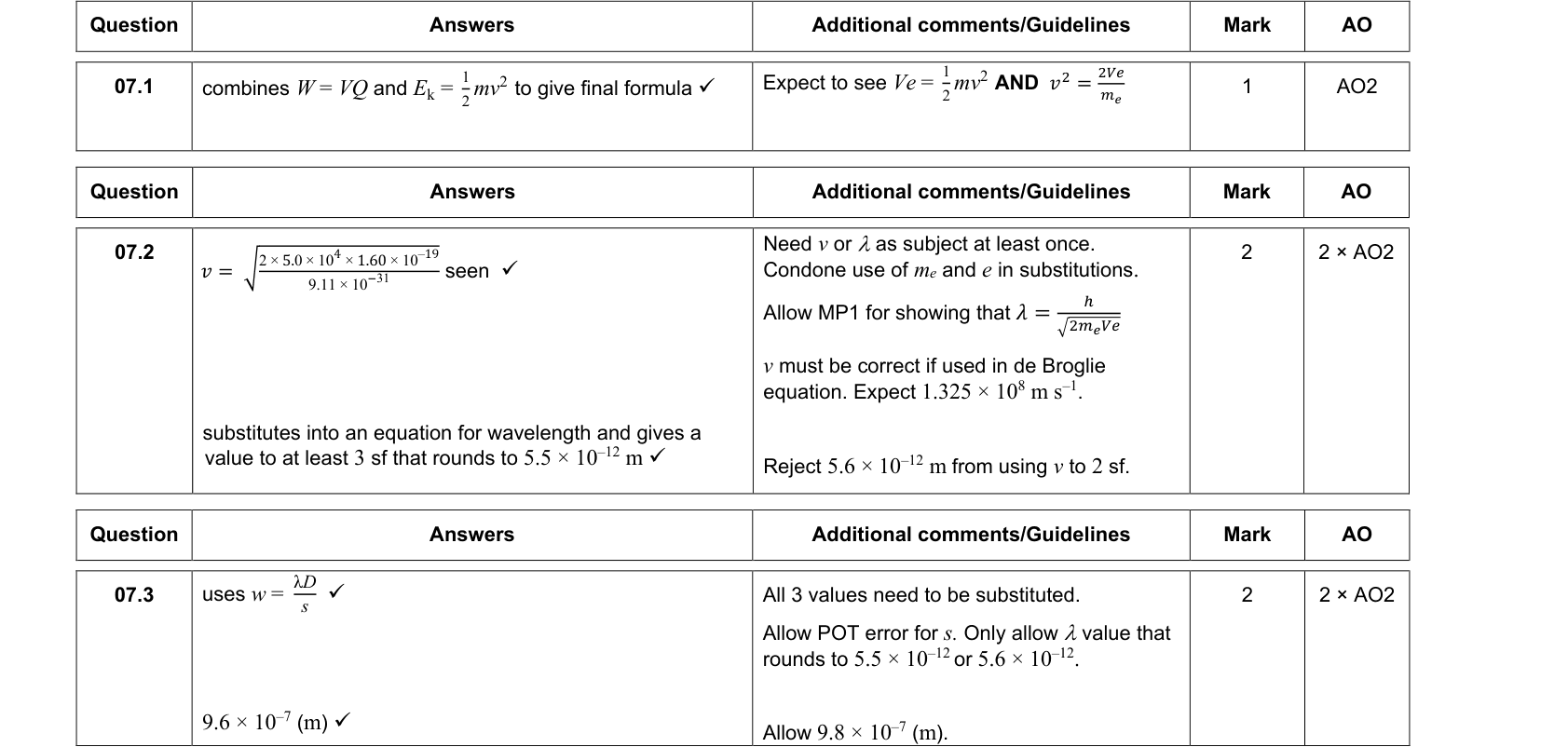
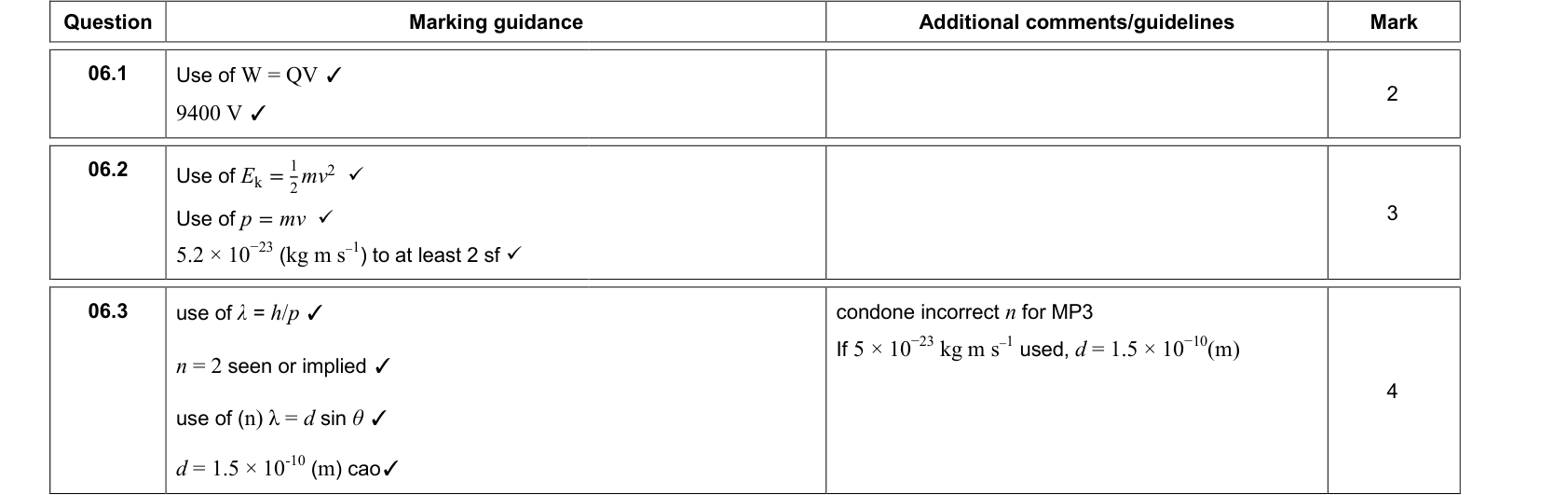
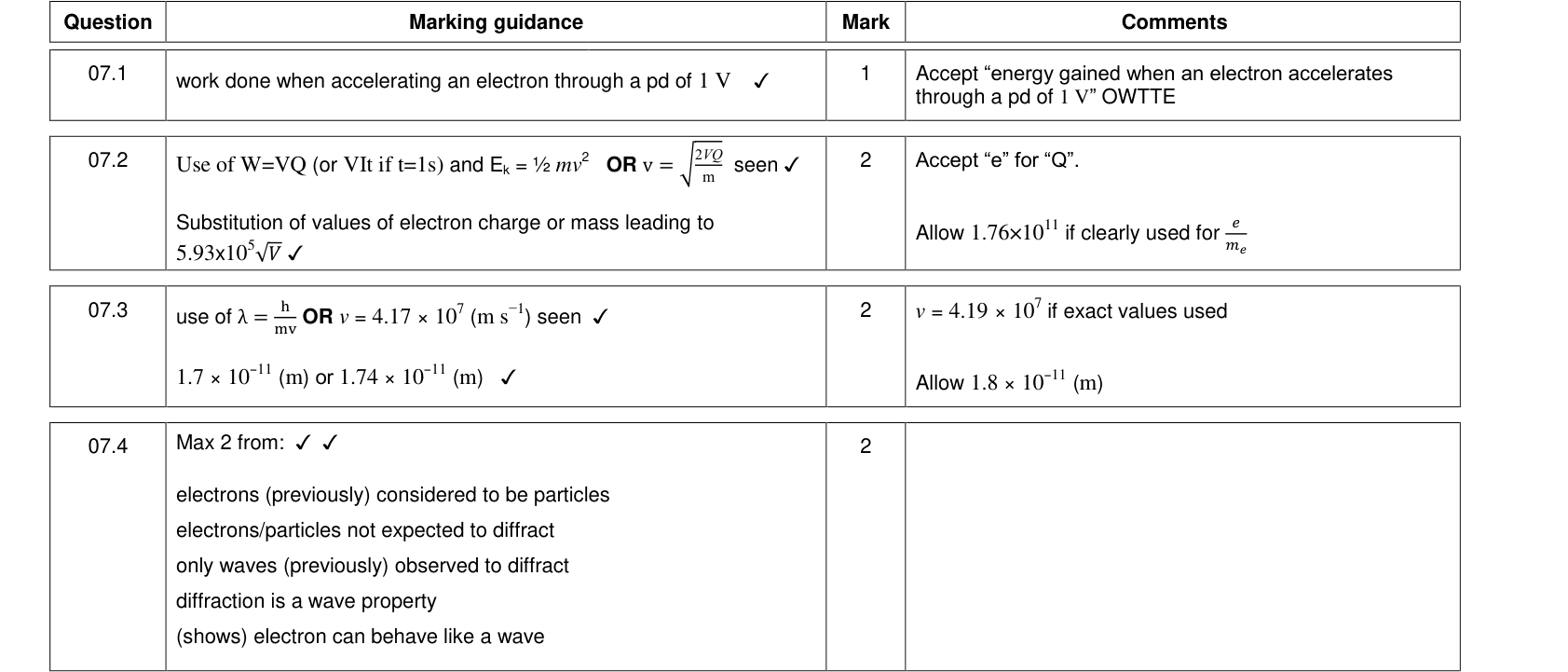
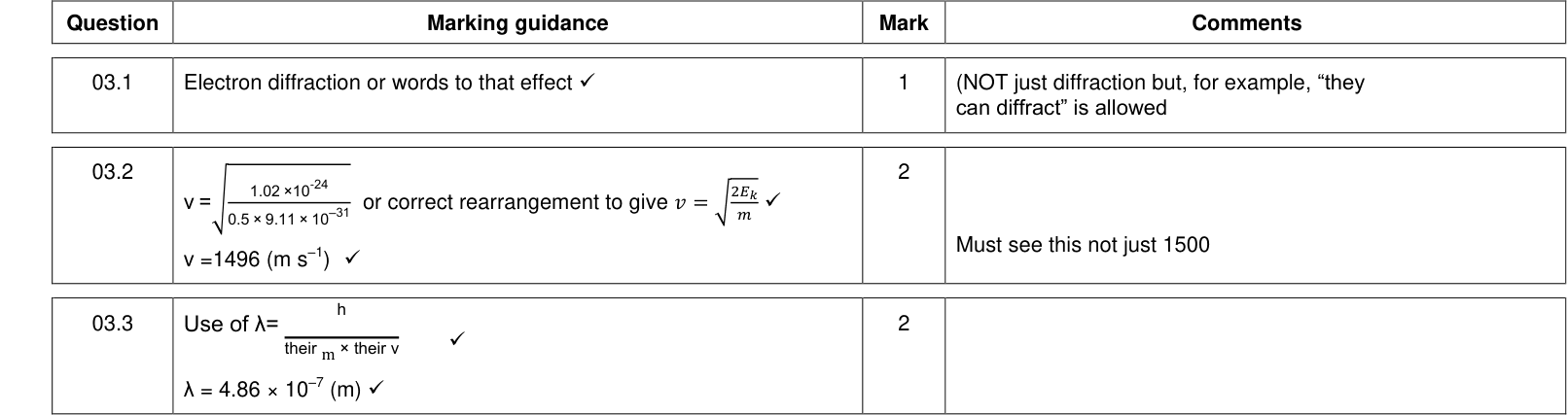
An electron accelerated from rest through a p.d. $V$ gains kinetic energy $eV = \tfrac12mv^2$. Its momentum is $p = mv = \sqrt{2meV}$, so
$$\lambda = \frac{h}{\sqrt{2meV}}$$
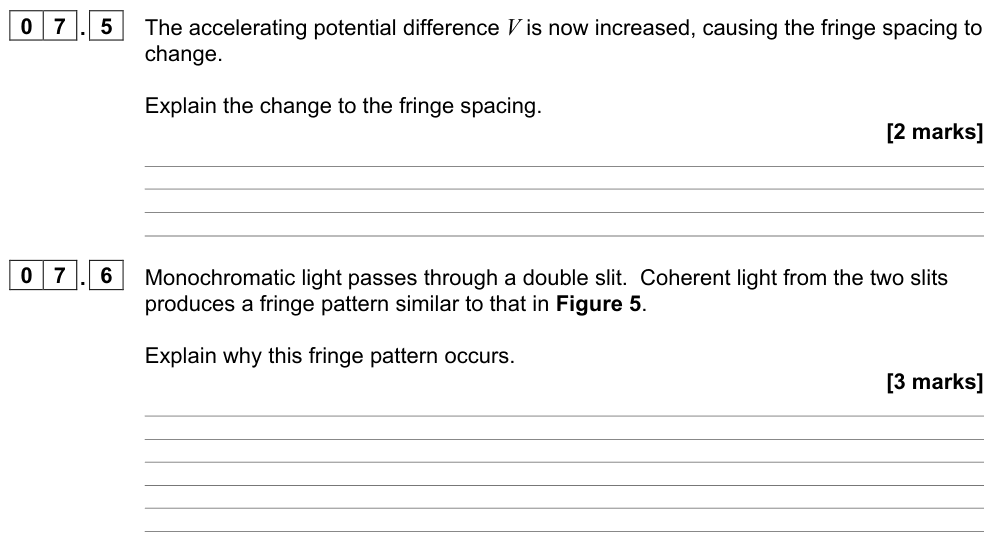
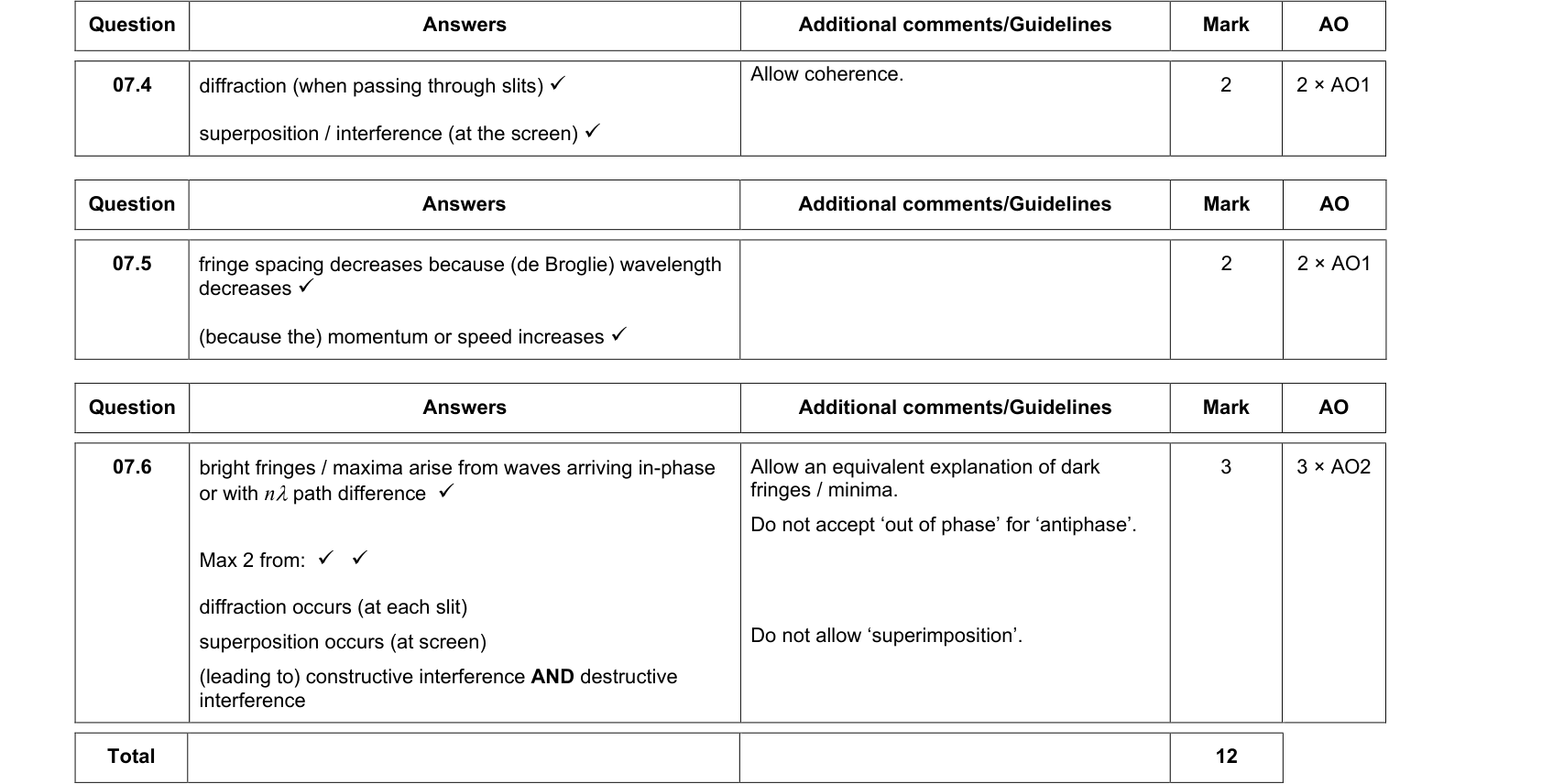
Increasing the accelerating p.d. increases the momentum and decreases the wavelength.
Evidence: electron diffraction
Electron diffraction
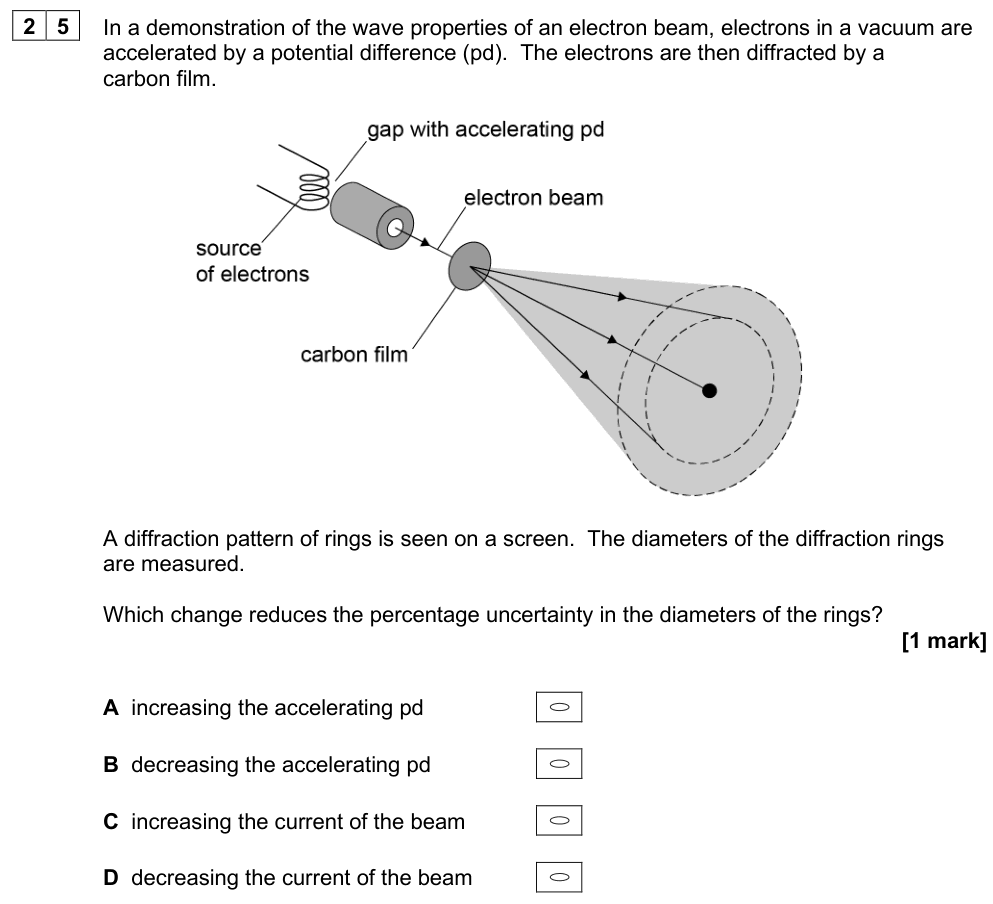
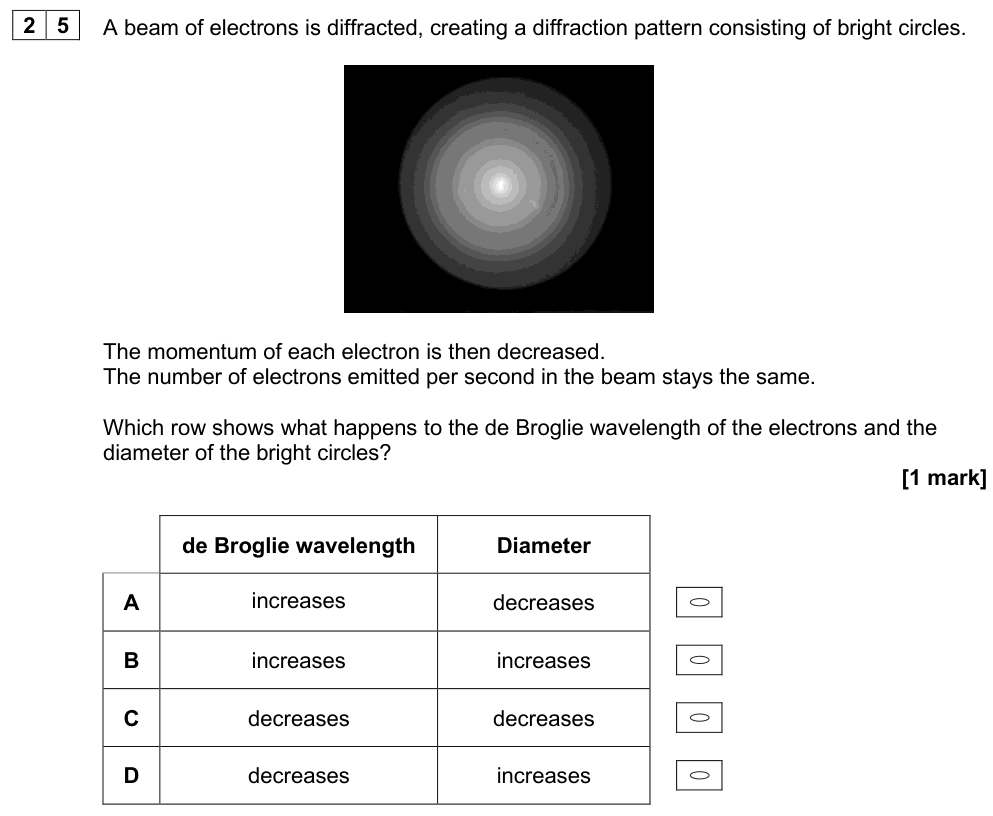
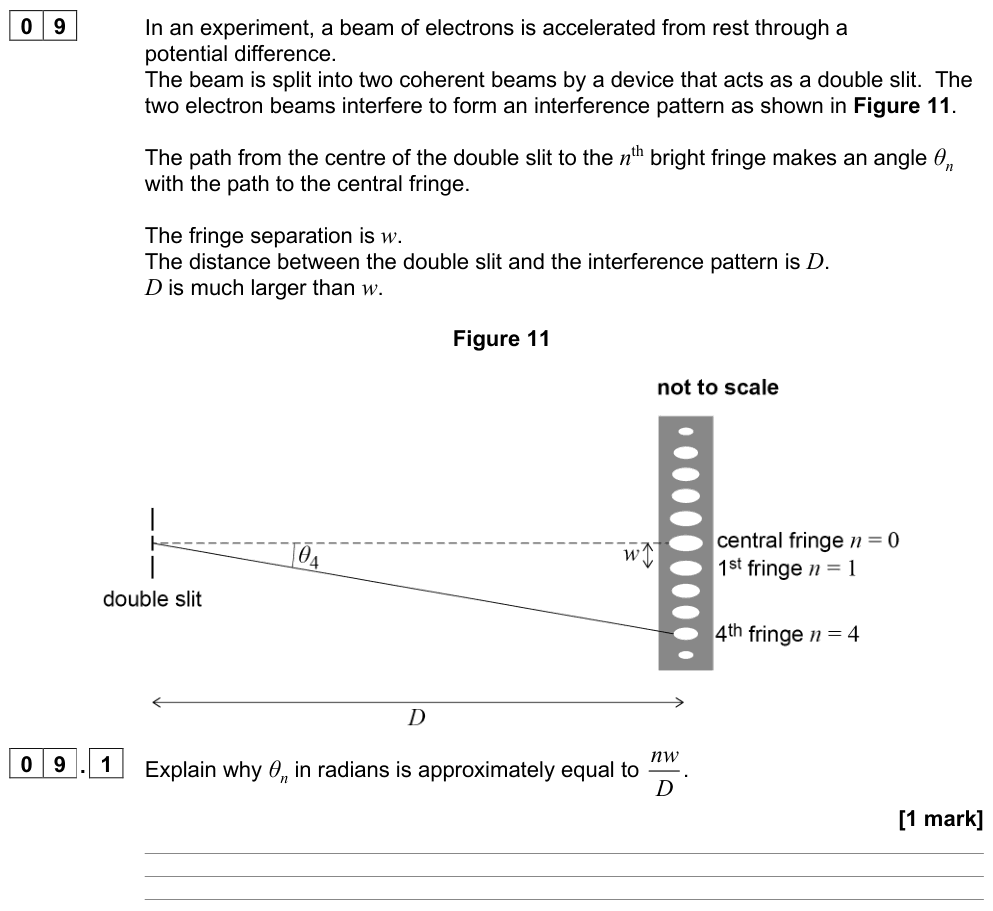
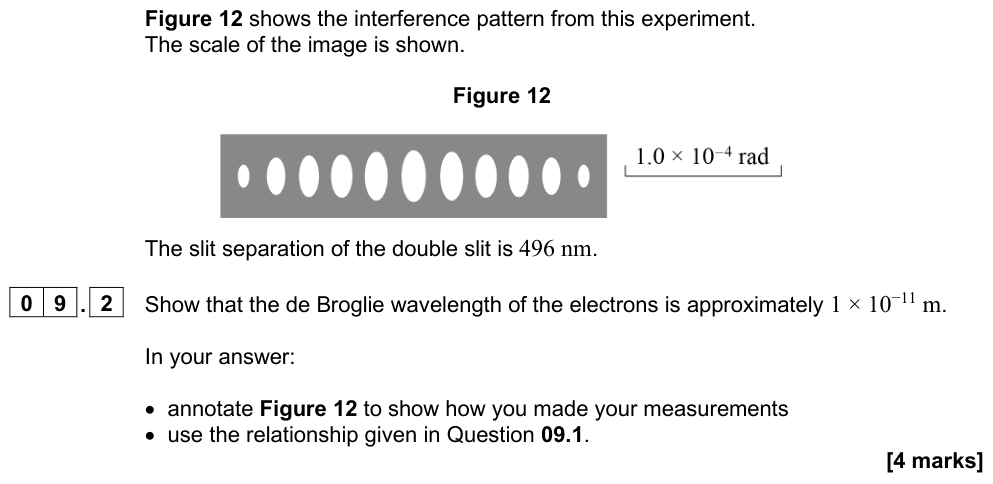
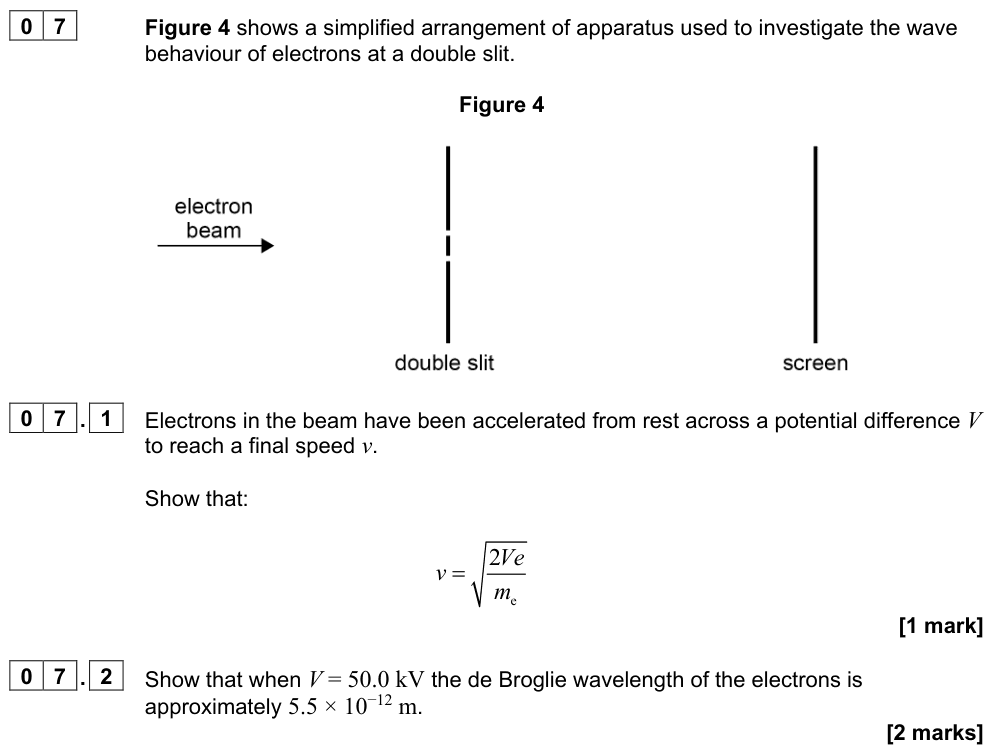
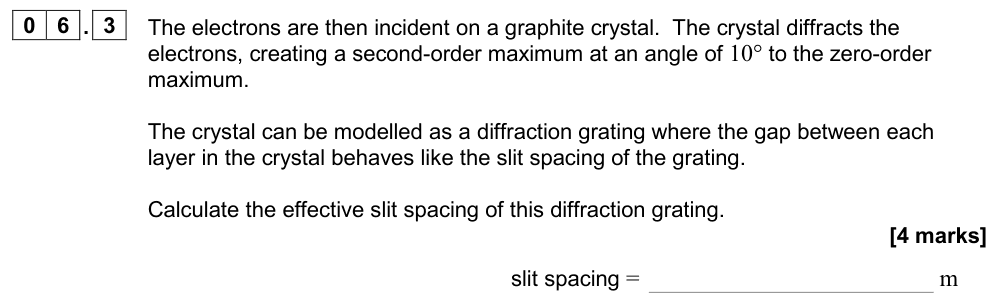
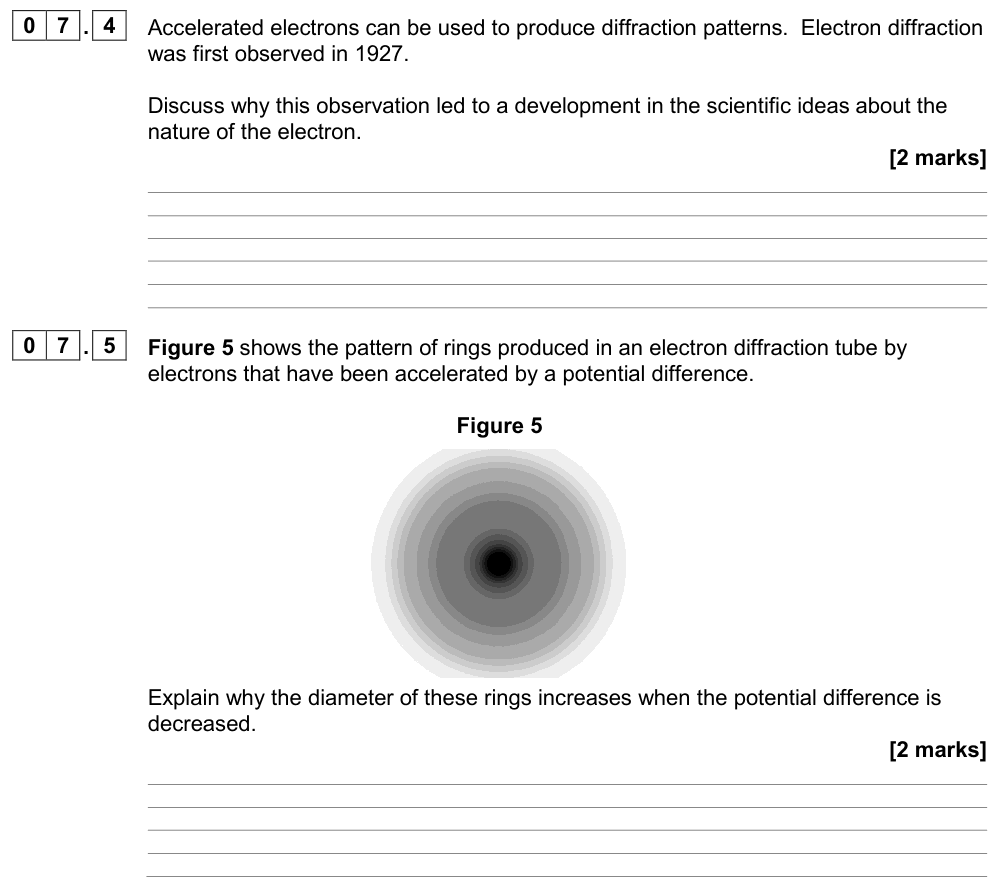
When a beam of electrons passes through a thin layer of polycrystalline graphite (or any thin crystal), a diffraction pattern of concentric rings is seen on a fluorescent screen. Diffraction is a wave property, so this shows that electrons (particles) have wave properties, confirming de Broglie's hypothesis.
How the amount of diffraction depends on momentum
Diffraction is greatest when the wavelength is similar to the gap (here the spacing between layers of atoms).
- Increasing the accelerating p.d. → electrons move faster → larger momentum → shorter de Broglie wavelength → less diffraction → the rings get smaller (closer to the centre).
- Decreasing the speed → longer wavelength → more diffraction → larger rings.
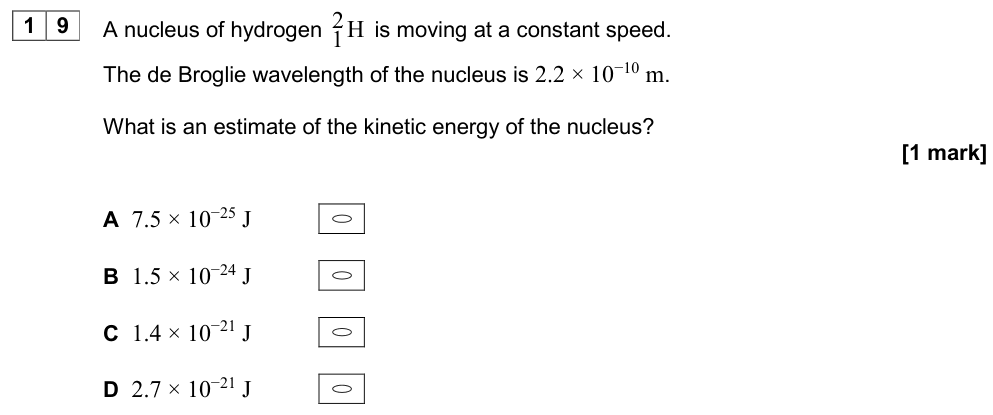
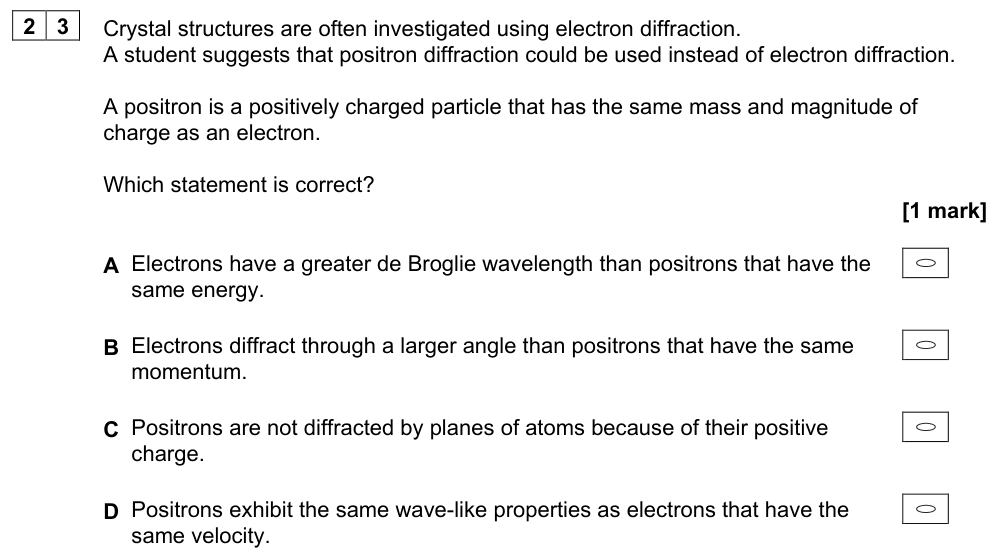
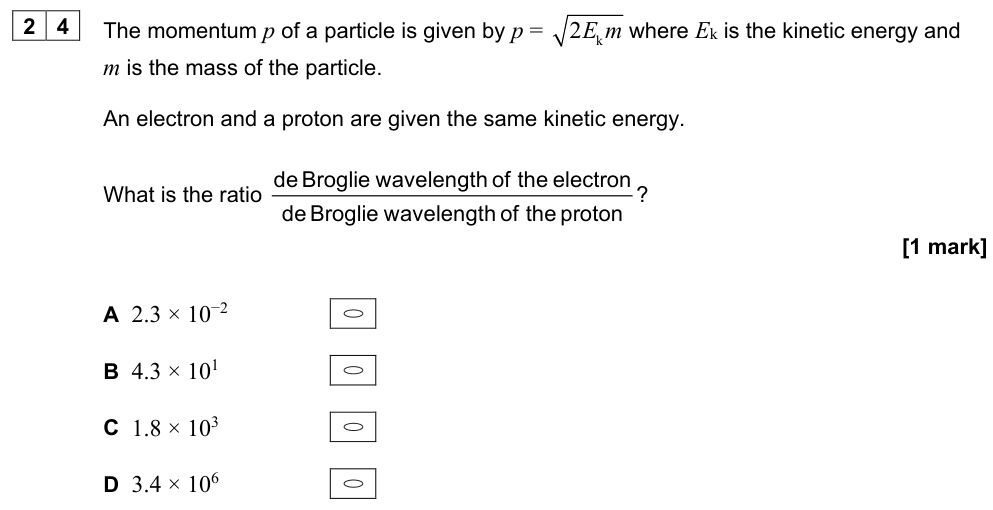
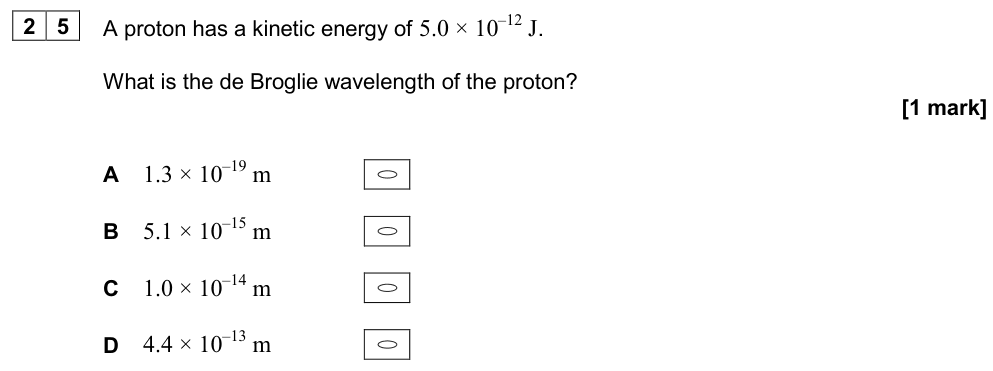
- A proton or neutron with the same speed has much more momentum (about 1840 times the mass), so a much shorter wavelength and much less diffraction. To get the same pattern it must have the same momentum, not the same speed.
Exam tip
Particles with the same momentum have the same de Broglie wavelength, regardless of their mass. Particles with the same kinetic energy have $p = \sqrt{2mE_k}$, so the heavier particle has the larger momentum and the shorter wavelength.
Uses of electron diffraction
Electron and neutron diffraction are used to study the structure of crystals and molecules. Electron microscopes use electrons with very short wavelengths (much shorter than visible light), so they can resolve much finer detail than optical microscopes.
How scientific understanding changes
- Newton favoured a particle (corpuscular) theory of light; Huygens a wave theory.
- Young's interference experiment (1801) convinced scientists that light was a wave.
- Einstein's photon explanation of the photoelectric effect (1905) brought back a particle model.
- De Broglie (1924) proposed matter waves; Davisson, Germer and Thomson observed electron diffraction (1927), confirming the idea.
Each new theory was accepted only after experimental evidence supported it and was checked by other scientists. Today both light and matter are described by quantum theory, in which both wave and particle descriptions are needed.
Summary
- Diffraction and interference show light behaves as a wave; the photoelectric effect shows it behaves as particles (photons).
- de Broglie: $\lambda = h/mv = h/p$; for an electron accelerated through $V$, $\lambda = h/\sqrt{2meV}$.
- Electron diffraction (rings through graphite) shows that particles have wave properties.
- More momentum → shorter wavelength → less diffraction (smaller rings).