Conservation of charge and energy
Two conservation laws explain every rule for circuits.
Kirchhoff's laws
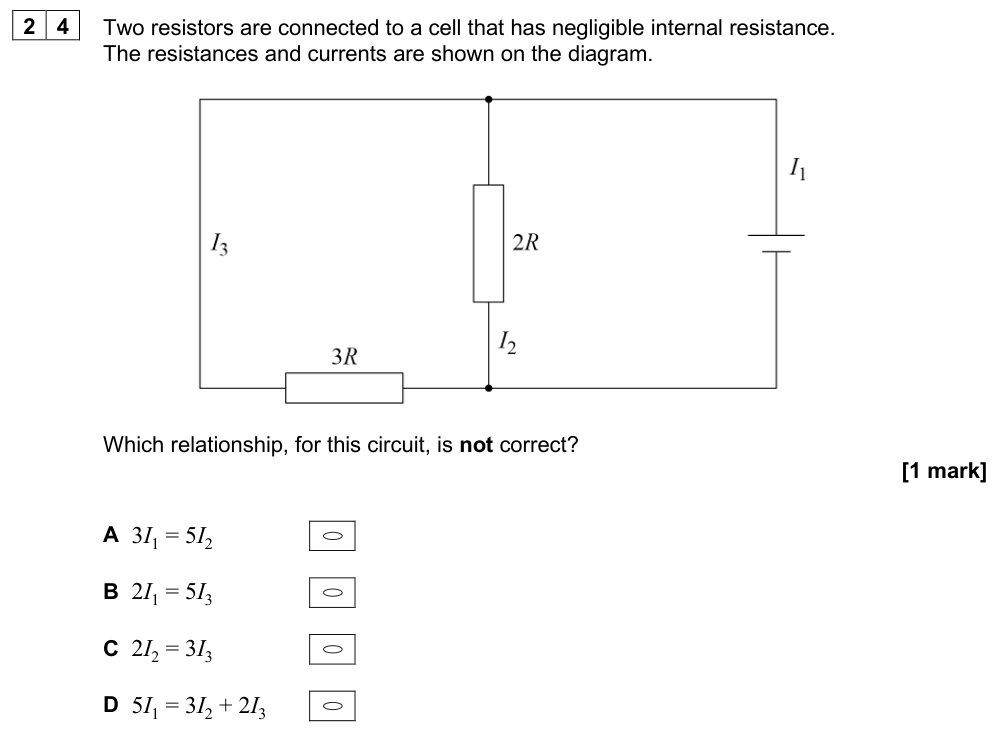
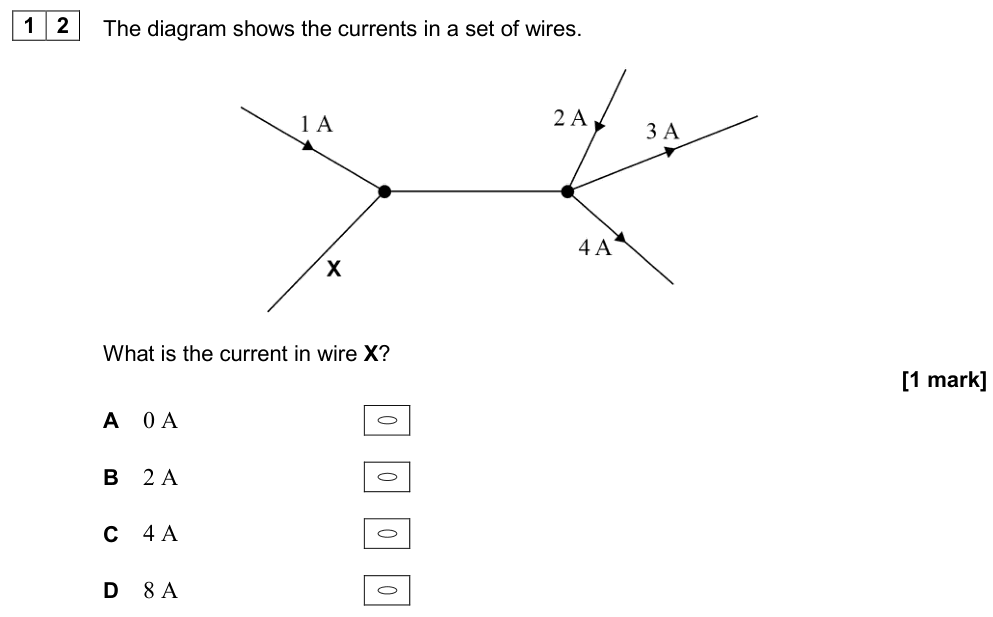
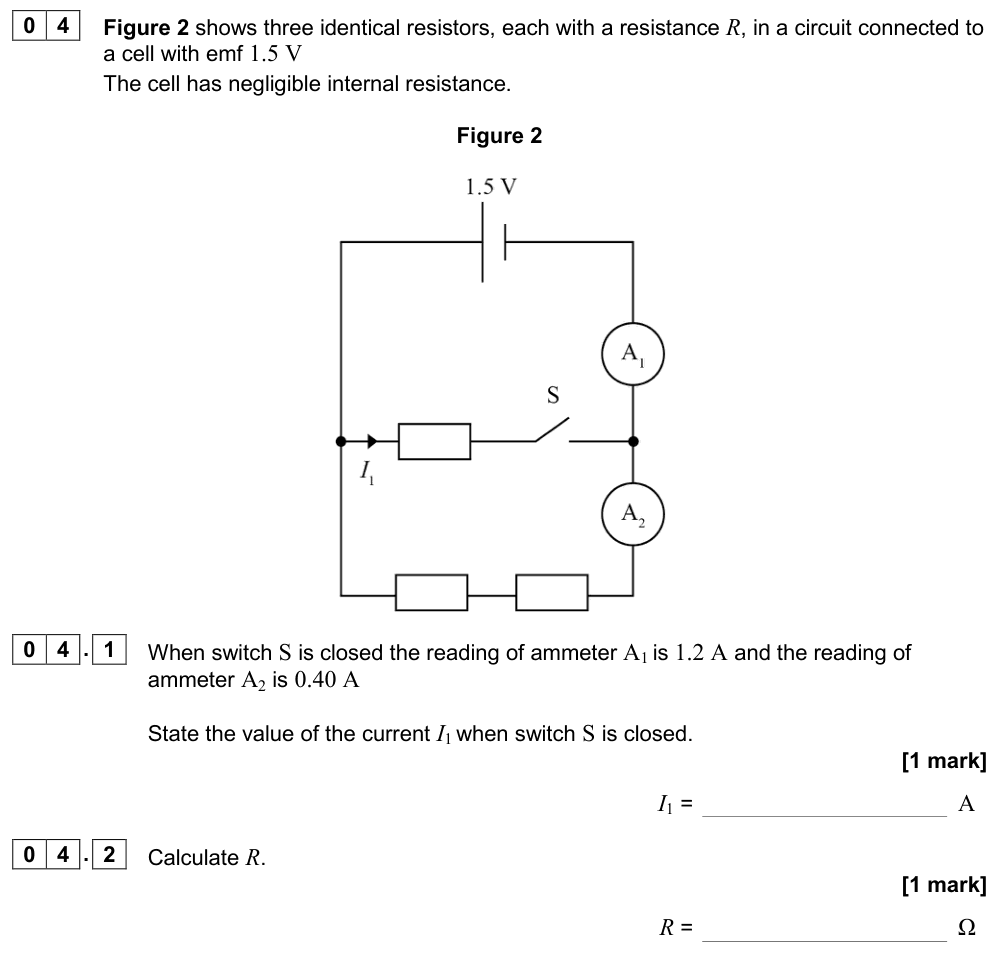
Conservation of charge (first law): the total current flowing into any junction equals the total current flowing out of it. Charge cannot build up or disappear.
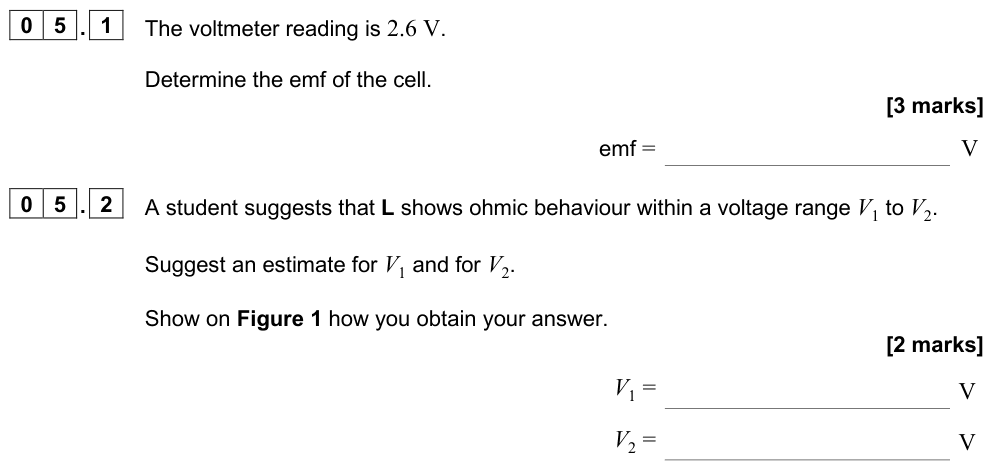
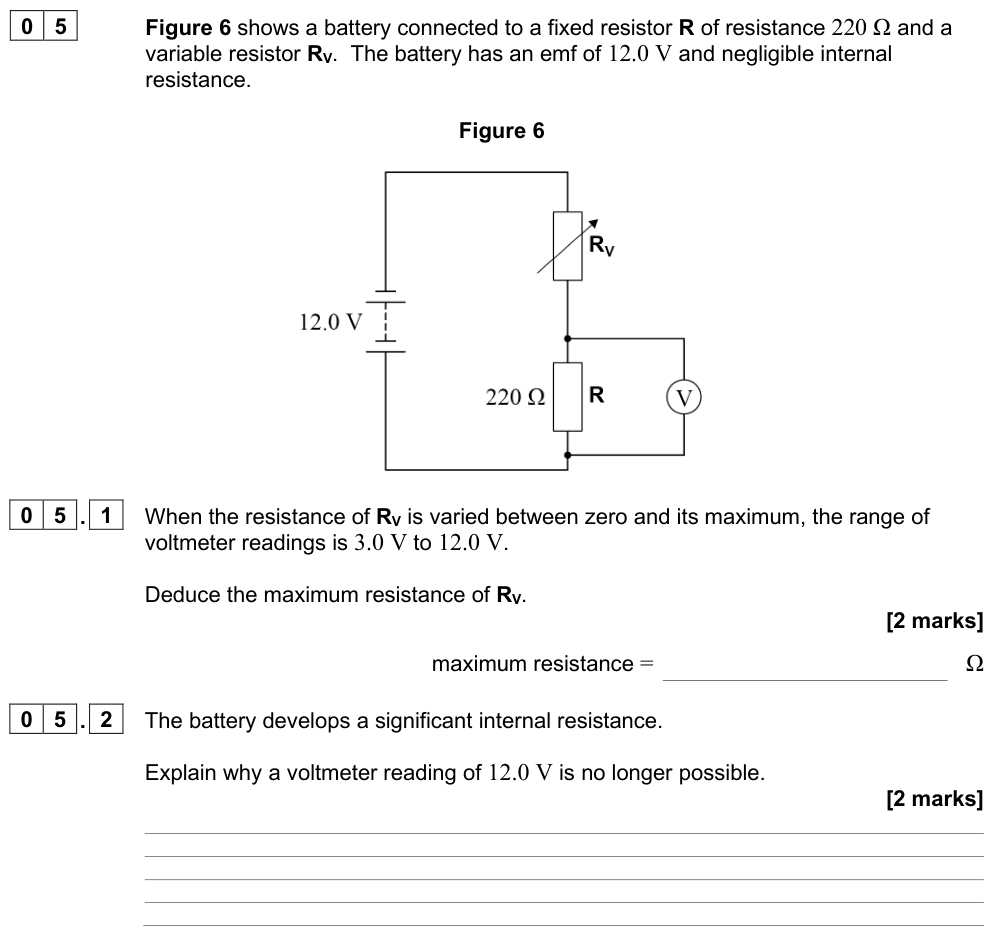
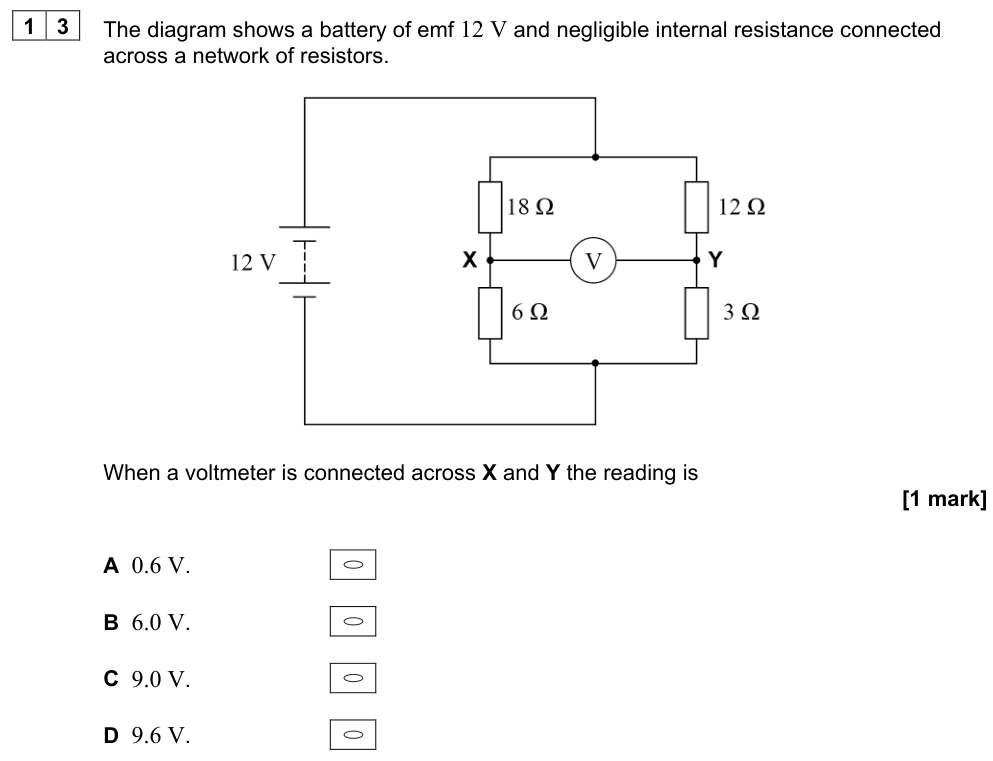
Conservation of energy (second law): around any closed loop in a circuit, the sum of the e.m.f.s equals the sum of the p.d.s ($\sum \varepsilon = \sum IR$). The energy given to each coulomb by the sources is all transferred by the components.
Series circuits
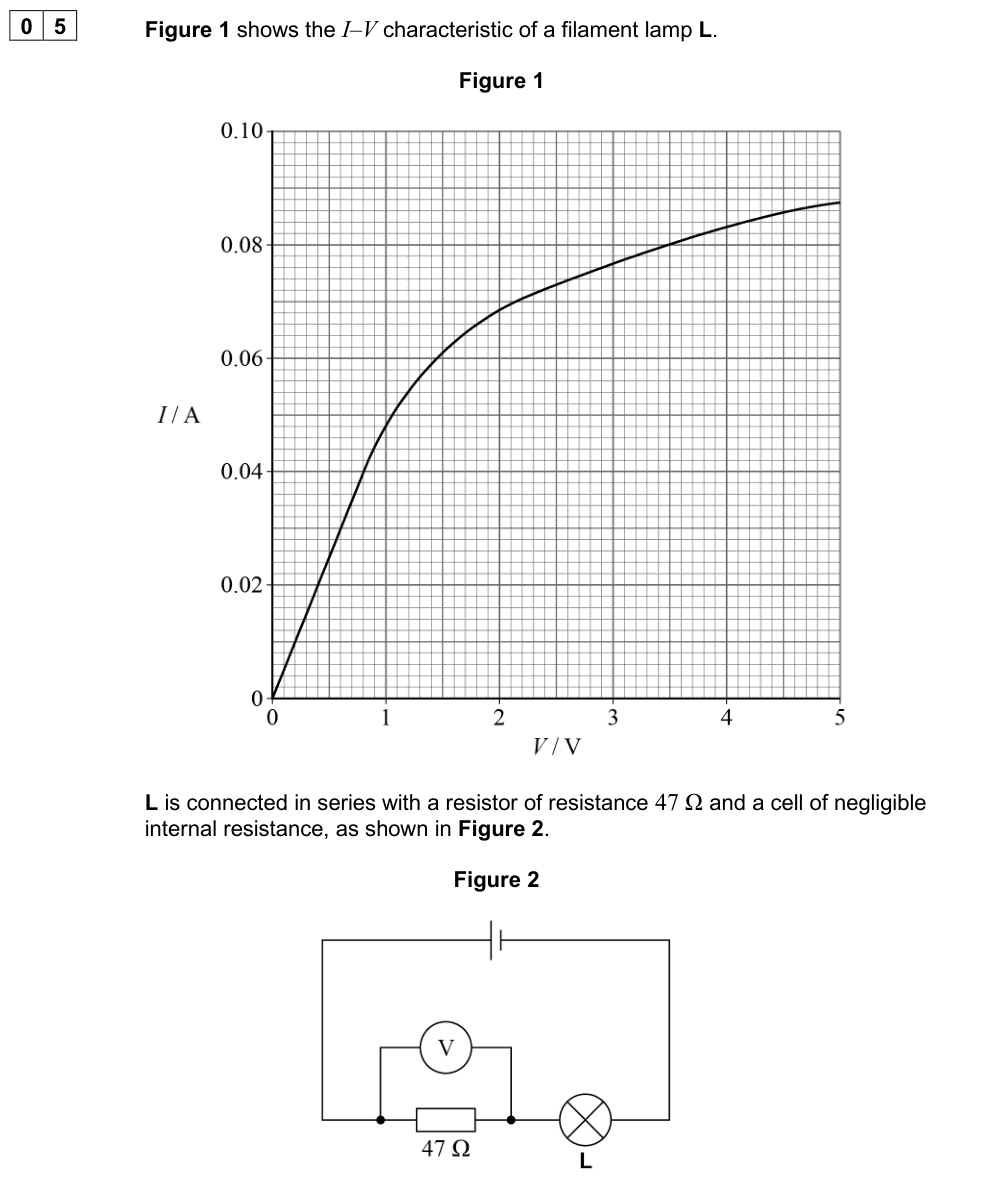
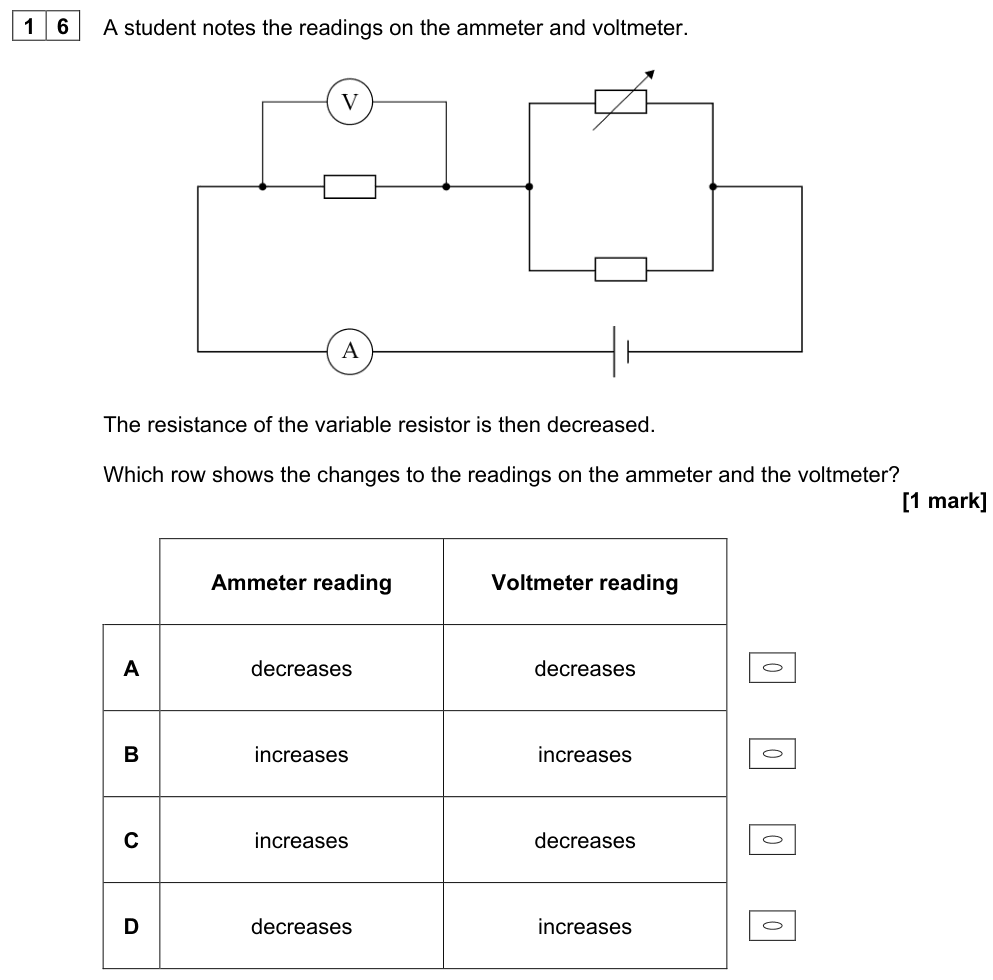
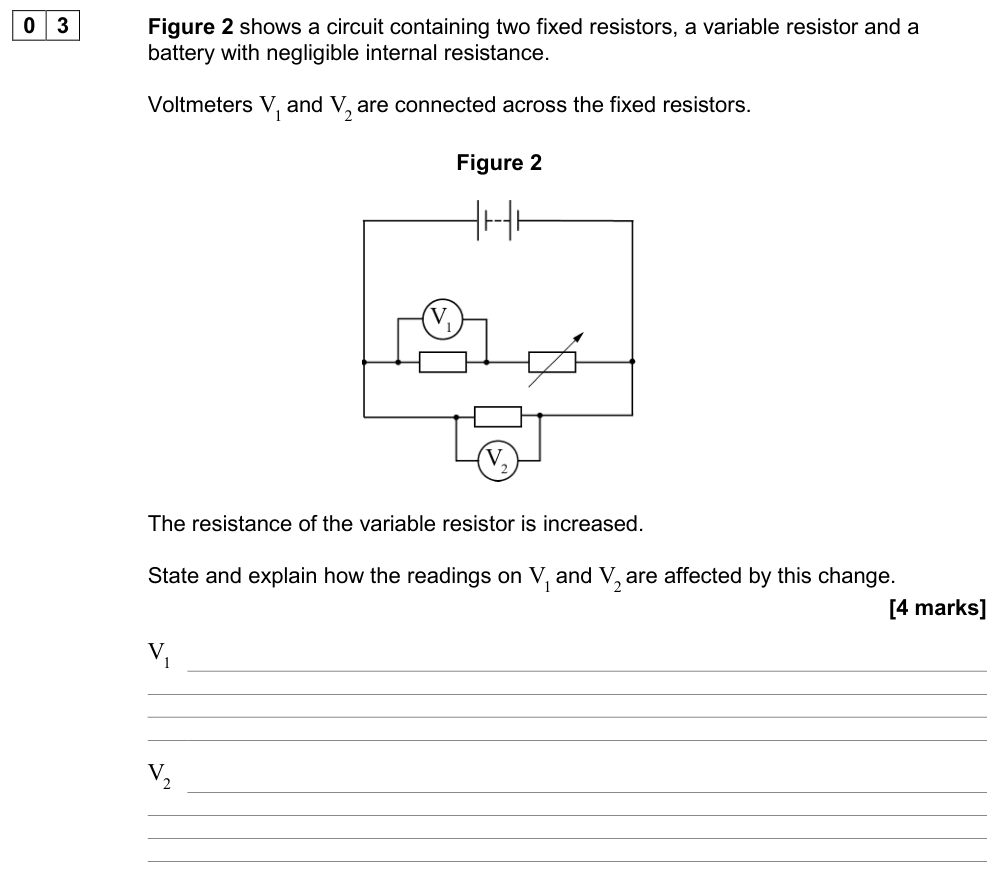
In a series circuit the components are connected one after another in a single loop.
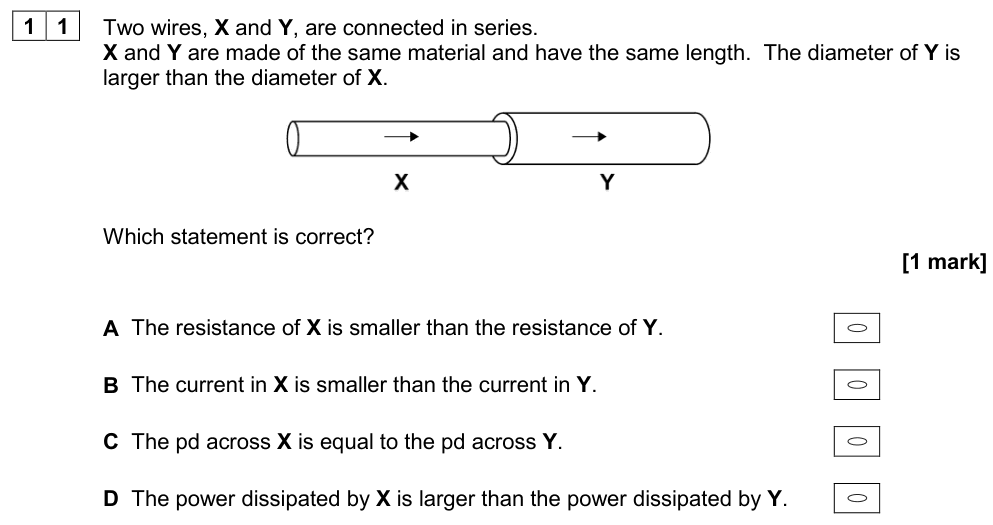
- The current is the same everywhere: $I = I_1 = I_2$.
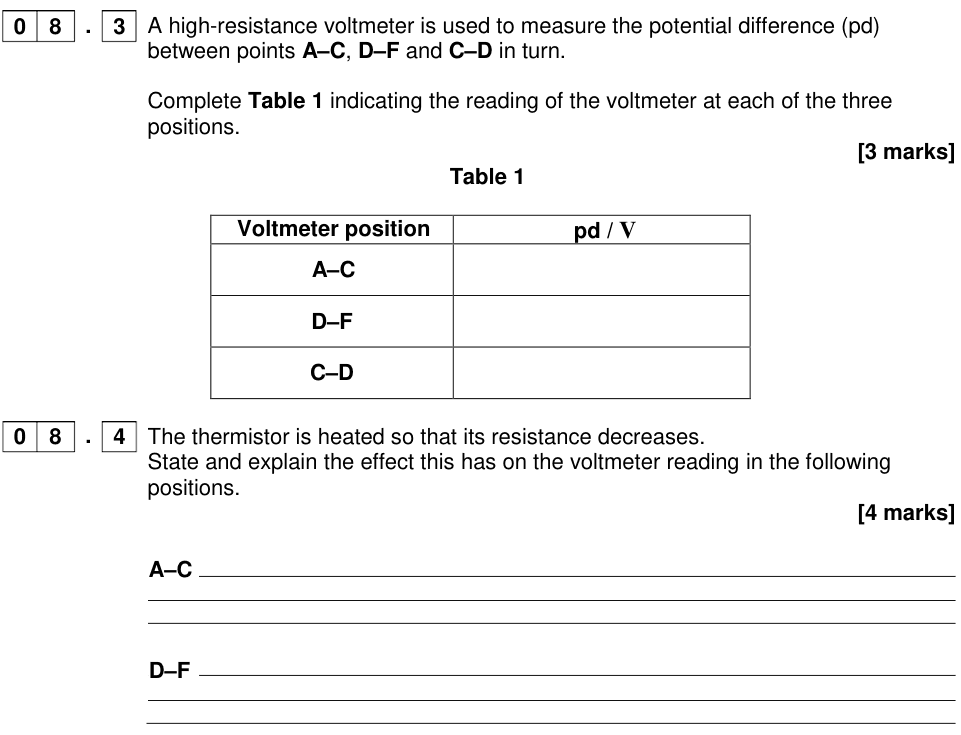
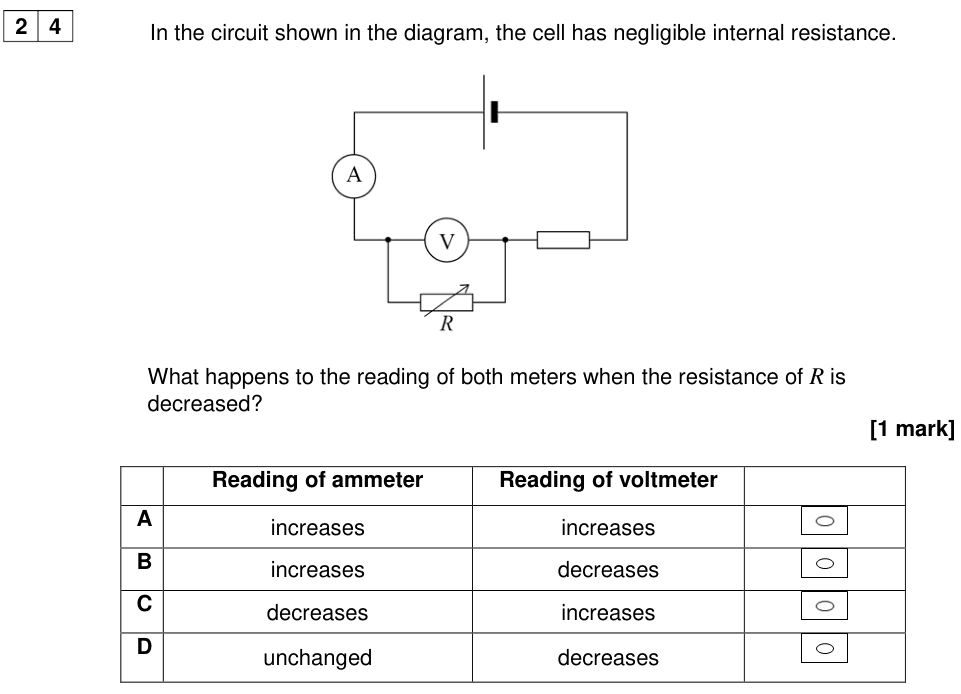
- The p.d.s add up to the supply p.d.: $V = V_1 + V_2 + \dots$
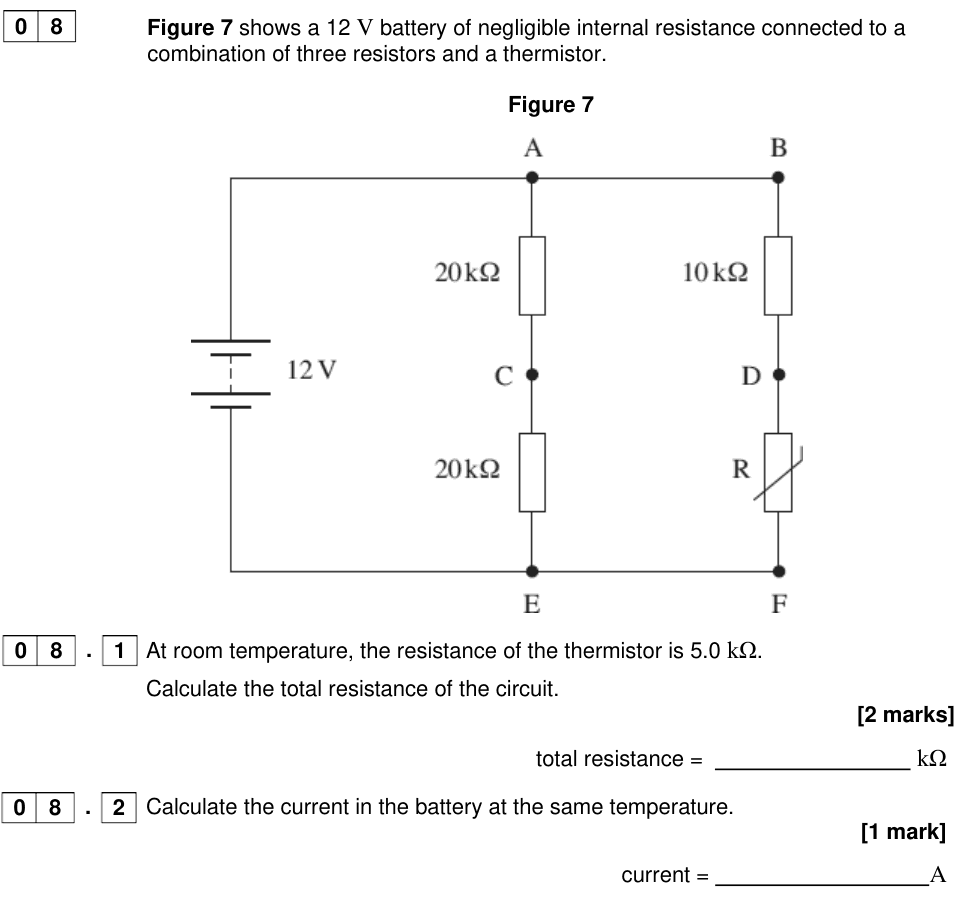
- The p.d. across each resistor is proportional to its resistance (larger resistor, larger share of the p.d.).
Resistors in series
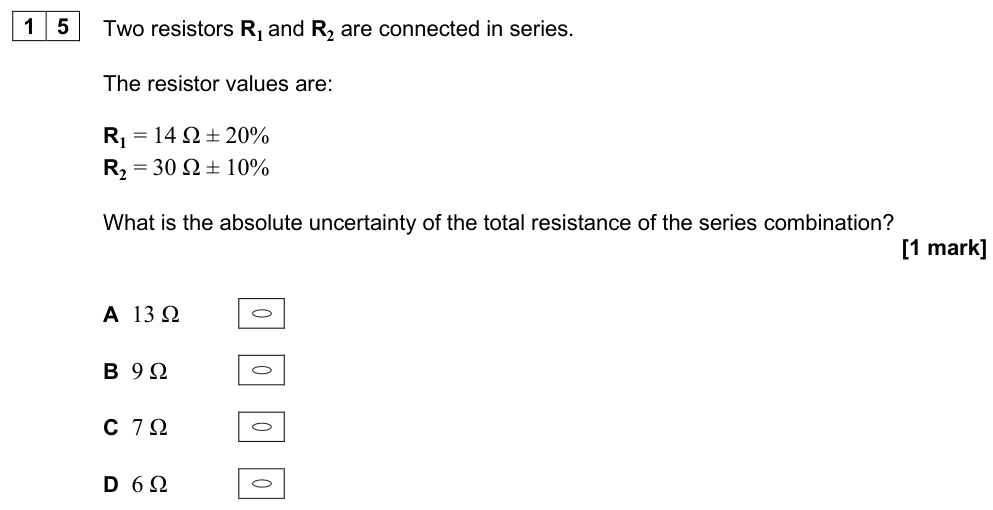
$$R_T = R_1 + R_2 + R_3 + \dots$$
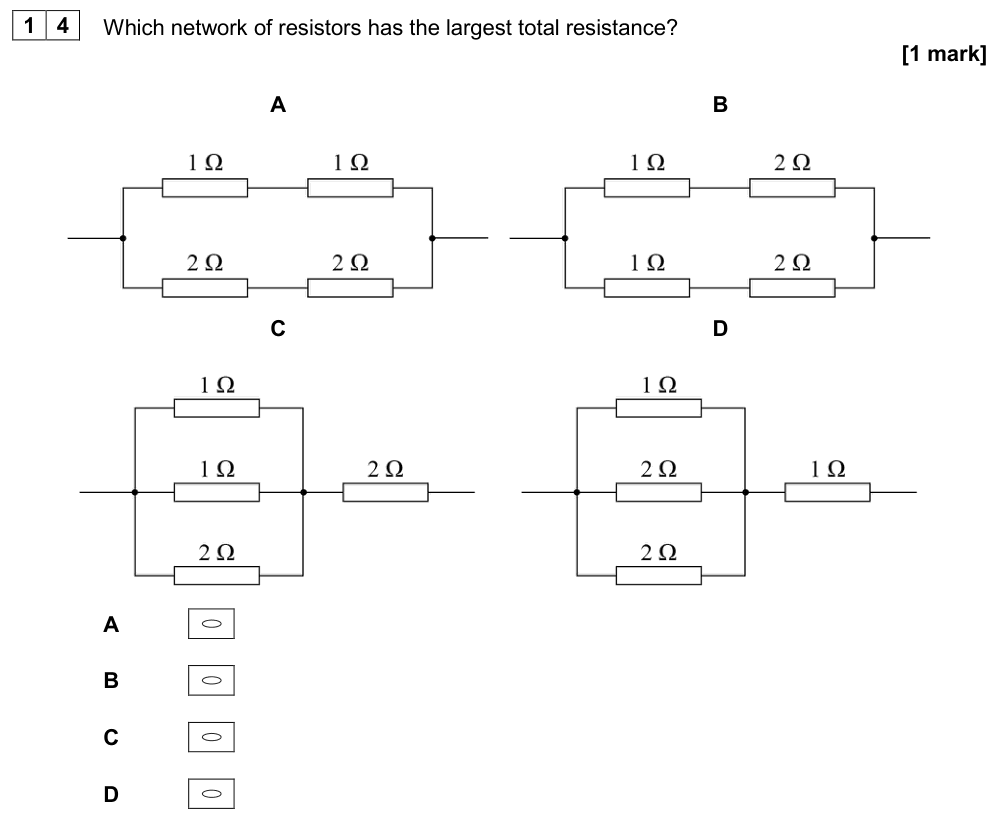
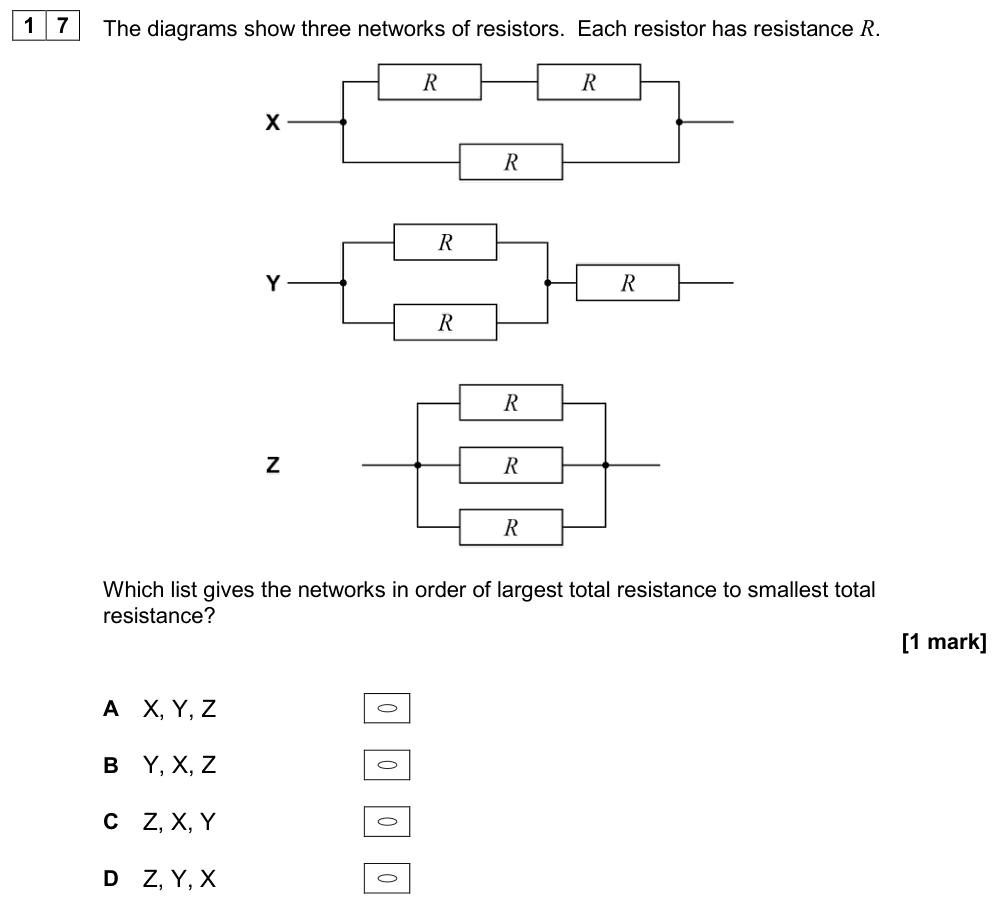
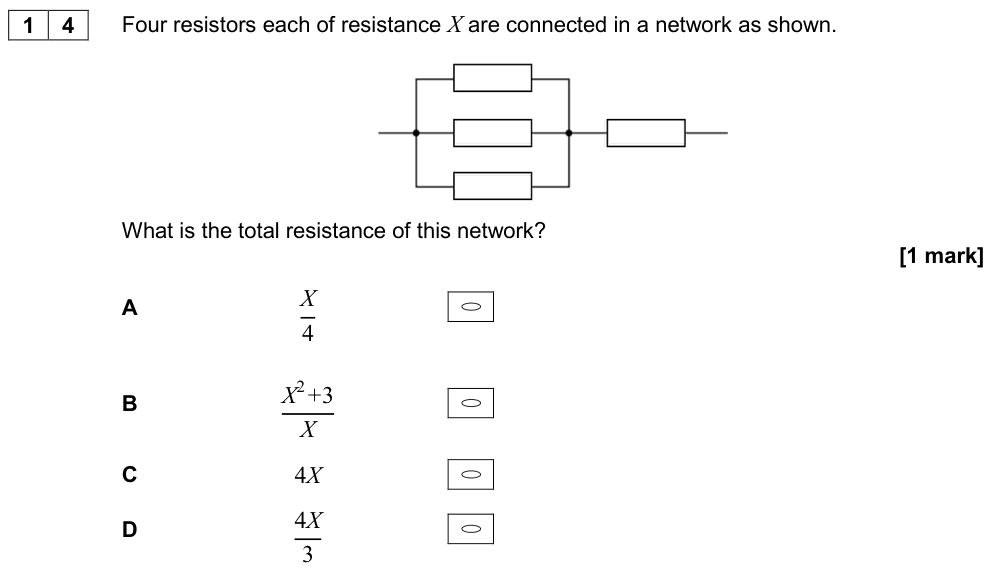
The total resistance is larger than the largest individual resistance.
Parallel circuits
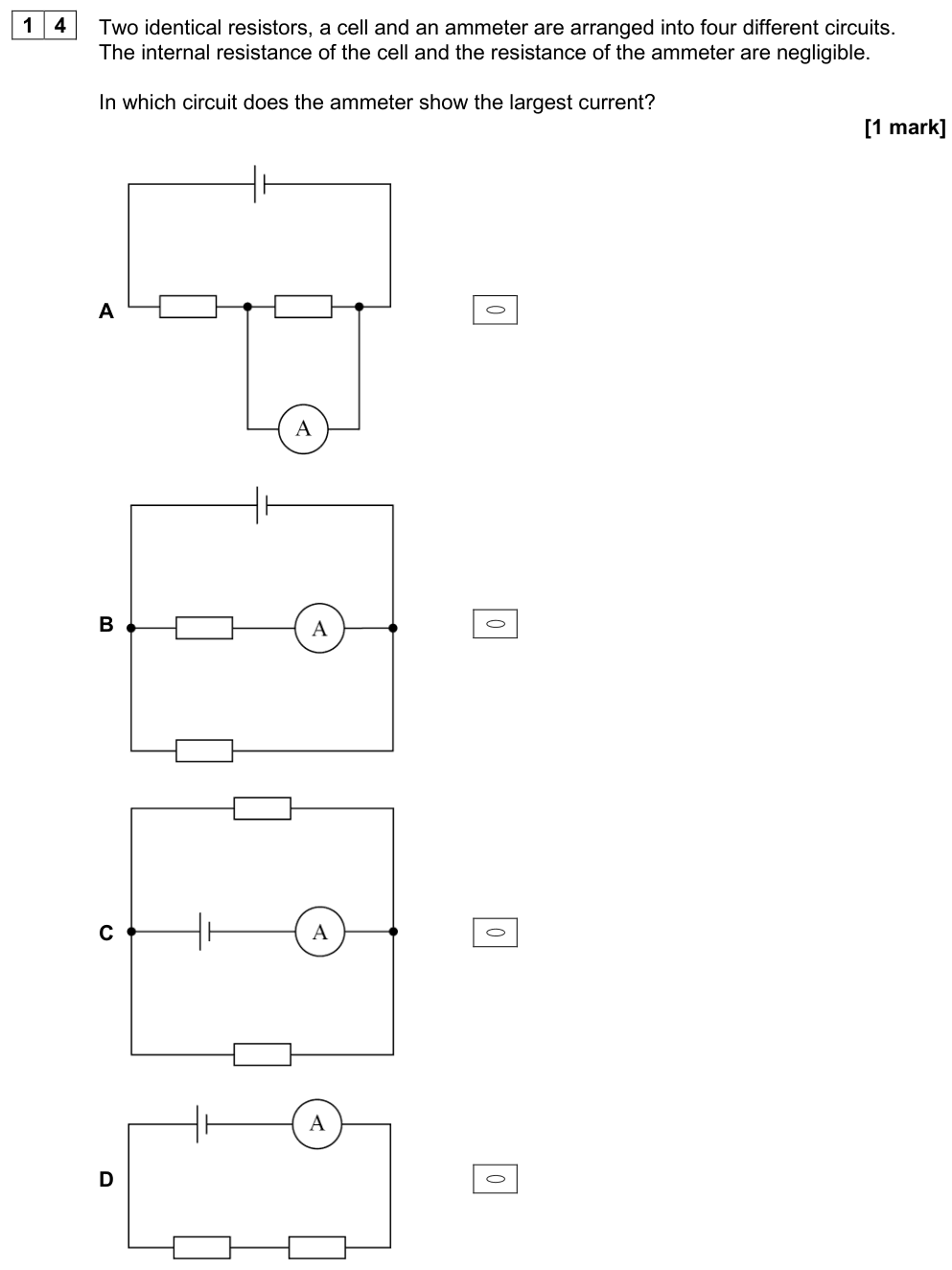
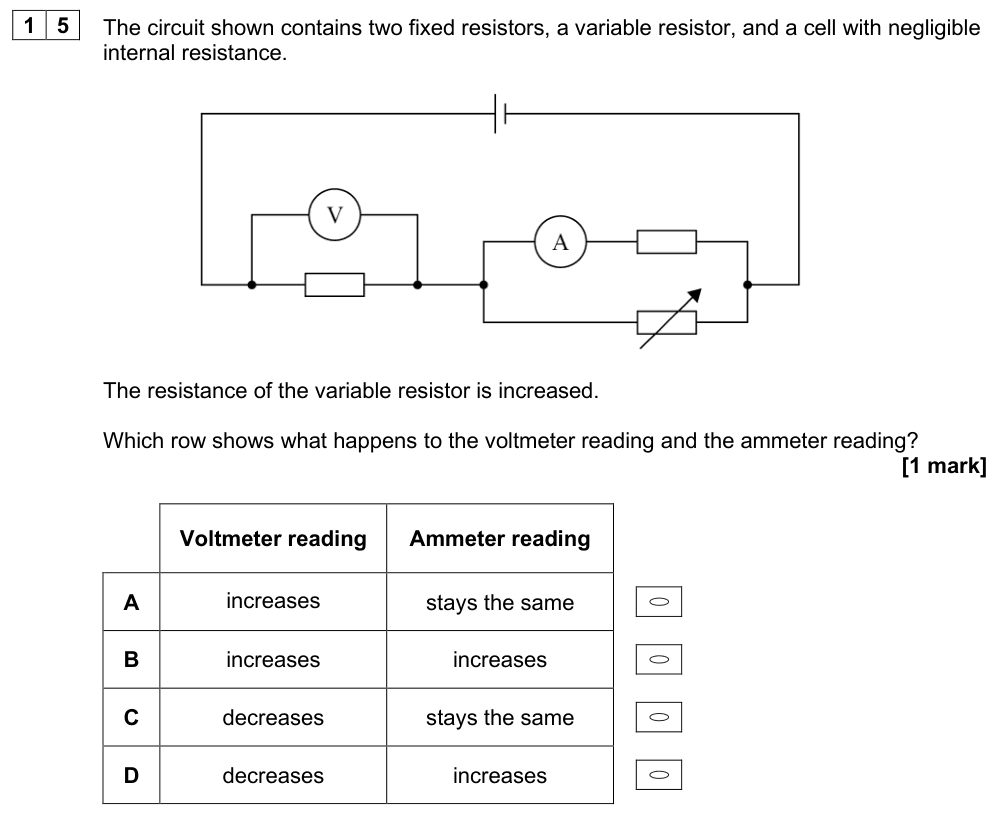
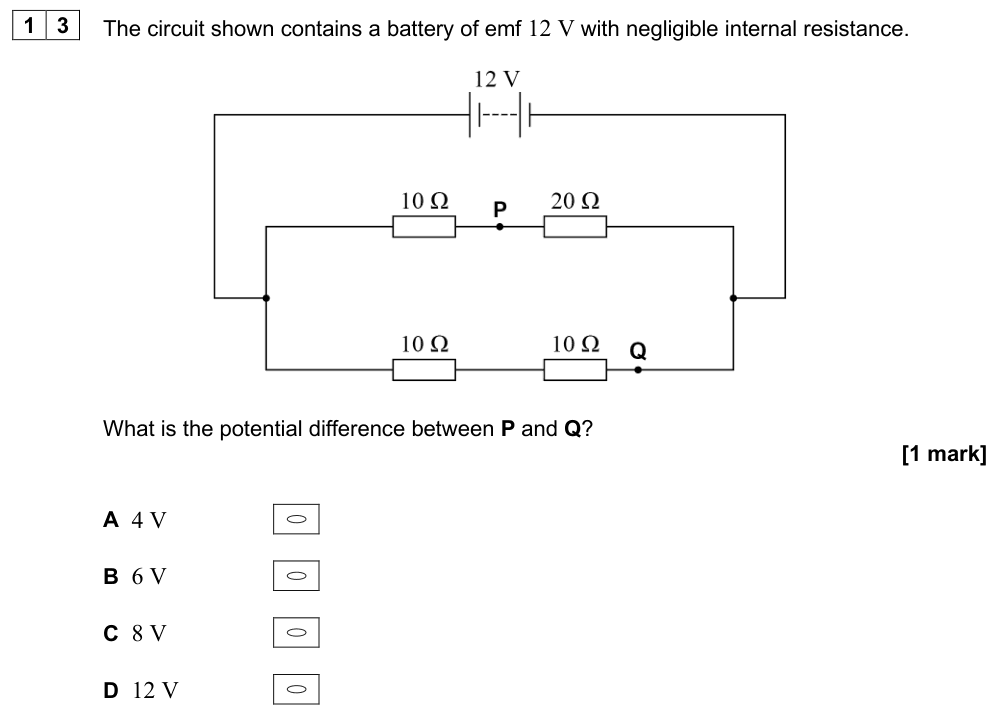
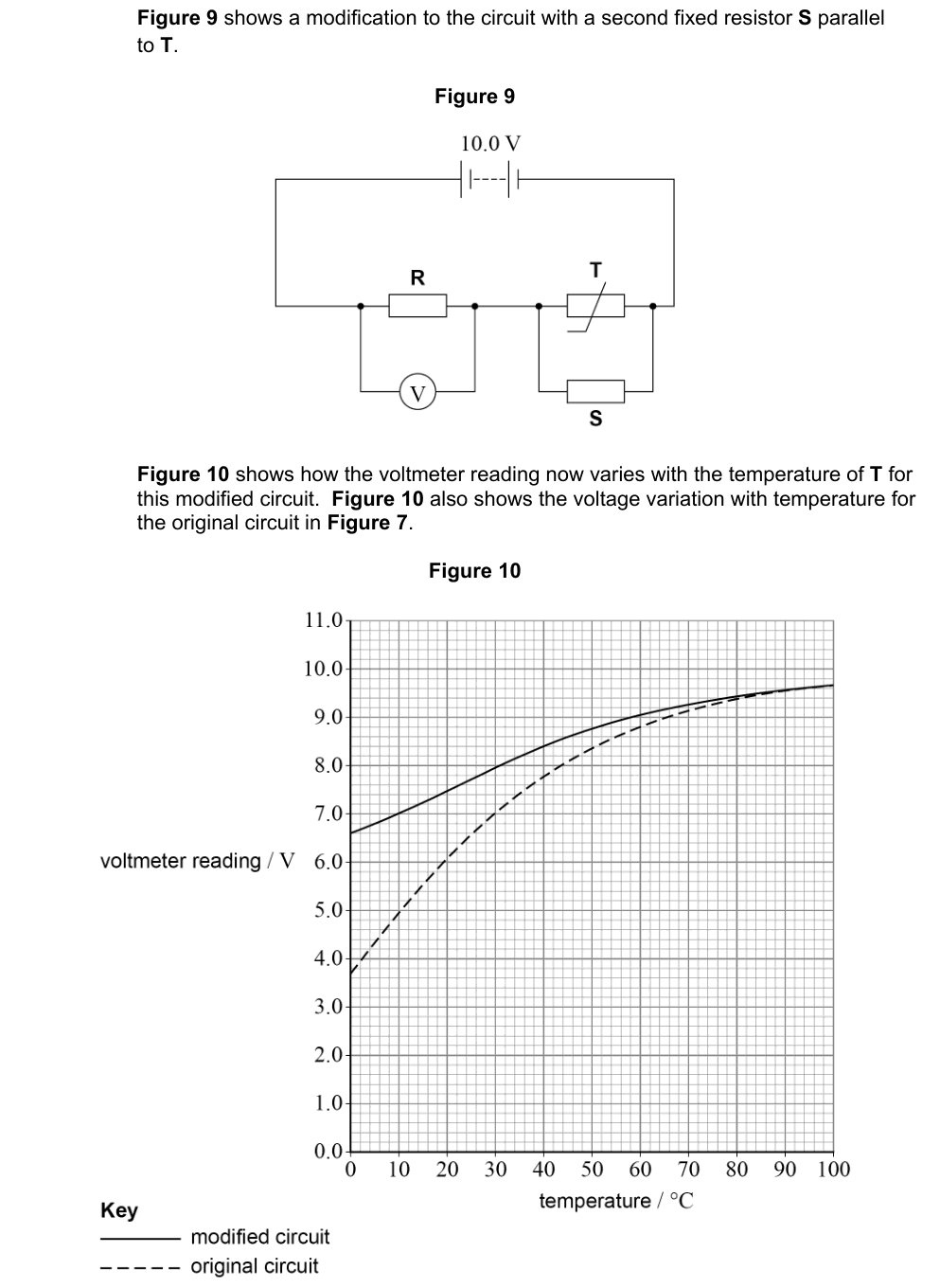
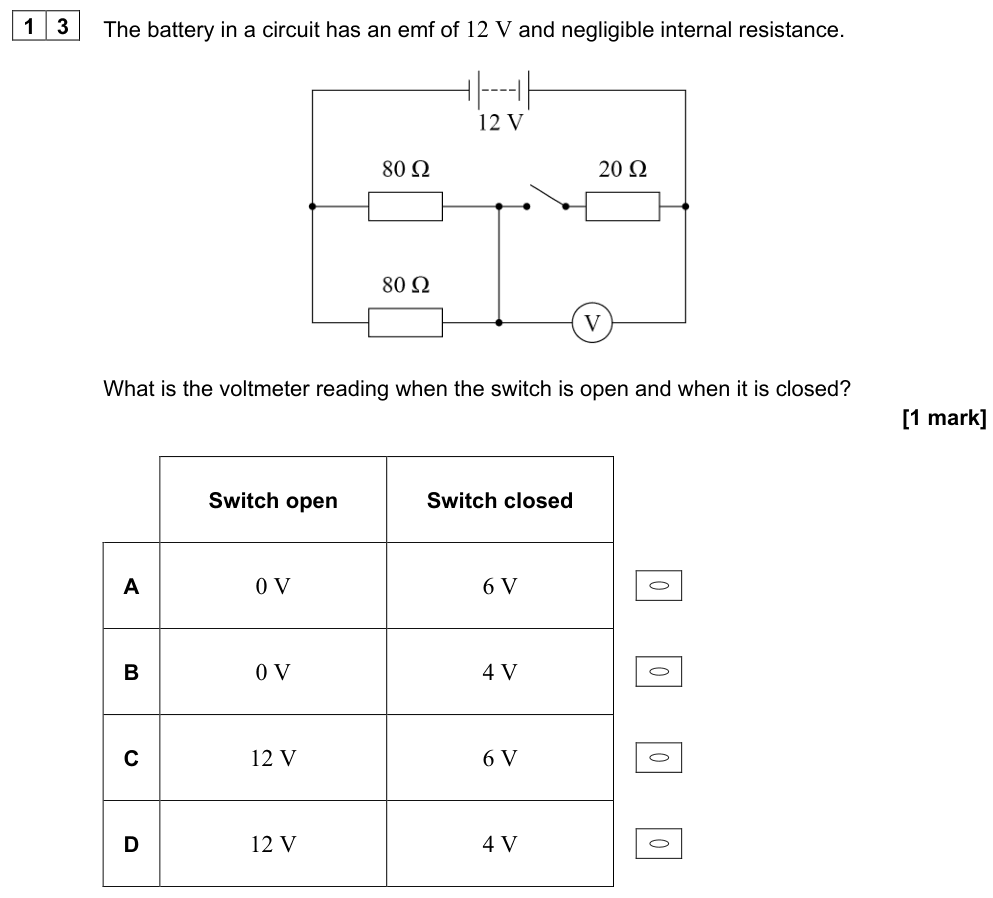
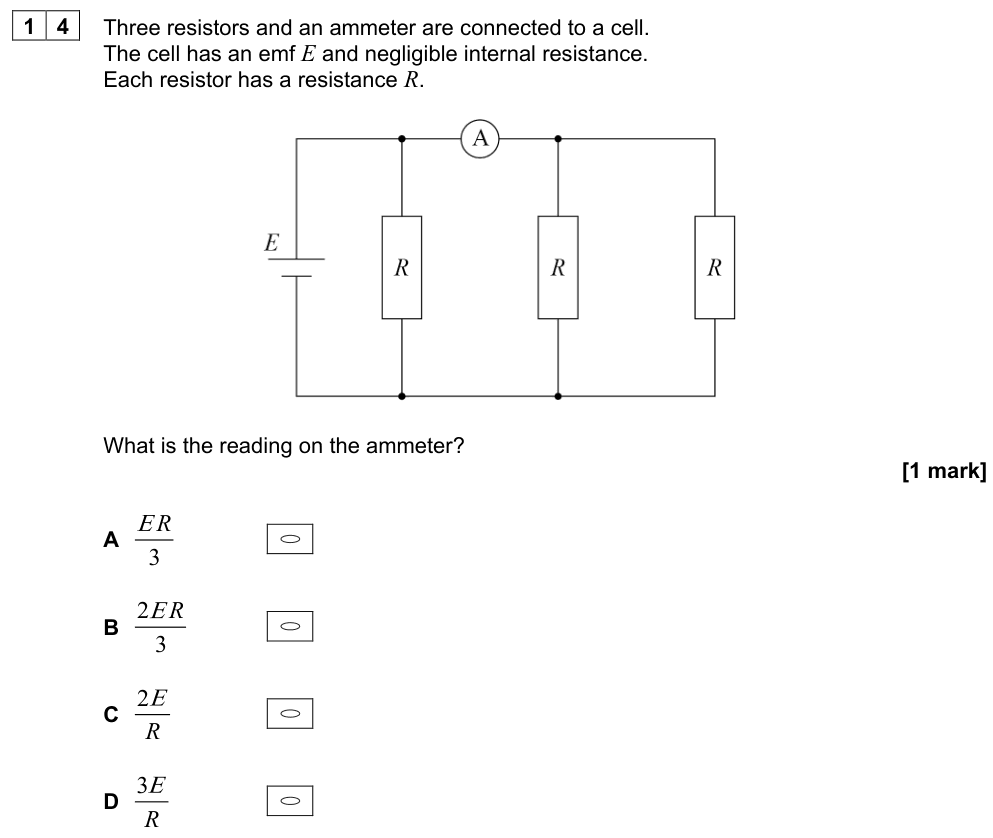
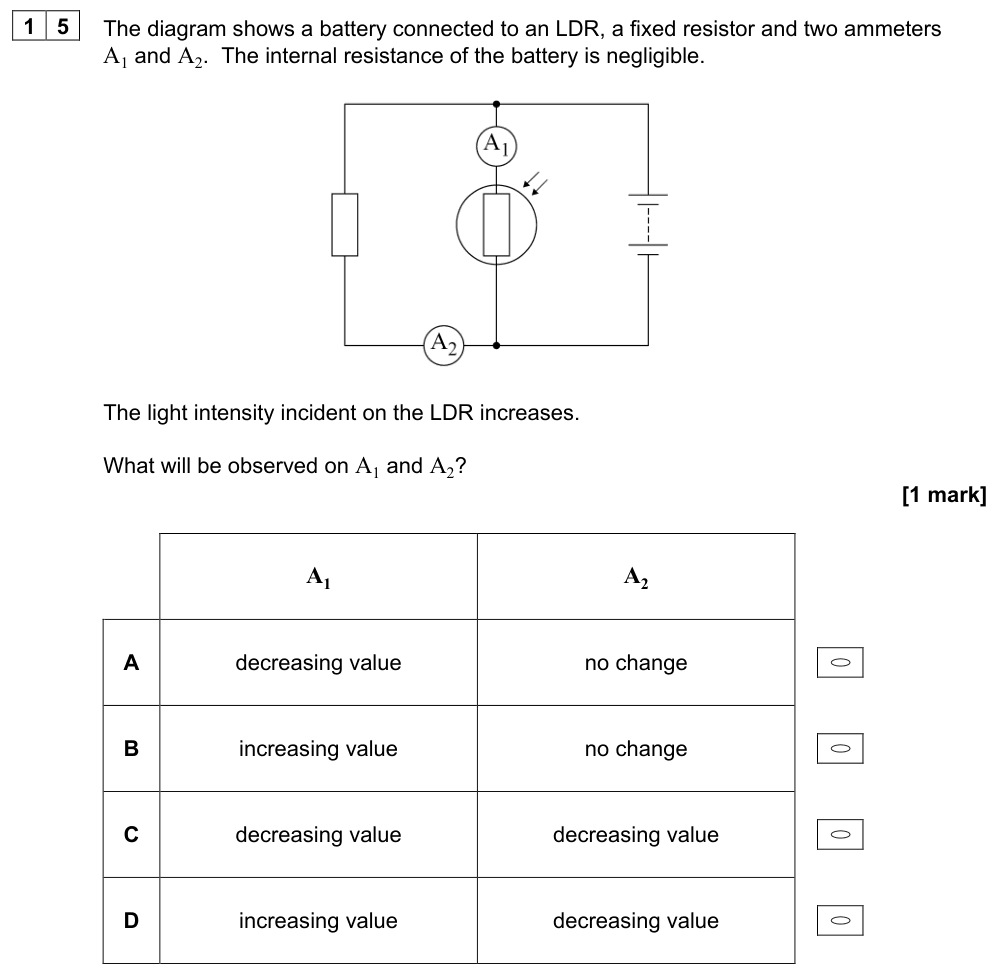
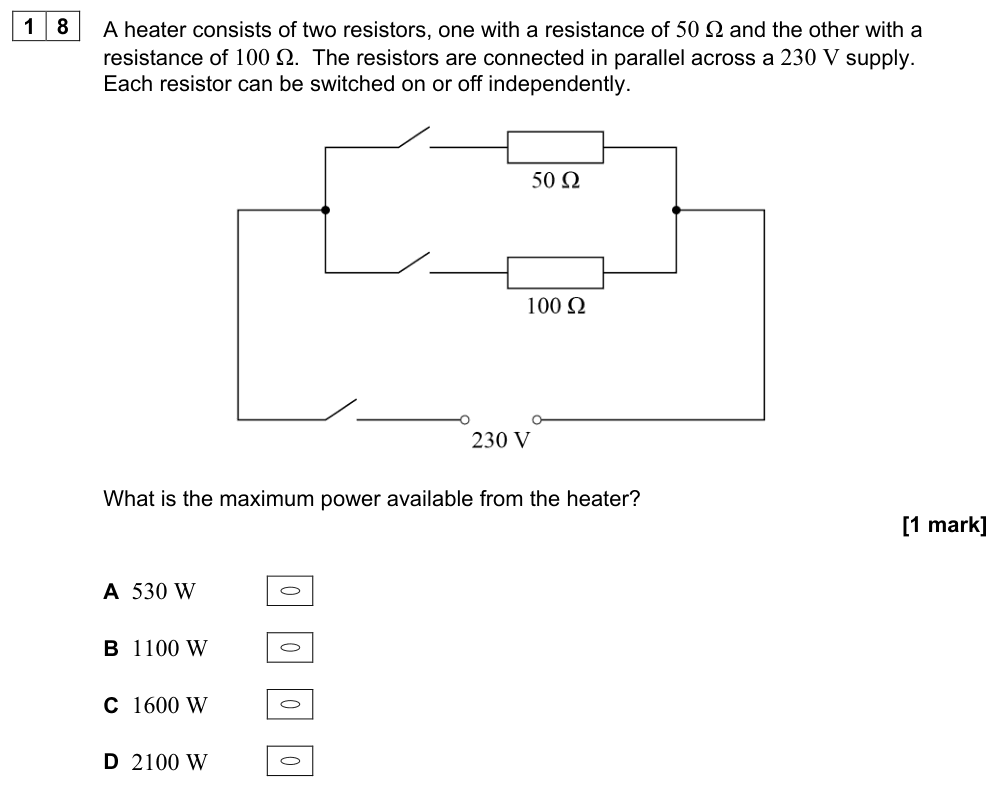
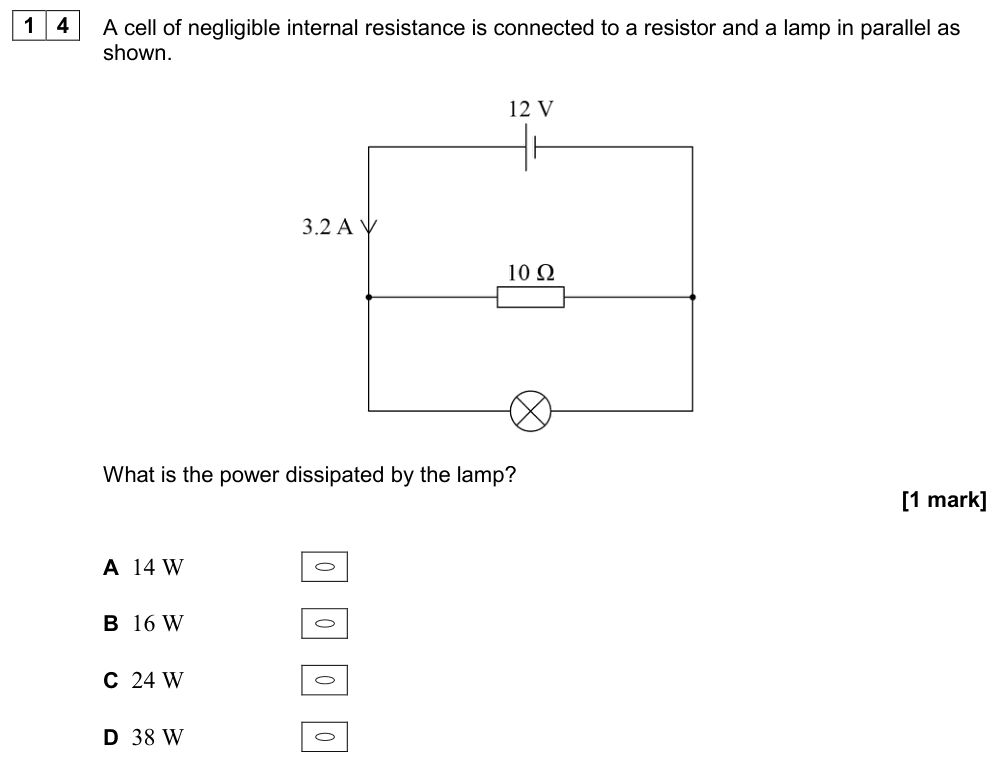
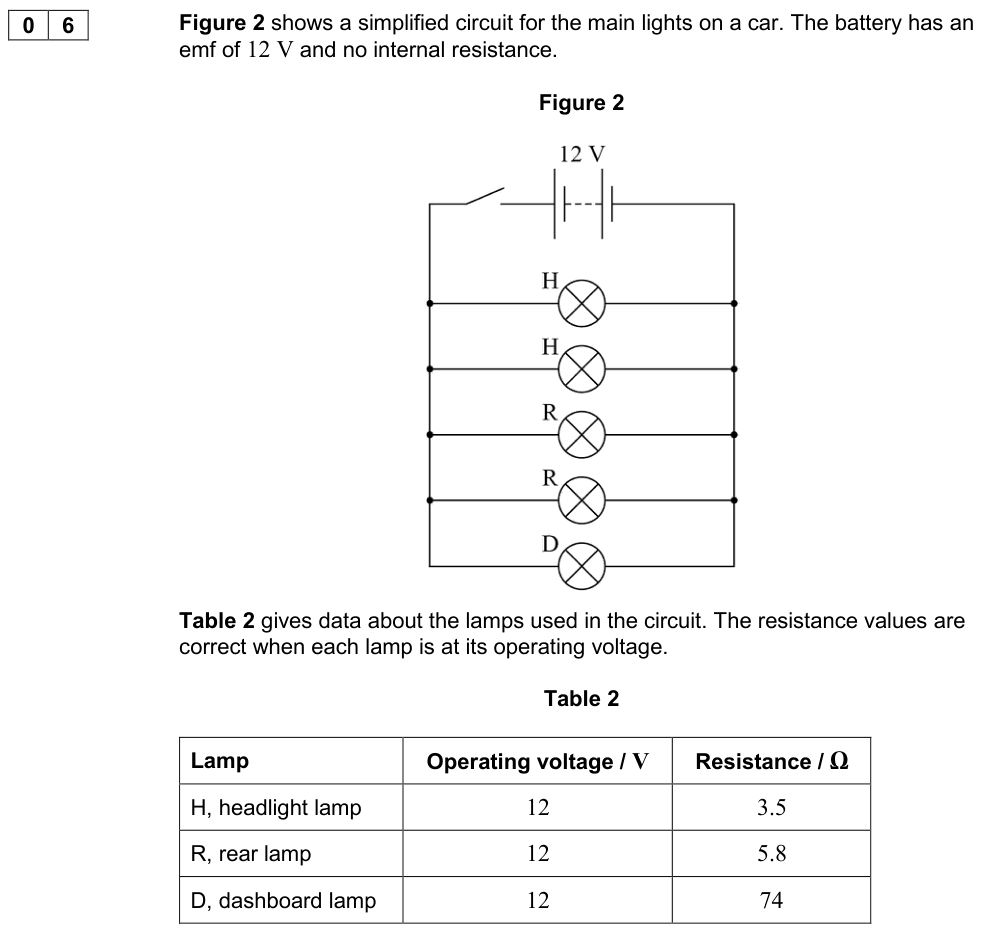
In a parallel circuit the components are connected across the same two points.
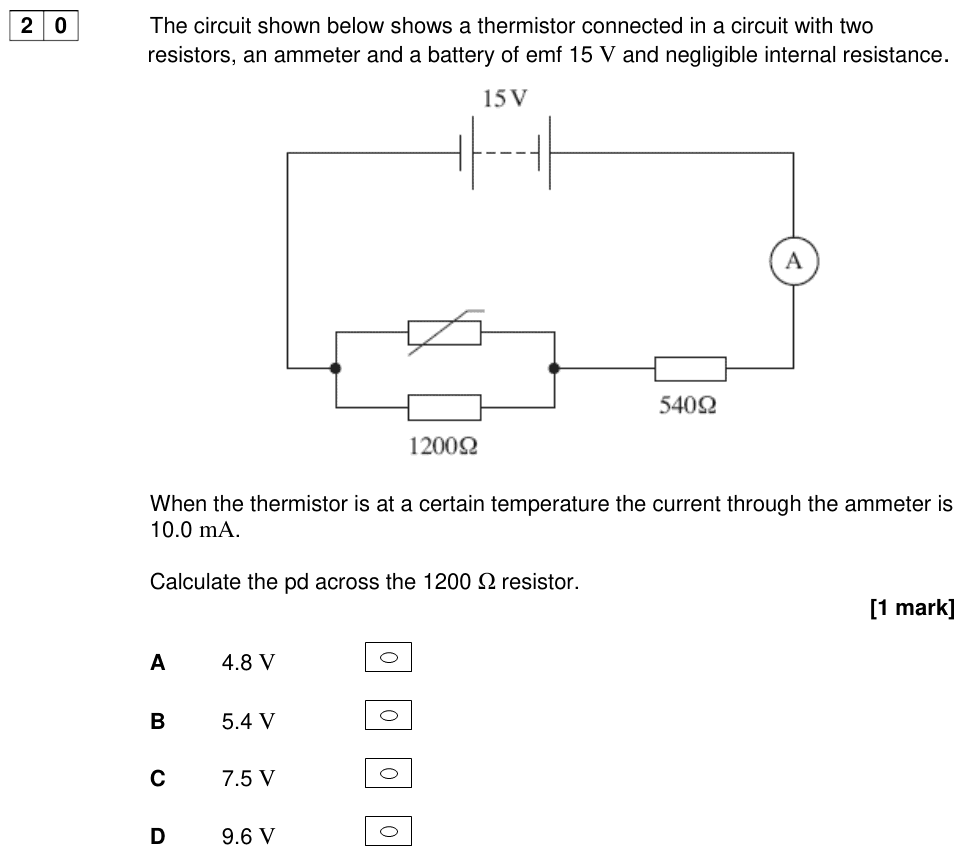
- The p.d. is the same across each branch: $V = V_1 = V_2$.
- The currents add: $I = I_1 + I_2 + \dots$
- The current in each branch is inversely proportional to its resistance.
Resistors in parallel
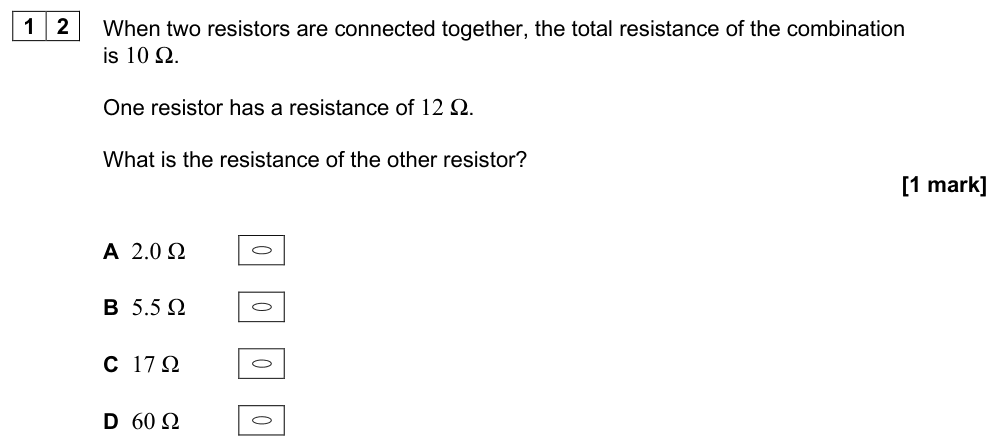
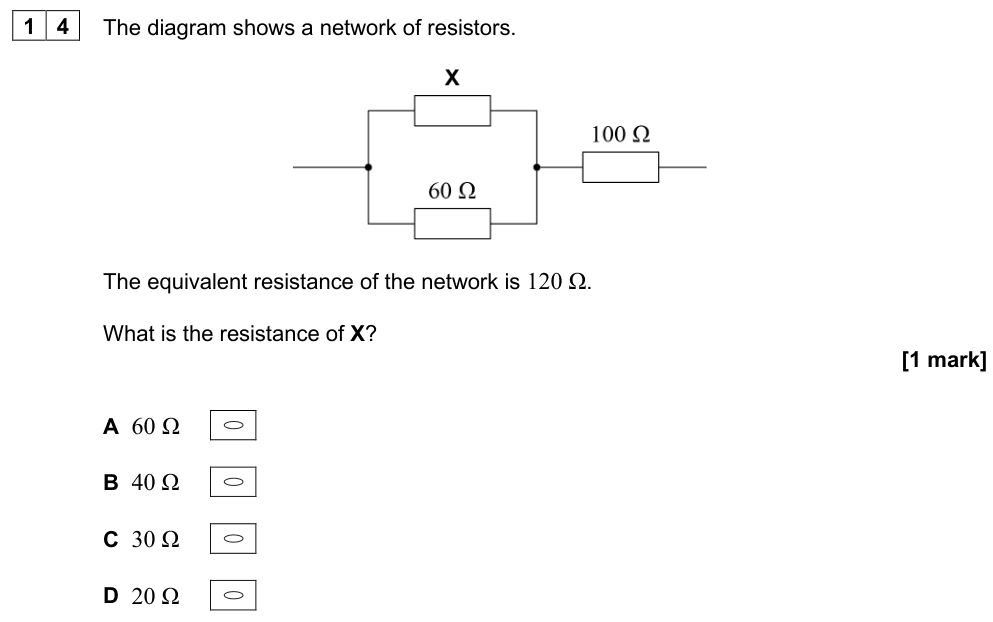
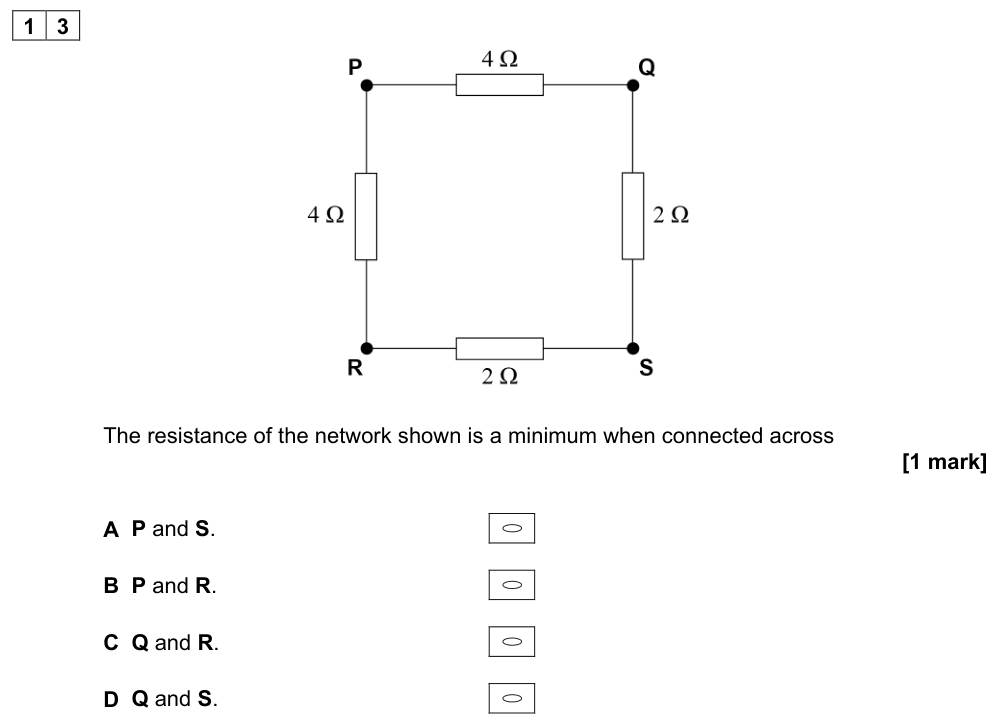
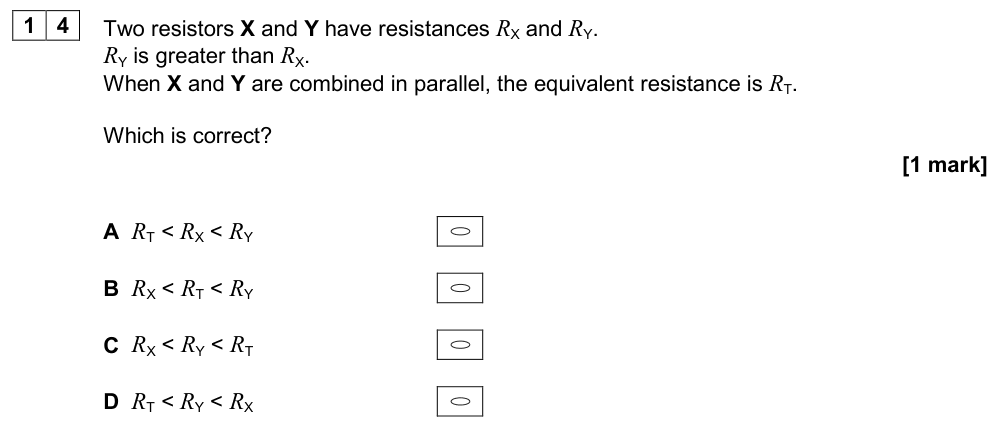
$$\frac{1}{R_T} = \frac{1}{R_1} + \frac{1}{R_2} + \frac{1}{R_3} + \dots$$
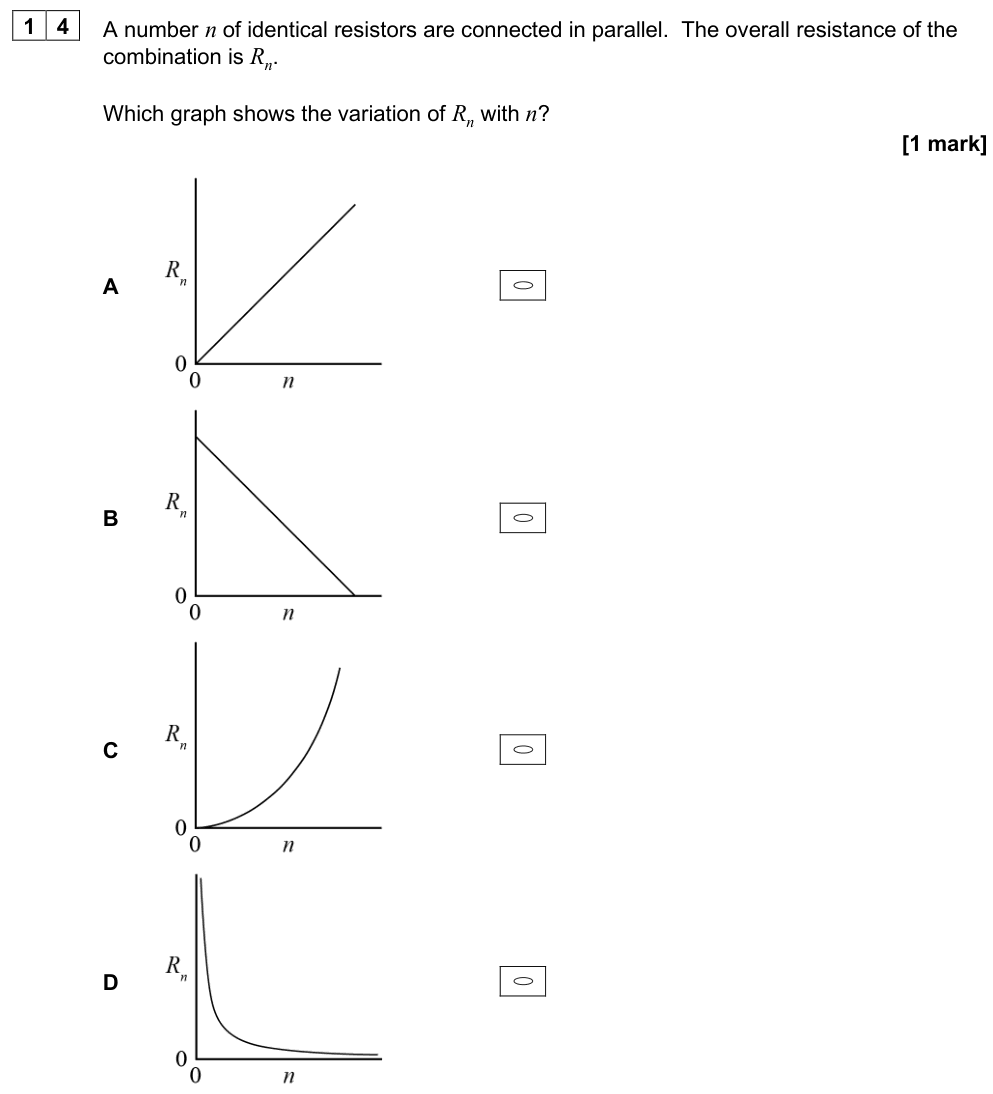
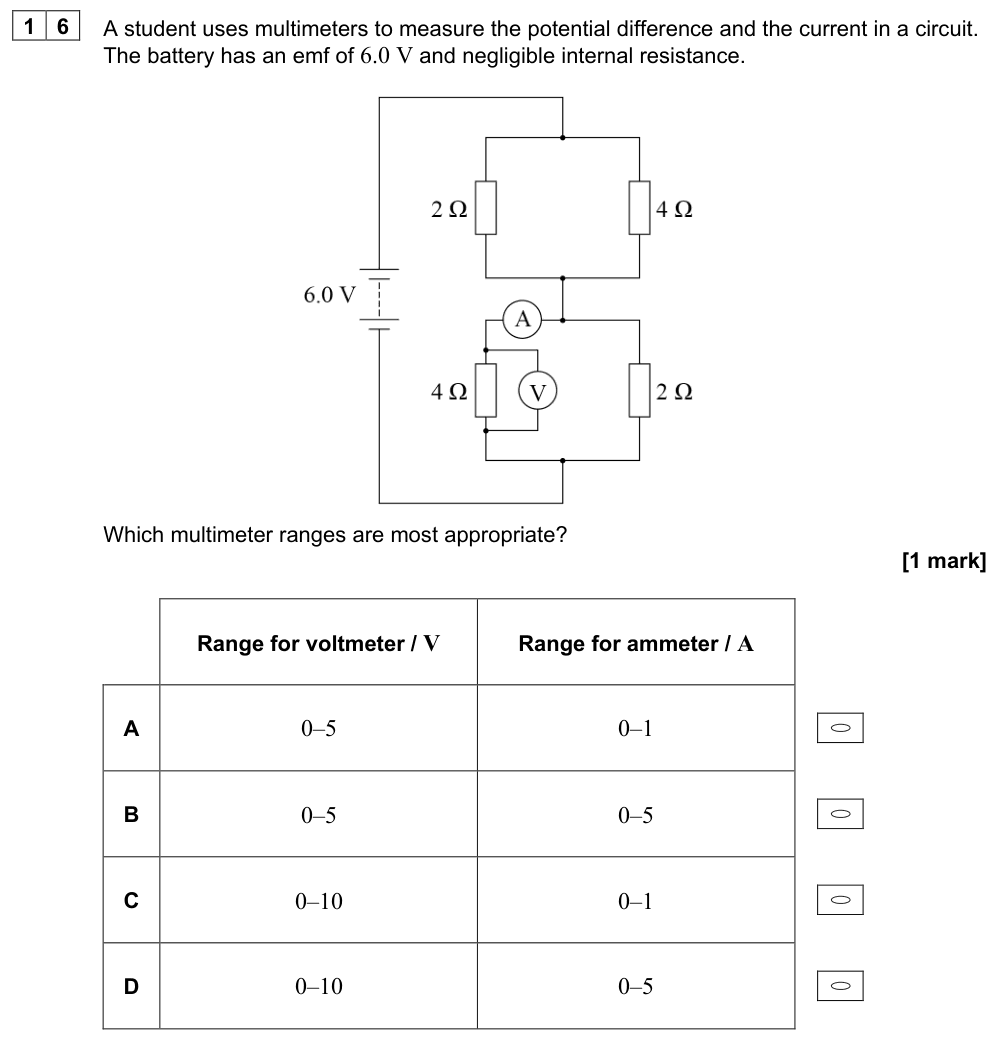
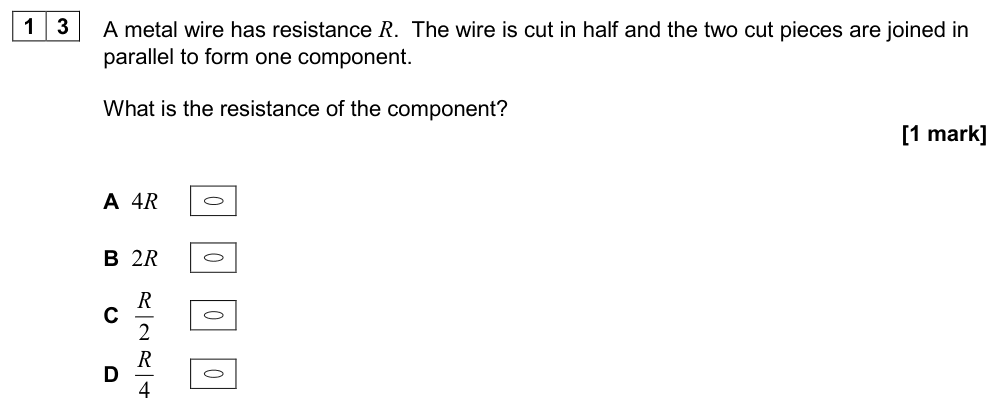
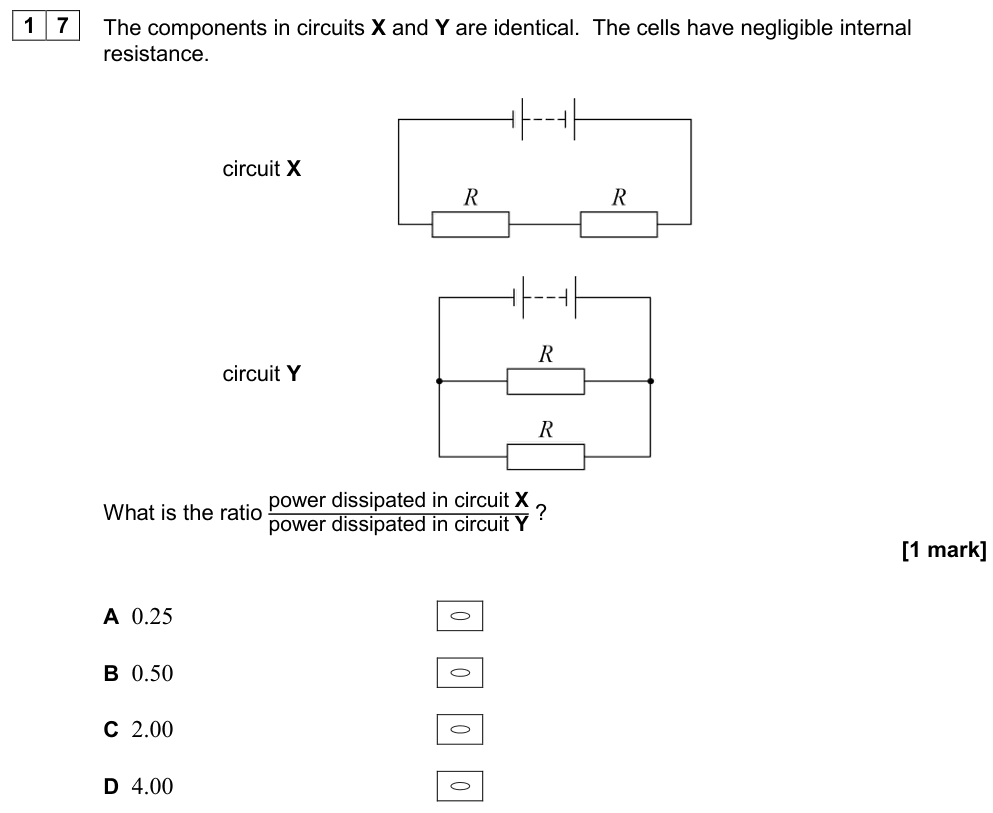
For two resistors: $R_T = \dfrac{R_1R_2}{R_1 + R_2}$ ("product over sum"). For $n$ identical resistors $R$: $R_T = R/n$.
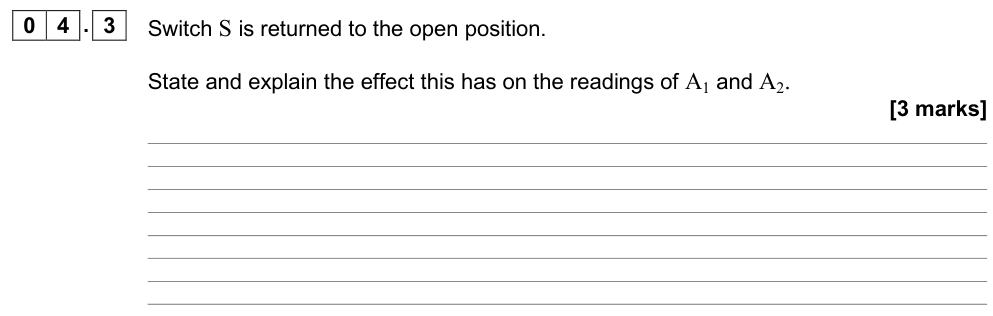
The total resistance of a parallel combination is smaller than the smallest individual resistance. Adding another branch always decreases the total resistance and increases the total current.
Worked example: series–parallel network
A 12 V supply (no internal resistance) is connected to a 4.0 Ω resistor in series with a parallel pair of 6.0 Ω and 3.0 Ω.
Parallel pair: $R = \dfrac{6.0 \times 3.0}{6.0 + 3.0} = 2.0\ \Omega$. Total $= 4.0 + 2.0 = 6.0\ \Omega$.
Supply current $= 12/6.0 = 2.0\ \text{A}$. p.d. across 4.0 Ω $= 8.0\ \text{V}$; p.d. across the parallel pair $= 4.0\ \text{V}$.
Currents: $4.0/6.0 = 0.67\ \text{A}$ and $4.0/3.0 = 1.33\ \text{A}$ (these add to 2.0 A ✓).
Exam tip: work from the outside in
For networks: (1) combine parallel groups, (2) add series resistances, (3) find the total current, (4) work back to find each p.d. and current. Check that currents add up at junctions and p.d.s add up around loops.
Energy and power
Energy and power equations
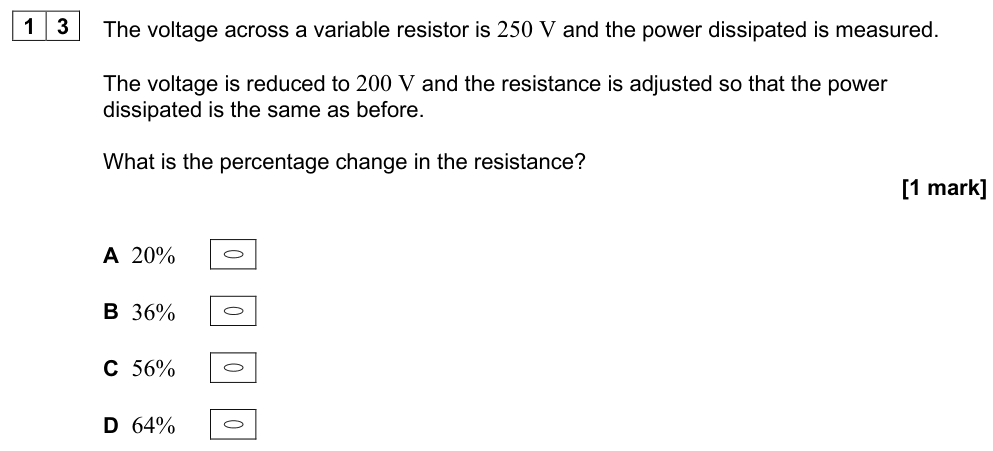
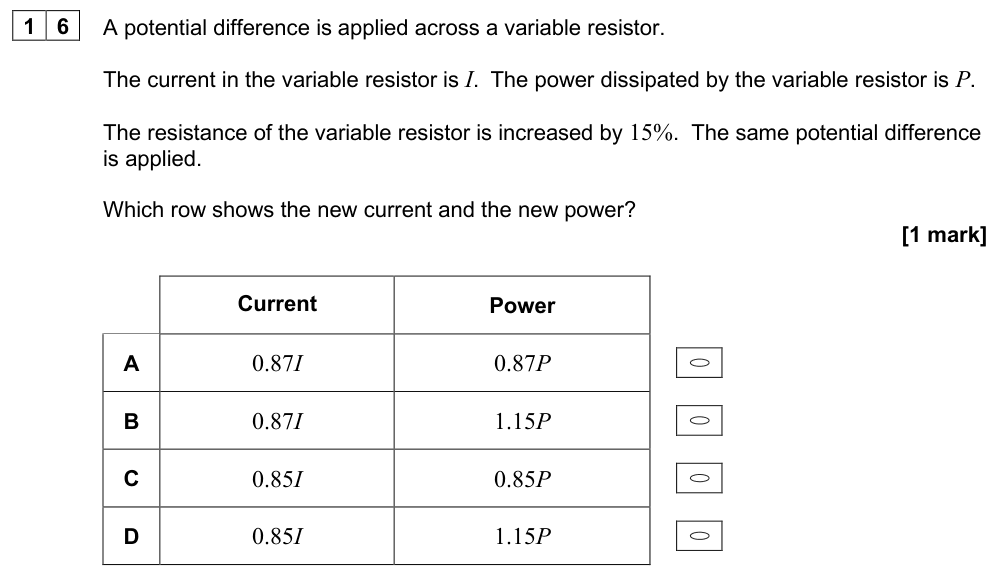
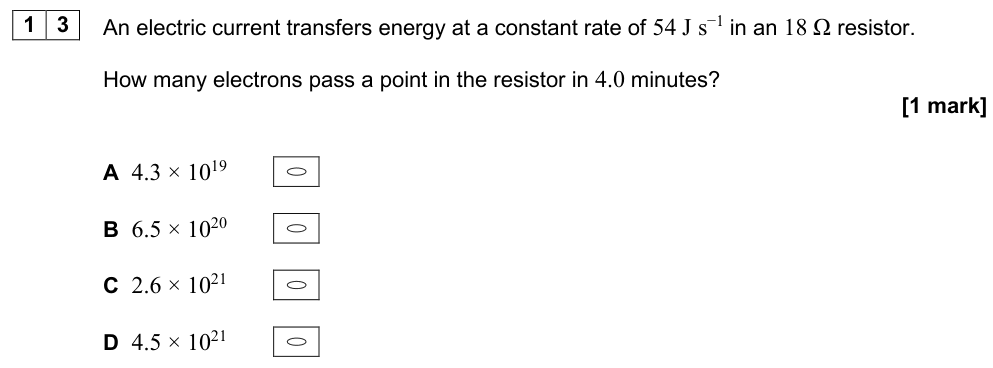
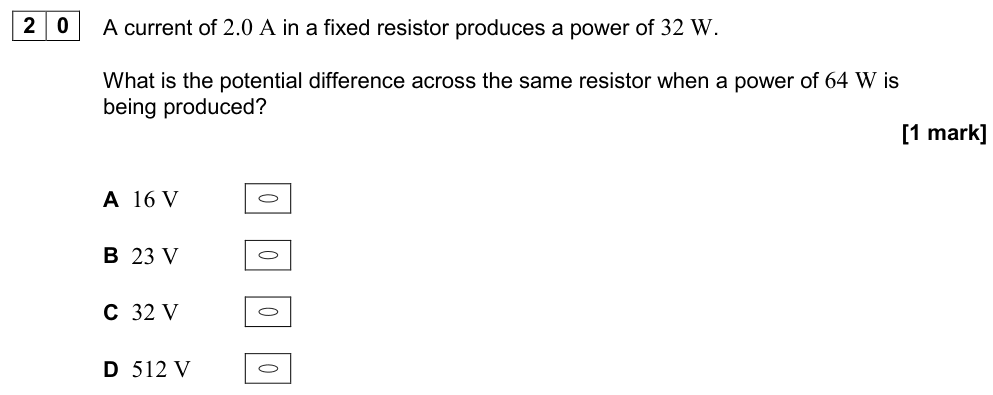
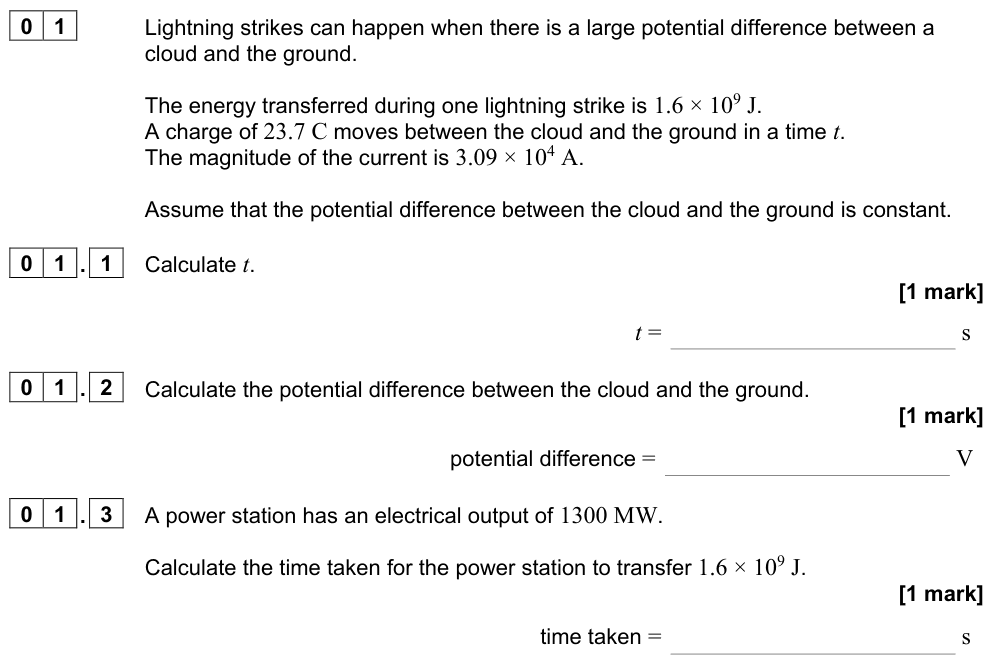
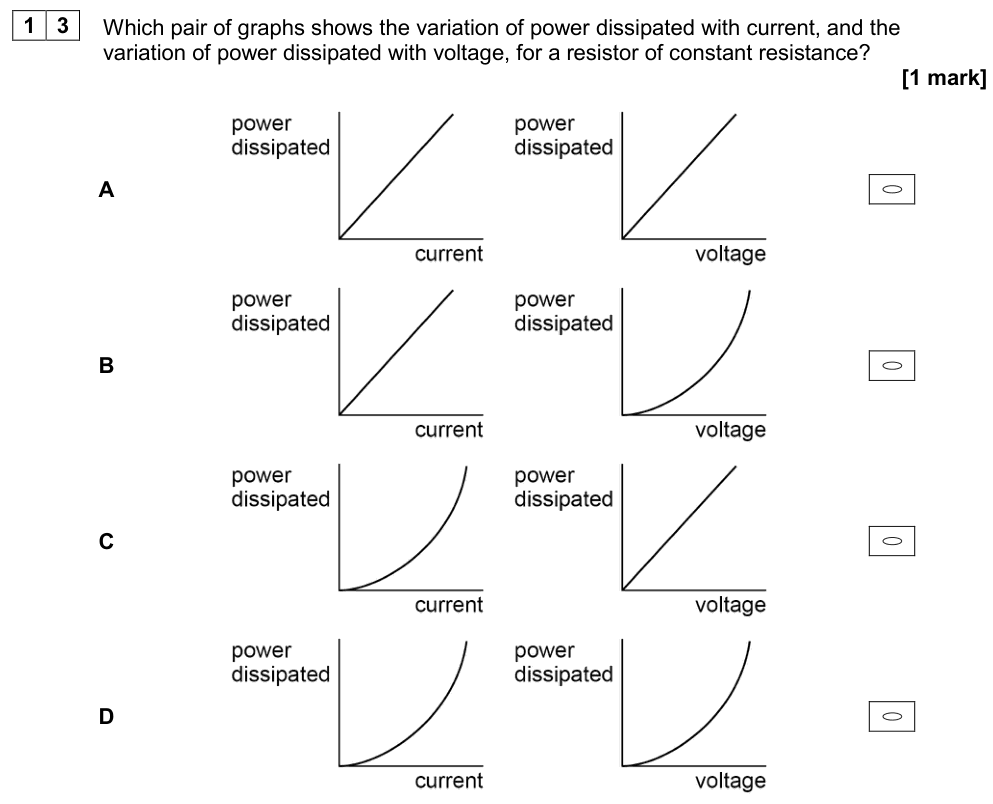
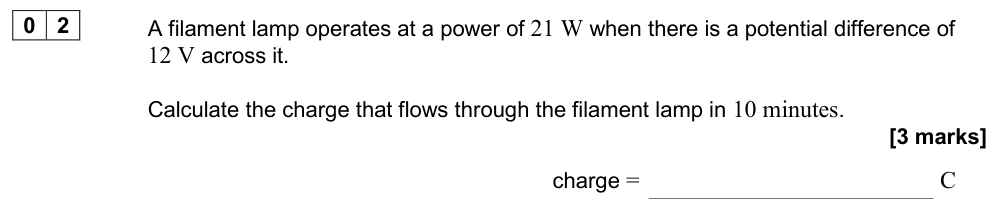
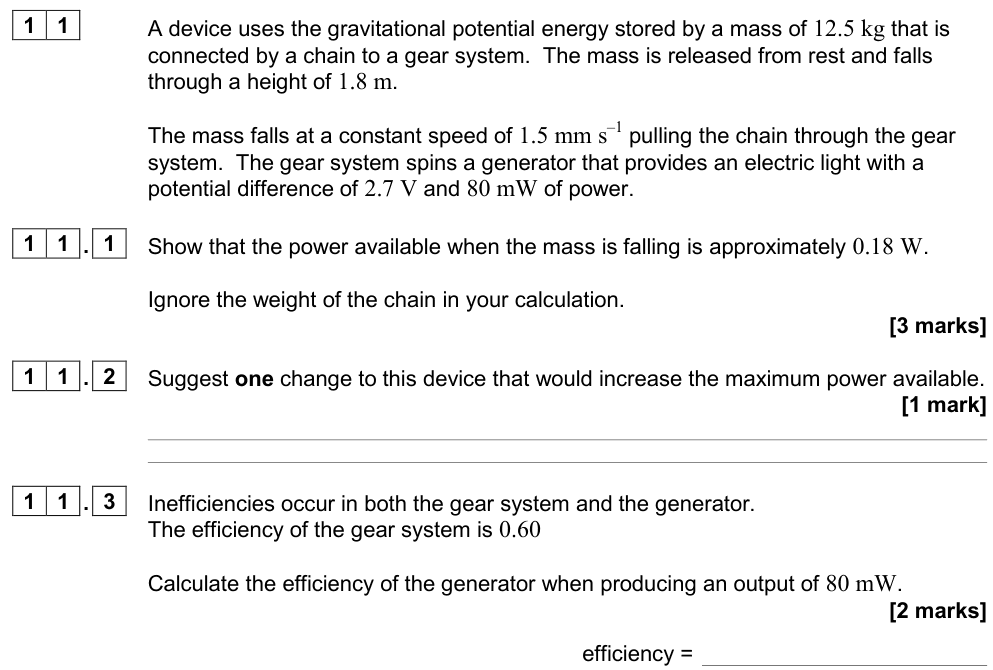
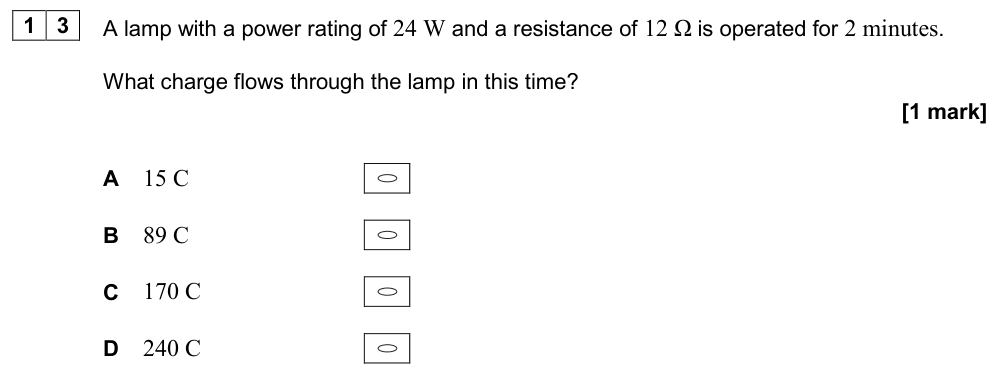
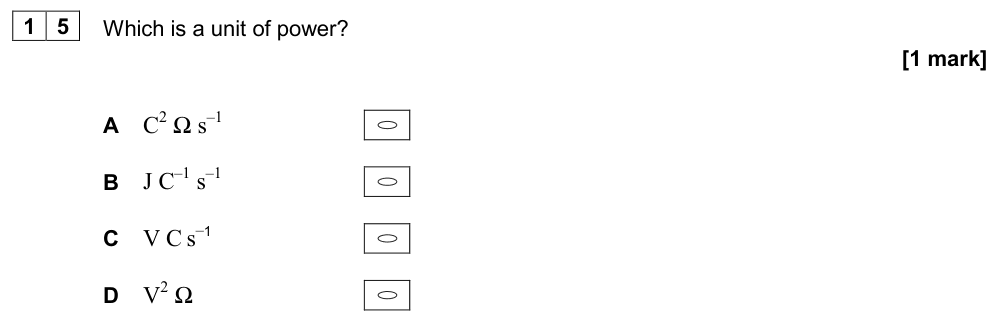
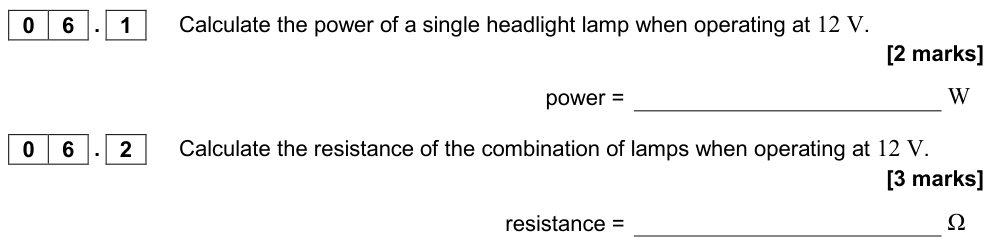
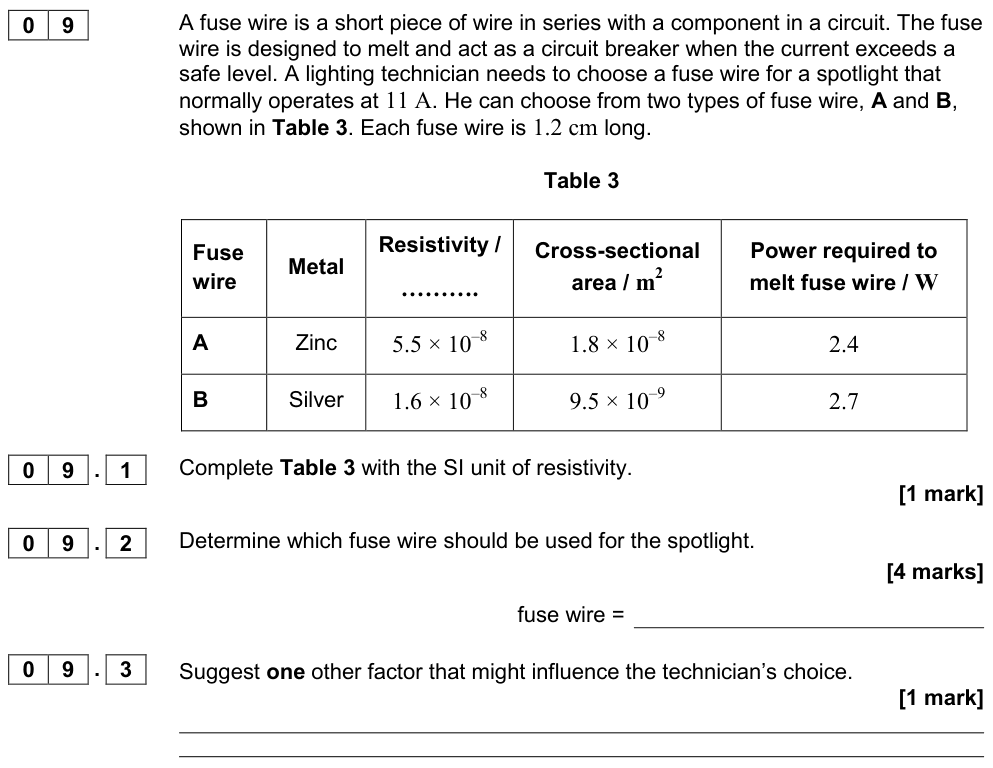
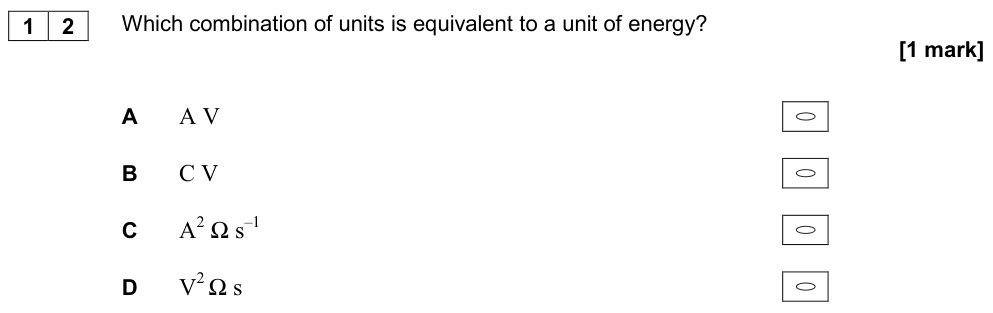
$$E = IVt \qquad P = IV = I^2R = \frac{V^2}{R}$$
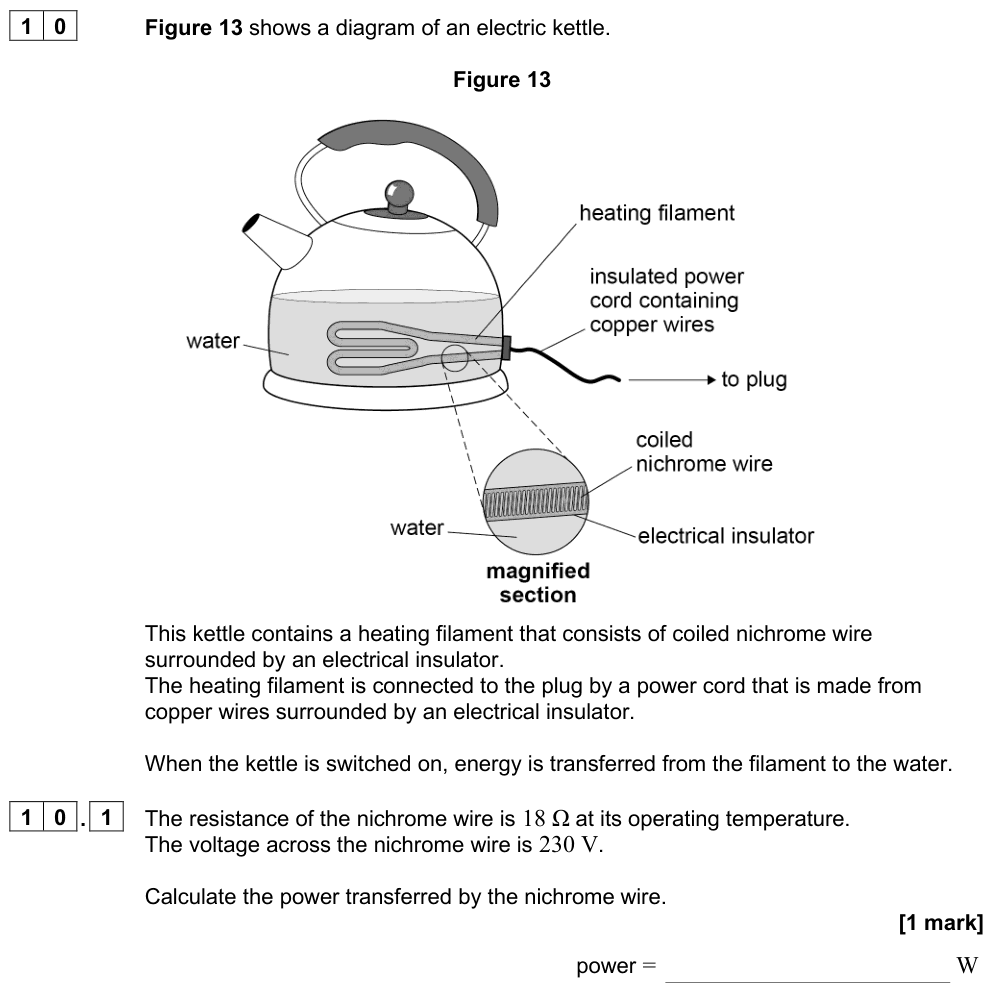
(Use $P = I^2R$ when you know the current, e.g. in series; use $P = V^2/R$ when you know the p.d., e.g. in parallel.)
Worked example: heater
A heater is rated at 2.0 kW for 230 V. Current $I = P/V = 8.7\ \text{A}$. Resistance $R = V^2/P = 230^2/2000 = 26\ \Omega$. Energy in 30 minutes $= 2000 \times 1800 = 3.6 \times 10^{6}\ \text{J} = 1.0\ \text{kW h}$.
Worked example: which lamp is brighter?
Two lamps of resistance 4 Ω and 12 Ω are connected to the same supply.
- In series (same current): $P = I^2R$, so the 12 Ω lamp is brighter.
- In parallel (same p.d.): $P = V^2/R$, so the 4 Ω lamp is brighter.
Cells in series and parallel
- Cells in series: the e.m.f.s add (taking account of their directions). Their internal resistances also add.
- Identical cells in parallel: the e.m.f. of the combination equals the e.m.f. of one cell. For $n$ identical cells in parallel the internal resistance is $r/n$. The combination can supply the same current for longer, because each cell provides only part of the current.
Worked example: cells
Four identical cells, each of e.m.f. 1.5 V and internal resistance 0.40 Ω, are connected as two parallel pairs, and the pairs are connected in series. Each pair: e.m.f. 1.5 V, internal resistance 0.20 Ω. Combination: e.m.f. 3.0 V, internal resistance 0.40 Ω.
Summary
- Series: same current; p.d.s add; $R_T = R_1 + R_2 + \dots$
- Parallel: same p.d.; currents add; $1/R_T = 1/R_1 + 1/R_2 + \dots$
- Kirchhoff: current in = current out at a junction (charge); sum of e.m.f.s = sum of p.d.s round a loop (energy).
- $P = IV = I^2R = V^2/R$; $E = IVt$.
- Cells in series: e.m.f.s and internal resistances add. Identical cells in parallel: same e.m.f., internal resistance $r/n$.