Path difference and coherence
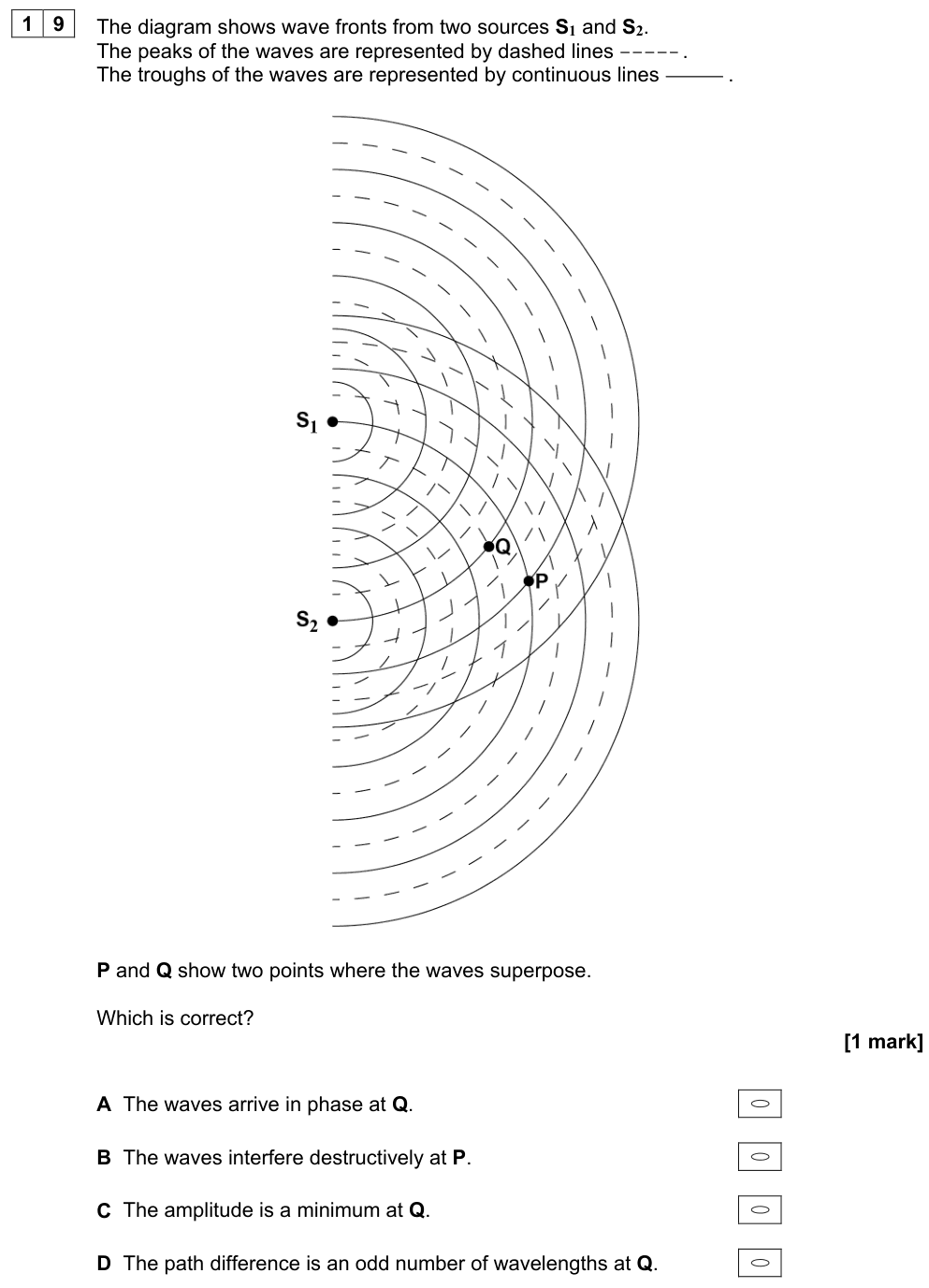
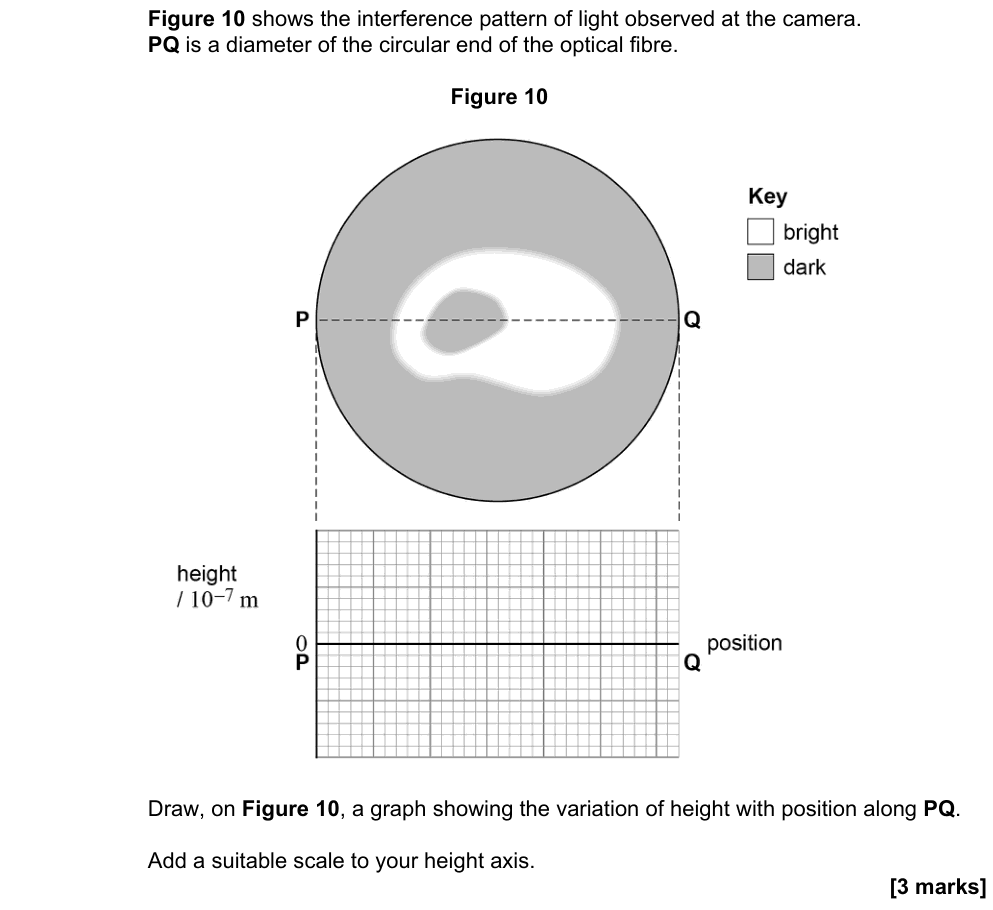
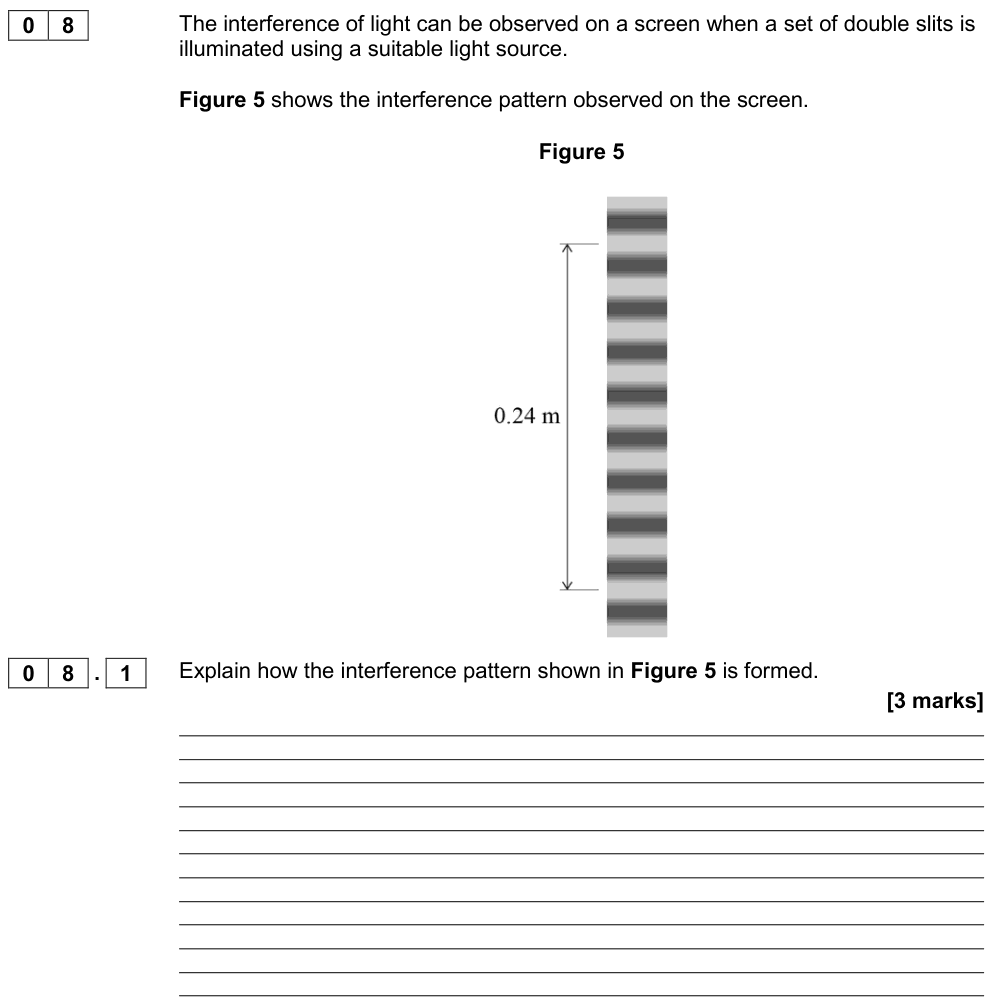
Interference is the superposition of waves from two (or more) sources to produce a stable pattern of maxima and minima.
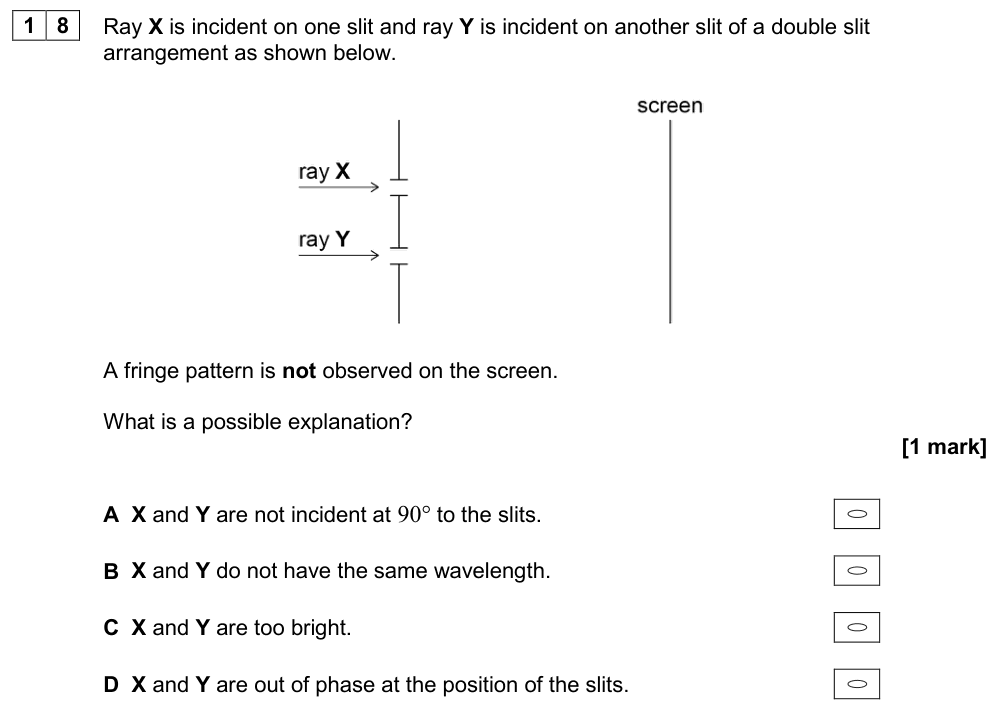
Coherent sources
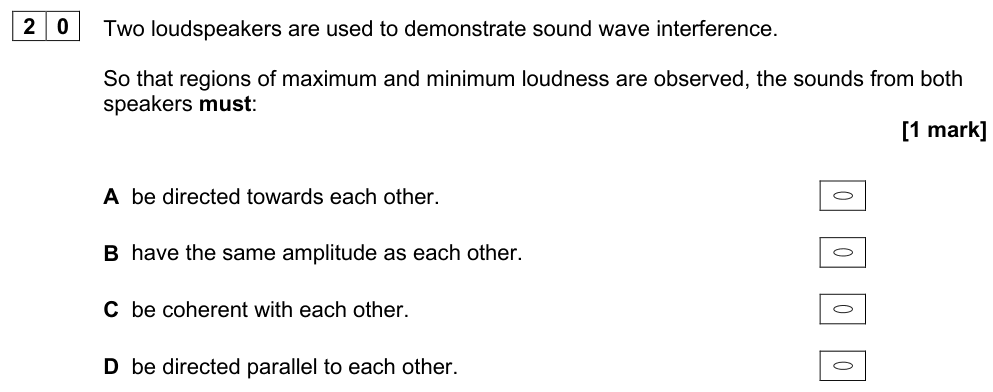
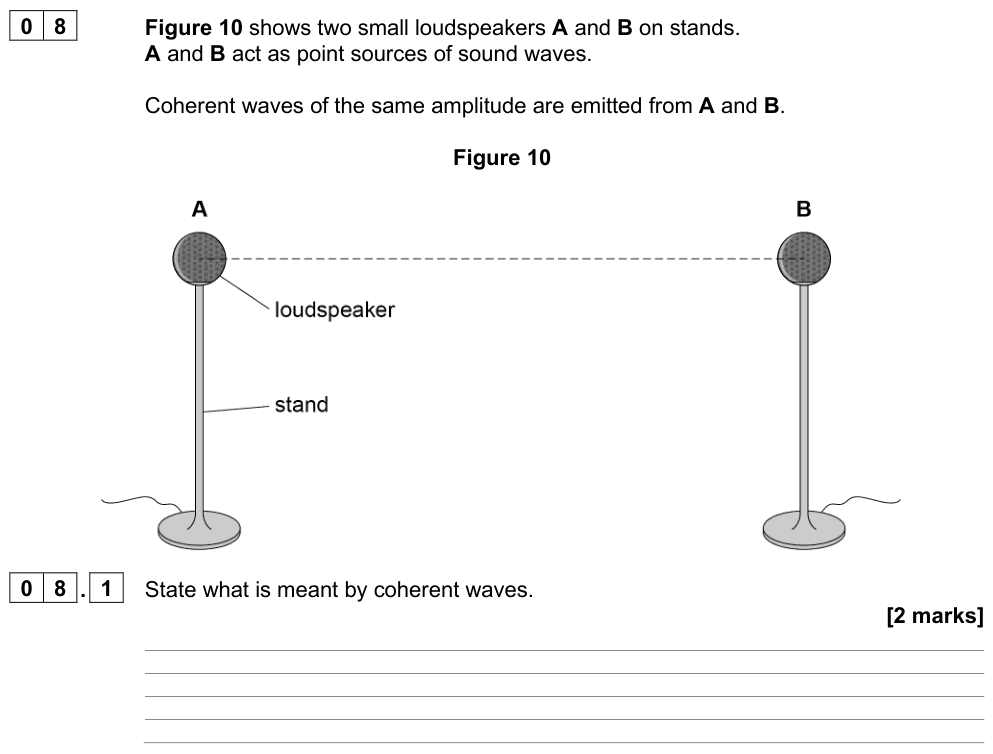
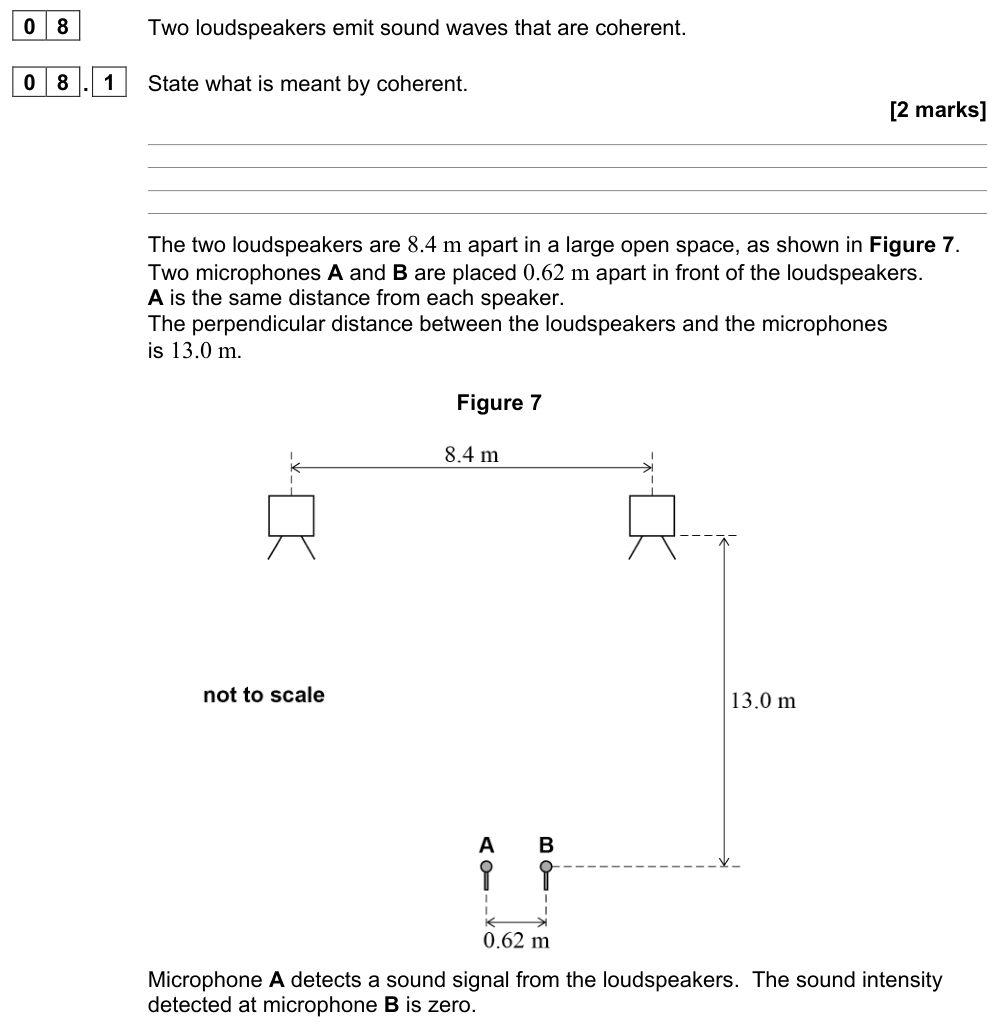
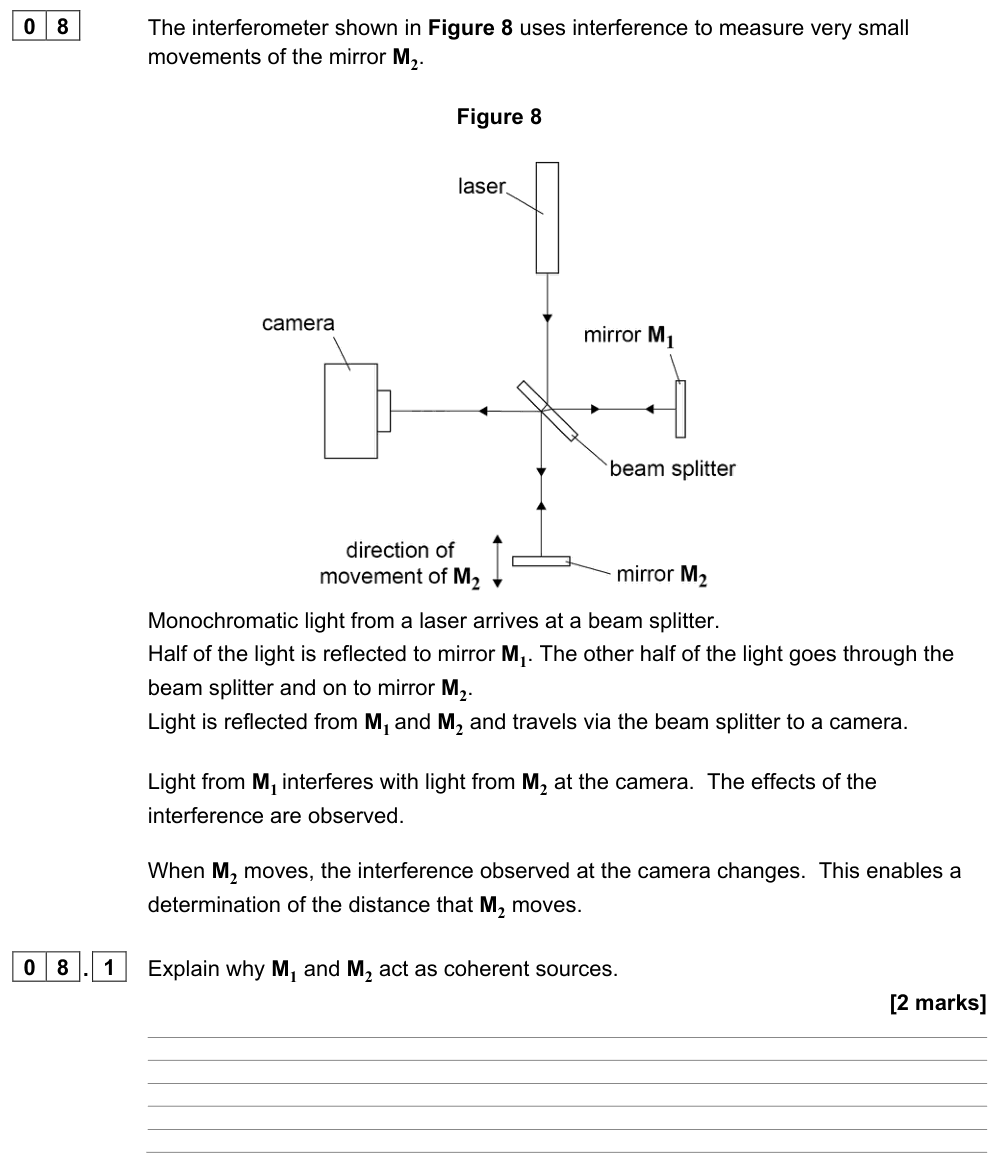
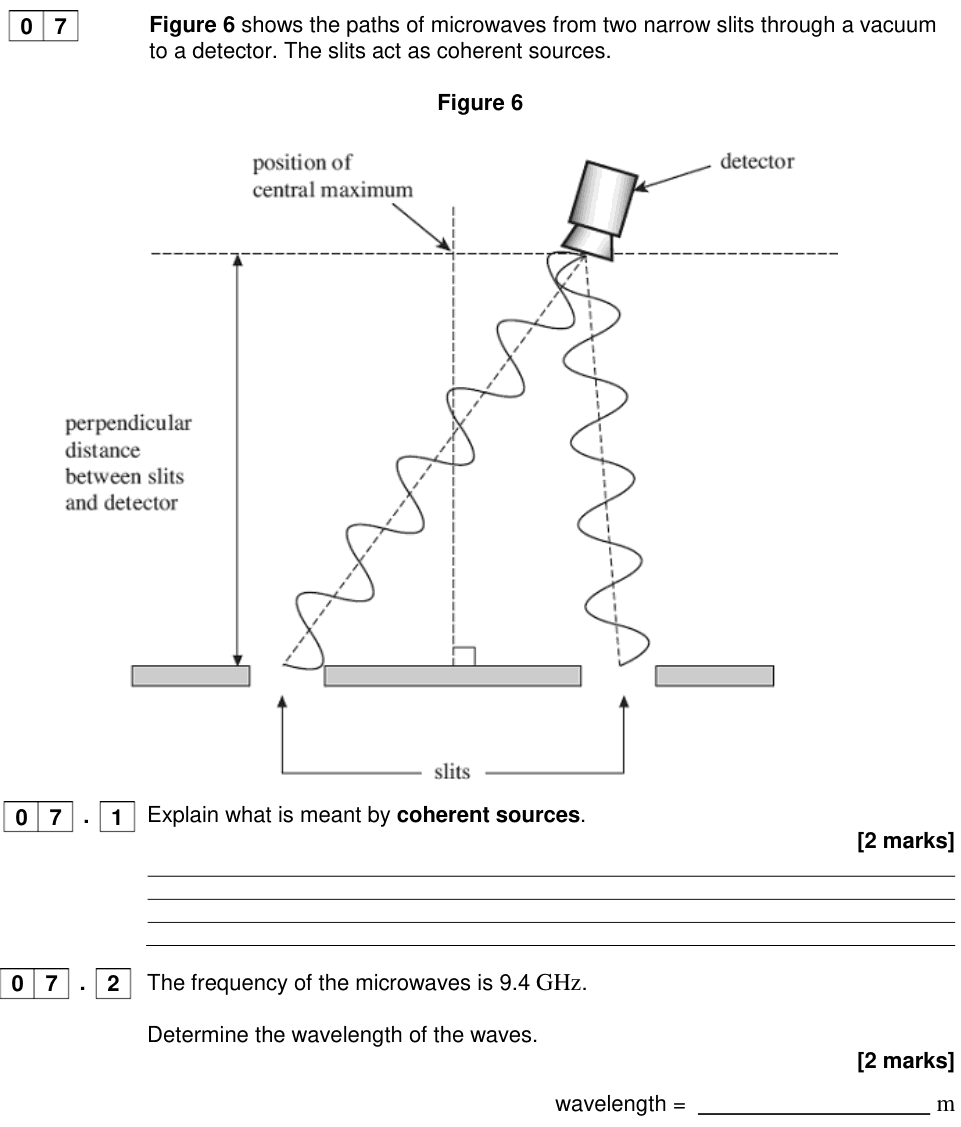
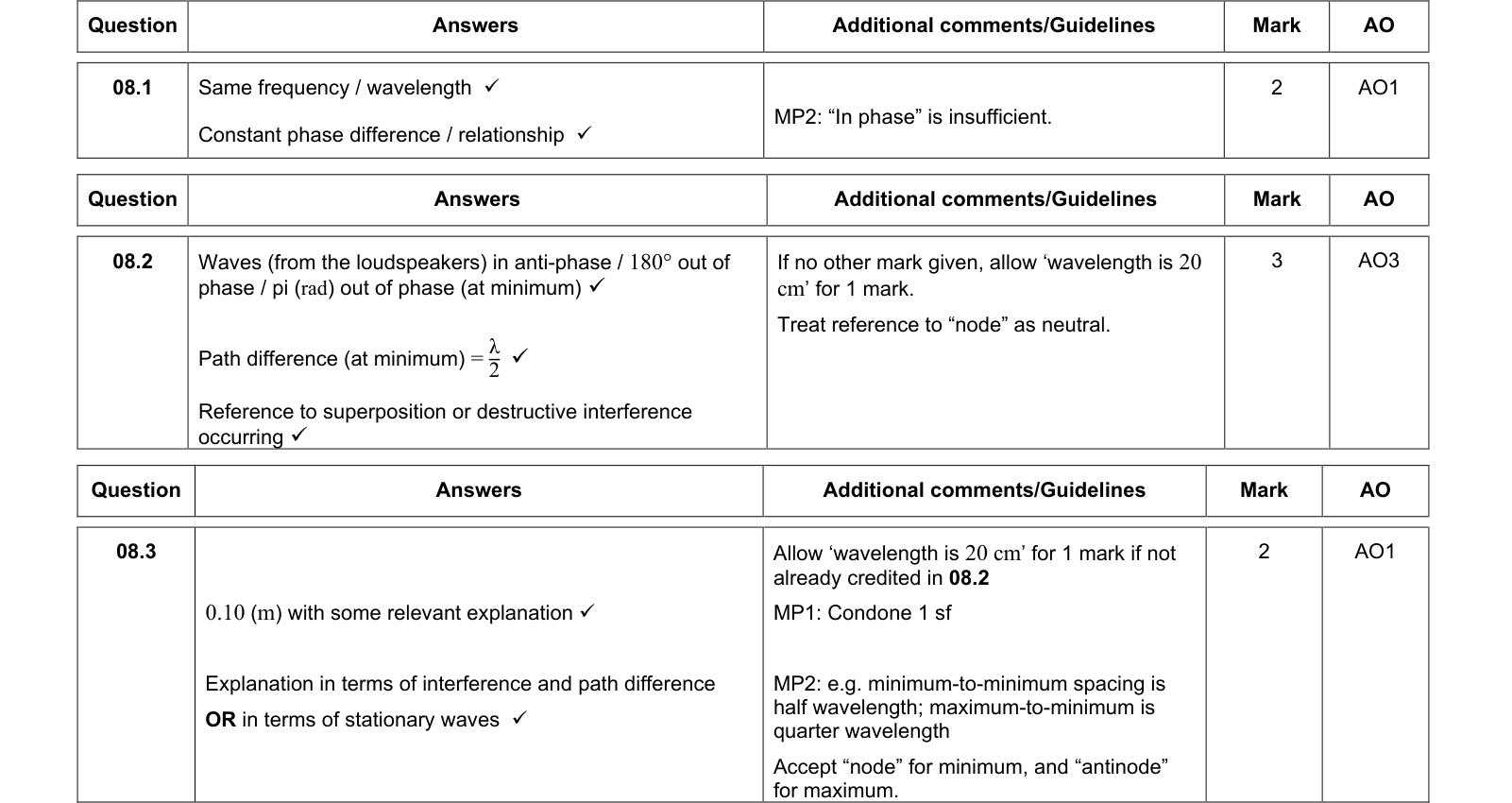
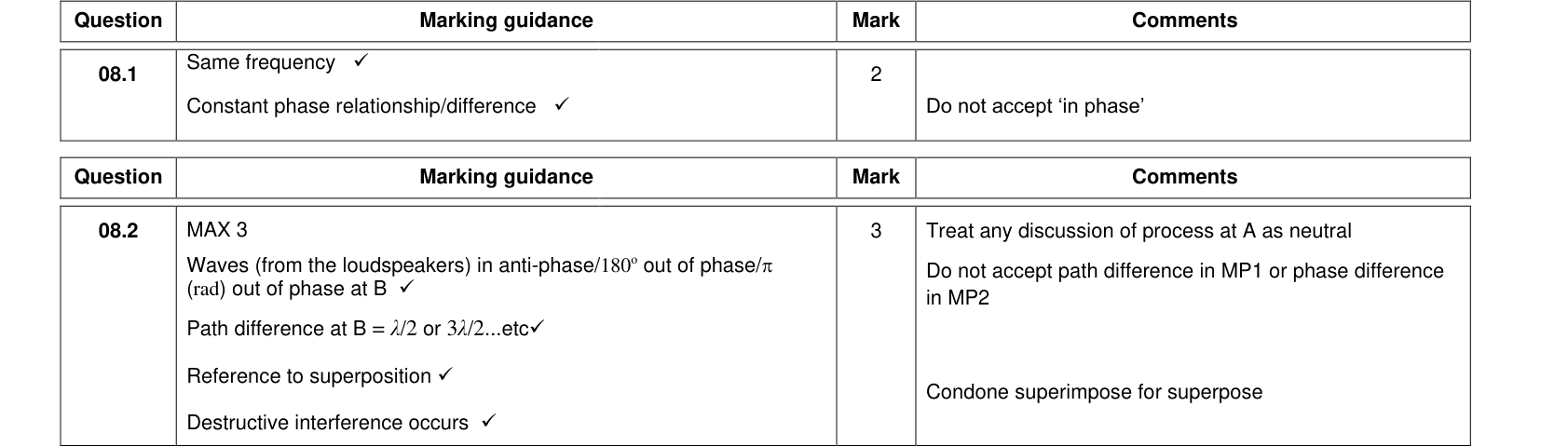
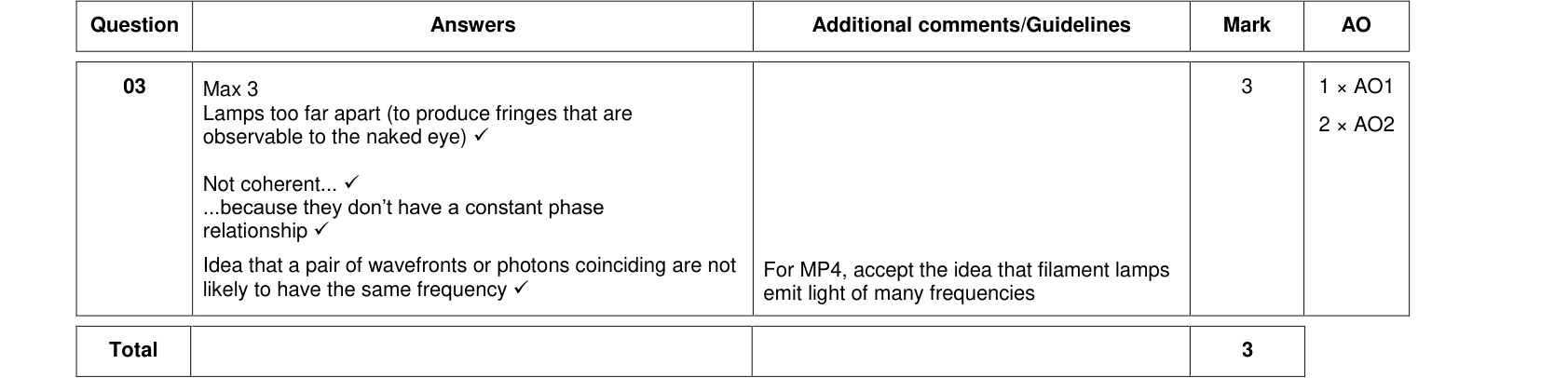
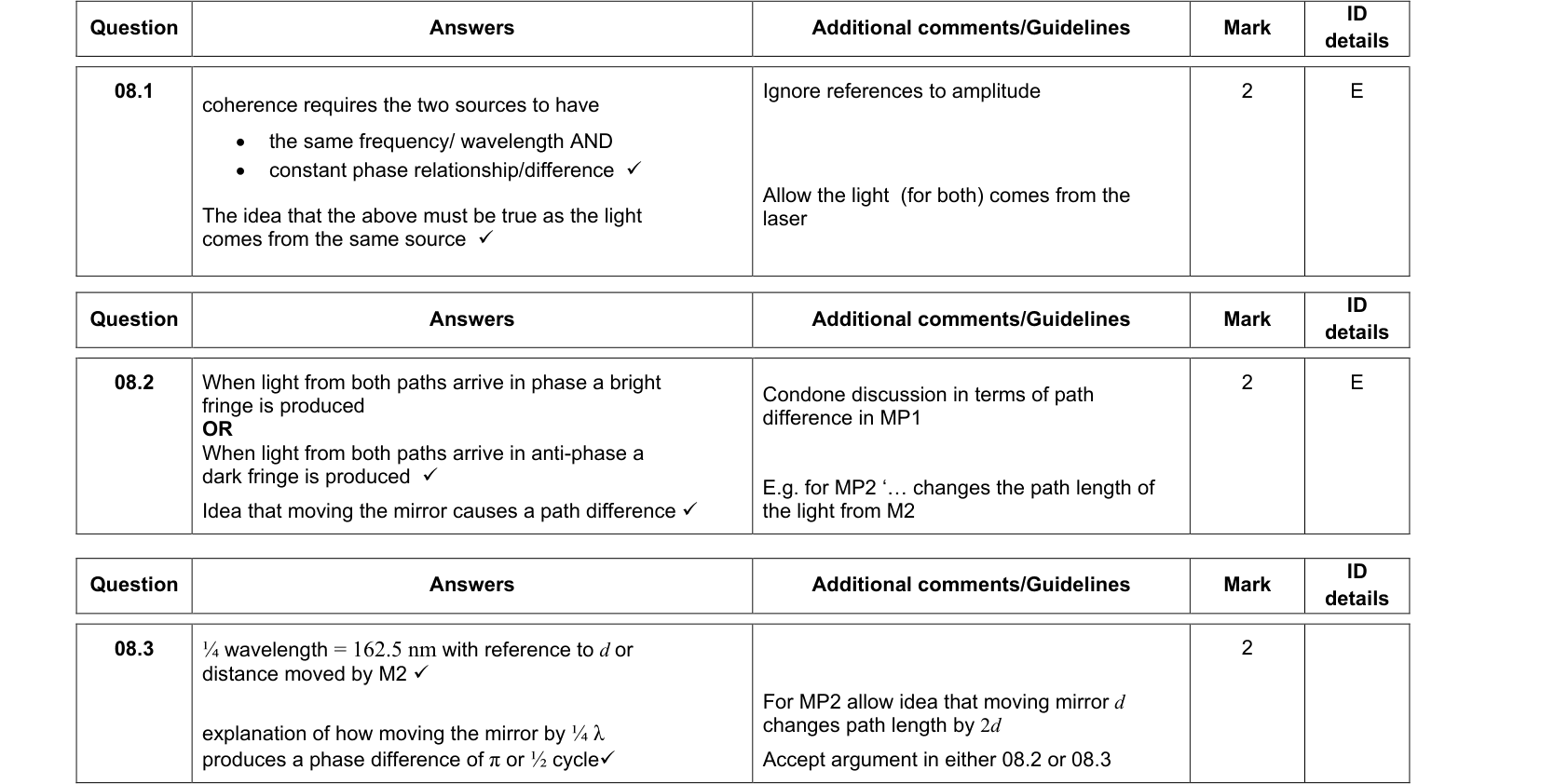
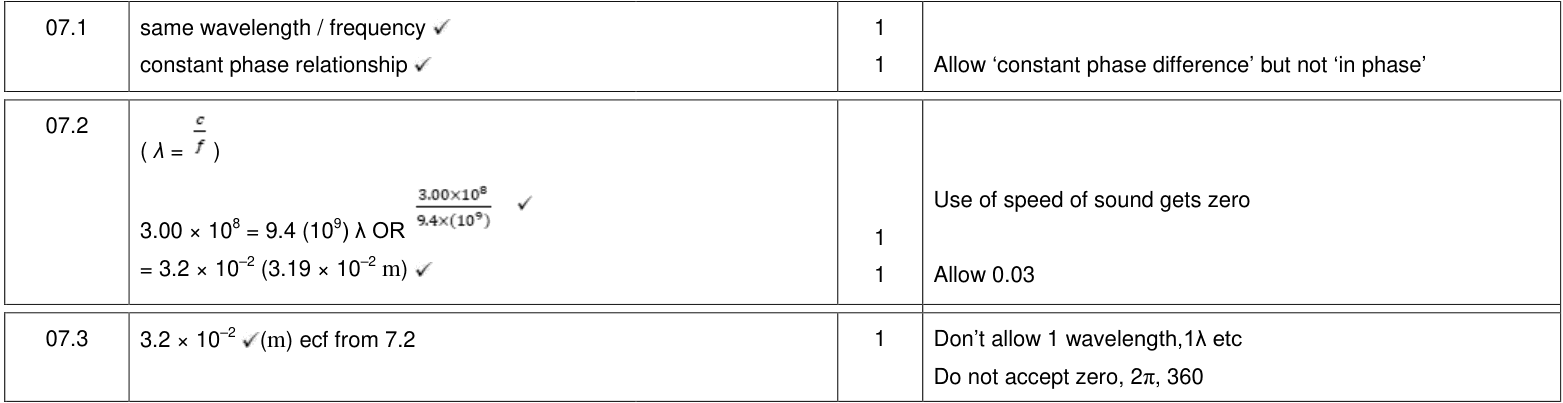
Two sources are coherent if they emit waves with the same frequency (and wavelength) and a constant phase difference.
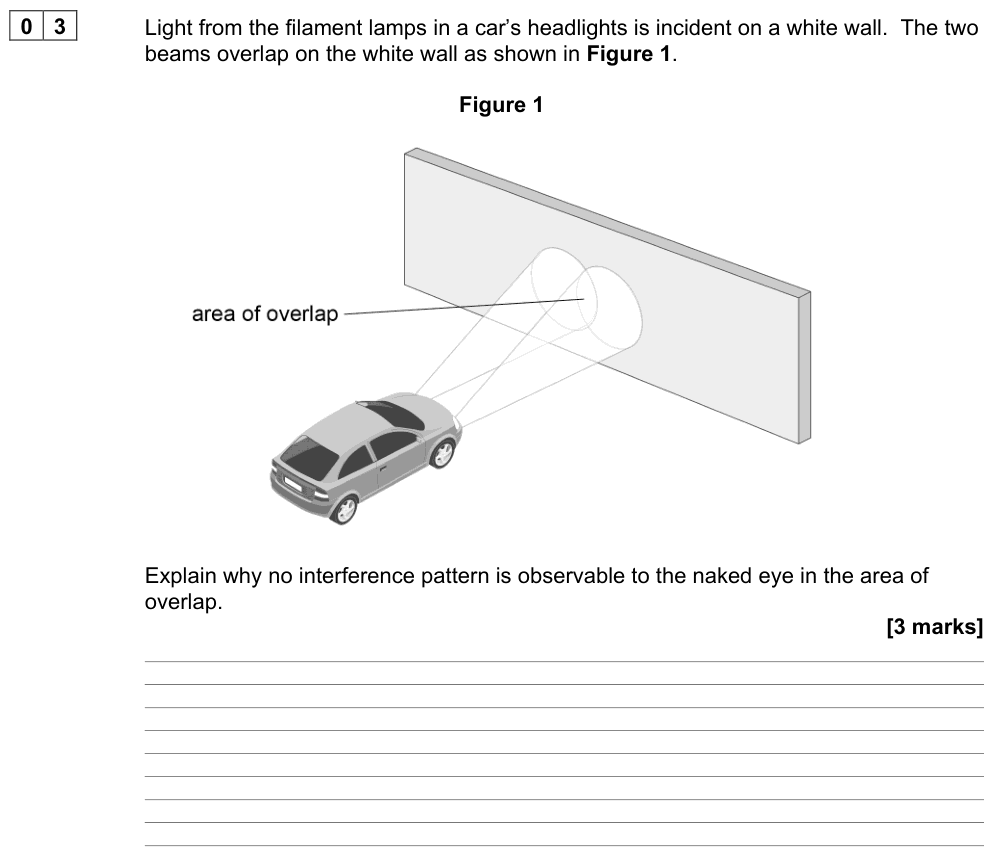
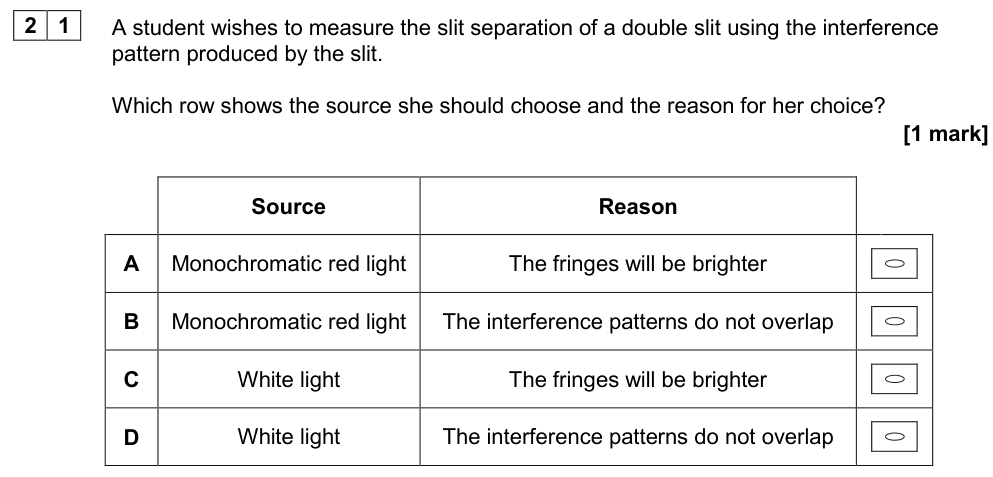
A stable interference pattern needs coherent sources. Two separate lamps are not coherent: light is emitted in random bursts with random phases, so any pattern changes billions of times a second and averages out. Lasers produce coherent, monochromatic (single-wavelength) light. A single source split into two (by two slits) also gives coherent sources.
Conditions for maxima and minima (sources in phase)
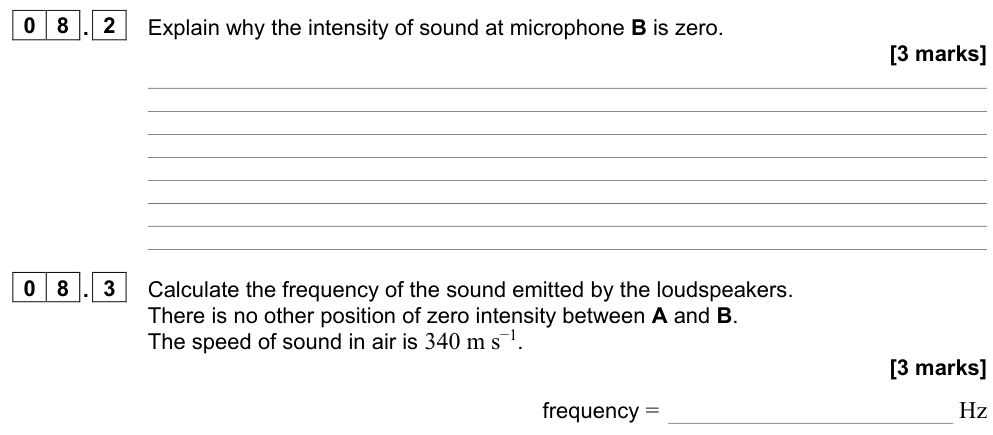
The path difference is the difference in distance travelled by the two waves to a point.
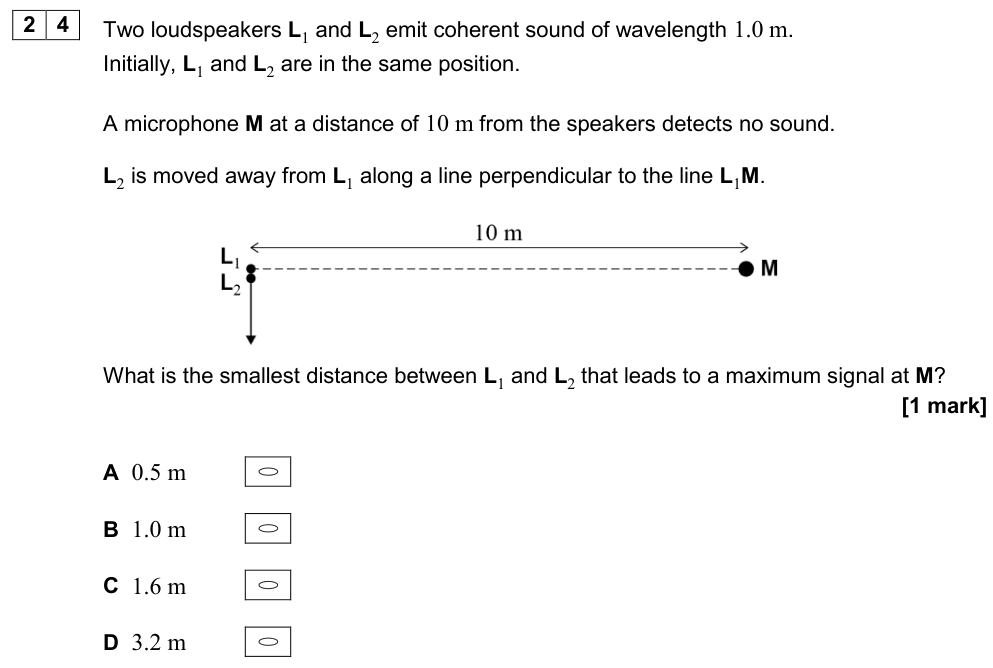
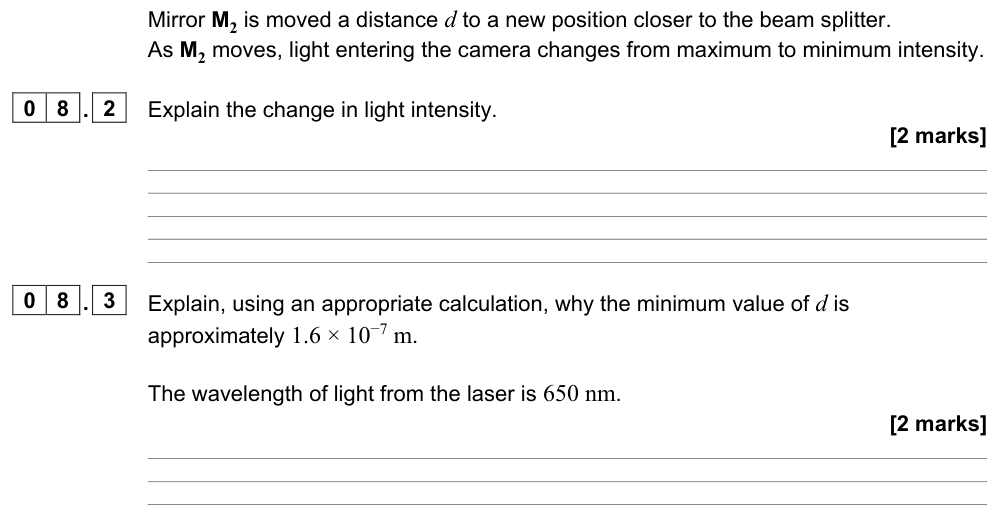
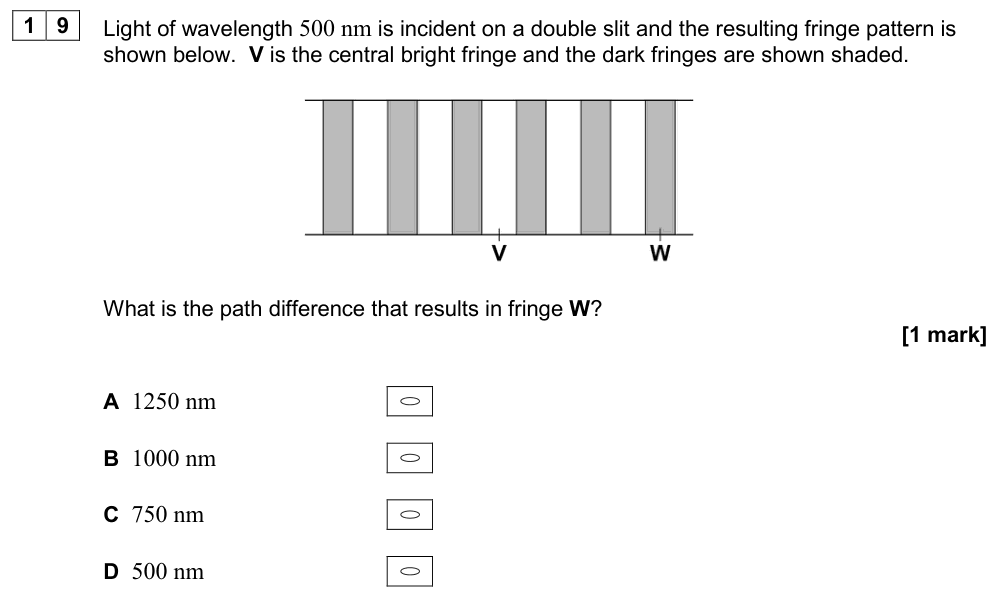
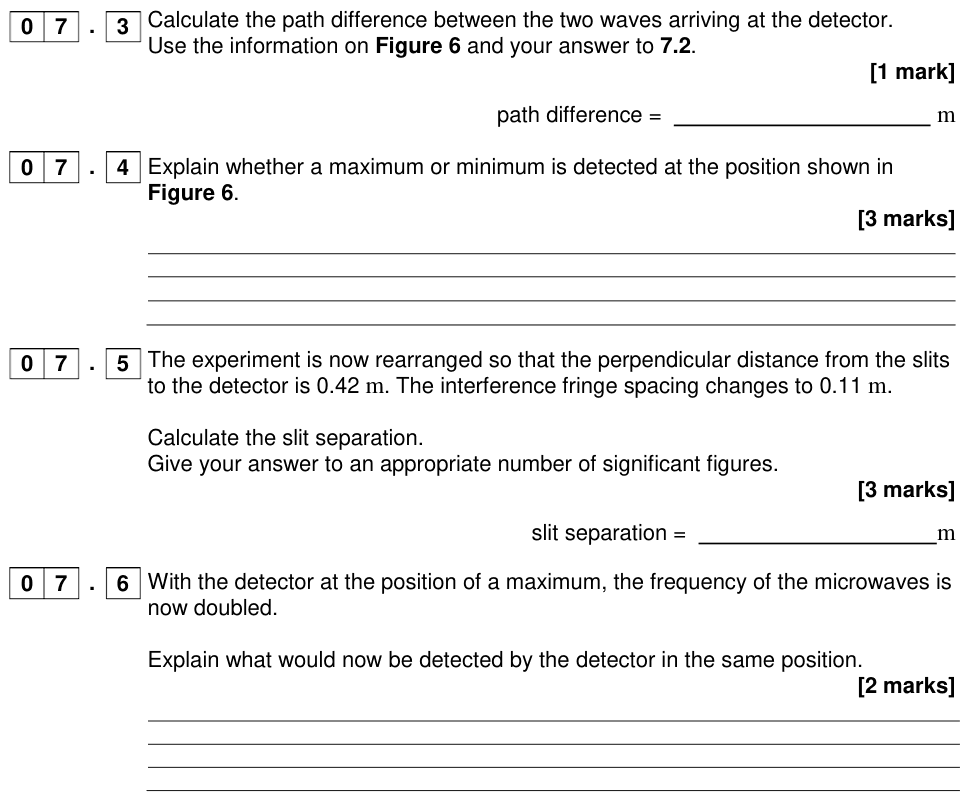
- Constructive interference (maximum): path difference $= n\lambda$ (0, λ, 2λ, …)
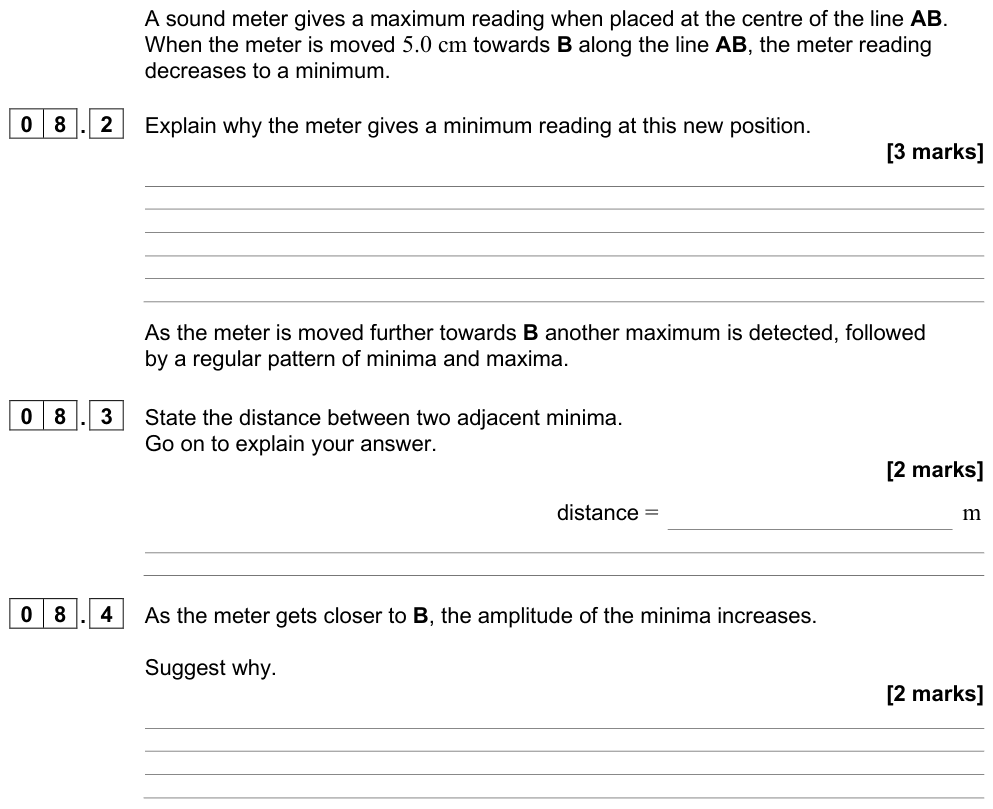
- Destructive interference (minimum): path difference $= \left(n + \tfrac12\right)\lambda$ (λ/2, 3λ/2, …)
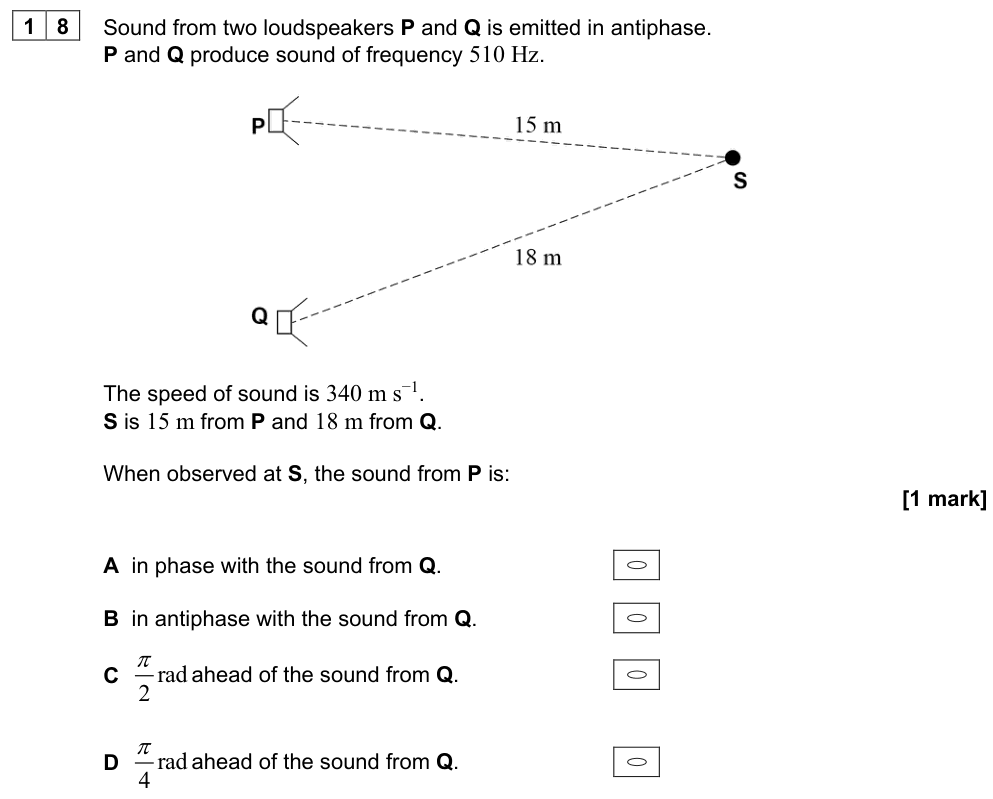
If the sources are in antiphase, the conditions swap.
Worked example: two loudspeakers
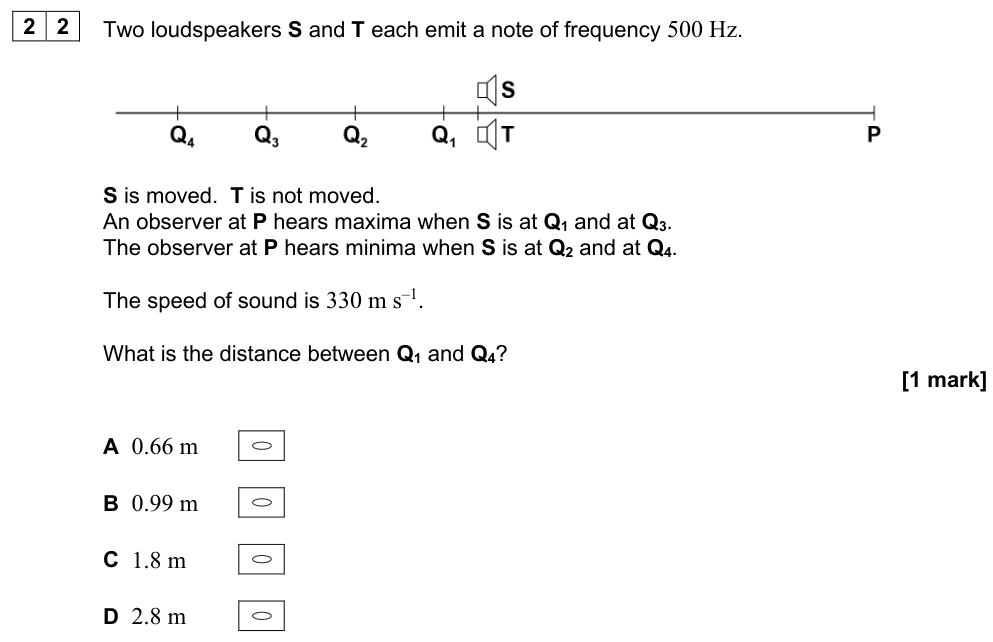
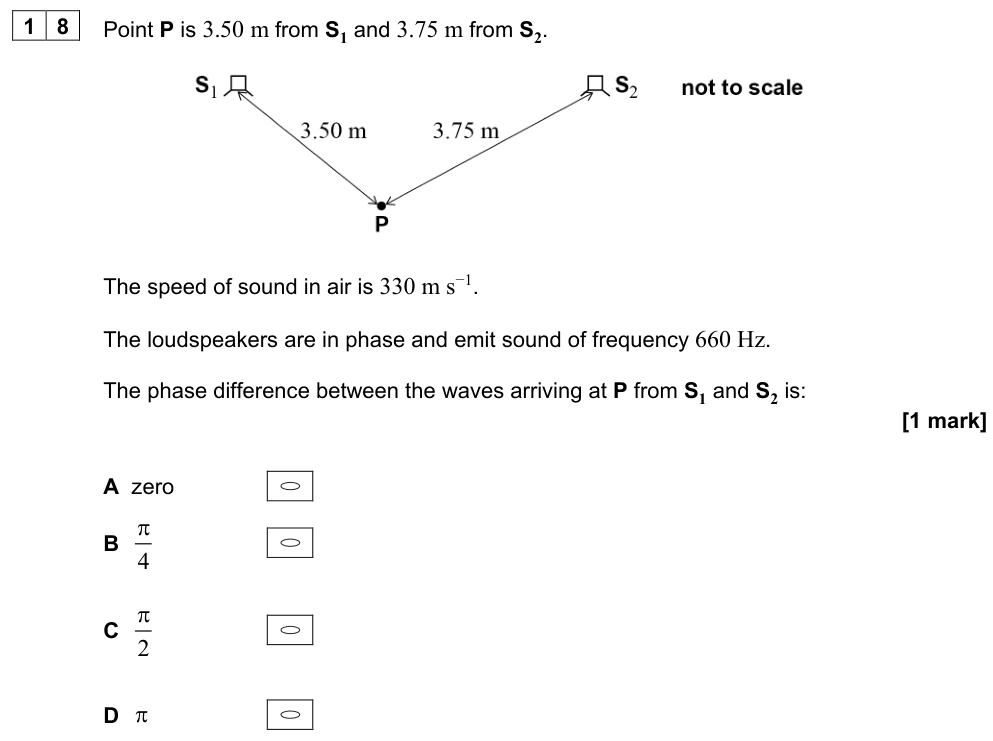
Two loudspeakers driven in phase emit sound of wavelength 0.50 m. A point P is 4.00 m from one speaker and 5.25 m from the other.
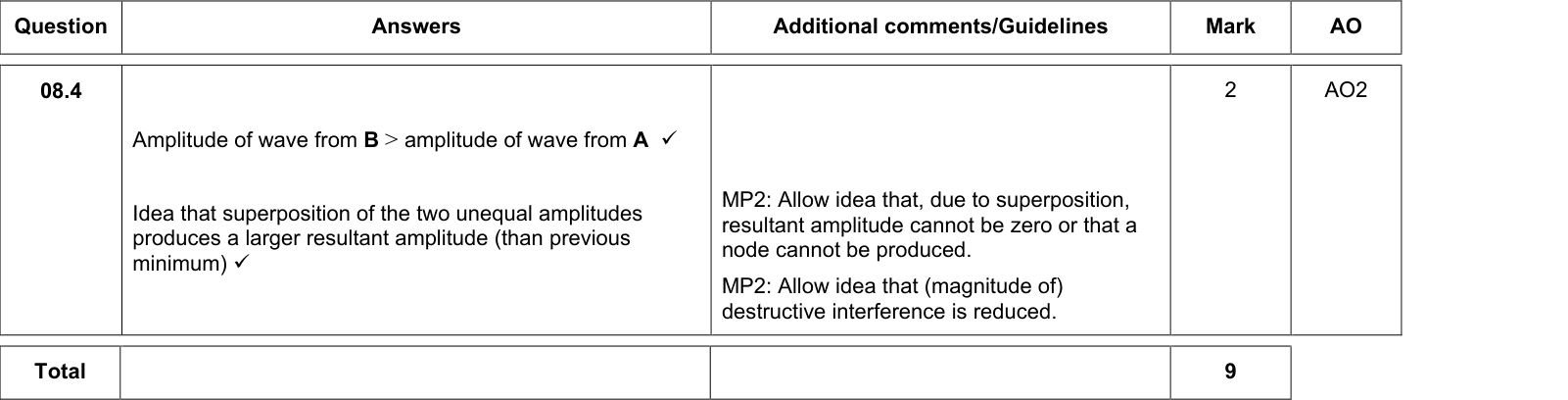
Path difference $= 1.25\ \text{m} = 2.5\lambda$, a half-odd number of wavelengths, so P is a minimum (quiet point).
Young's double-slit experiment
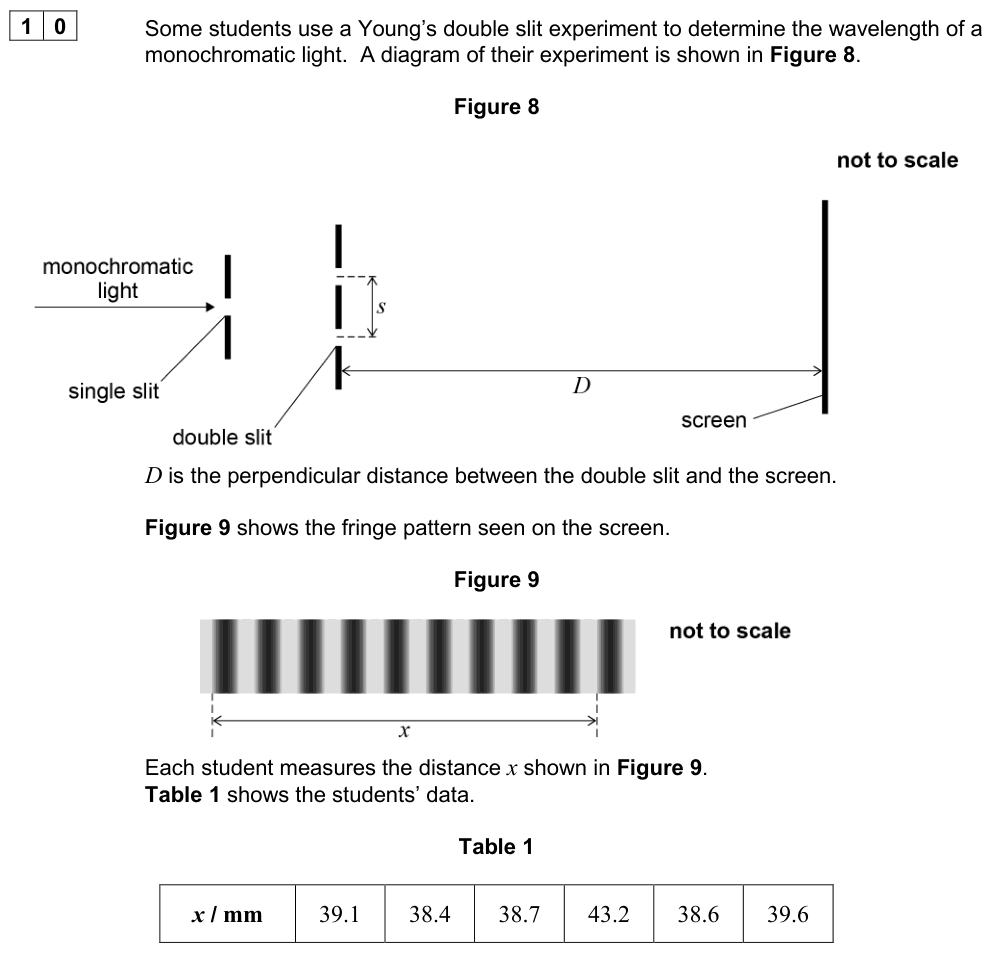
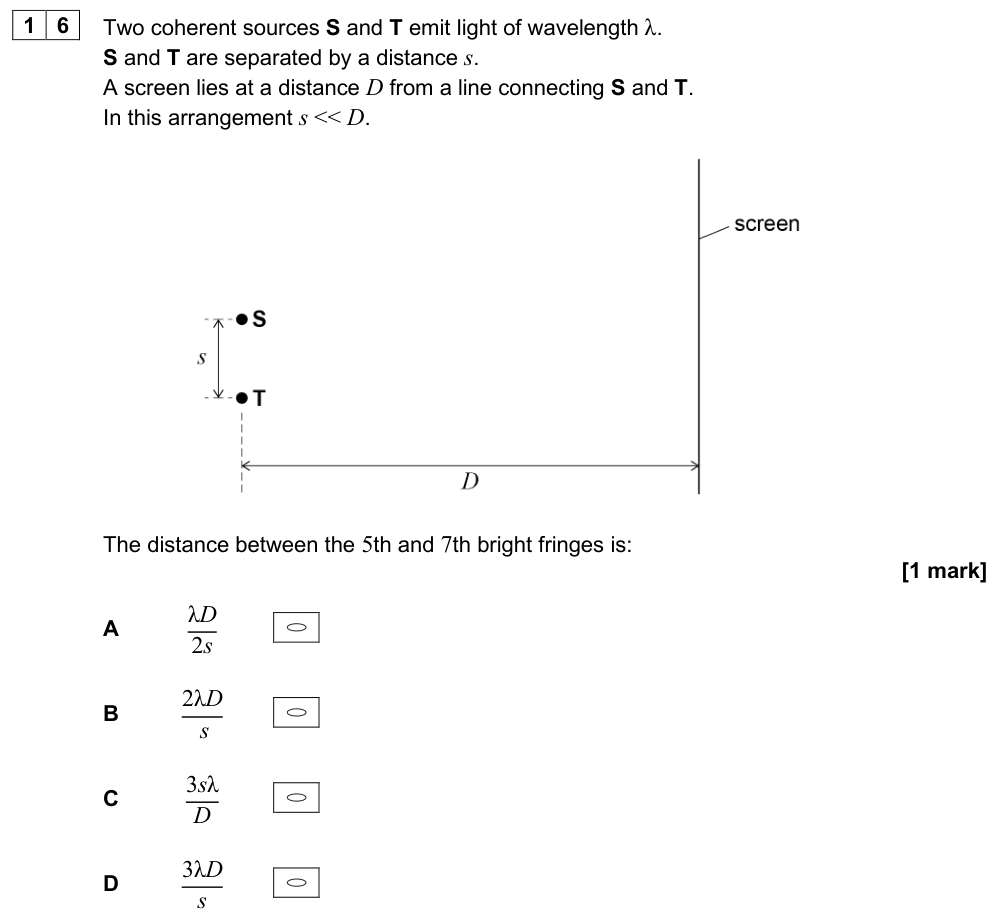
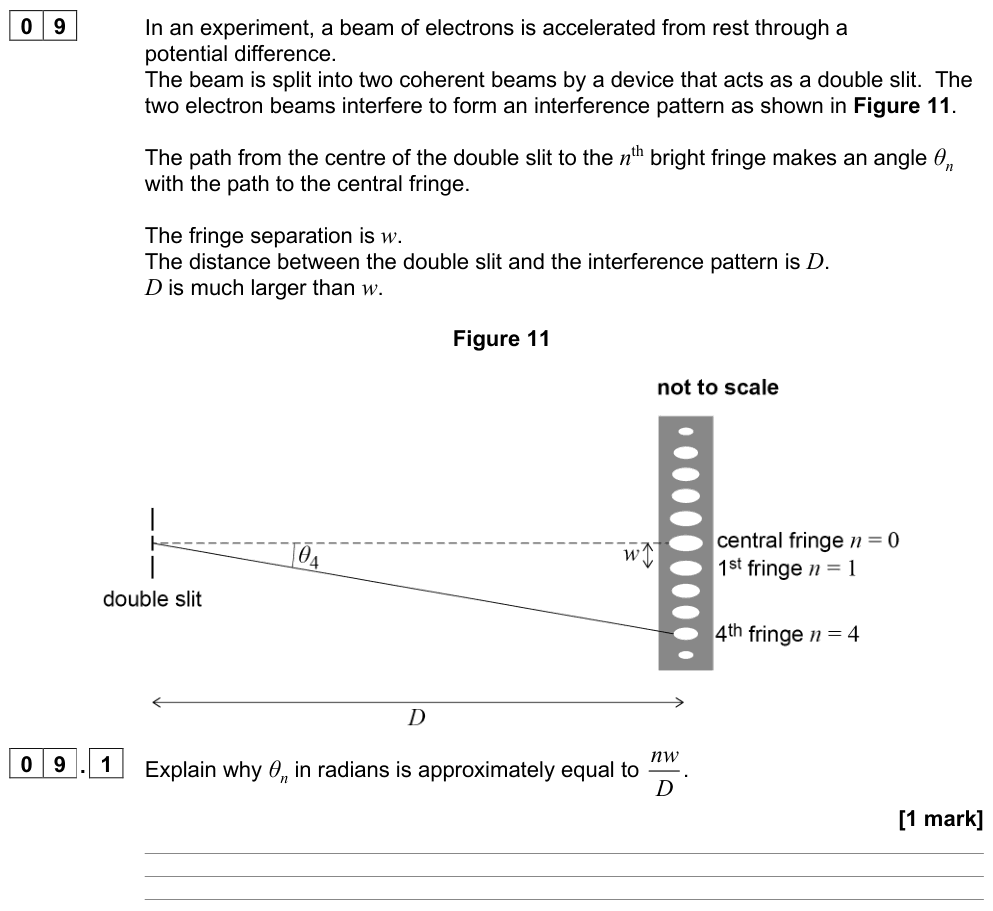
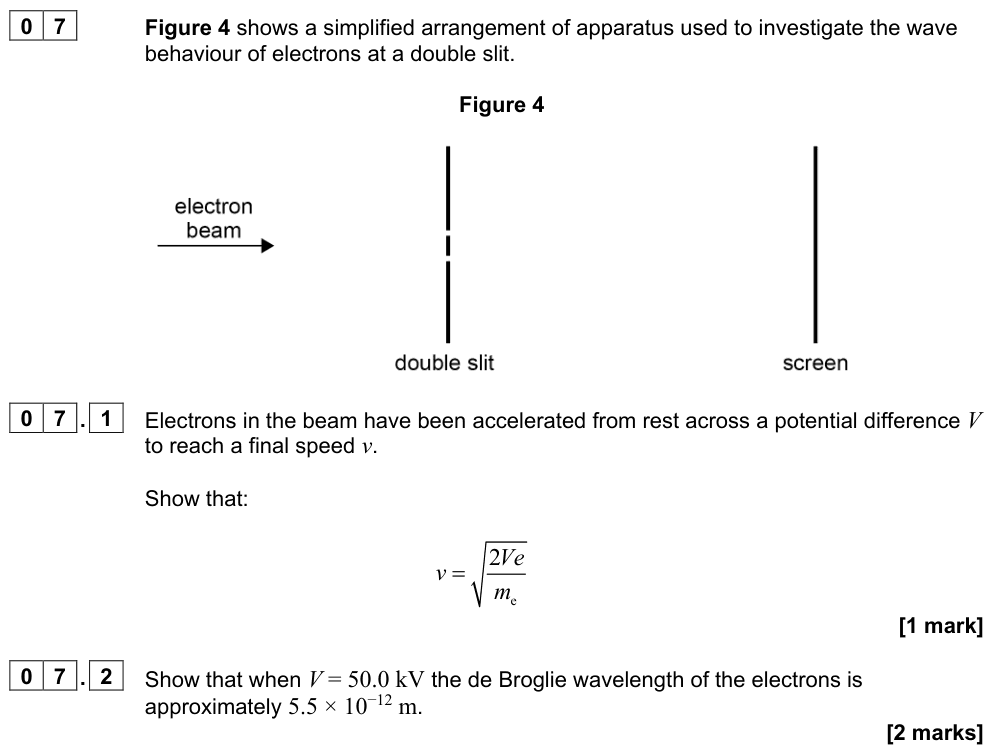
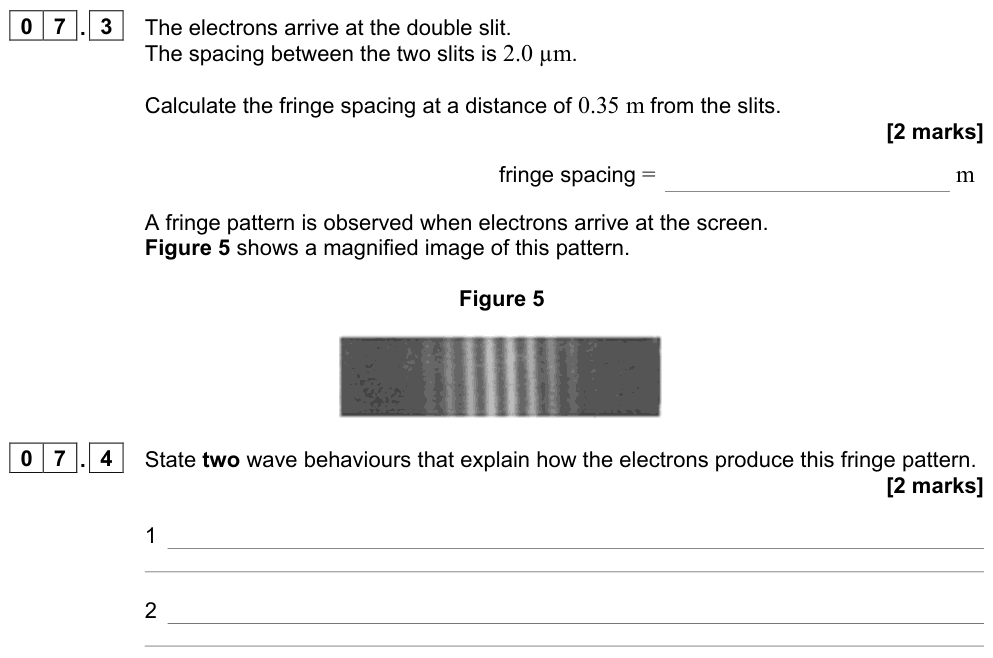
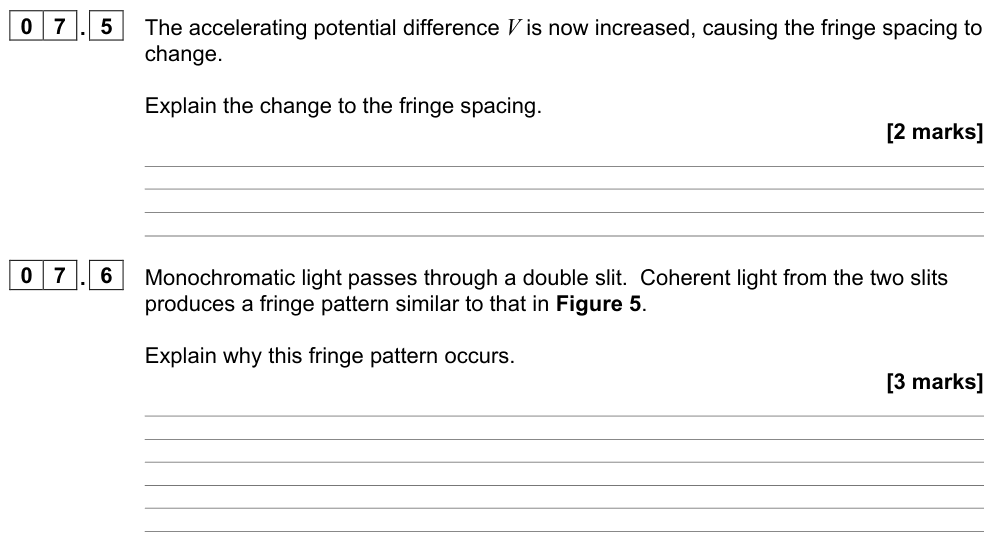
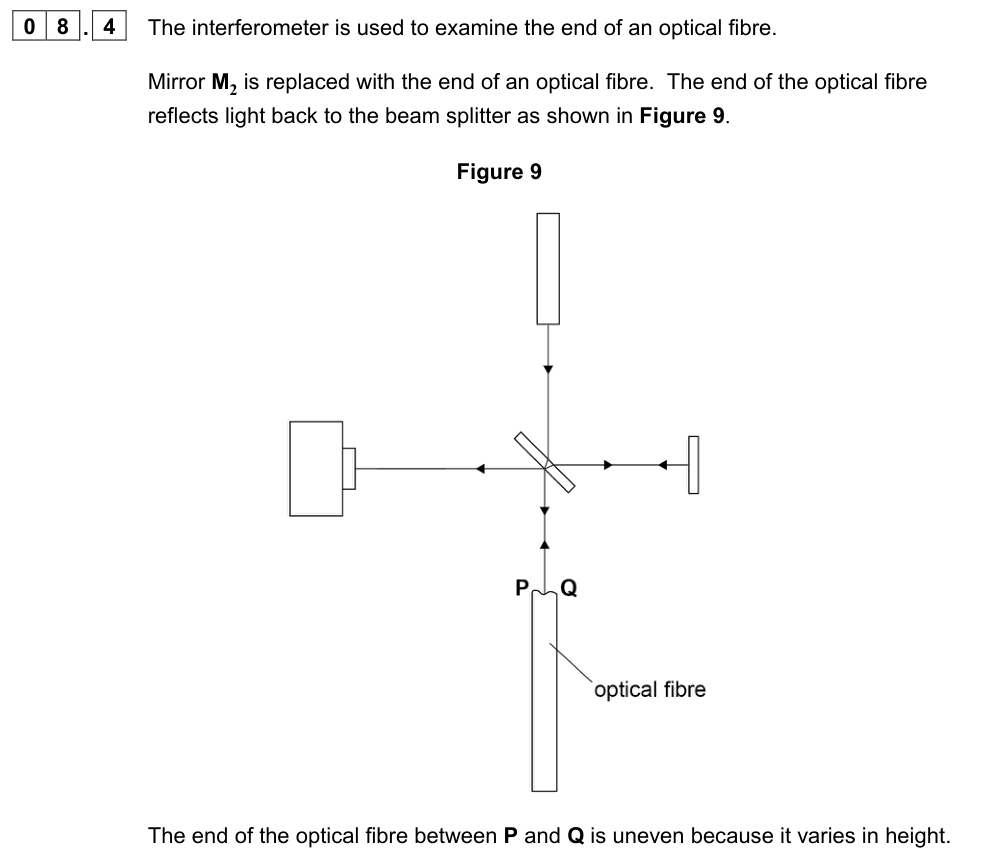
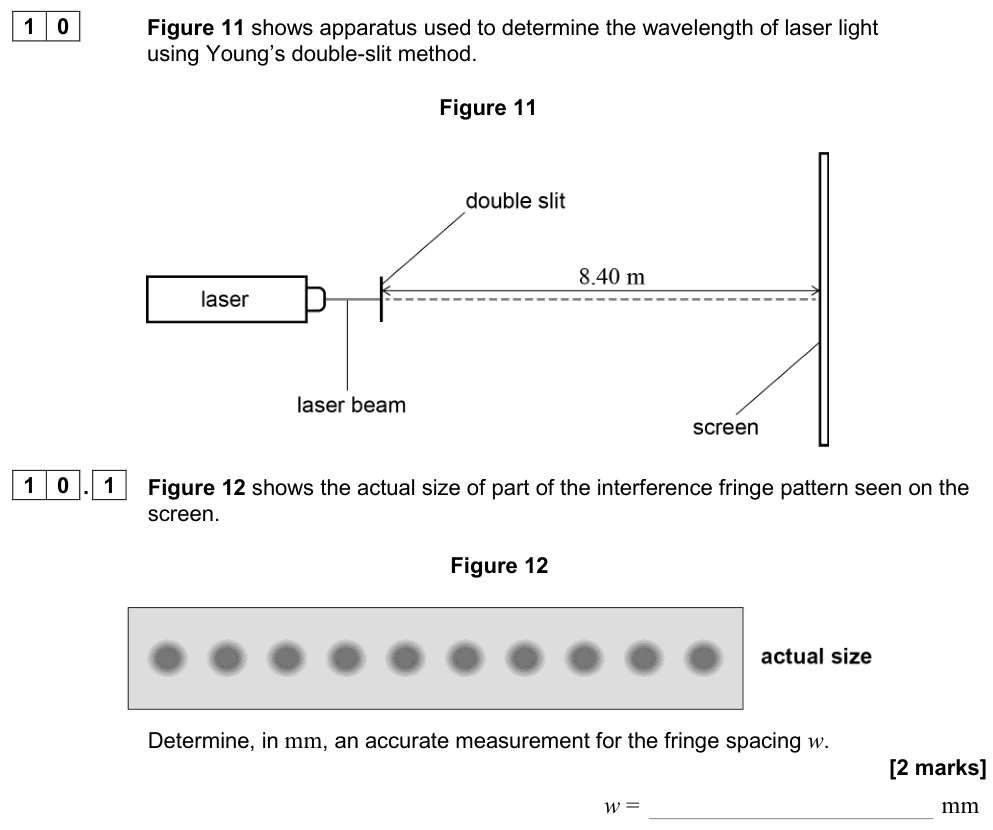
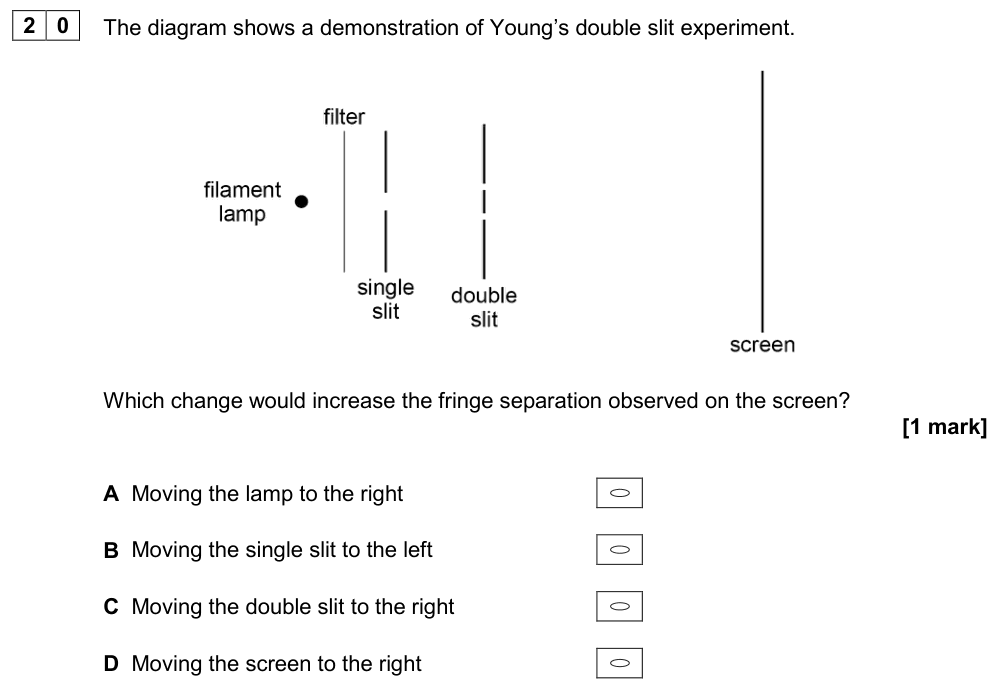
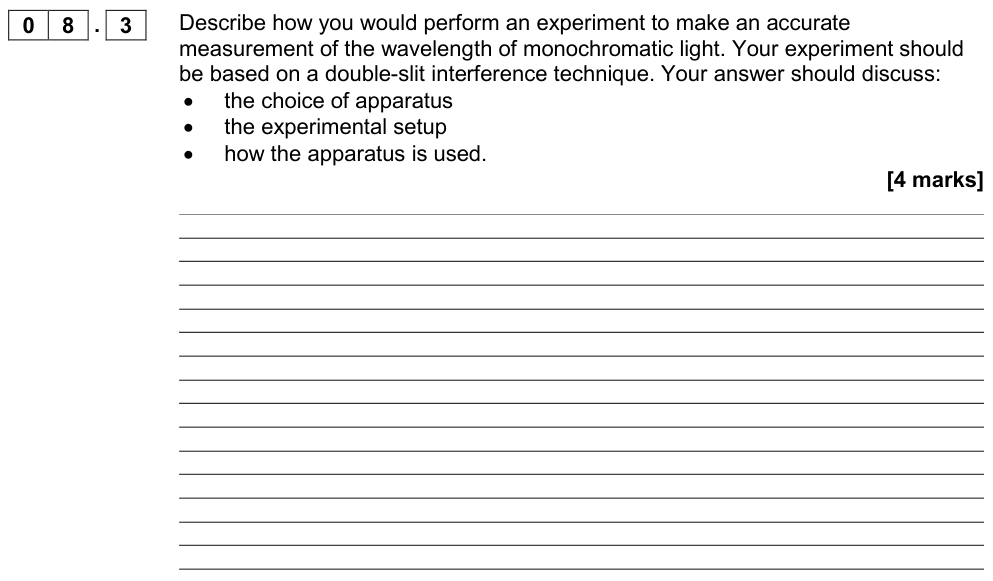
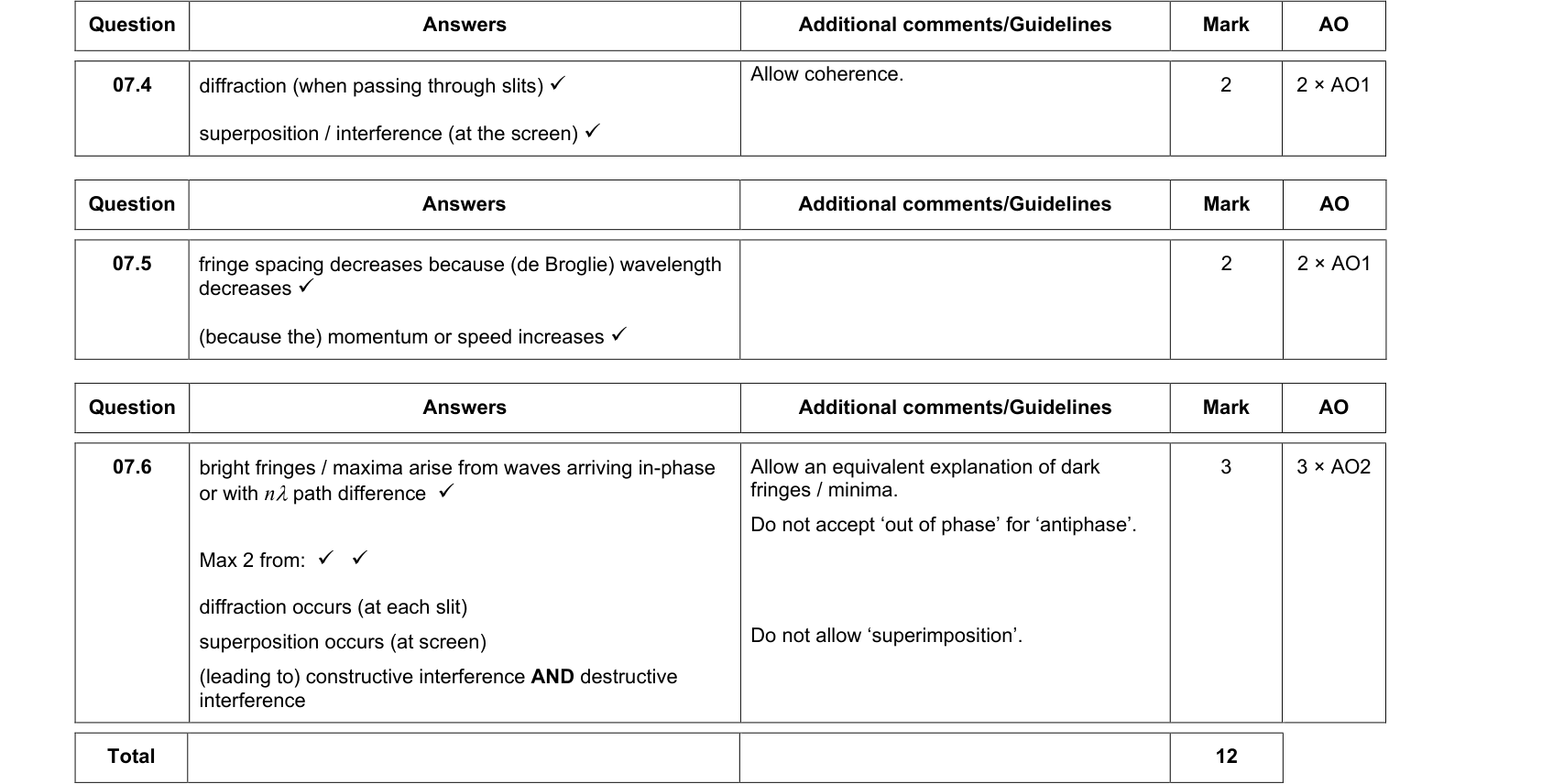
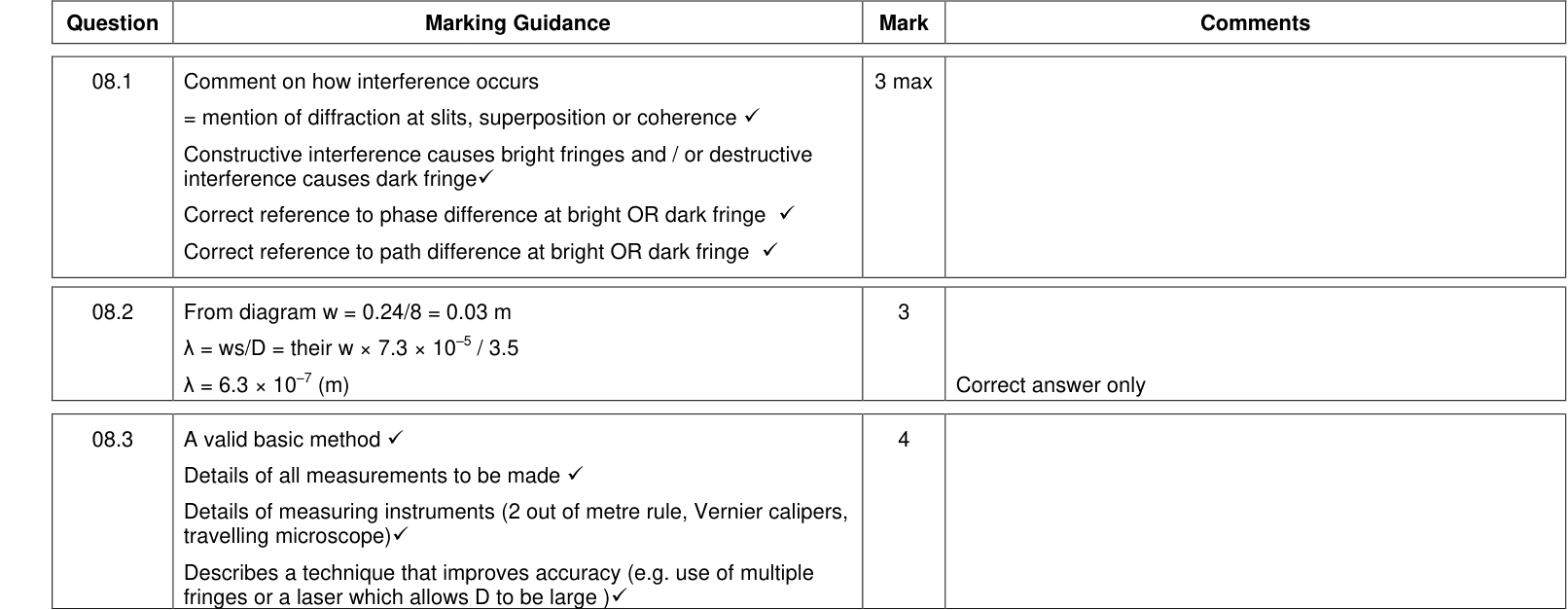
Light from a laser falls on two narrow, closely spaced slits. Each slit diffracts the light so that the two beams overlap. Where they overlap they interfere, producing a pattern of equally spaced bright and dark fringes on a screen.
Fringe spacing
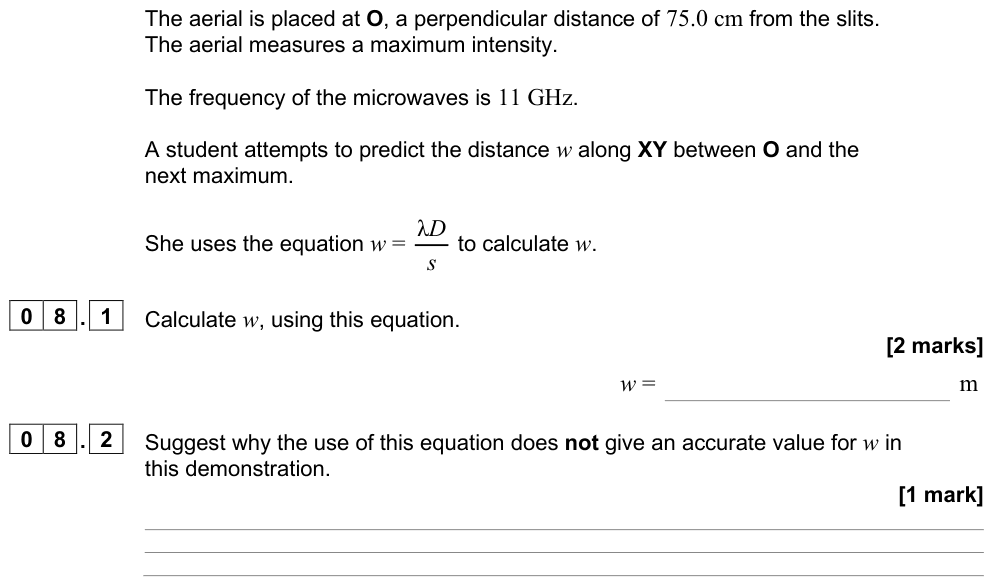
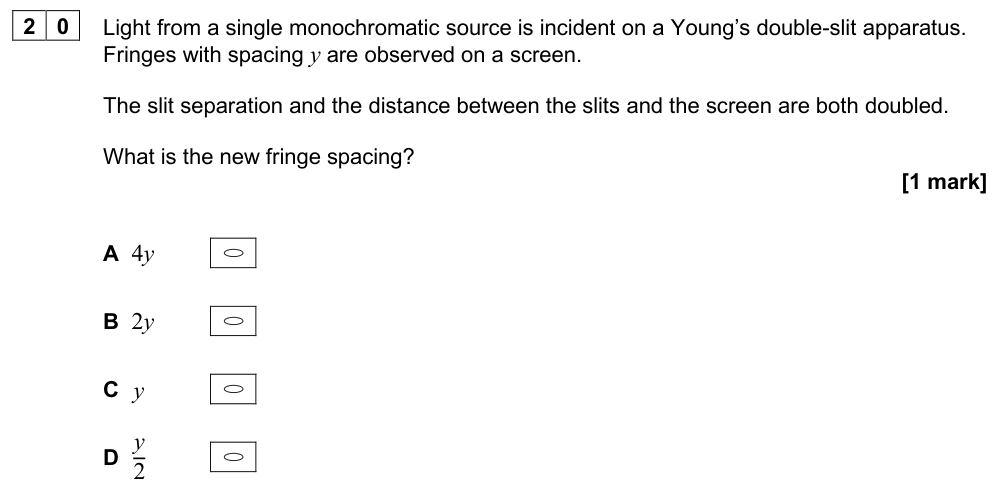
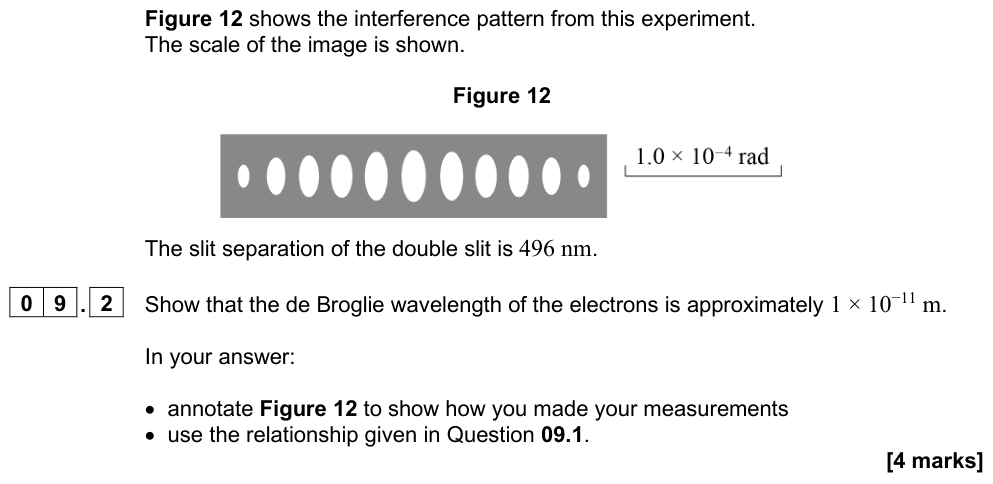
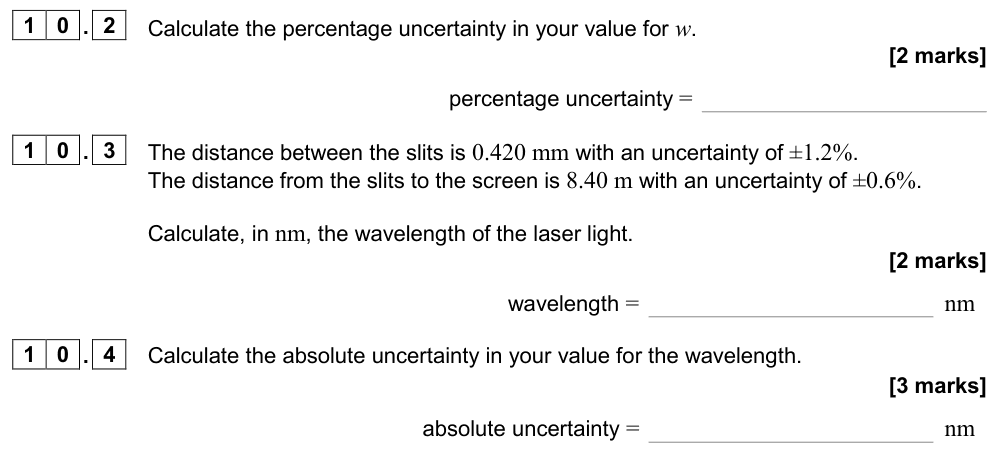
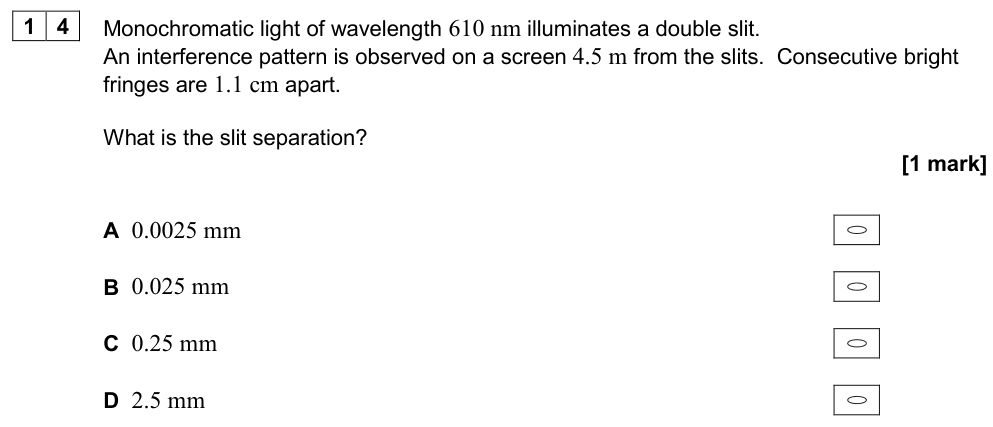
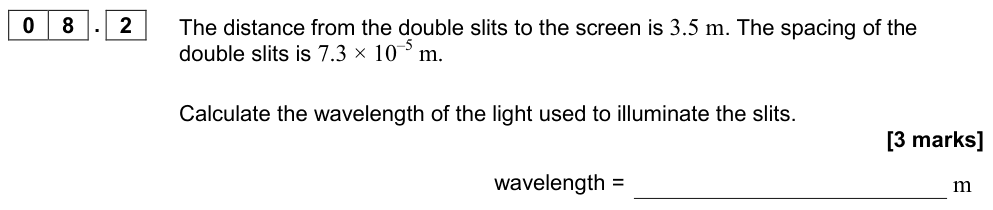
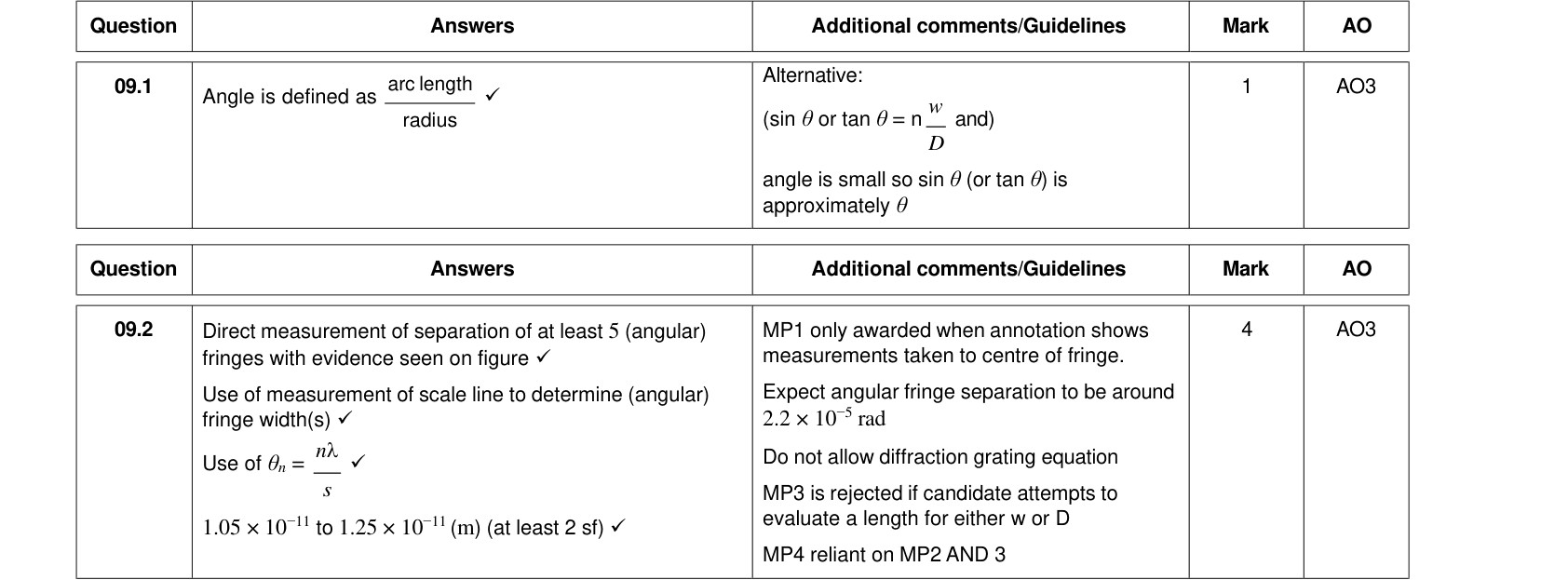
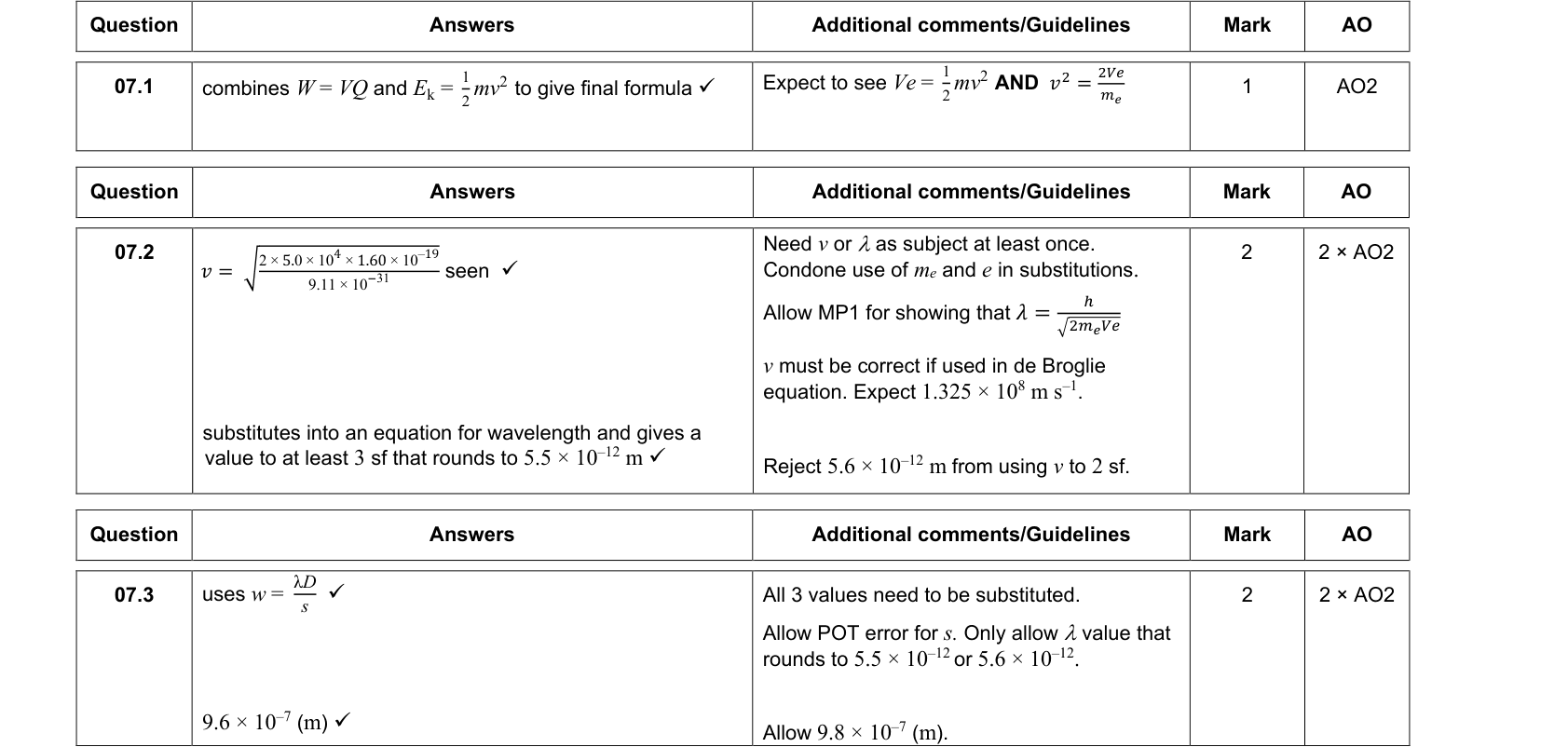
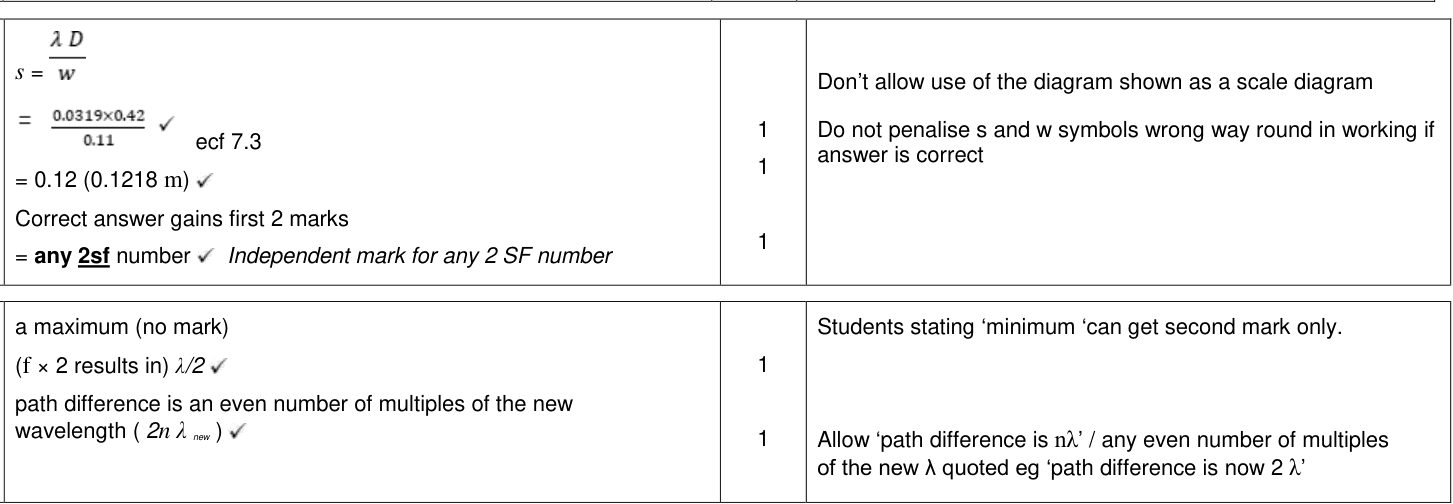
$$w = \frac{\lambda D}{s}$$
$w$ = fringe spacing (distance between adjacent bright fringes), $\lambda$ = wavelength, $D$ = slit-to-screen distance, $s$ = slit separation (centre to centre).
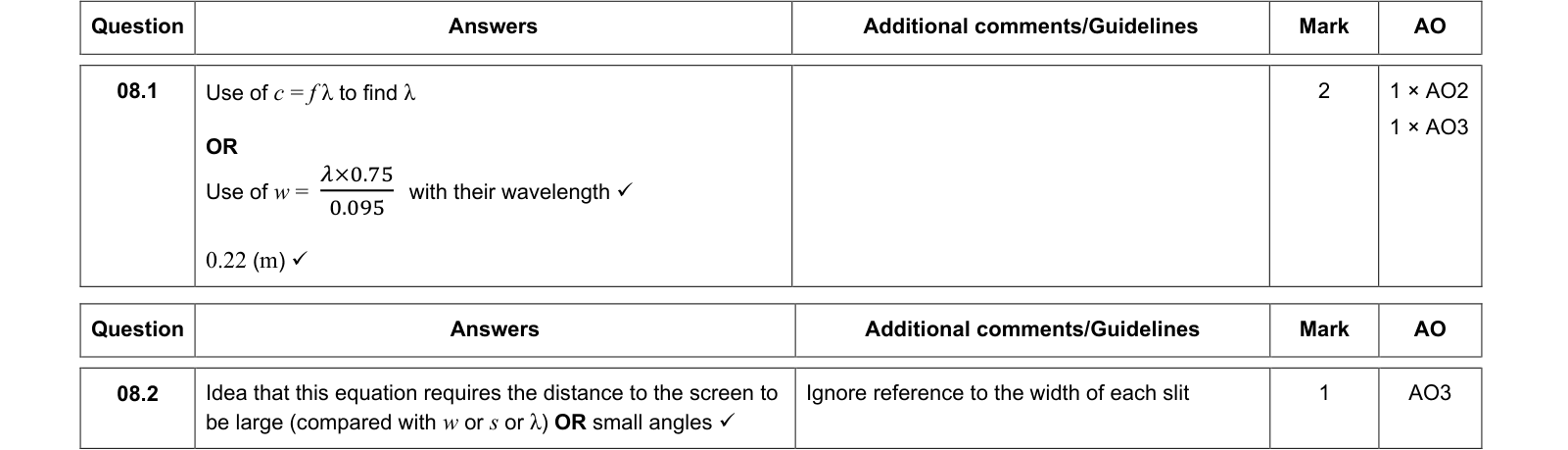
This applies when $D \gg s$, which is always true in practice.
- Increasing $D$ or $\lambda$ spreads the fringes out; increasing $s$ brings them closer together.
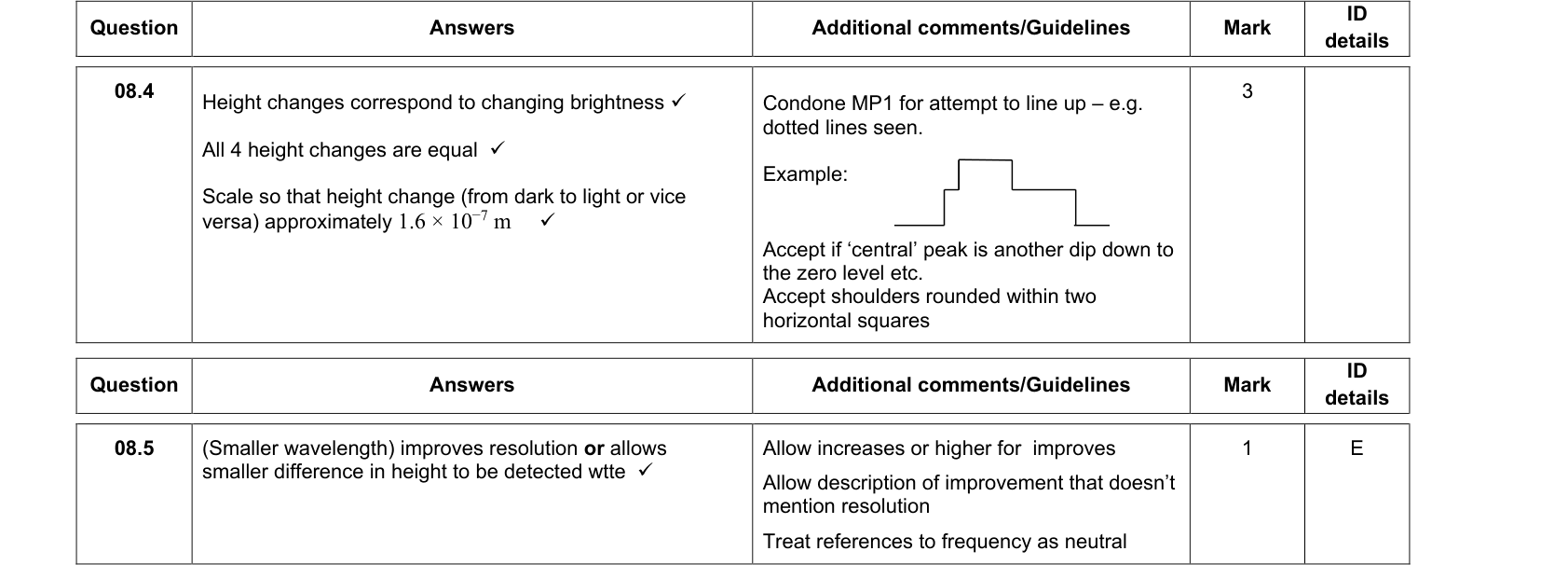
- Red light (longer λ) gives wider fringes than blue light.
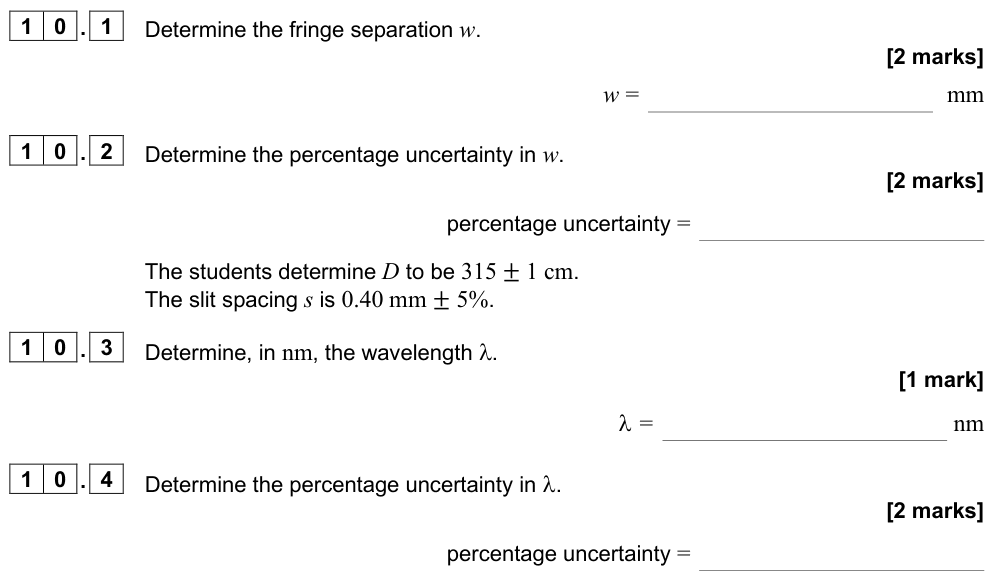
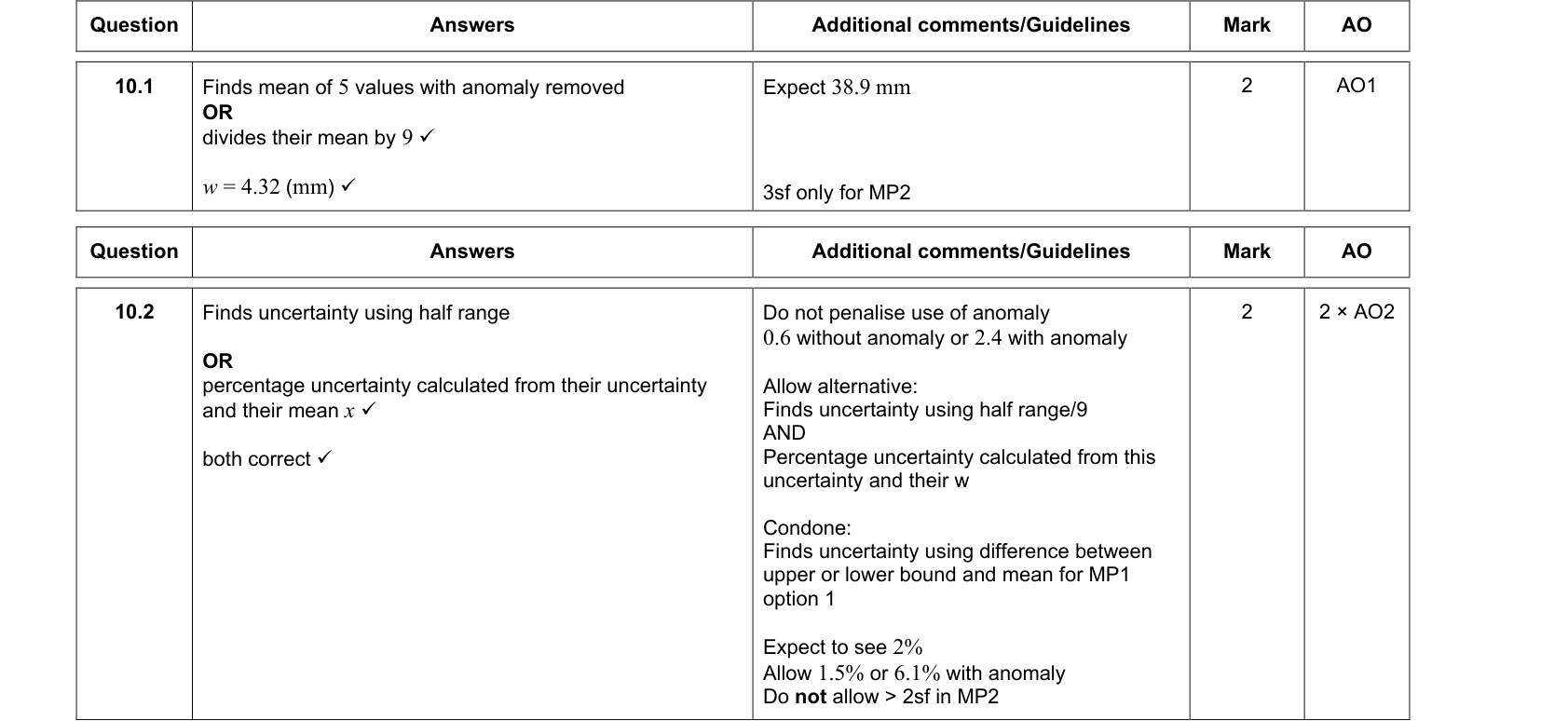
- Measure across several fringes (e.g. 10 fringe spacings) and divide, to reduce the percentage uncertainty in $w$.
Worked example
A laser of wavelength 633 nm illuminates slits 0.40 mm apart. The screen is 2.5 m away.
$w = \dfrac{633 \times 10^{-9} \times 2.5}{0.40 \times 10^{-3}} = 4.0 \times 10^{-3}\ \text{m} = 4.0\ \text{mm}$.
Why the experiment mattered
Young's experiment (1801) showed that light behaves as a wave: particles could not cancel to produce dark fringes. This supported Huygens' wave theory against Newton's corpuscular (particle) theory. Later, the photoelectric effect showed light also has particle properties (see Wave–particle duality).
White light fringes
With white light the central fringe is white (all wavelengths have zero path difference there). The other fringes are coloured spectra, with blue/violet nearest the centre and red furthest out (because $w \propto \lambda$). The fringes overlap and blur after the first few orders.
Laser safety
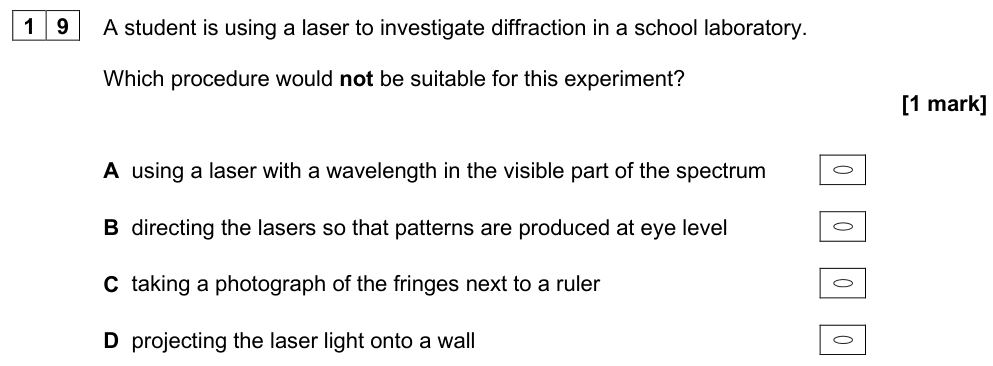
- Never look directly into a laser beam or at its reflection; it can permanently damage the retina.
- Avoid shiny surfaces that could reflect the beam; keep the beam below eye level.
- Use low-power (class 2) lasers in schools; use warning signs; do not point lasers at people.
Interference of sound and microwaves
Interference happens with all types of wave:
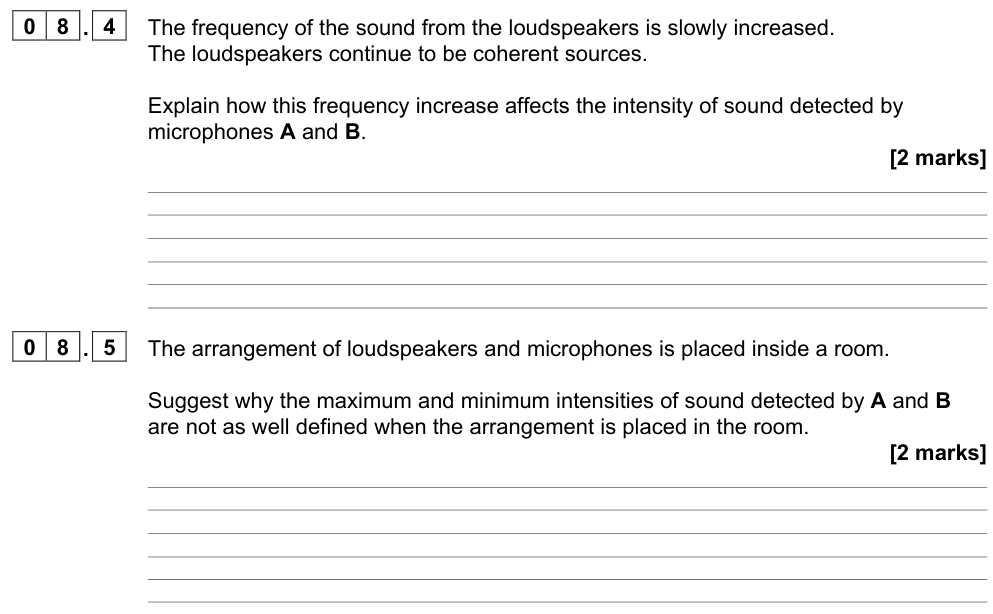
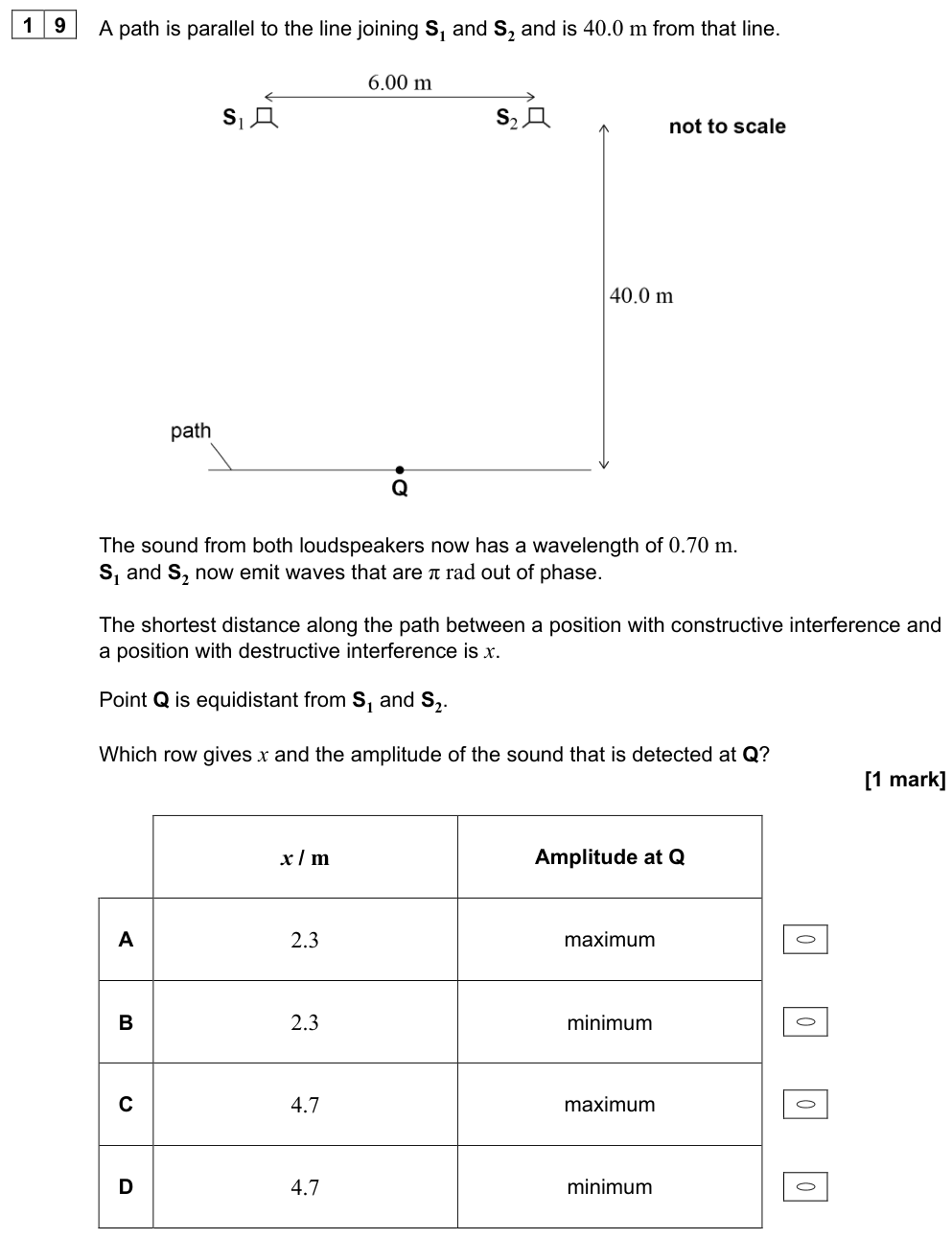
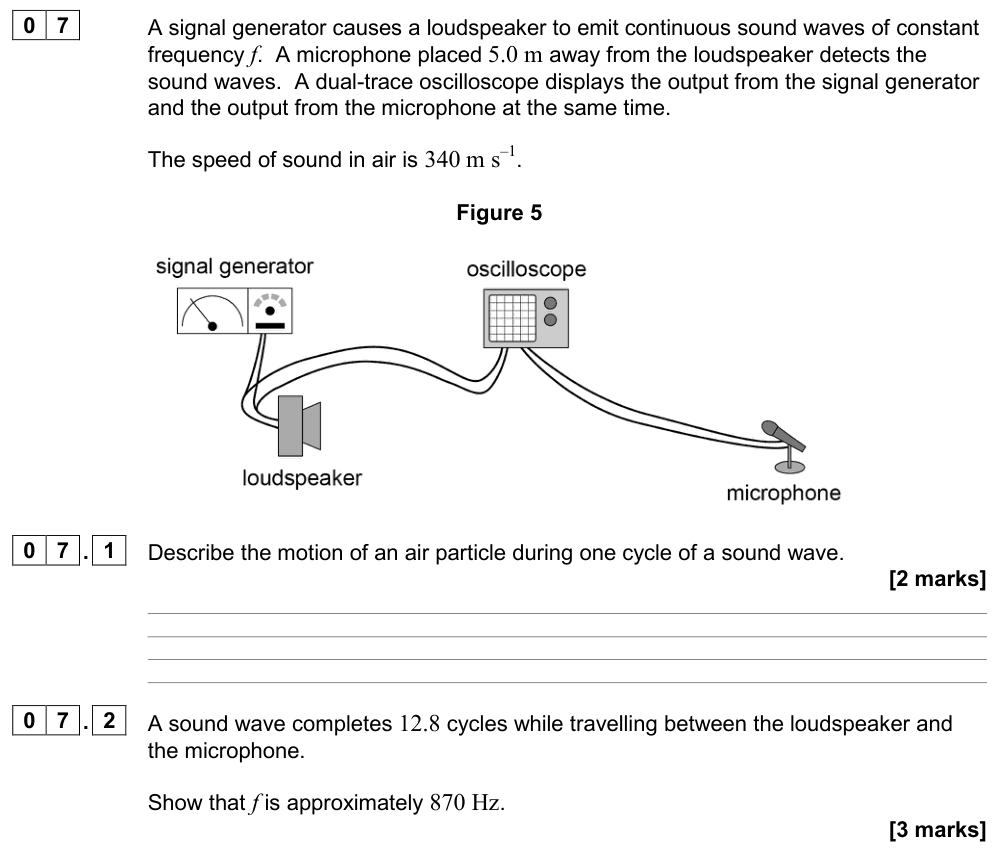
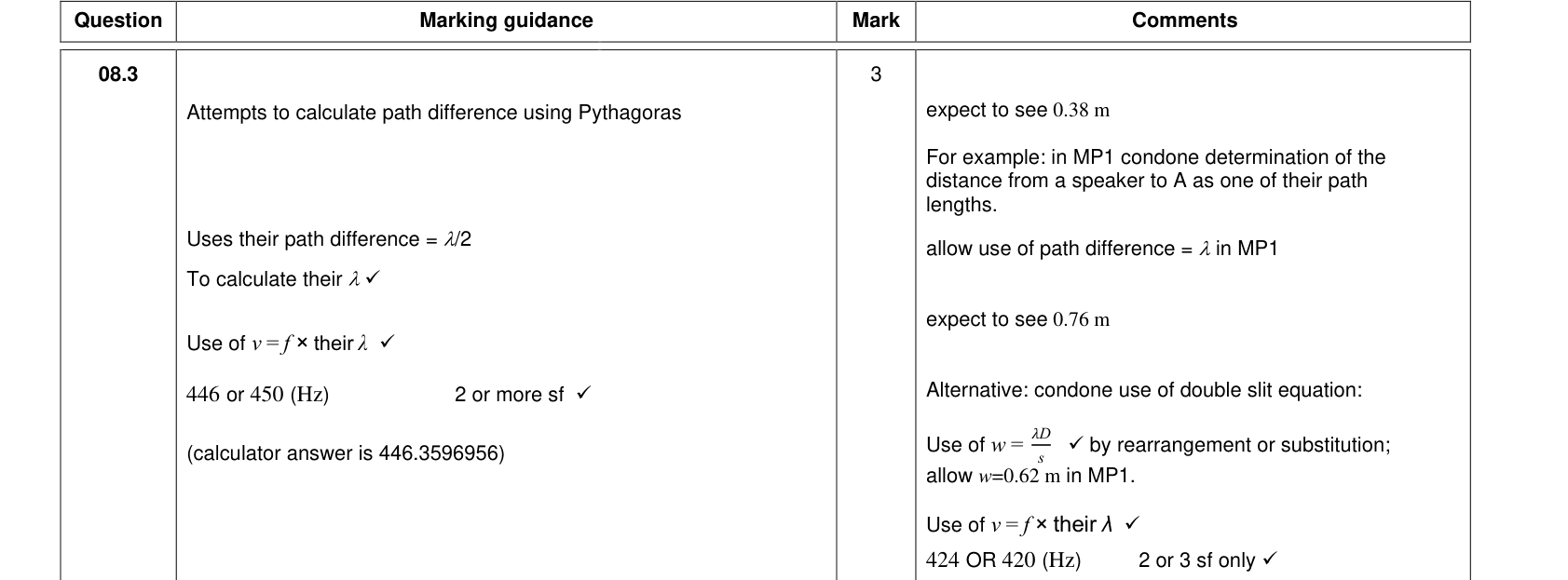
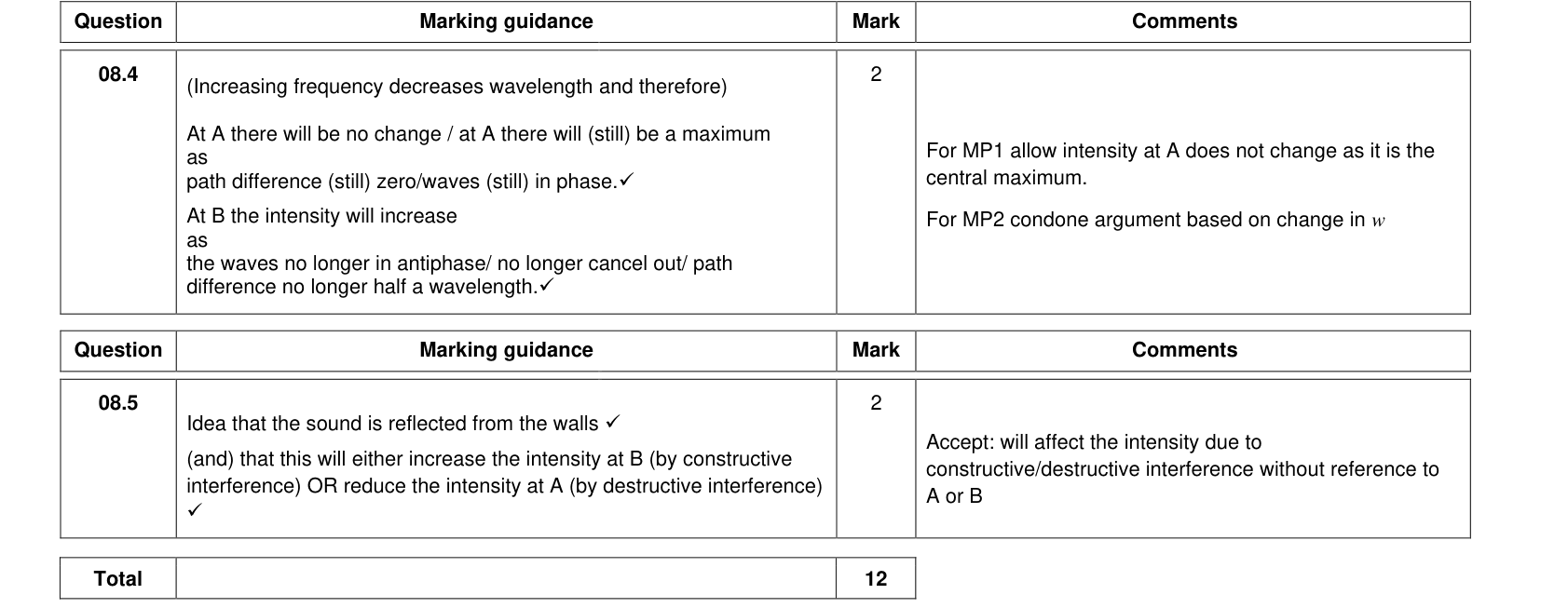
- Sound: two loudspeakers connected to the same signal generator are coherent. Walking along a line in front of them, you hear alternating loud and quiet regions. The same equation $w = \lambda D/s$ applies approximately when $D \gg s$.
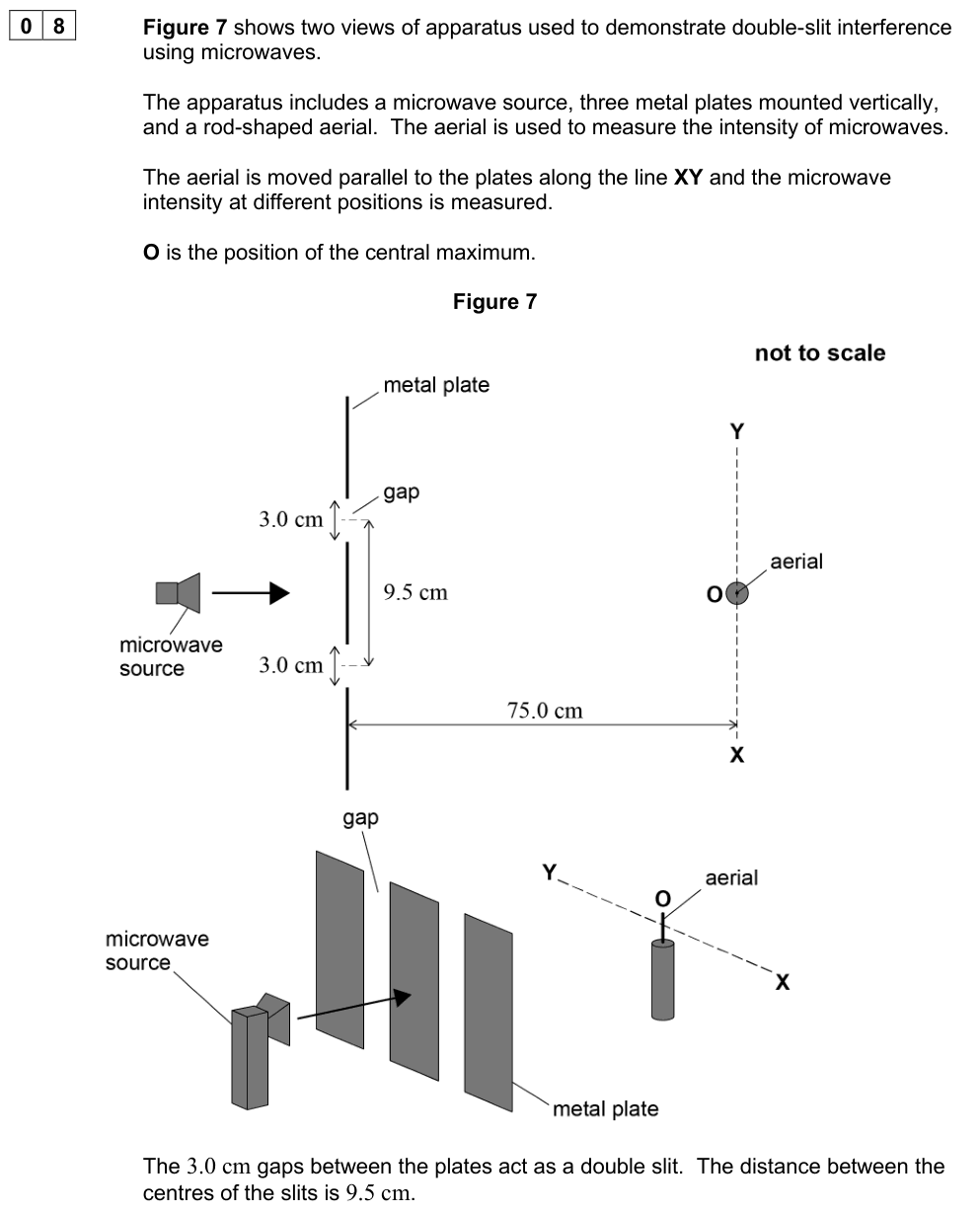
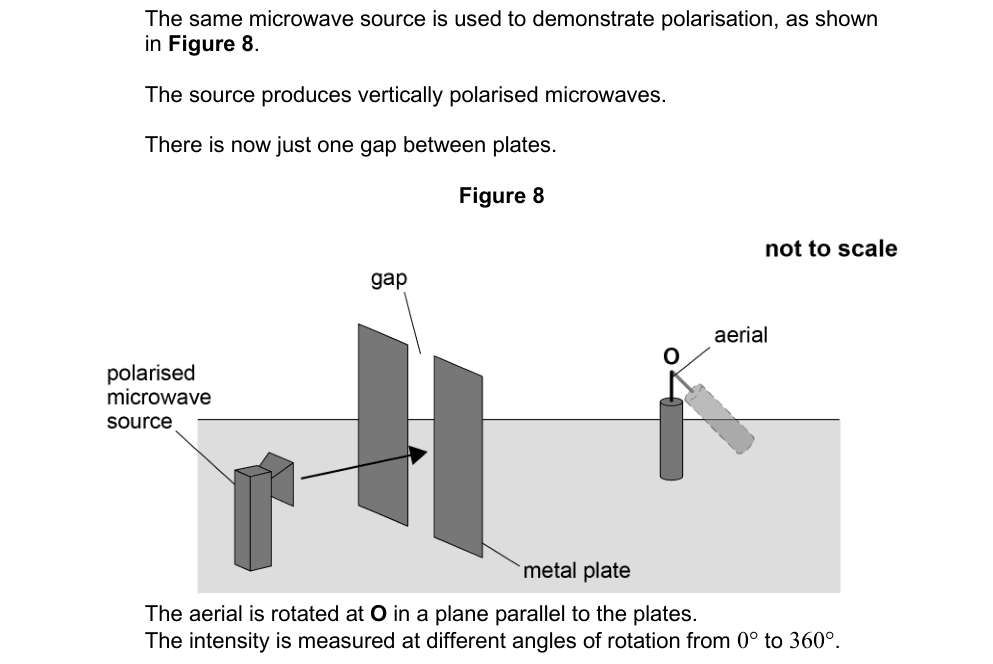
- Microwaves: a microwave transmitter in front of a metal sheet with two slits gives maxima and minima, detected with a microwave probe.
Required practical 5: interference with Young's slits and a diffraction grating
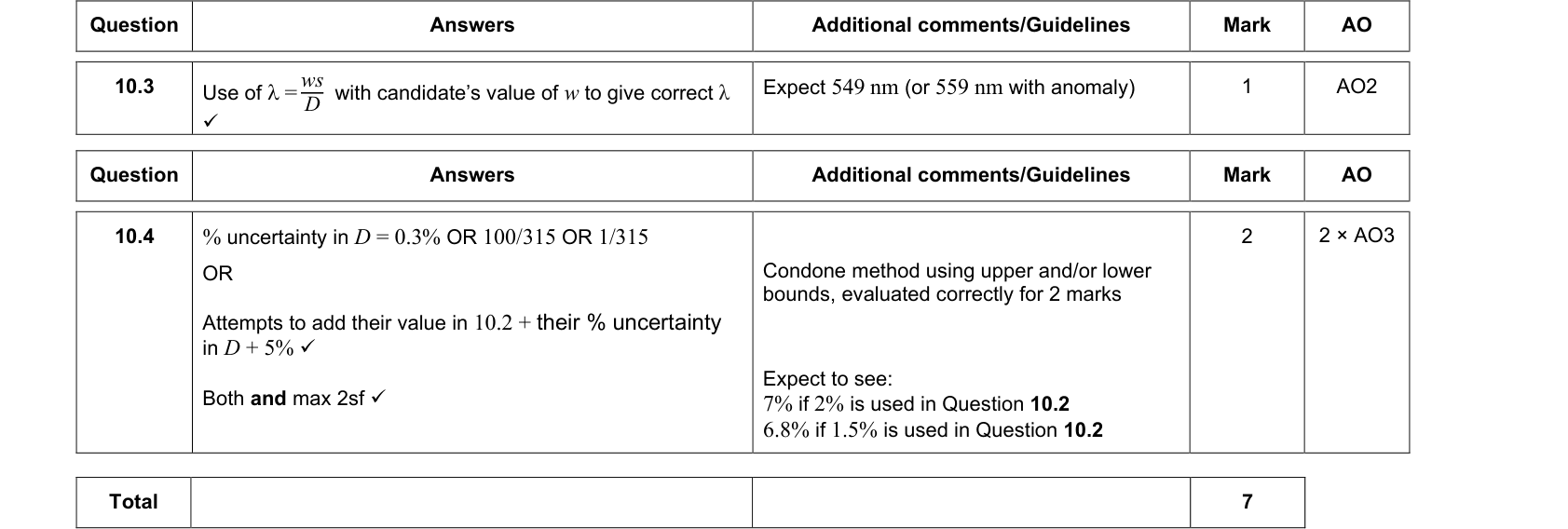
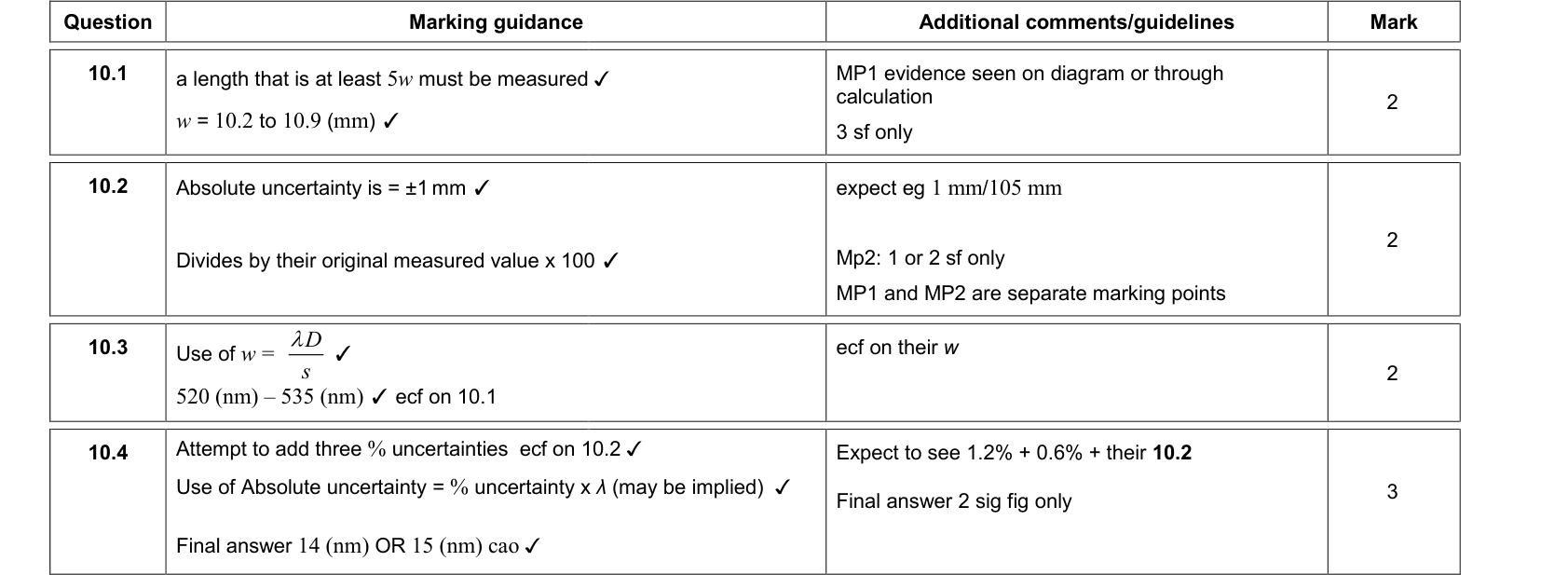
Double slit: shine a laser through a double slit onto a screen at least 1 m away. Measure $D$ with a metre rule or tape, measure across several fringes with a ruler or vernier callipers to find $w$, and use the given slit separation $s$. Calculate $\lambda = ws/D$. Repeat for different $D$; a graph of $w$ against $D$ has gradient $\lambda/s$.
Diffraction grating: see the next chapter. Measure the angles of the orders and use $d\sin\theta = n\lambda$.
Safety: follow the laser rules above.
Summary
- Coherent sources: same frequency, constant phase difference.
- Maximum: path difference $n\lambda$; minimum: $(n + \tfrac12)\lambda$ (sources in phase).
- Young's slits: $w = \lambda D/s$; evidence for the wave nature of light.
- White light: white central fringe, coloured fringes with violet nearest the centre.
- Interference also occurs with sound and microwaves. Never look into a laser.