Electromotive force (e.m.f.)
E.m.f.
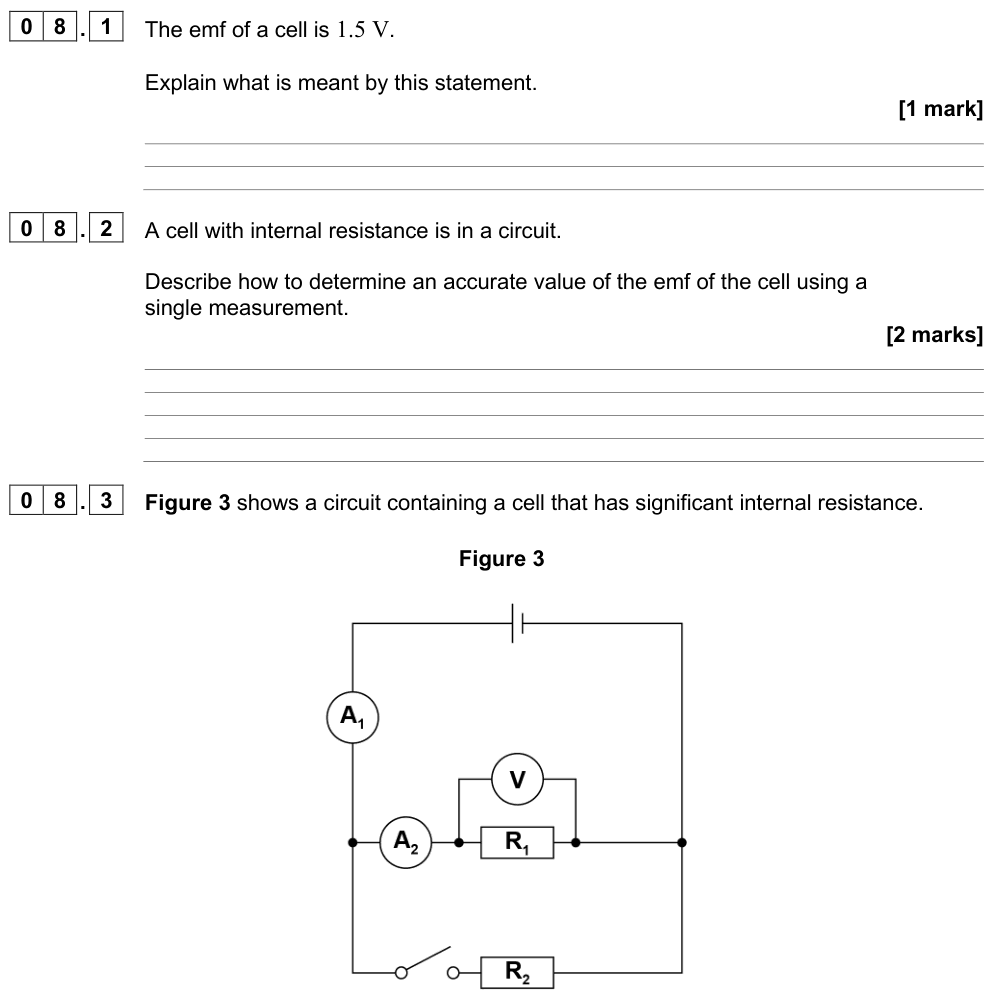
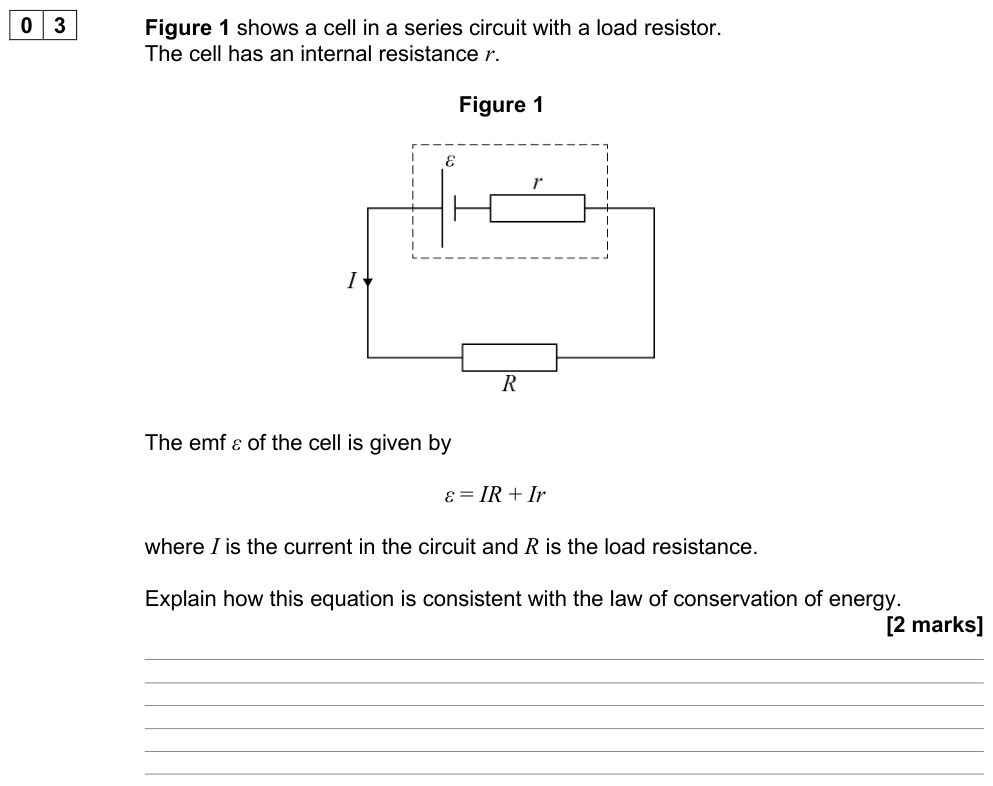
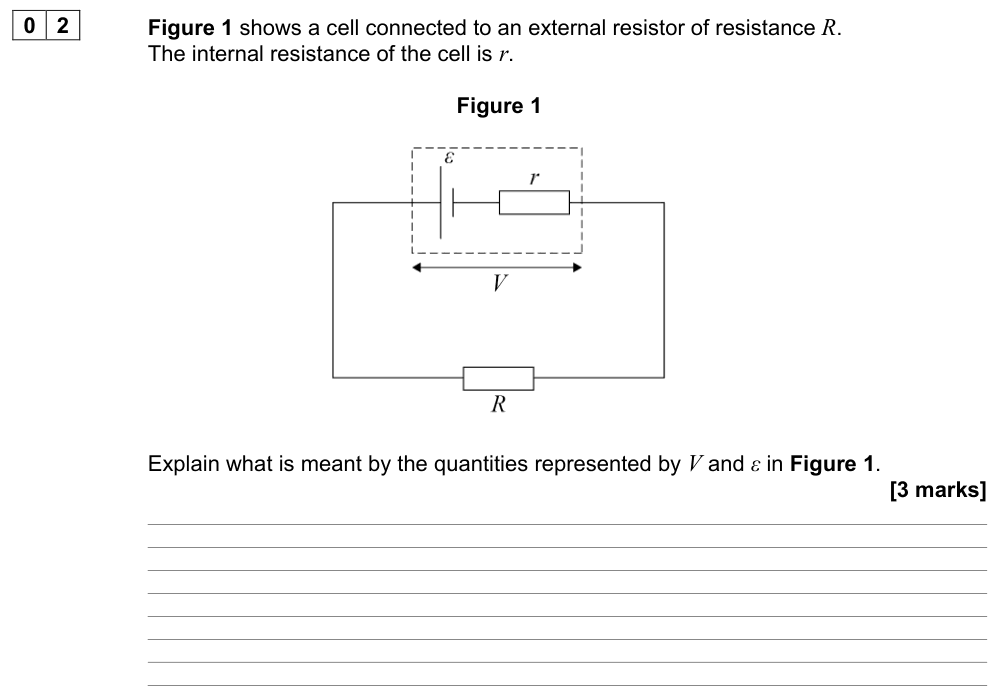
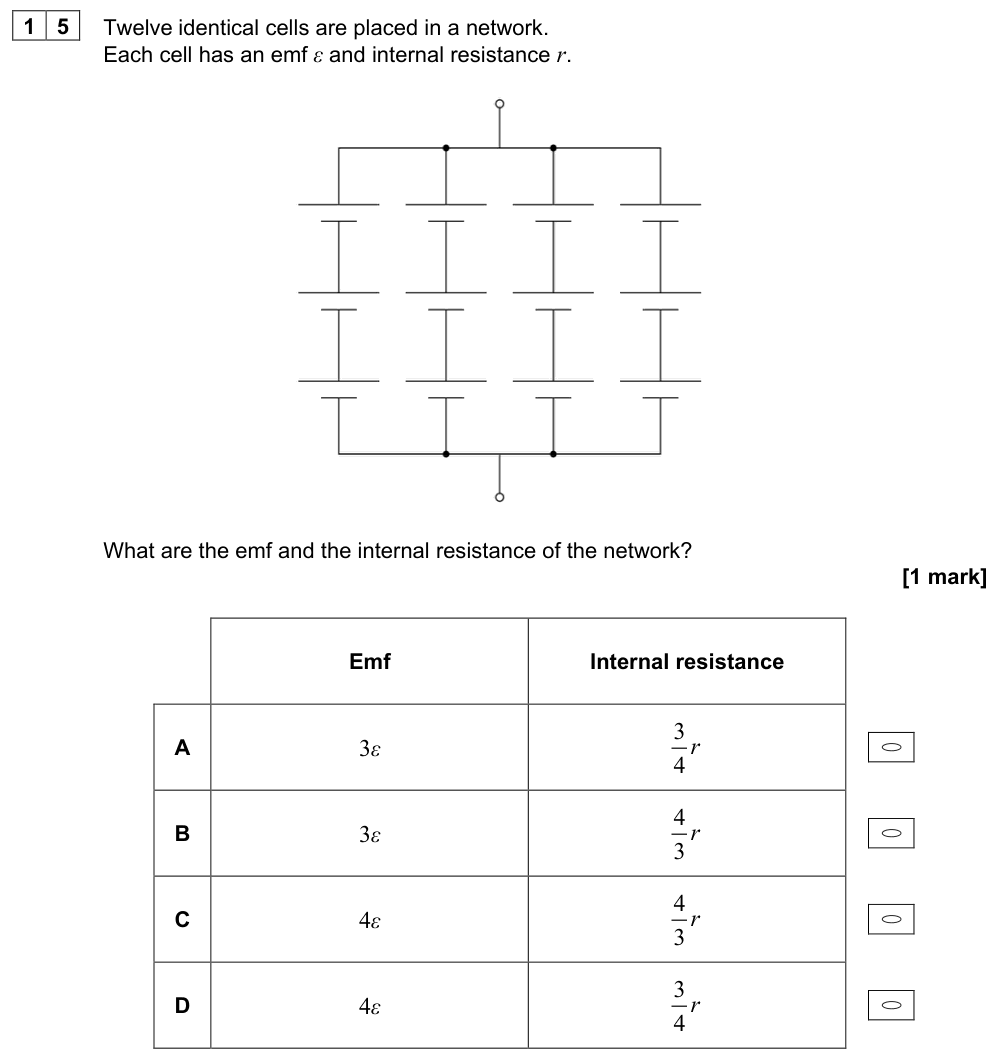
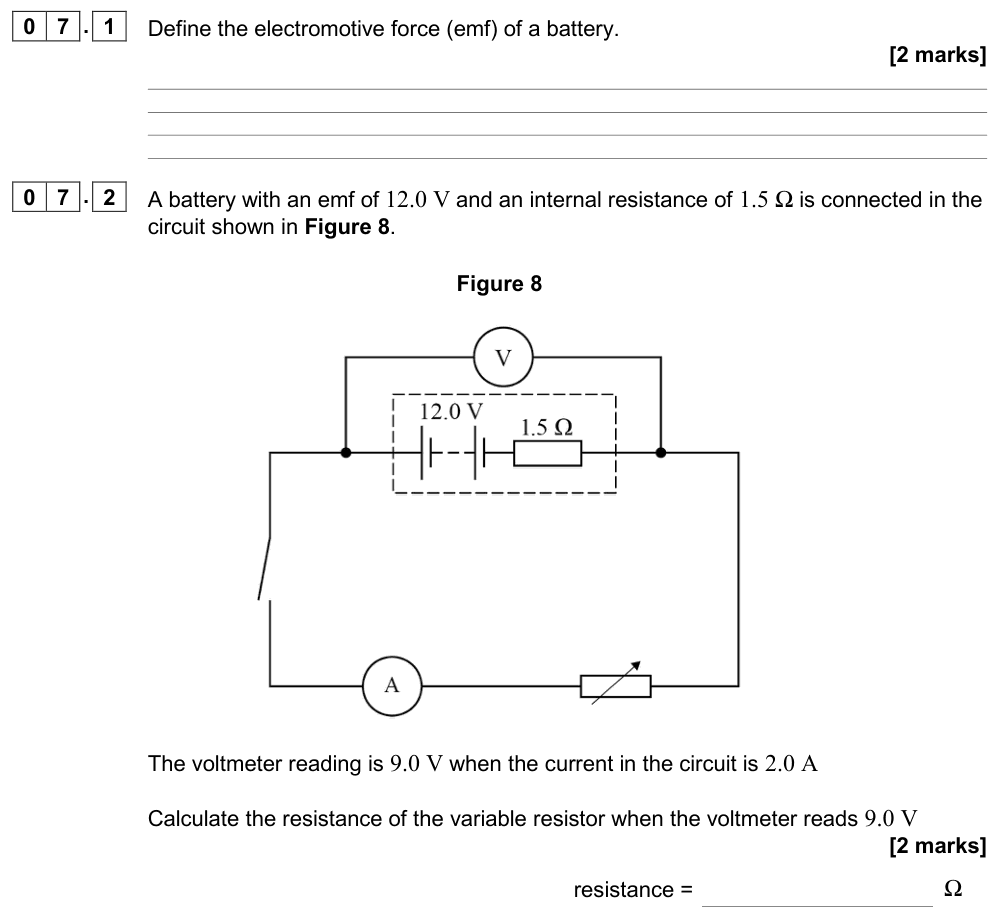
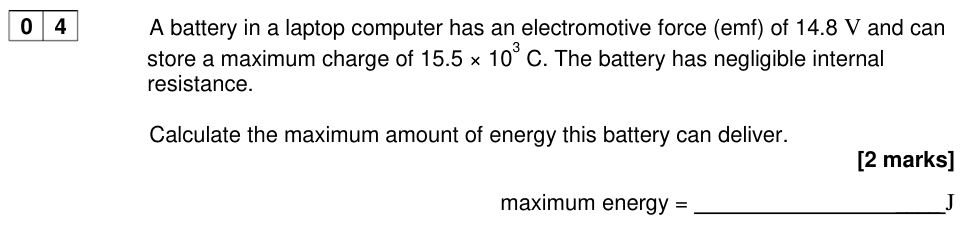
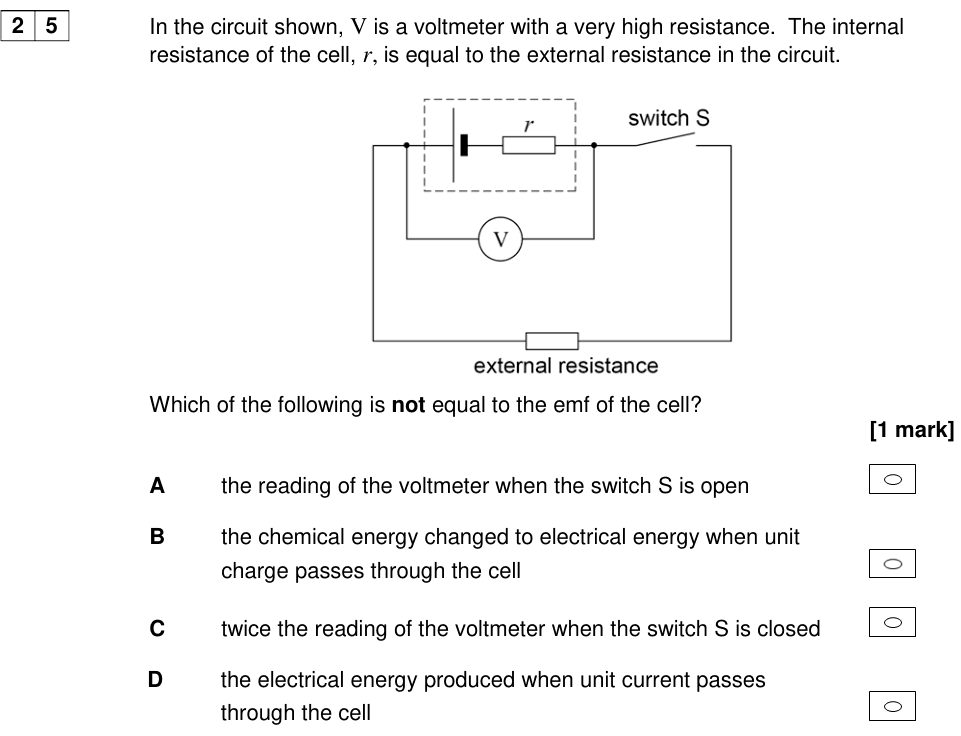
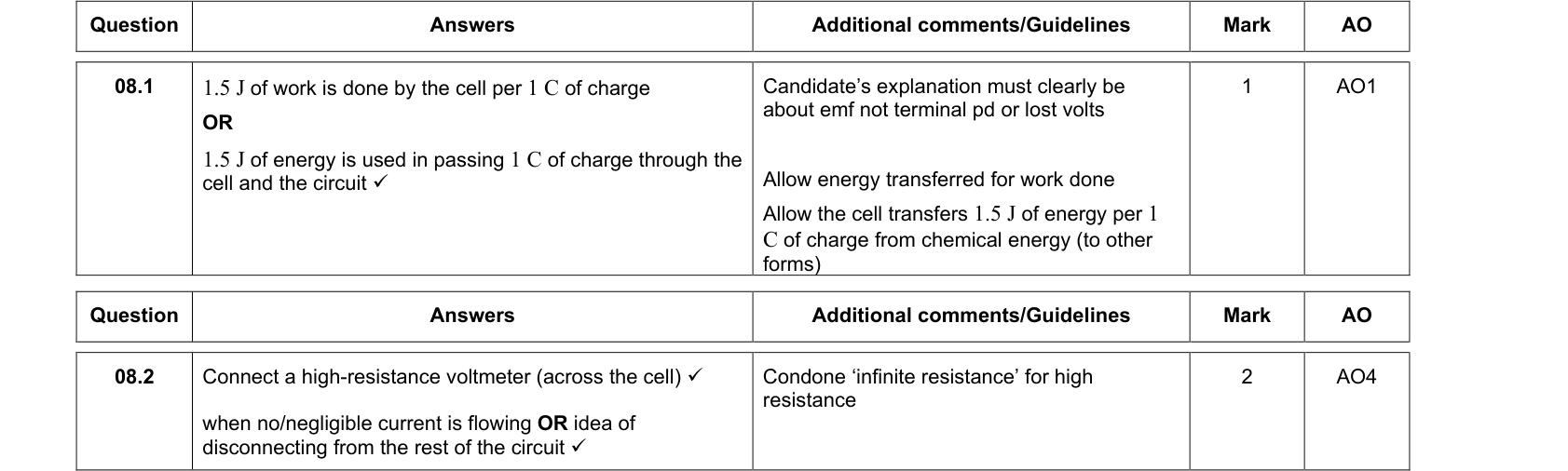
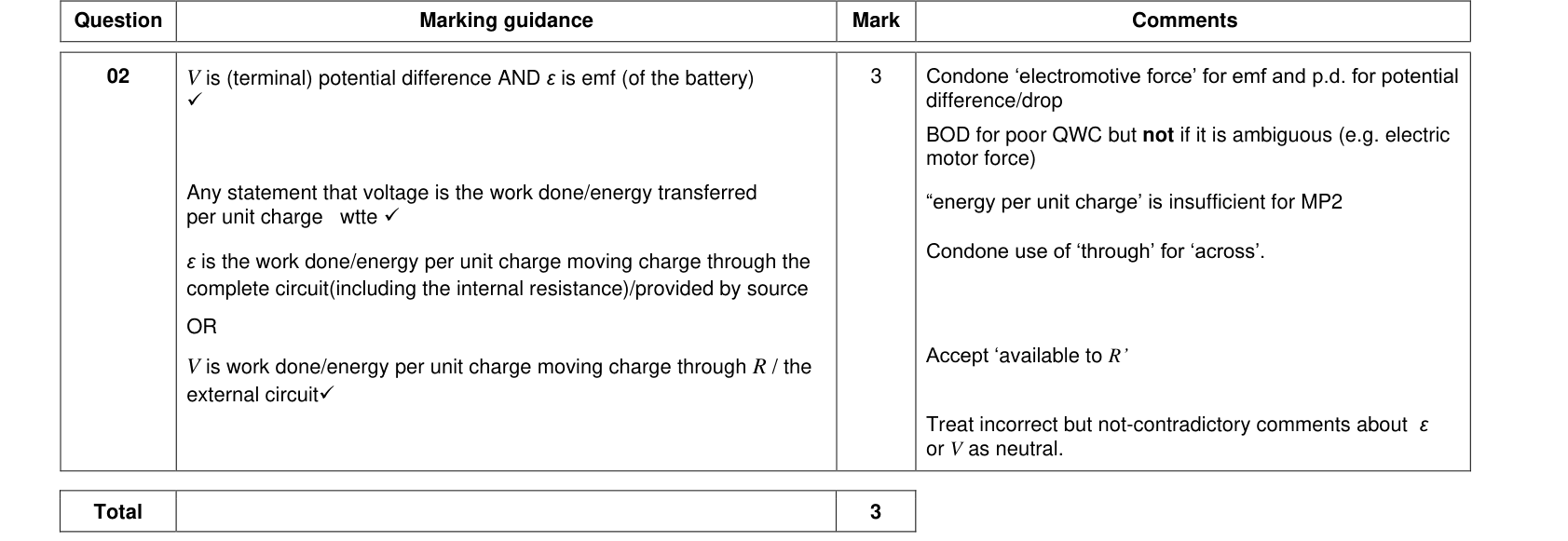
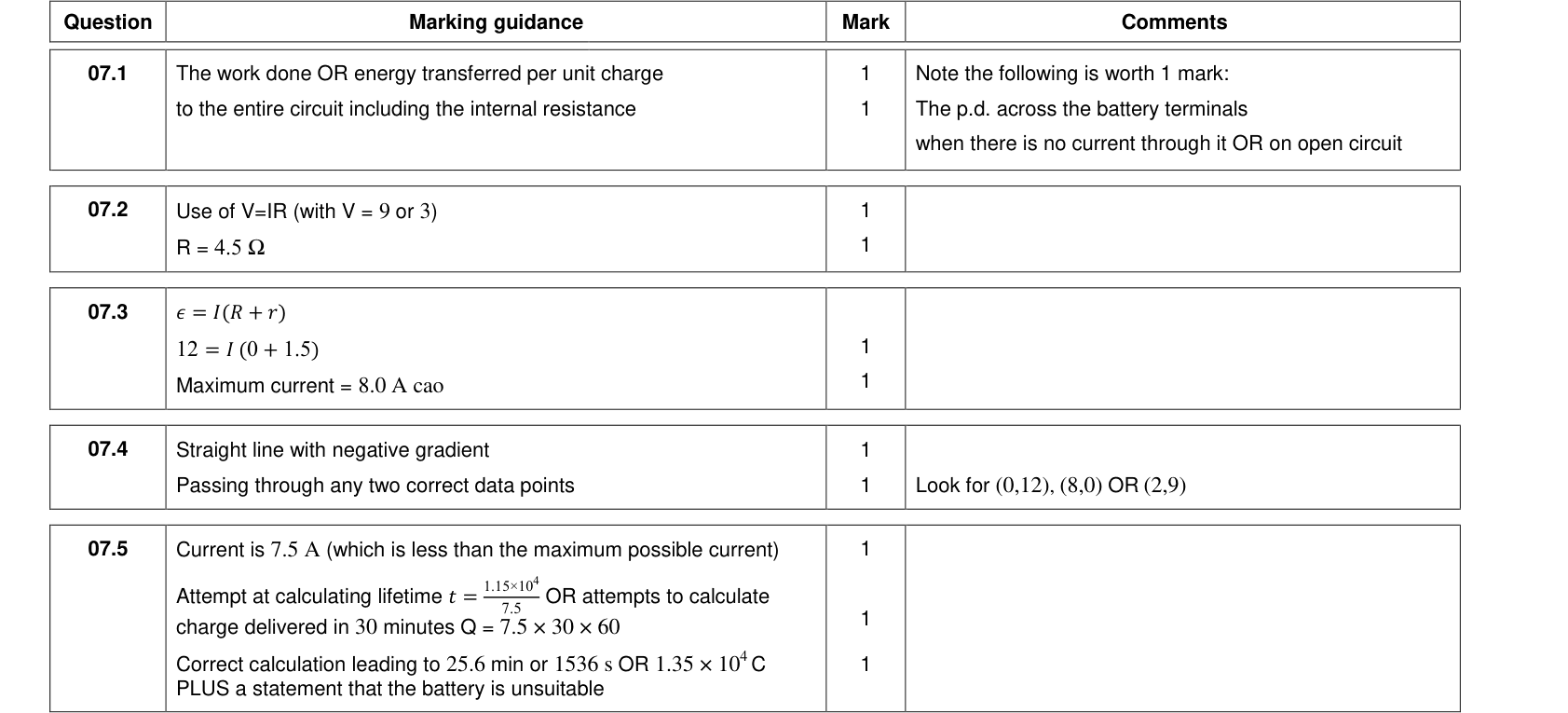
The electromotive force $\varepsilon$ of a source is the energy transferred to electrical energy per unit charge passing through the source (the work done on each coulomb by the source):
$$\varepsilon = \frac{E}{Q} \qquad \text{unit: volt (V)}$$
Compare this with p.d., which is the electrical energy transferred to other forms per unit charge by a component. E.m.f. is energy given to the charge; p.d. is energy taken from it.
Internal resistance
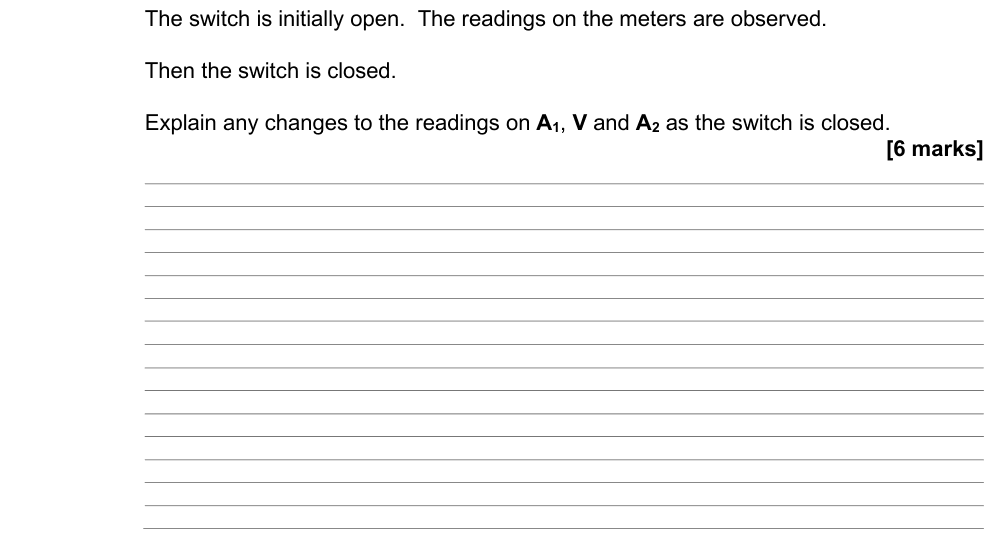
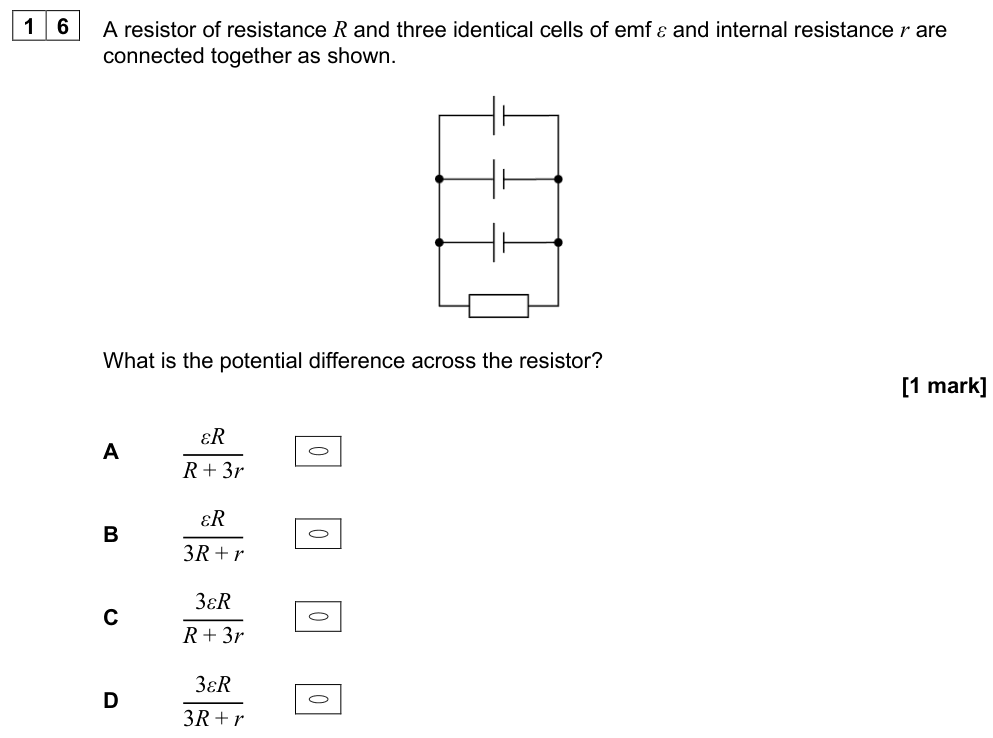
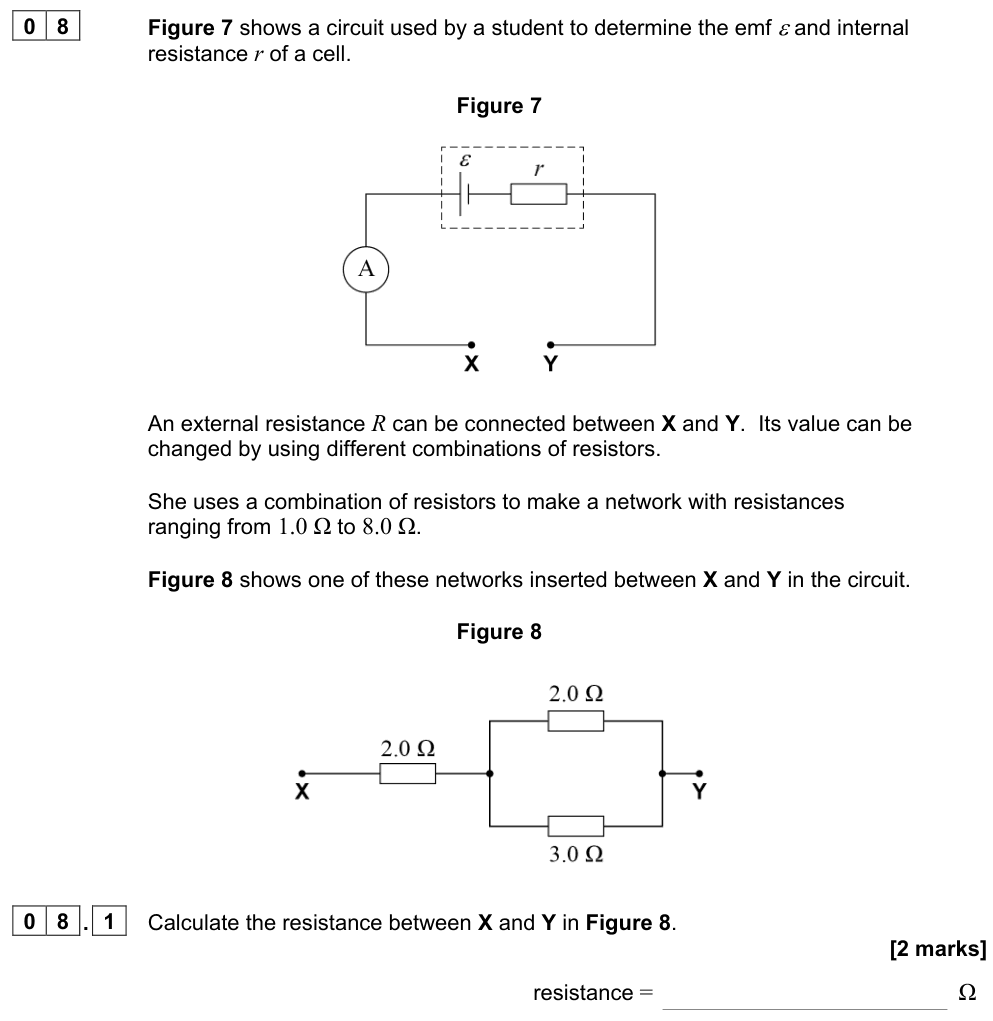
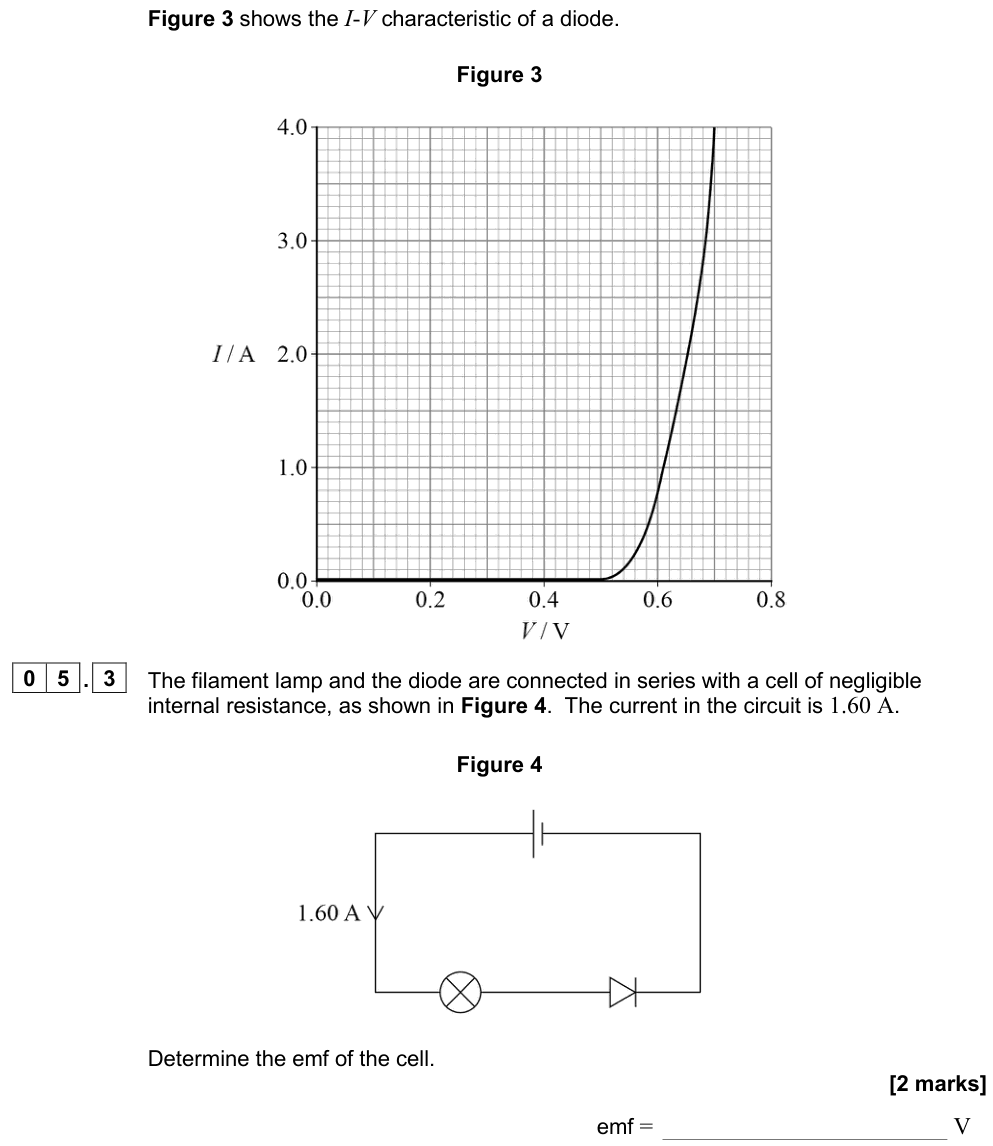
Every real source (cell, battery, power supply, generator) has internal resistance $r$. Some of the energy it gives to the charge is transferred to thermal energy inside the source as the charge passes through it.
The internal resistance equation
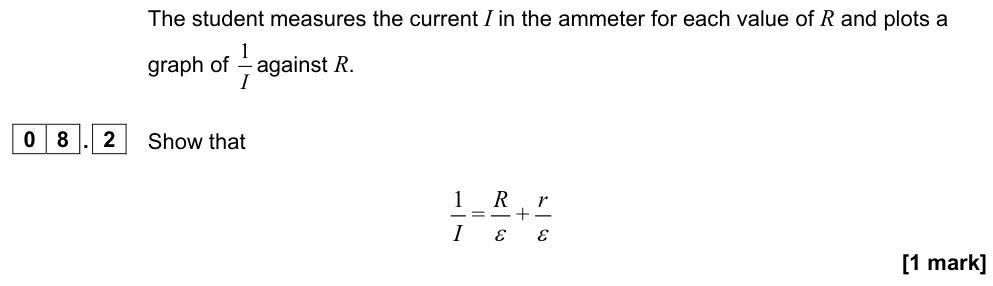
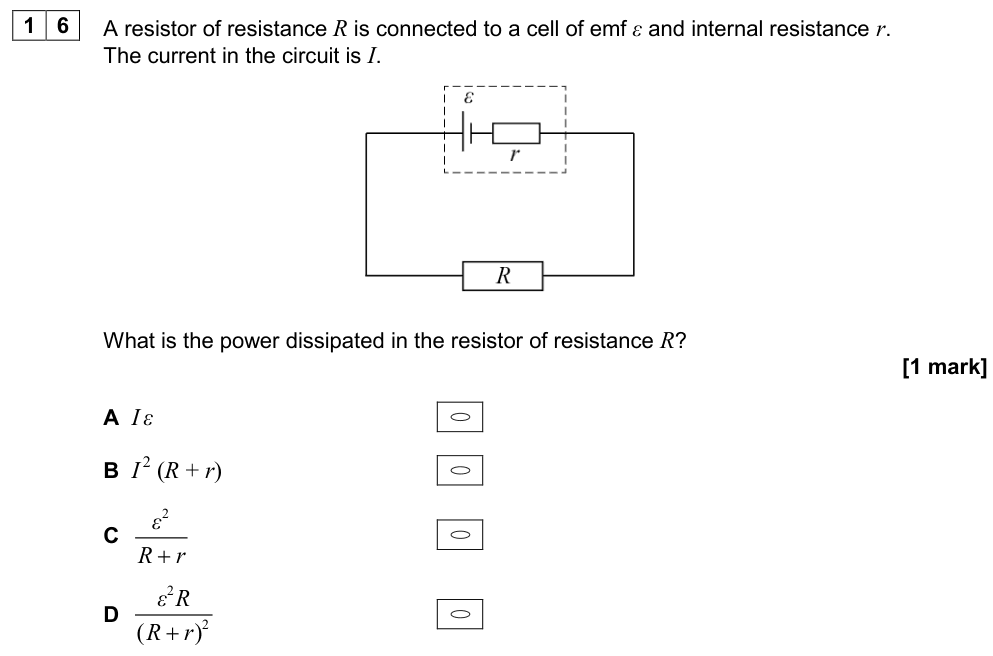
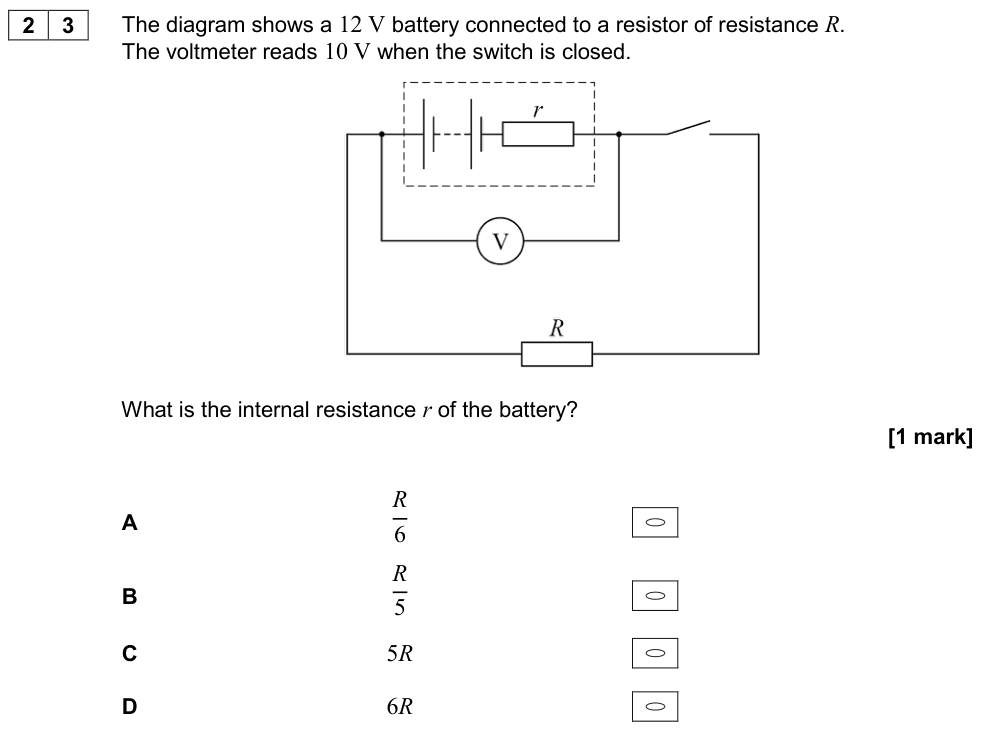
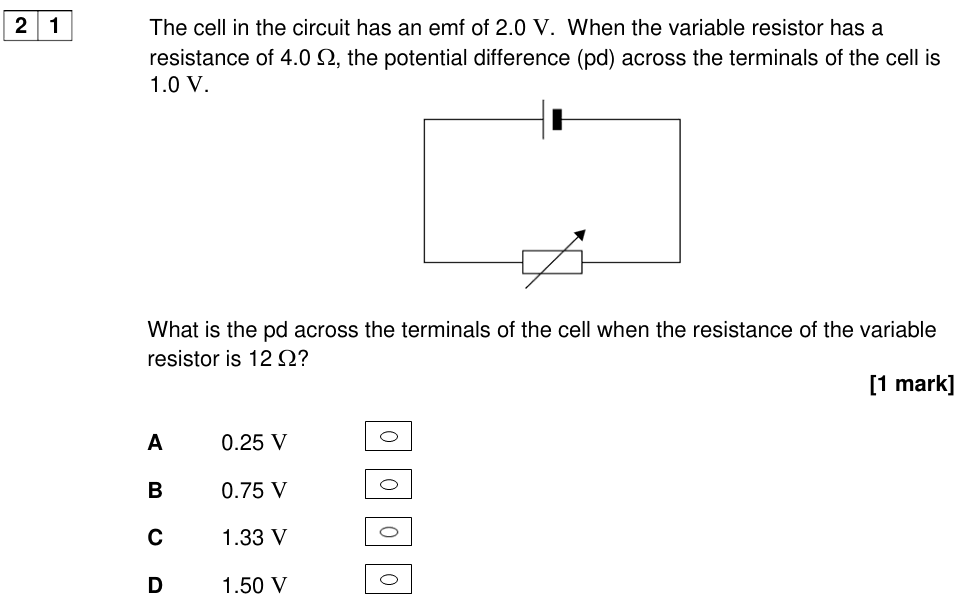
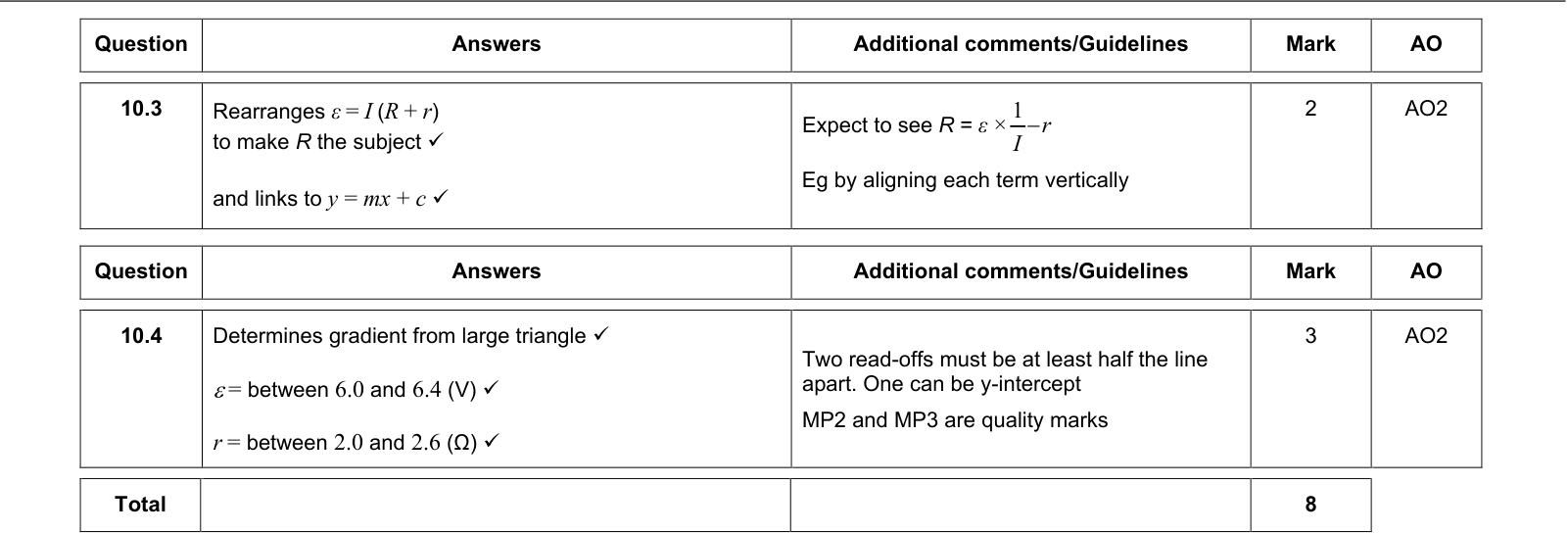
$$\varepsilon = I(R + r) \qquad \Longleftrightarrow \qquad \varepsilon = V + Ir$$
- $V = IR$ is the terminal p.d., the p.d. across the external circuit (the load).
- $Ir$ is the "lost volts": the energy per coulomb transferred inside the source.
So the terminal p.d. is
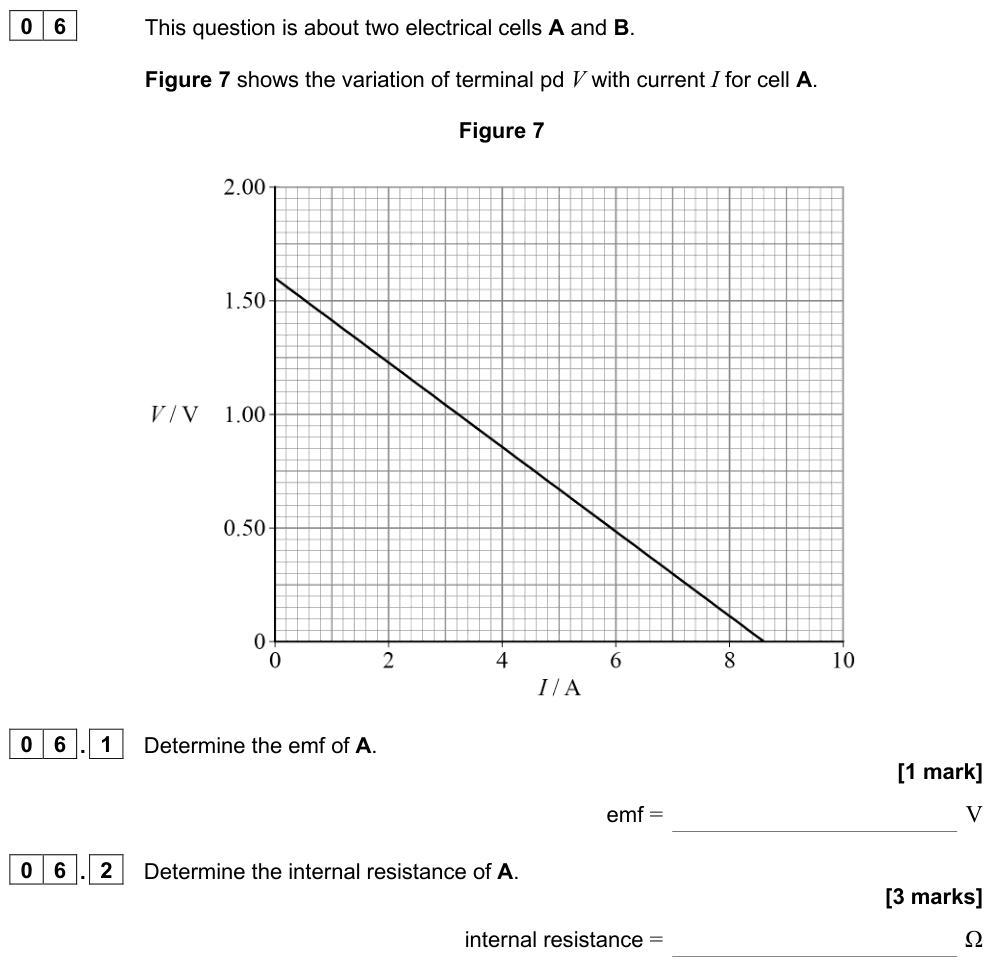
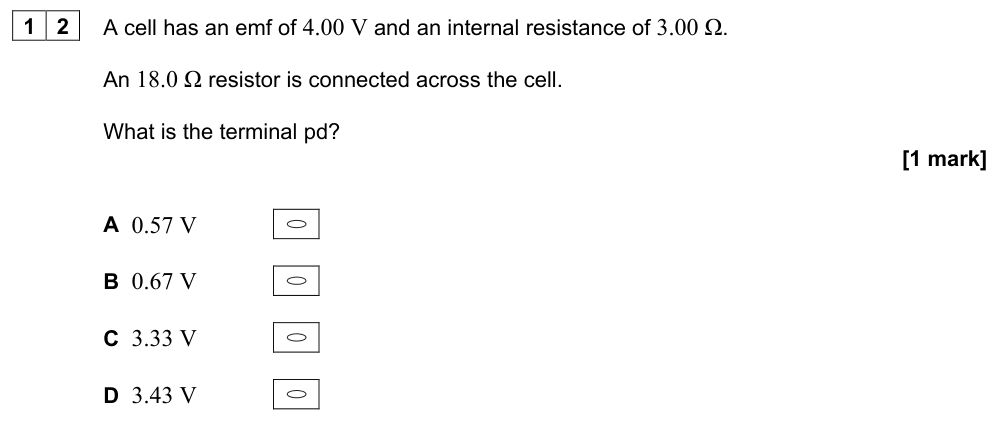
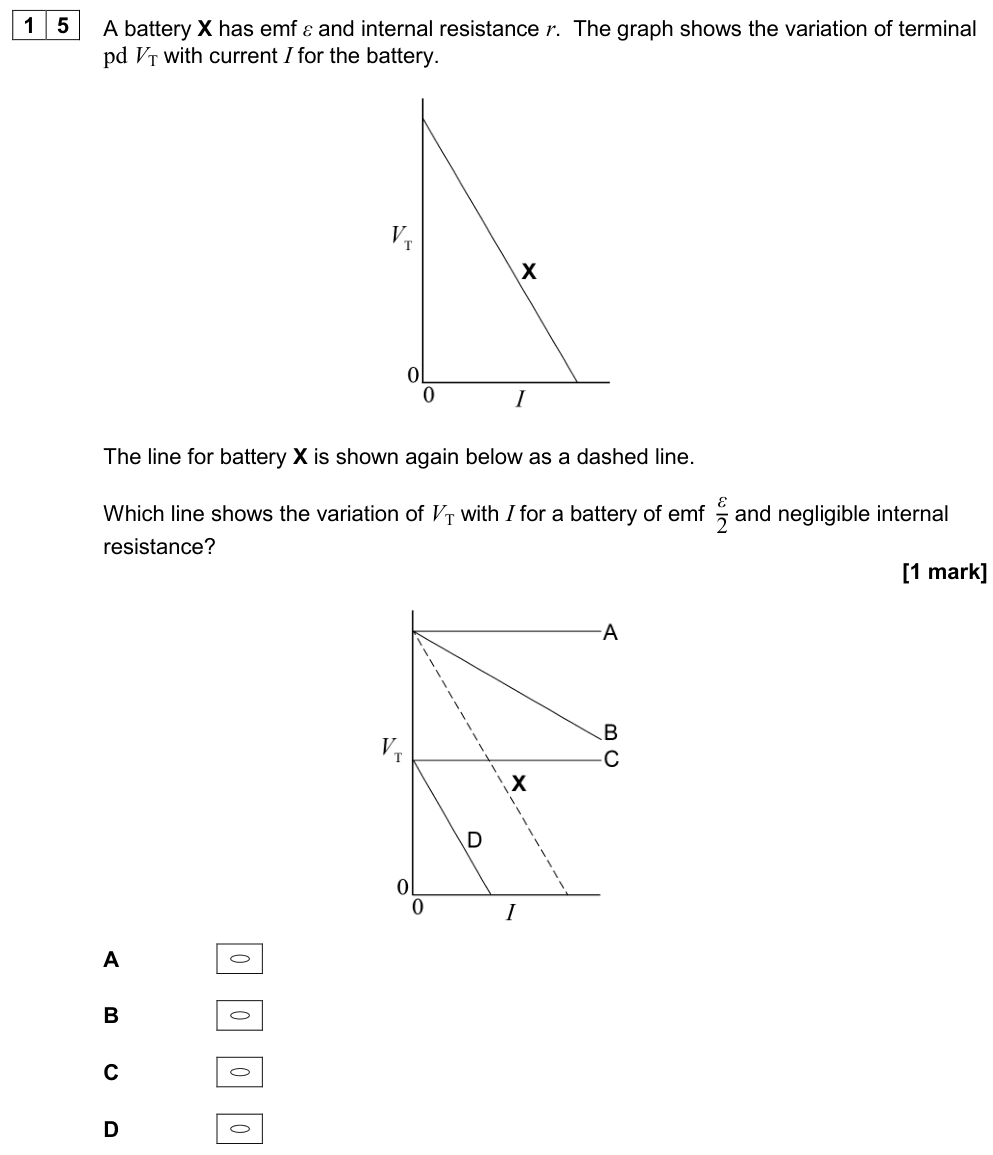
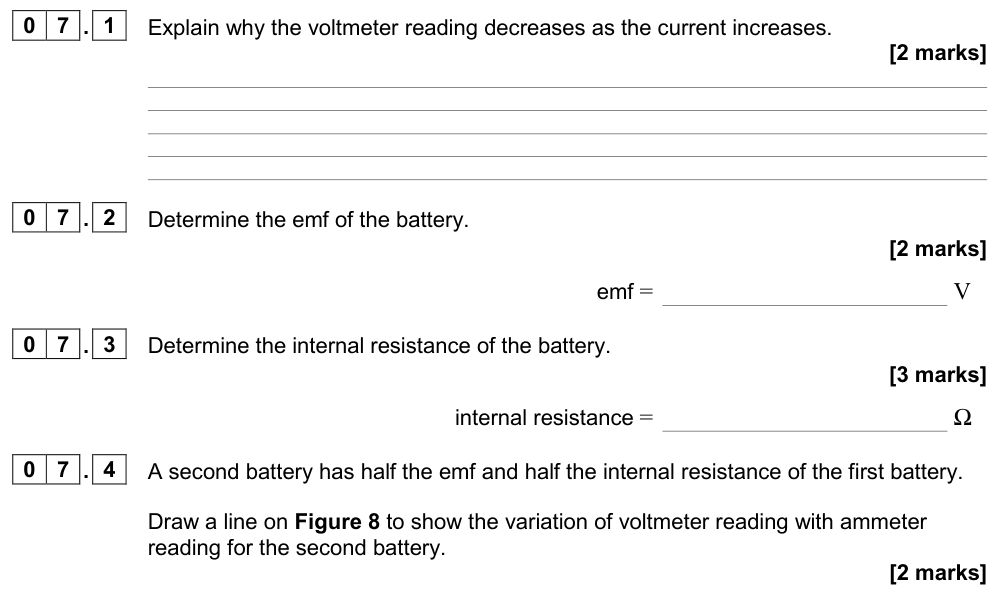
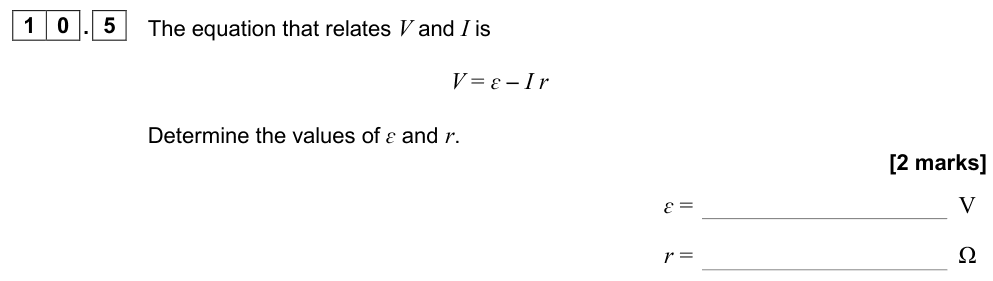
$$V = \varepsilon - Ir$$
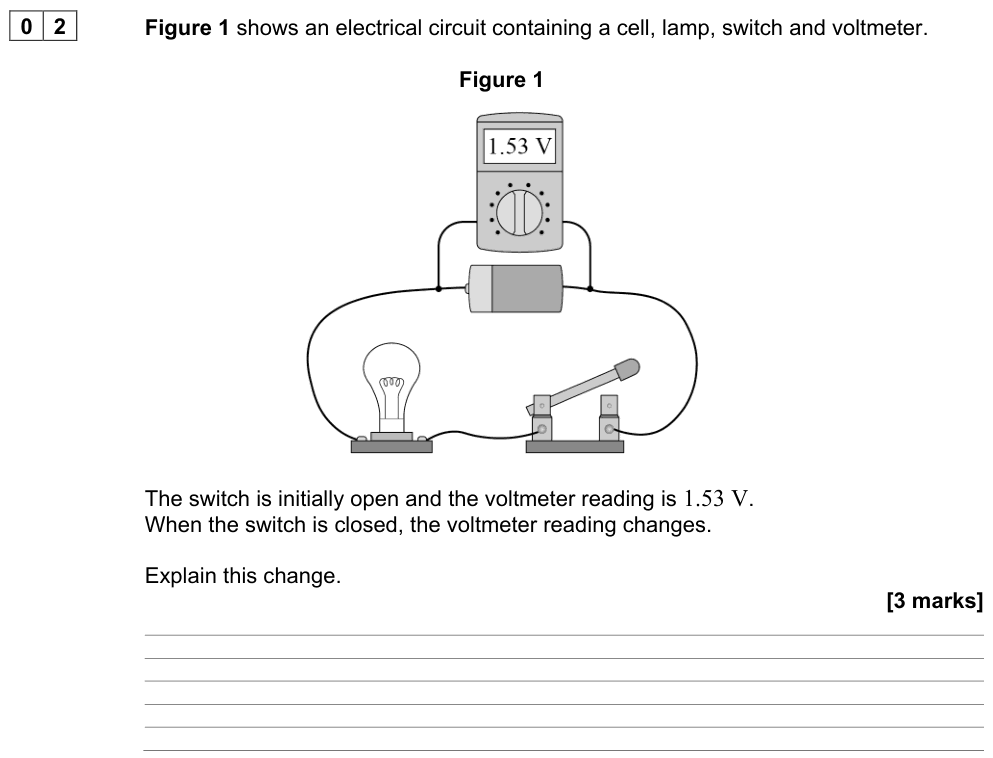
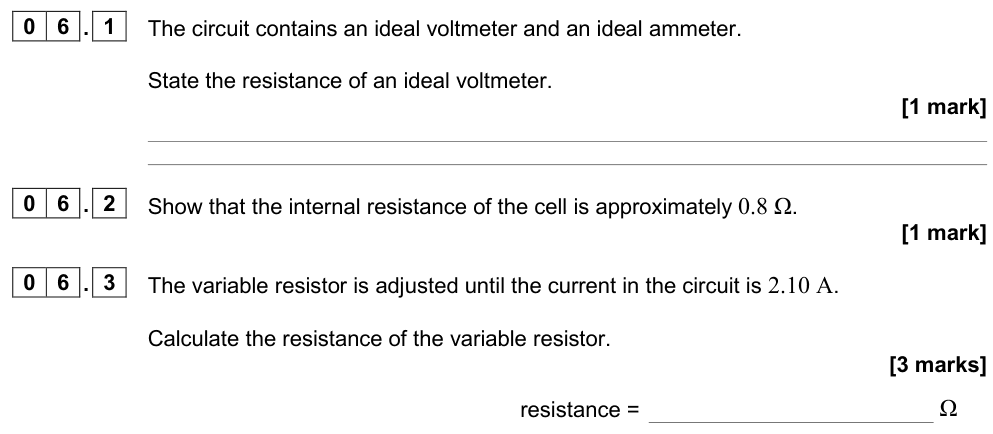
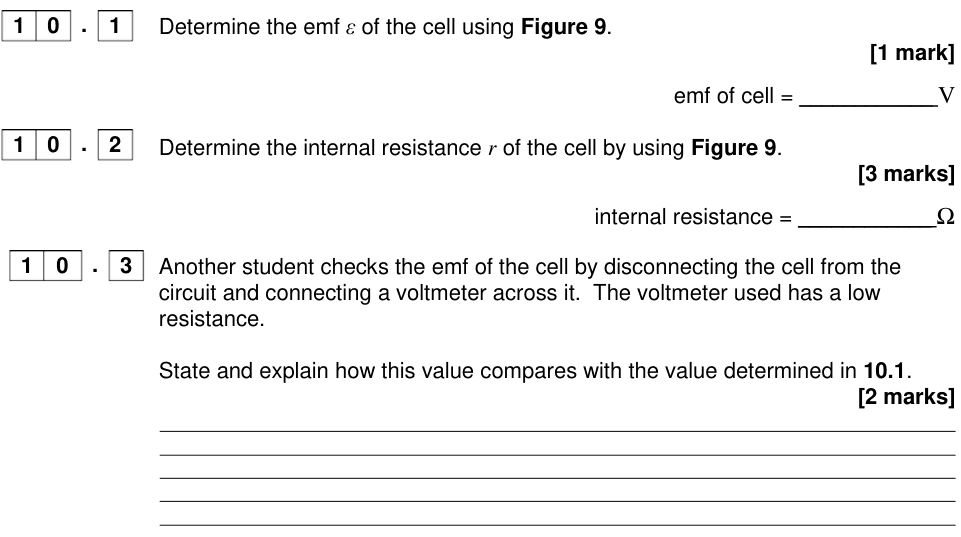
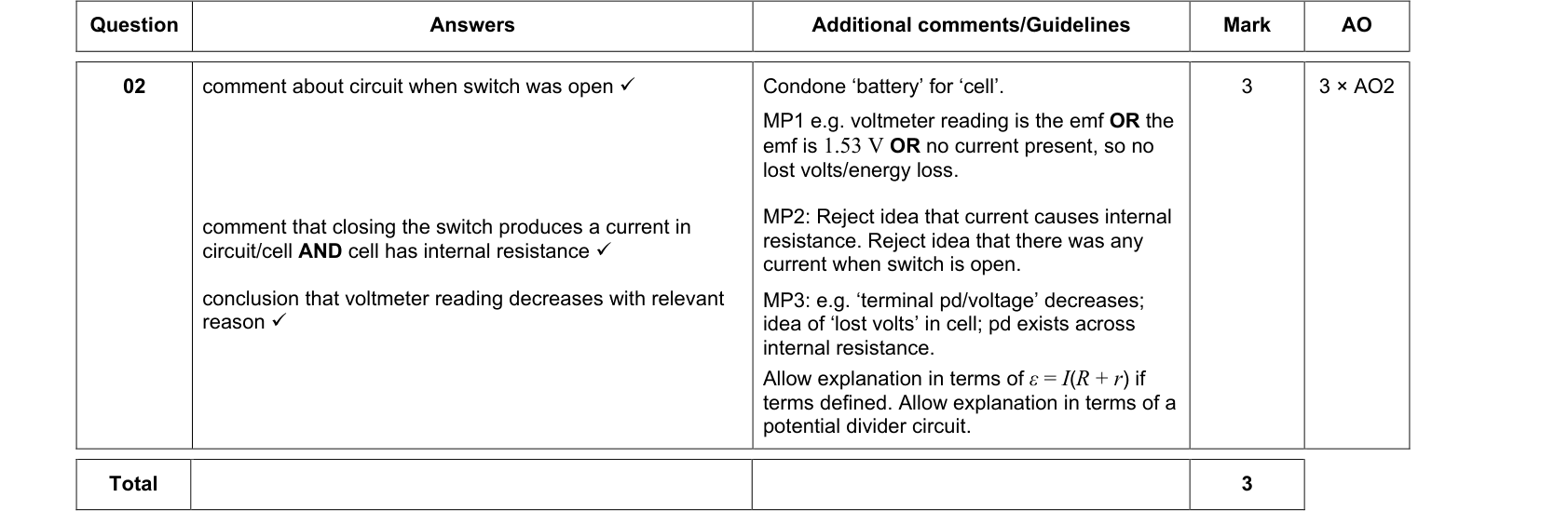
- When no current flows (open circuit), $V = \varepsilon$. A high-resistance voltmeter connected directly across a cell reads (almost exactly) its e.m.f.
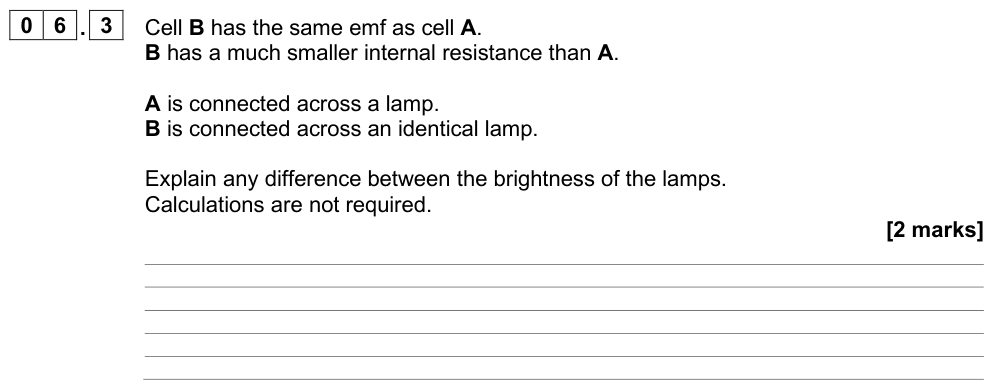
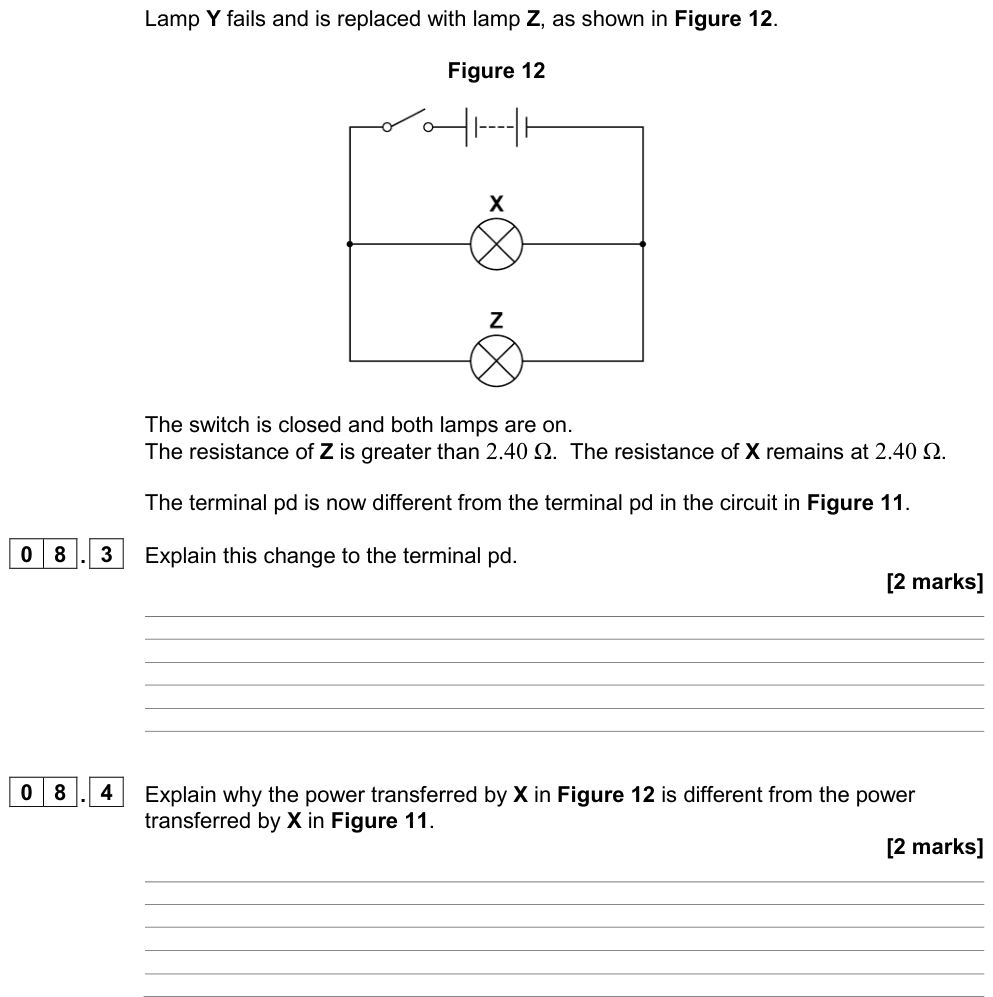
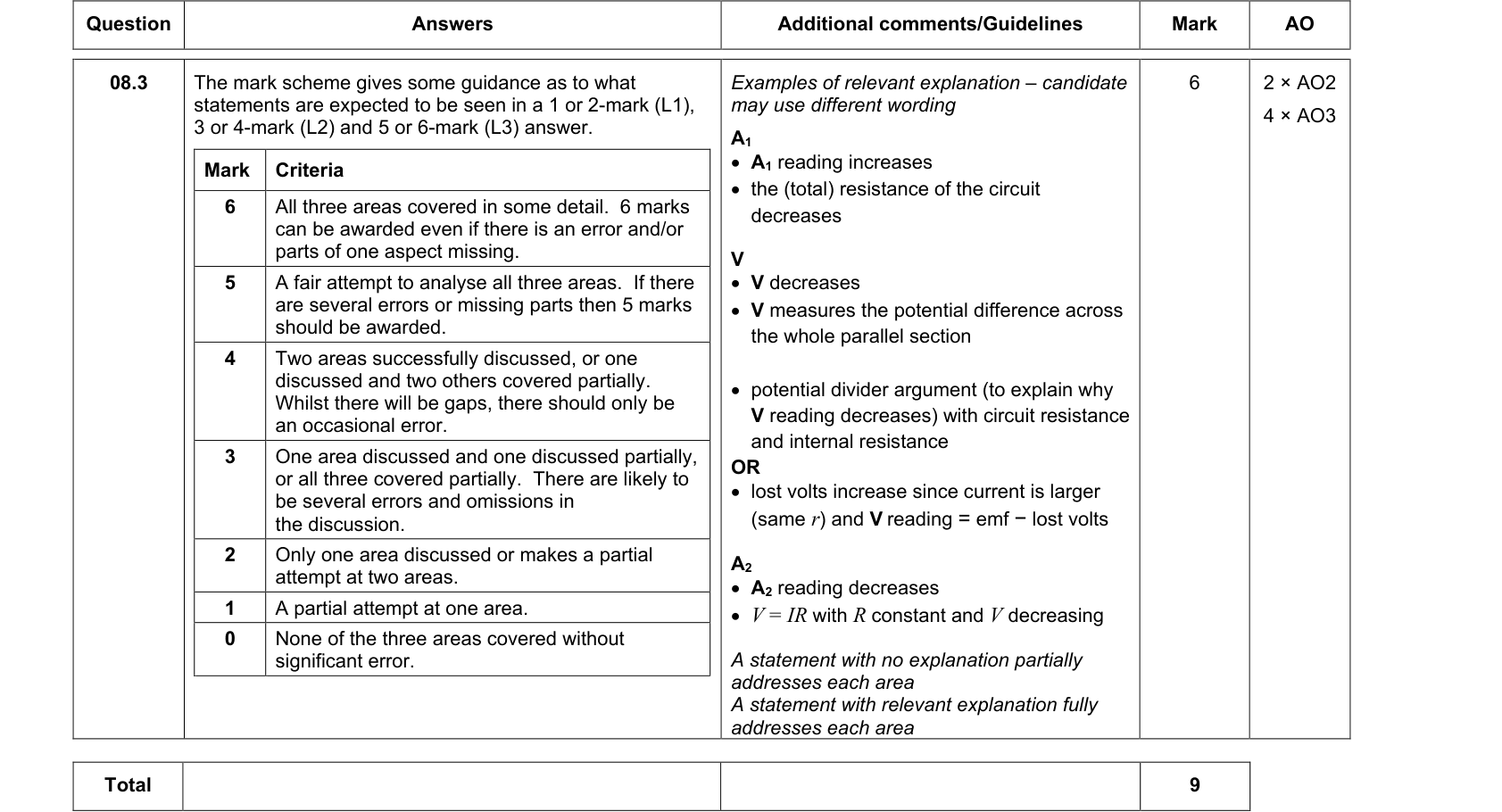
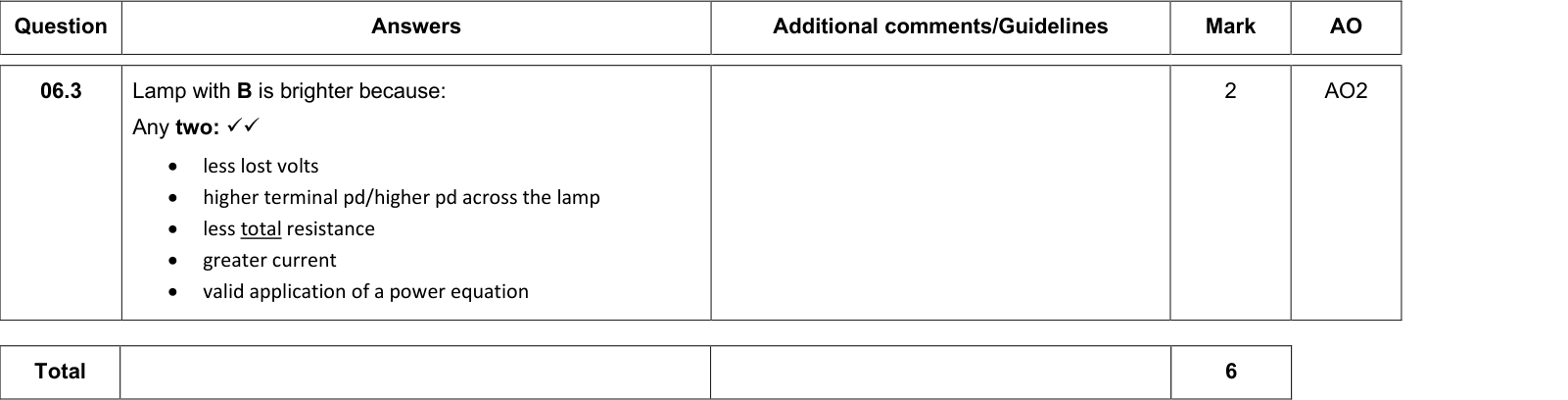
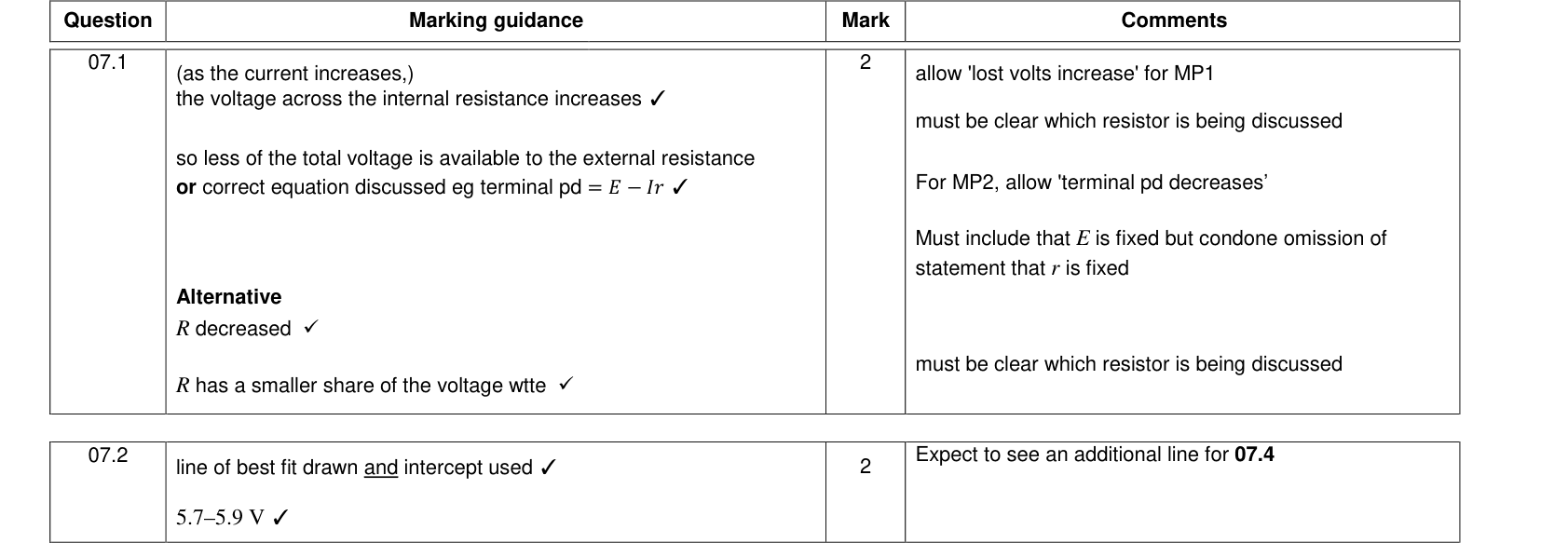
- As the current increases (smaller load resistance), the lost volts increase and the terminal p.d. falls.
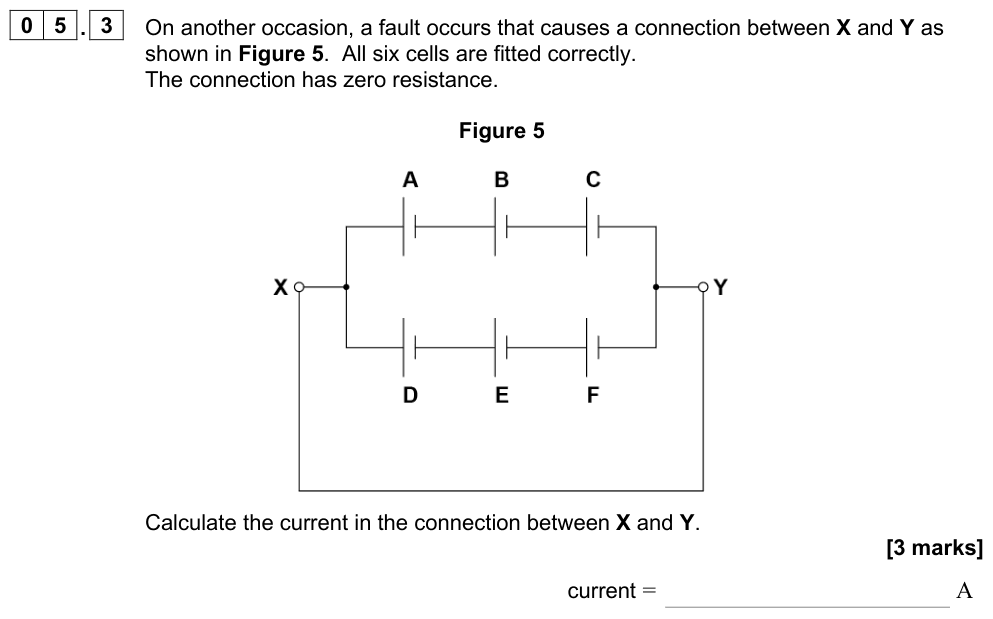
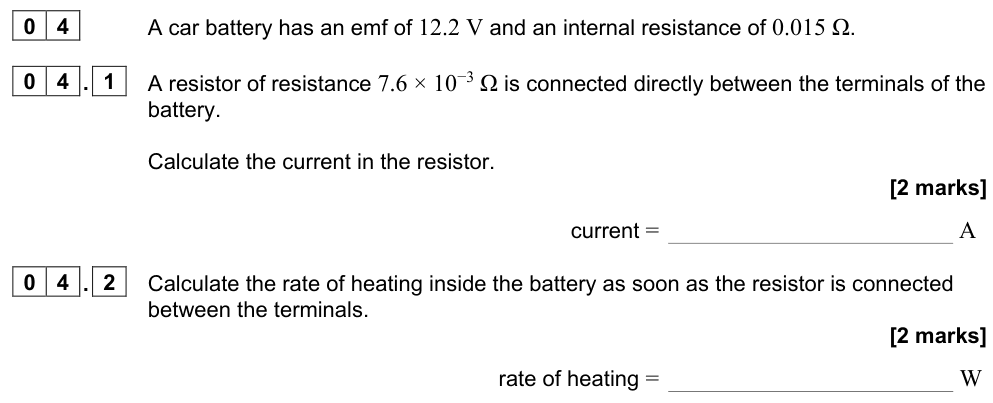
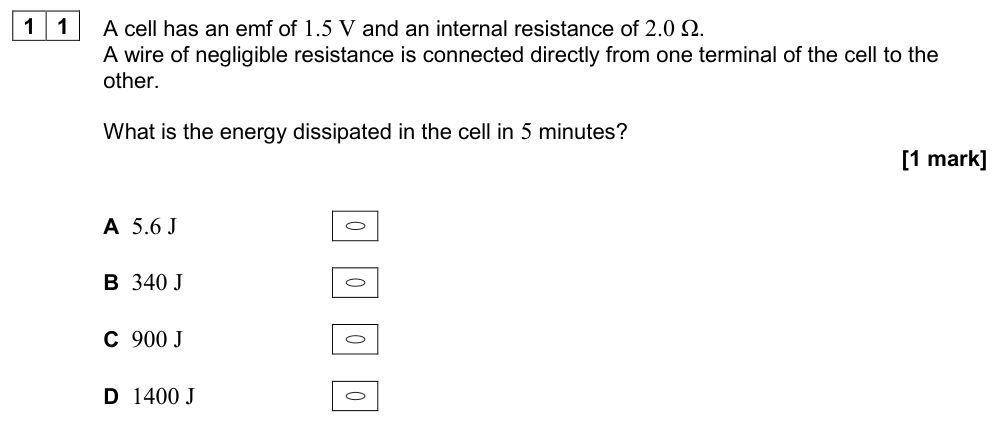
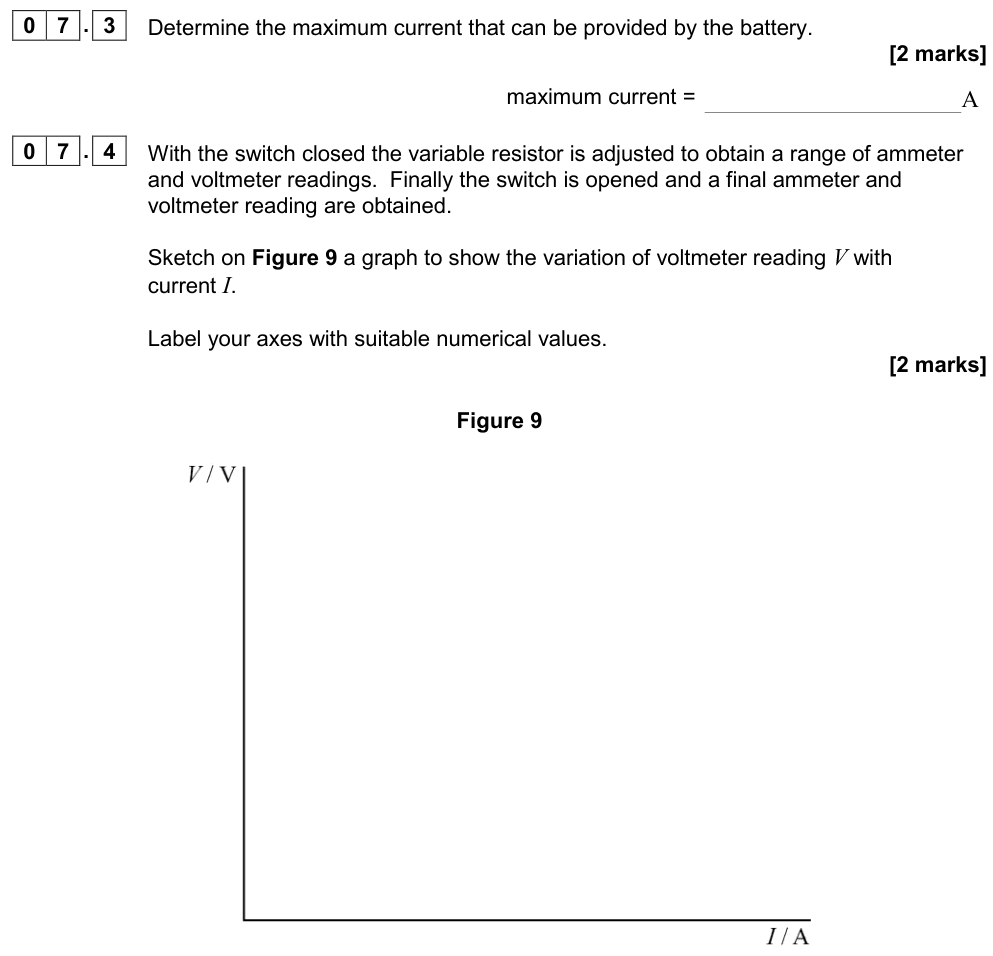
- When the terminals are short-circuited ($R = 0$), the current is the maximum possible, $I_{\max} = \varepsilon/r$, and the terminal p.d. is zero.
Worked example: car battery
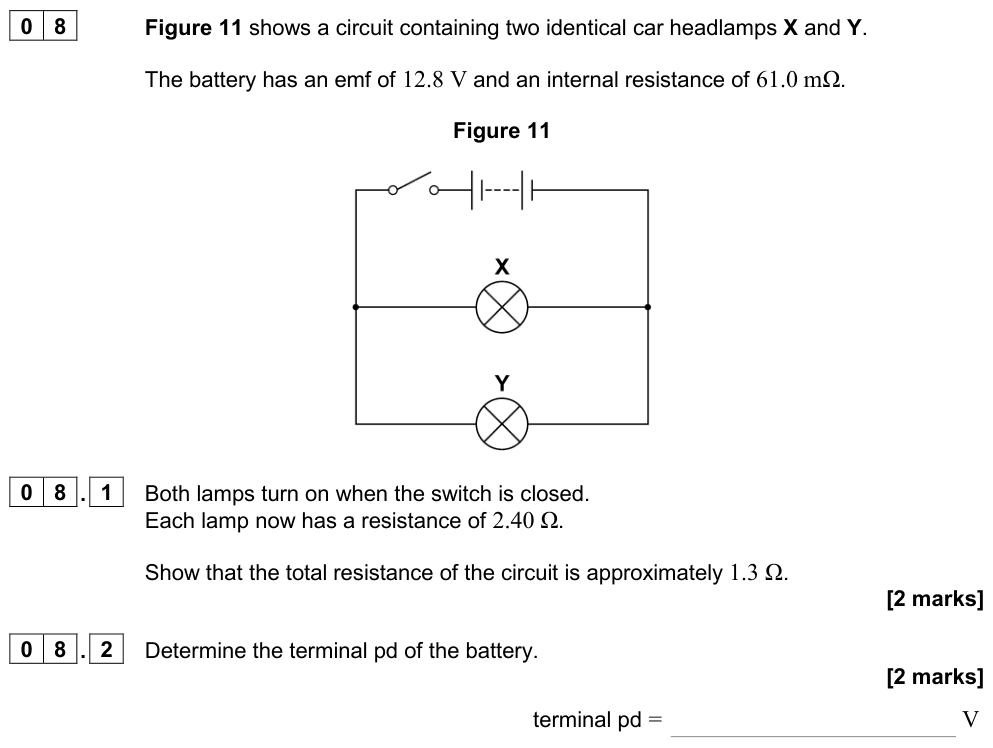
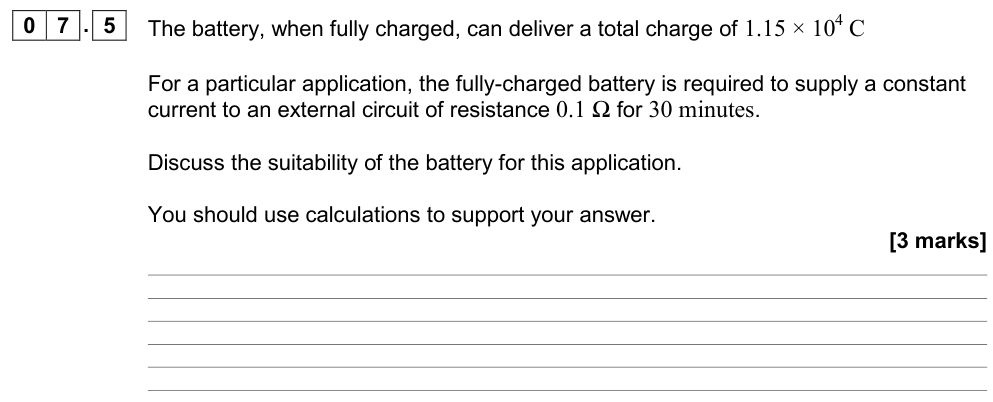
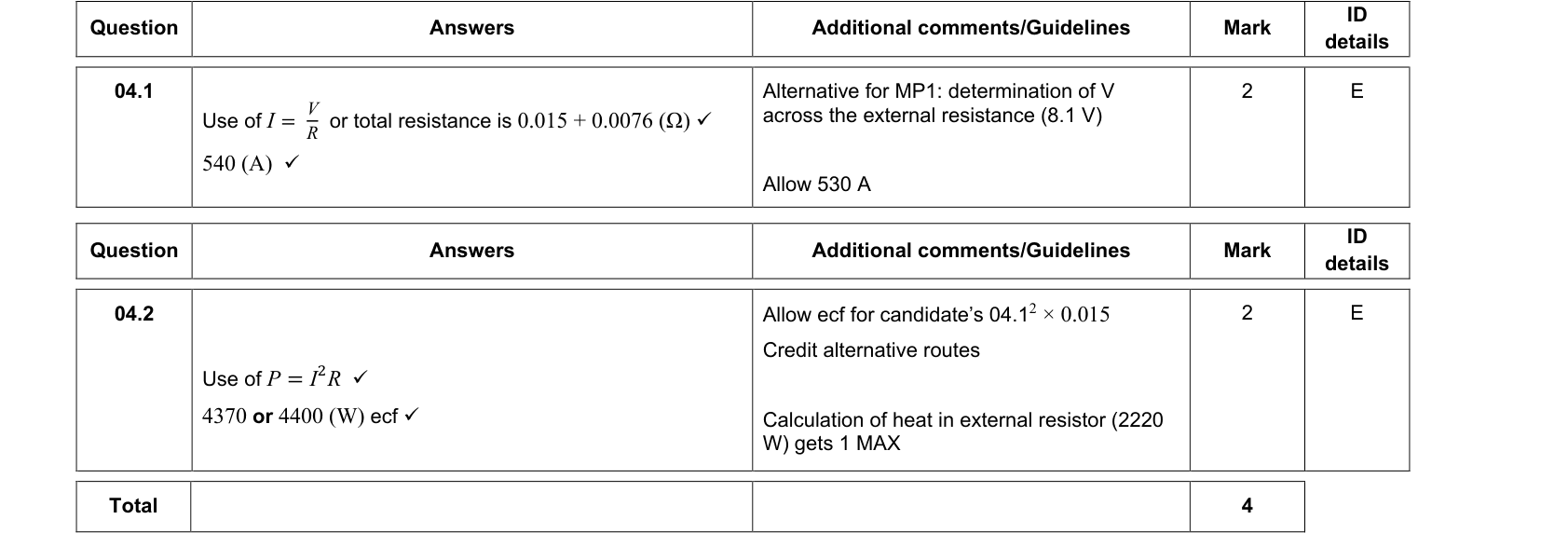
A car battery has e.m.f. 12.0 V and internal resistance 0.020 Ω. The starter motor draws 150 A.
Lost volts $= 150 \times 0.020 = 3.0\ \text{V}$. Terminal p.d. $= 12.0 - 3.0 = 9.0\ \text{V}$.
That is why the headlights dim while the engine is being started.
Worked example: finding ε and r
A cell gives a terminal p.d. of 1.40 V when the current is 0.20 A, and 1.10 V when the current is 0.80 A.
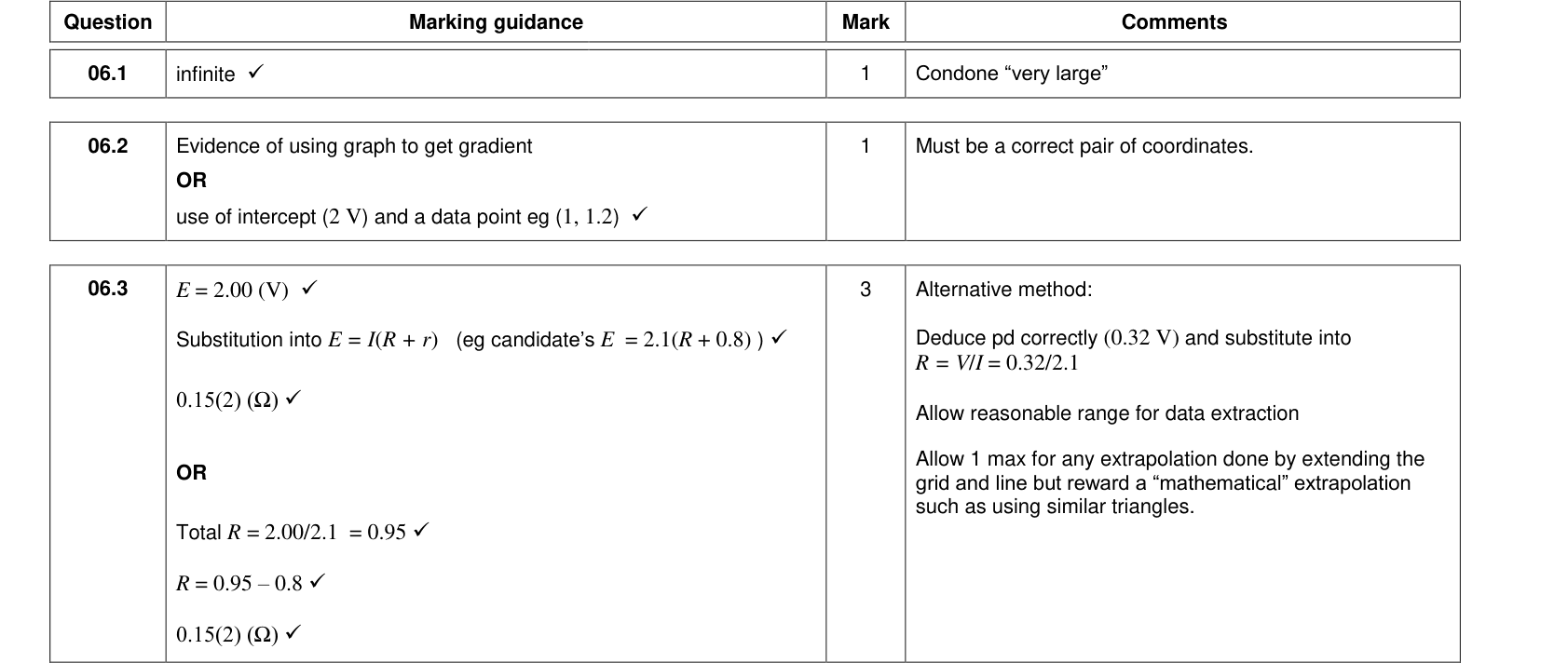
$1.40 = \varepsilon - 0.20r$ and $1.10 = \varepsilon - 0.80r$. Subtracting: $0.30 = 0.60r \Rightarrow r = 0.50\ \Omega$; then $\varepsilon = 1.50\ \text{V}$.
Power and internal resistance
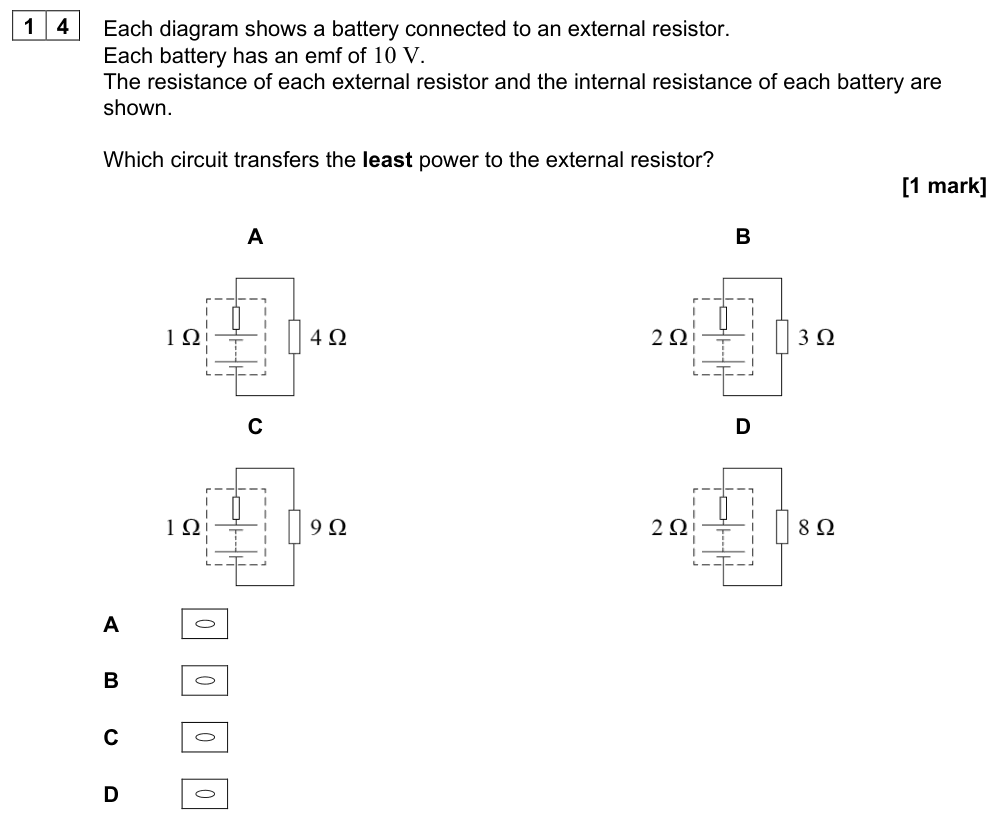
- Power produced by the source: $P = \varepsilon I$.
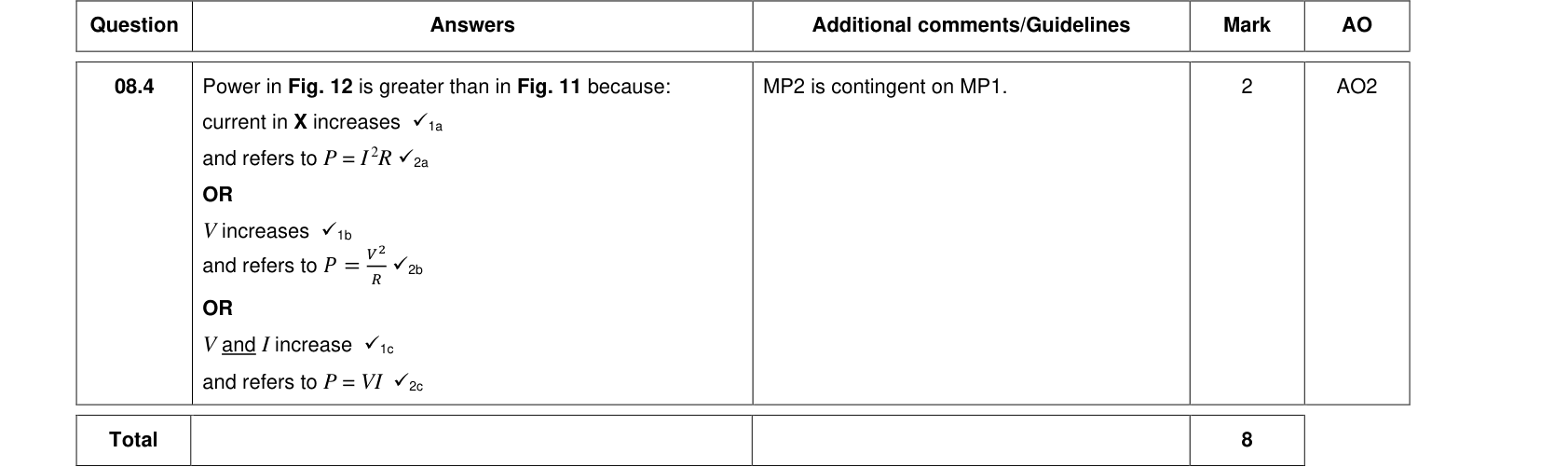
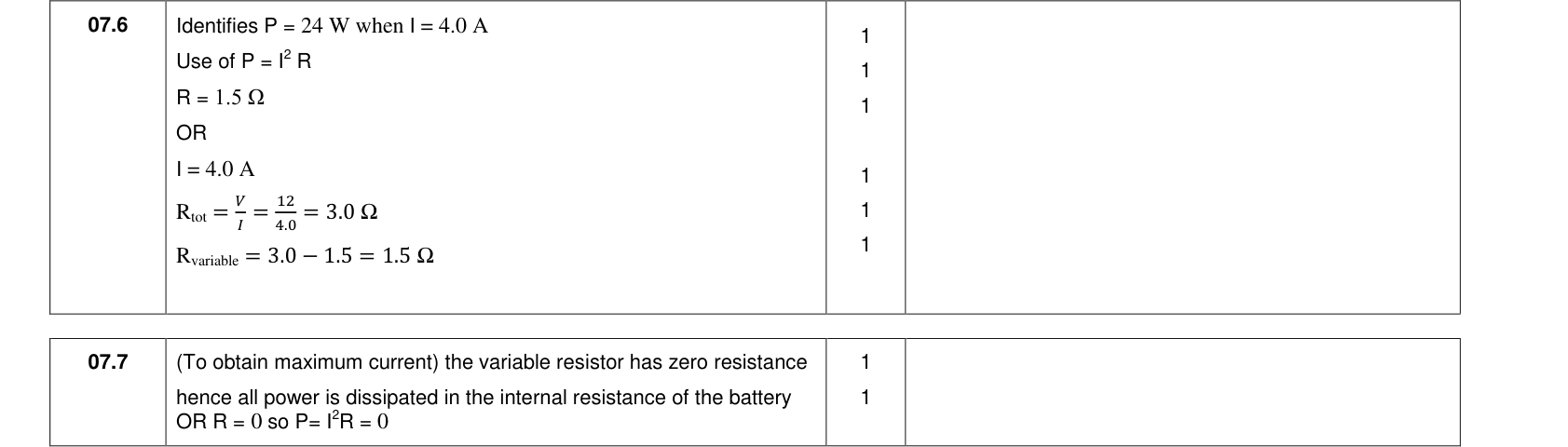
- Power delivered to the load: $P = I^2R = VI$.
- Power wasted in the source: $I^2r$ (the source warms up).
Maximum power transfer
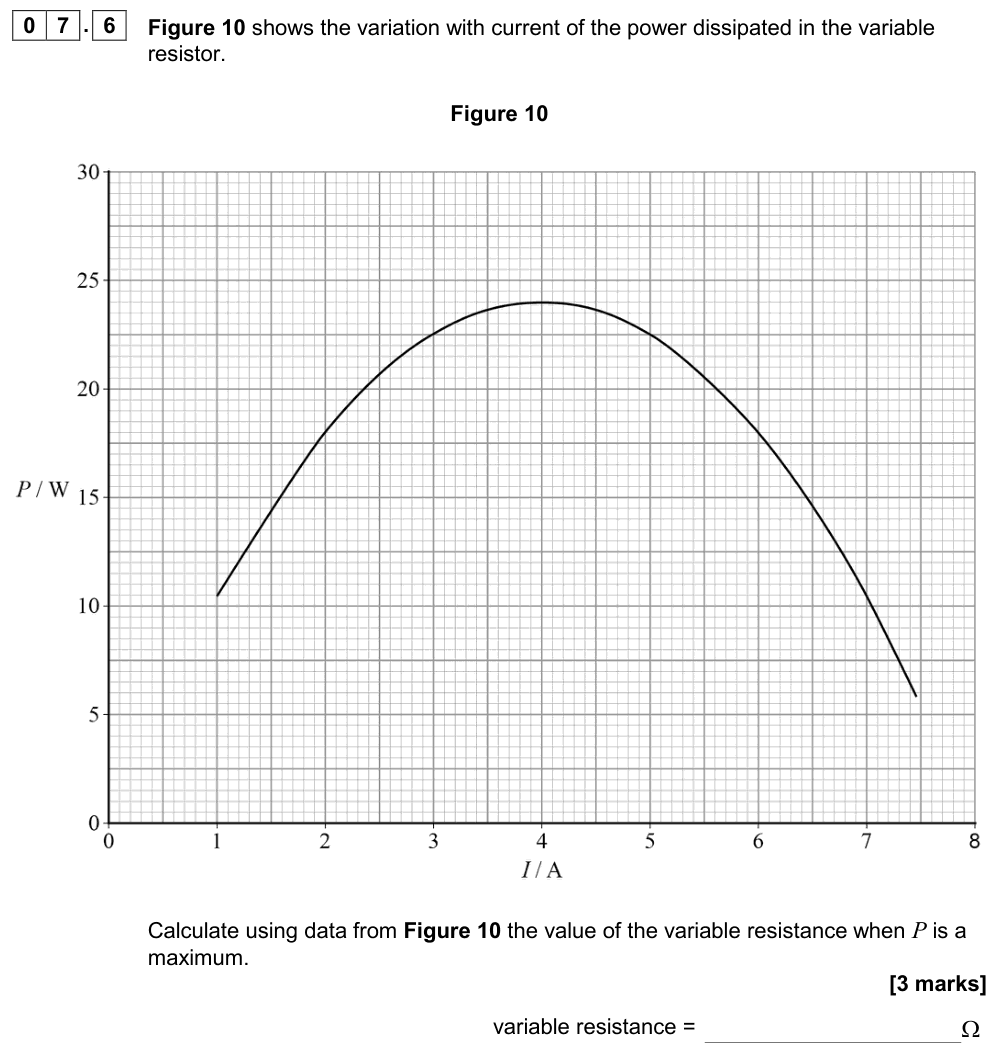
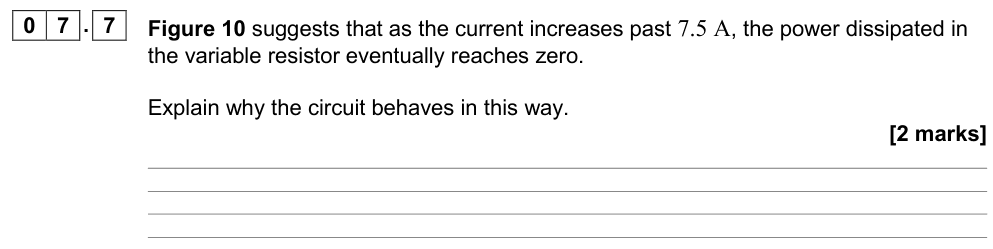
The power delivered to the external resistor is greatest when $R = r$. (Useful for interpreting some graphs; not a required equation.)
Why high-current supplies need low internal resistance
A car battery must deliver hundreds of amps, so its internal resistance must be tiny (a few mΩ), or the terminal p.d. would collapse. In contrast, a high-voltage (EHT) supply is given a very large internal resistance deliberately, so that if someone touches it the current is limited to a safe value.
Required practical 3
Required practical 3: e.m.f. and internal resistance of a cell
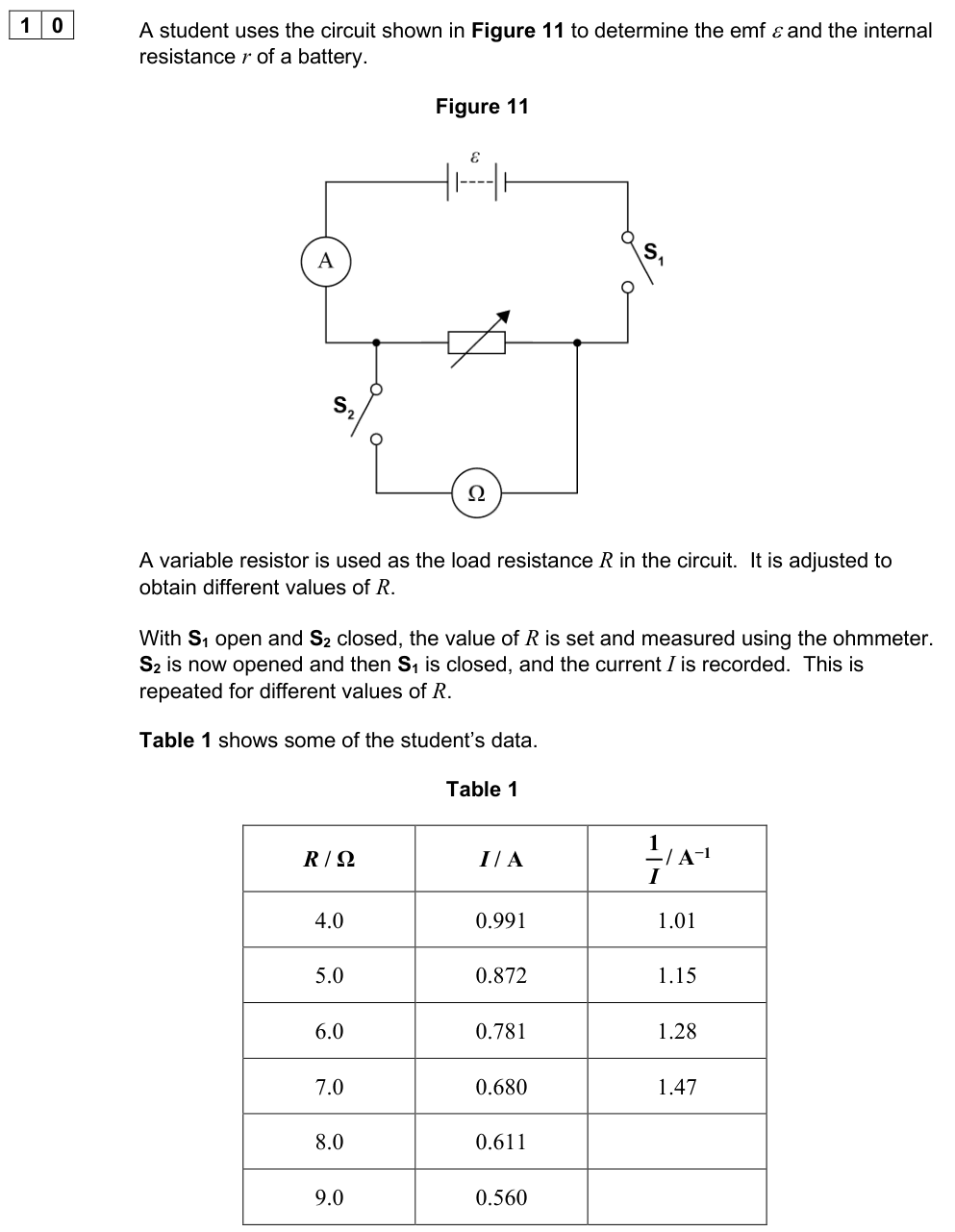
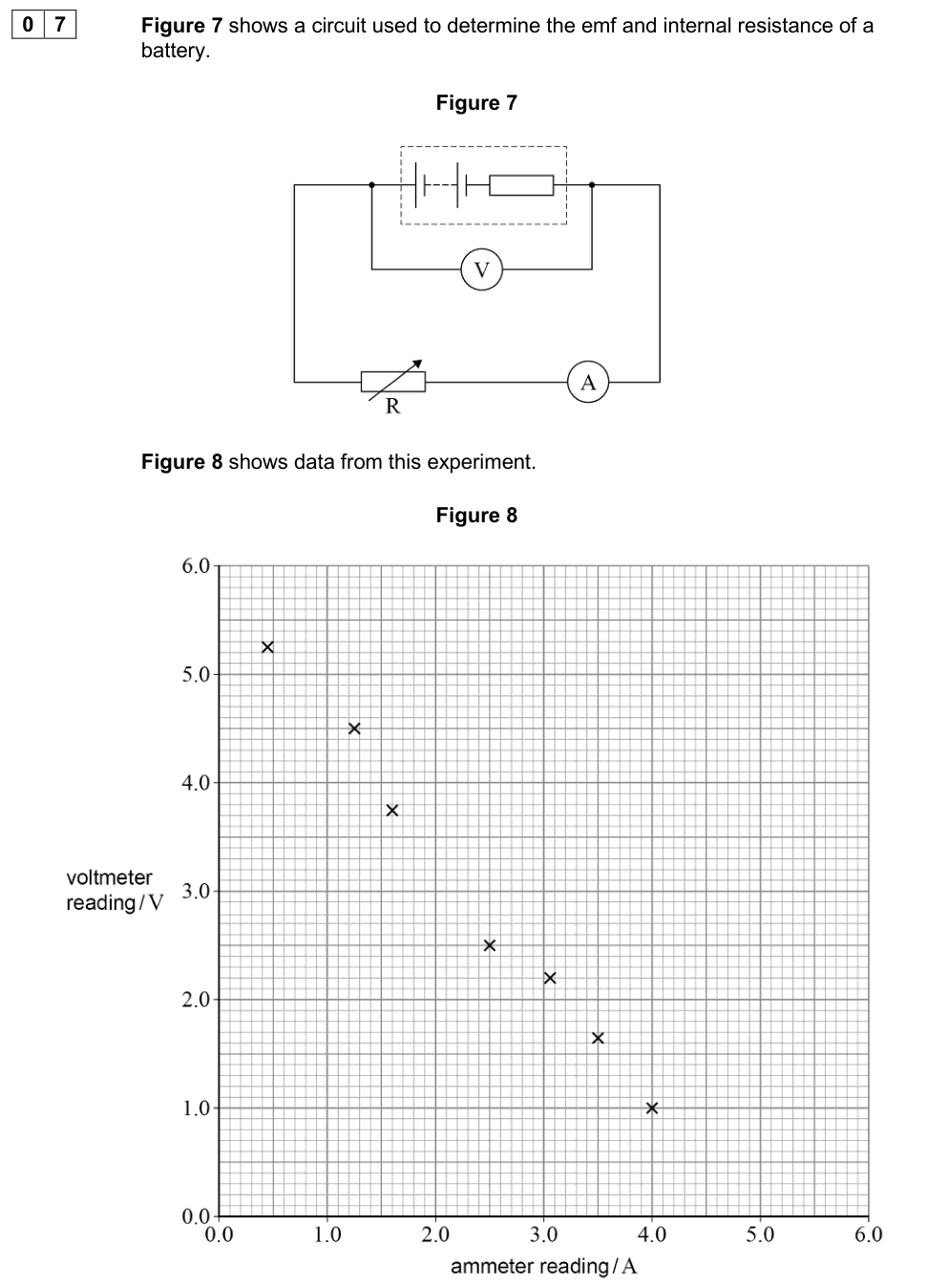
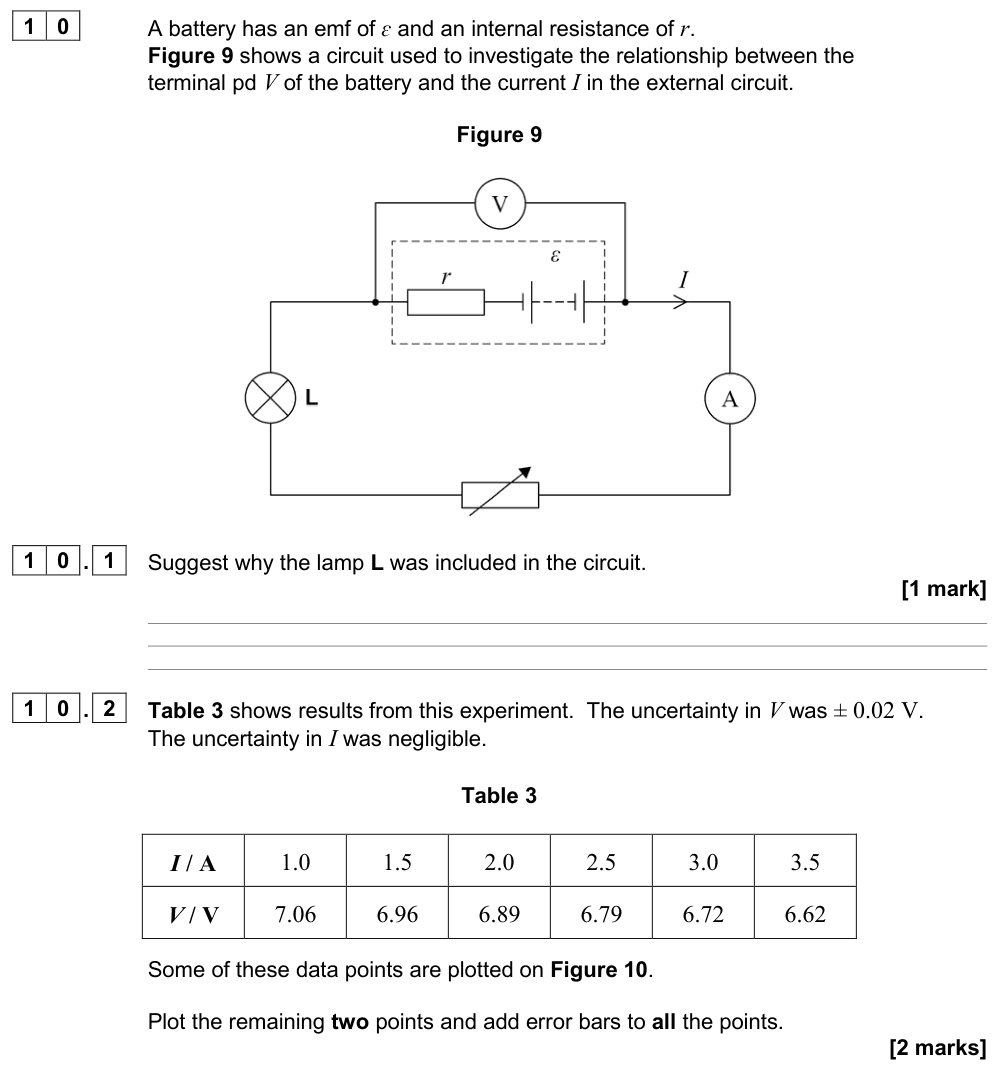
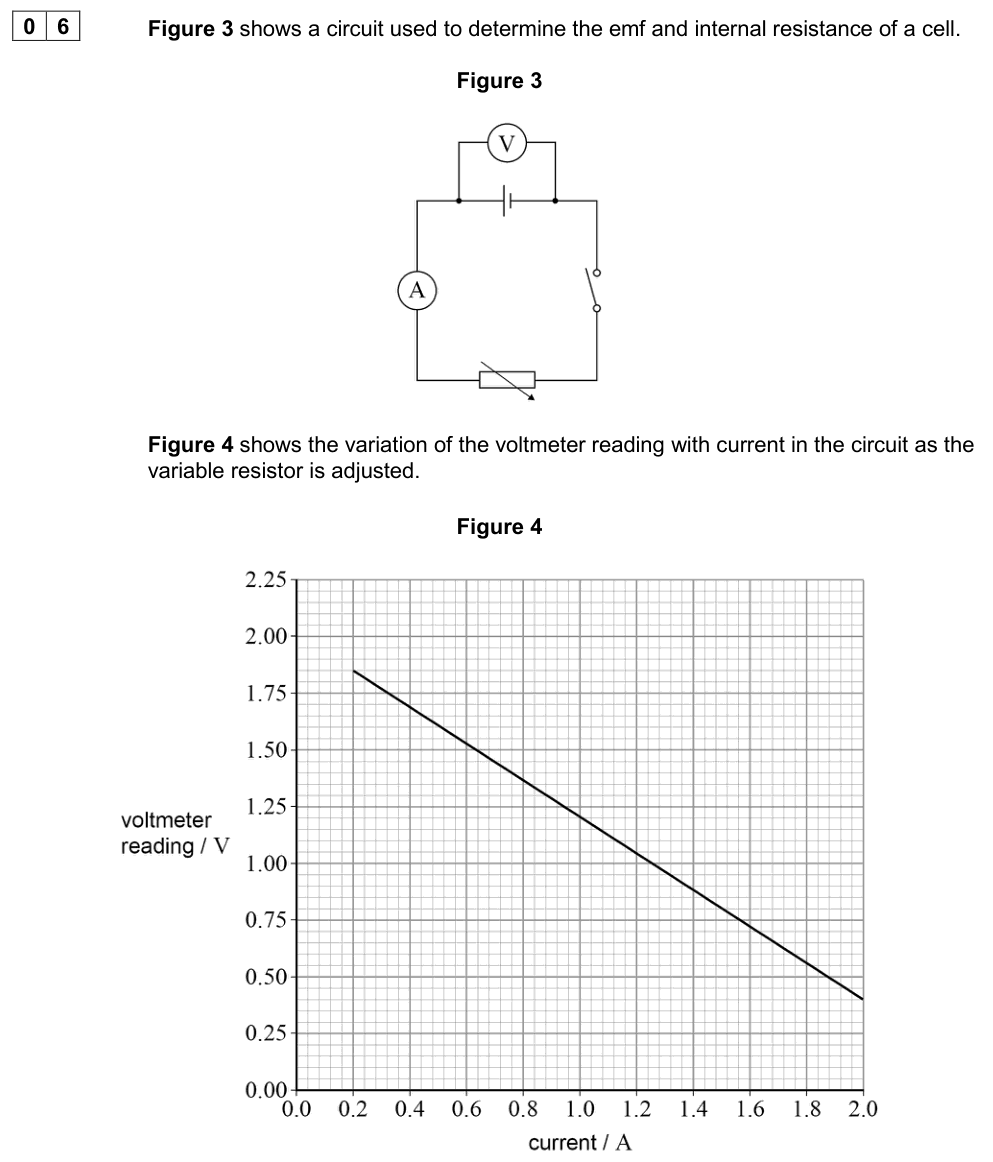
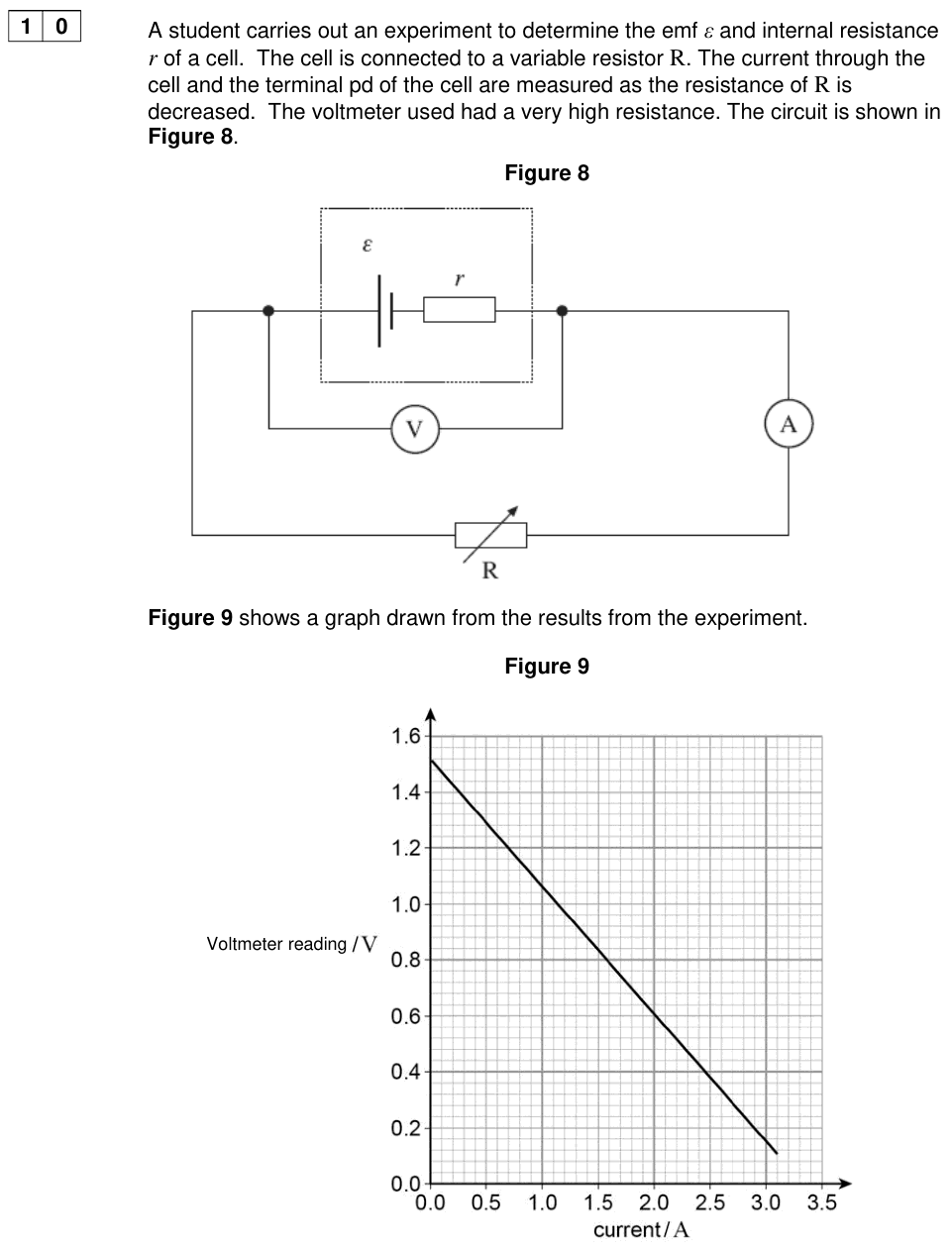
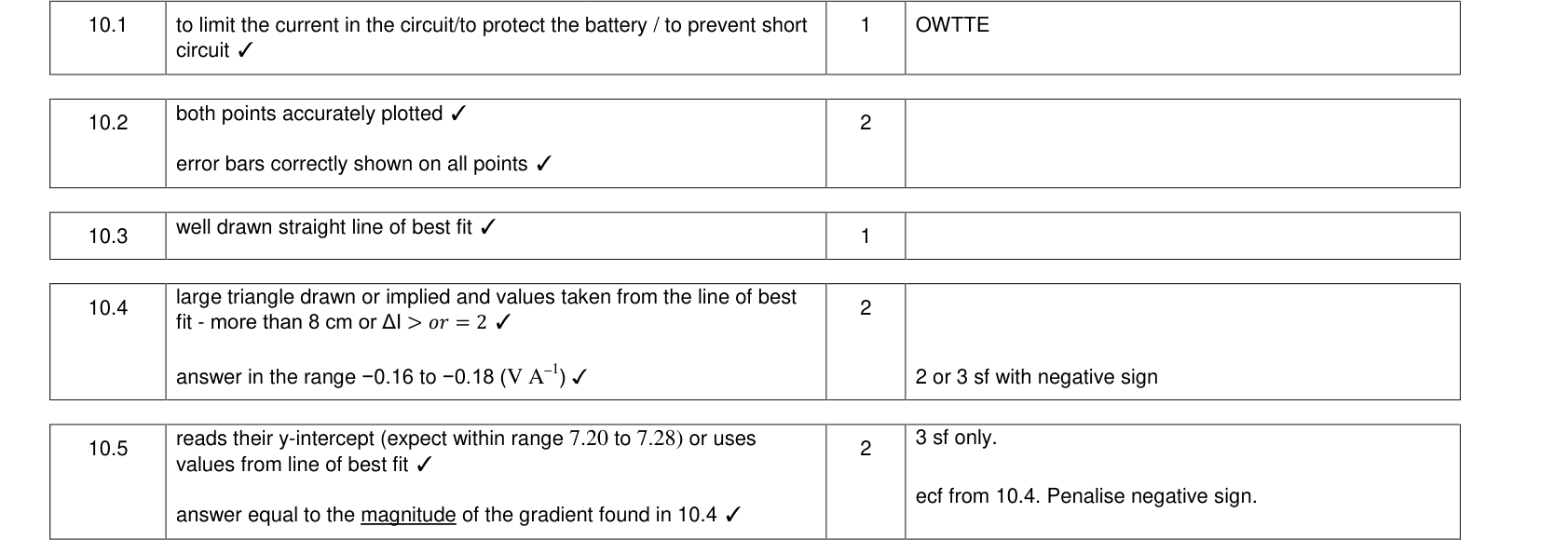
Circuit: the cell, a variable resistor (or resistance box), an ammeter in series and a switch; a voltmeter across the cell terminals. A small protective resistor in series stops the current becoming too large.
Method:
- Set the variable resistor to its maximum value. Close the switch and record $I$ and $V$.
- Reduce the resistance in steps, recording pairs of $V$ and $I$ (about 8 sets).
- Open the switch between readings, so the cell does not warm up and its internal resistance and e.m.f. stay constant.
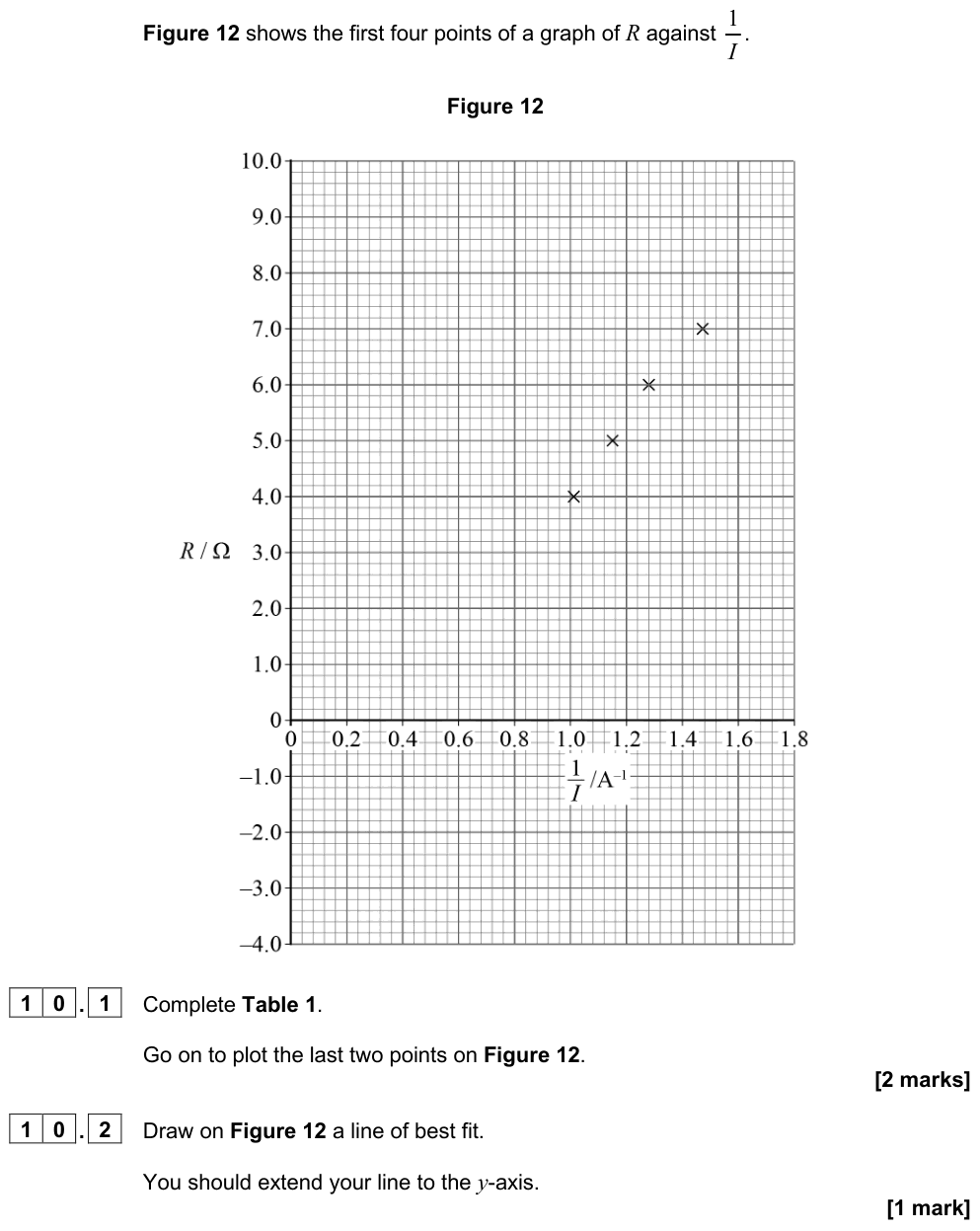
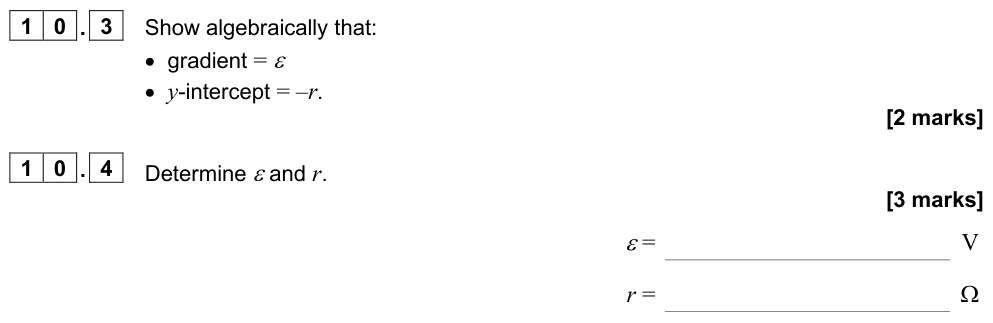
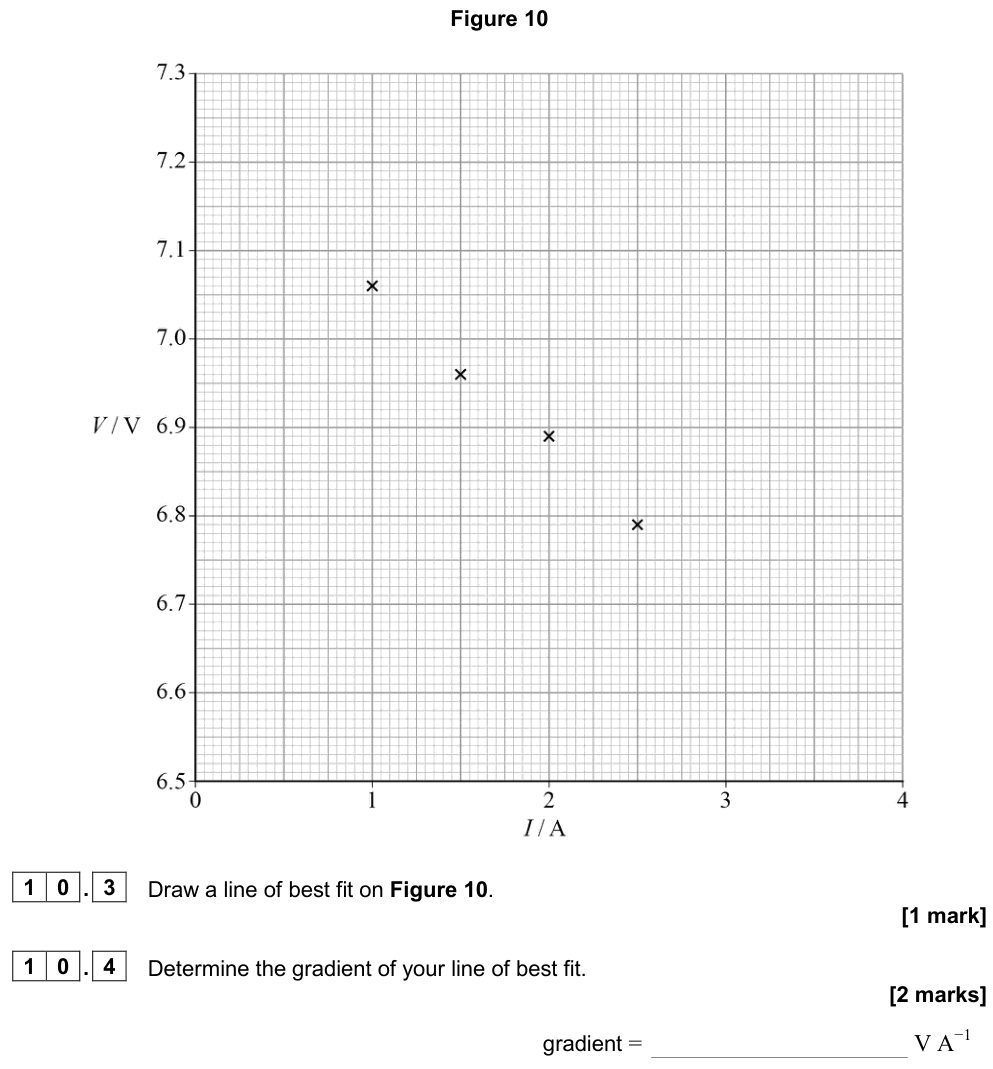
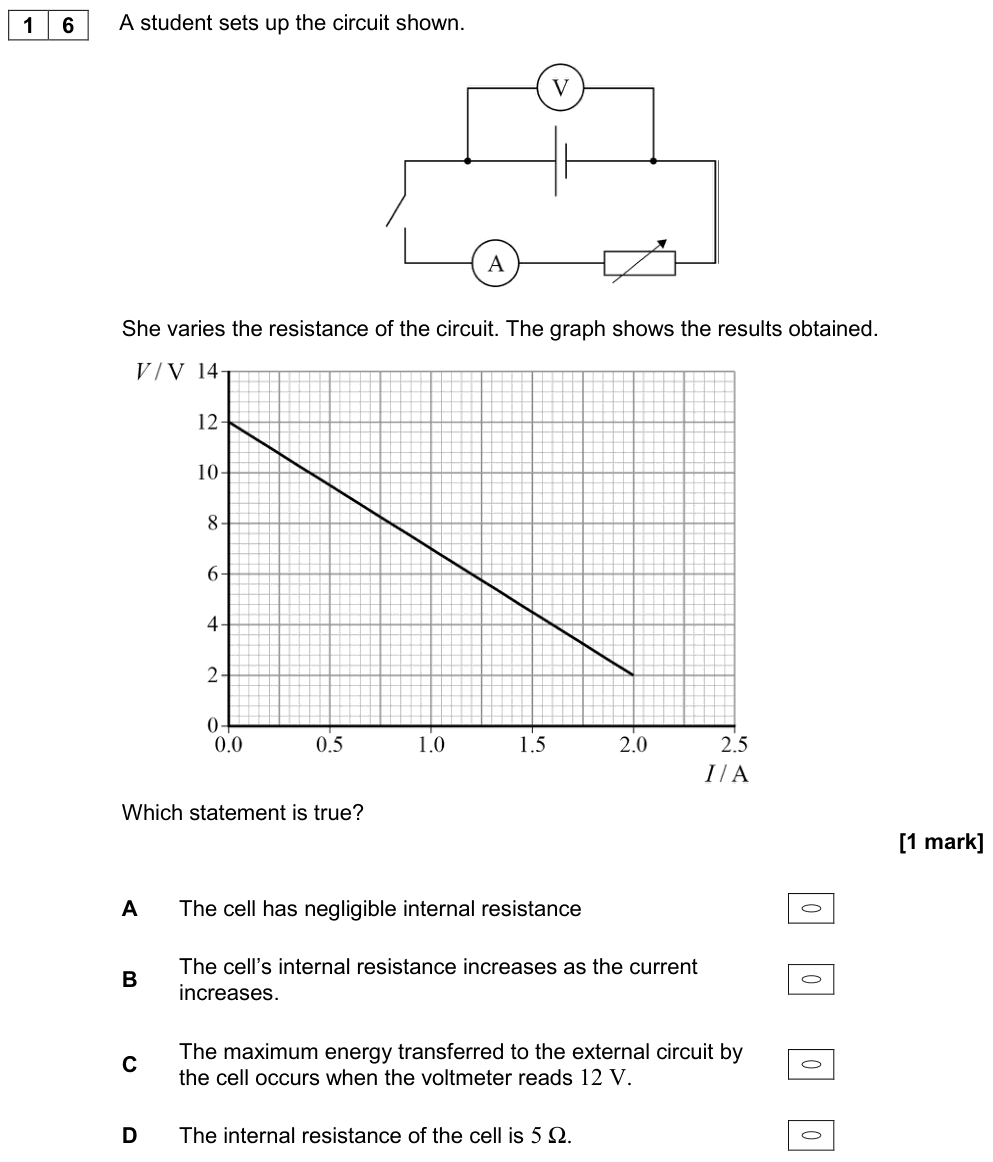
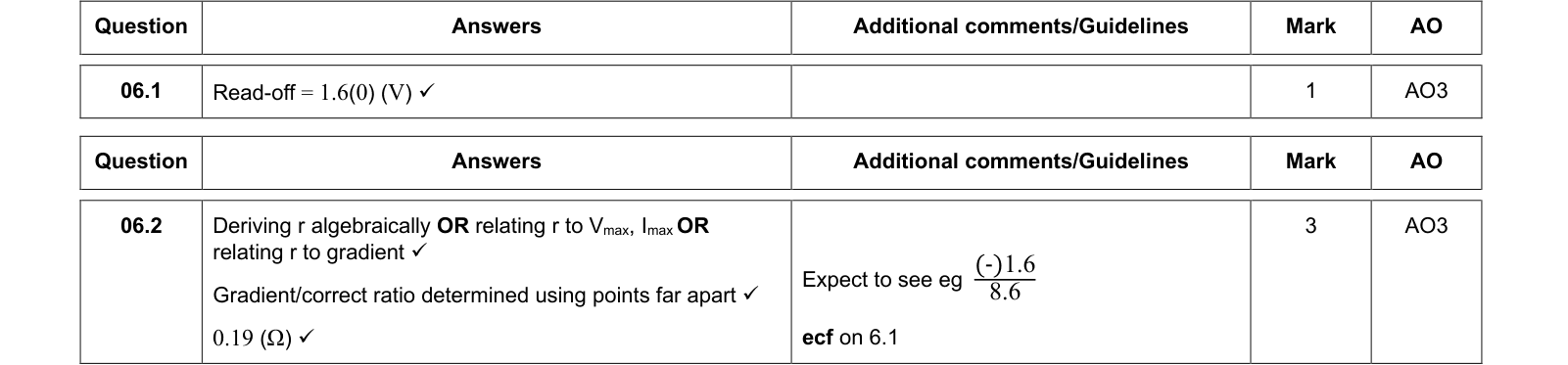
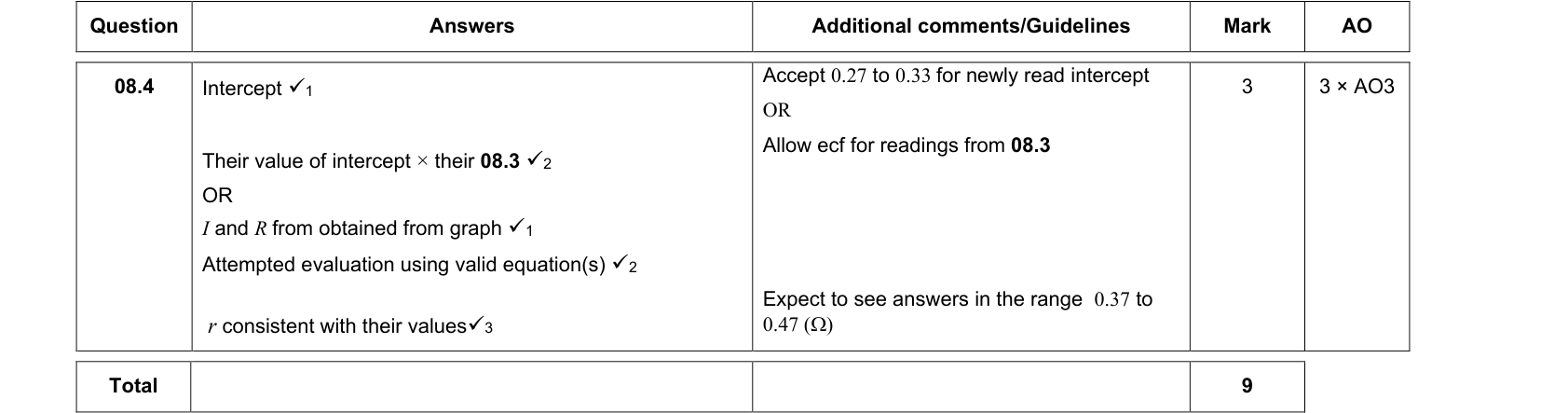
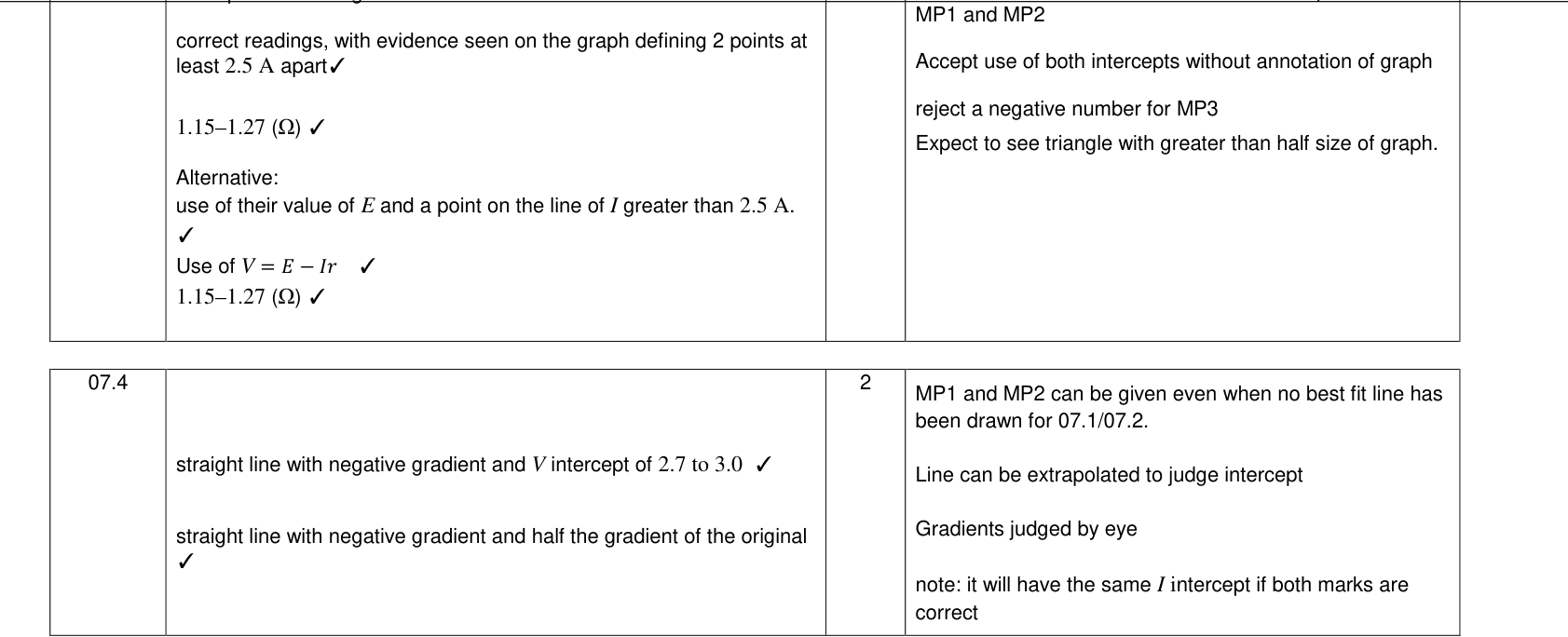
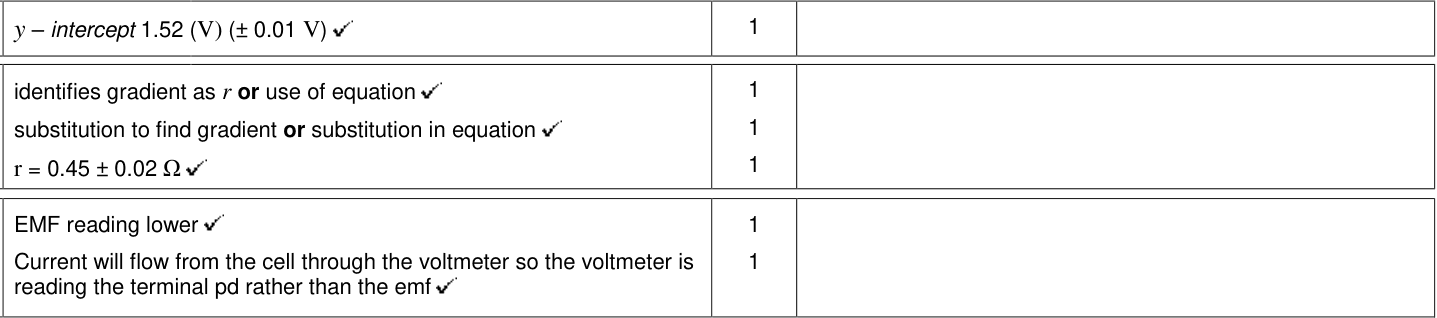
Analysis: plot terminal p.d. $V$ (y-axis) against current $I$ (x-axis). From $V = -rI + \varepsilon$:
- y-intercept = e.m.f. $\varepsilon$
- gradient = −r (so $r$ = −gradient)
- the x-intercept is the short-circuit current $\varepsilon/r$.
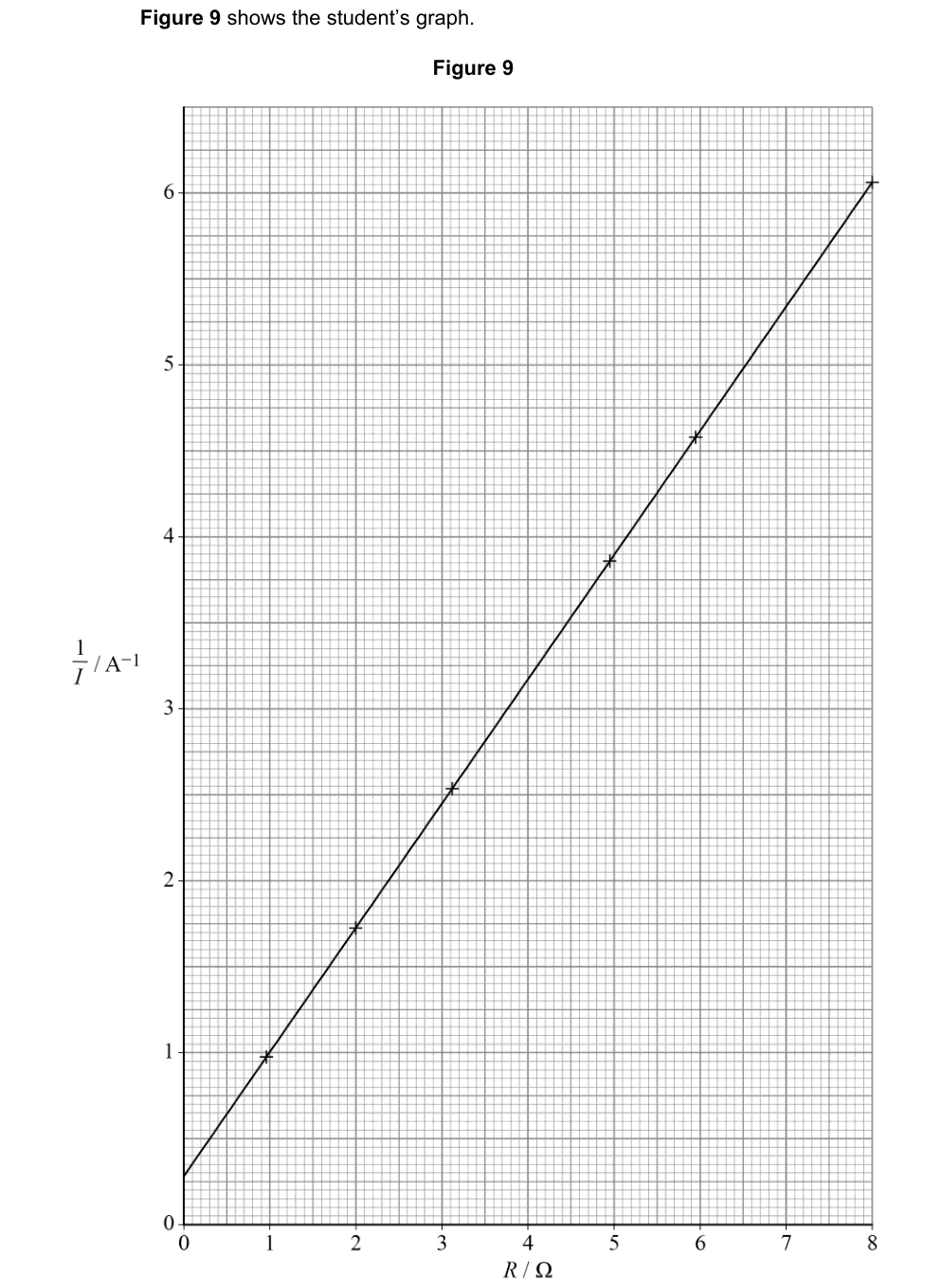
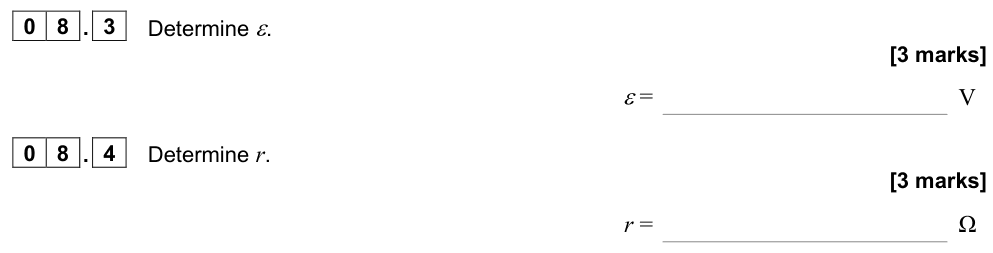
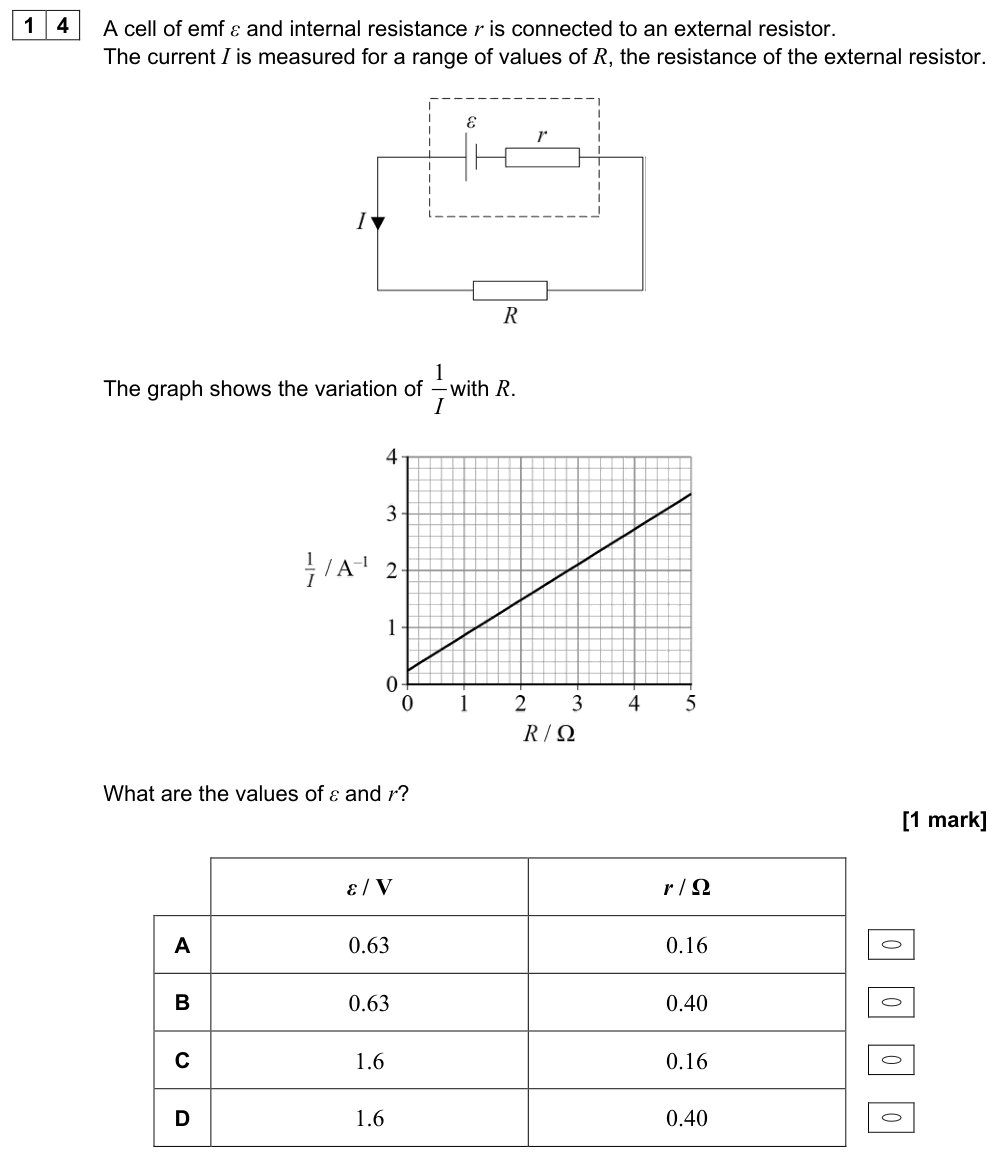
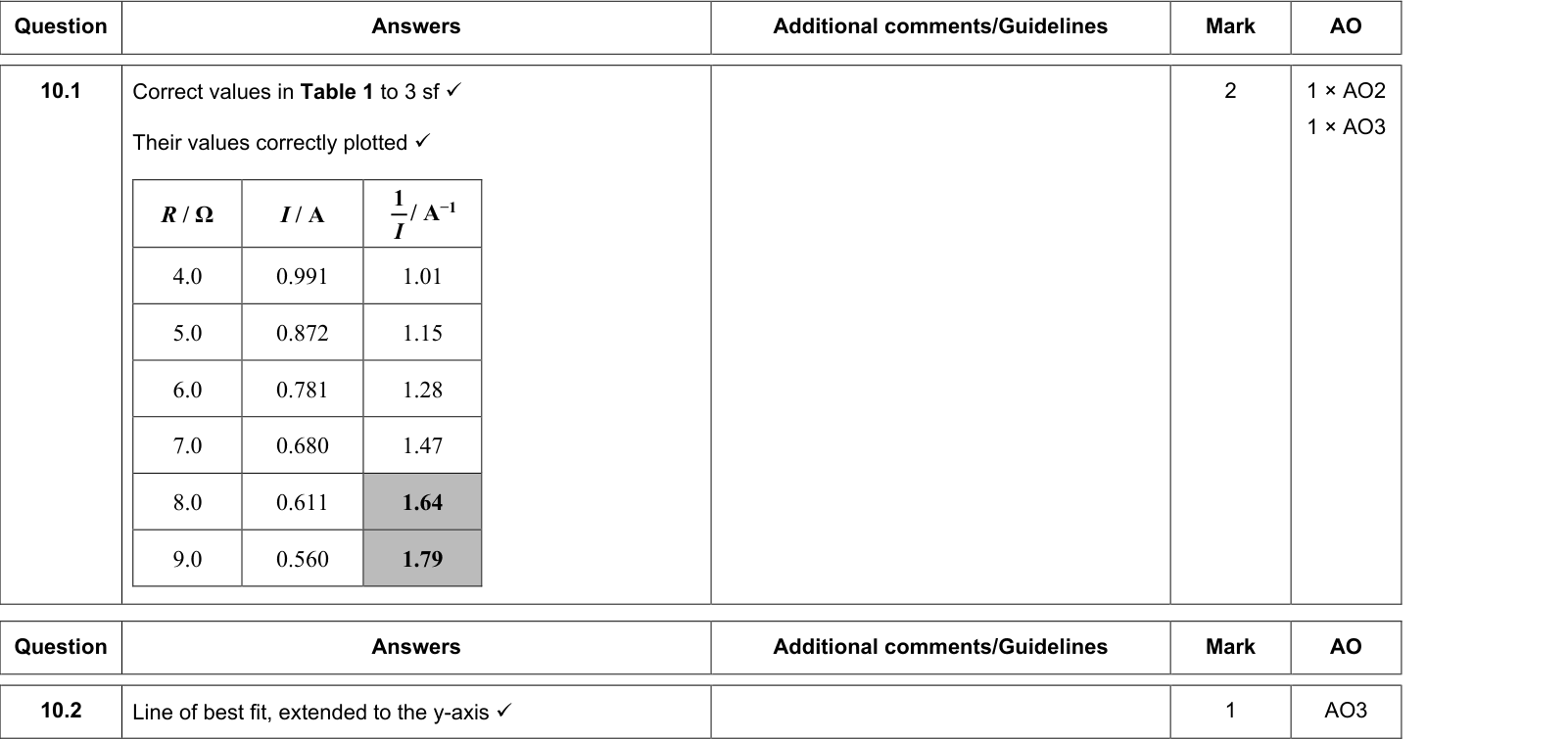
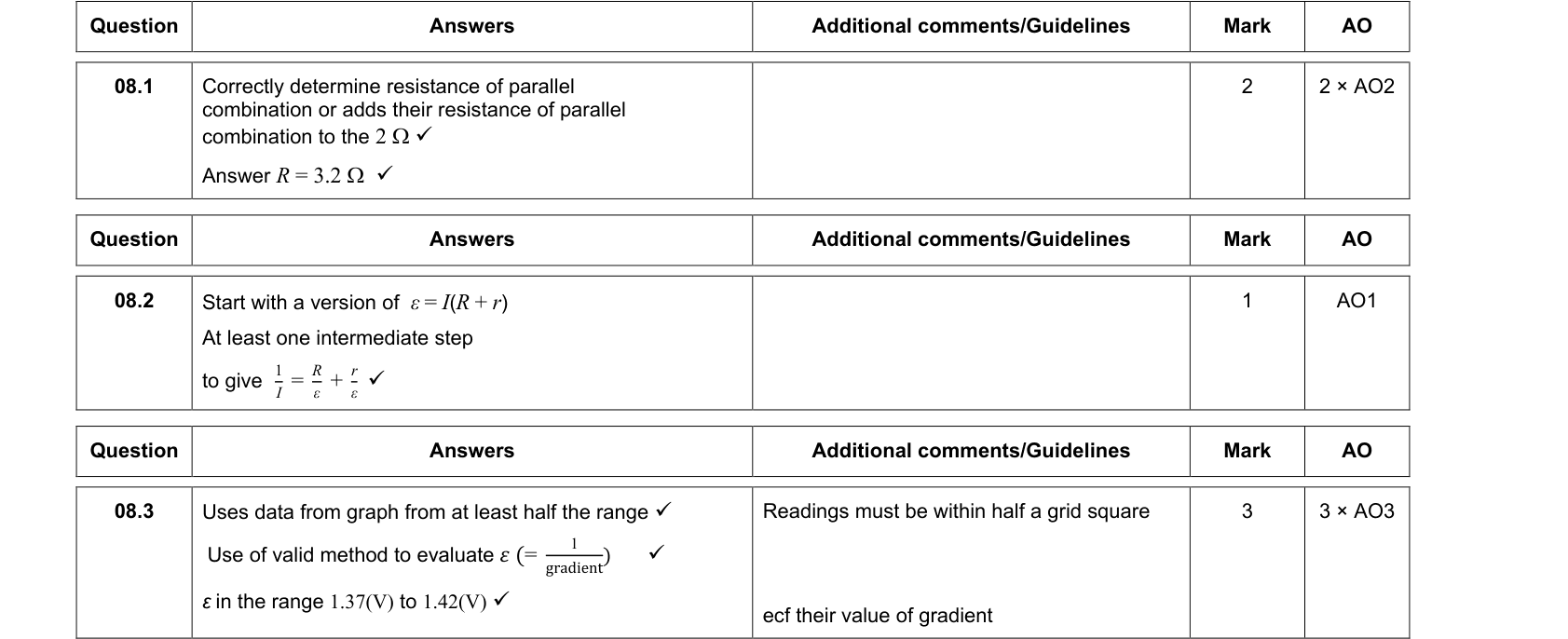
Alternative: use a resistance box with known $R$ and only a voltmeter (or ammeter); plot $\dfrac{1}{I}$ against $R$ ($\dfrac1I = \dfrac{R}{\varepsilon} + \dfrac{r}{\varepsilon}$): gradient $= 1/\varepsilon$, y-intercept $= r/\varepsilon$.
Summary
- E.m.f. $\varepsilon = E/Q$: energy given to each coulomb by the source.
- $\varepsilon = I(R + r) = V + Ir$; terminal p.d. $V = \varepsilon - Ir$ falls as current rises; $Ir$ is the "lost volts".
- Open circuit: $V = \varepsilon$. Short circuit: $I = \varepsilon/r$.
- Required practical 3: plot $V$ against $I$; intercept $= \varepsilon$, gradient $= -r$.