Electric current
Electric current
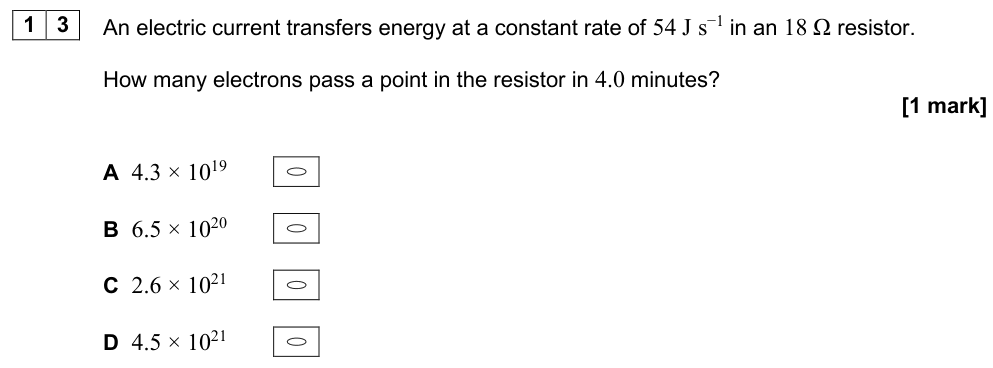
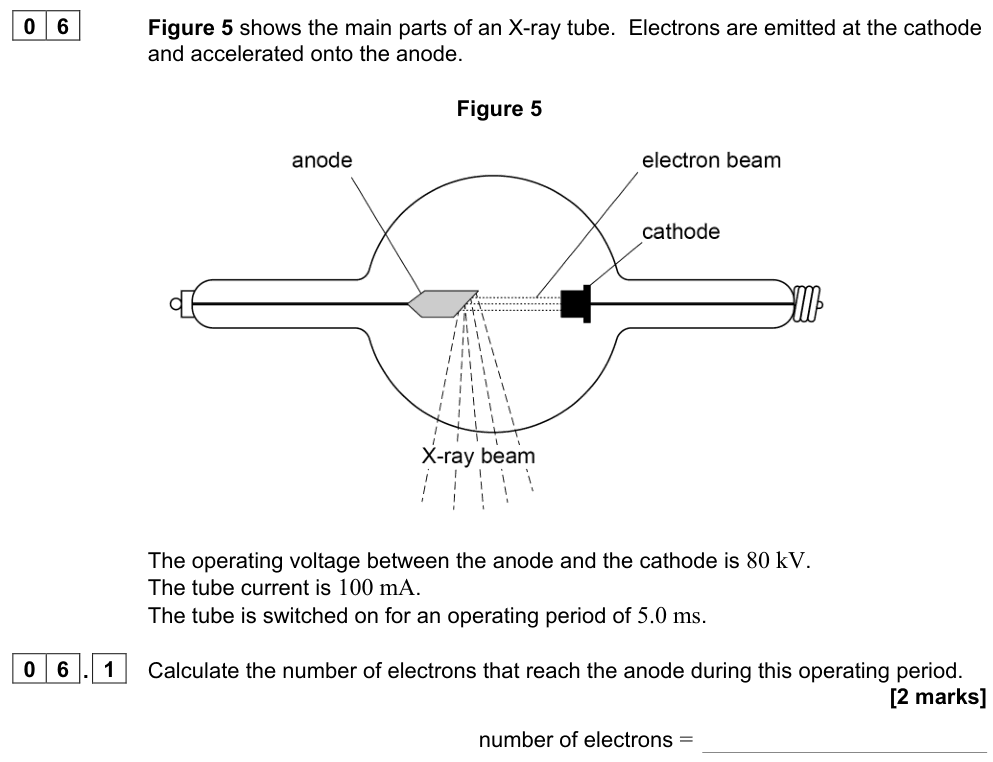
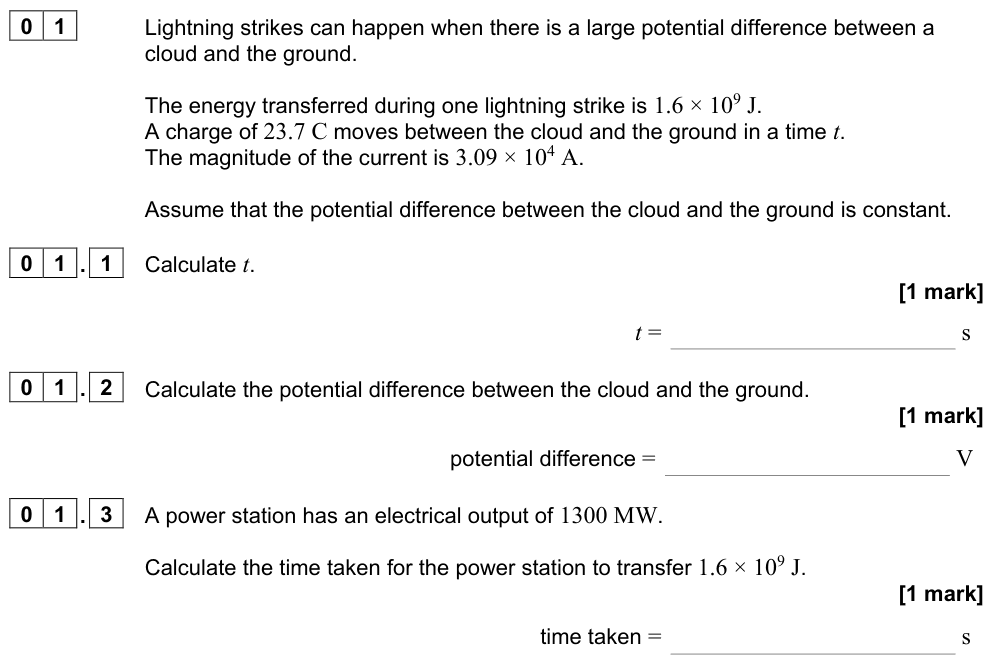
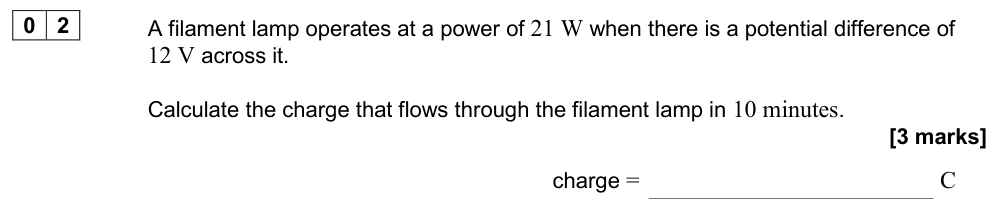
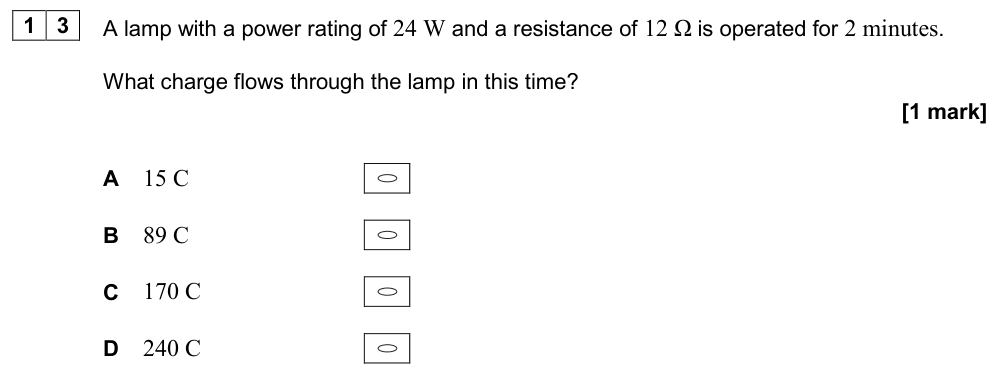
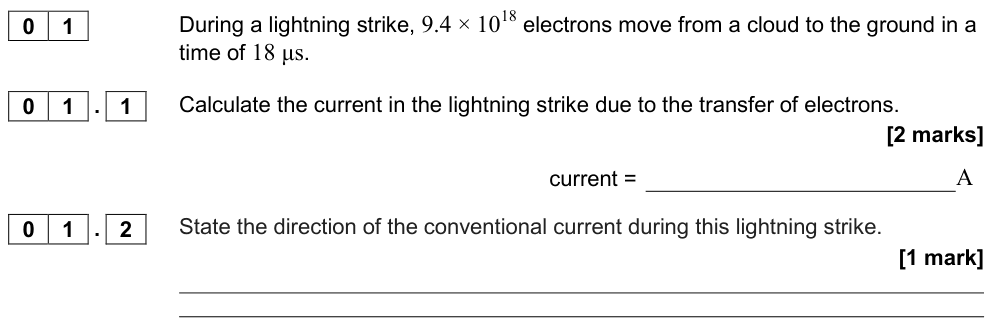
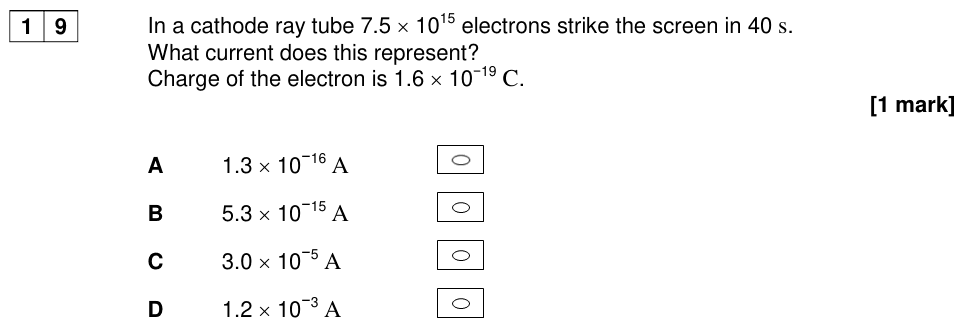
Electric current is the rate of flow of charge:
$$I = \frac{\Delta Q}{\Delta t} \qquad \text{unit: ampere (A)}$$
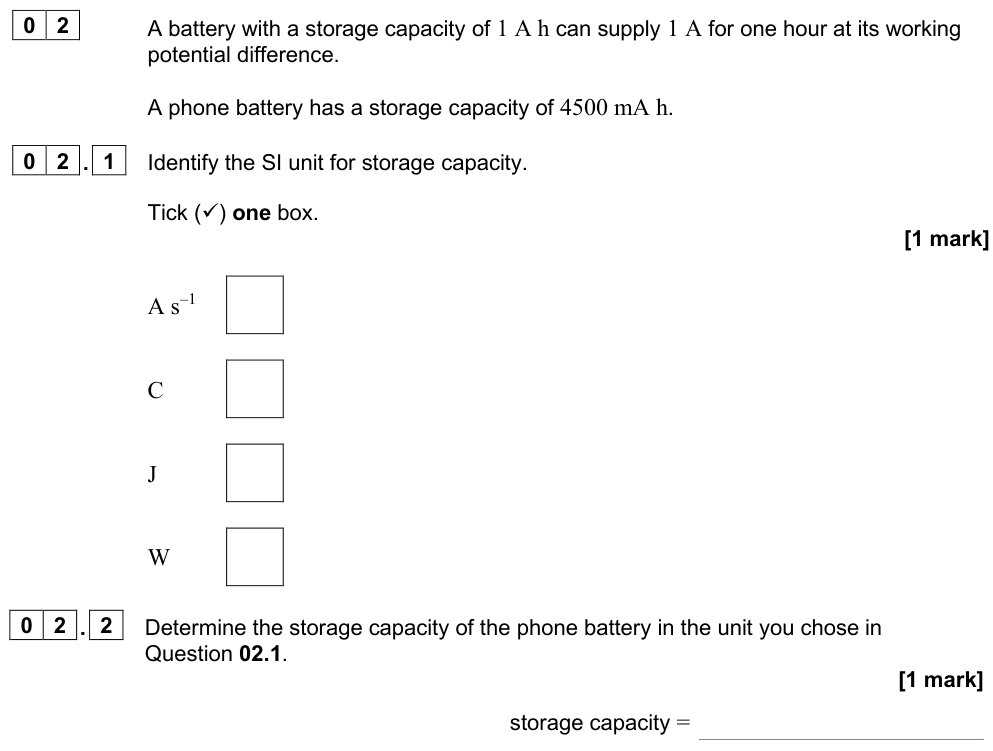
One coulomb is the charge that passes a point when a current of 1 A flows for 1 s: $1\ \text{C} = 1\ \text{A s}$.
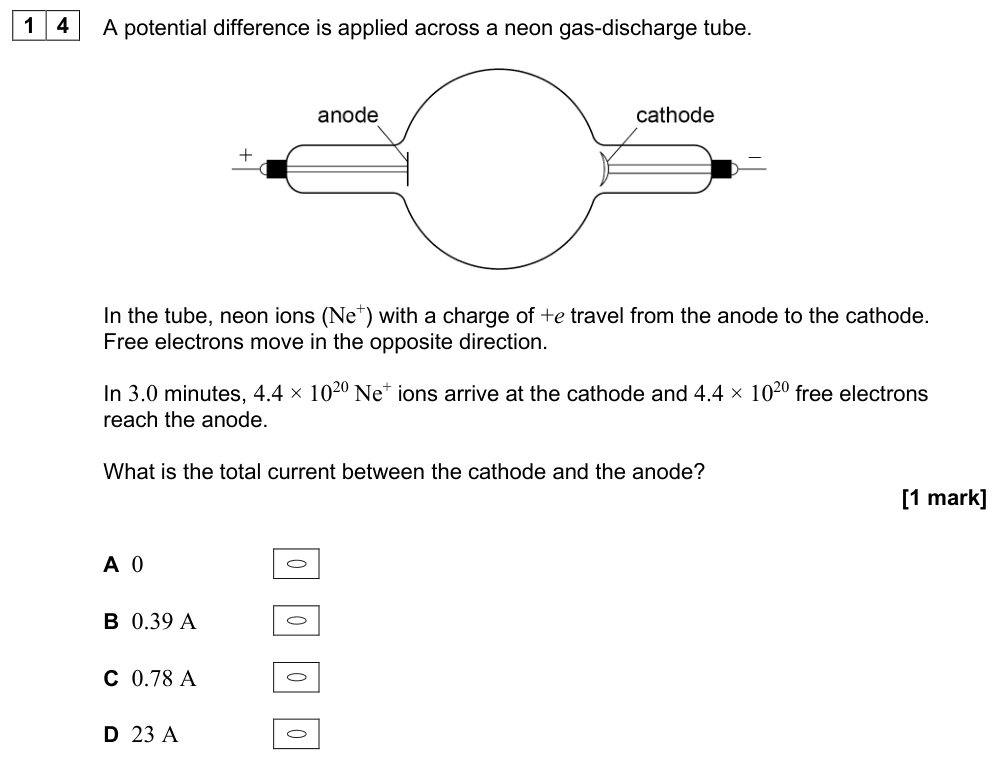
- In metals the charge carriers are free (delocalised) electrons, each carrying a charge of $-e = -1.60 \times 10^{-19}\ \text{C}$. In electrolytes and gases, ions also carry charge.
- Conventional current flows from + to − around the circuit outside the supply. Electrons actually drift the other way.
- Charge is quantised: any charge is a whole-number multiple of $e$. The number of electrons passing a point is $N = \dfrac{Q}{e}$.
Worked example: counting electrons
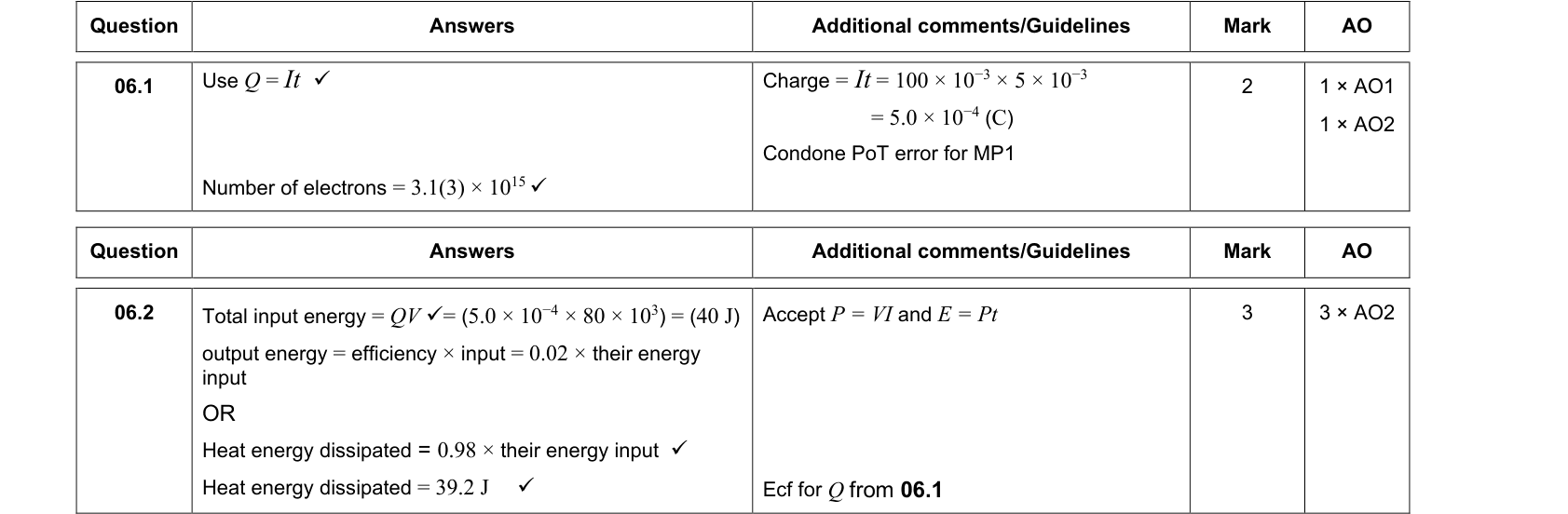
A current of 0.25 A flows for 2.0 minutes. Charge $Q = It = 0.25 \times 120 = 30\ \text{C}$.
Number of electrons $= \dfrac{30}{1.60 \times 10^{-19}} = 1.9 \times 10^{20}$.
Charge from a current–time graph
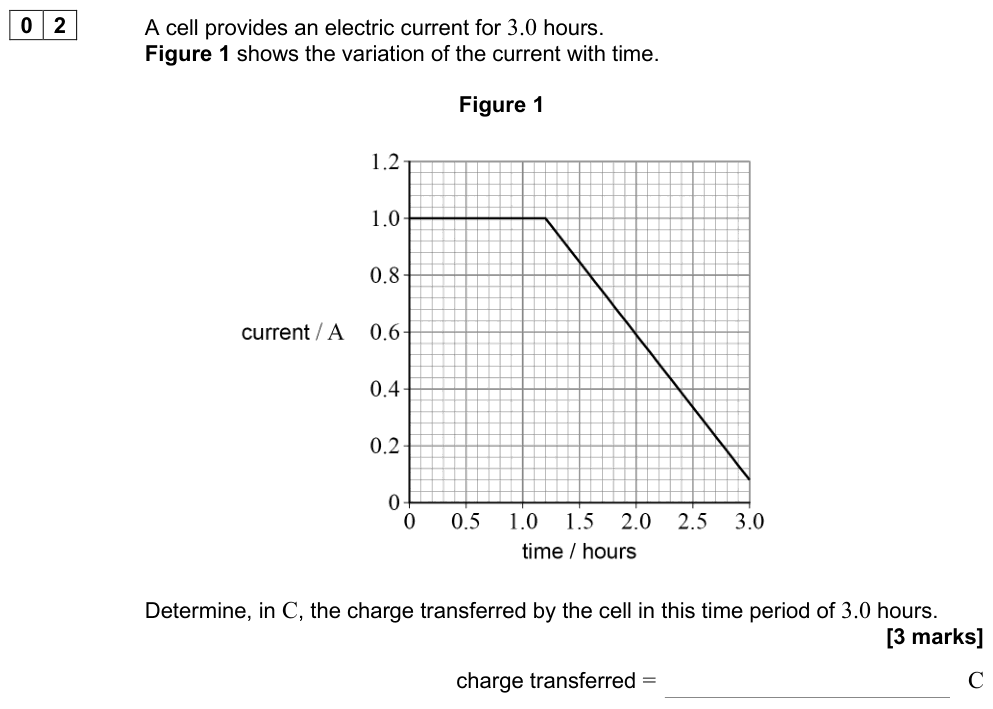
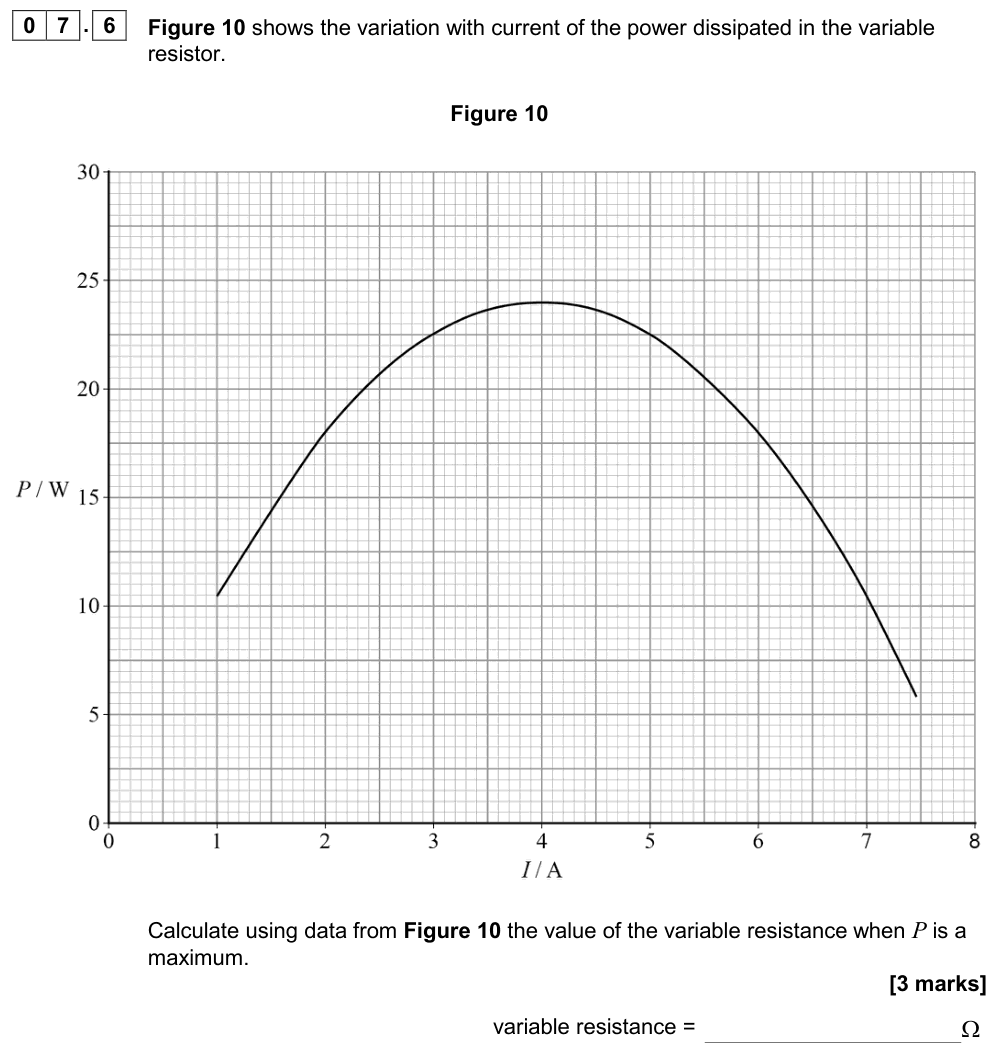
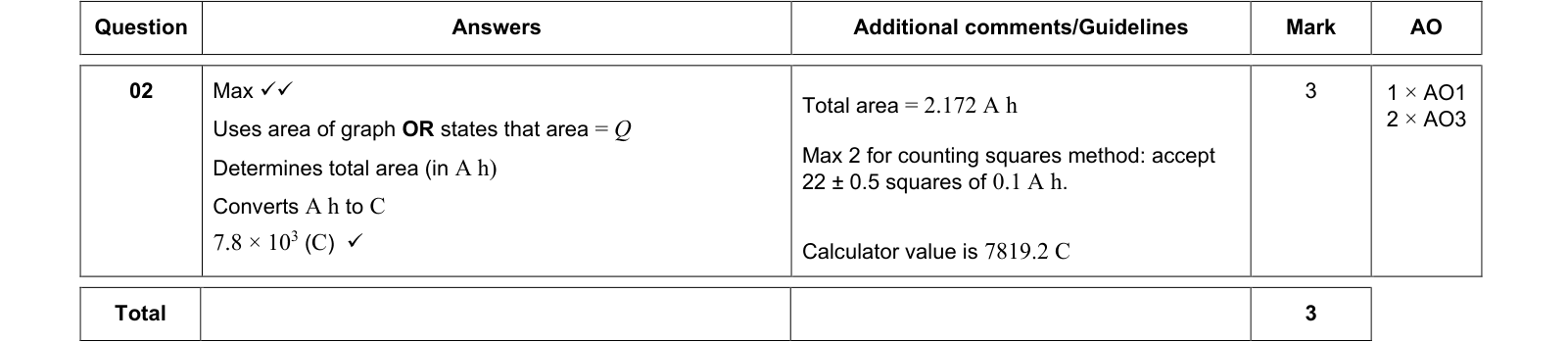
The area under a current–time graph equals the charge that has flowed. This is useful when the current changes, e.g. when a capacitor discharges (Unit 3) or a battery runs down.
Worked example: battery capacity
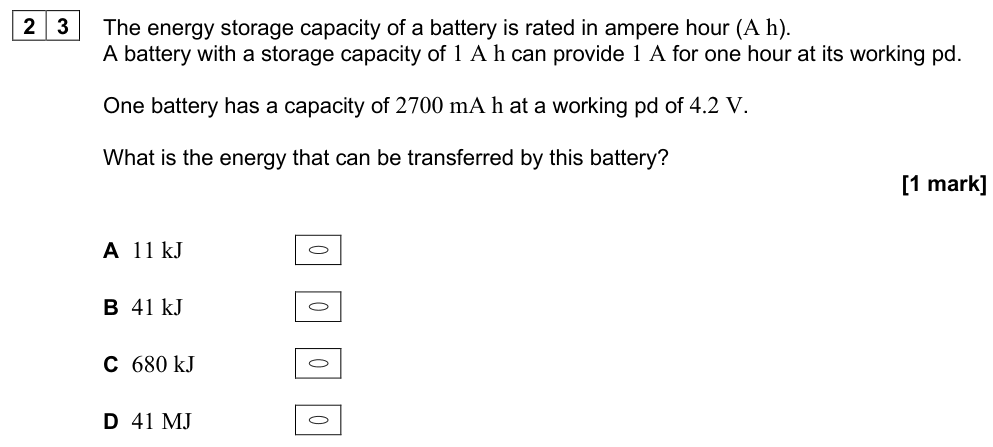
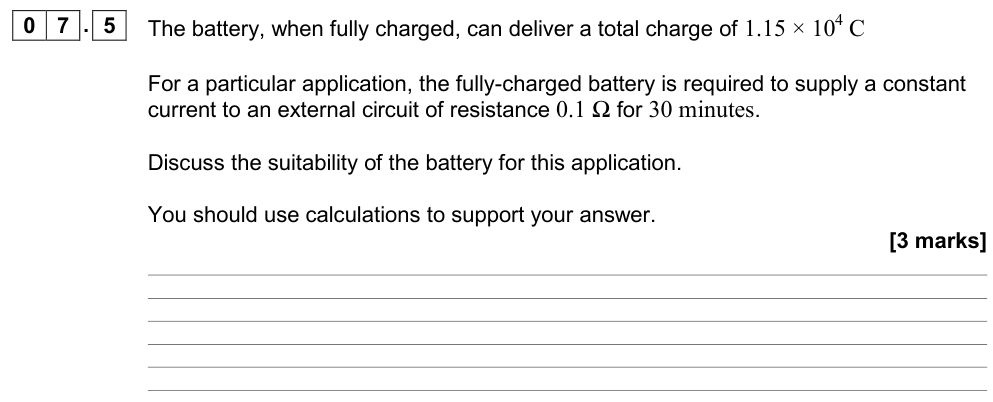
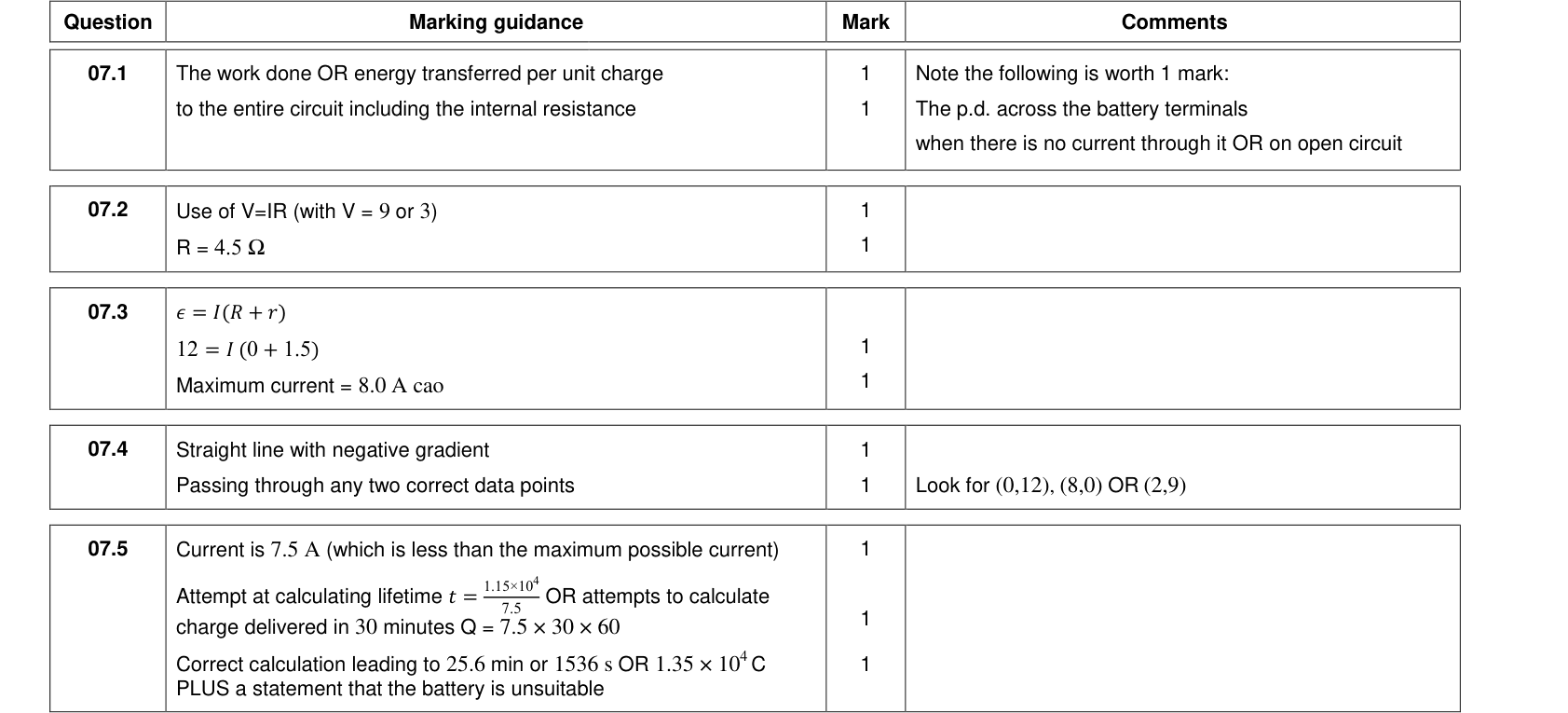
A phone battery is rated at 3000 mA h. This is a charge: $Q = 3.0\ \text{A} \times 3600\ \text{s} = 1.08 \times 10^{4}\ \text{C}$.
Potential difference
Potential difference
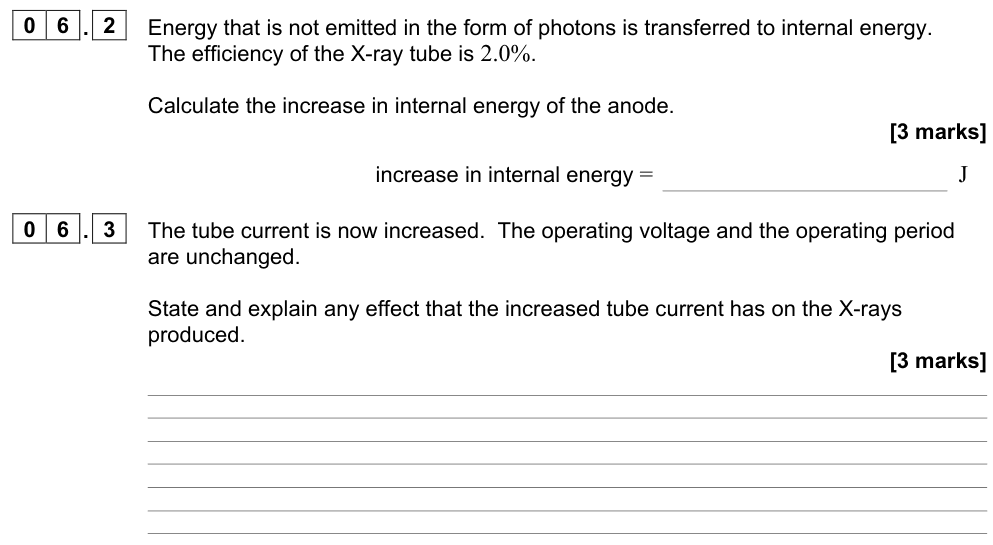
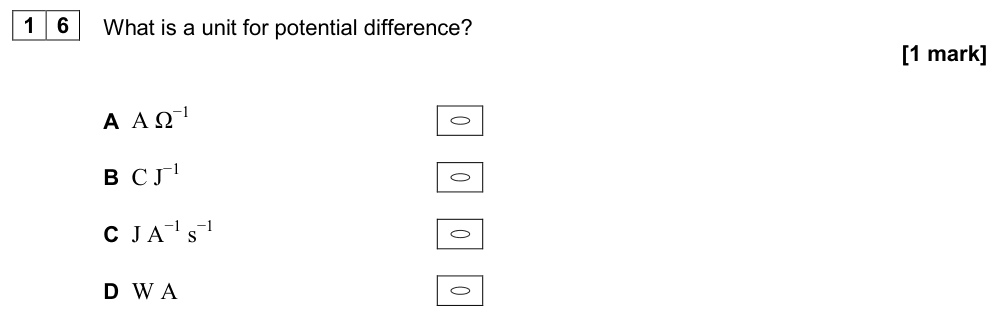
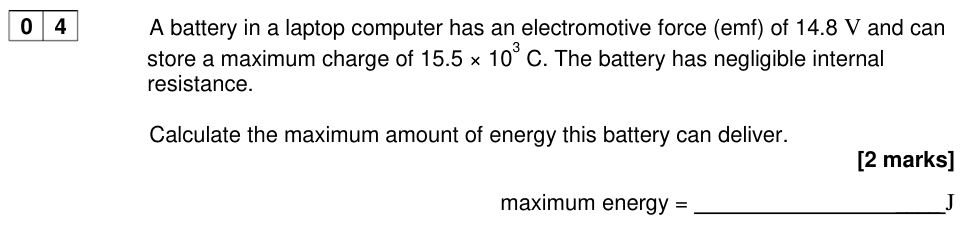
The potential difference (p.d.) between two points is the work done (energy transferred) per unit charge moving between them:
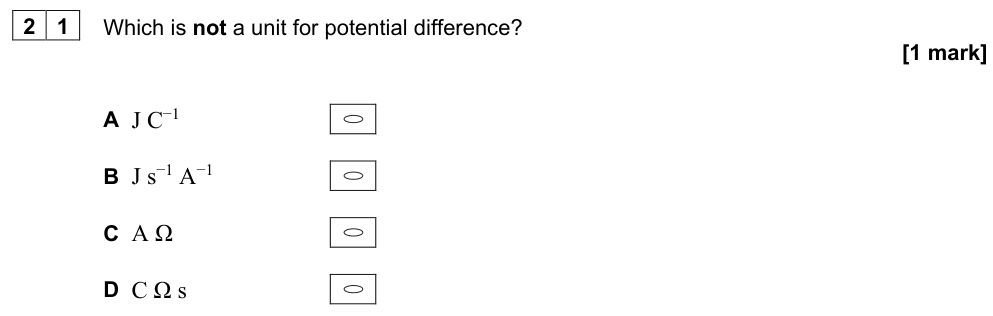
$$V = \frac{W}{Q} \qquad \text{unit: volt (V)};\ 1\ \text{V} = 1\ \text{J C}^{-1}$$
So a p.d. of 6 V across a lamp means that 6 J of electrical energy is transferred to other forms (light and thermal energy) for every coulomb of charge that passes through it.
Worked example
How much energy is transferred when $3.2 \times 10^{19}$ electrons pass through a 12 V motor?
$Q = 3.2 \times 10^{19} \times 1.60 \times 10^{-19} = 5.12\ \text{C}$, so $W = QV = 5.12 \times 12 = 61\ \text{J}$.
The electronvolt
When one electron moves through a p.d. of 1 V, the energy transferred is $W = QV = 1.60 \times 10^{-19}\ \text{J}$. This amount of energy is called one electronvolt (1 eV). An electron accelerated from rest through a p.d. $V$ gains kinetic energy $eV$:
$$\tfrac12 m_e v^2 = eV$$
Resistance
Resistance
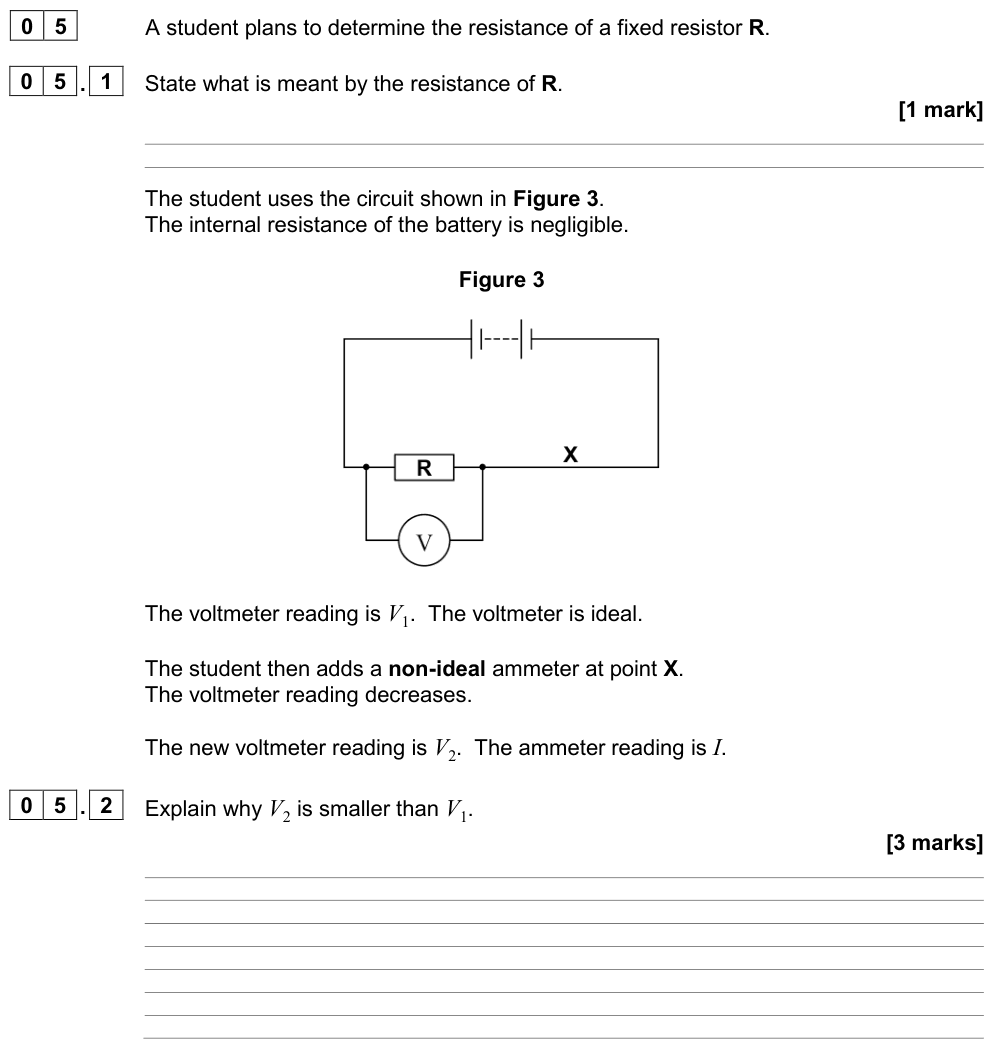
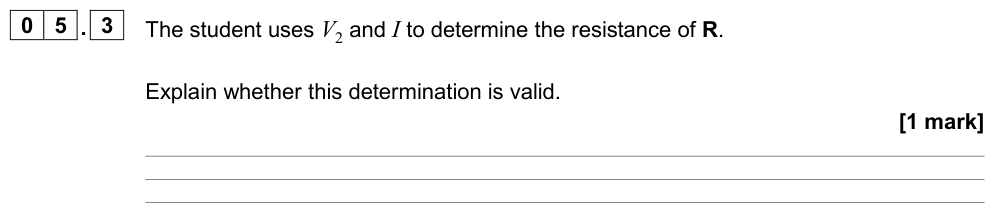
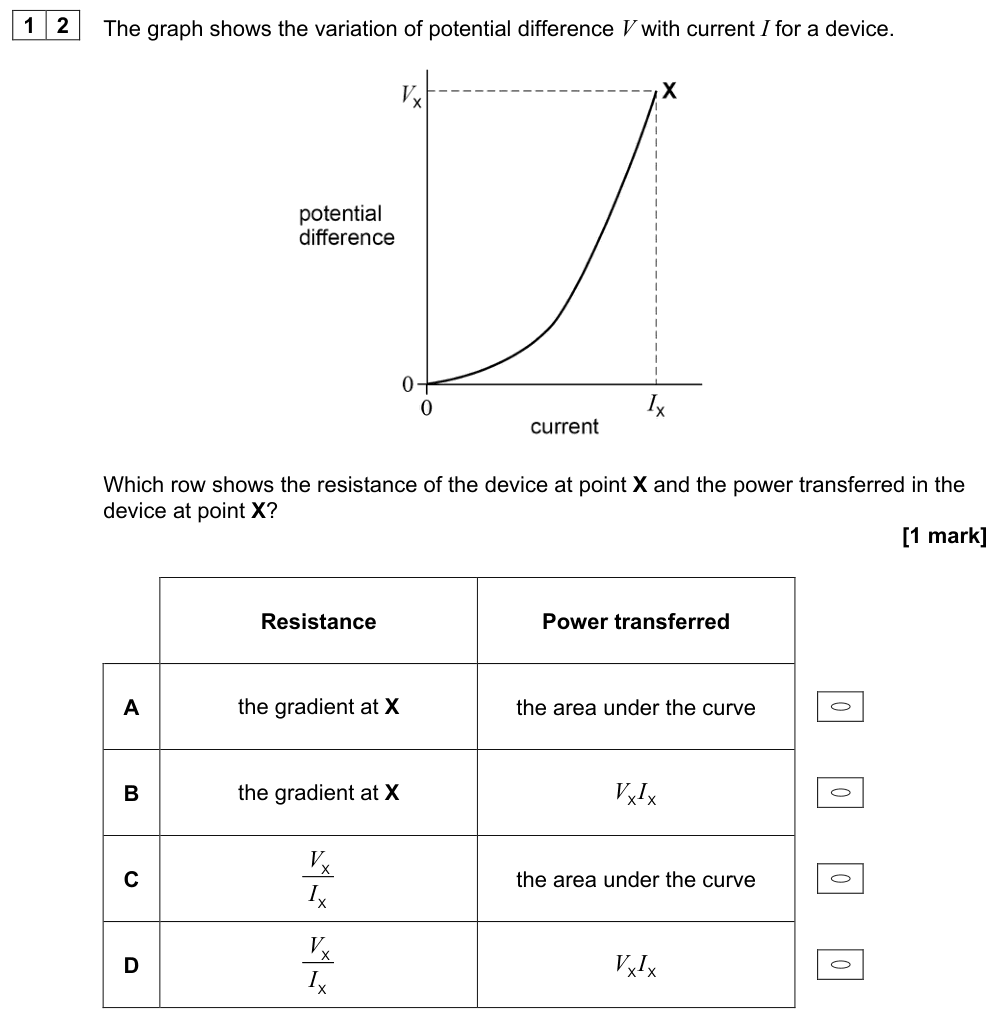
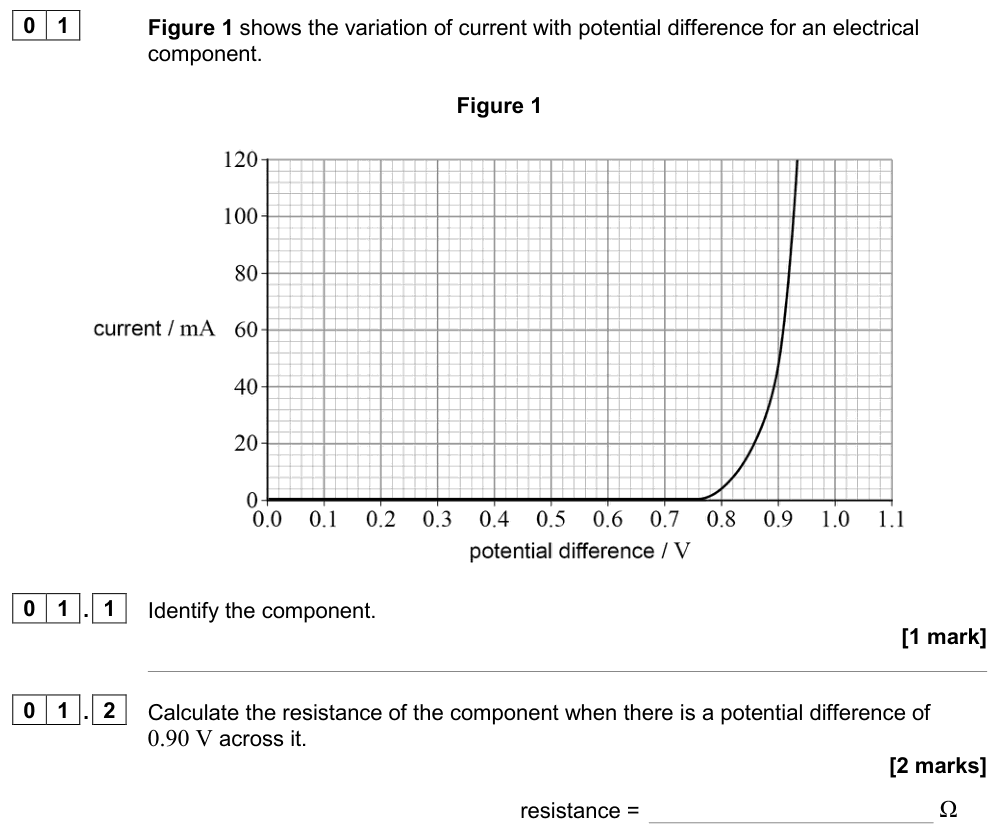
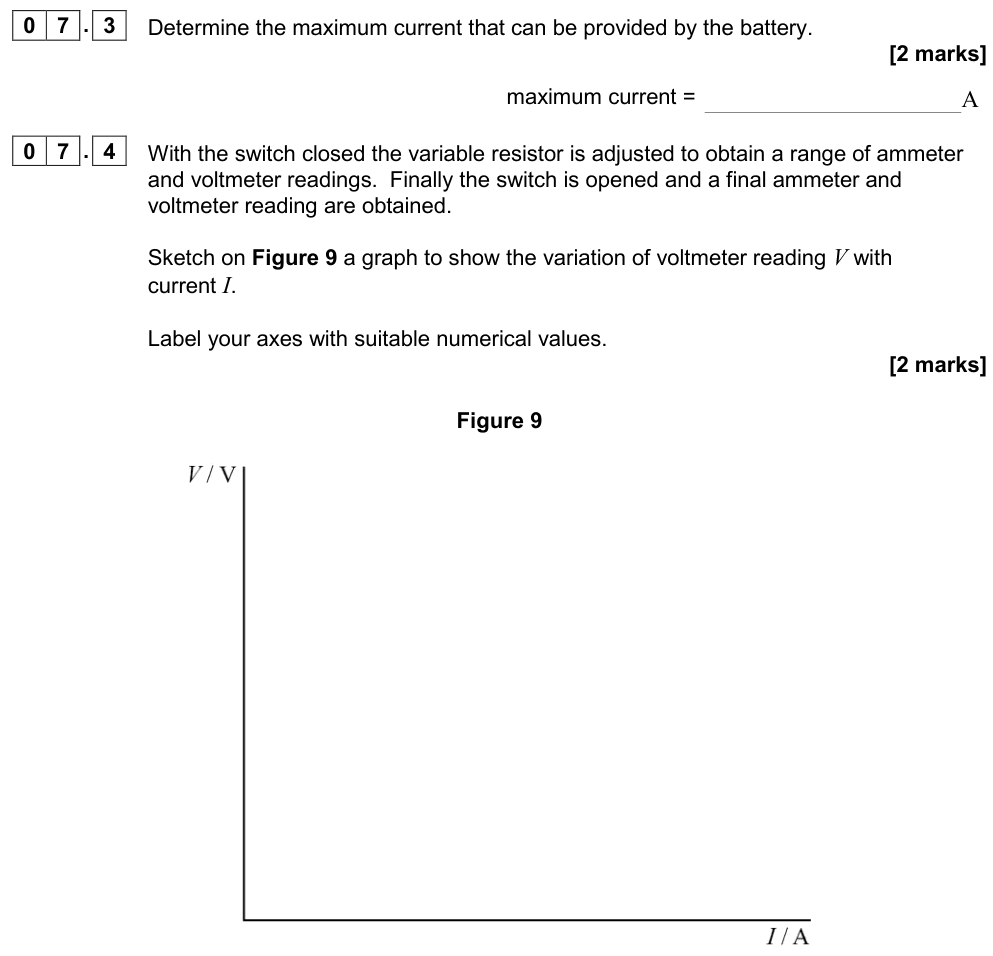
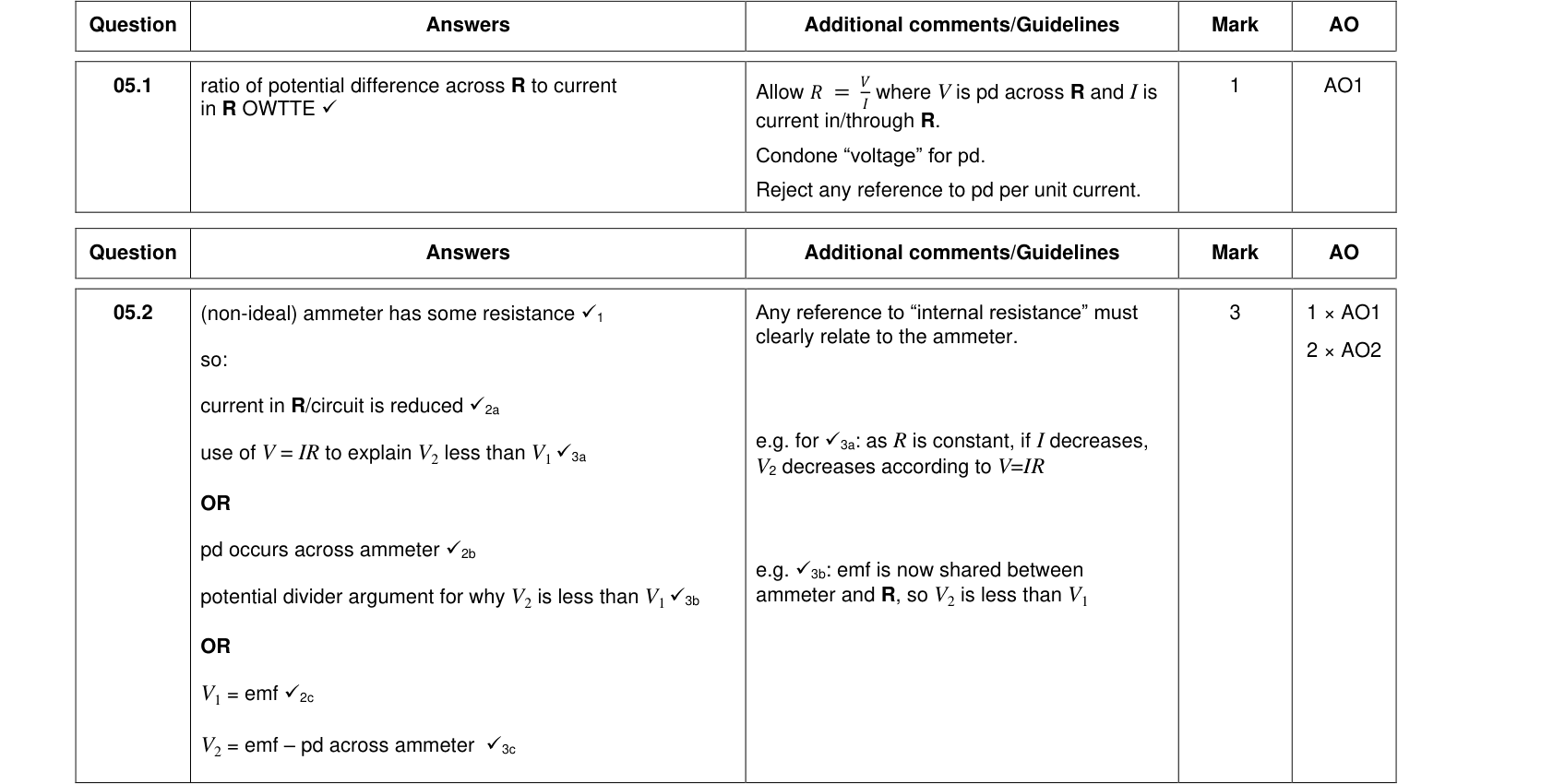
The resistance of a component is the ratio of the p.d. across it to the current through it:
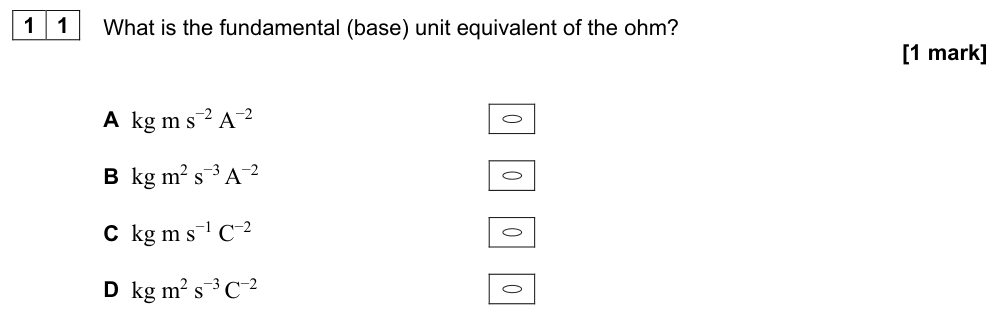
$$R = \frac{V}{I} \qquad \text{unit: ohm } (\Omega);\ 1\ \Omega = 1\ \text{V A}^{-1}$$
Resistance measures how hard it is for charge to flow. In a metal, the free electrons collide with the vibrating positive ions of the lattice, transferring energy to them. This is why a current heats a wire.
Common mistake
$R = V/I$ is the definition of resistance and is true at every point on an I–V graph. Use the ratio $V/I$ at the point, not the gradient of the graph (unless the graph is a straight line through the origin). See the next chapter.
Meters
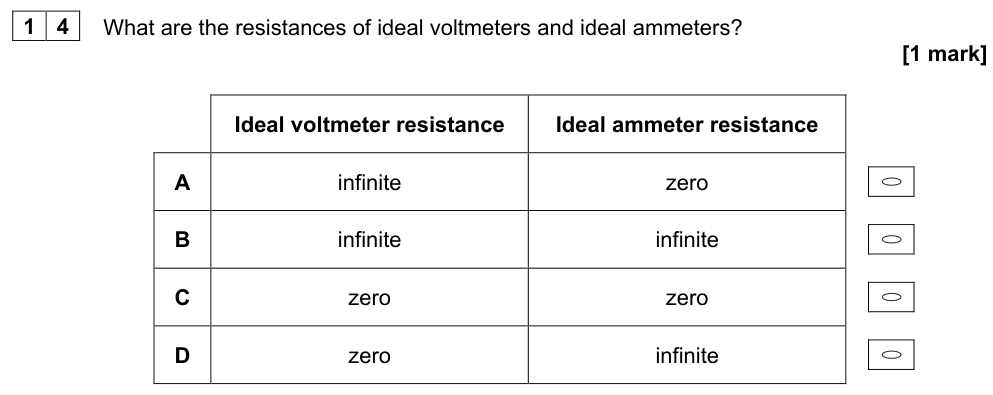
| Meter | Connected | Ideal resistance | Why |
|---|---|---|---|
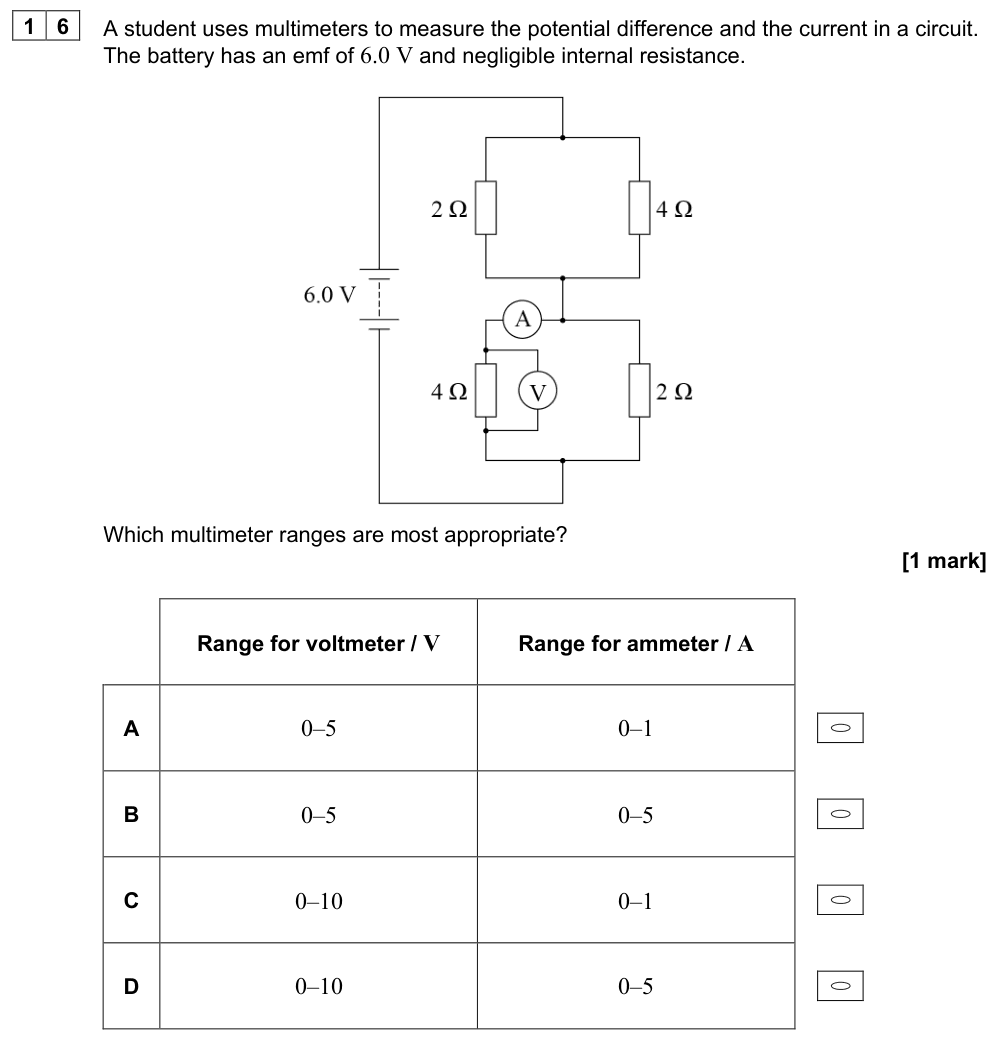
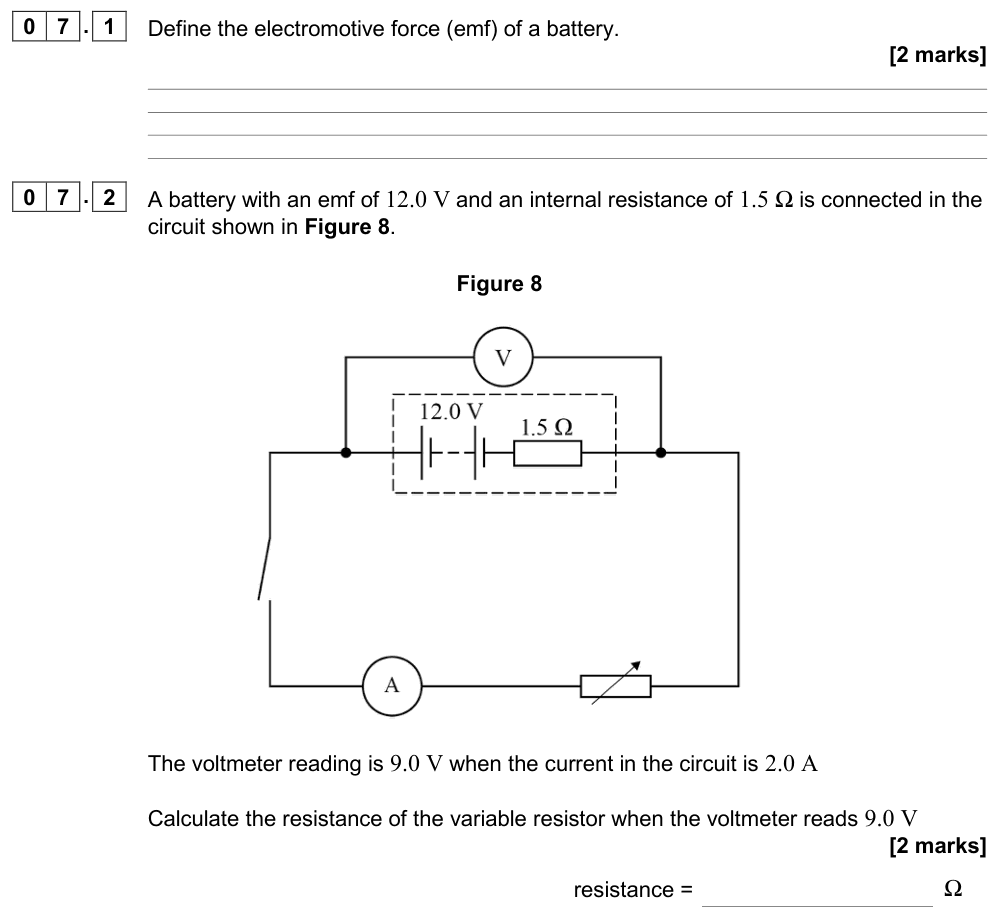
| Ammeter | in series with the component | zero | so that it does not reduce the current it measures |
| Voltmeter | in parallel across the component | infinite | so that it does not draw any current from the circuit |
Unless a question says otherwise, treat ammeters and voltmeters as ideal.
Summary
- $I = \Delta Q/\Delta t$; 1 C = 1 A s; area under an I–t graph = charge; $N = Q/e$.
- $V = W/Q$; 1 V = 1 J C⁻¹; an electron accelerated through $V$ gains $eV$ of energy.
- $R = V/I$ (always the ratio, not the gradient).
- Ideal ammeter: zero resistance, in series. Ideal voltmeter: infinite resistance, in parallel.