Work done
Work done
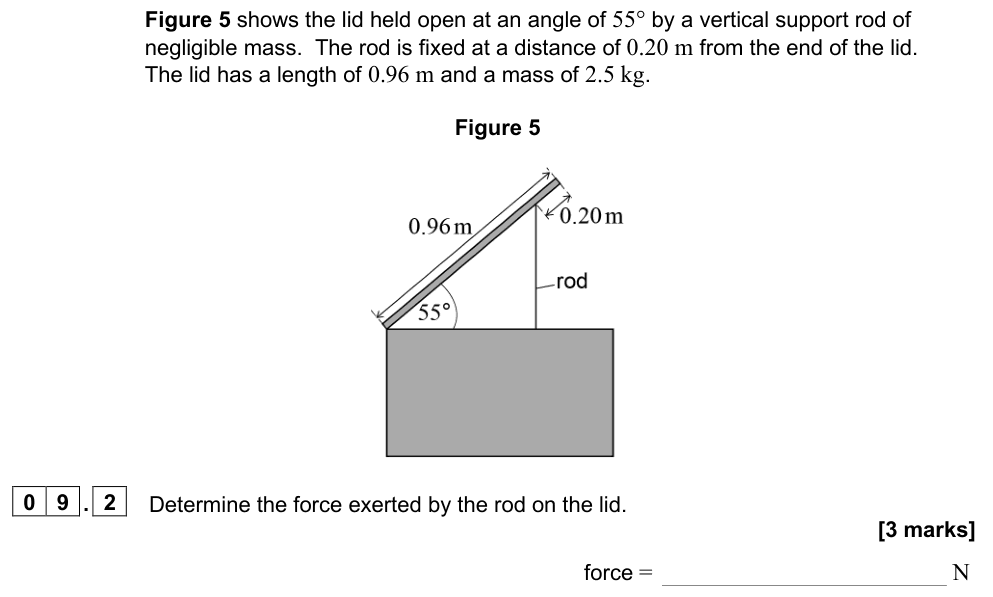
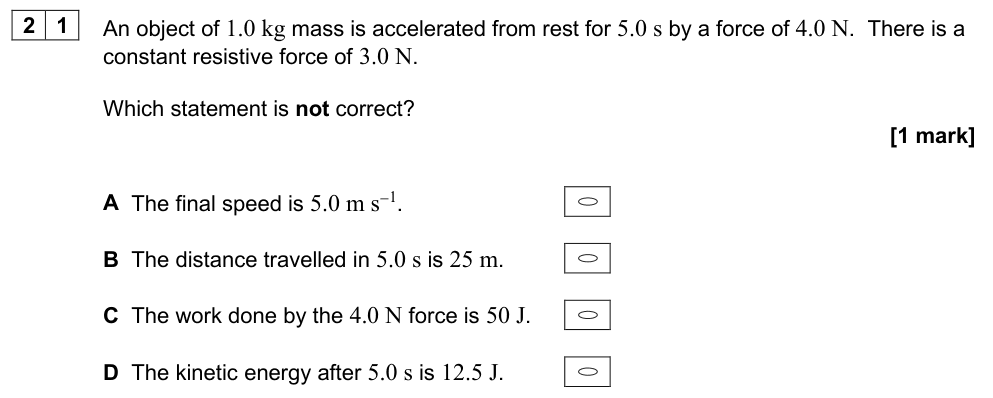
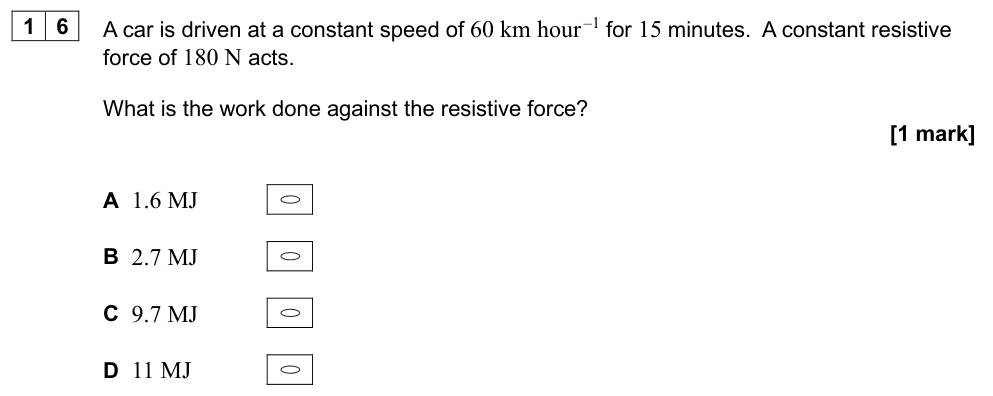
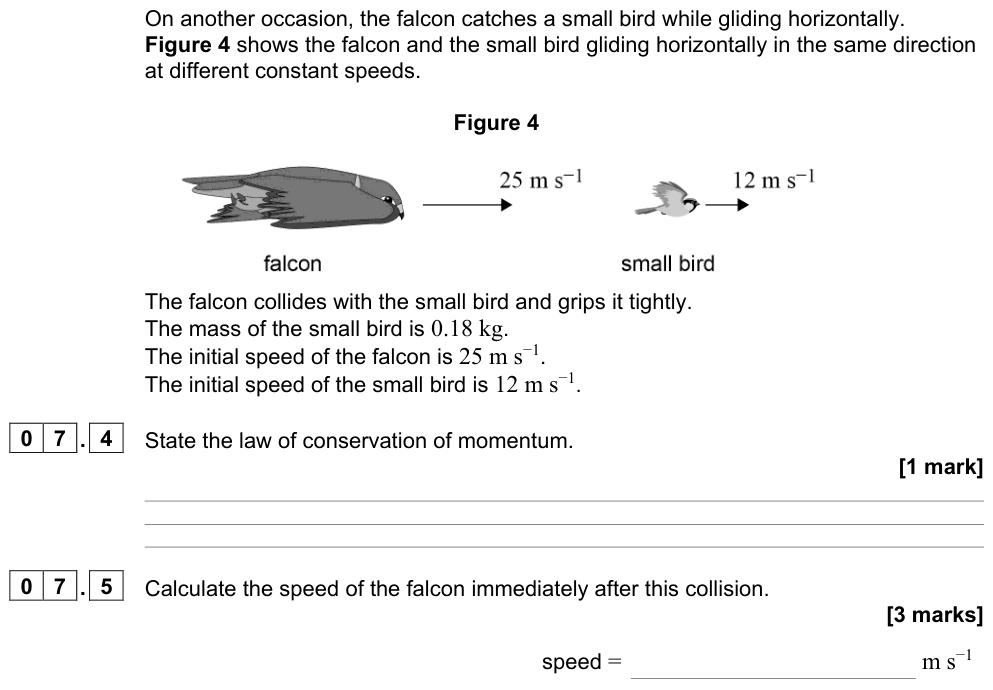
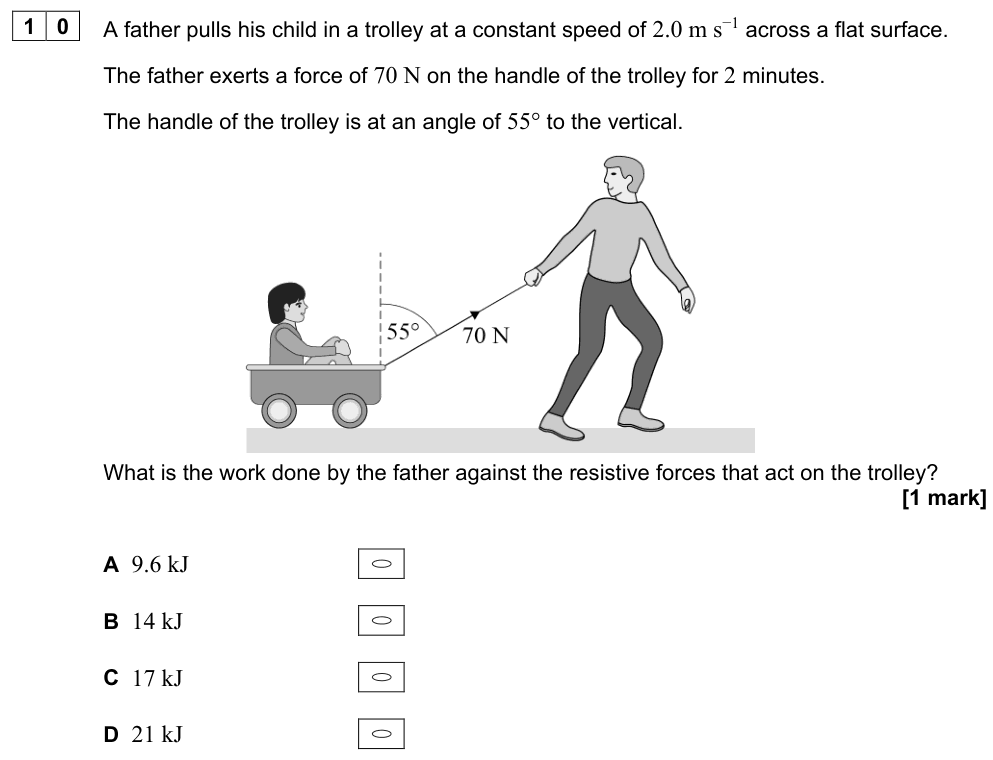
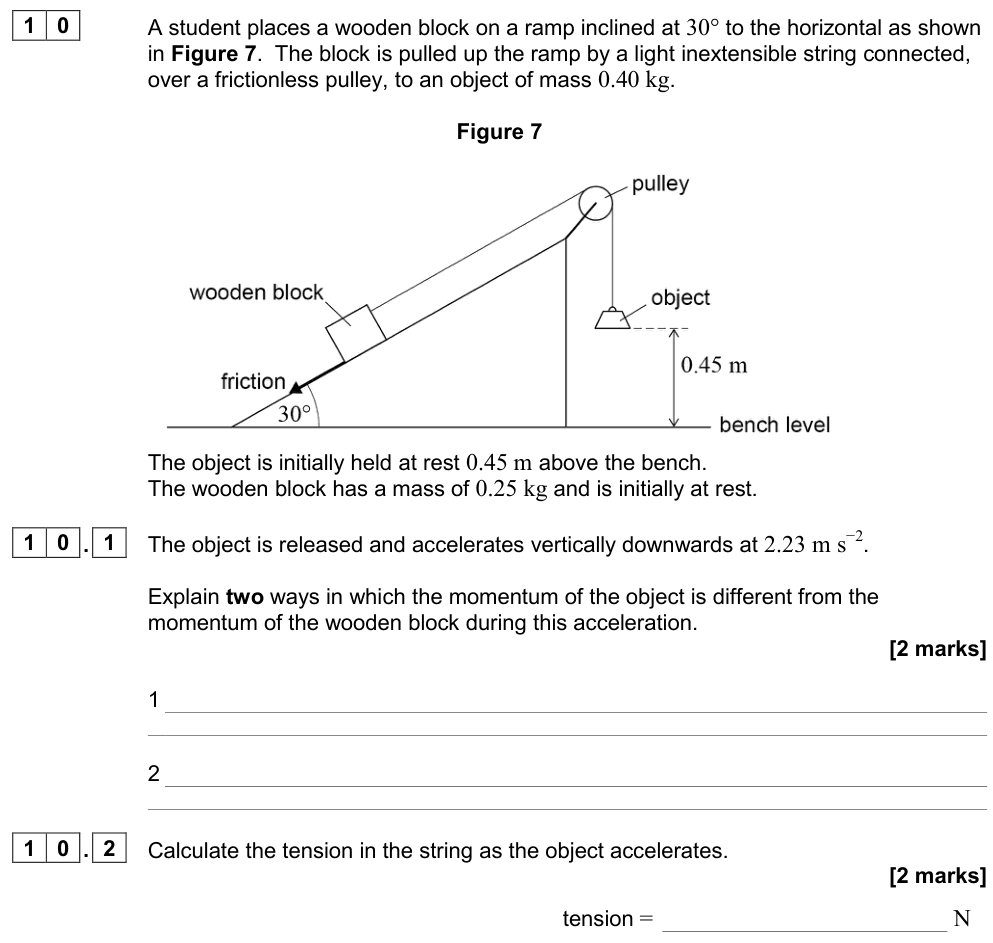
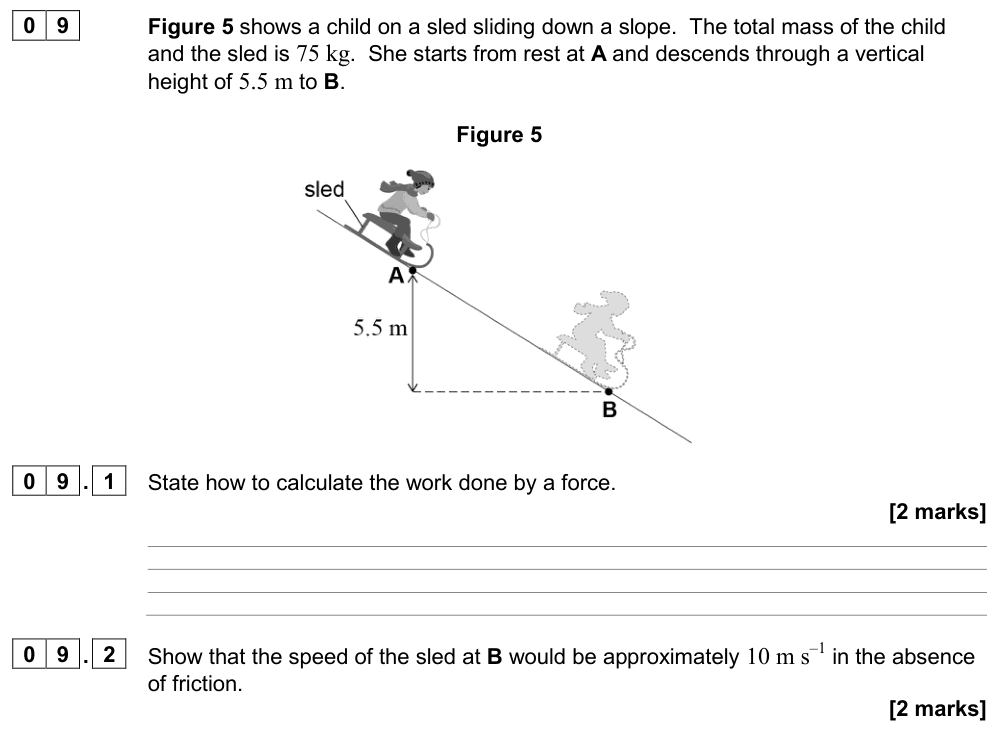
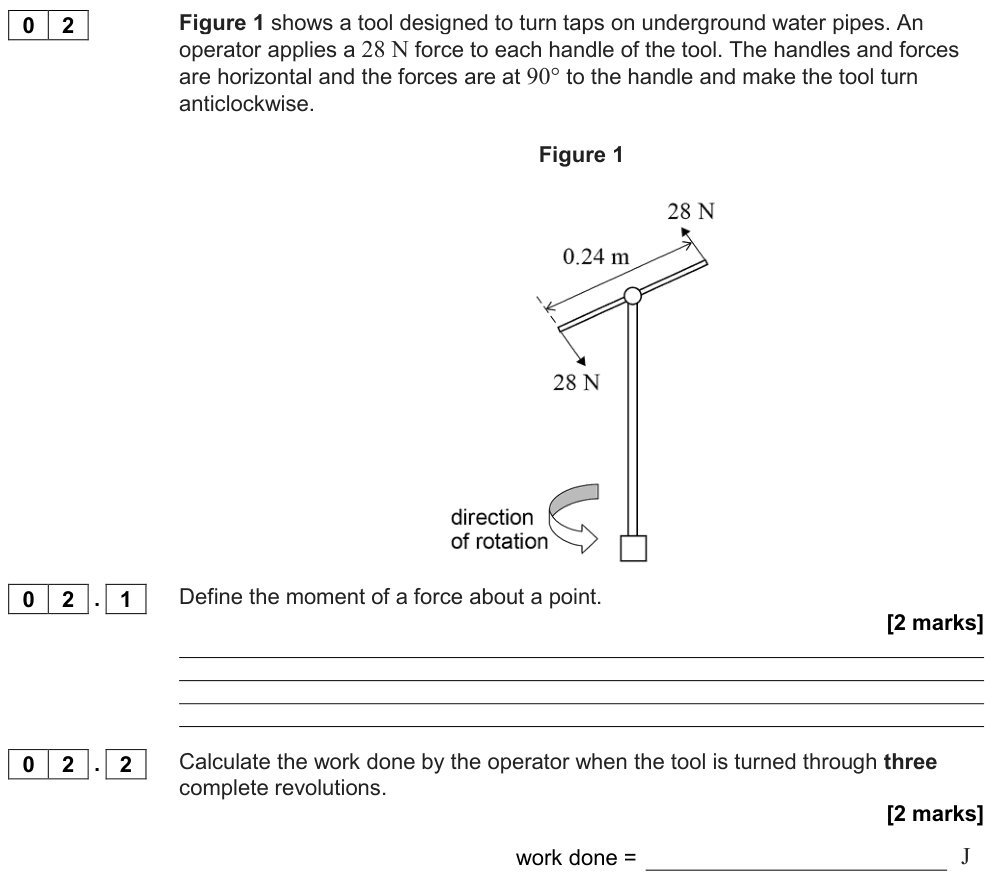
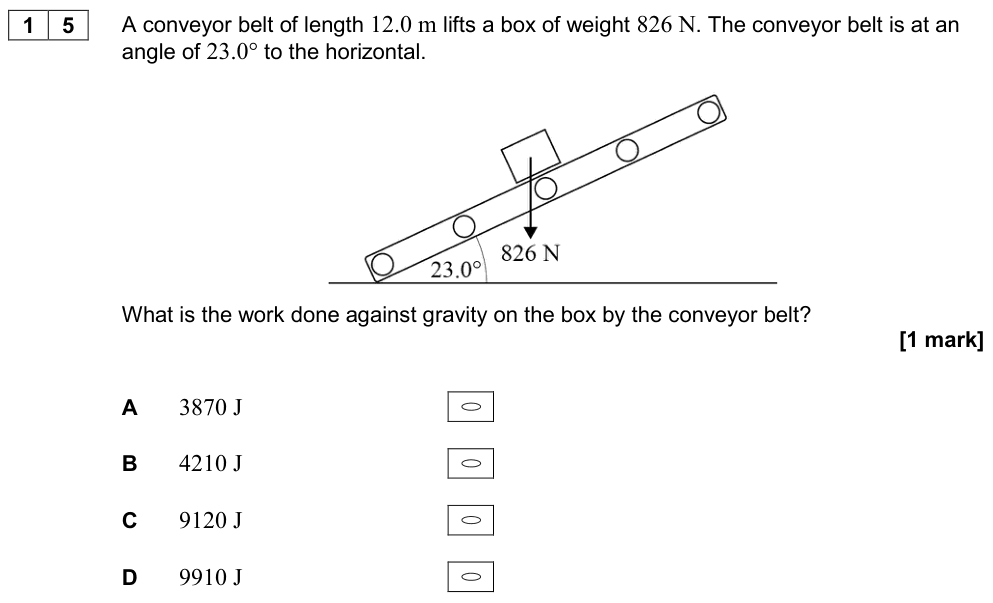
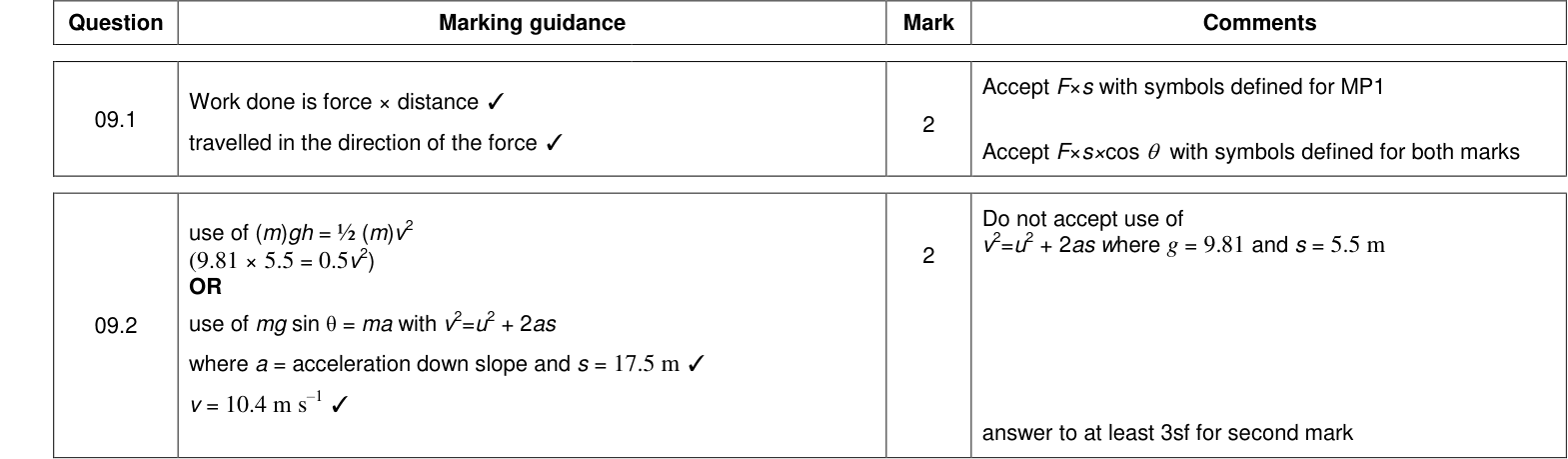
Work is done when a force moves an object in the direction of the force. Work done = energy transferred.
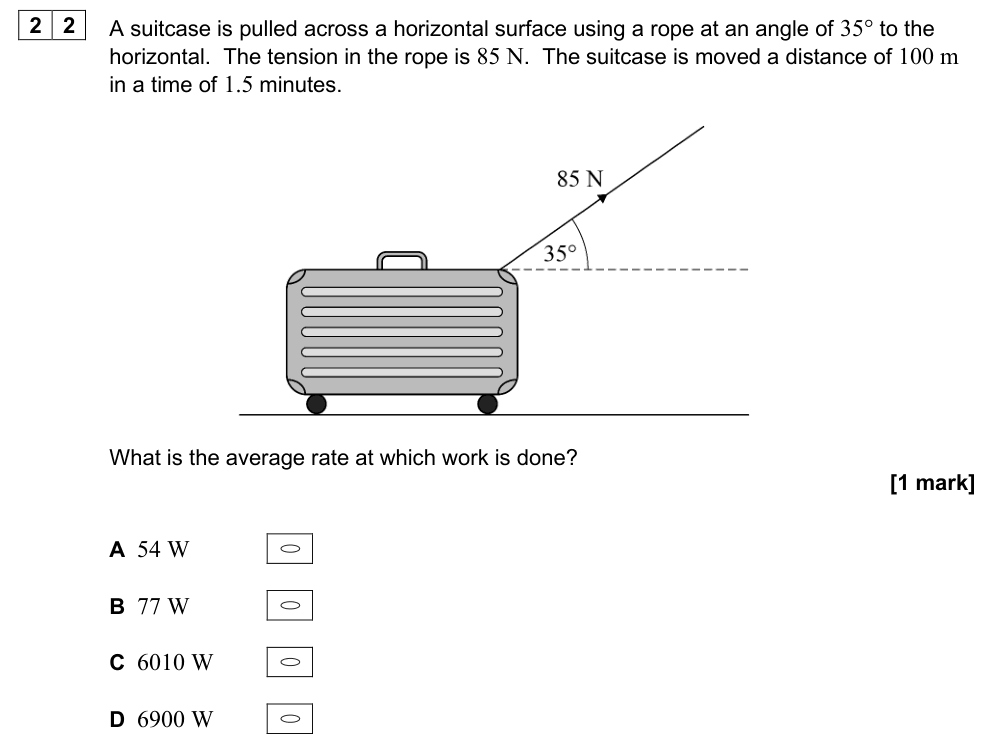
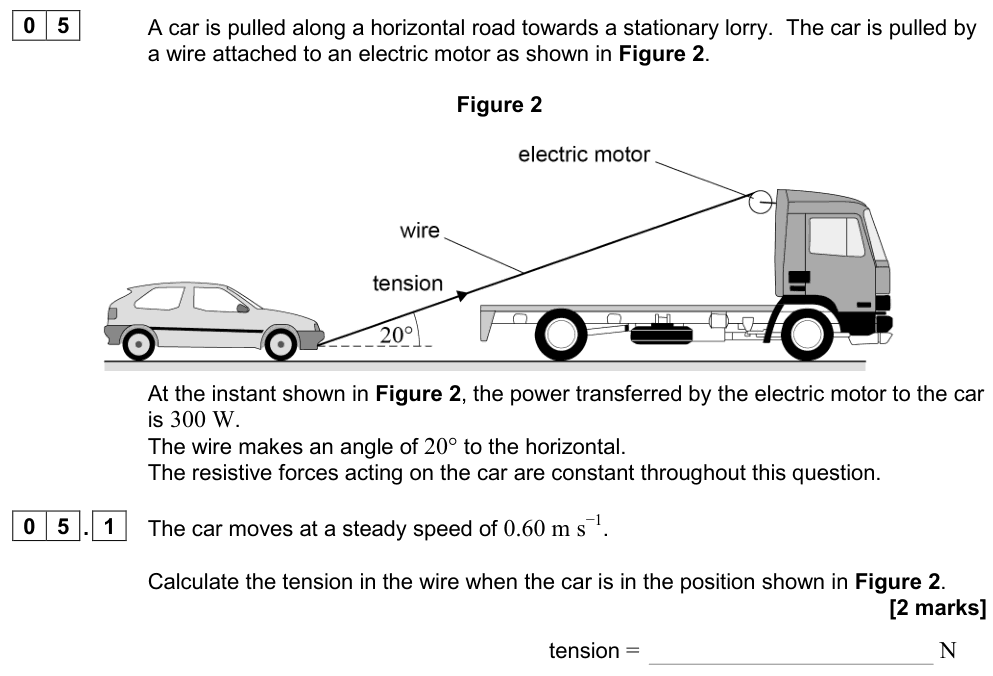
$$W = Fs\cos\theta$$
where $\theta$ is the angle between the force $F$ and the displacement $s$. Unit: joule (J); $1\ \text{J} = 1\ \text{N m}$.
- If the force is along the motion ($\theta = 0$), $W = Fs$.
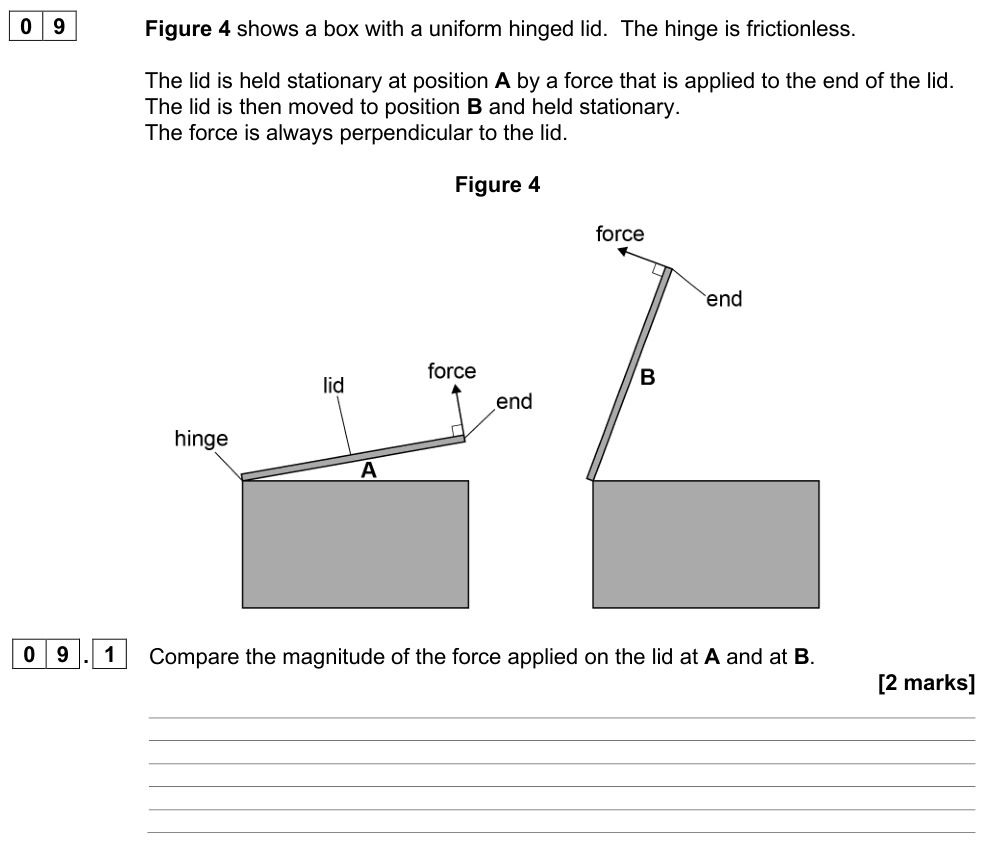
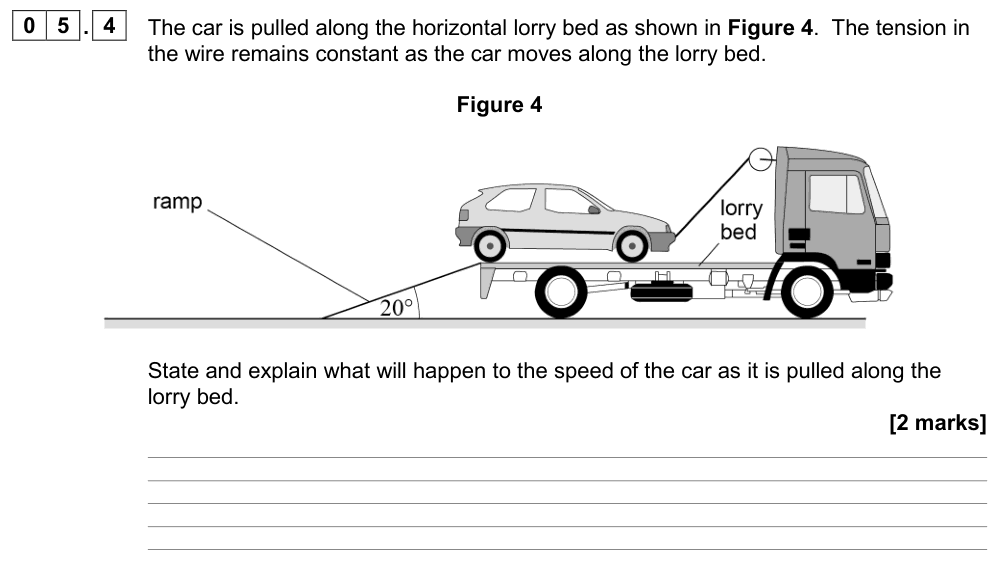
- If the force is perpendicular to the motion ($\theta = 90^\circ$), no work is done. Example: the centripetal force on an object moving in a circle, or the normal reaction on a block sliding along a horizontal floor.
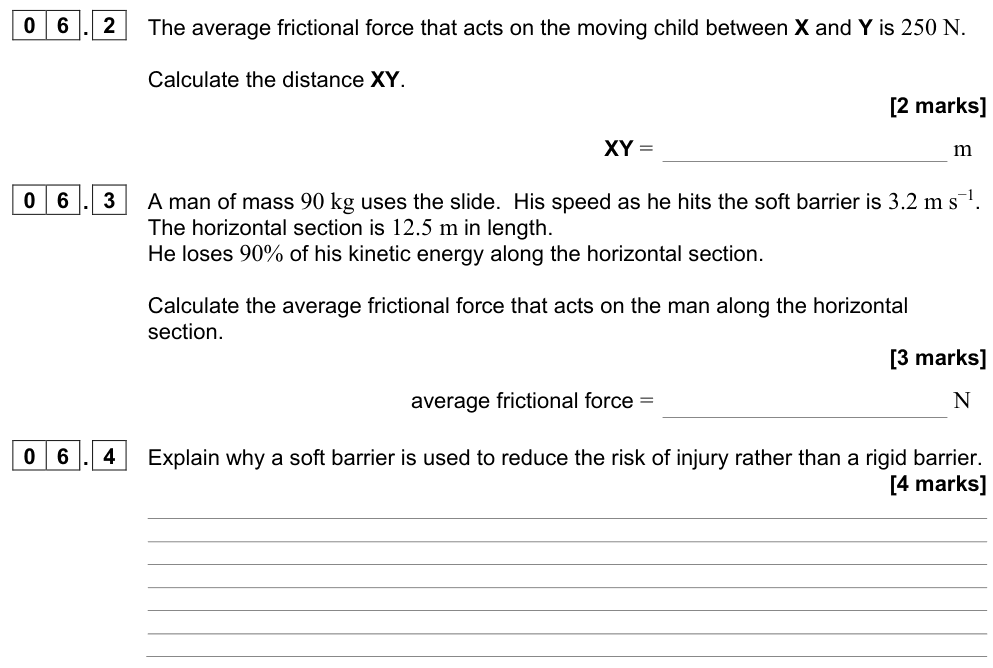
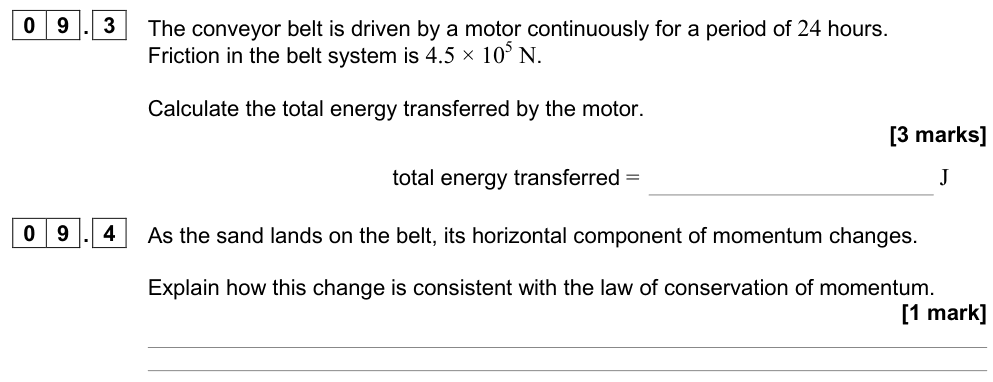
- If the force opposes the motion ($\theta = 180^\circ$), the work done is negative. Friction does negative work and transfers kinetic energy to internal energy.
Worked example: pulling a suitcase
A suitcase is pulled 30 m along level ground with a force of 45 N at $35^\circ$ above the horizontal. $W = 45 \times 30 \times \cos35^\circ = 1100\ \text{J}$.
Force–displacement graphs
Work done from a graph
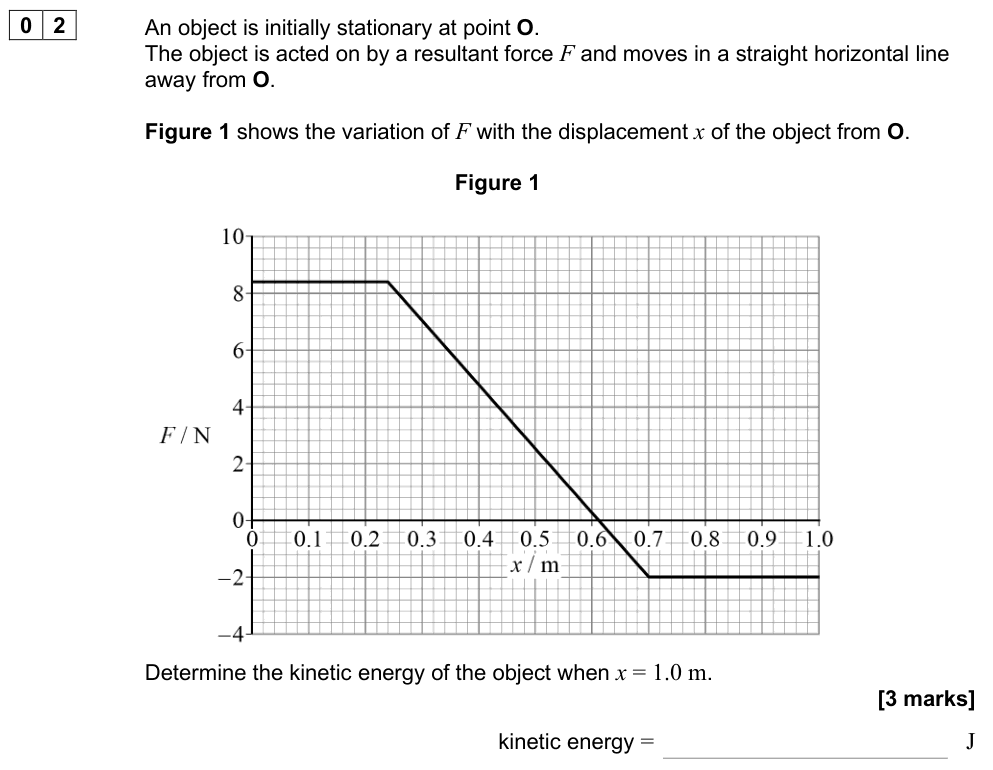
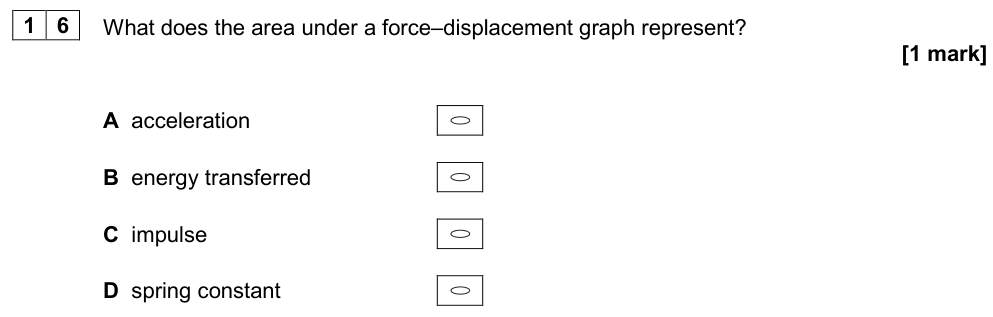
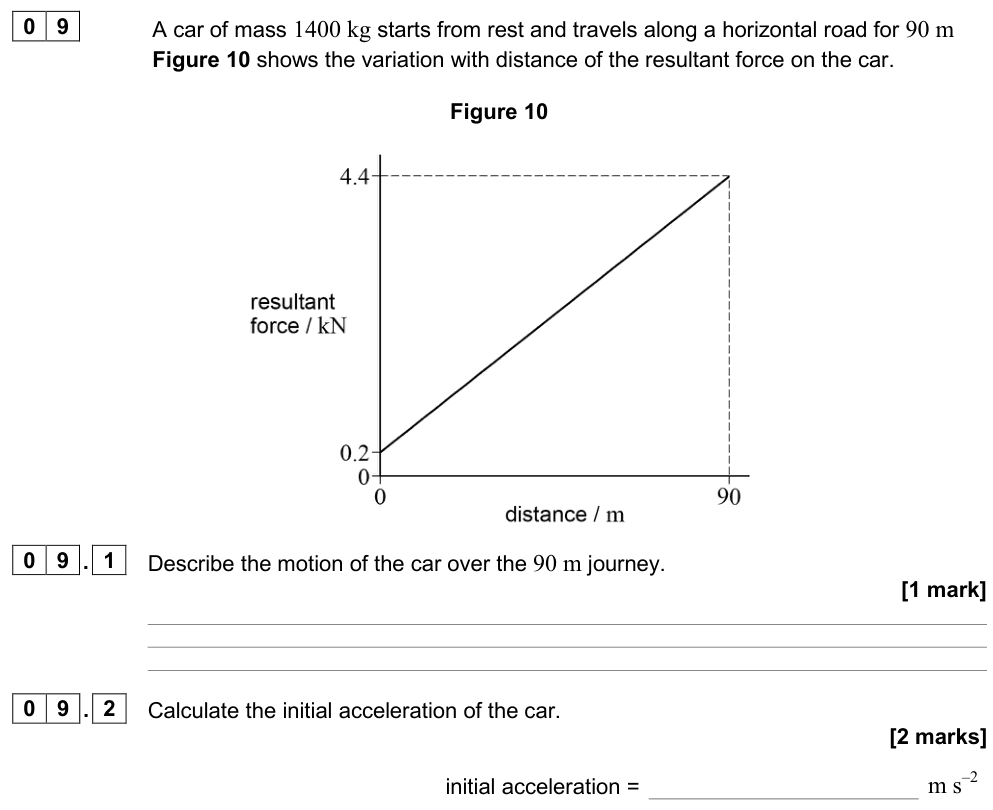
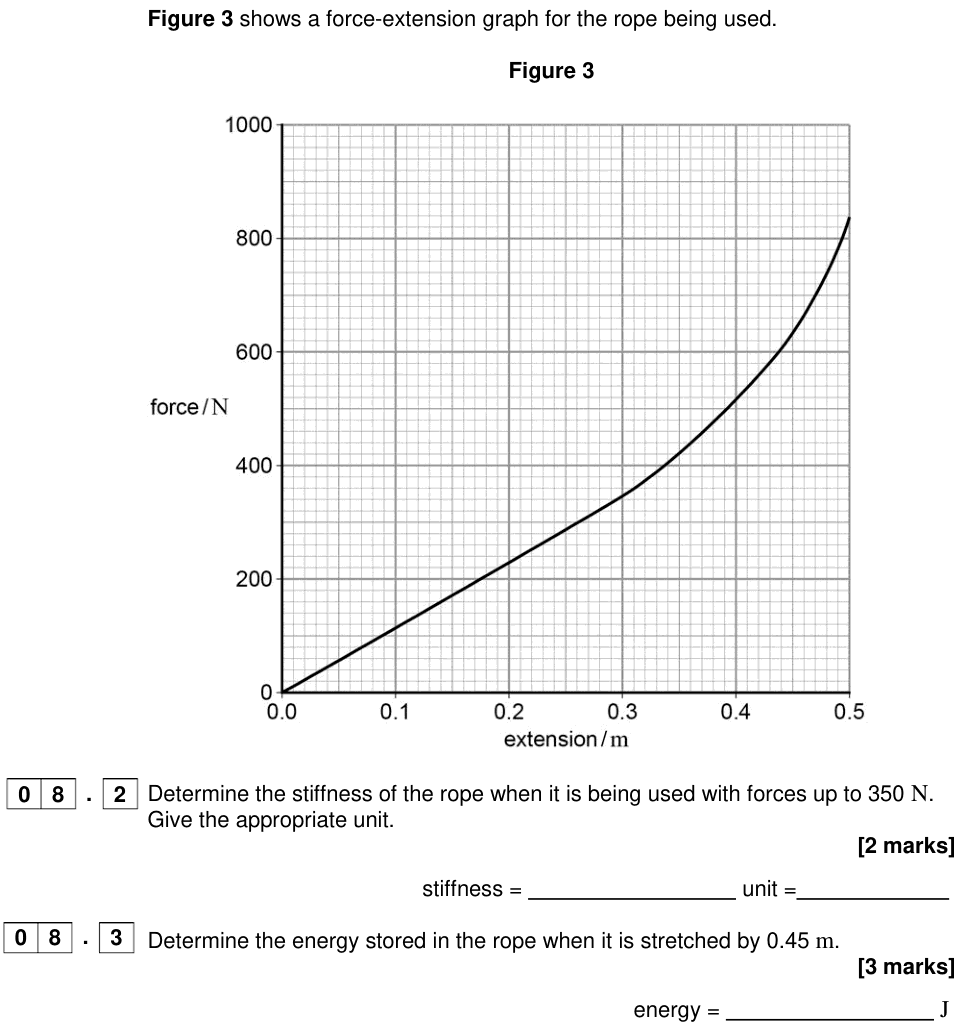
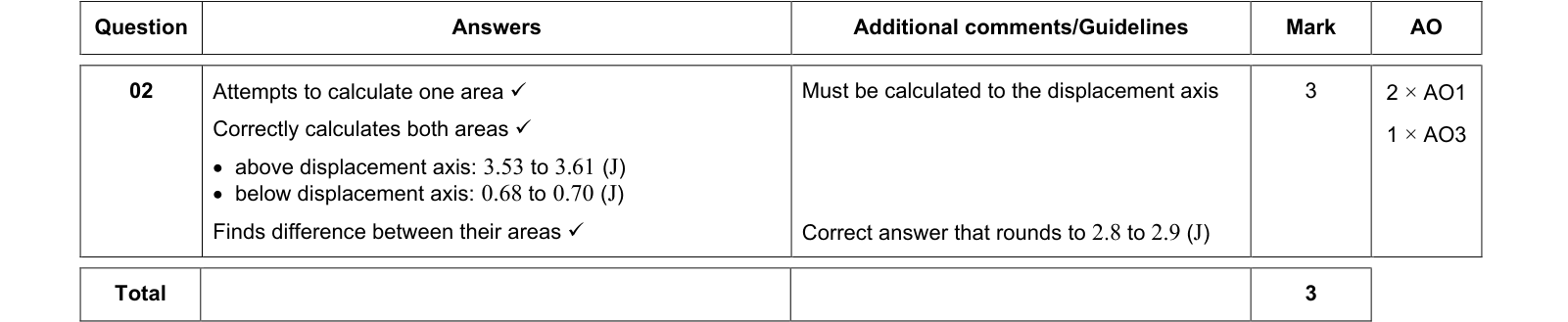
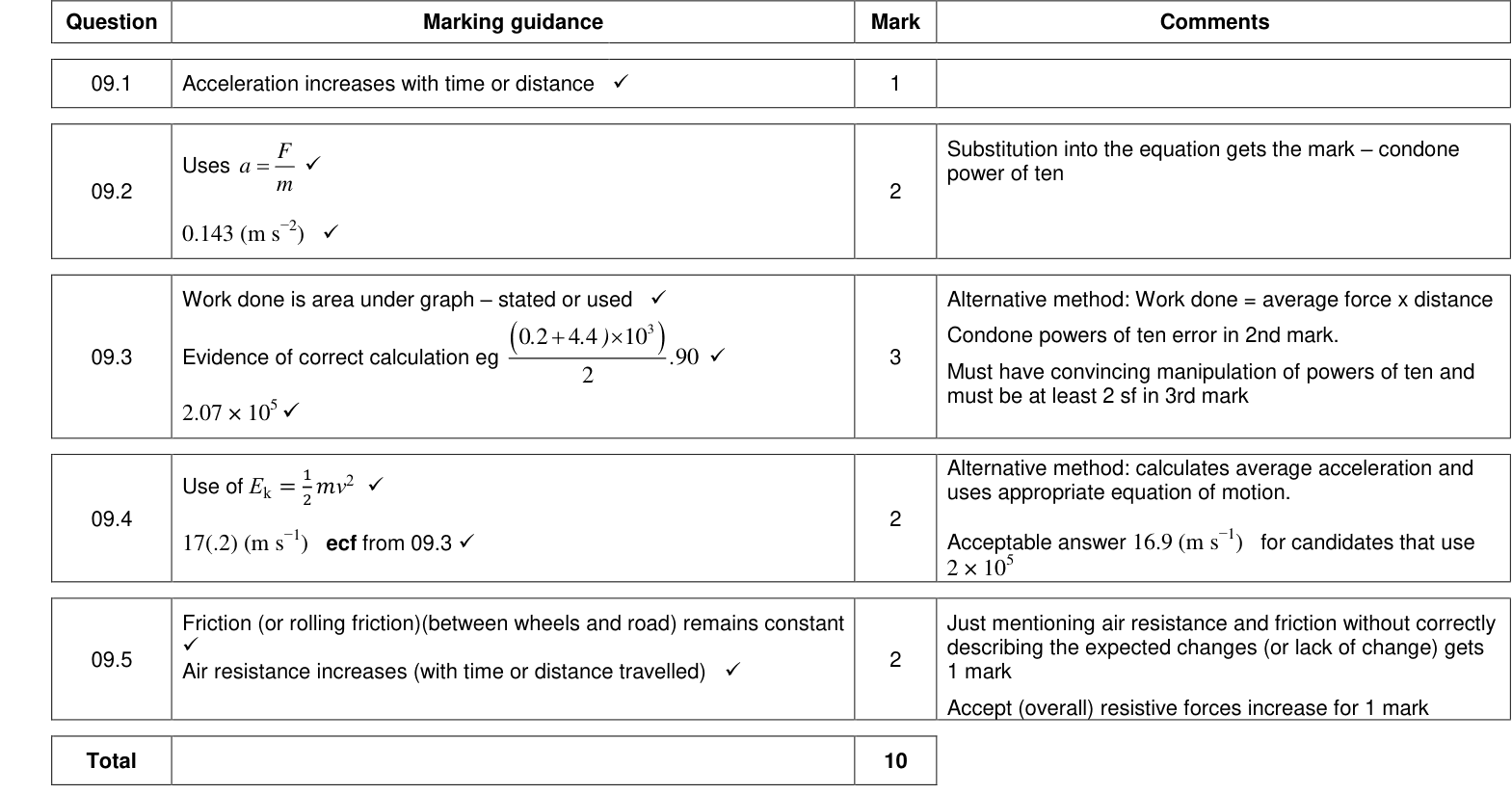
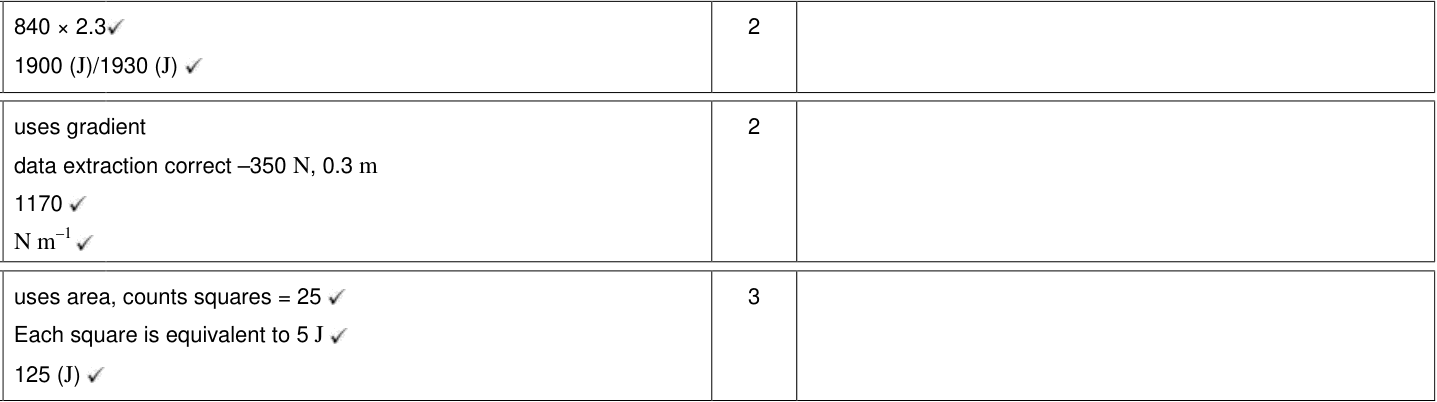
The area under a force–displacement graph equals the work done.
This is especially useful when the force varies, e.g. stretching a spring (a triangle: $W = \tfrac12F\Delta L$) or a car whose driving force changes. For curved graphs, count squares.
Power
Power
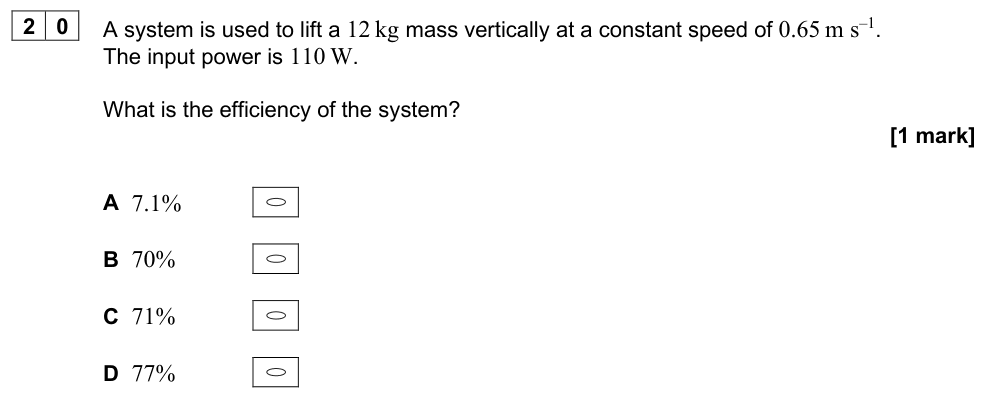
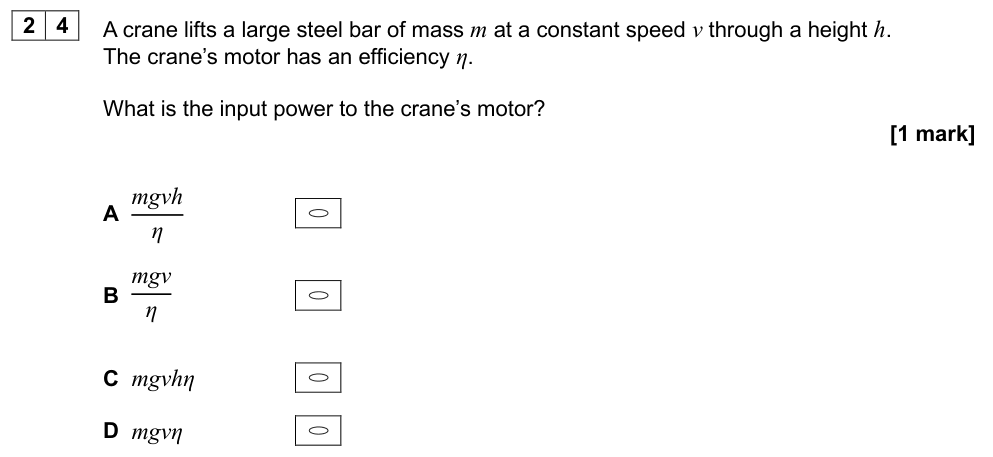
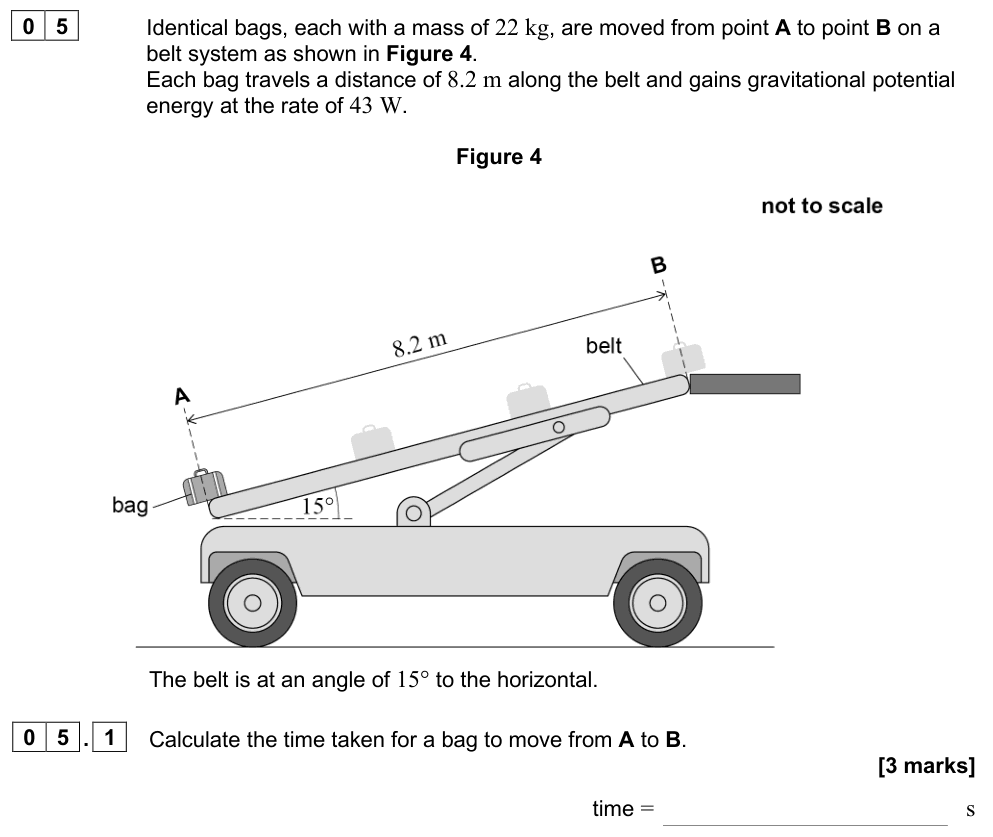
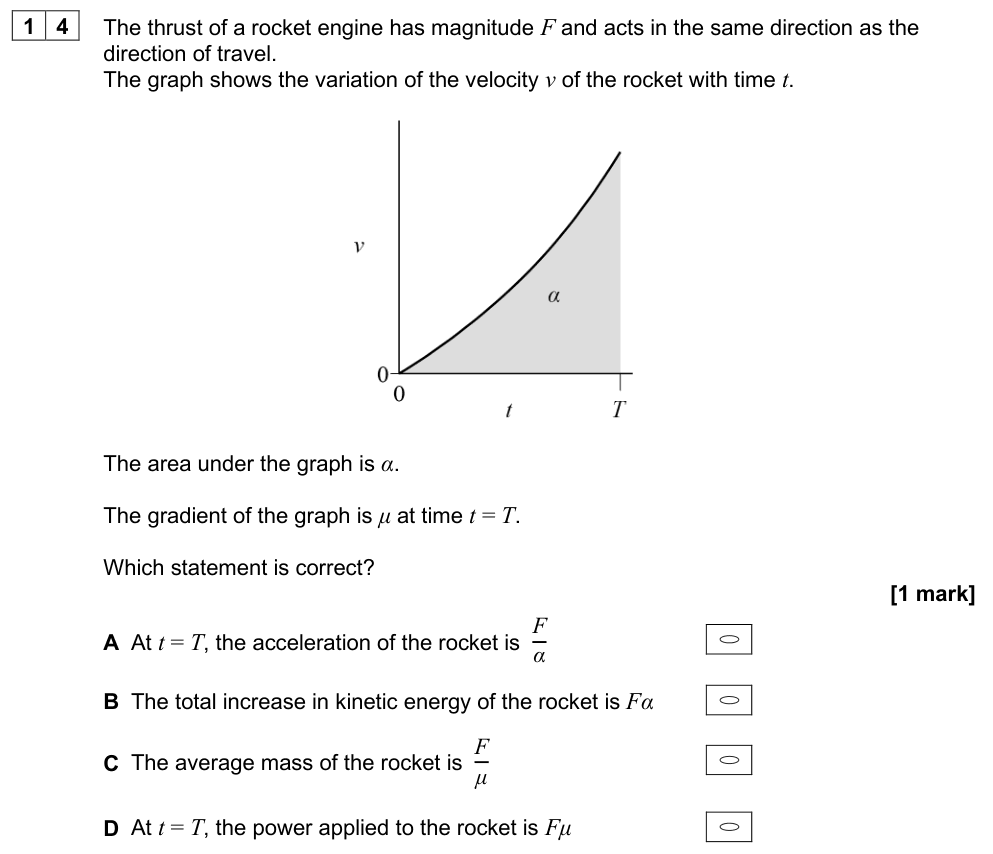
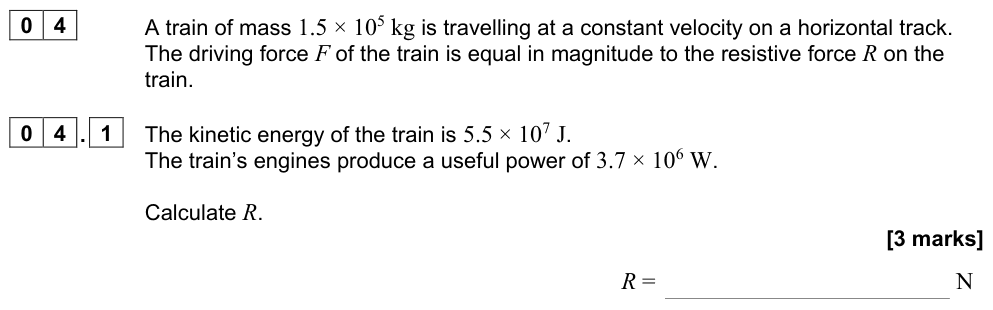
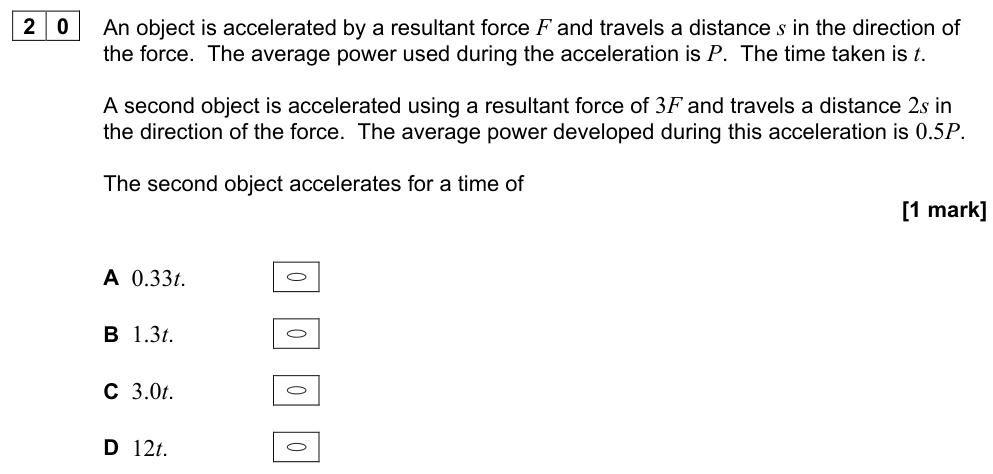
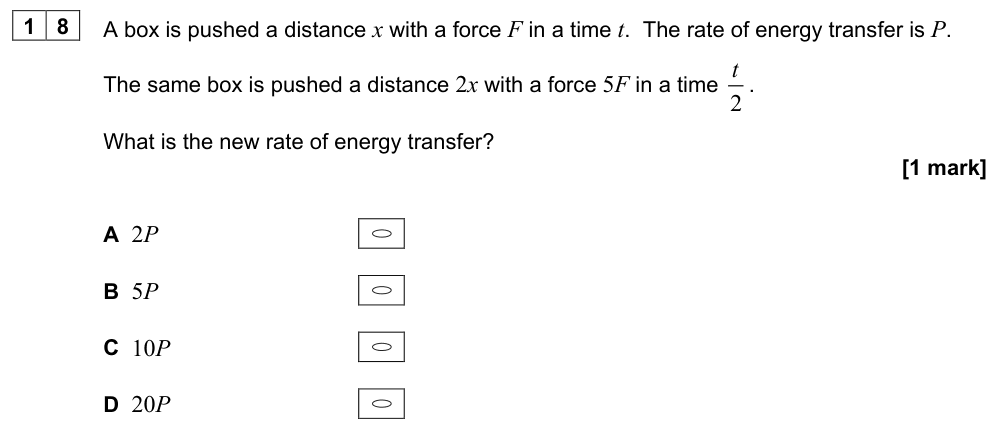
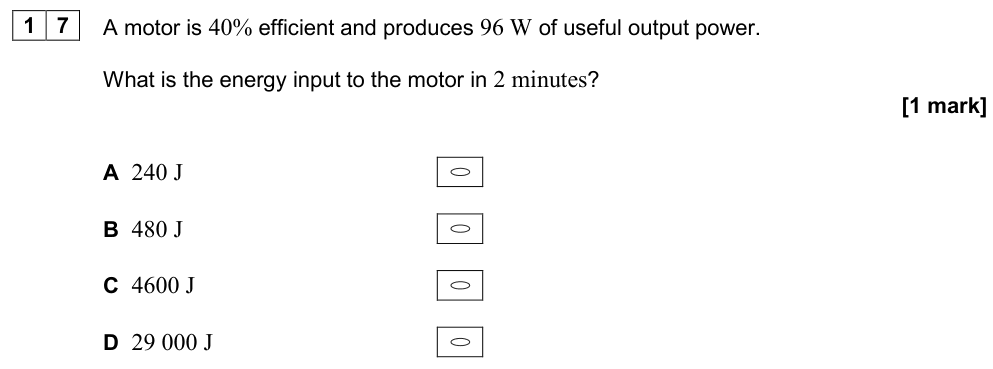
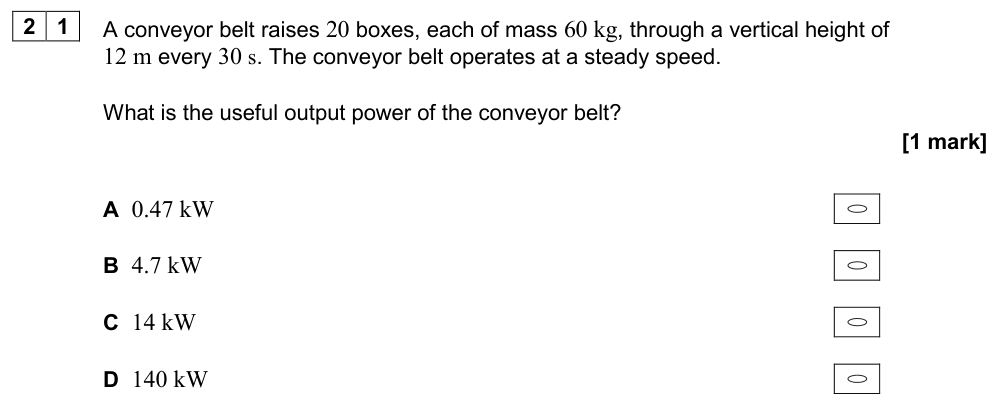
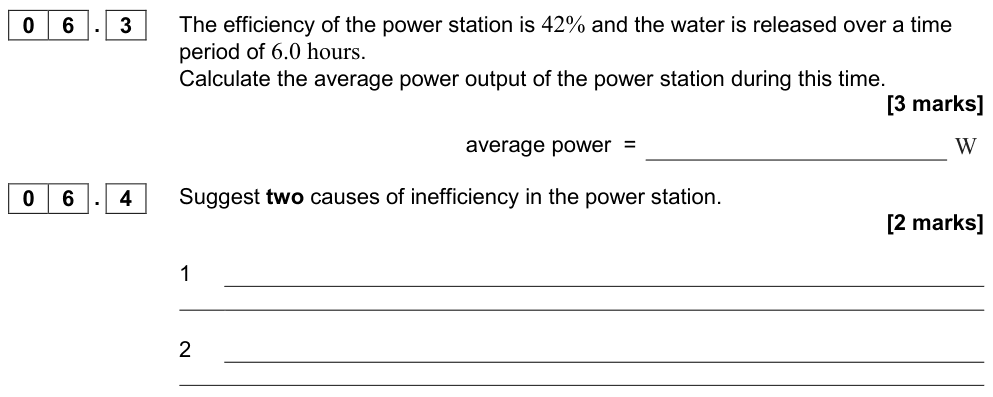
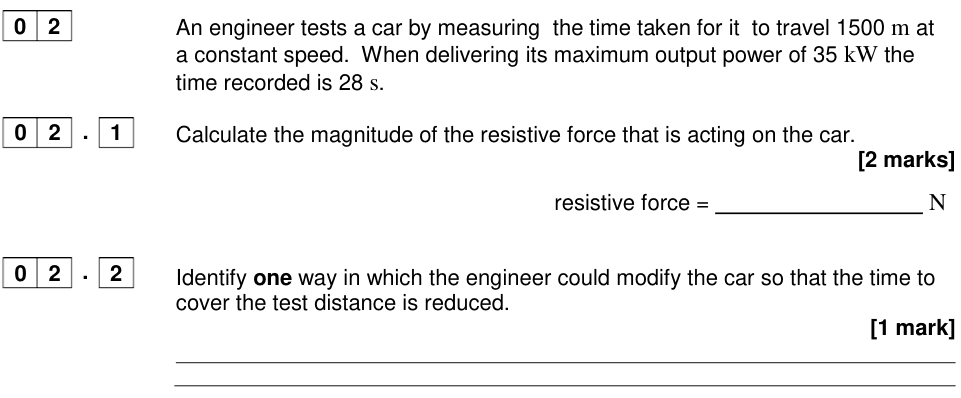
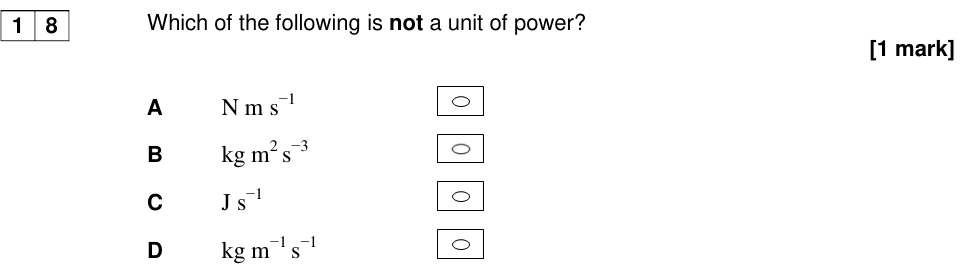
Power is the rate of doing work (the rate of energy transfer):
$$P = \frac{\Delta W}{\Delta t} \qquad \text{unit: watt (W)};\ 1\ \text{W} = 1\ \text{J s}^{-1}$$
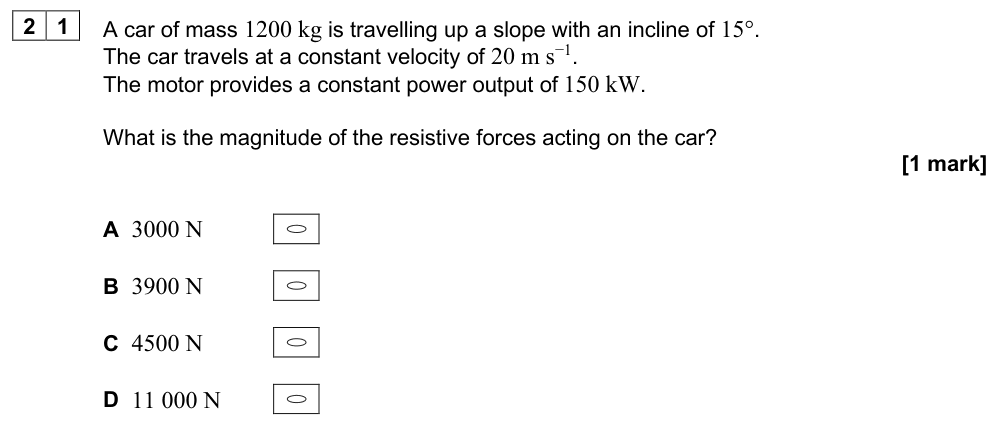
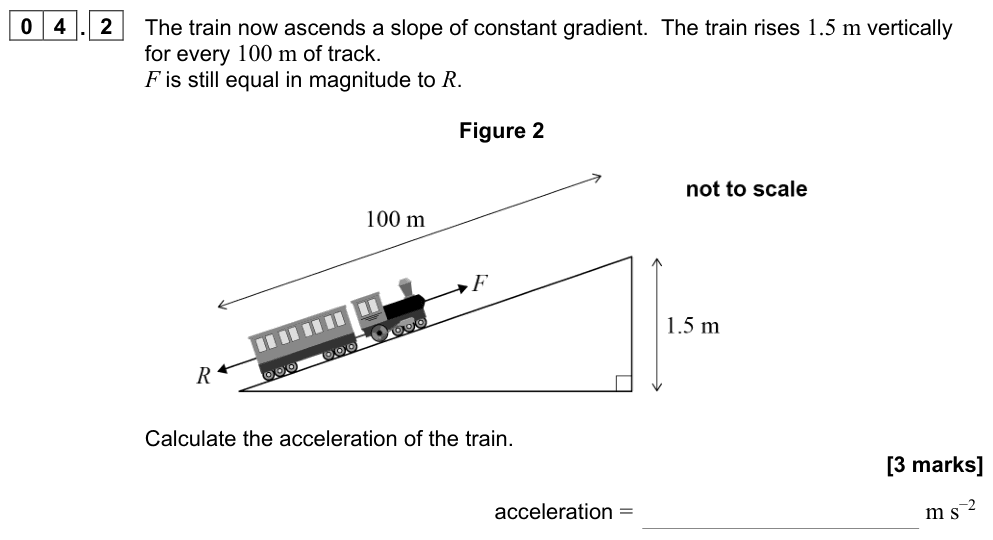
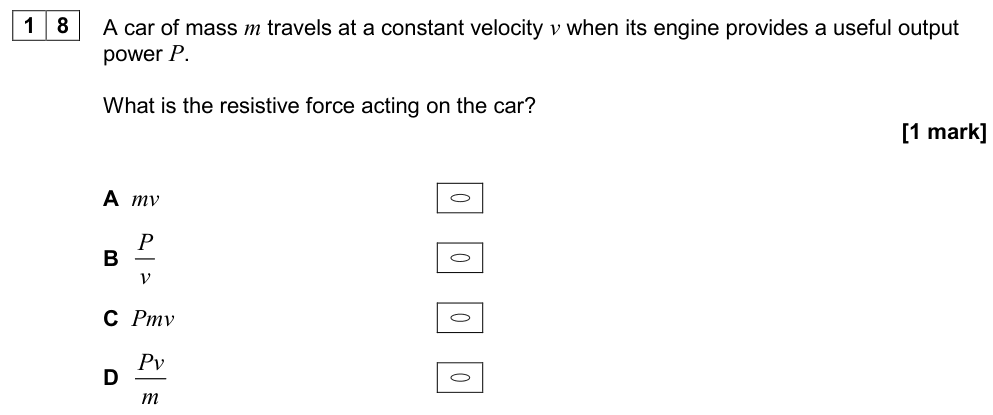
For an object moving at constant velocity $v$ against a resistive force, the driving force $F$ does work at a rate:
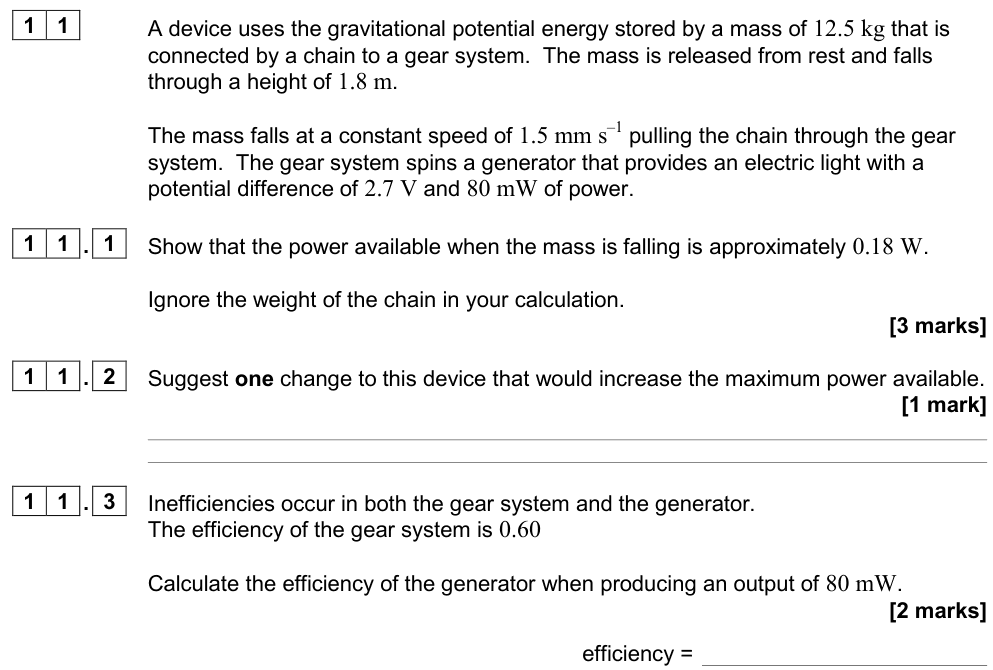
$$P = Fv$$
Derivation: $P = \dfrac{\Delta W}{\Delta t} = \dfrac{F\Delta s}{\Delta t} = Fv$.
Worked example: car at top speed
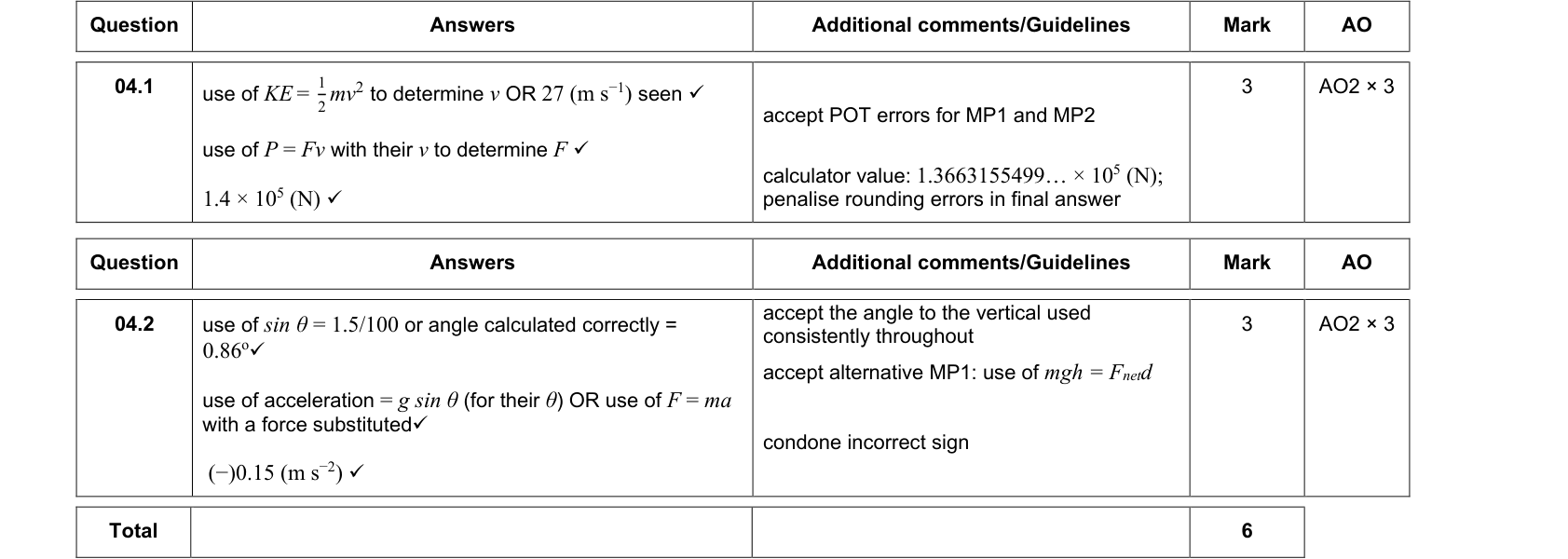
A car's engine produces a useful power output of 45 kW. At its top speed the total resistive force is 1500 N. At top speed the driving force equals the resistive force, so $v = \dfrac{P}{F} = \dfrac{45\,000}{1500} = 30\ \text{m s}^{-1}$.
Efficiency
Efficiency
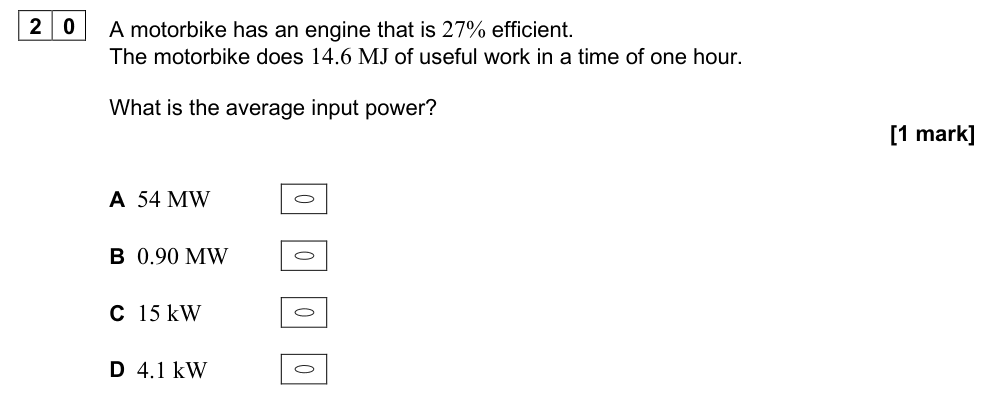
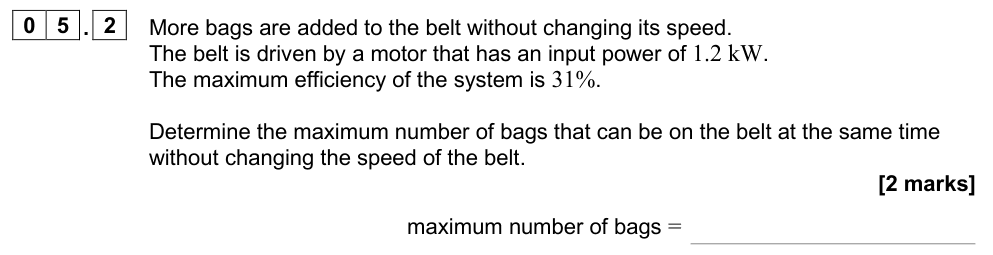
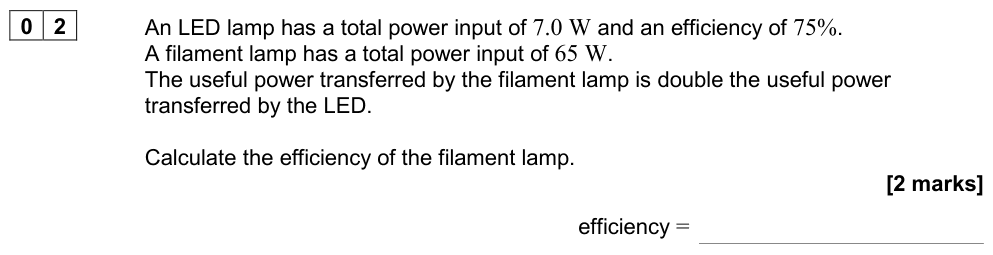
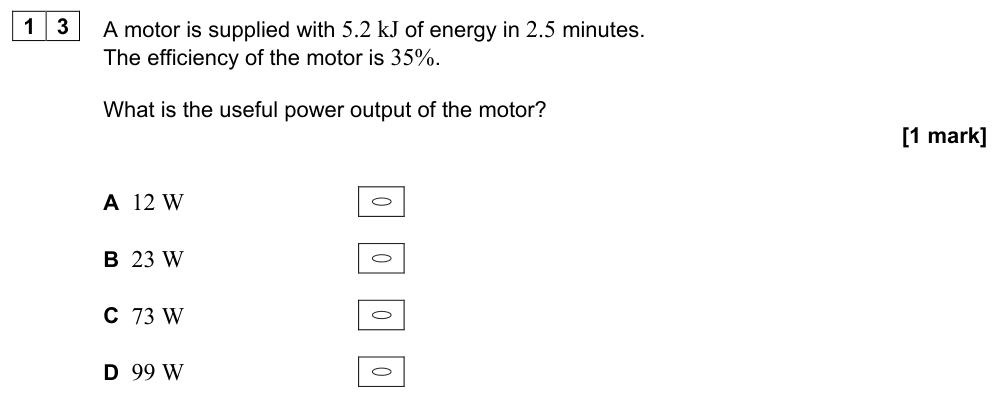
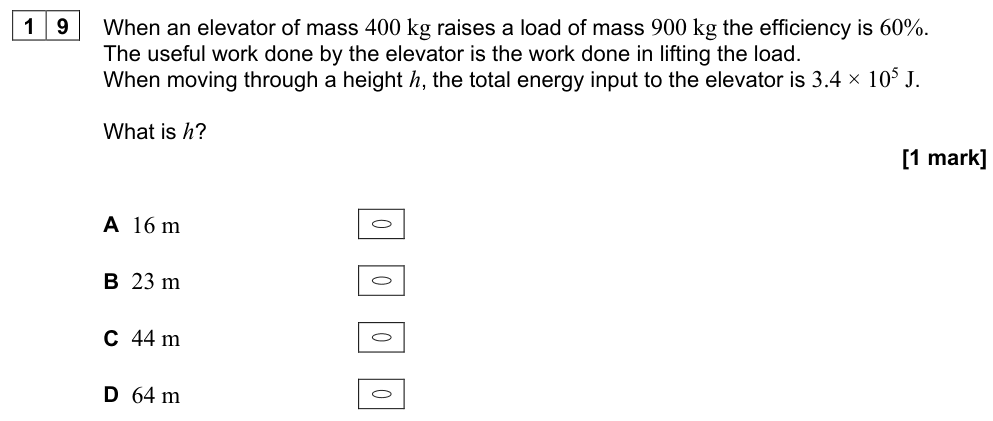
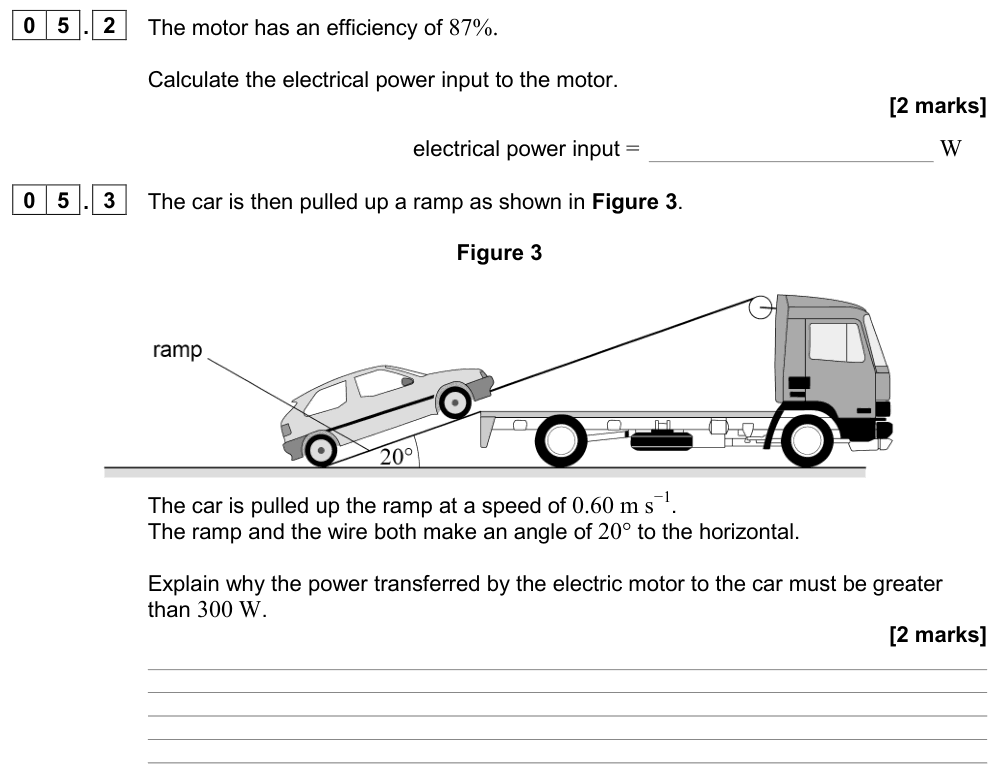
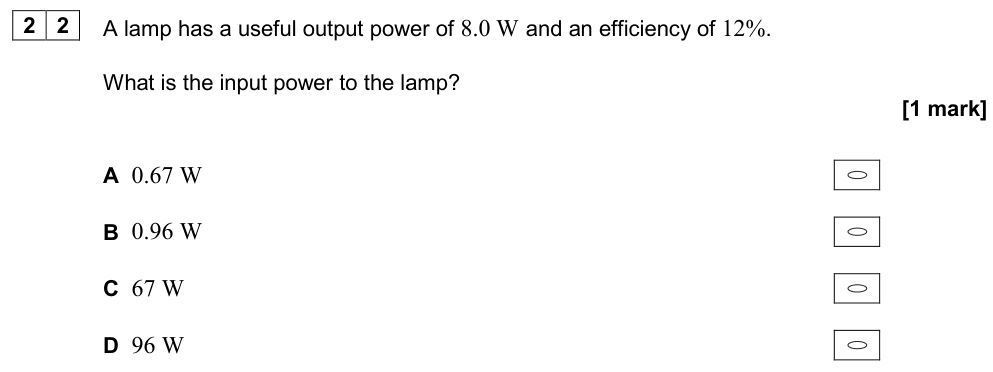
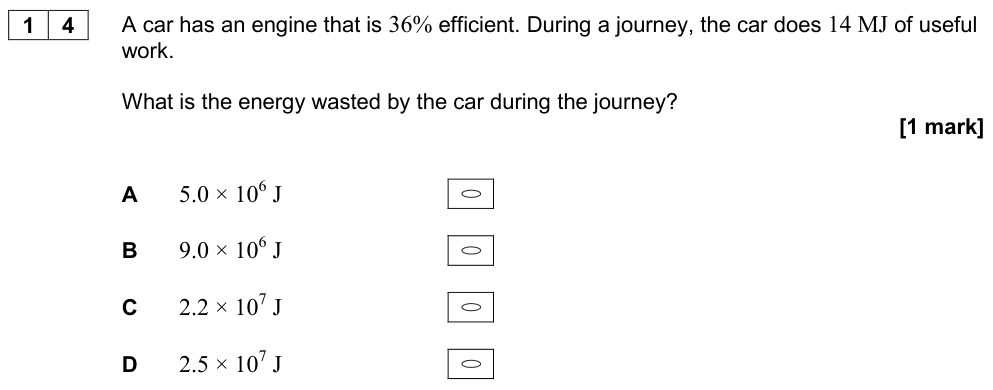
$$\text{efficiency} = \frac{\text{useful output power}}{\text{input power}} = \frac{\text{useful energy output}}{\text{total energy input}}$$
Efficiency can be given as a decimal (0 to 1) or a percentage (× 100%). It can never be more than 1 (100%).
The energy that is not useful is wasted, usually as thermal energy (because of friction or electrical resistance) and sound.
Worked example: electric motor
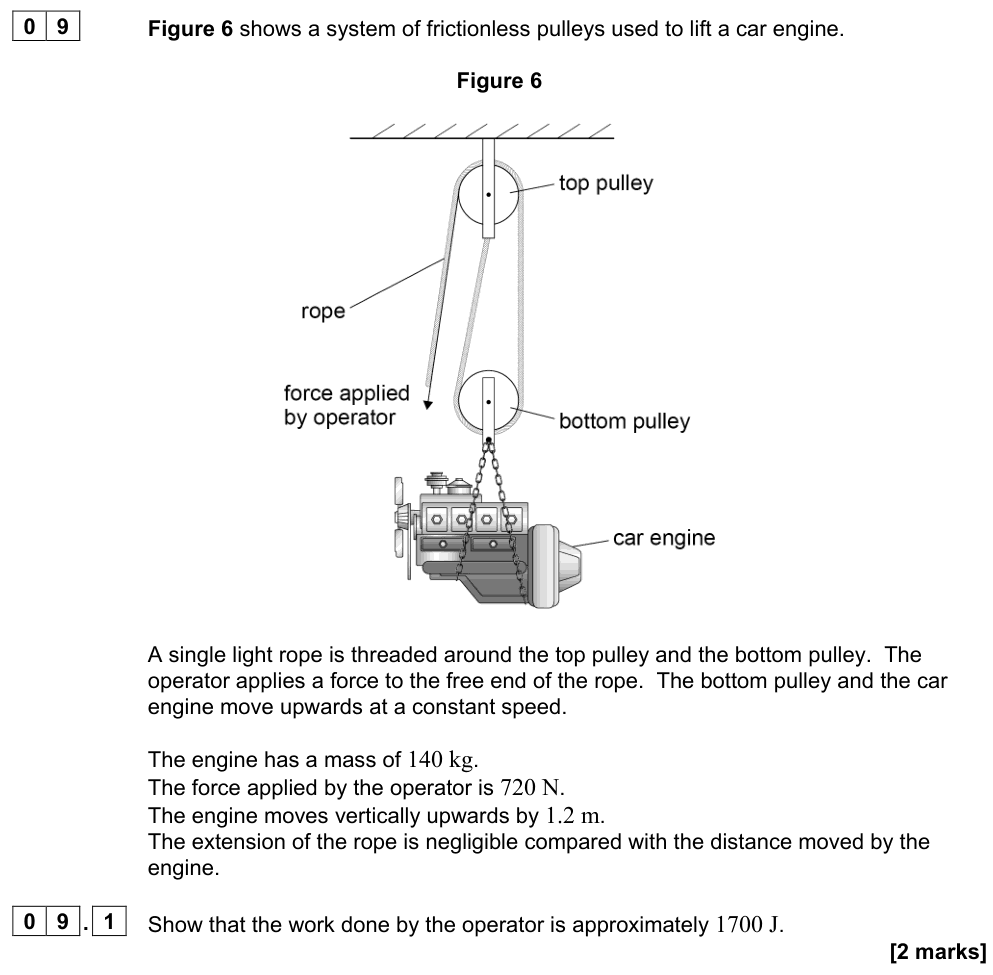
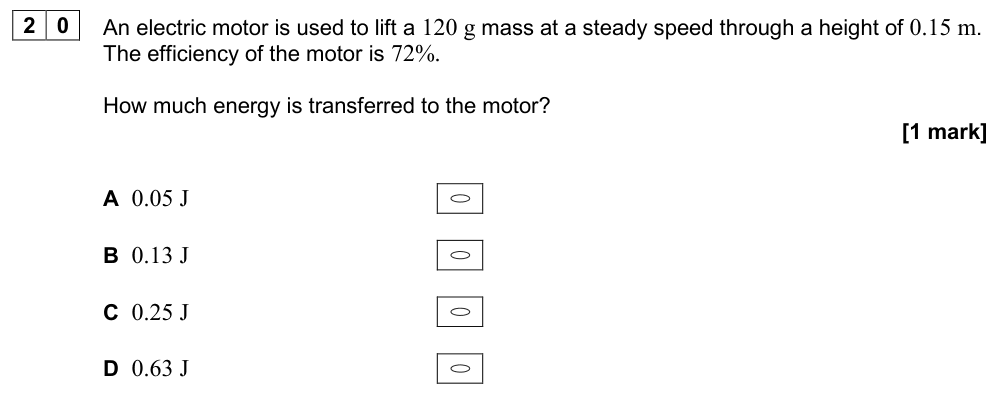
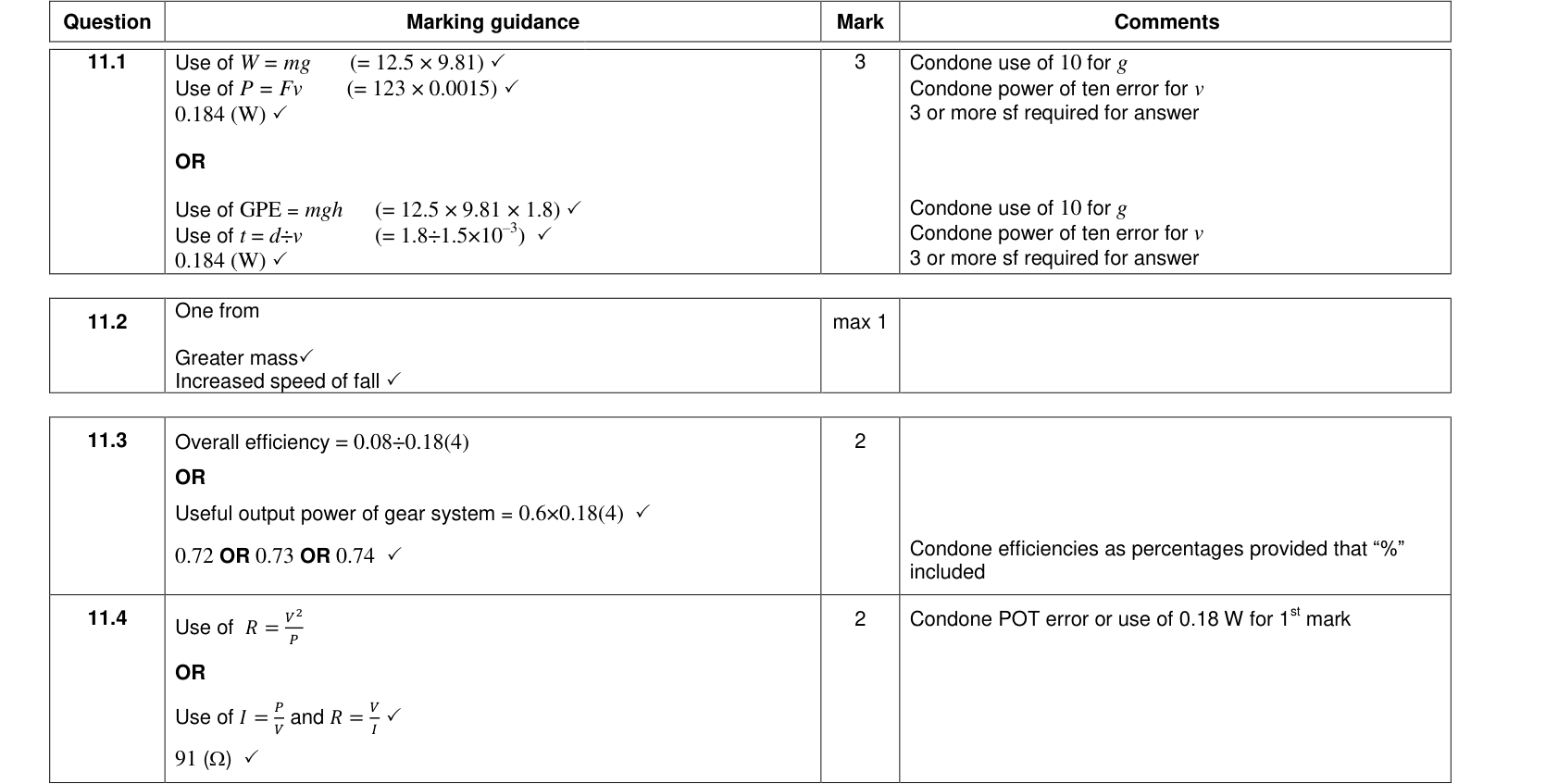
A motor lifts a 25 kg load through 4.0 m in 8.0 s. The input power is 200 W.
Useful power $= \dfrac{mgh}{t} = \dfrac{25 \times 9.81 \times 4.0}{8.0} = 123\ \text{W}$.
Efficiency $= \dfrac{123}{200} = 0.61 = 61\%$.
Kinetic and gravitational potential energy
Energy equations
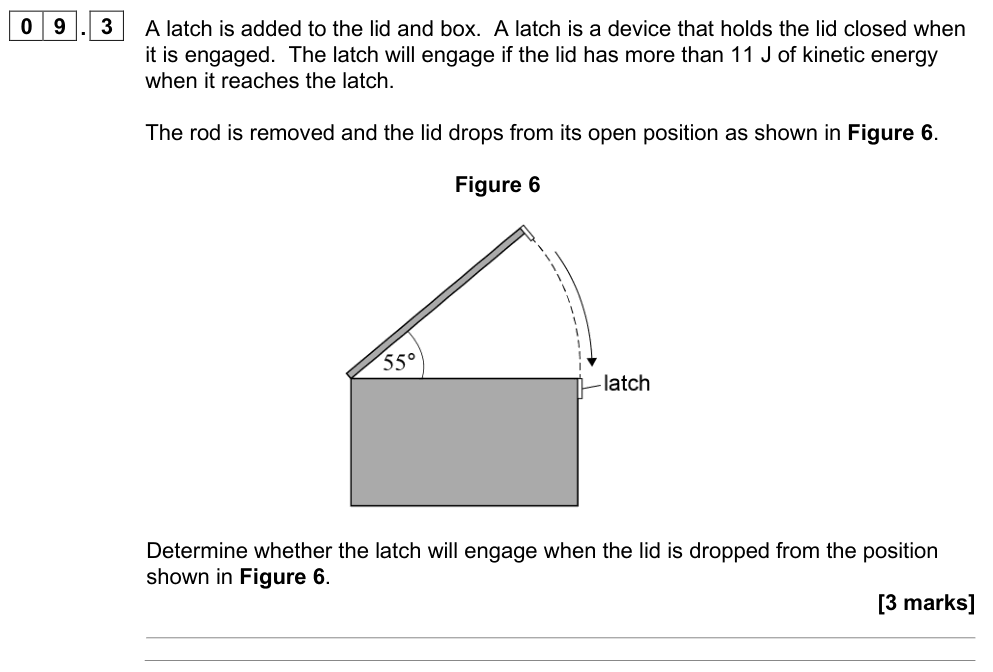
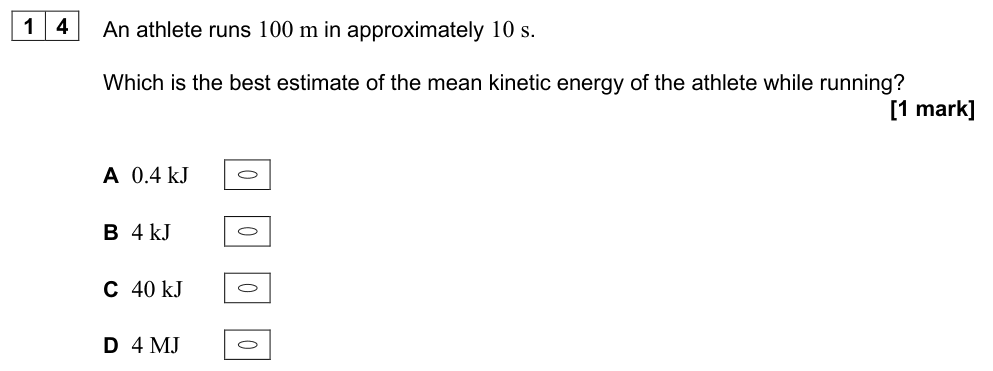
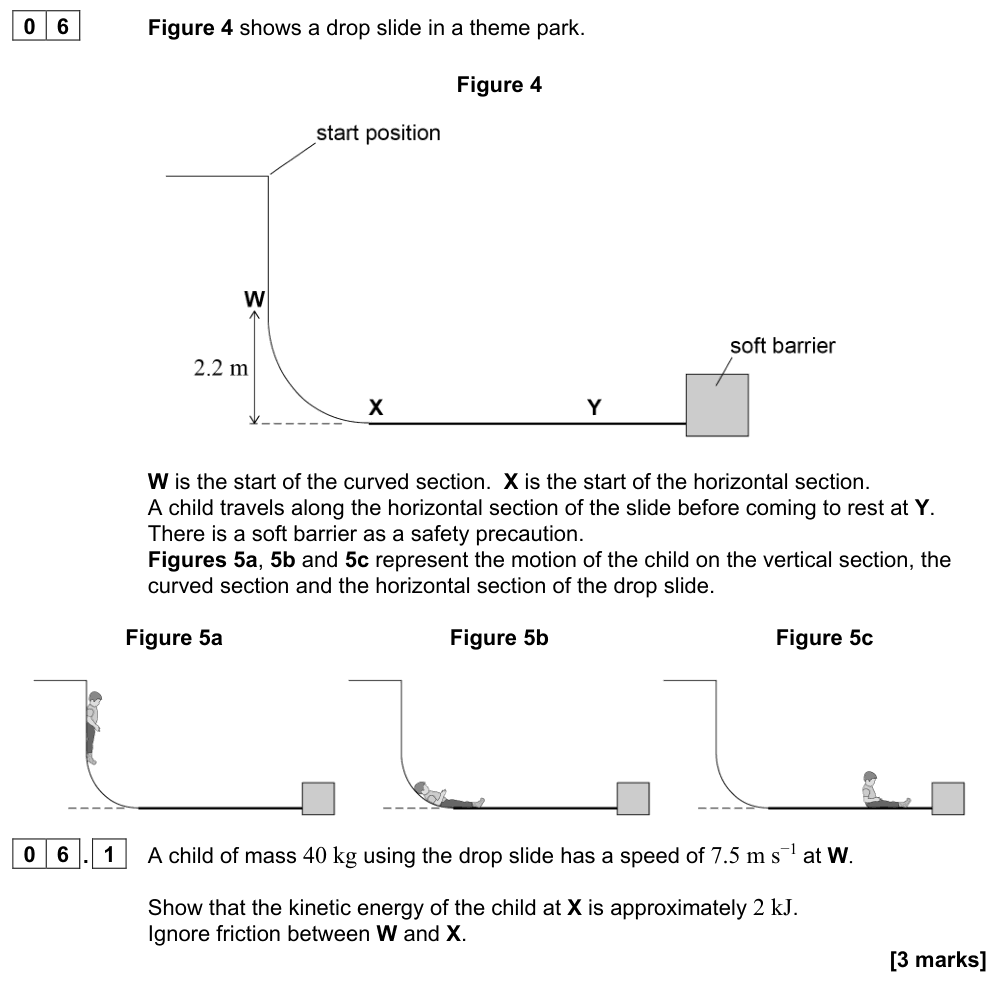
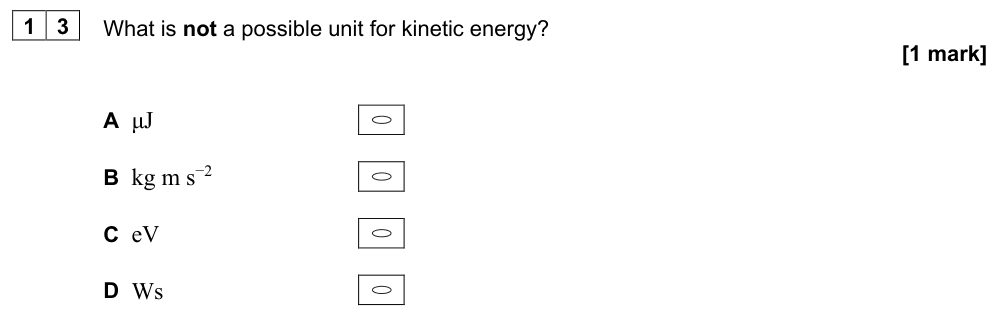
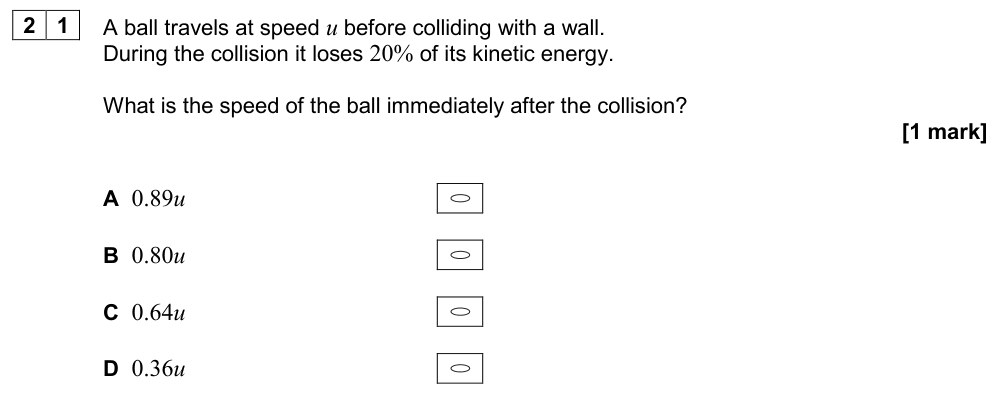
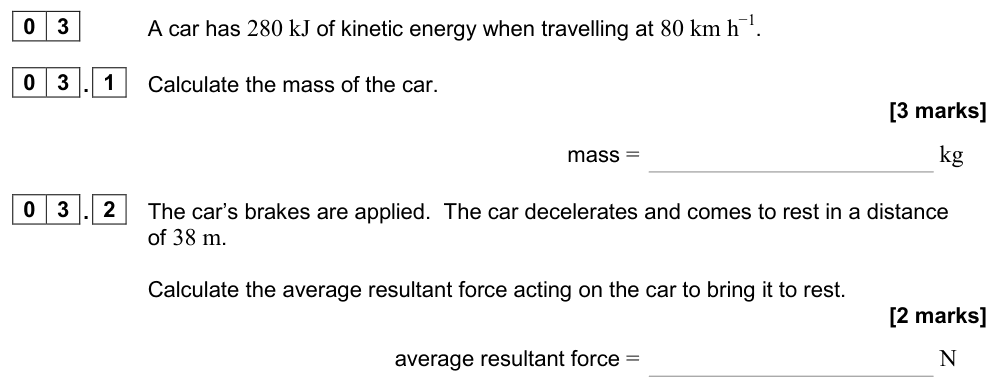
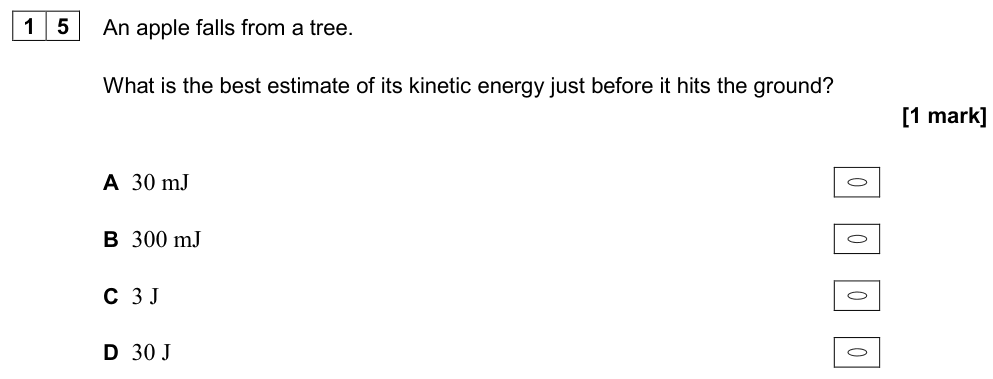
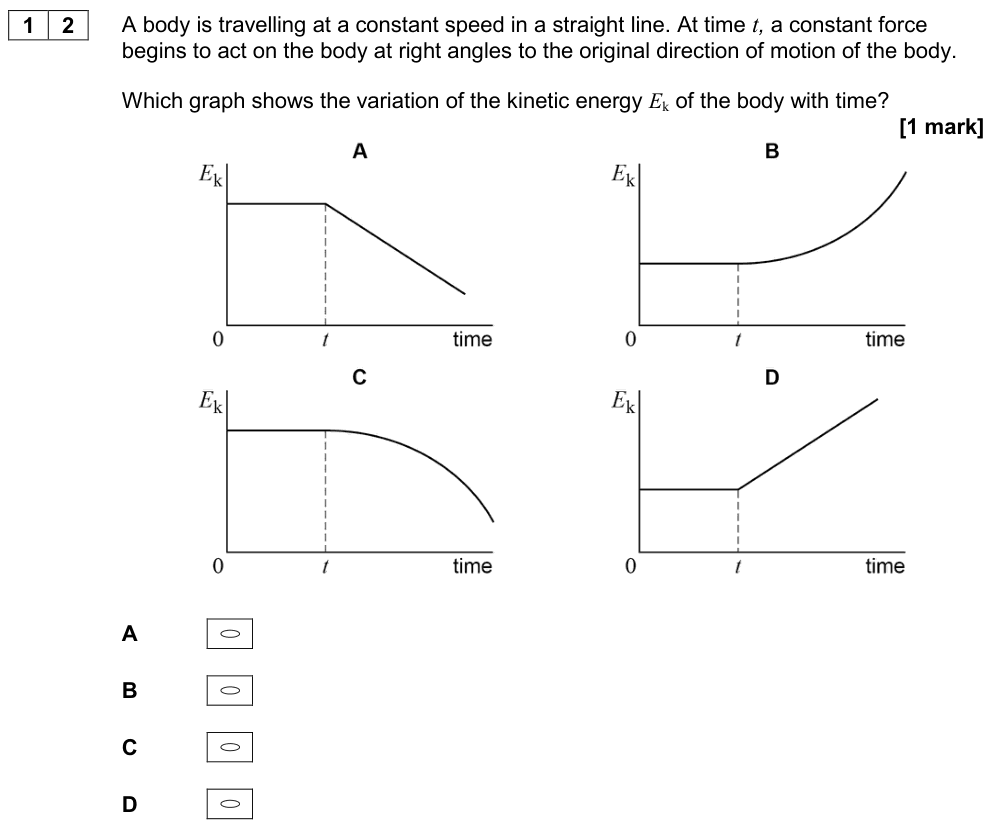
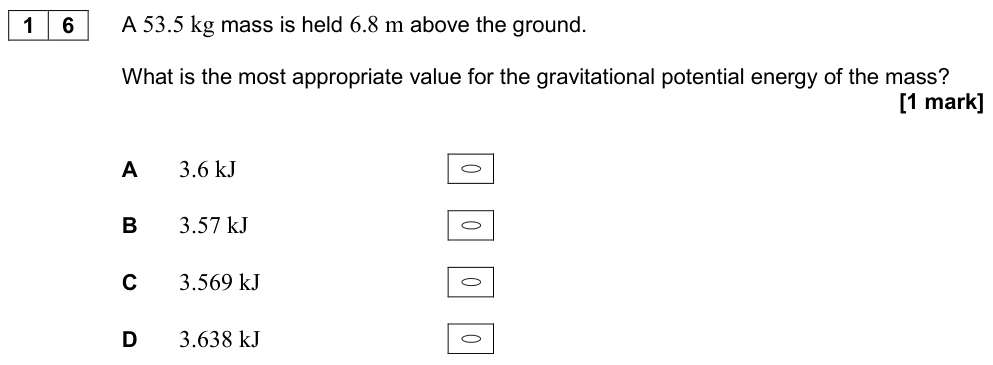
Kinetic energy: $E_k = \tfrac12mv^2$
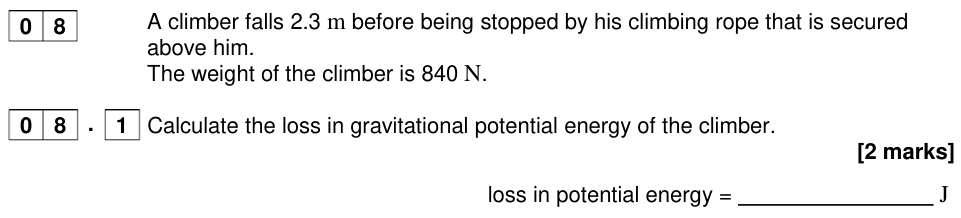
Change in gravitational potential energy (near the Earth's surface, uniform field): $\Delta E_p = mg\Delta h$
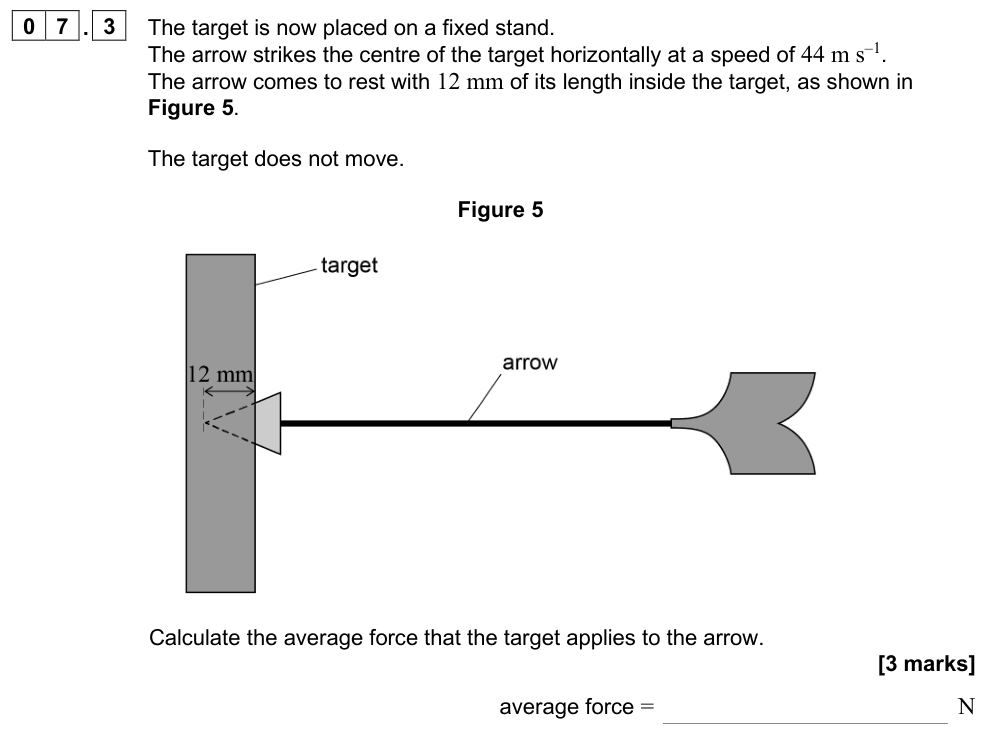
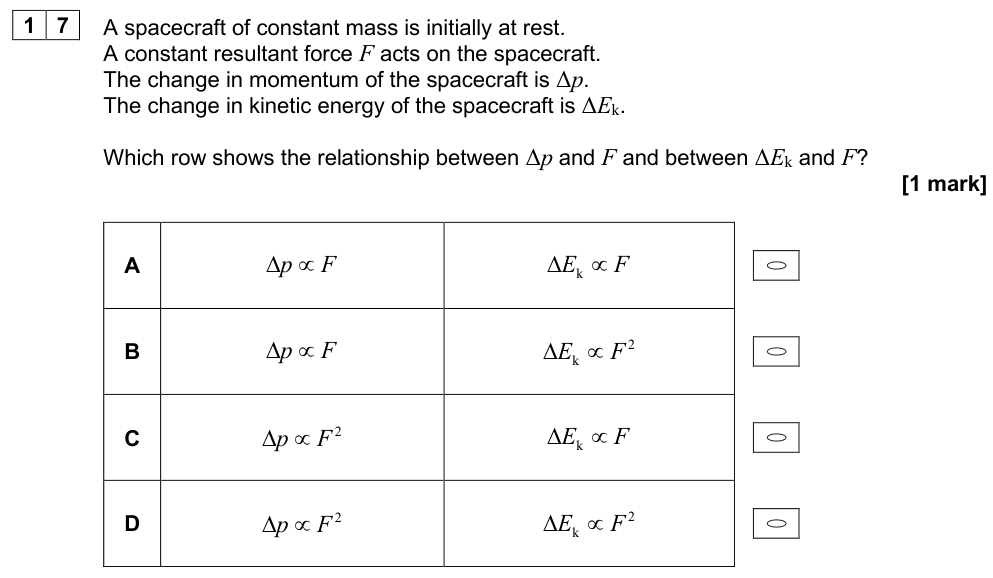
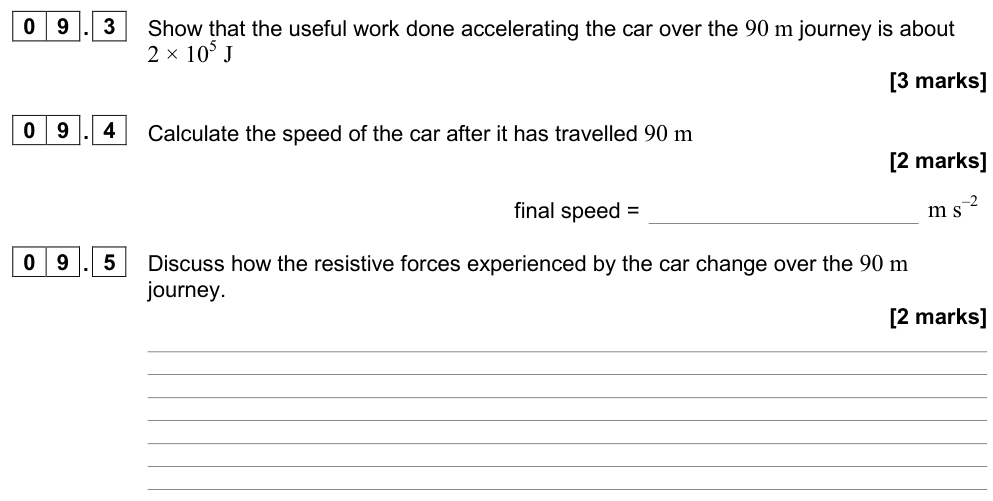
Deriving $E_k = \tfrac12mv^2$: a constant resultant force $F$ accelerates a mass $m$ from rest through a distance $s$. Work done $= Fs = mas$, and $v^2 = 2as$ so $as = \tfrac12v^2$. Therefore $W = \tfrac12mv^2$.
Deriving $\Delta E_p = mg\Delta h$: to lift a mass at constant speed you must apply a force equal to its weight $mg$ through a height $\Delta h$, so the work done is $mg\Delta h$.
Conservation of energy
Principle of conservation of energy
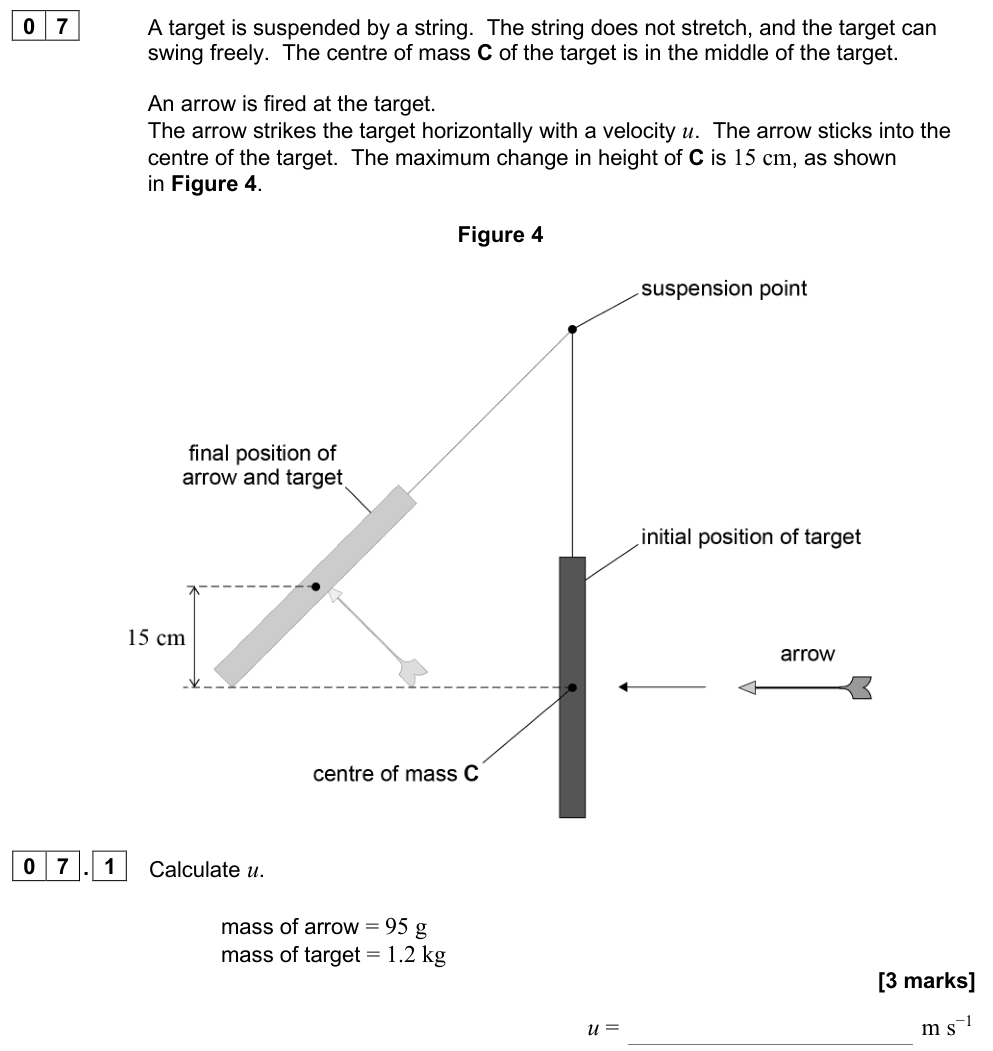
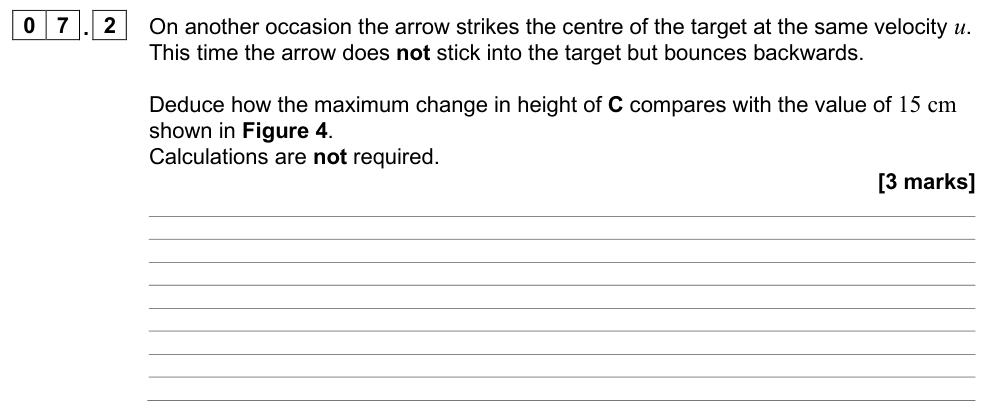
Energy cannot be created or destroyed. It can only be transferred from one store to another. The total energy of a closed system is constant.
For mechanical problems:
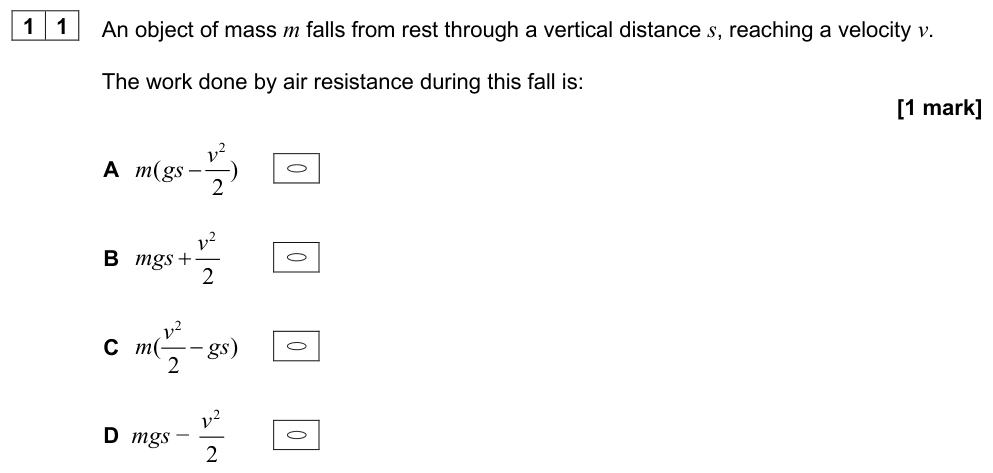
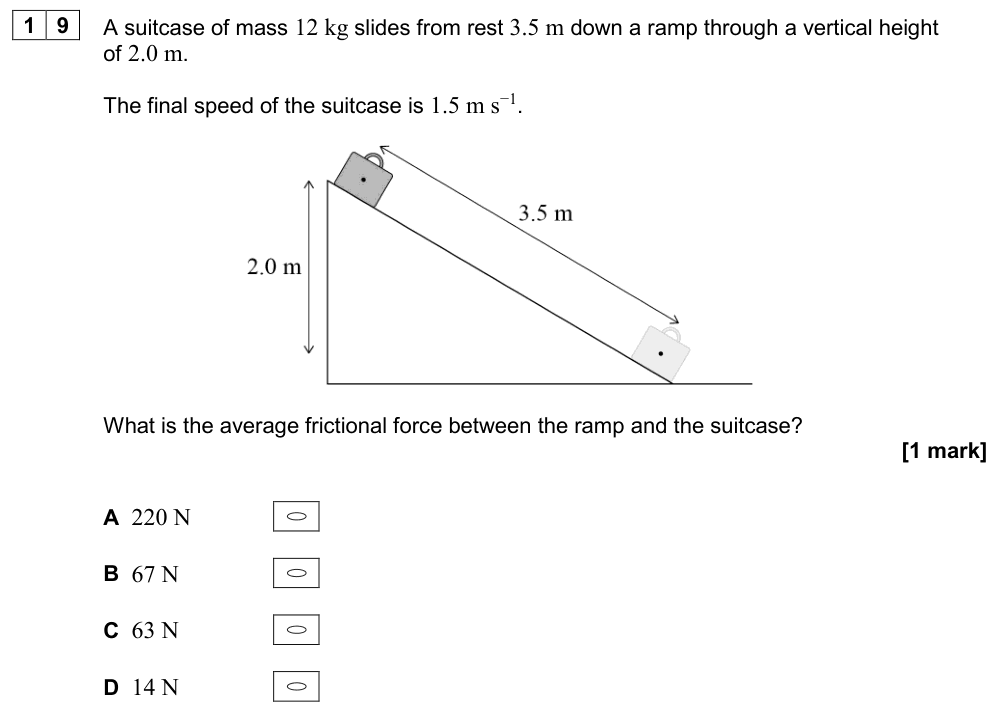
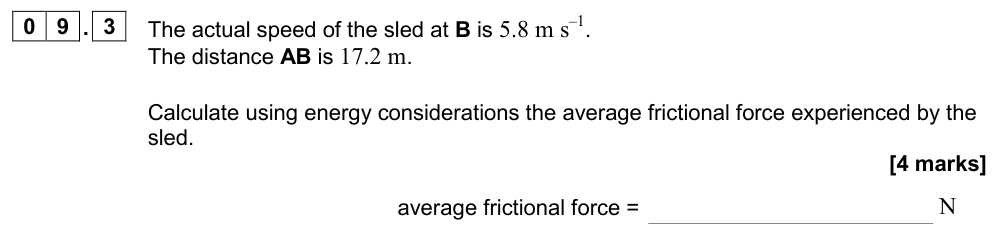
$$\text{energy at start} = \text{energy at end} + \text{work done against resistive forces}$$
No resistive forces
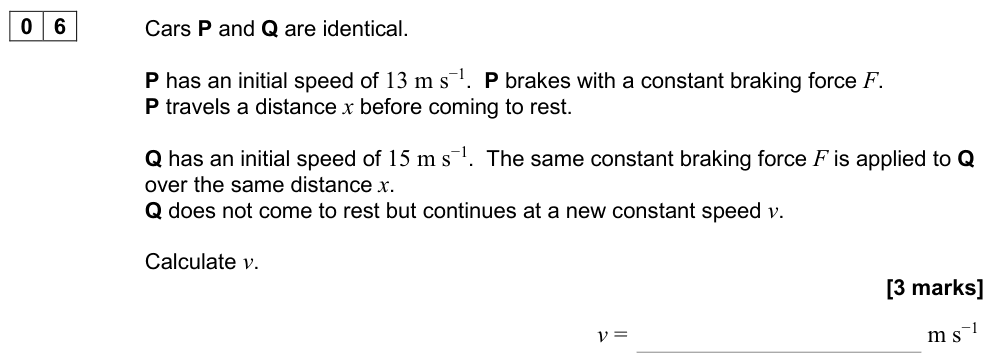
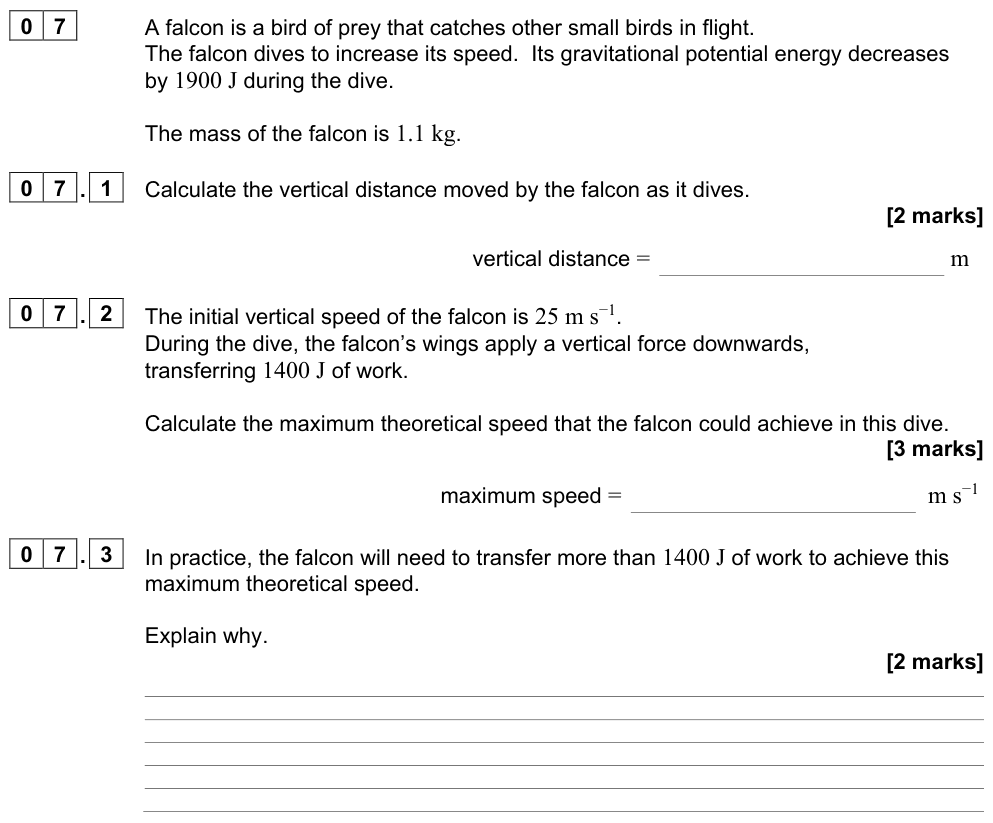
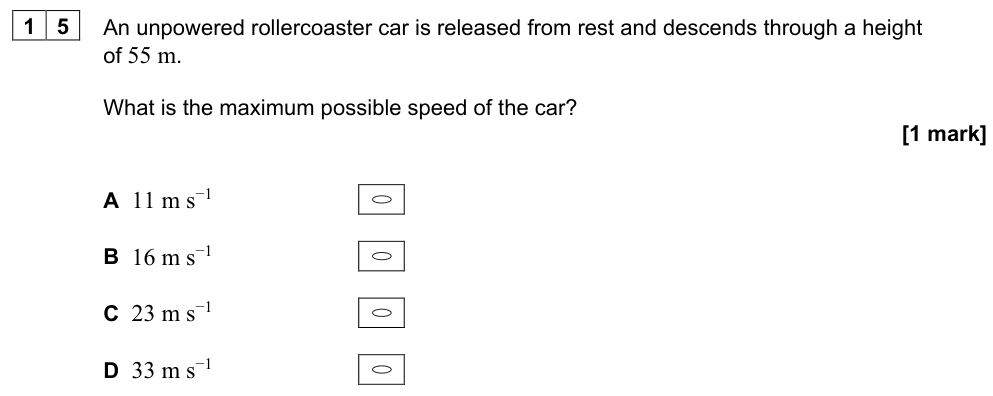
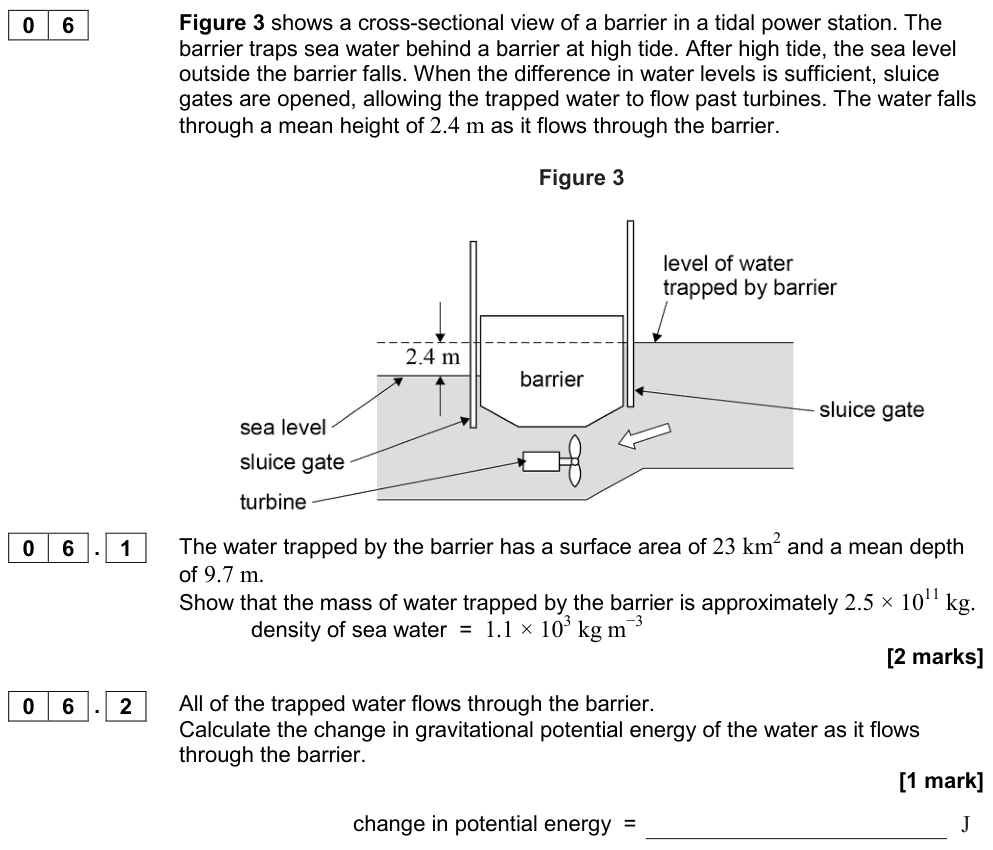
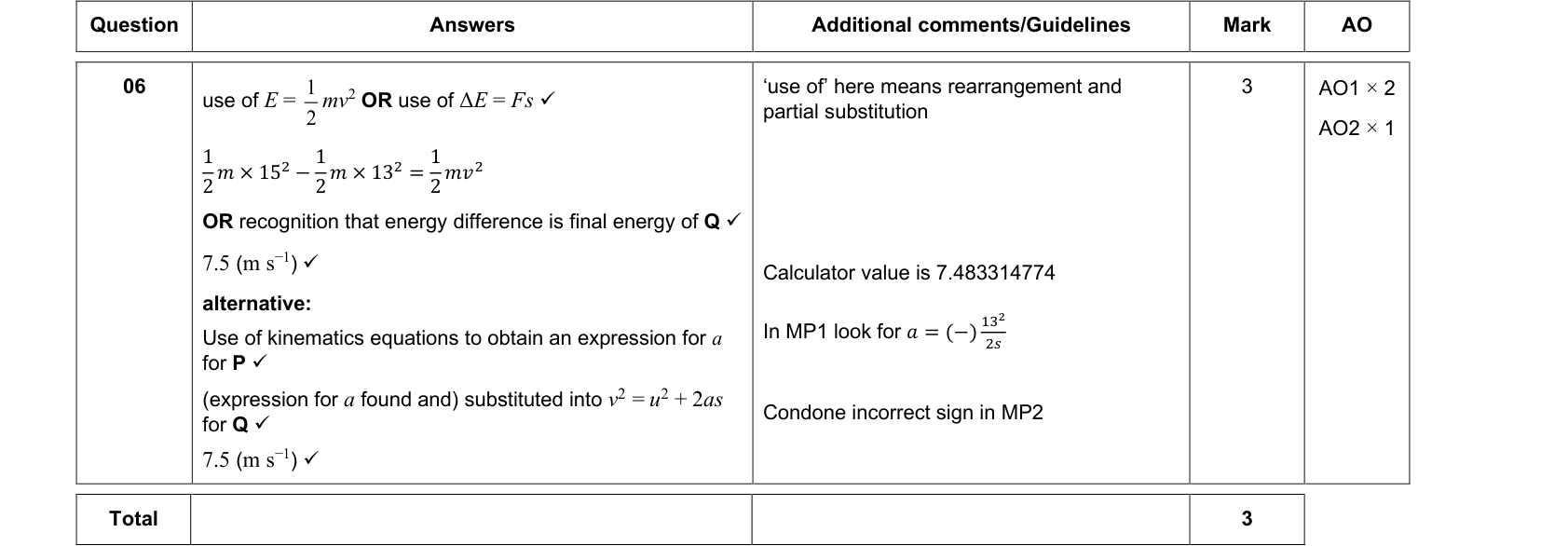
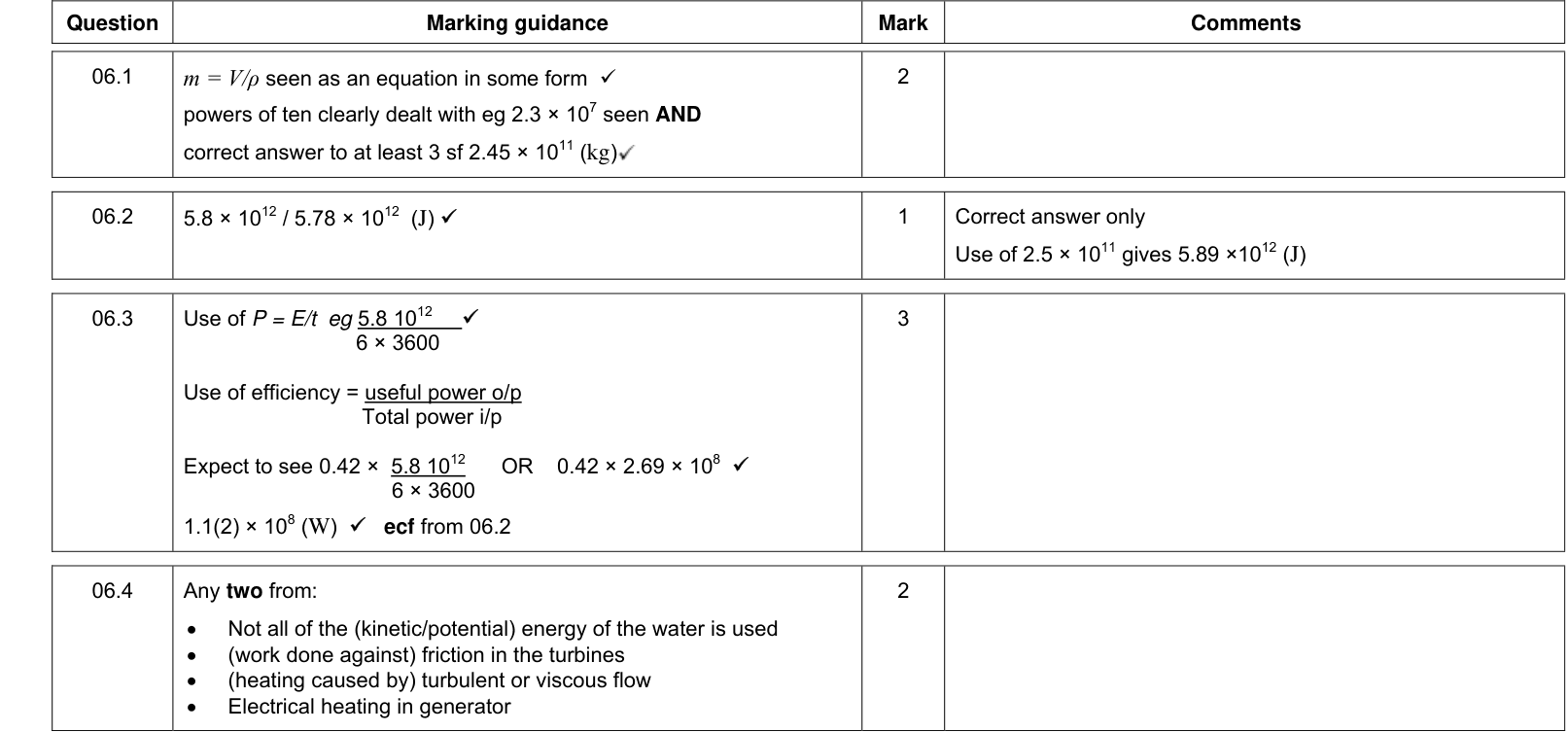
If friction and air resistance are negligible, the loss in $E_p$ equals the gain in $E_k$:
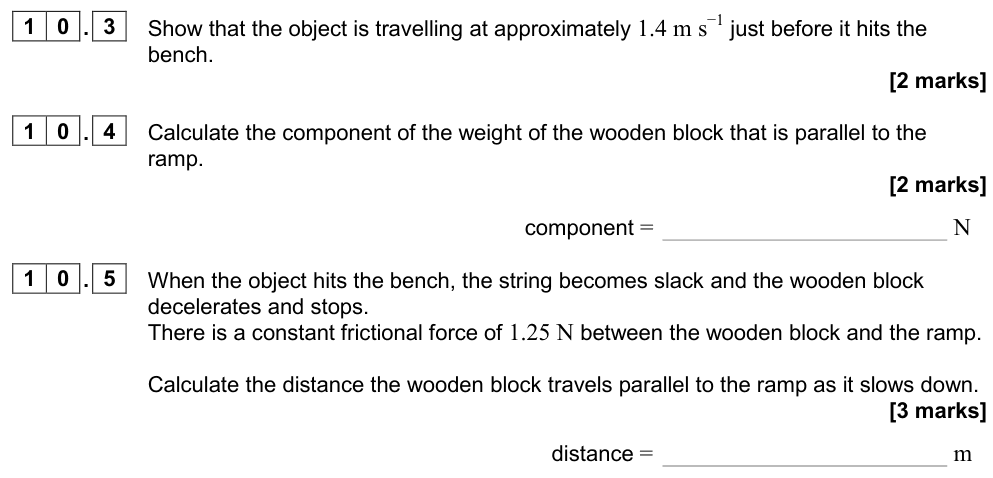
$$mg\Delta h = \tfrac12mv^2 - \tfrac12mu^2 \quad \Rightarrow \quad v^2 = u^2 + 2g\Delta h$$
The mass cancels: in free fall every object gains the same speed for the same drop. For an object starting from rest, $v = \sqrt{2g\Delta h}$.
Worked example: rollercoaster
A rollercoaster car starts from rest at the top of a 32 m drop. Ignoring friction, its speed at the bottom is $v = \sqrt{2 \times 9.81 \times 32} = 25\ \text{m s}^{-1}$. At a later hump 12 m above the bottom: $v^2 = 2 \times 9.81 \times (32 - 12)$, so $v = 20\ \text{m s}^{-1}$.
With resistive forces
Worked example: sledge with friction
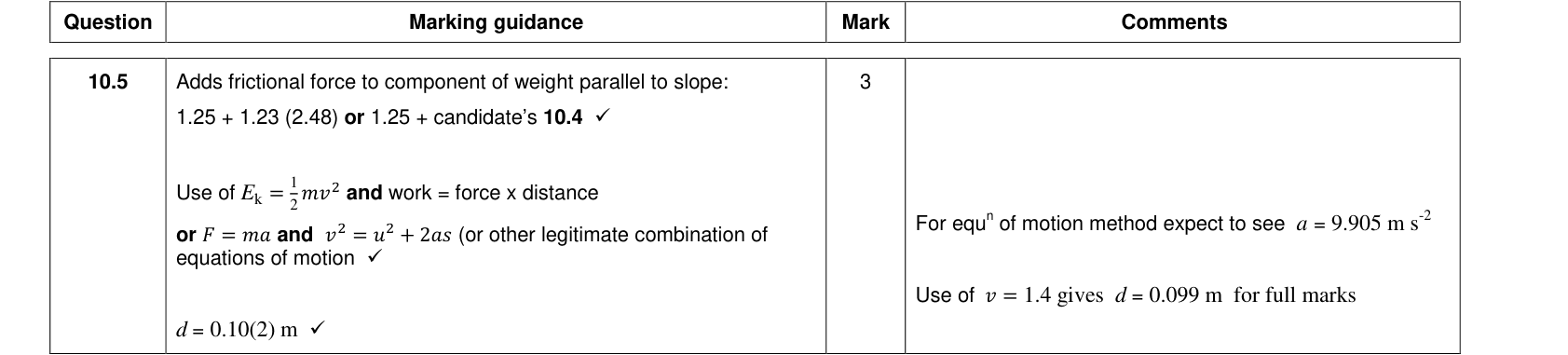
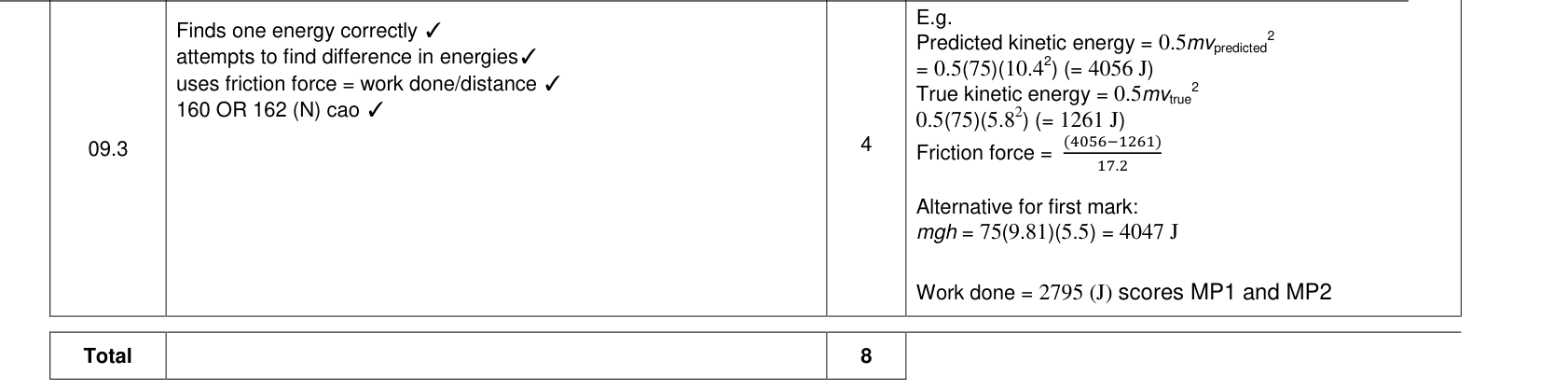
A child and sledge (total mass 40 kg) start from rest and slide 50 m down a slope, descending a vertical height of 8.0 m. The speed at the bottom is $9.0\ \text{m s}^{-1}$. Find the average resistive force.
Loss of $E_p = 40 \times 9.81 \times 8.0 = 3139\ \text{J}$.
Gain of $E_k = \tfrac12 \times 40 \times 9.0^2 = 1620\ \text{J}$.
Work done against friction $= 3139 - 1620 = 1519\ \text{J} = F \times 50$, so $F = 30\ \text{N}$.
Elastic potential energy
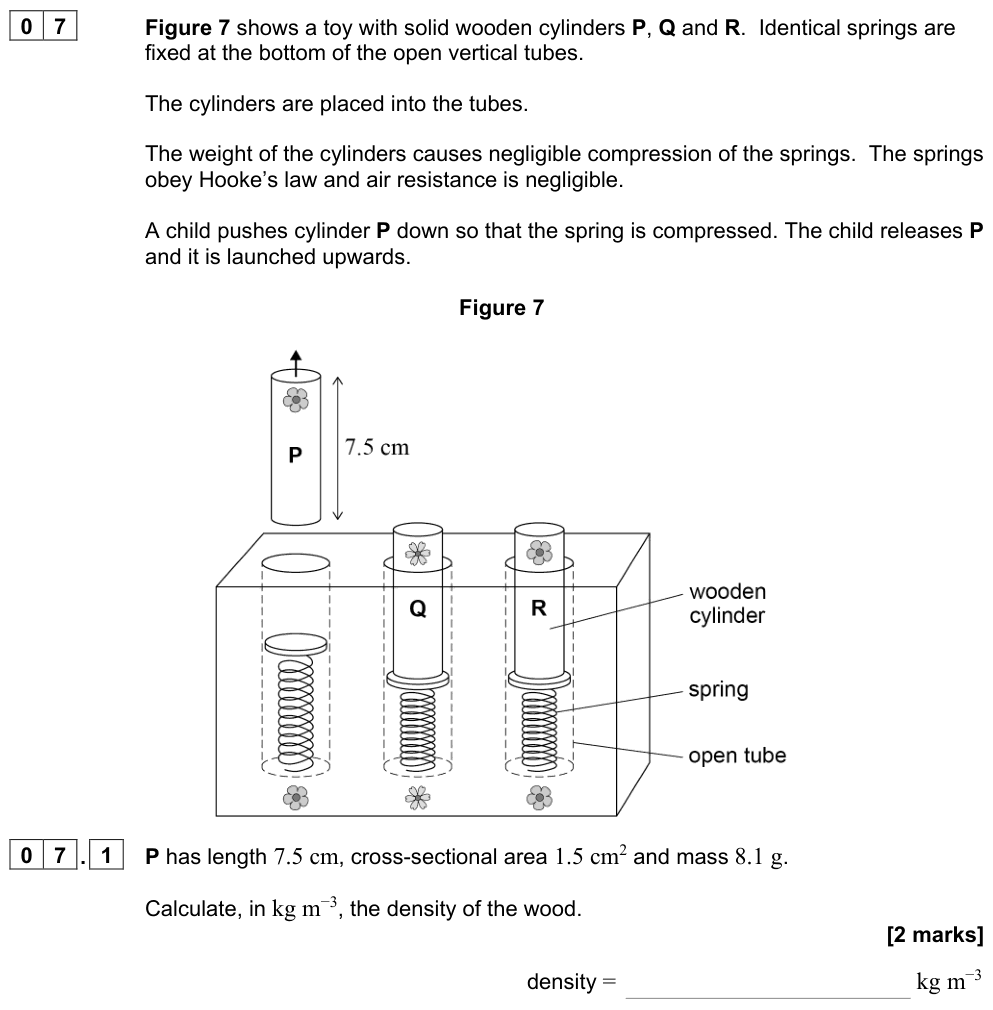
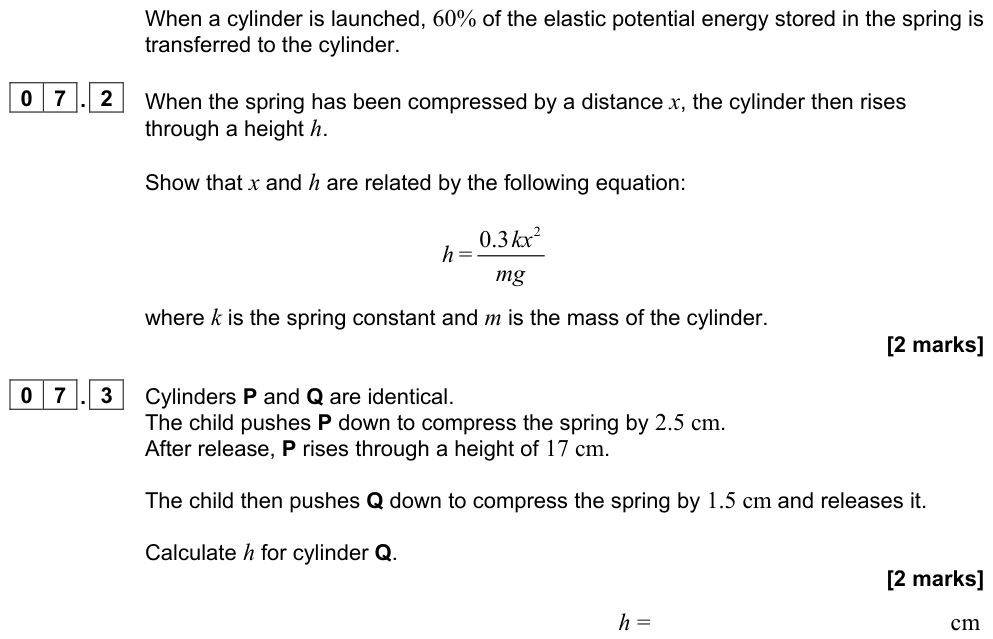
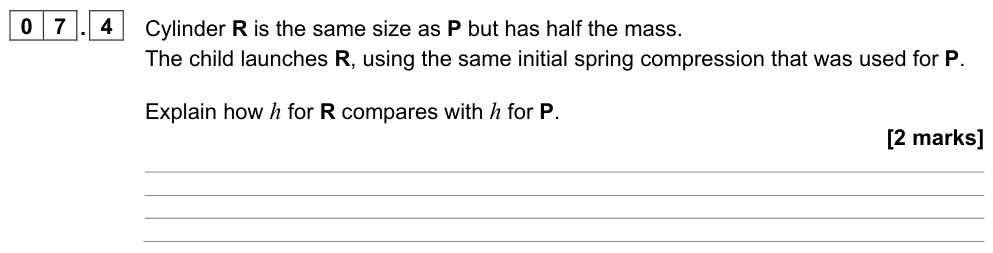
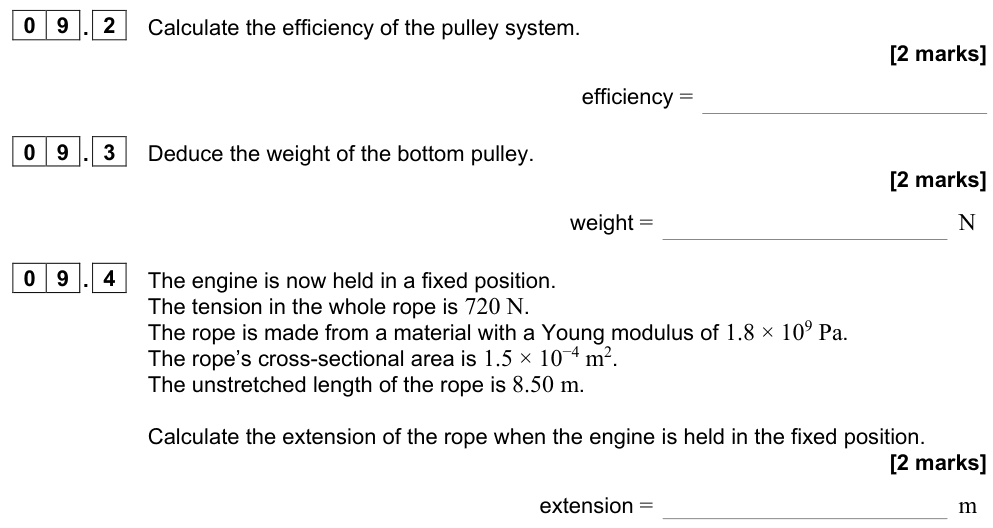
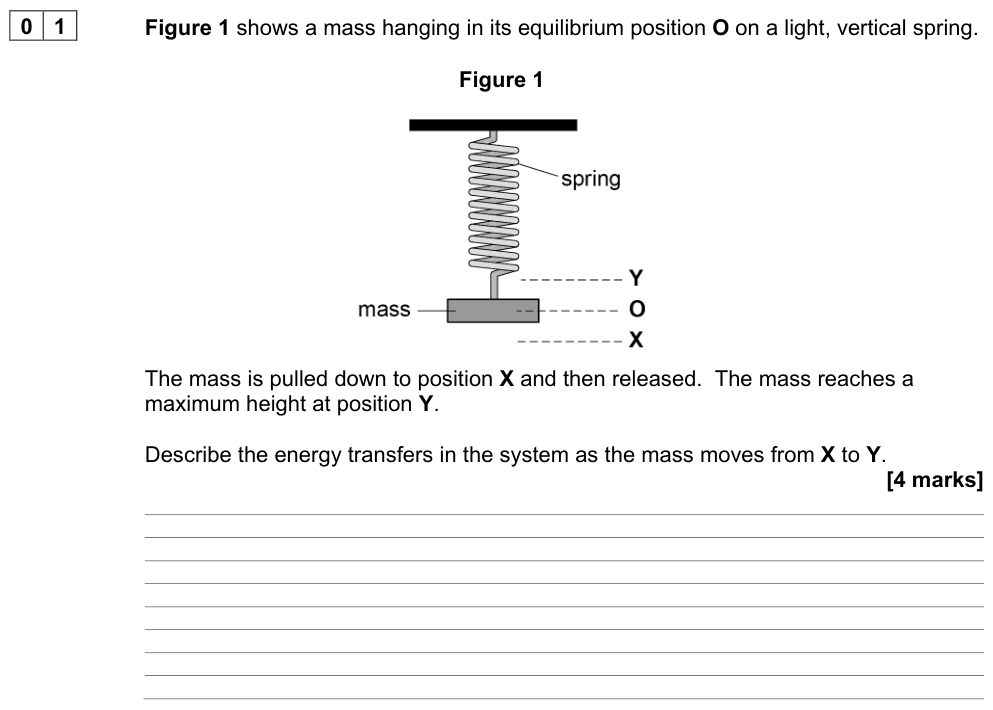
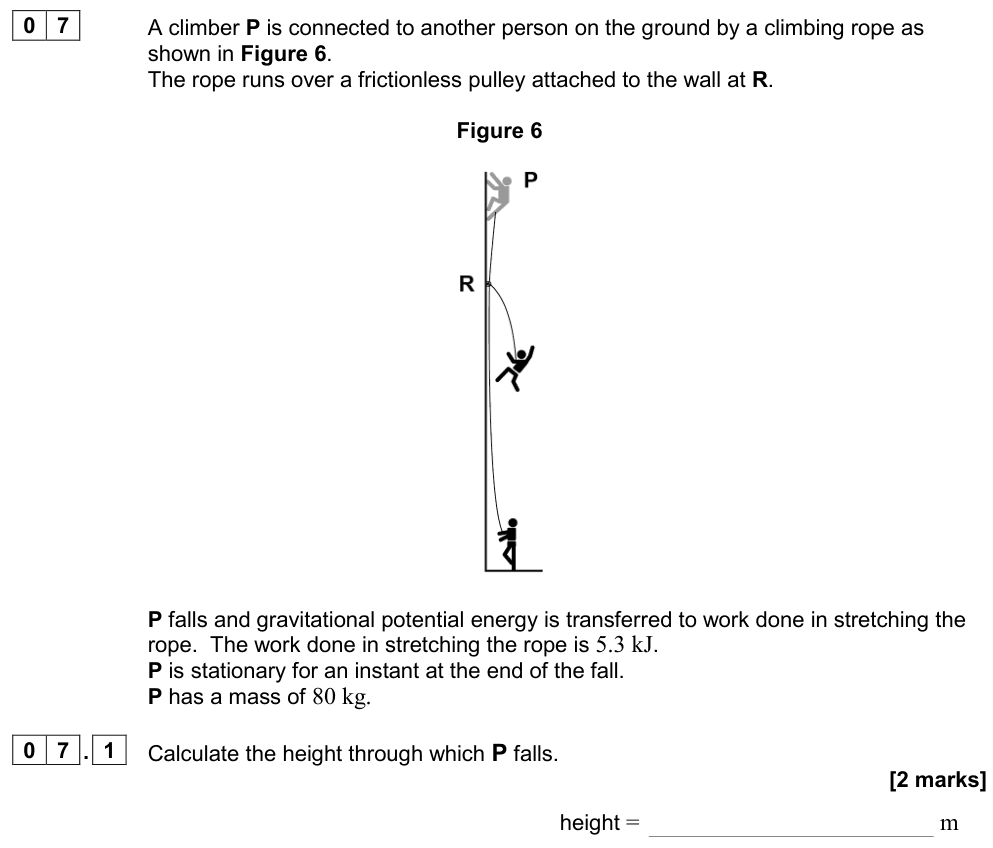
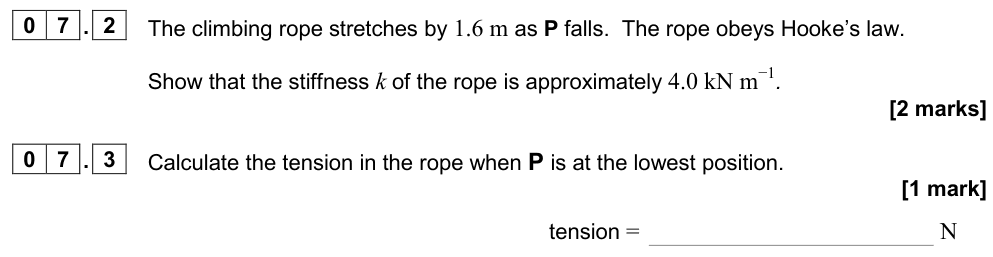
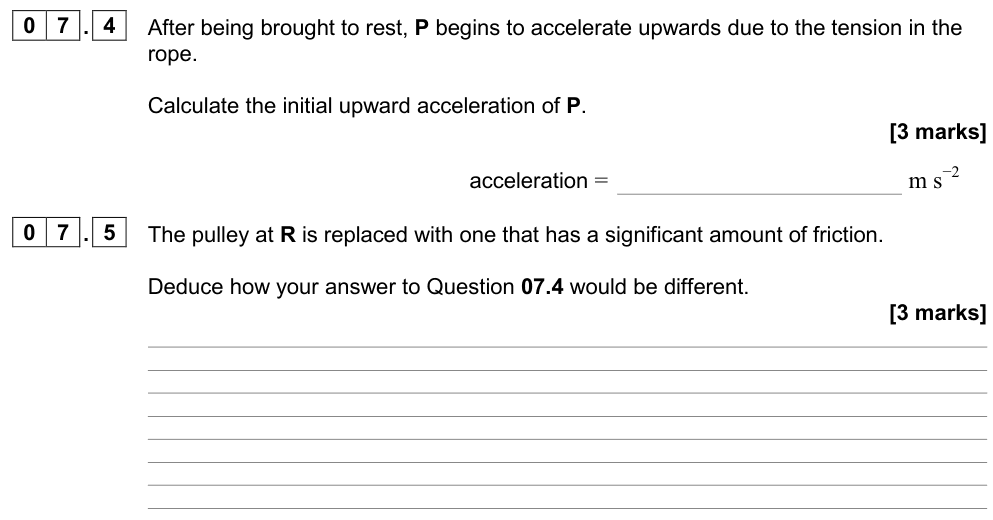
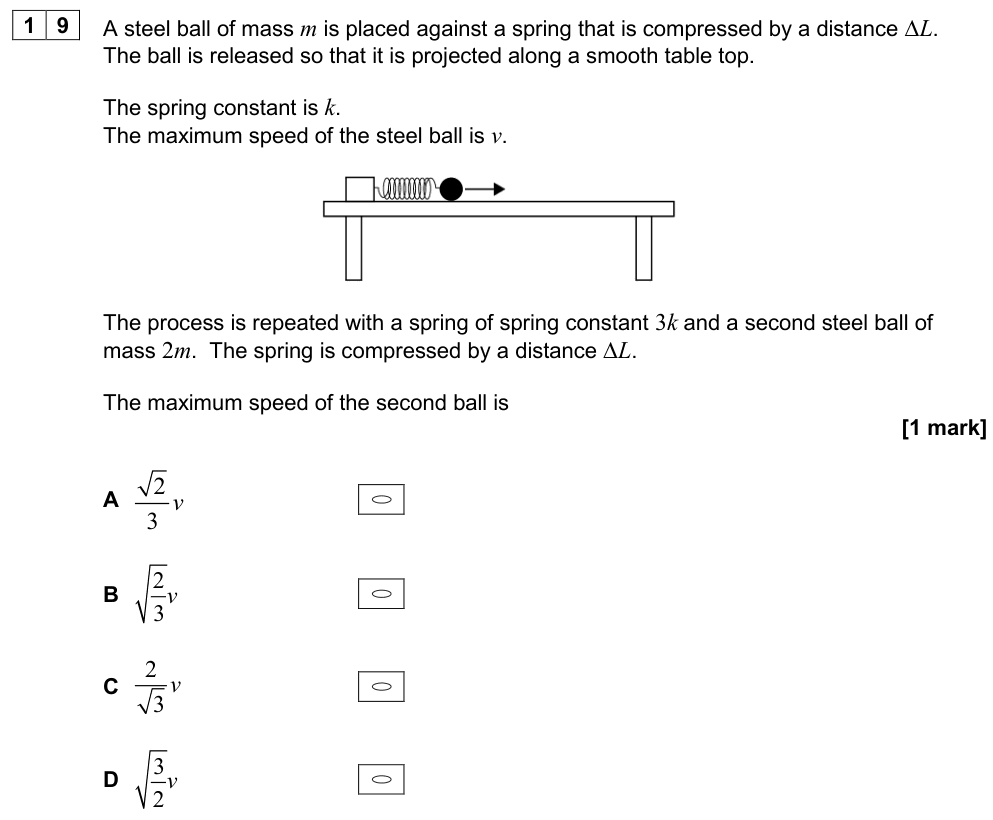
Springs and stretched materials store elastic potential energy $= \tfrac12F\Delta L = \tfrac12k\Delta L^2$ (see the Bulk properties chapter). In a toy launcher or a bungee jump, elastic, kinetic and gravitational potential energy are interchanged. The same conservation approach applies.
Exam tip
Start energy questions by listing the energy stores at the beginning and the end. Write an equation in words ("loss of GPE = gain in KE + work done against friction") before substituting numbers. This earns method marks even if you make an arithmetic slip.
Summary
- $W = Fs\cos\theta$; work done = area under force–displacement graph.
- $P = \Delta W/\Delta t = Fv$; efficiency = useful output ÷ input.
- $E_k = \tfrac12mv^2$; $\Delta E_p = mg\Delta h$.
- Energy is conserved: lost $E_p$ = gained $E_k$ + work done against resistive forces.