Density
Density
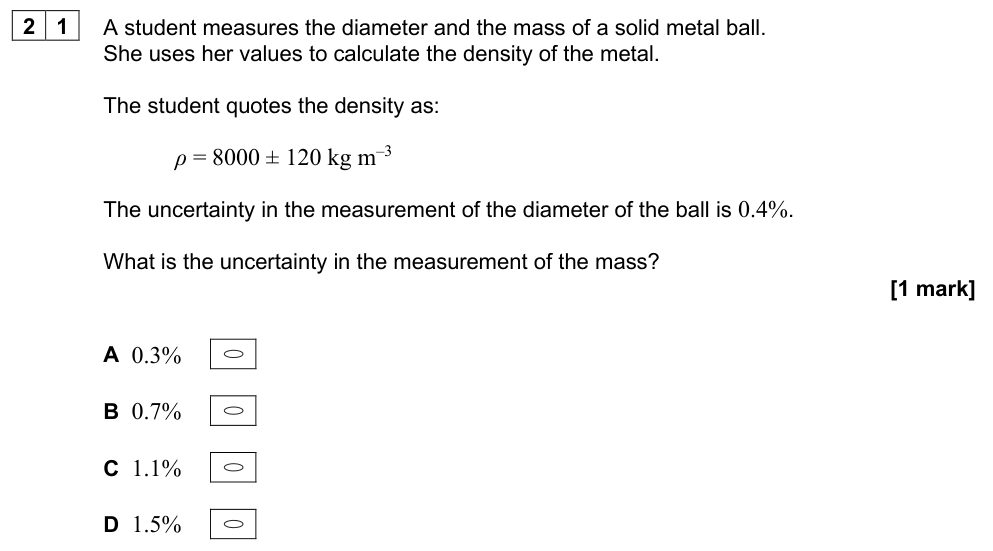
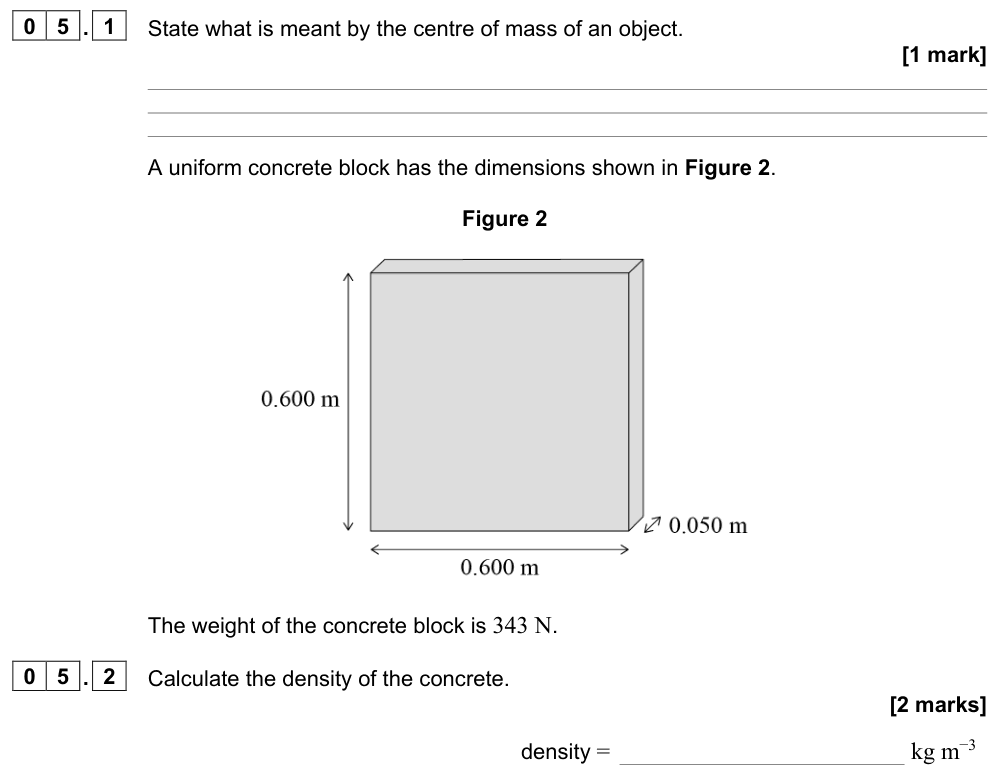
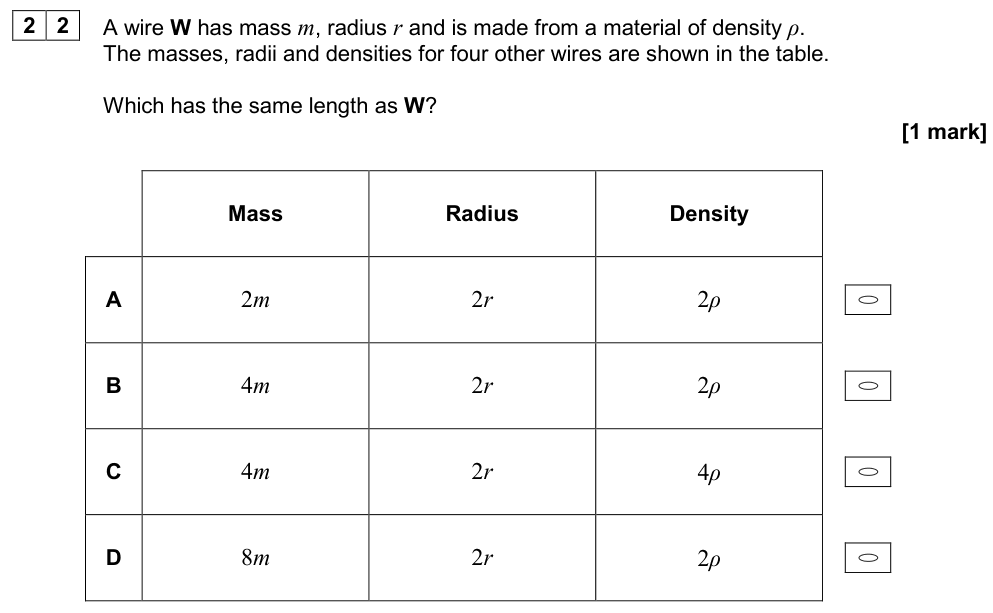
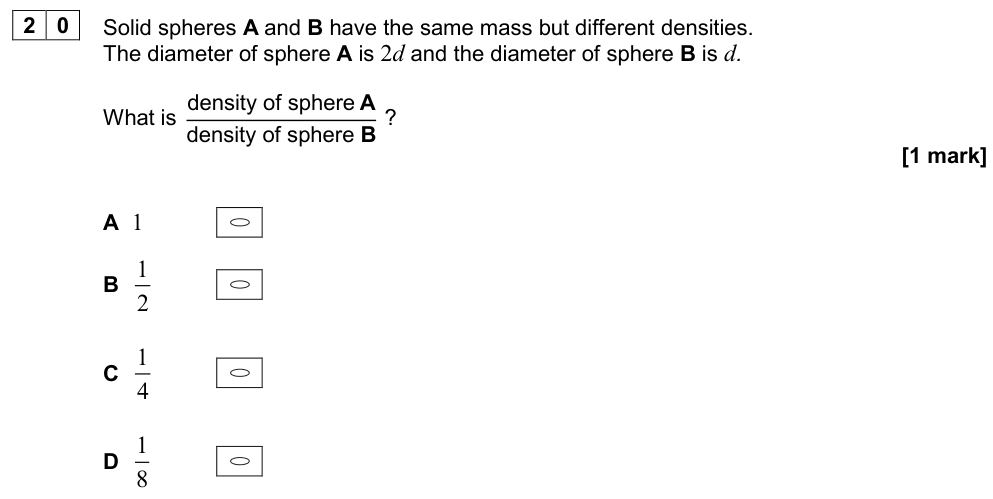
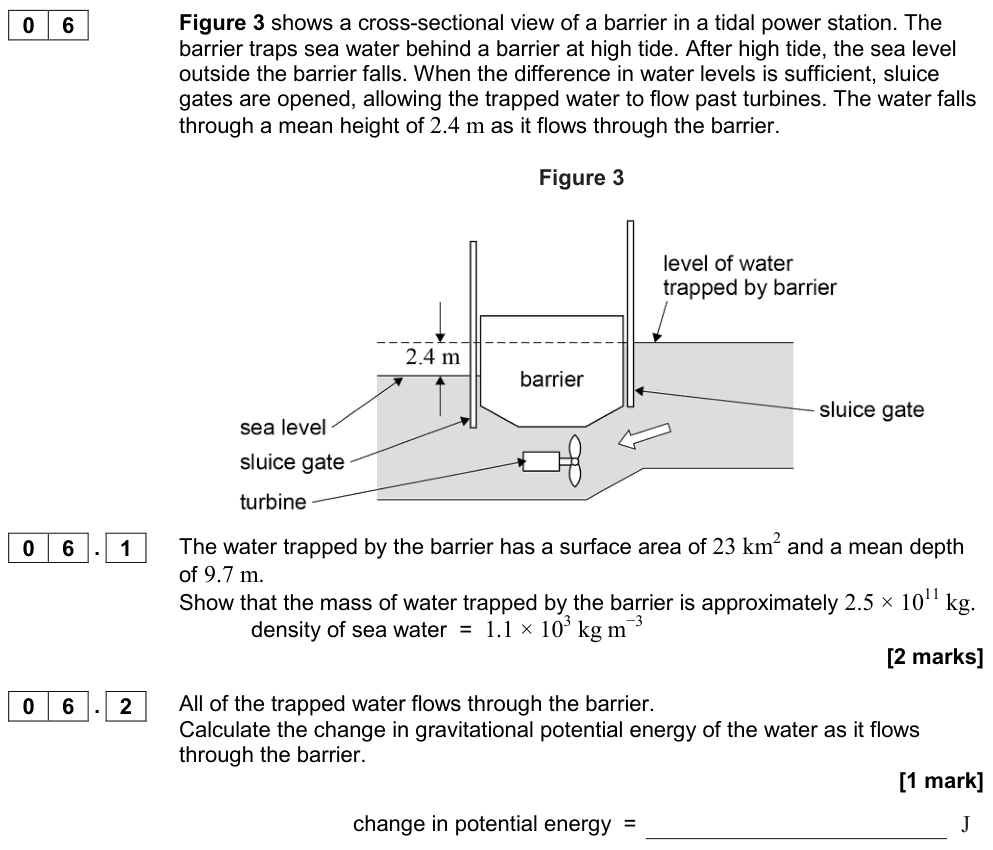
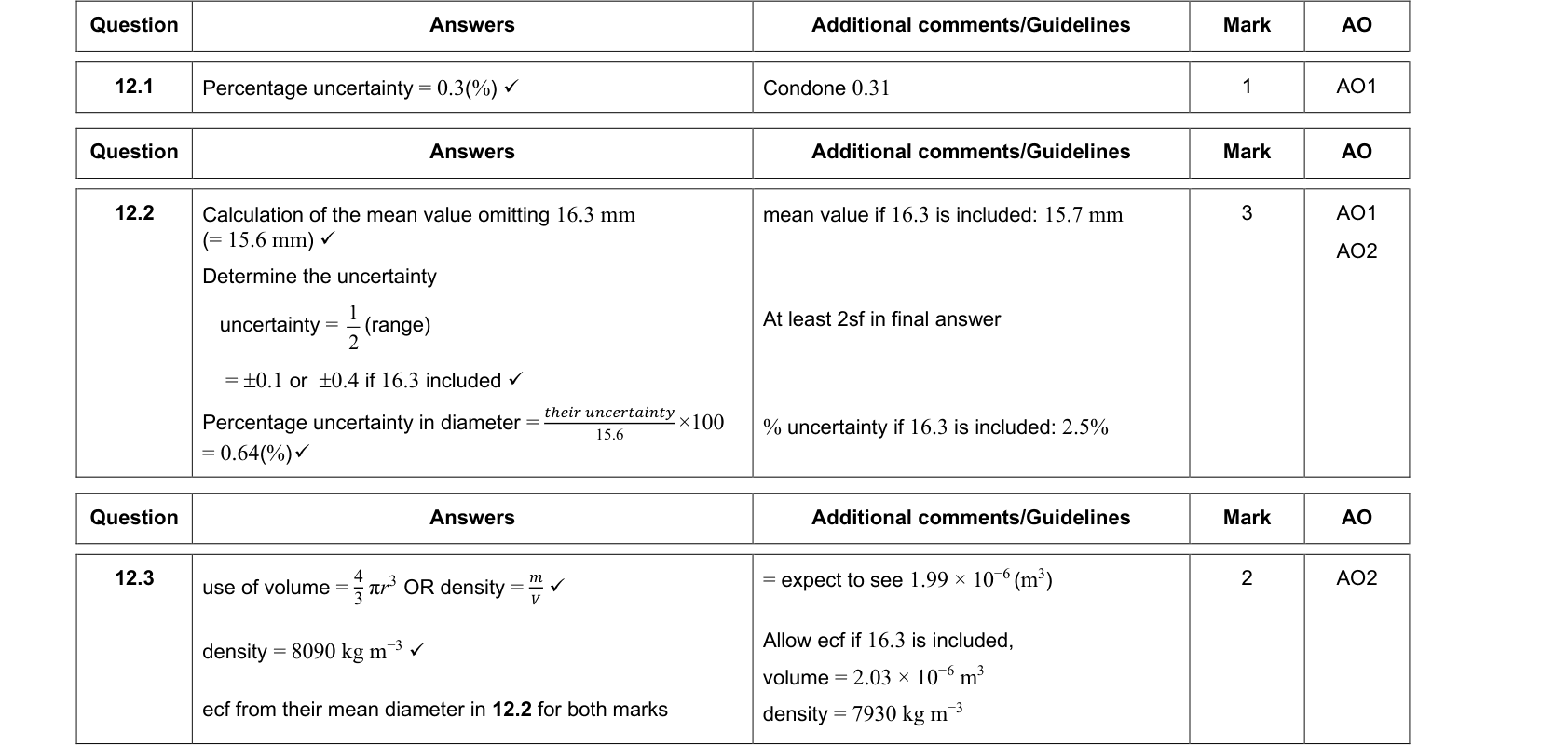
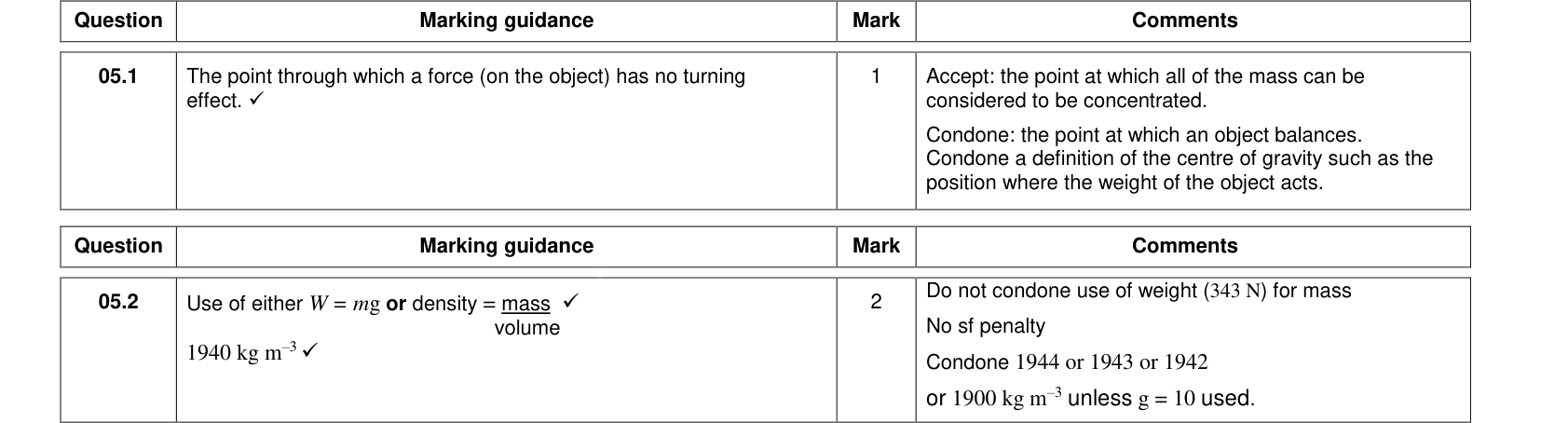
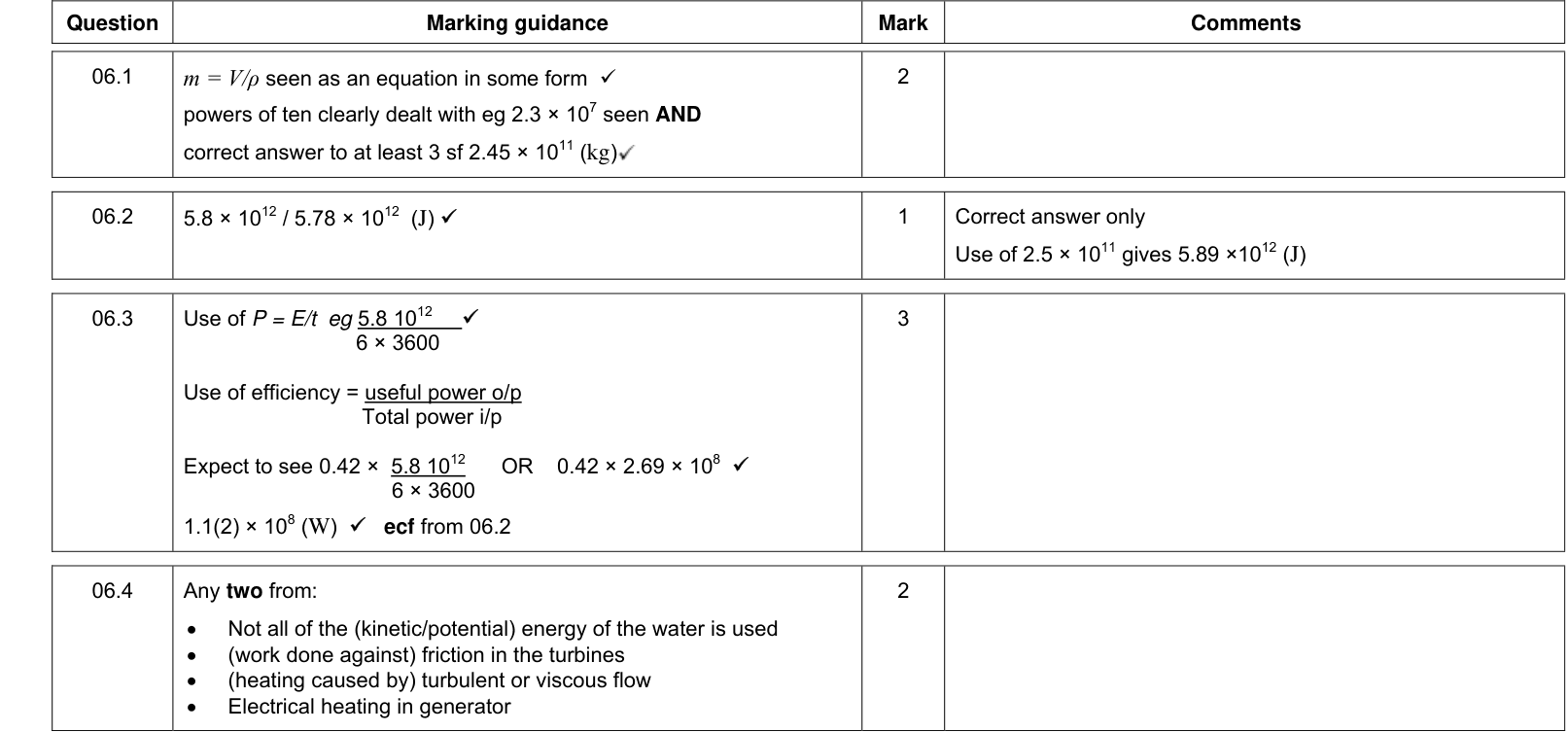
Density is mass per unit volume:
$$\rho = \frac{m}{V} \qquad \text{unit: kg m}^{-3}$$
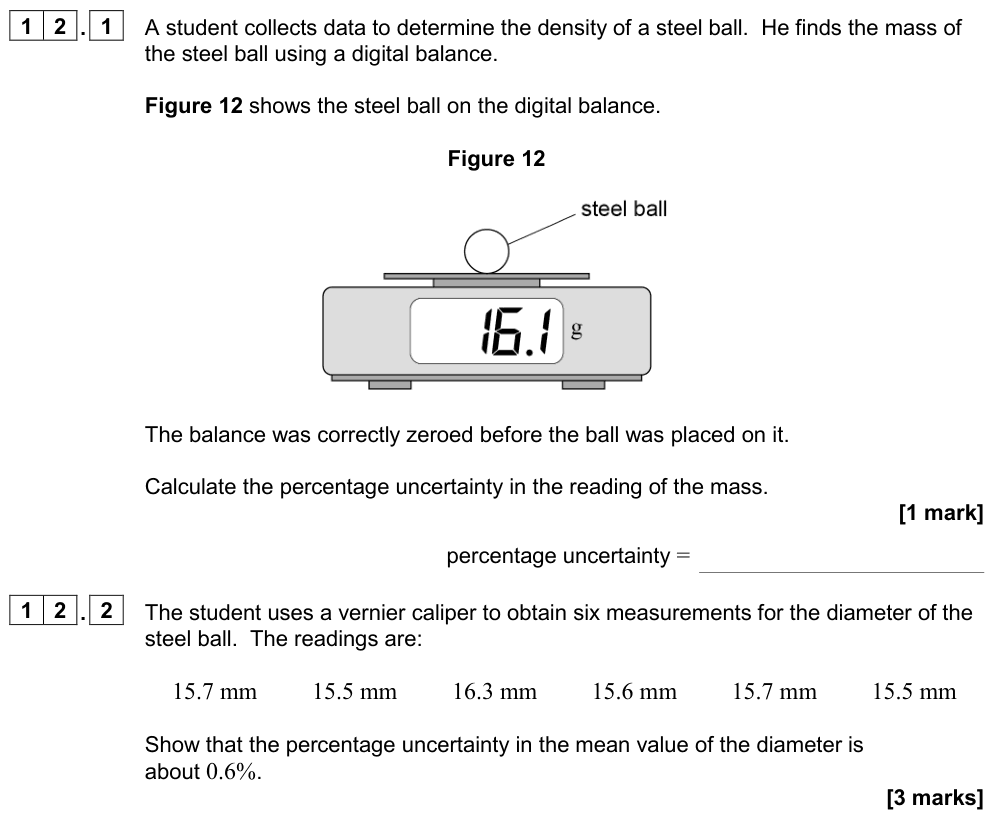
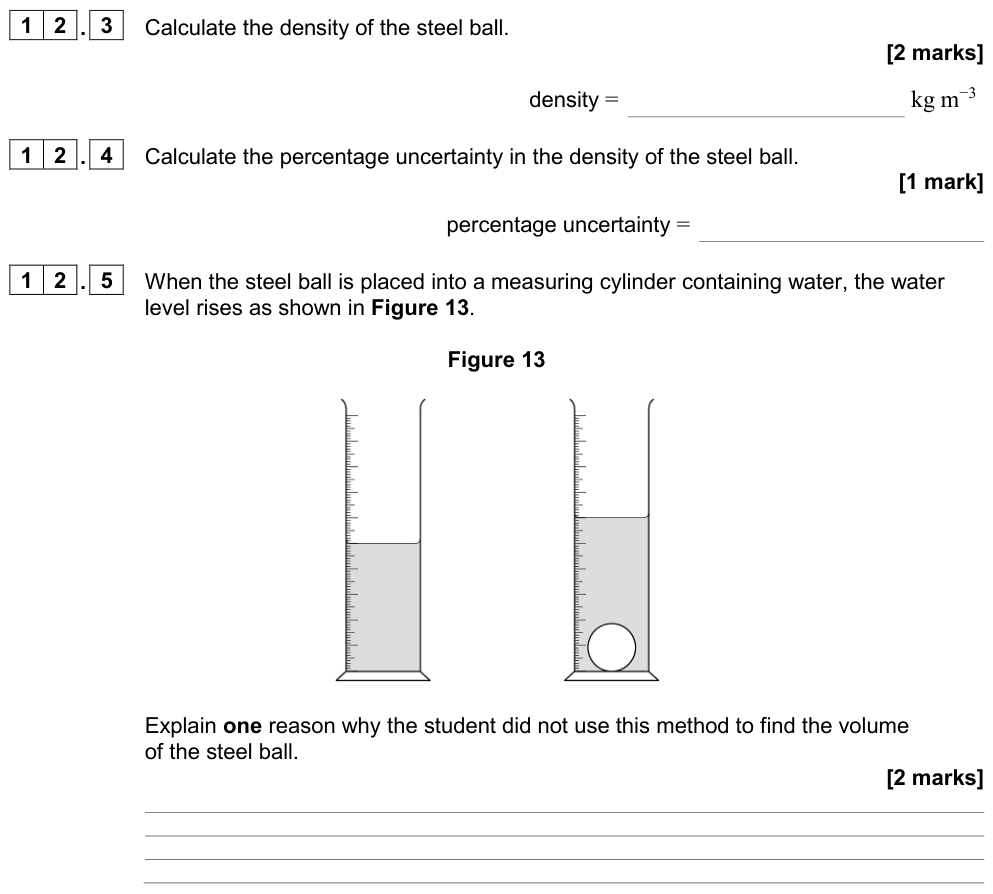
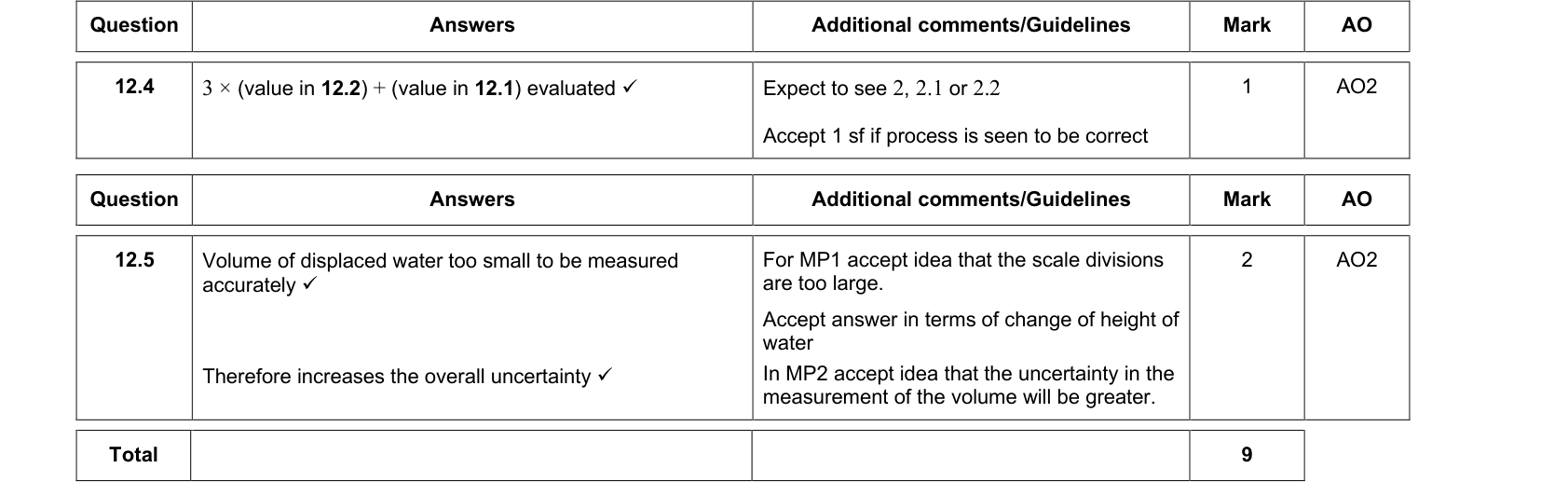
Density is a property of the material, not the object: a steel nail and a steel girder have the same density. For a regular solid, find the volume from its dimensions. For an irregular solid, use displacement of water in a measuring cylinder or a displacement can.
| Material | Density / kg m⁻³ |
|---|---|
| air (room conditions) | 1.2 |
| water | 1000 |
| aluminium | 2700 |
| steel | 7800 |
| copper | 8900 |
| lead | 11 300 |
Worked example: alloy
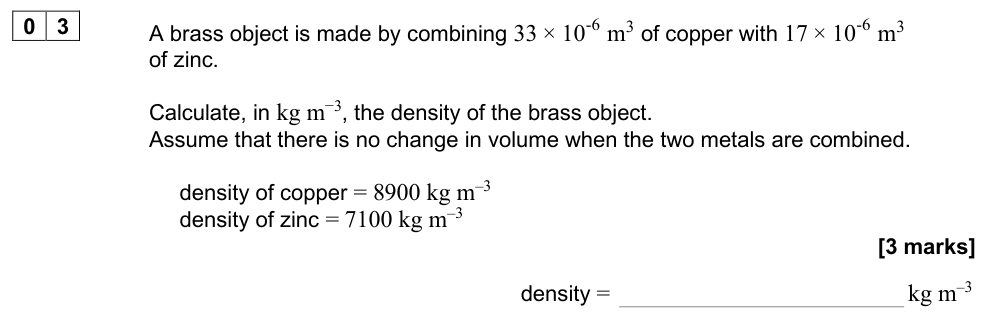
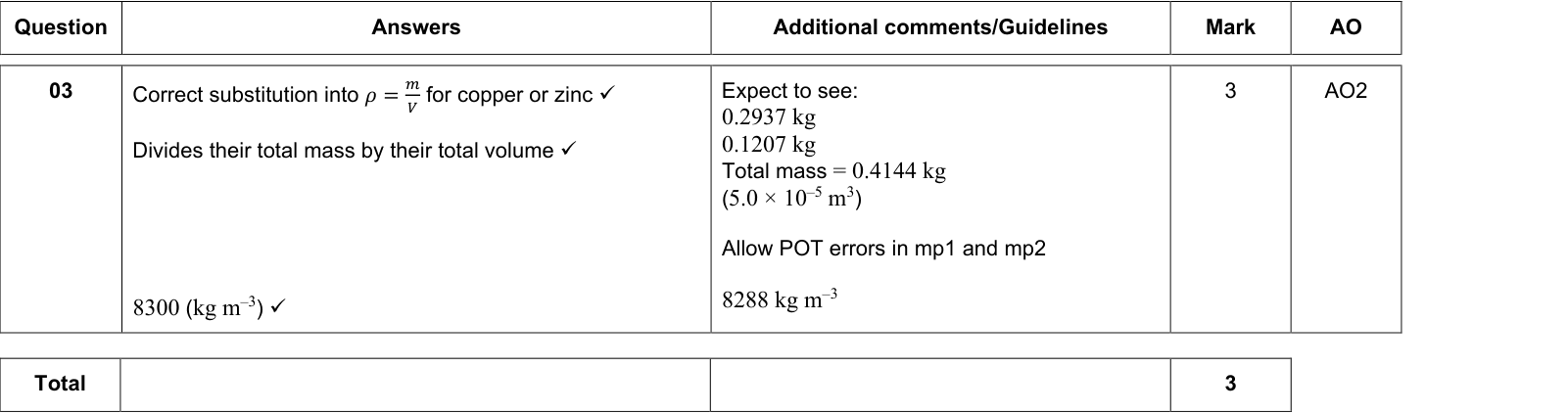
A brass object is made by melting together $40\ \text{cm}^3$ of copper ($8.9\ \text{g cm}^{-3}$) and $25\ \text{cm}^3$ of zinc ($7.1\ \text{g cm}^{-3}$), with no change in total volume.
Mass $= 40 \times 8.9 + 25 \times 7.1 = 356 + 177.5 = 533.5\ \text{g}$; volume $= 65\ \text{cm}^3$.
$\rho = 533.5/65 = 8.2\ \text{g cm}^{-3} = 8200\ \text{kg m}^{-3}$.
Hooke's law
Hooke's law
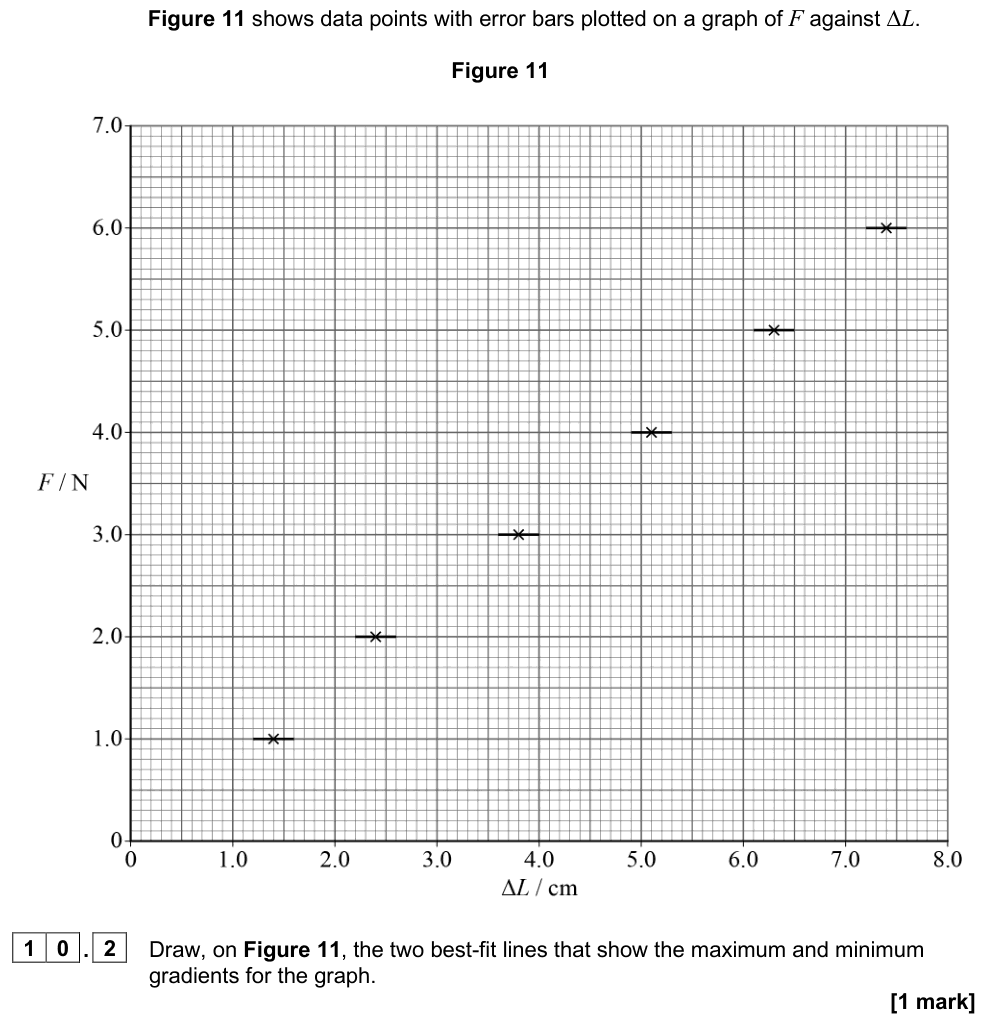
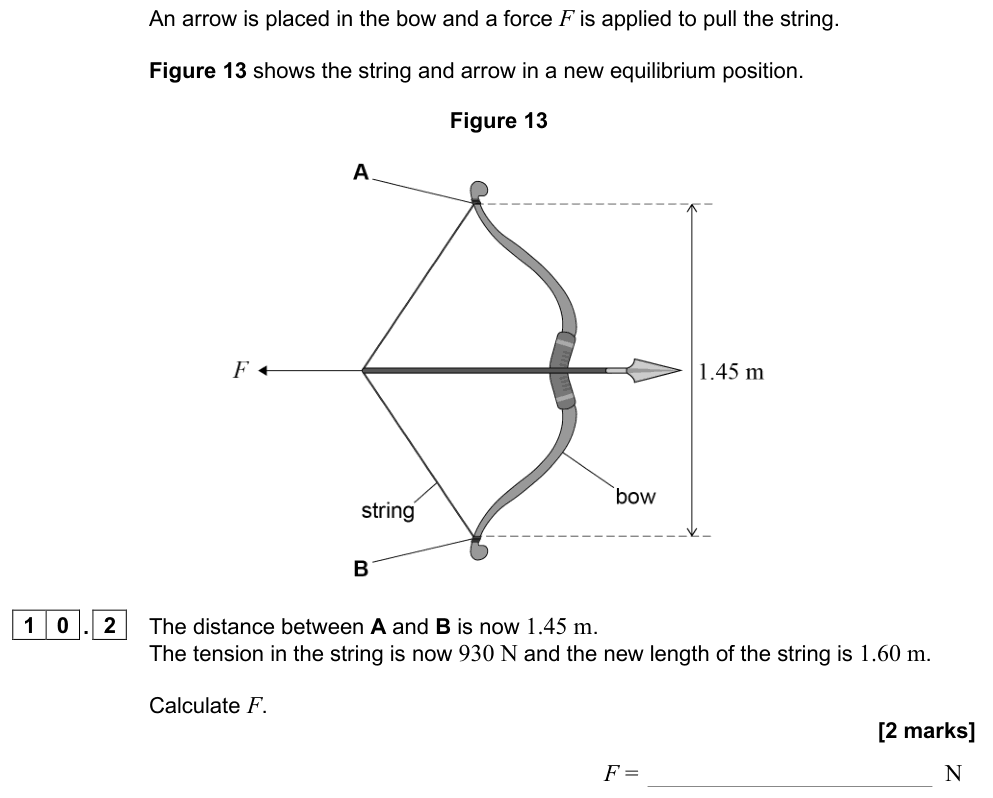
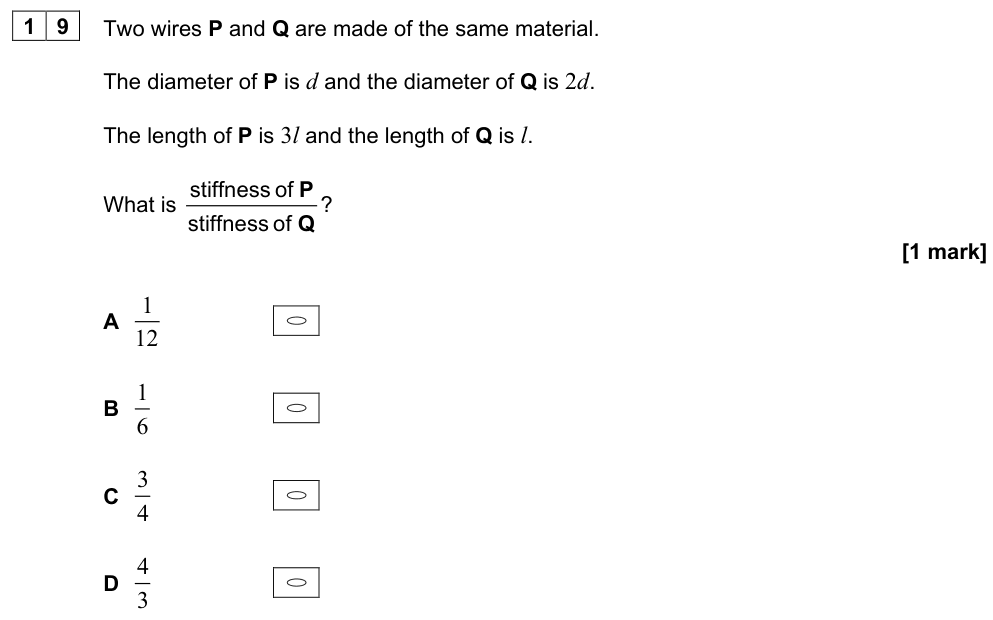
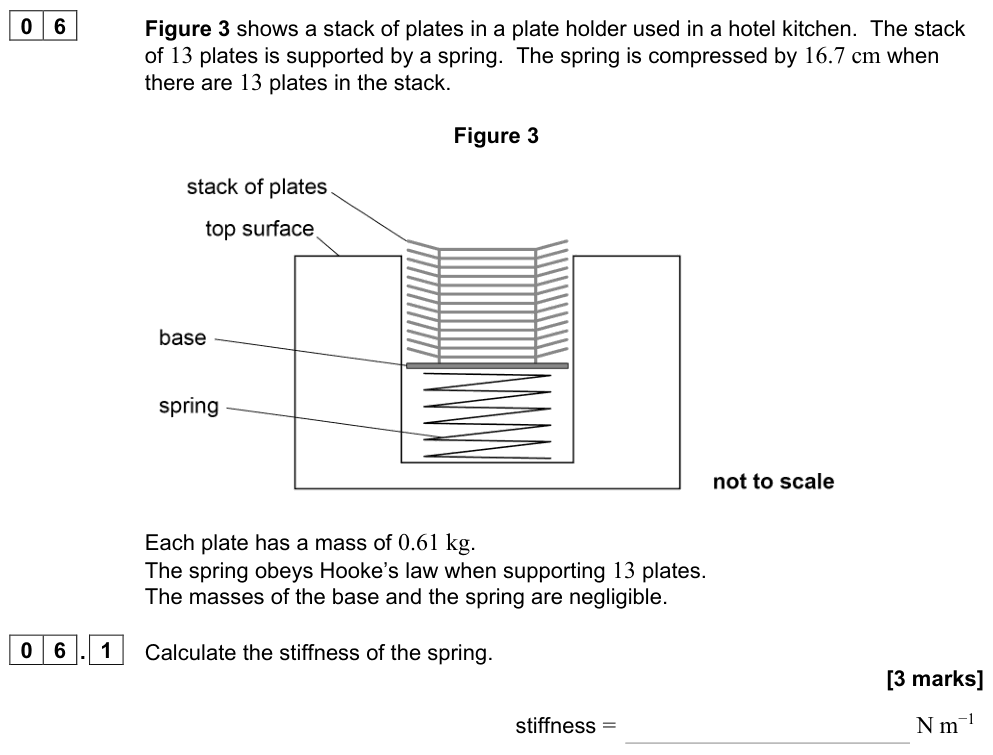
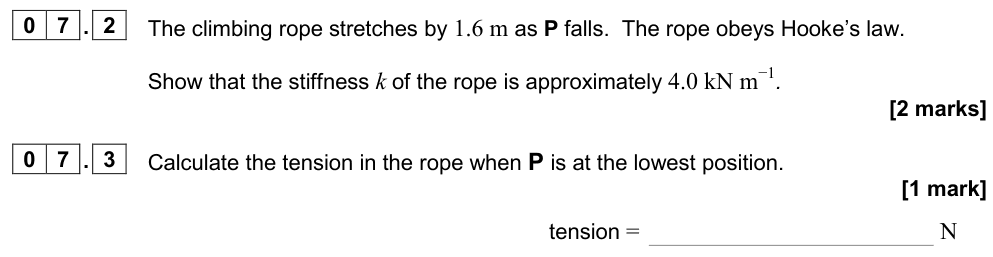
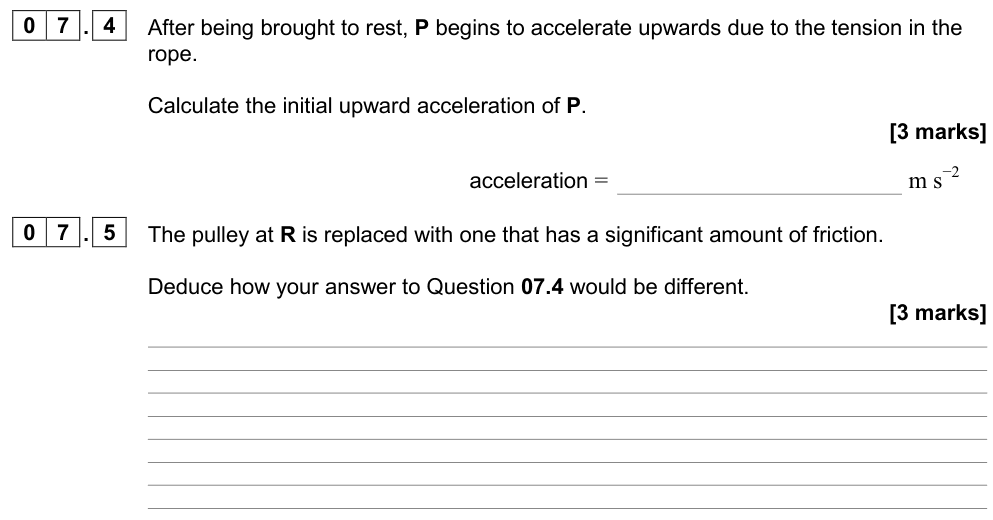
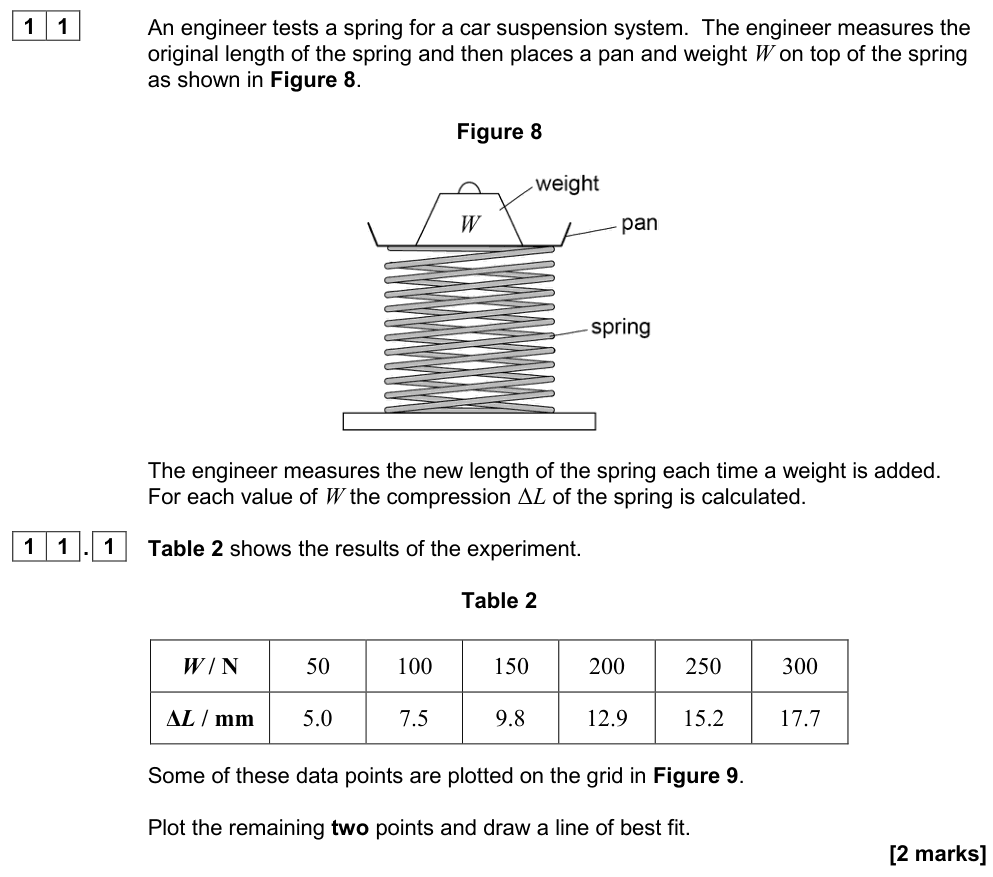
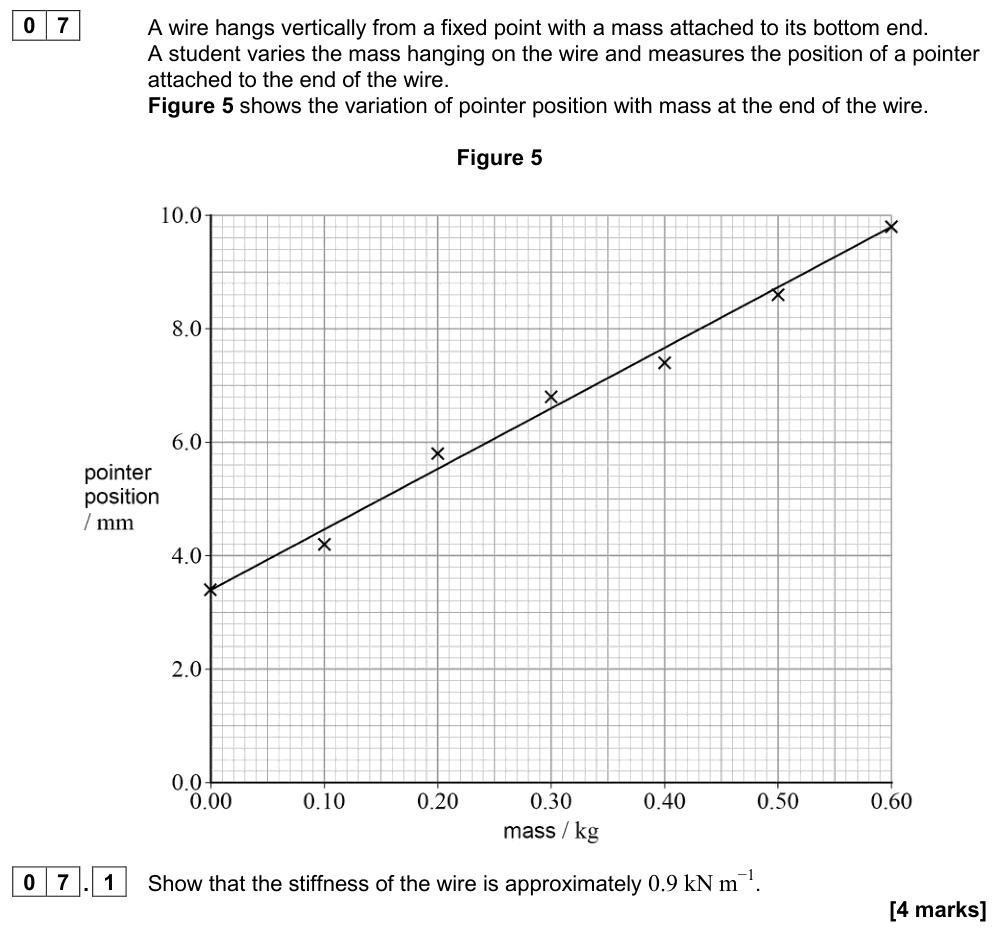
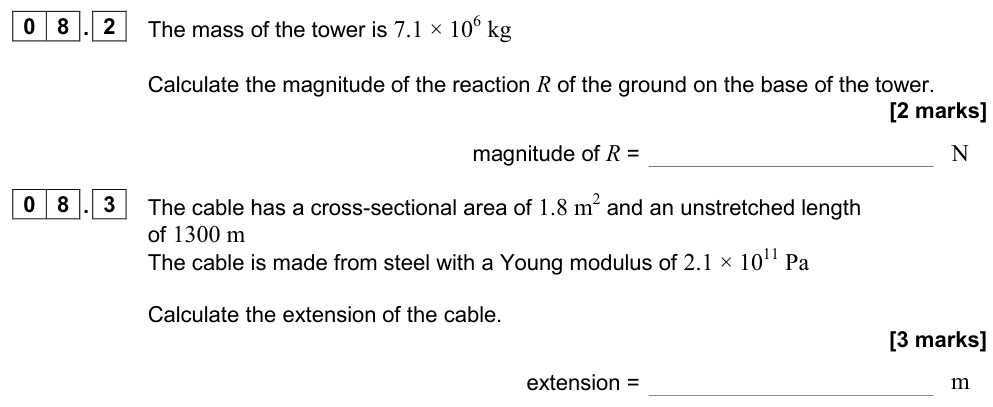
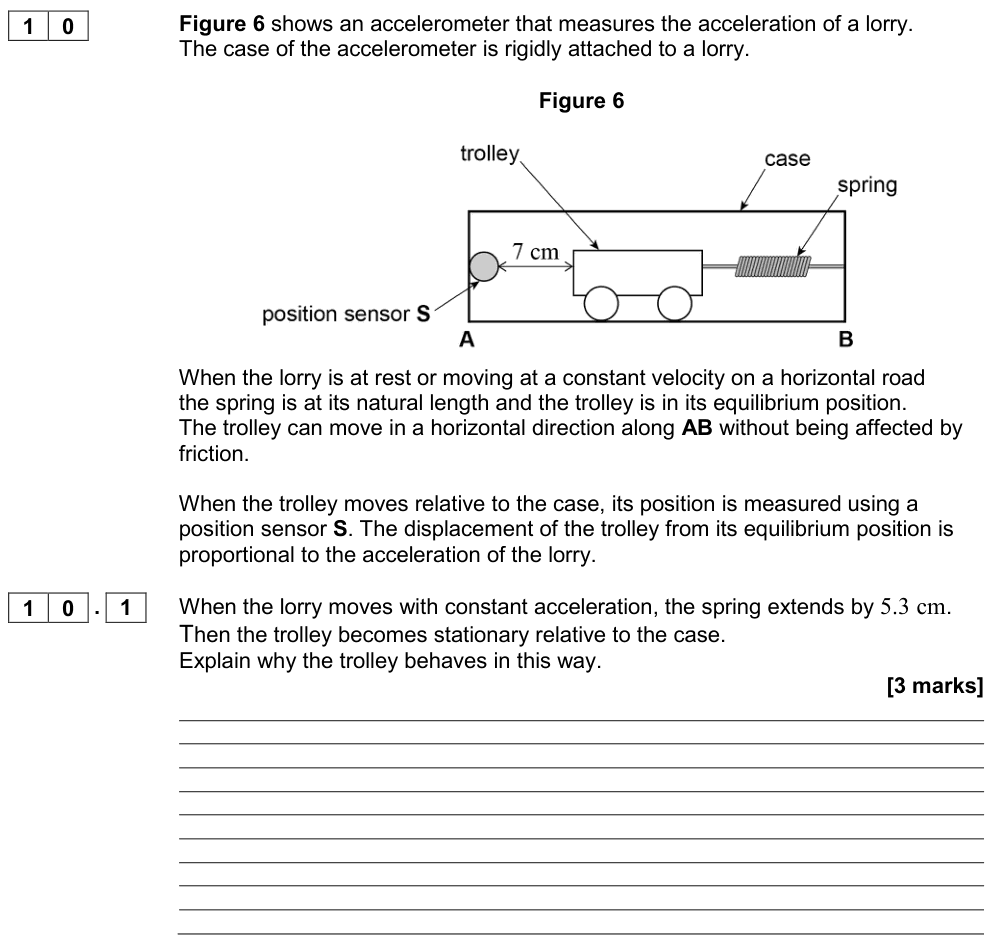
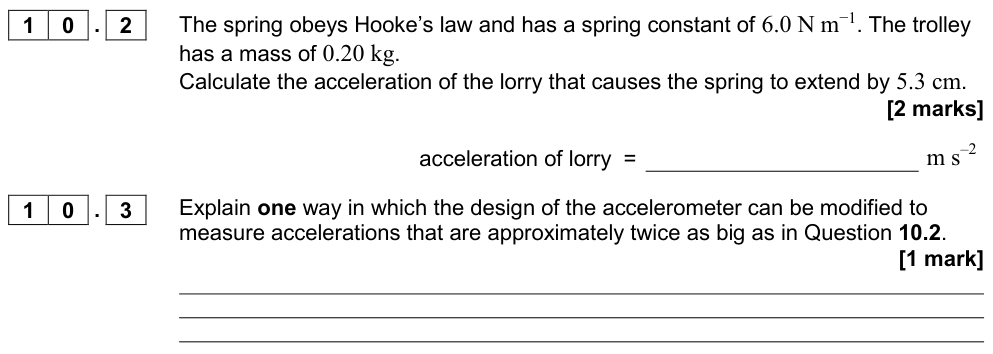
The extension of a spring (or wire) is directly proportional to the force applied, provided the limit of proportionality is not exceeded:
$$F = k\Delta L$$
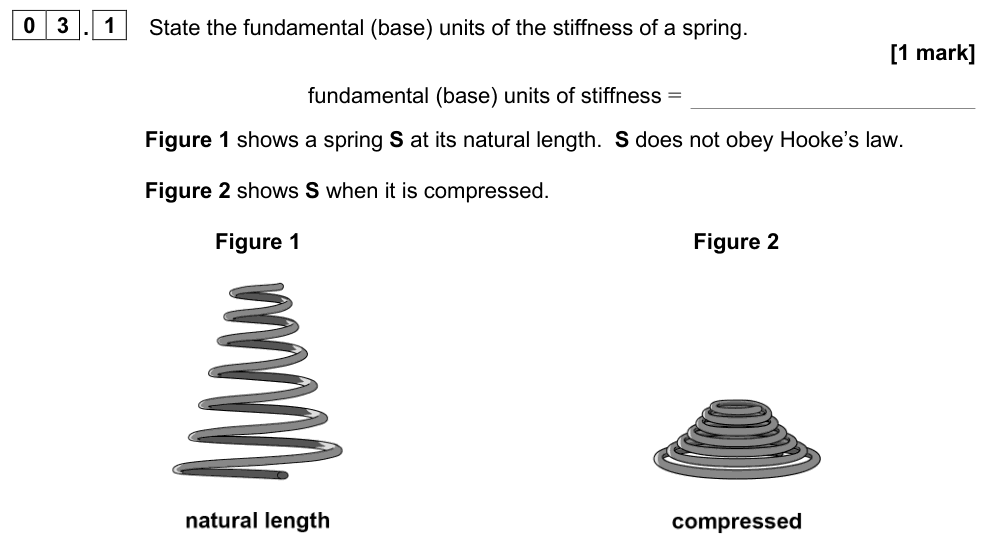
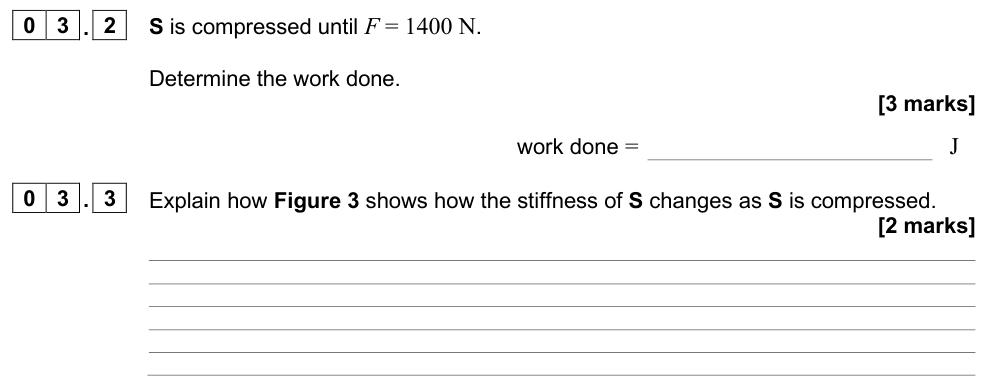
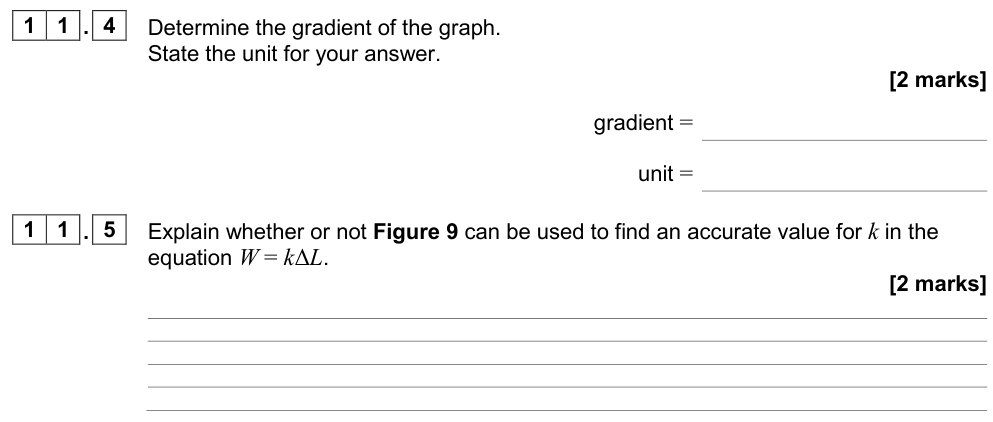
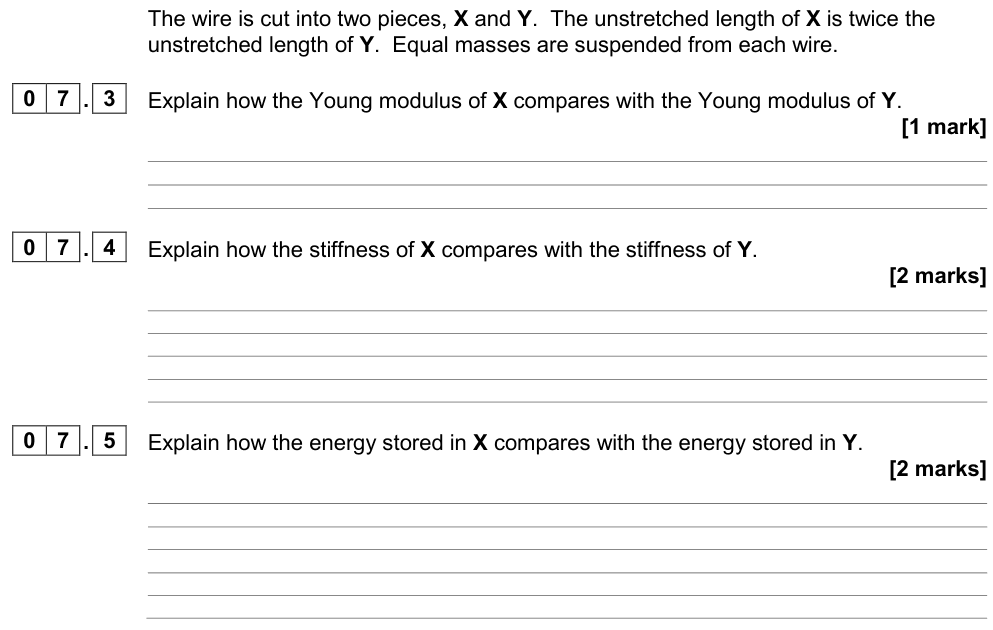
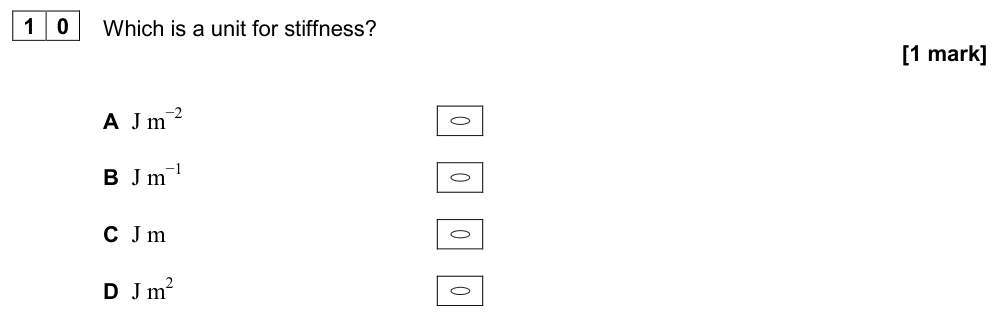
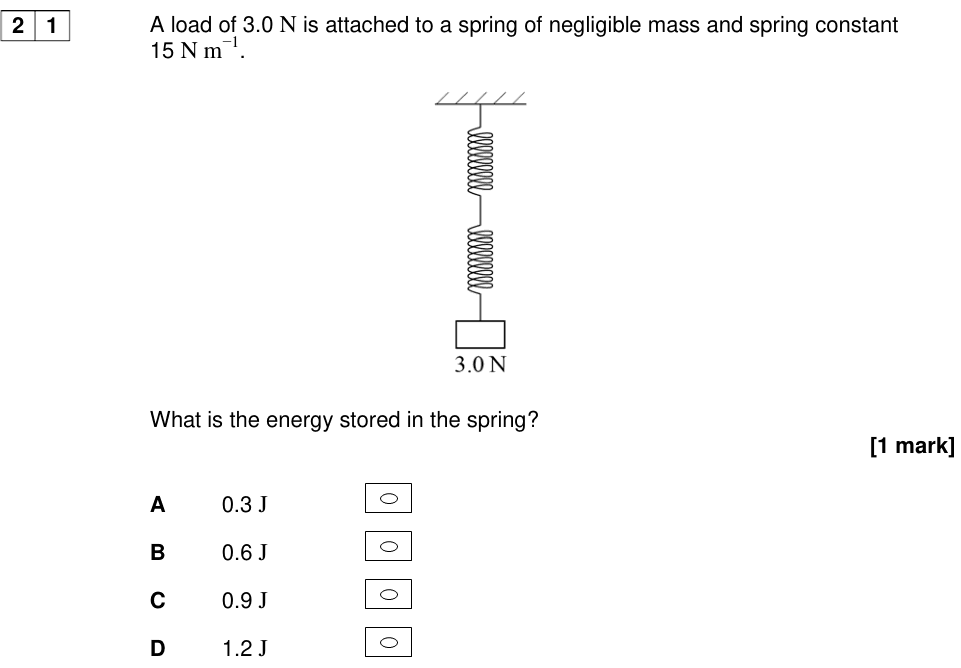
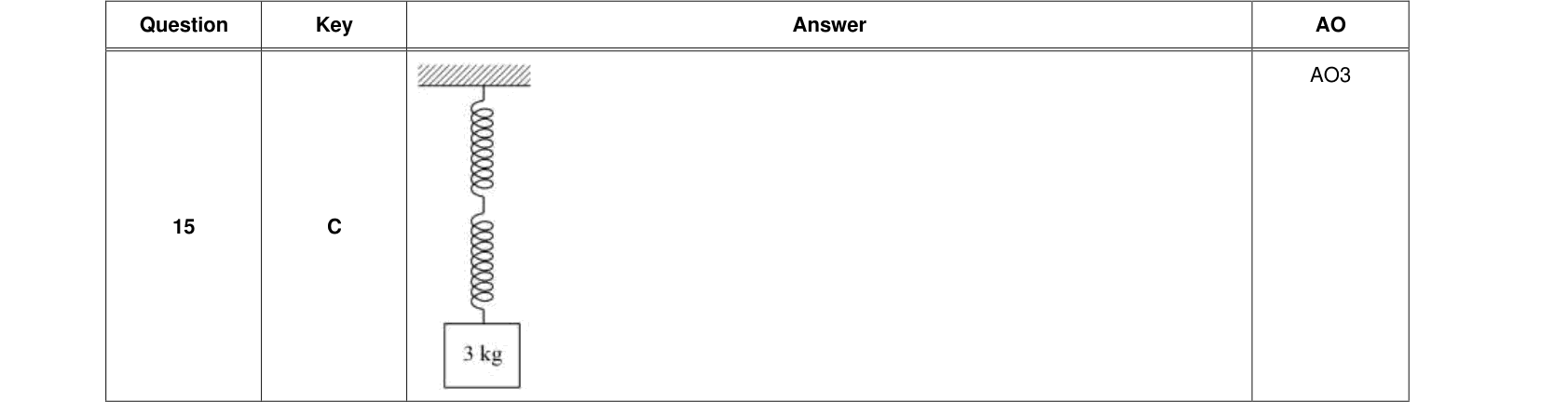
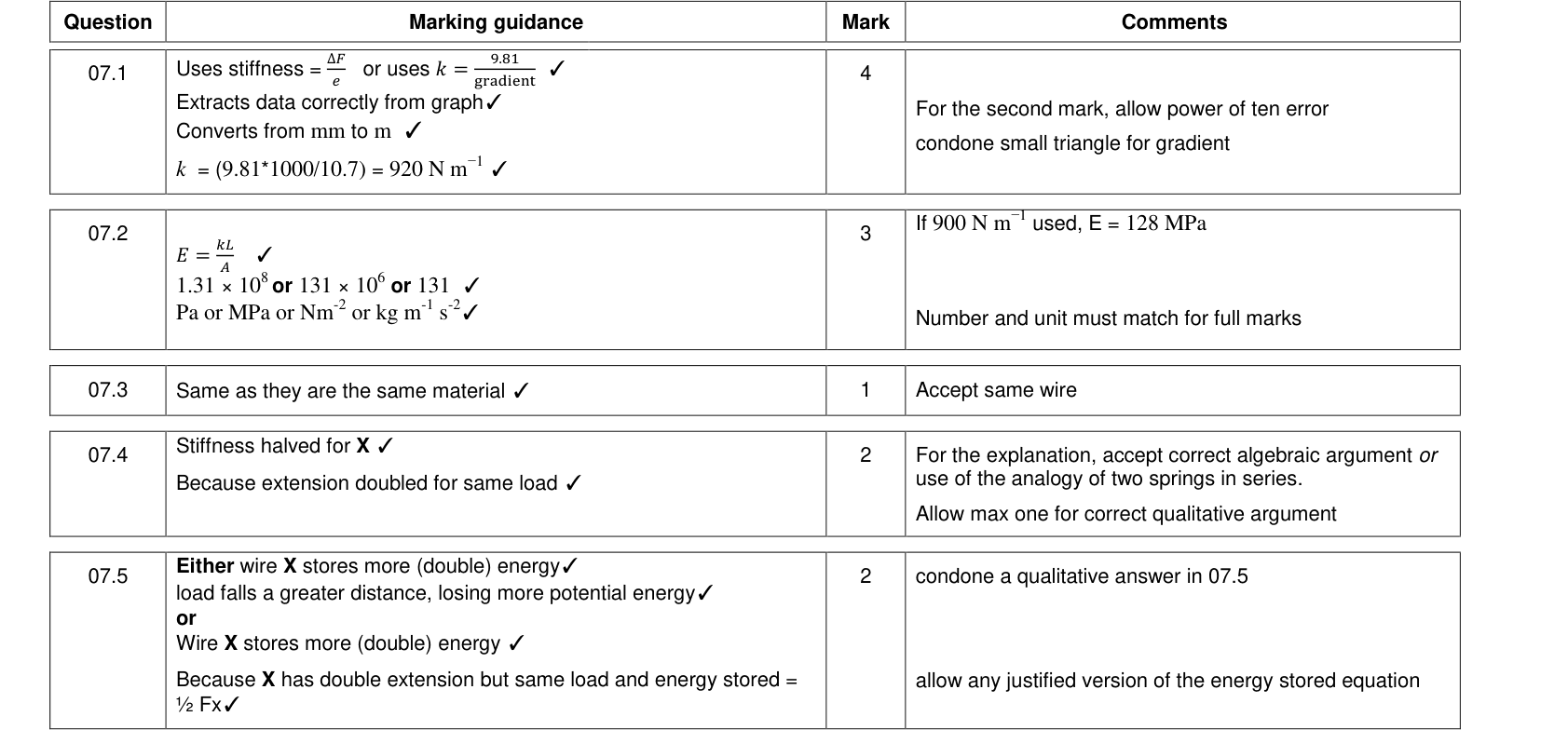
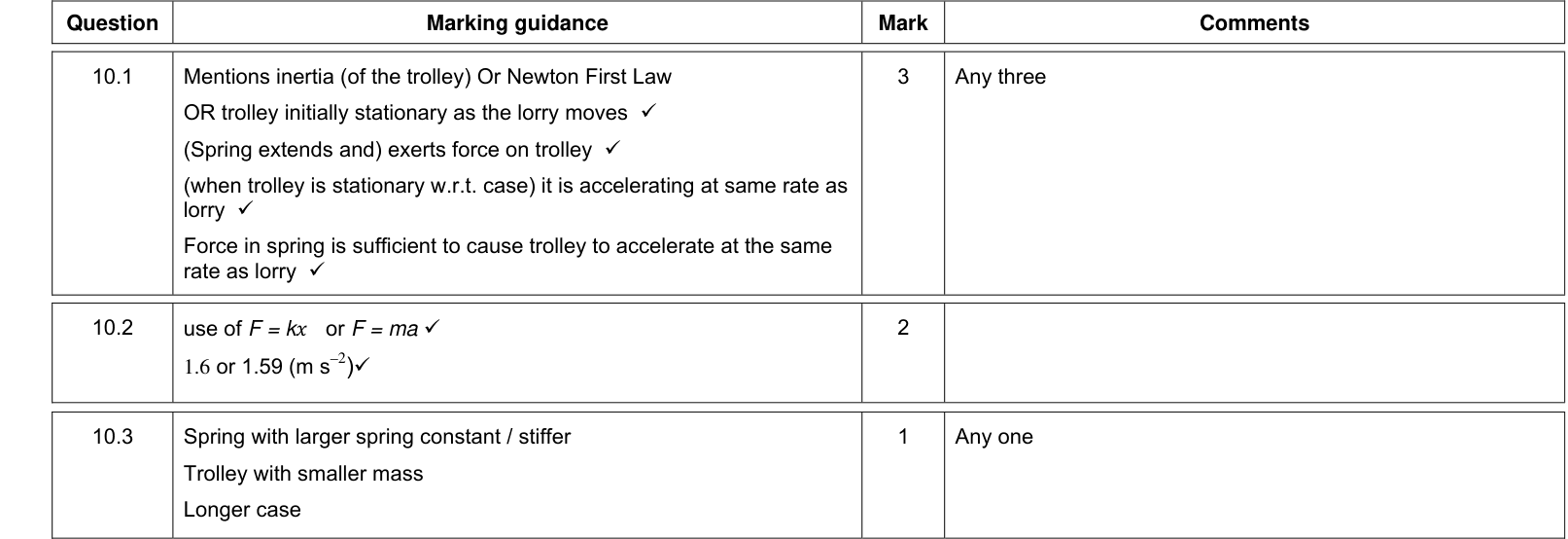
$k$ is the spring constant or stiffness (unit N m⁻¹). A stiffer spring has a larger $k$.
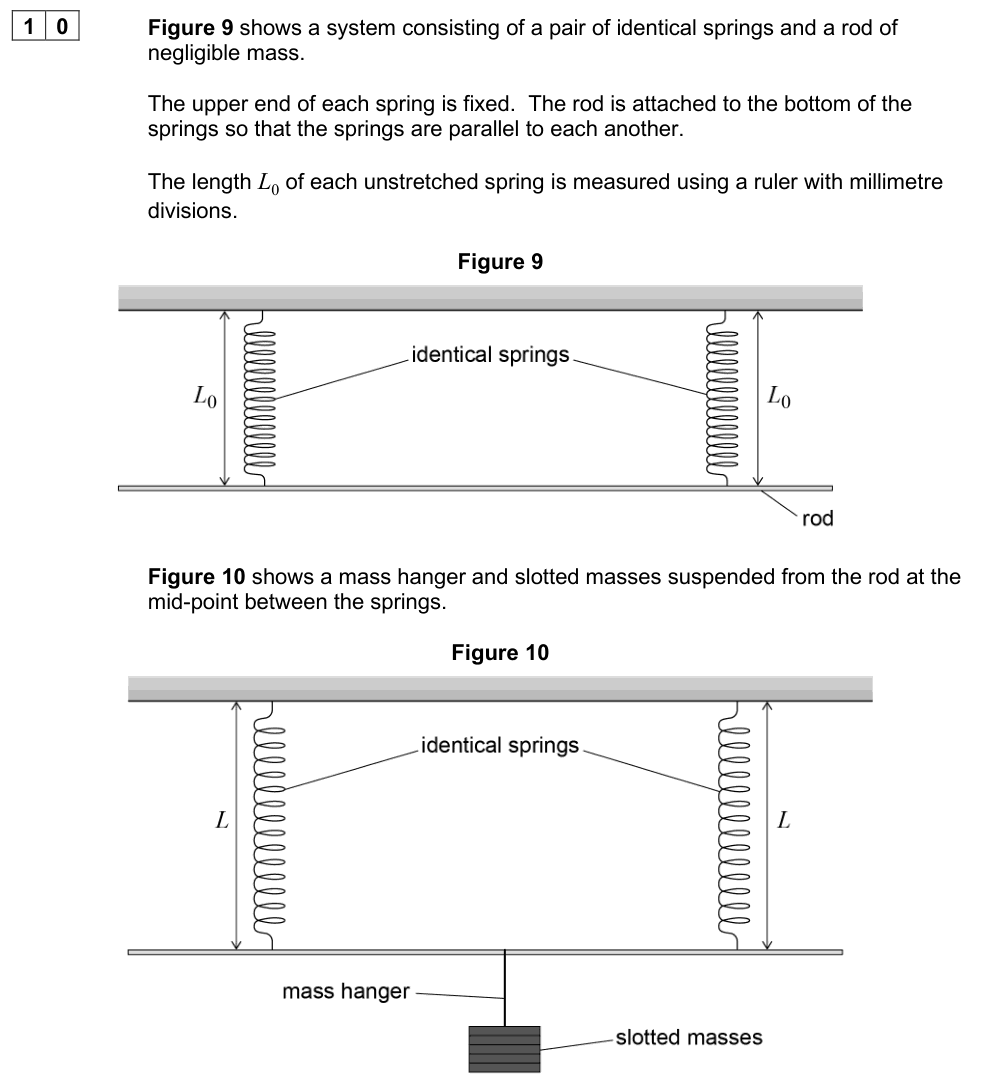
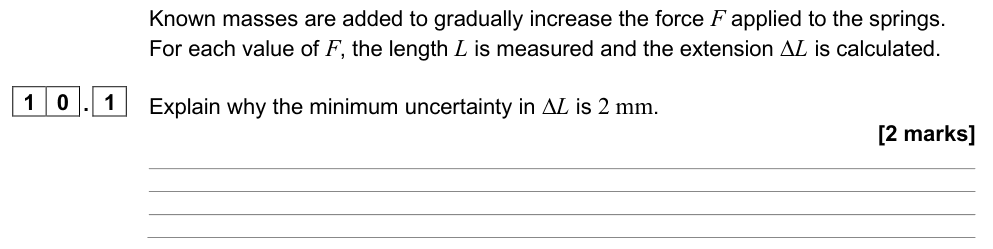
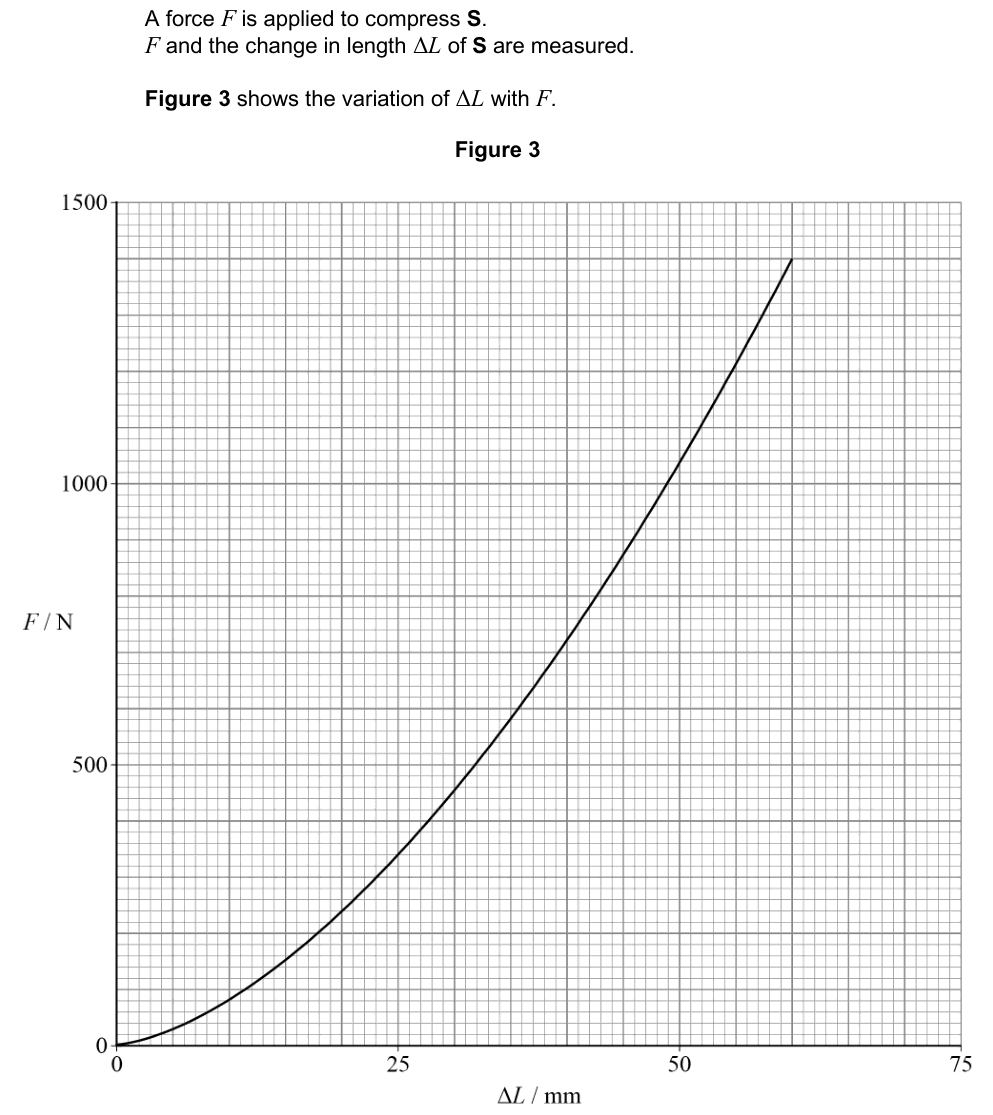
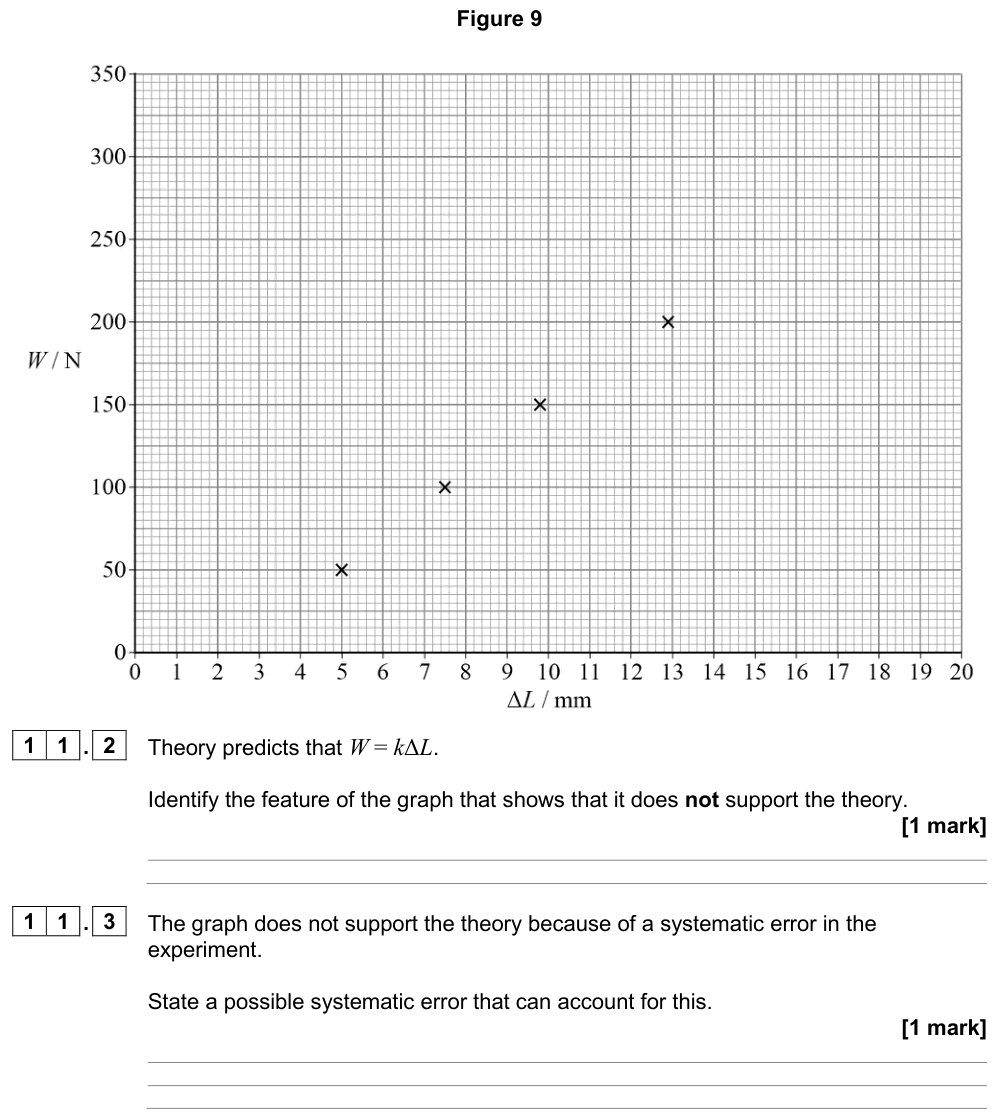
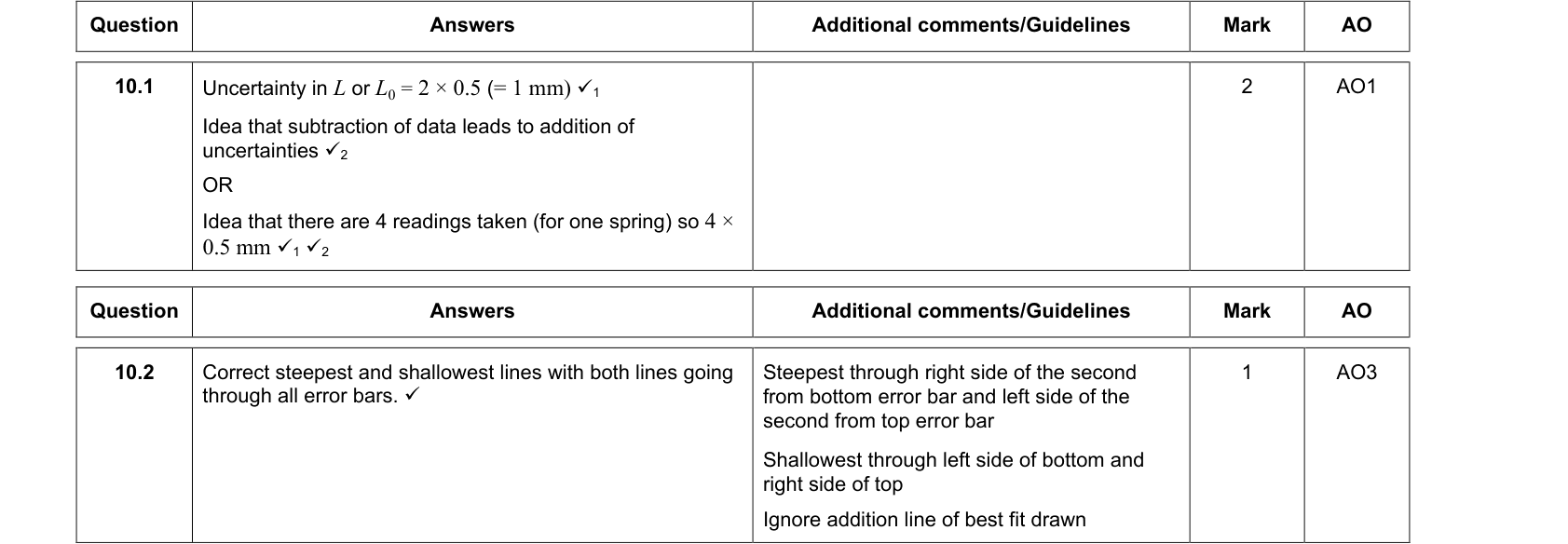
- The extension $\Delta L$ is the increase in length from the natural (unstretched) length: $\Delta L = L - L_0$. For compression, $\Delta L$ is the decrease in length.
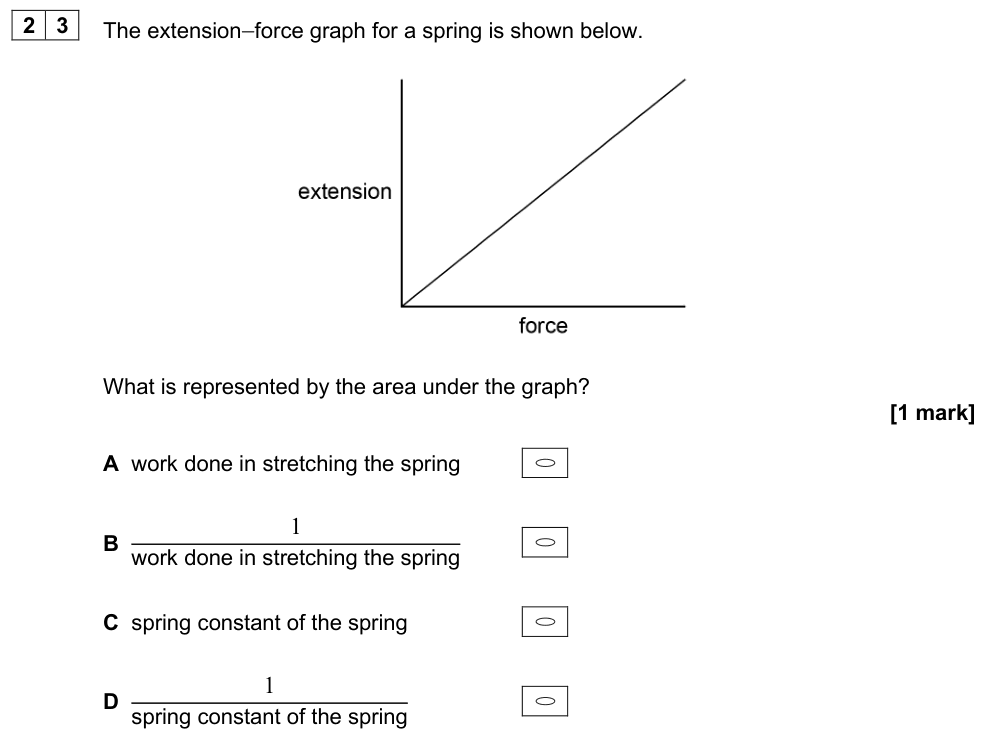
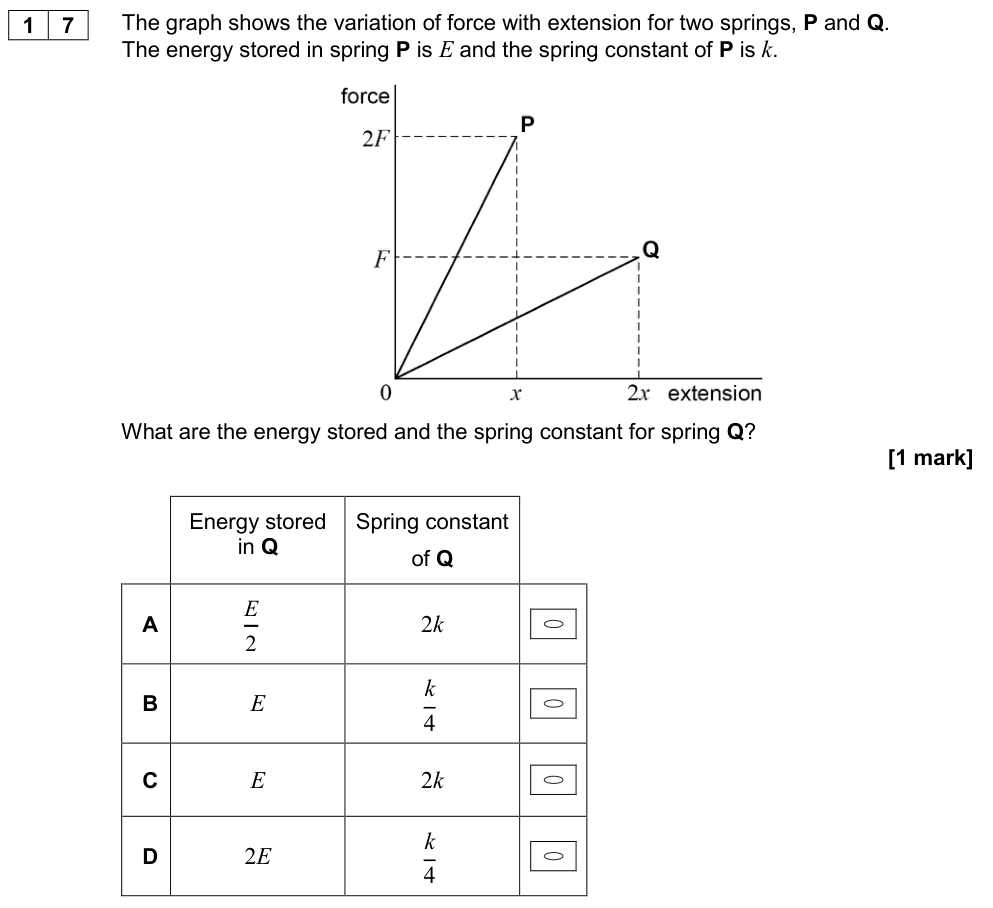
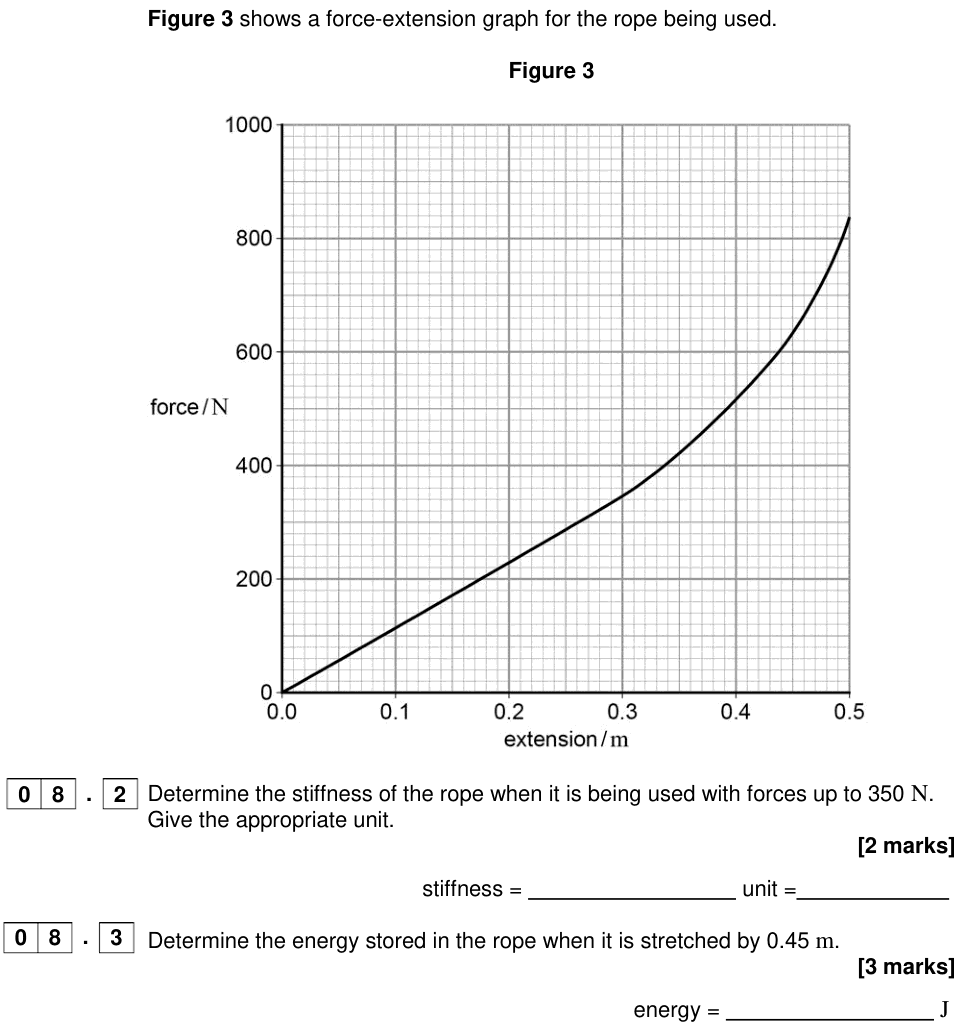
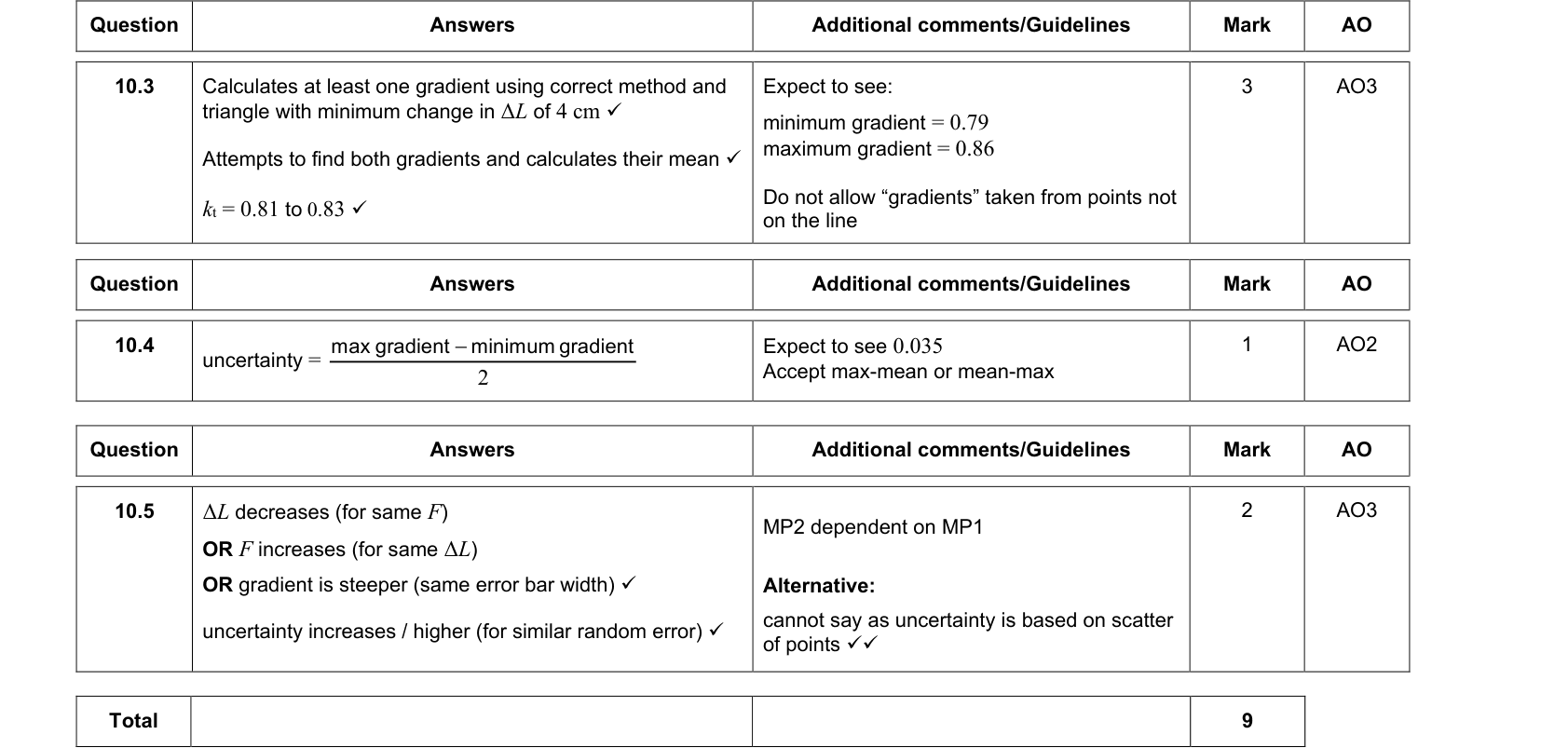
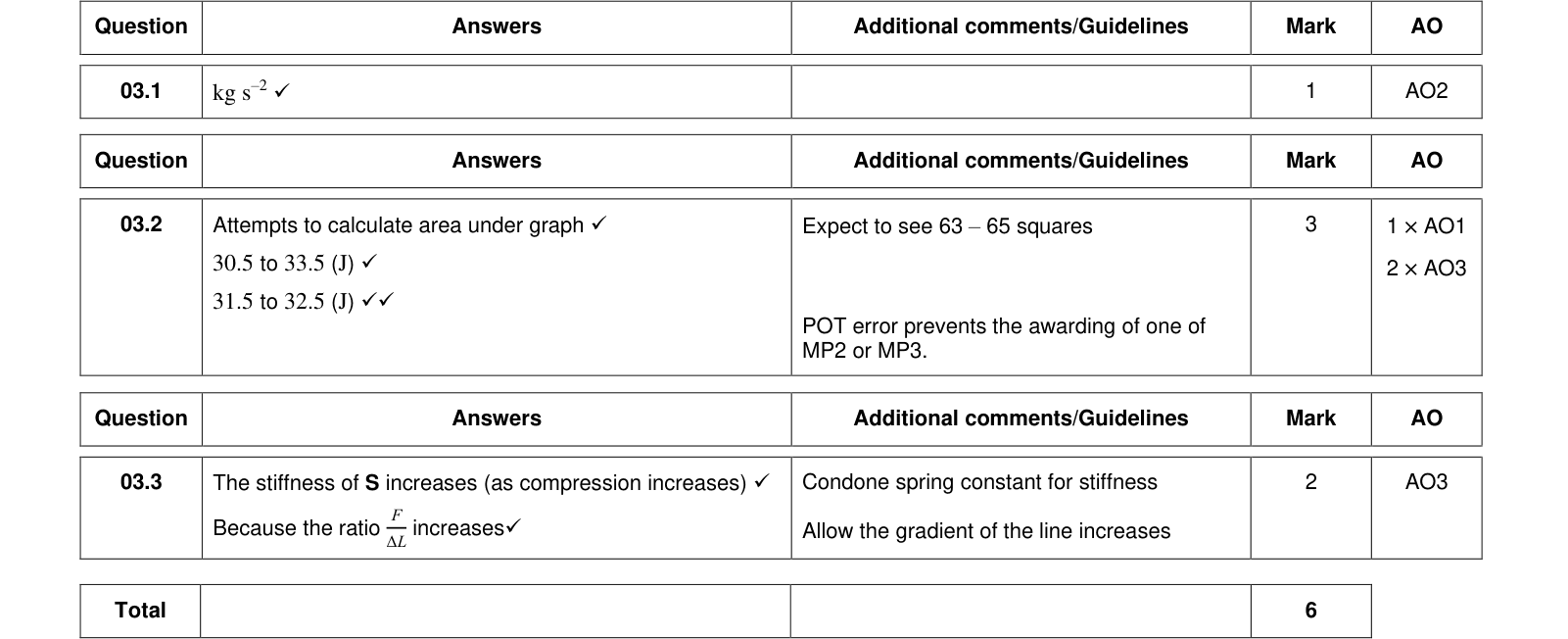
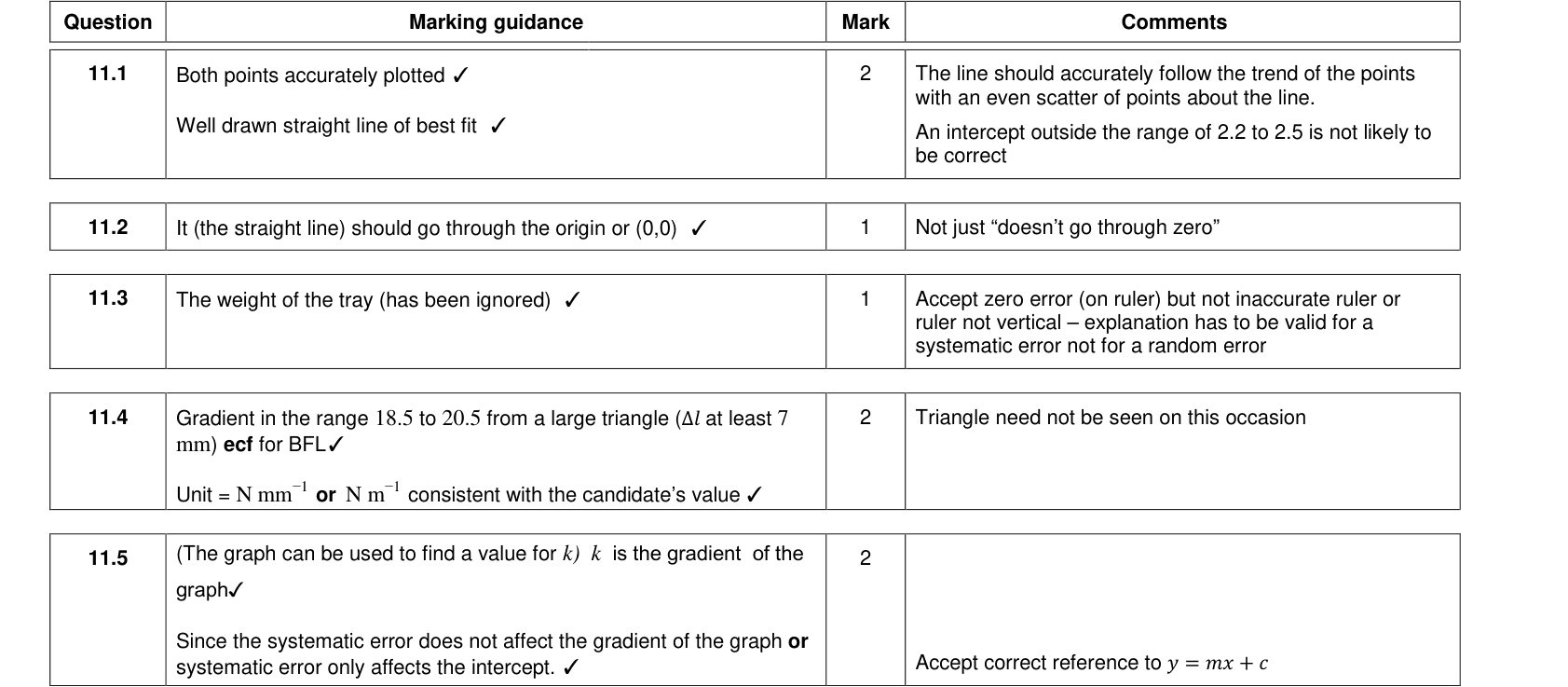
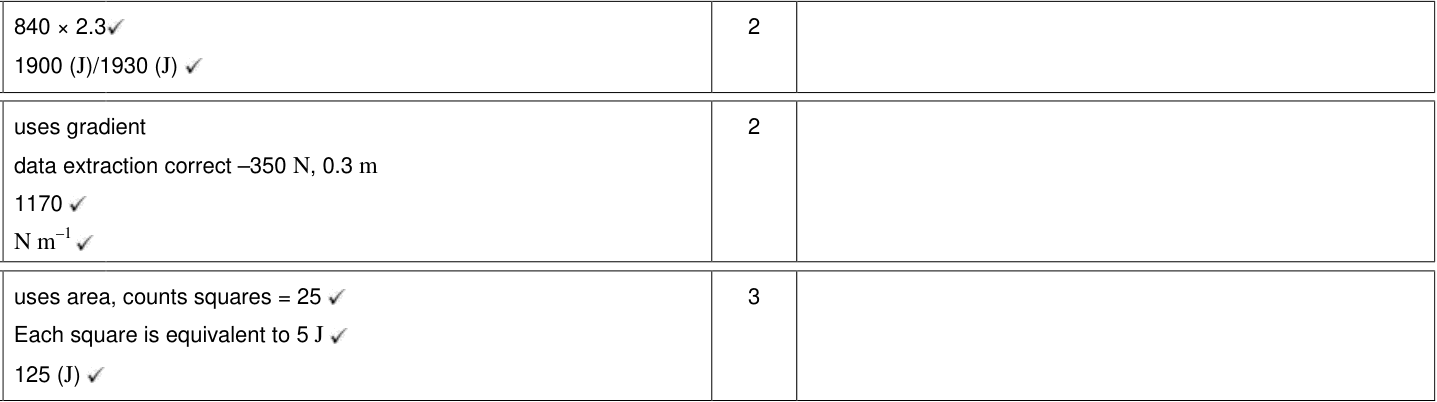
- On a force–extension graph, Hooke's law gives a straight line through the origin. The gradient = k. (If extension is on the y-axis, the gradient is $1/k$.)
Limit of proportionality and elastic limit
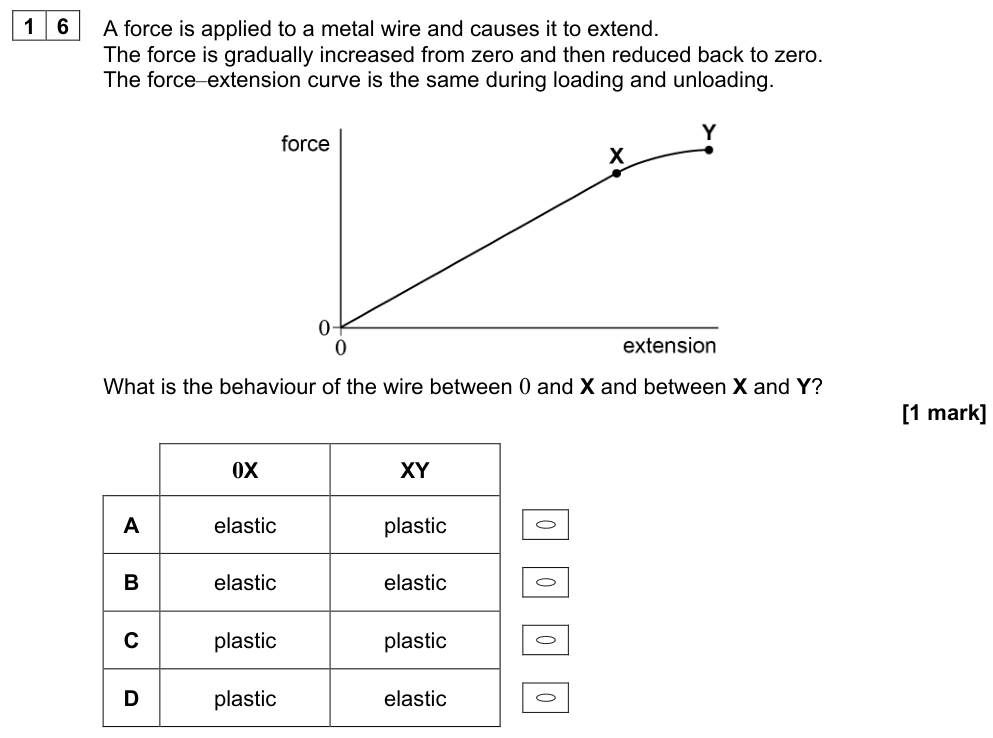
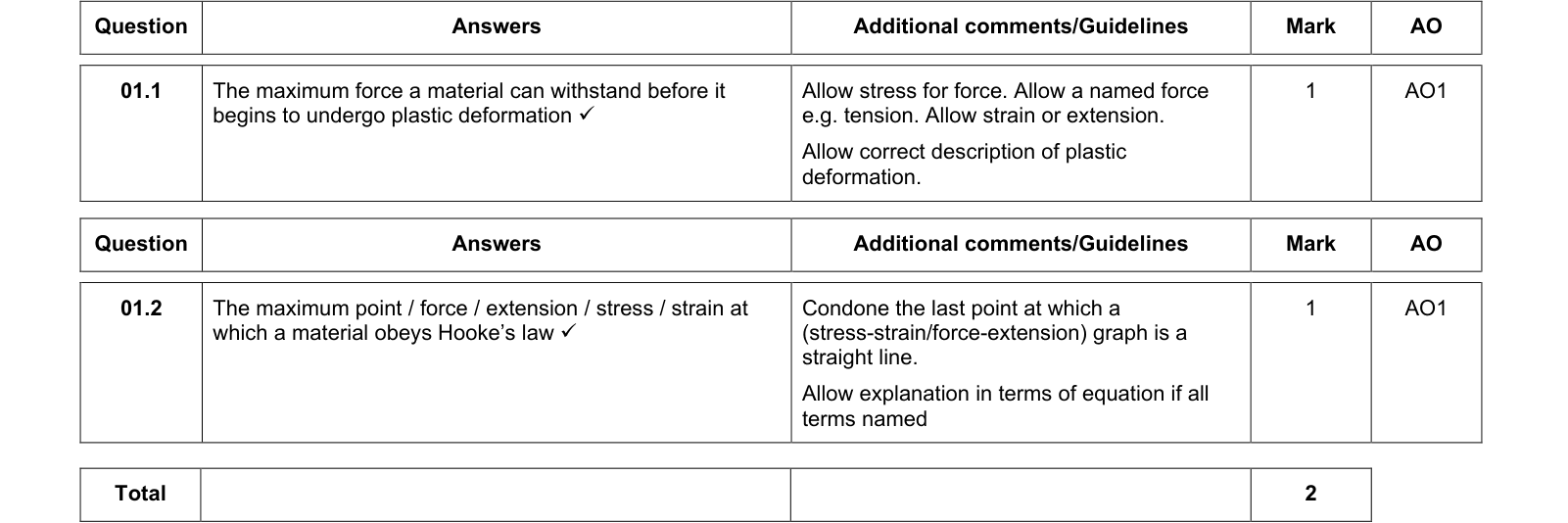
- Limit of proportionality (P): beyond this point the force–extension graph is no longer a straight line, so Hooke's law no longer applies.
- Elastic limit (E): the maximum force (or extension) for which the material still returns to its original length when the force is removed. It is usually just beyond the limit of proportionality.
Elastic and plastic deformation
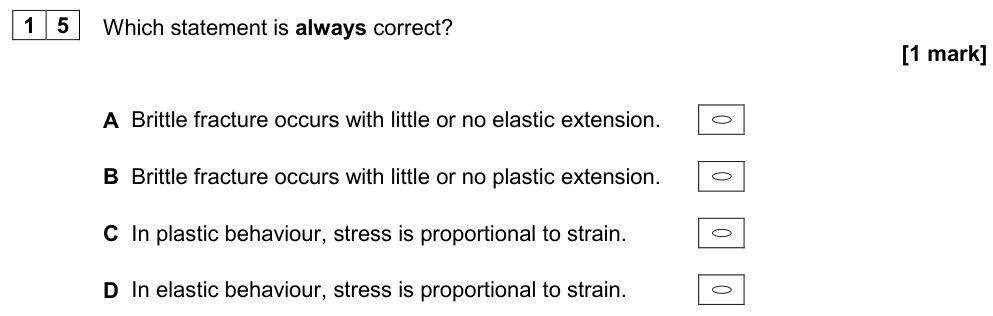
Elastic deformation: the material returns to its original shape and length when the force is removed.
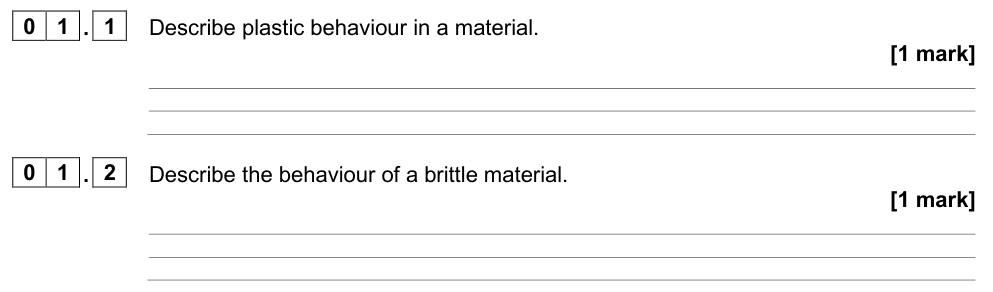
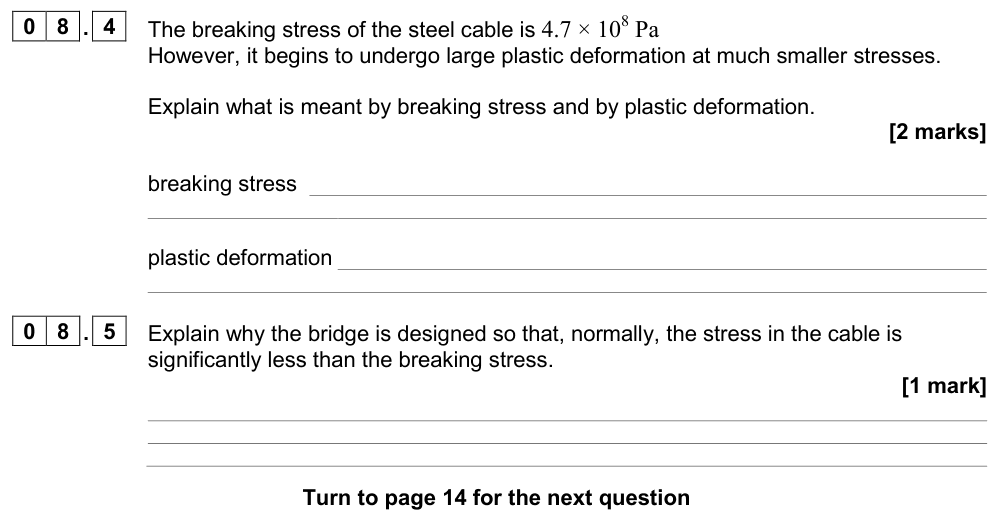
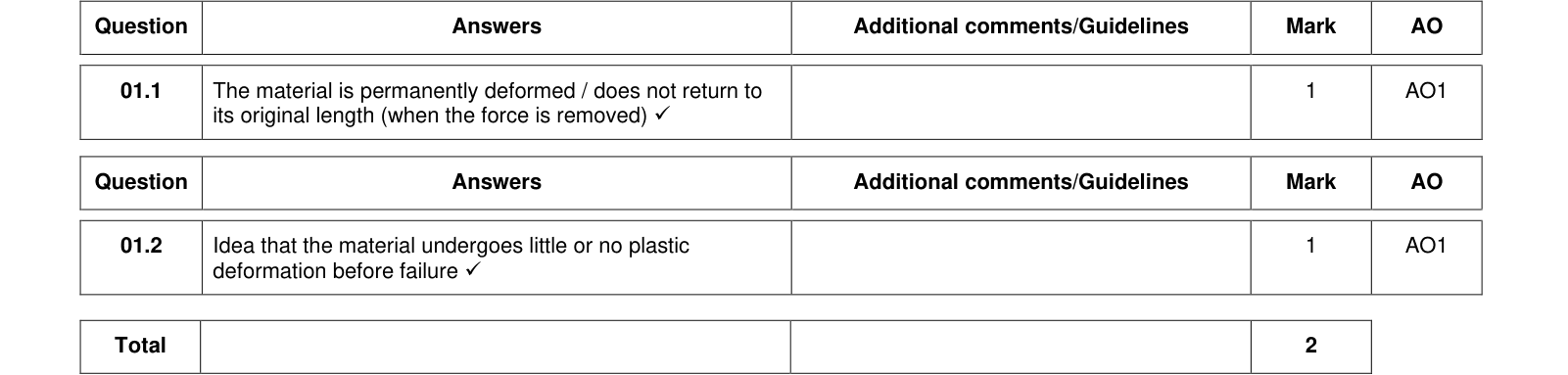
Plastic deformation: the material is permanently deformed. It does not return to its original length when the force is removed, because atoms (layers of atoms) have slid past each other into new positions.
Springs in series and parallel
| Arrangement | Effect | Combined spring constant |
|---|---|---|
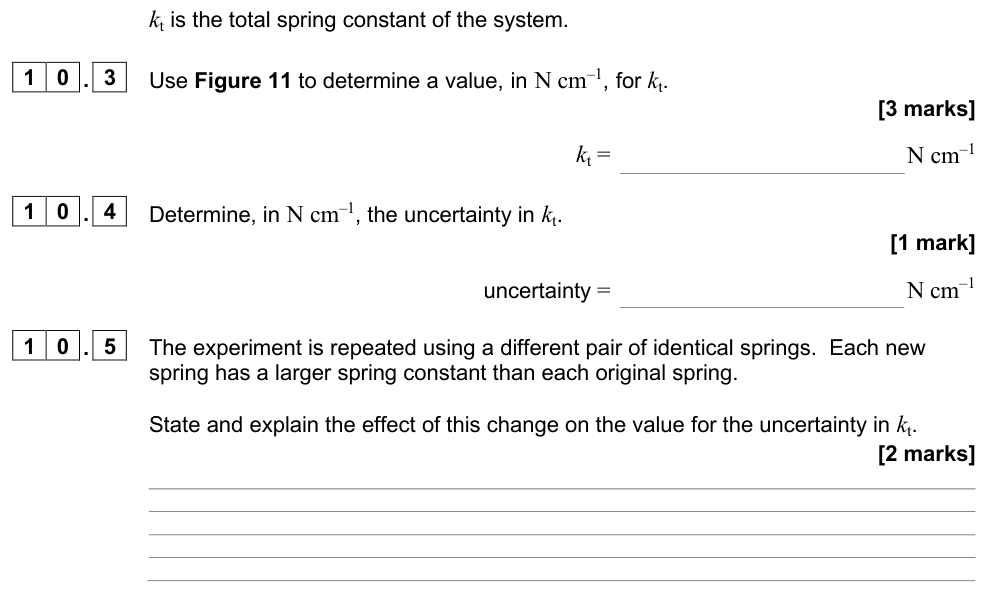
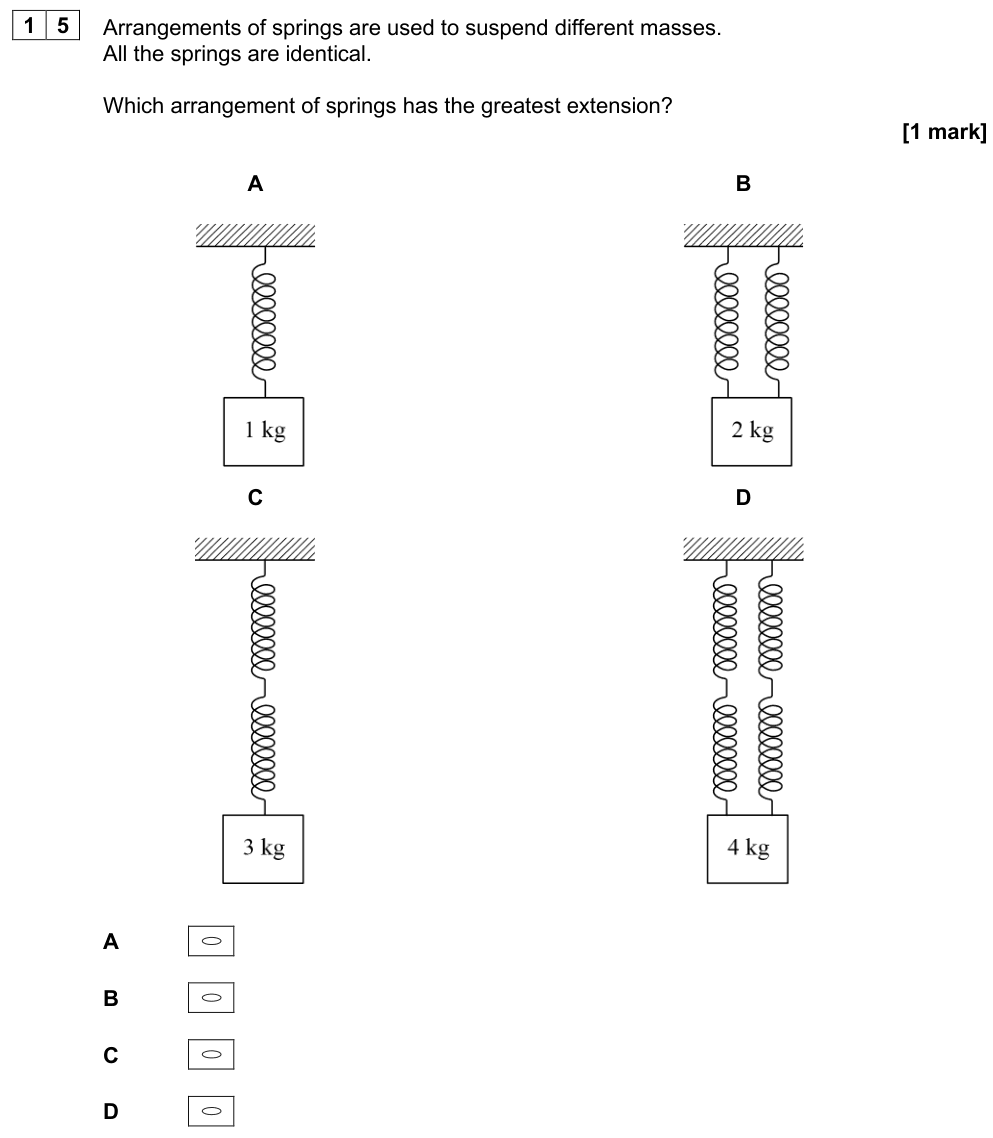
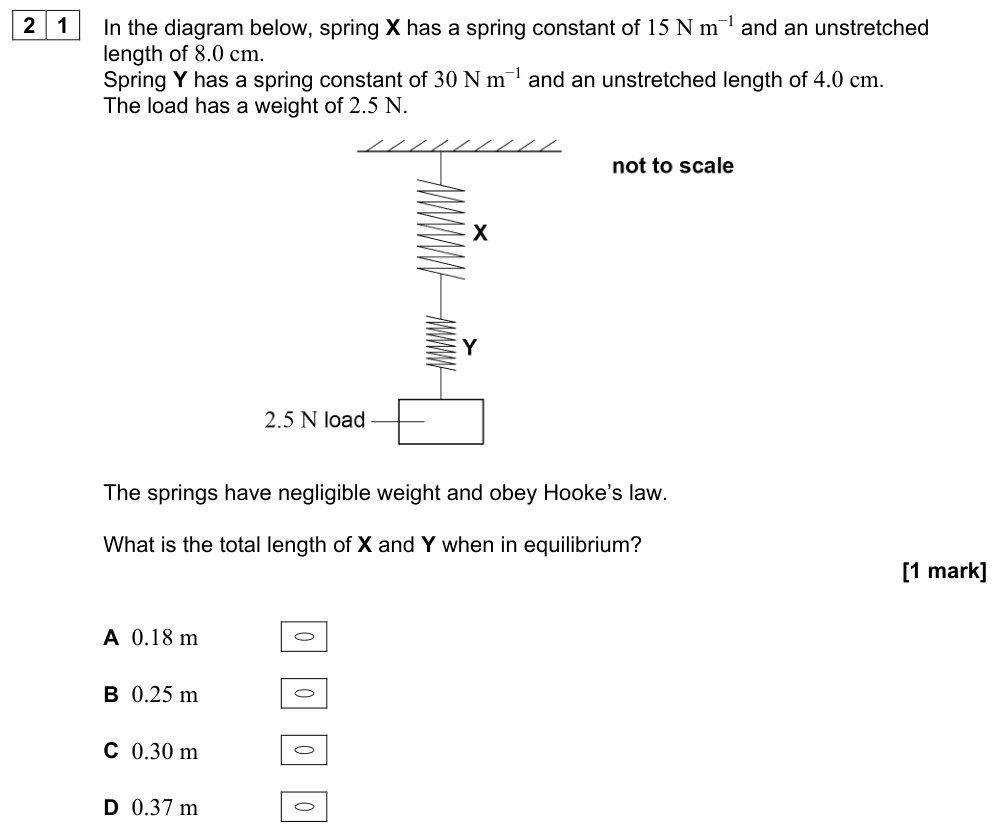
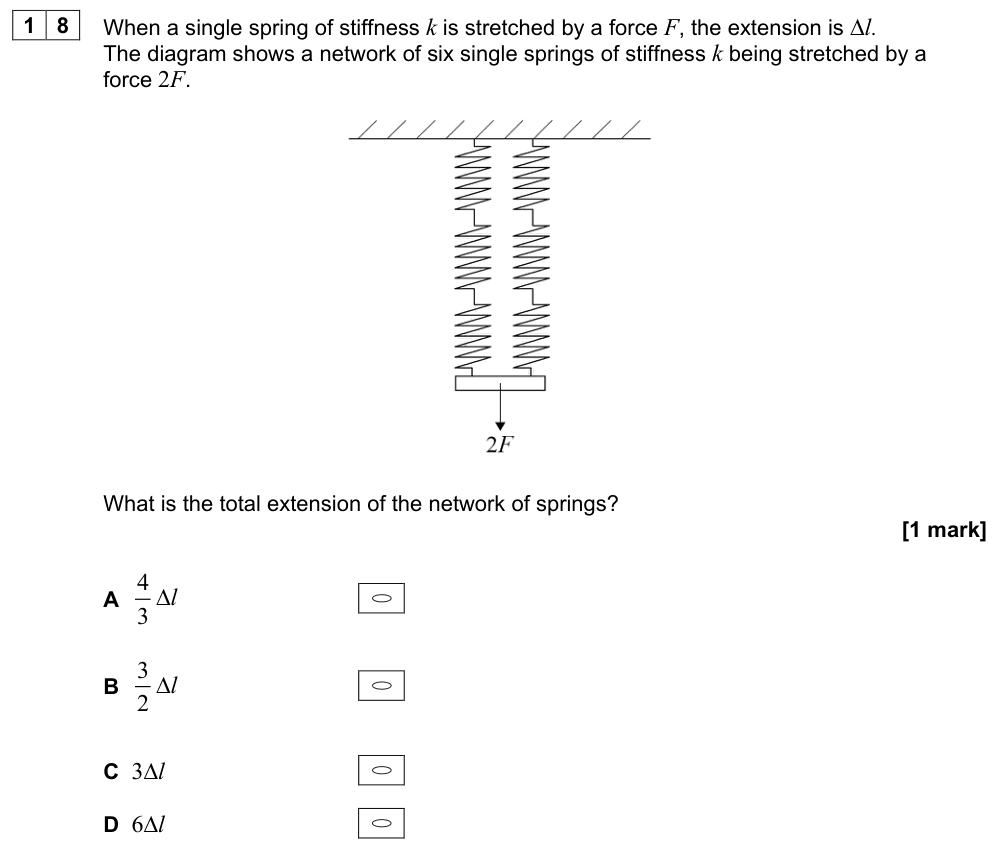
| Two identical springs in series | each spring carries the full force, so the total extension doubles | $k/2$ (in general $\dfrac{1}{k_T} = \dfrac{1}{k_1} + \dfrac{1}{k_2}$) |
| Two identical springs in parallel | the force is shared, so each extends half as much | $2k$ (in general $k_T = k_1 + k_2$) |
Tensile stress, tensile strain and breaking stress
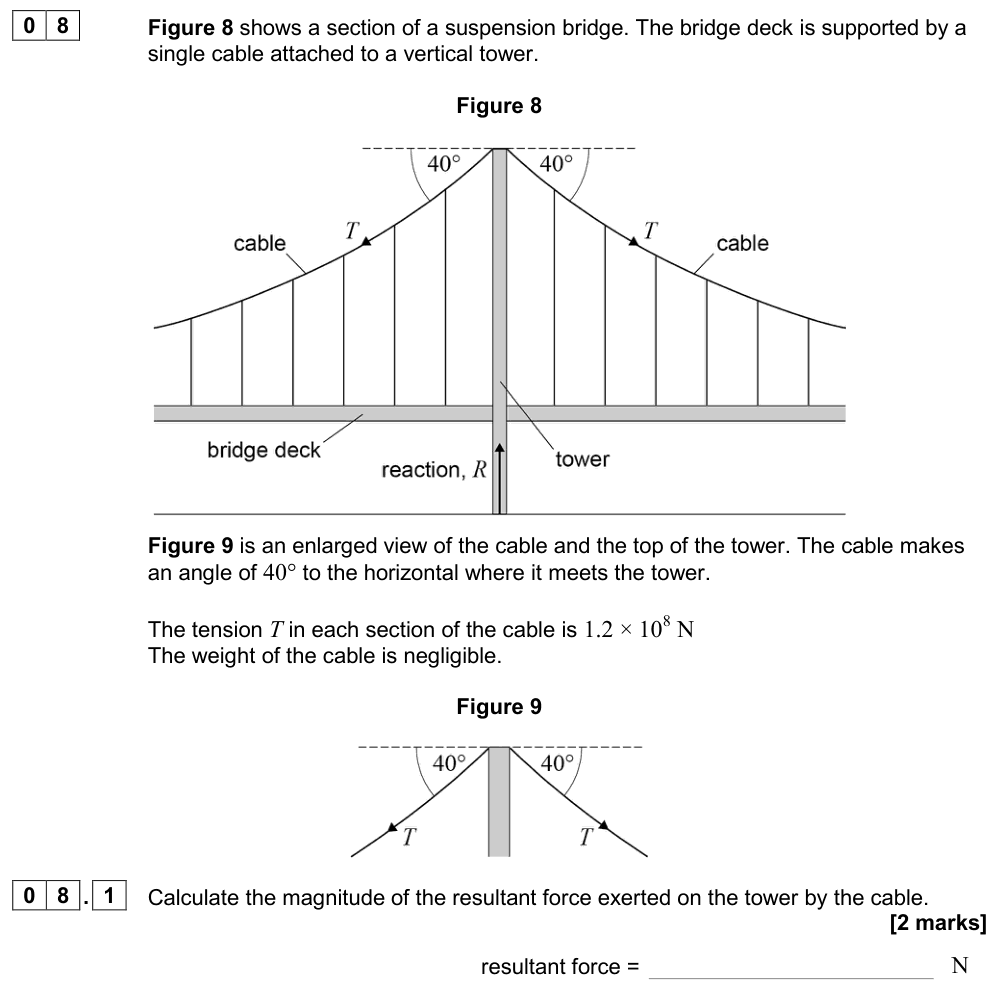
The extension of a wire depends on its length and cross-sectional area as well as its material. To describe the material we use stress and strain.
Tensile stress and strain
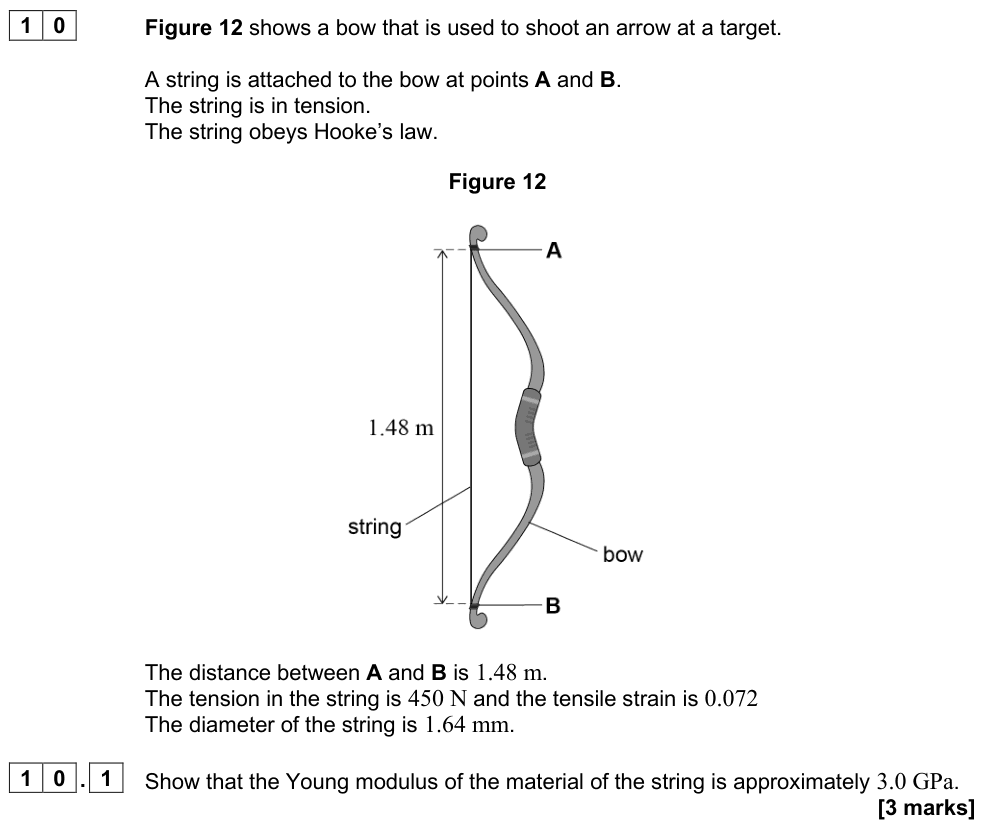
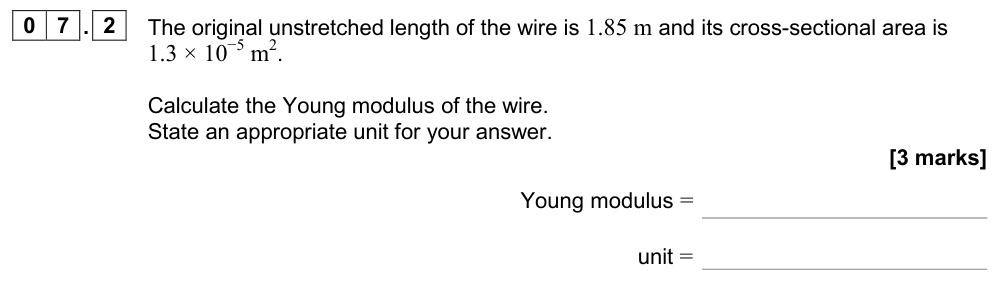
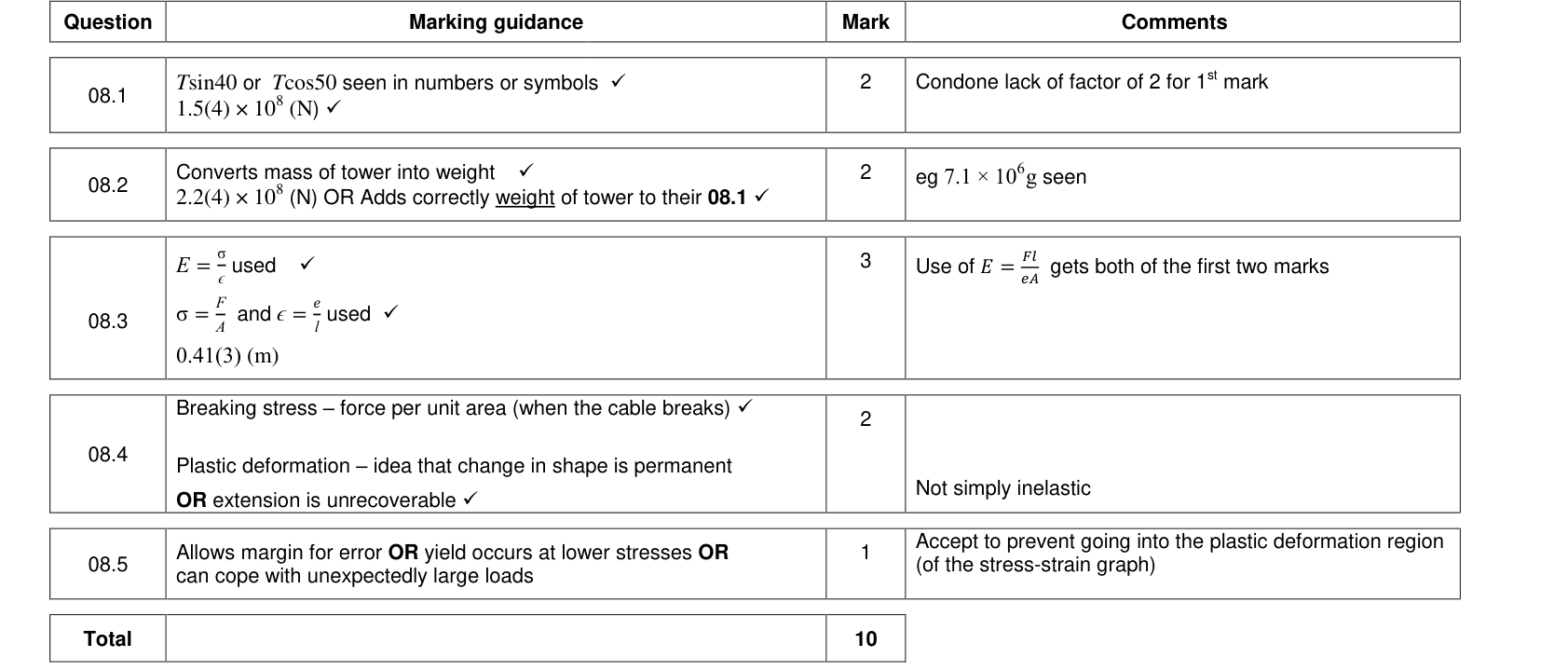
Tensile stress = tension (force) per unit cross-sectional area: $$\sigma = \frac{F}{A} \qquad \text{unit: Pa (N m}^{-2}\text{)}$$
Tensile strain = extension per unit original length: $$\varepsilon = \frac{\Delta L}{L} \qquad \text{no unit}$$
Breaking stress (ultimate tensile stress): the maximum stress a material can withstand before it breaks.
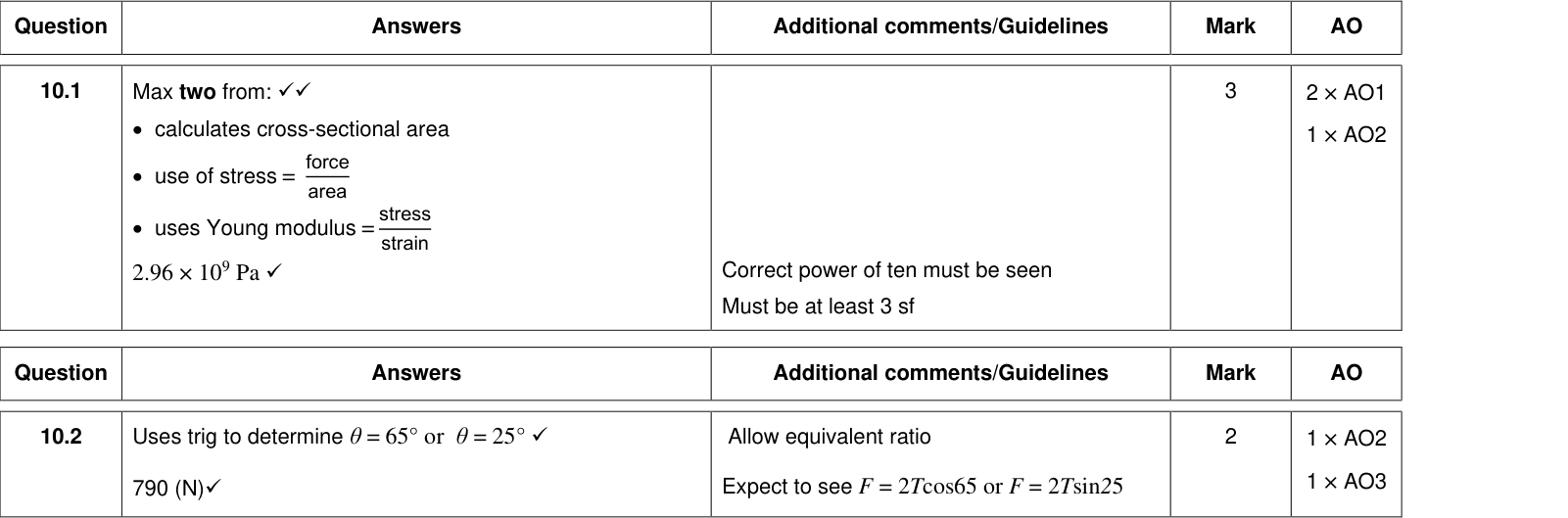
For a wire of diameter $d$, $A = \dfrac{\pi d^2}{4}$. Remember to convert mm² to m² ($\times 10^{-6}$).
Elastic strain energy
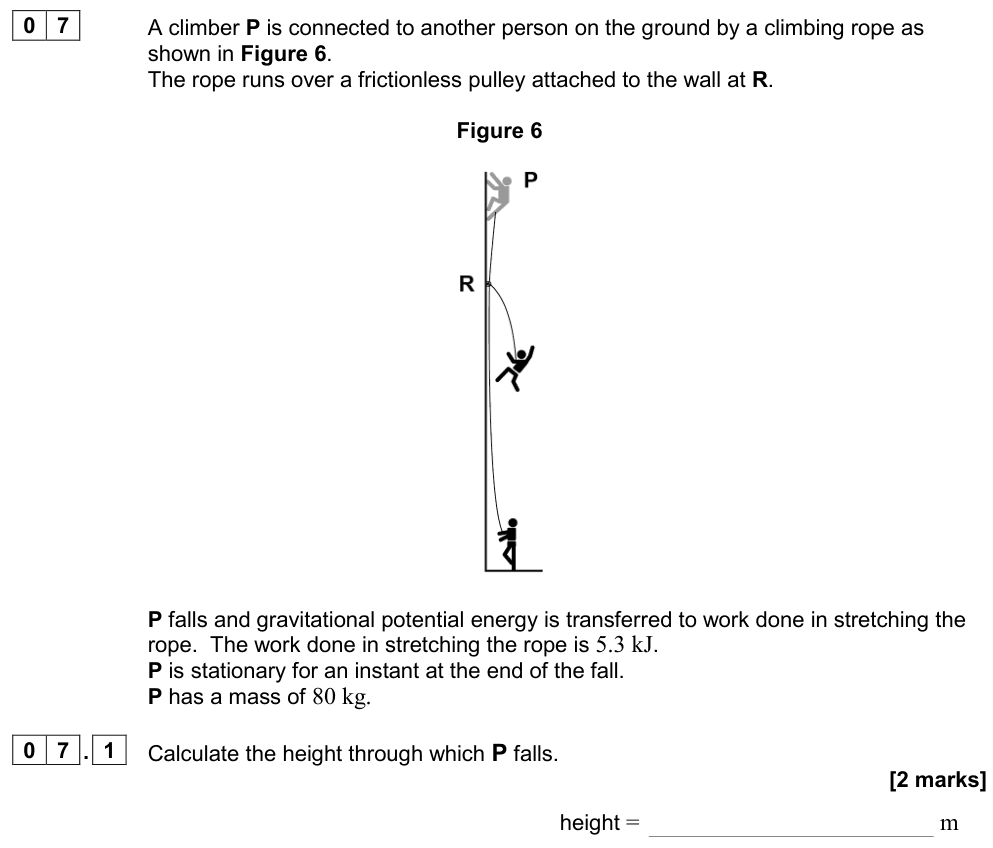
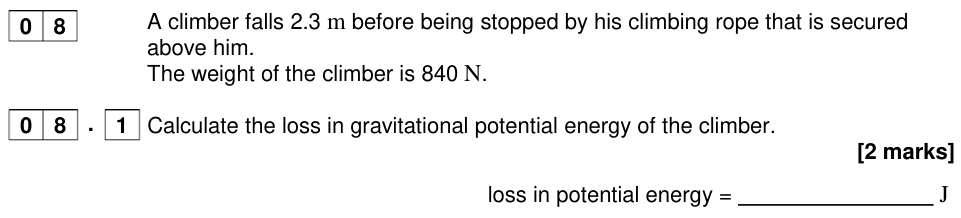
When a material is stretched elastically, the work done is stored as elastic strain energy (elastic potential energy).
Energy stored
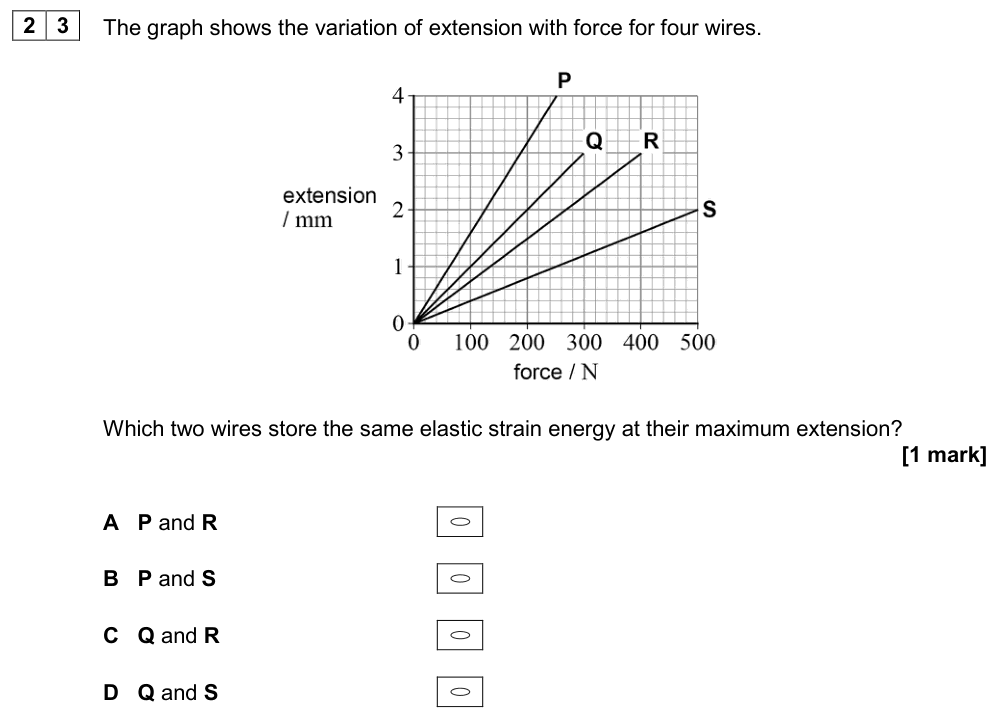
$$\text{energy stored} = \text{area under the force–extension graph}$$
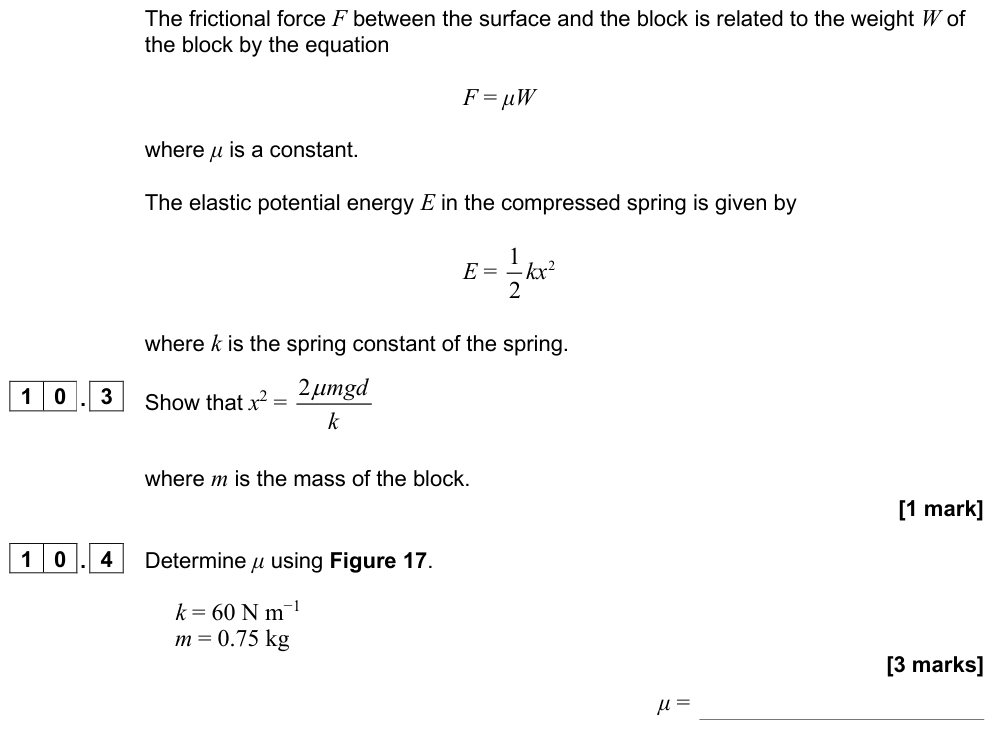
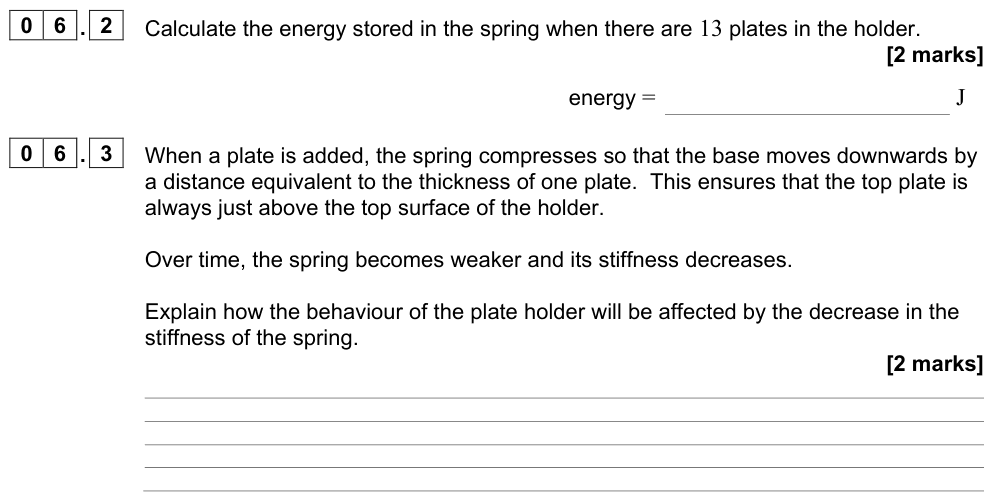
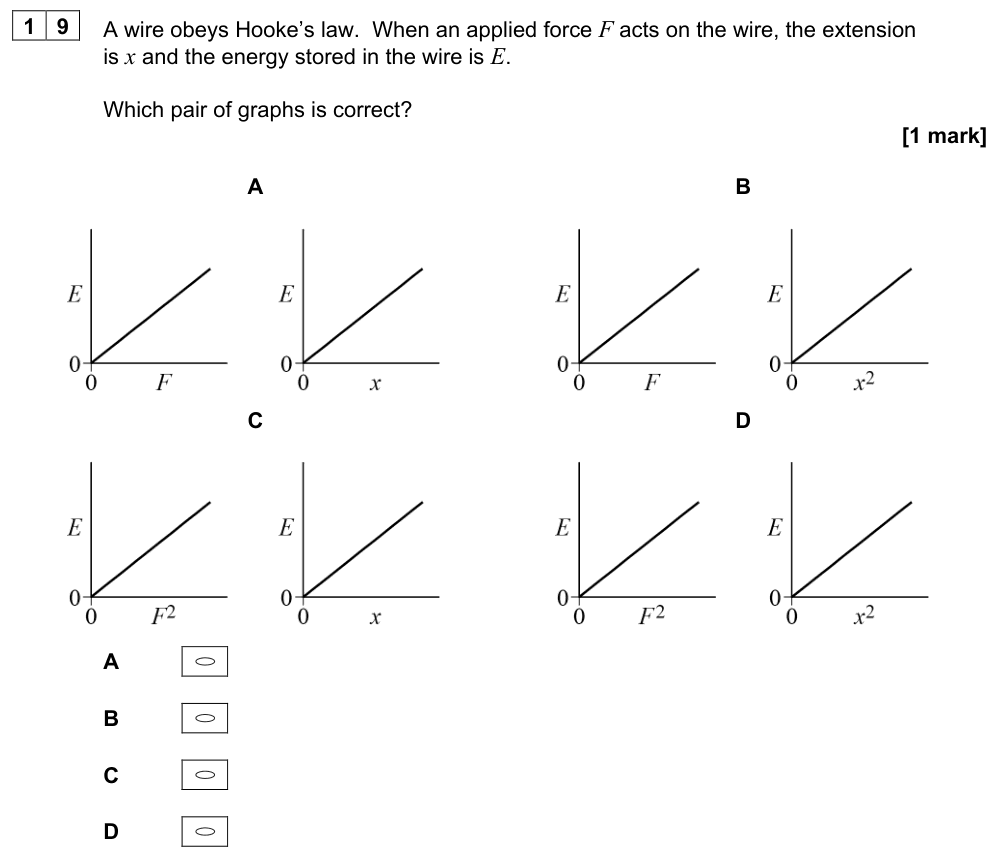
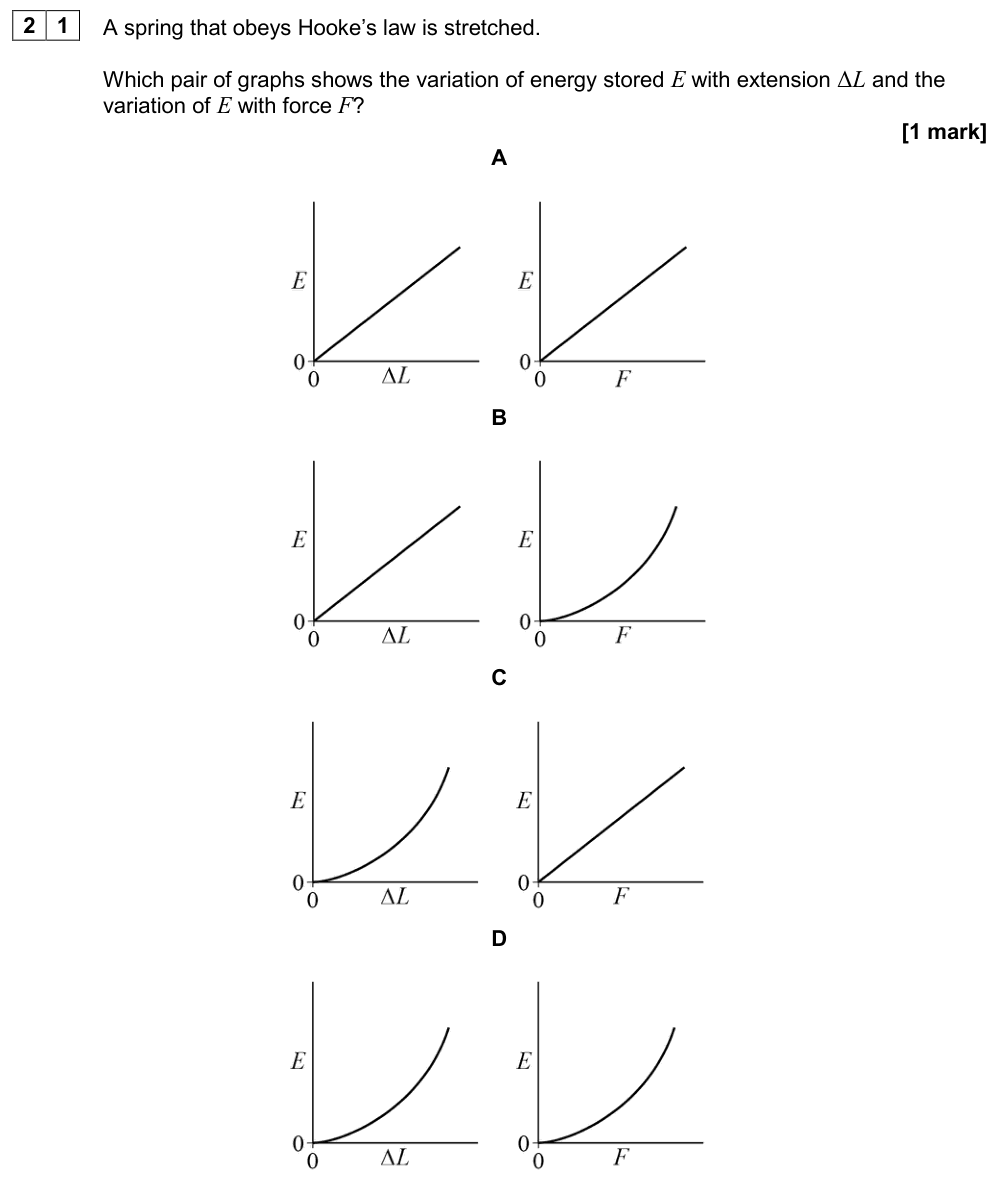
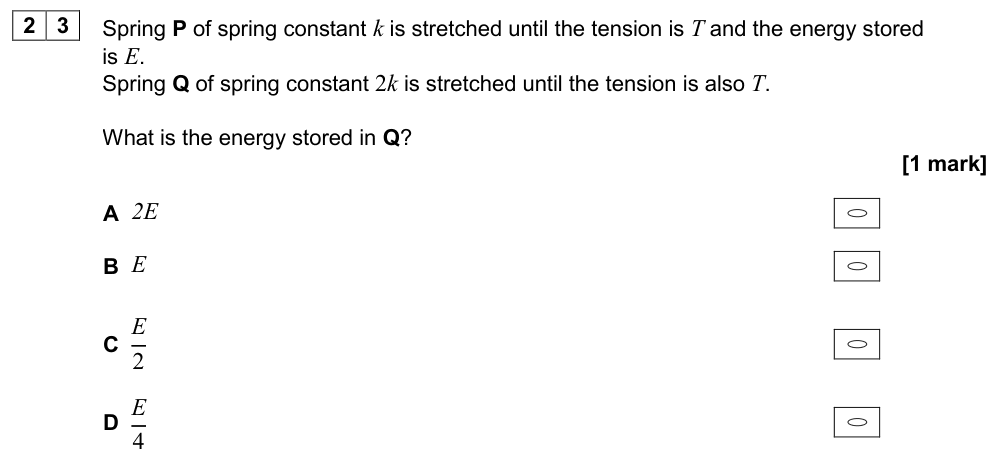
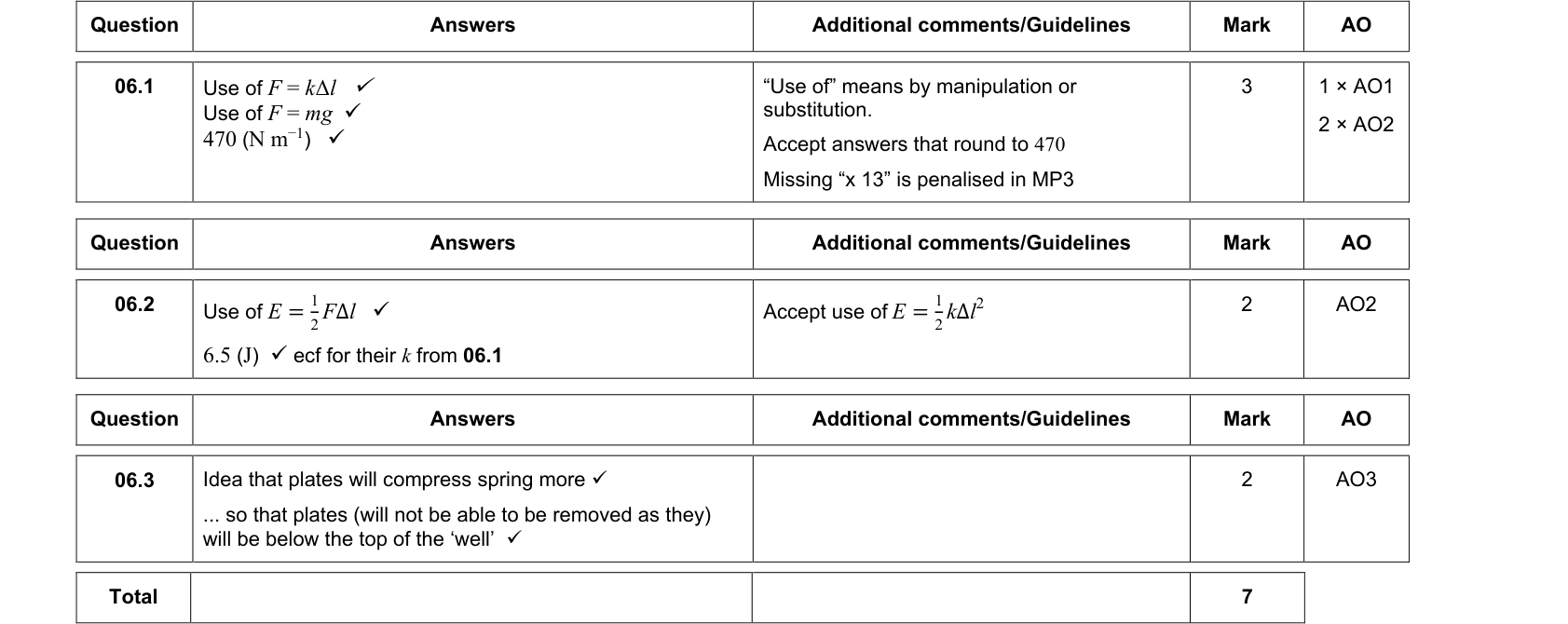
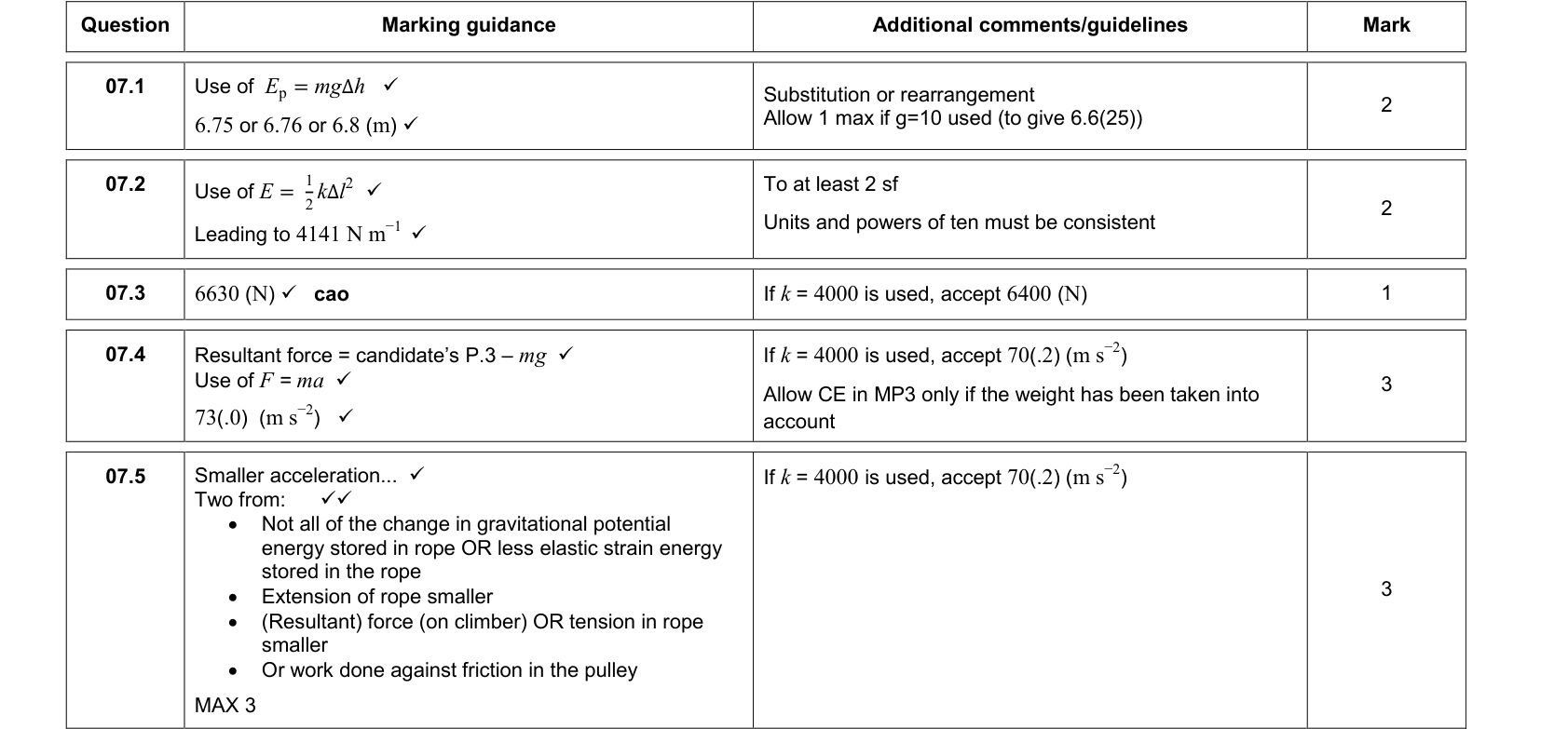
Within the limit of proportionality (a straight-line graph): $$E = \tfrac12F\Delta L = \tfrac12k(\Delta L)^2$$
The energy stored per unit volume is the area under a stress–strain graph: $\tfrac12\sigma\varepsilon$ (within the limit of proportionality).
Worked example: spring
A spring with $k = 250\ \text{N m}^{-1}$ is stretched by 8.0 cm.
$F = k\Delta L = 250 \times 0.080 = 20\ \text{N}$; $E = \tfrac12 \times 20 \times 0.080 = 0.80\ \text{J}$.
Doubling the extension doubles the force but quadruples the energy stored.
Energy conservation with springs
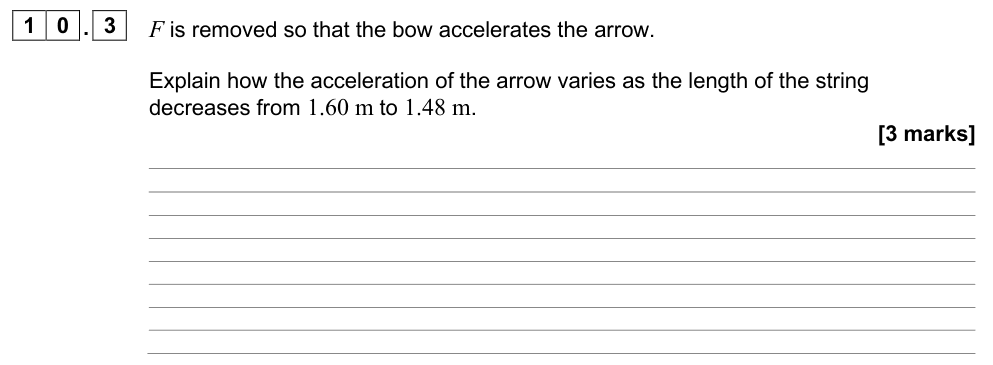
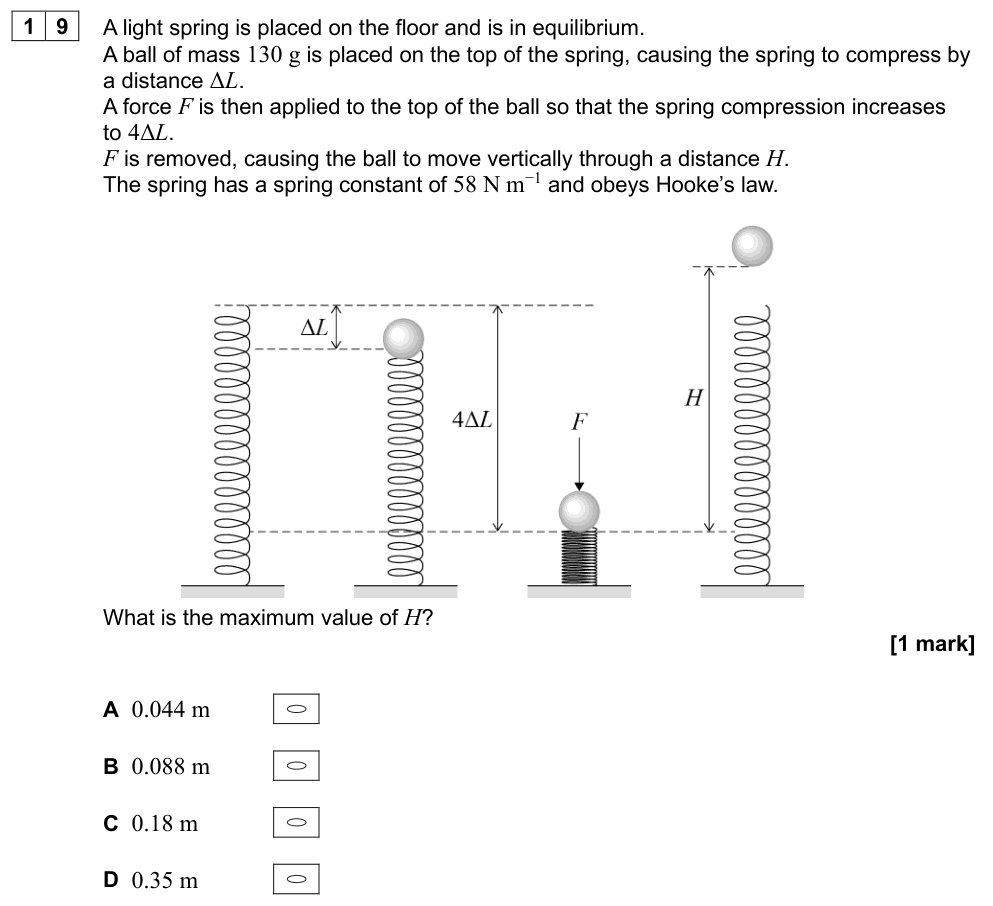
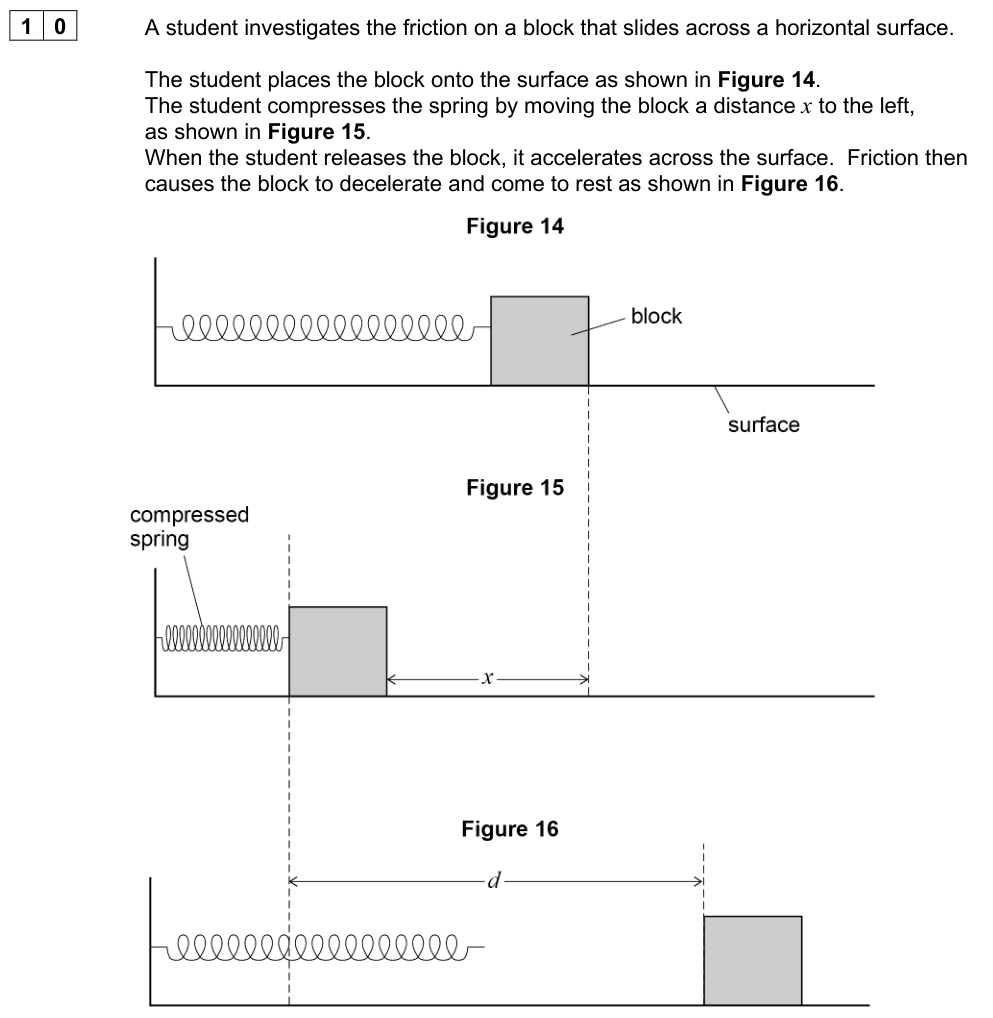
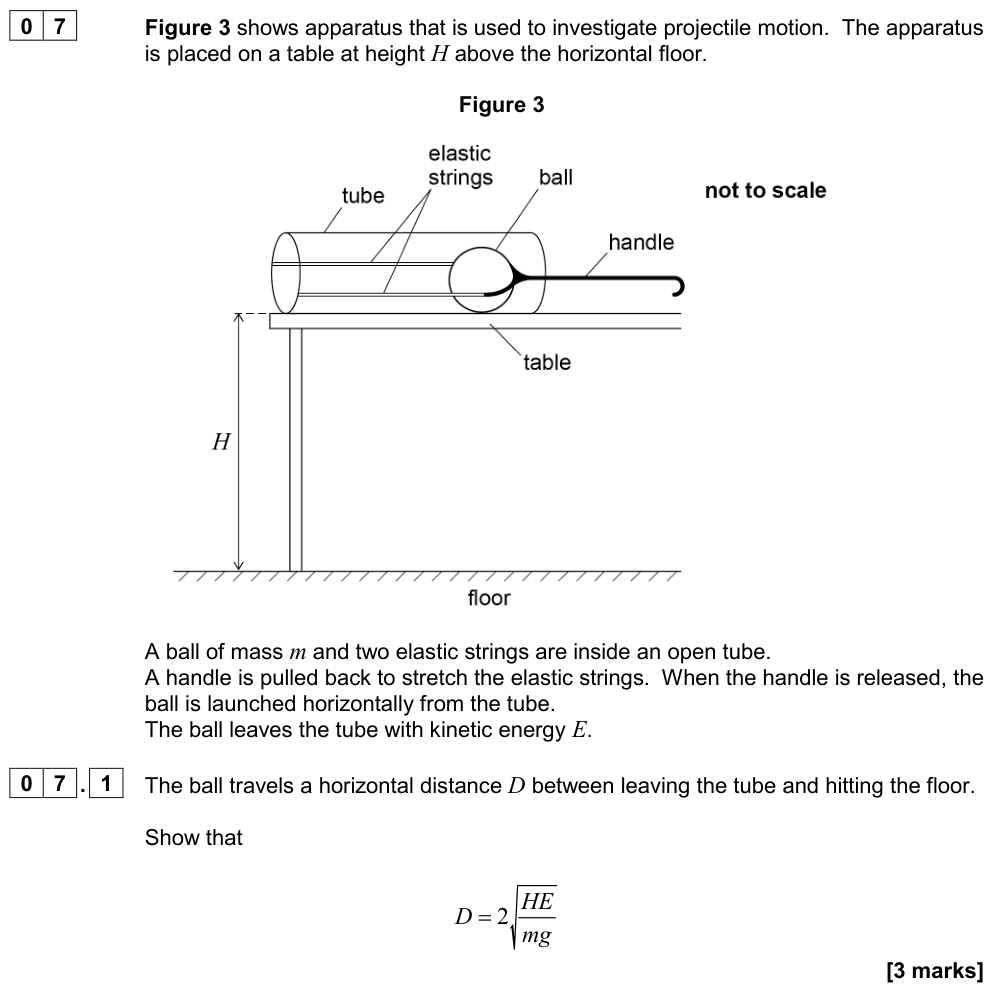
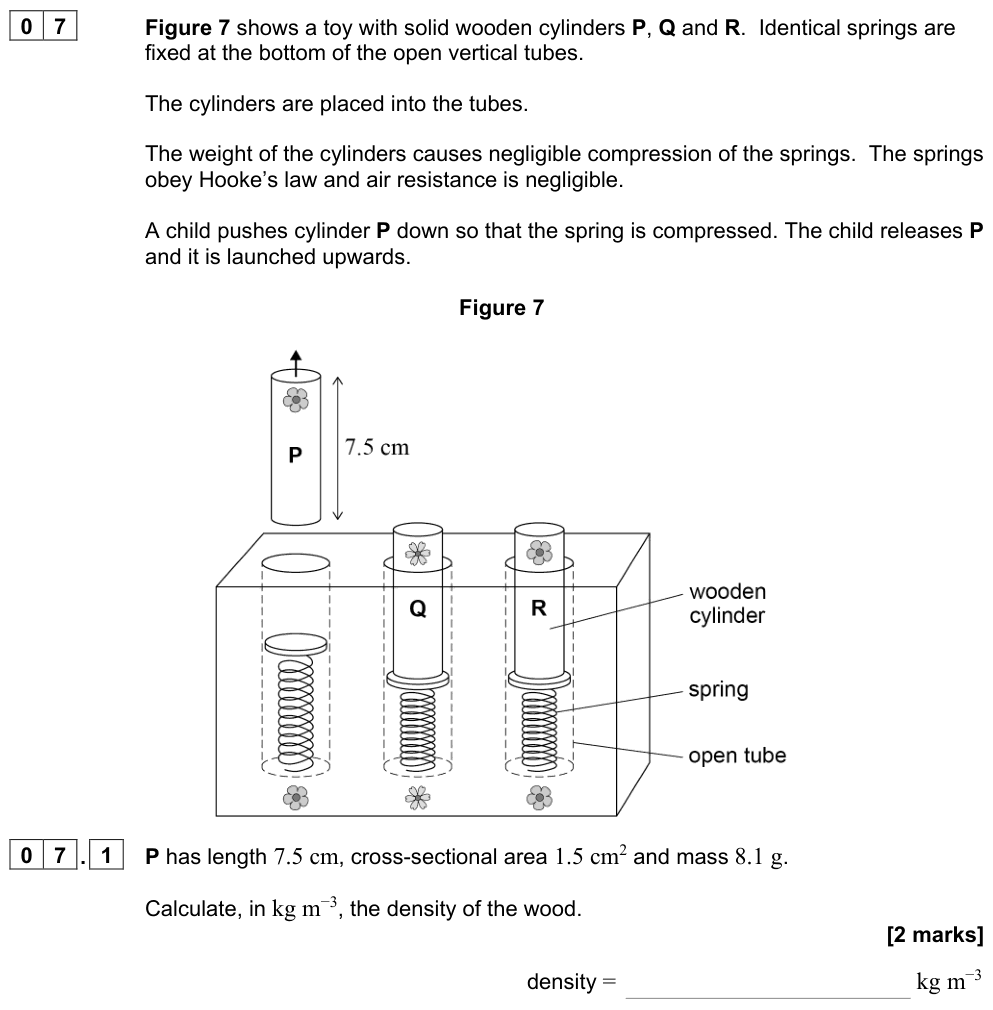
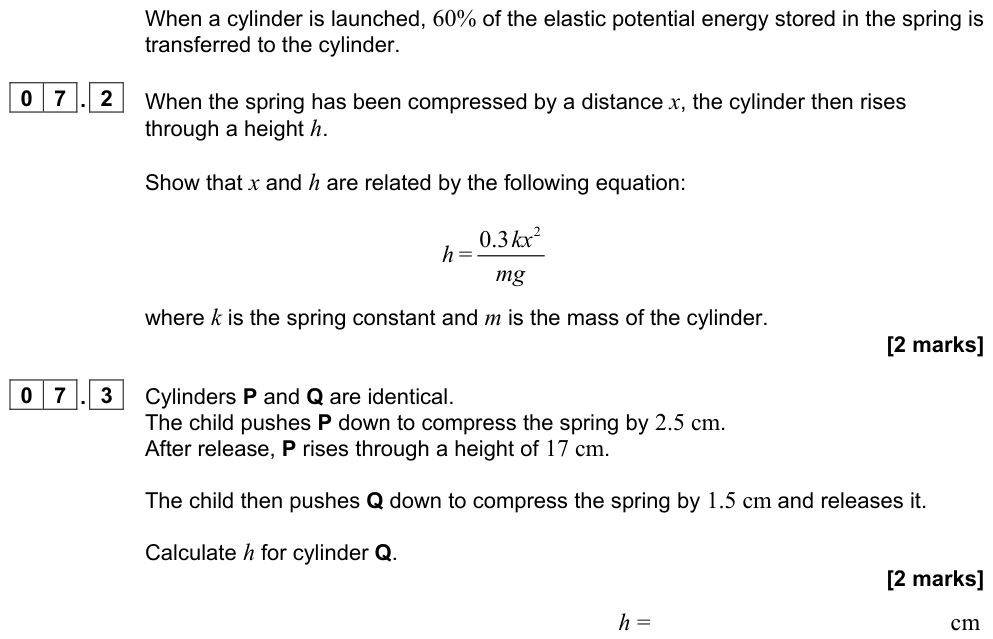
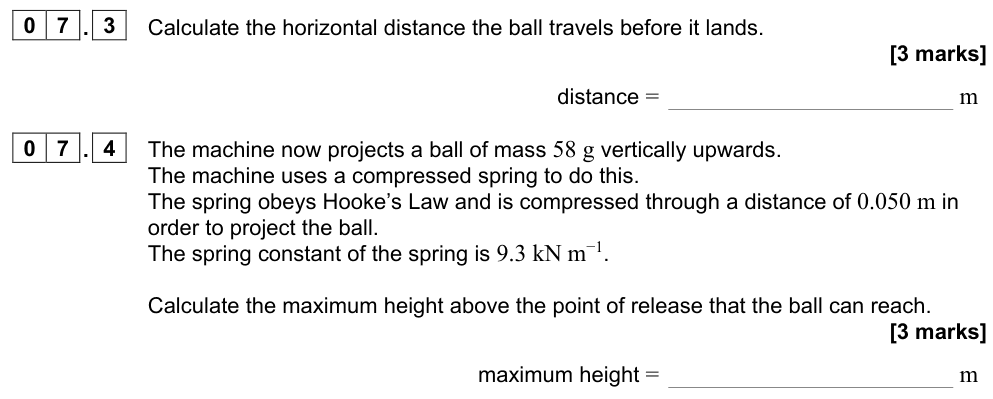
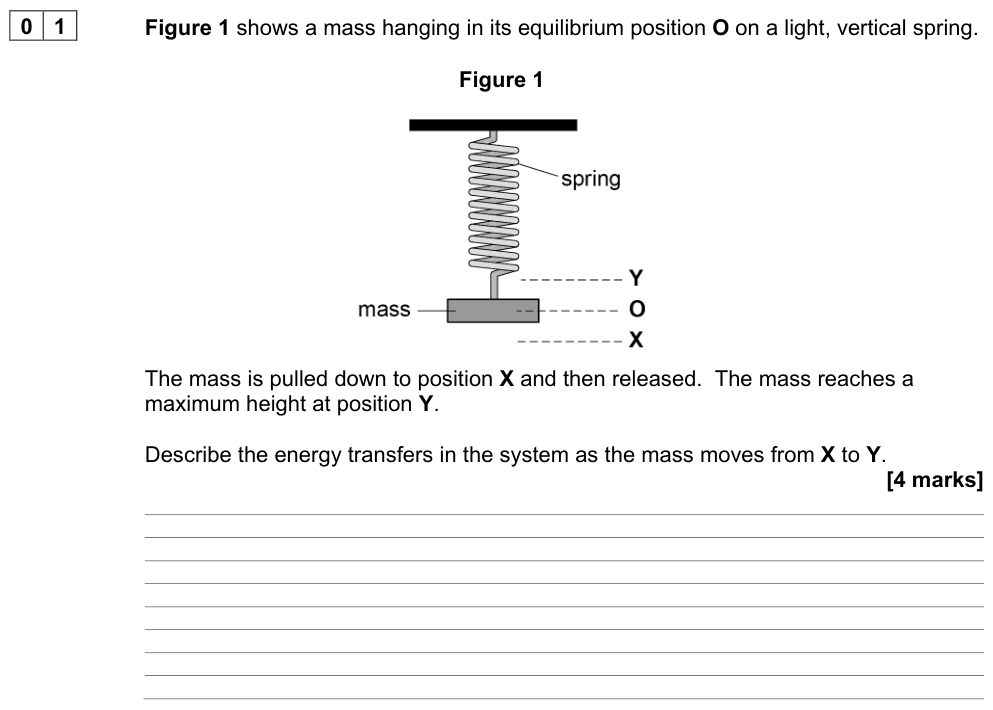
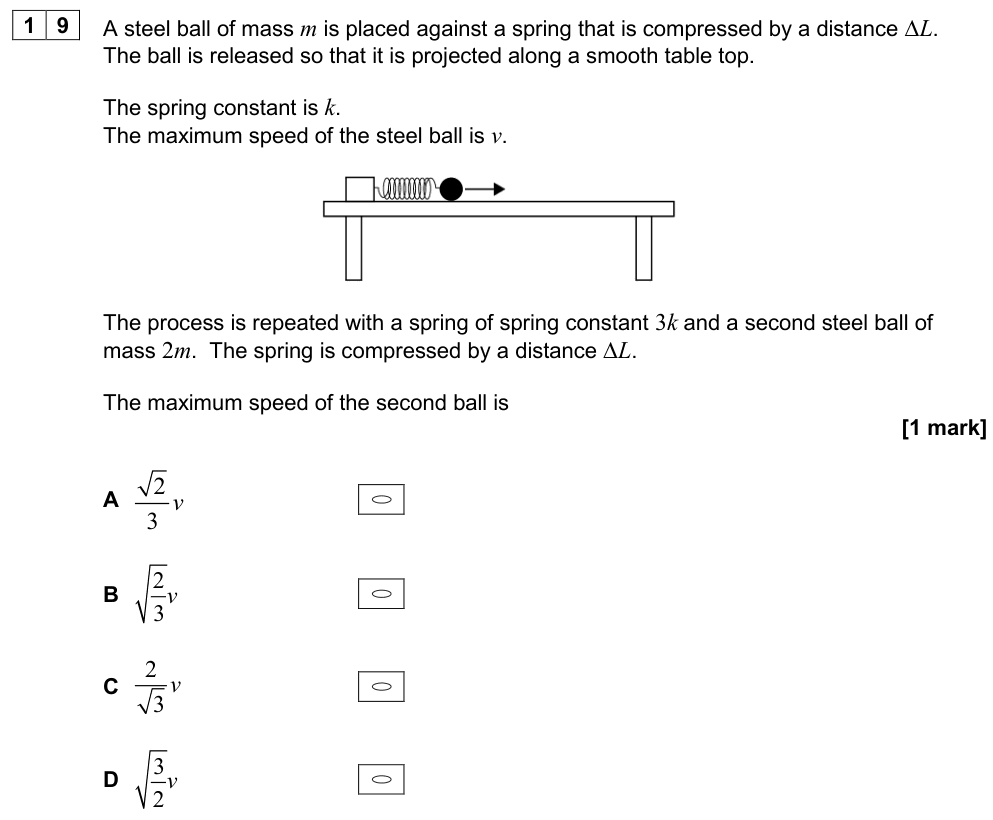
A compressed spring that launches a ball transfers elastic potential energy to kinetic energy (and gravitational potential energy if the ball rises):
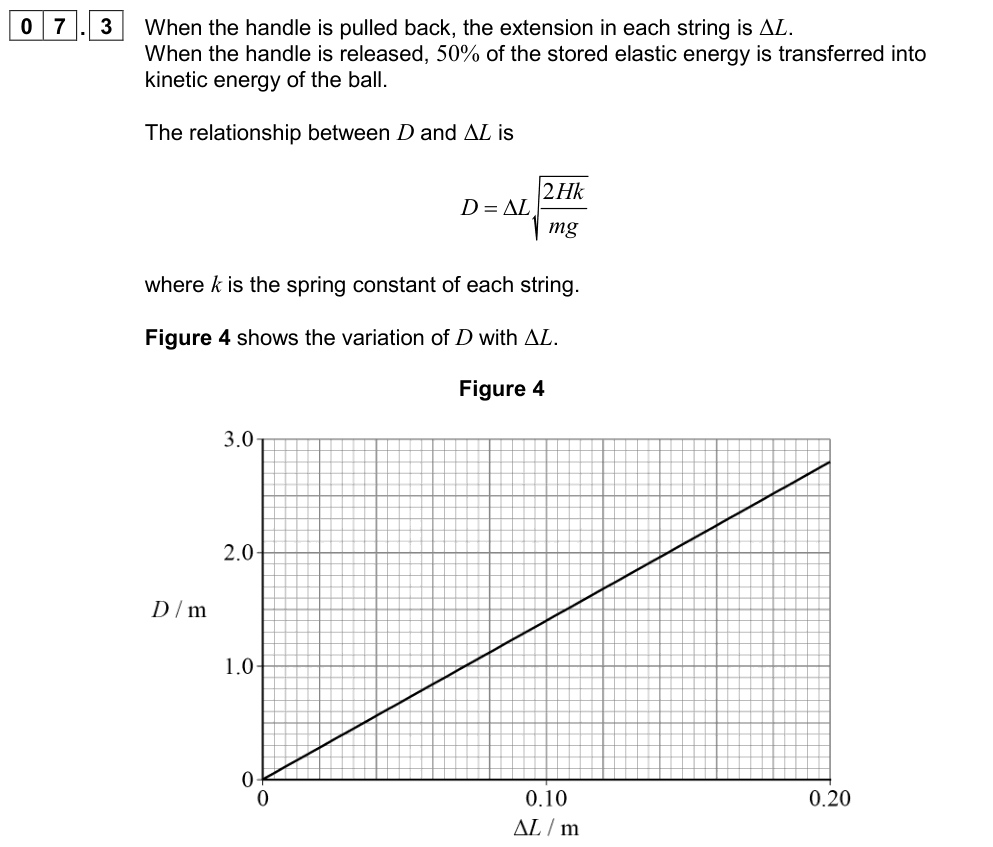
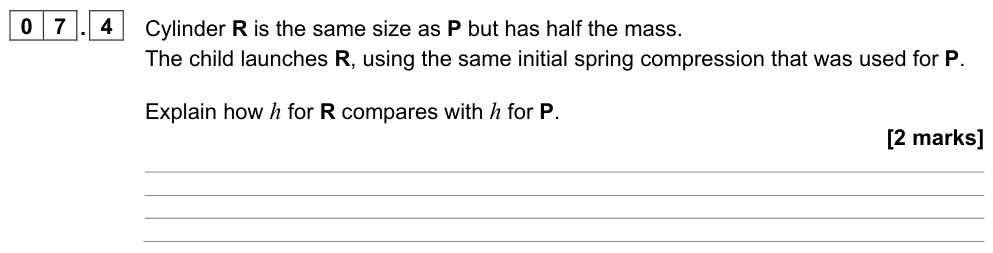
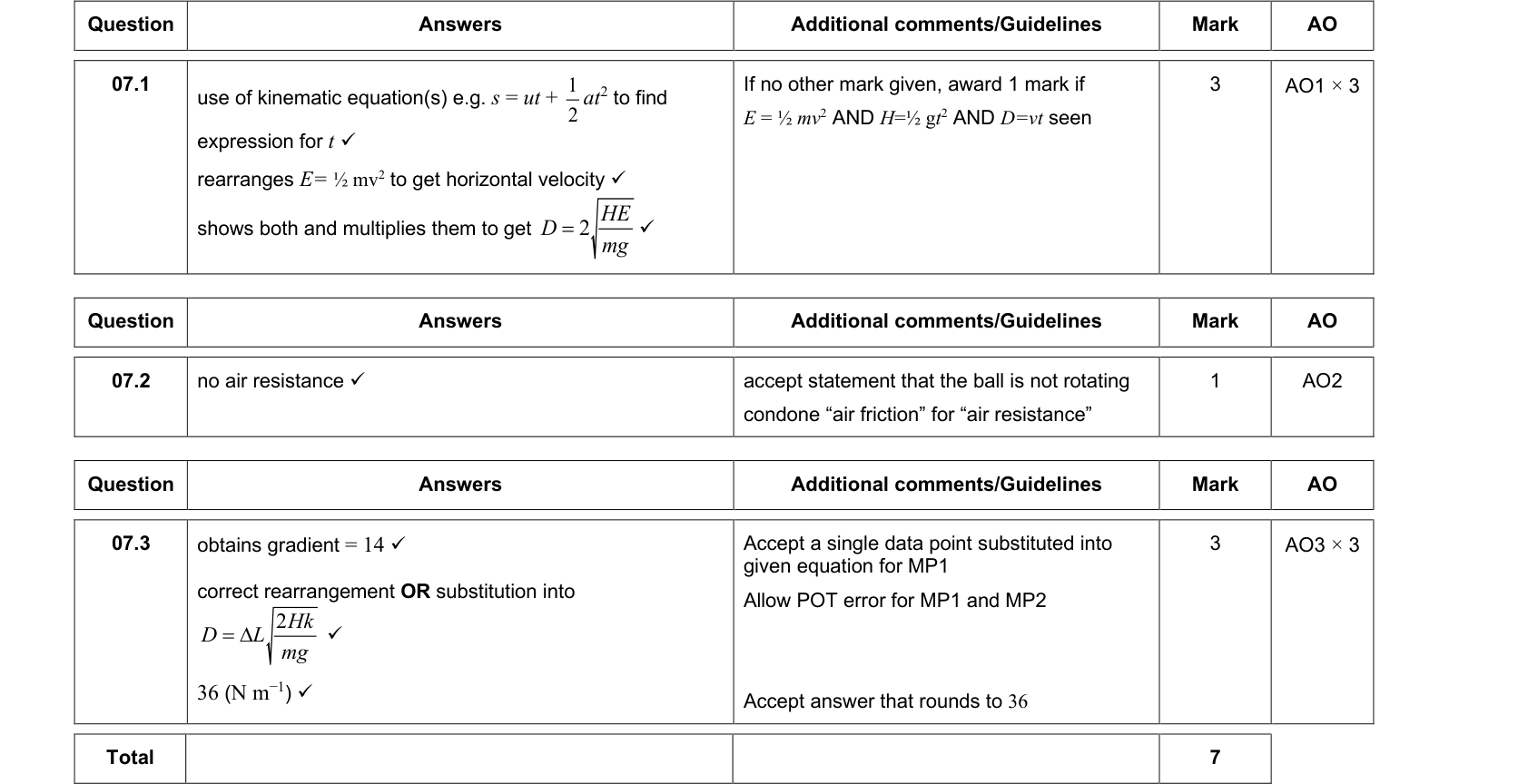
$$\tfrac12k(\Delta L)^2 = \tfrac12mv^2 \quad (\text{horizontal launch, no losses})$$
$$\tfrac12k(\Delta L)^2 = mg\Delta h \quad (\text{vertical launch to the top of the flight})$$
Worked example: toy launcher
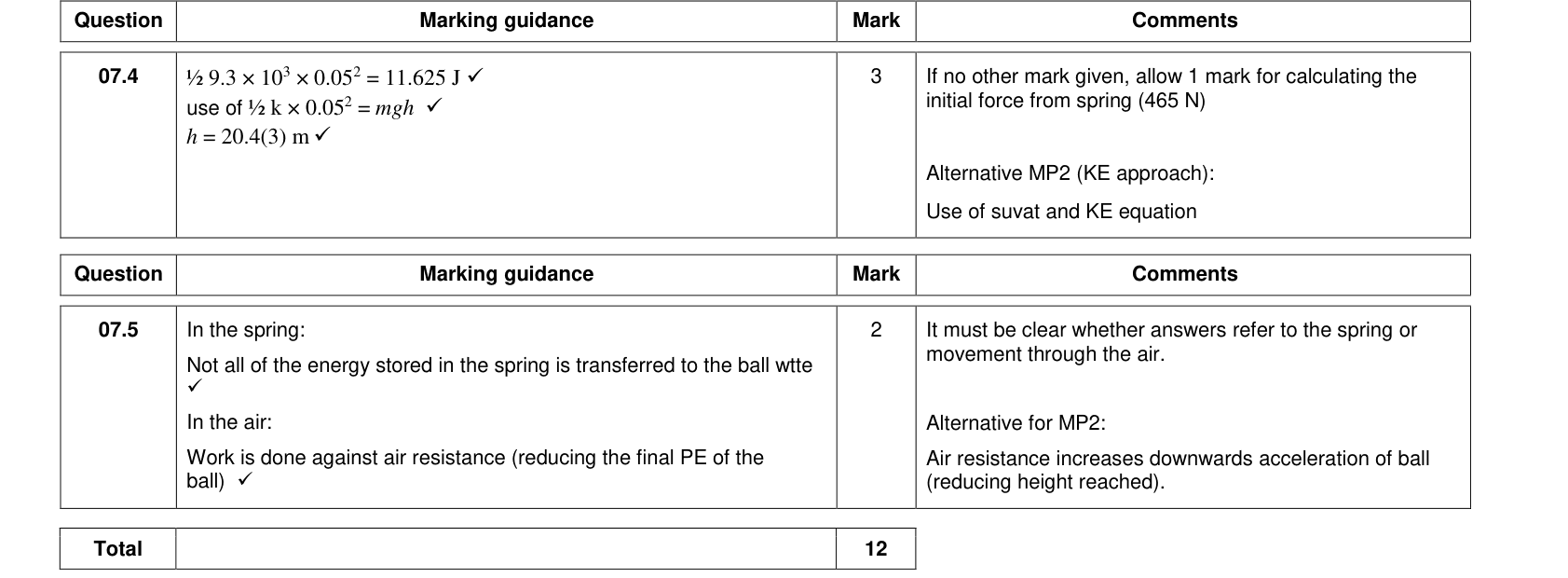
A spring ($k = 400\ \text{N m}^{-1}$) is compressed by 5.0 cm and launches a 20 g ball vertically. Maximum height $= \dfrac{\tfrac12 \times 400 \times 0.050^2}{0.020 \times 9.81} = \dfrac{0.50}{0.196} = 2.5\ \text{m}$ (ignoring losses).
Describing materials with force–extension graphs
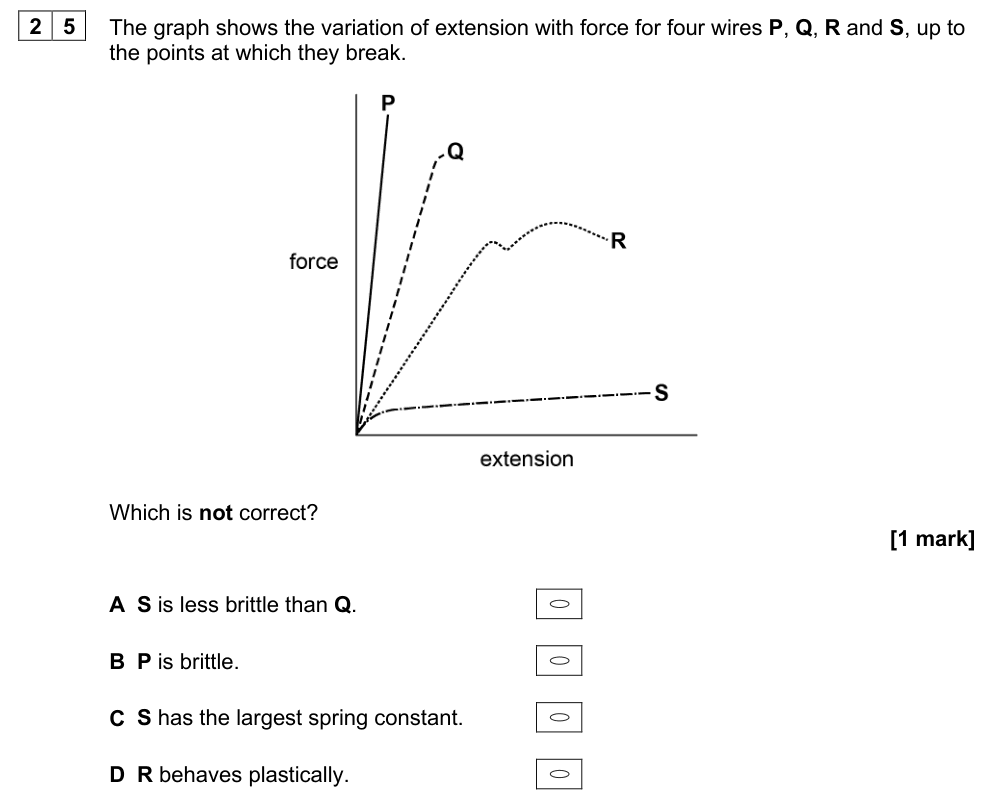
- Ductile materials (e.g. copper) show a large plastic region before they break. They can be drawn into wires.
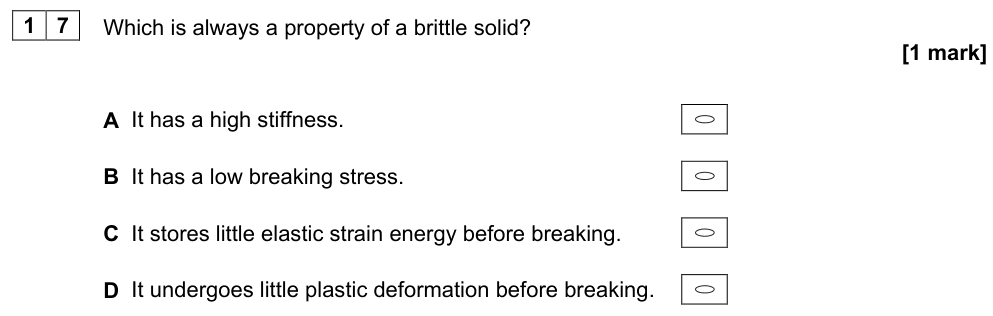
- Brittle materials (e.g. glass, cast iron, ceramics) obey Hooke's law up to the breaking point and then fracture suddenly with little or no plastic deformation. Cracks spread easily through them.
- Rubber and polymers have a non-linear (curved) graph. They can stretch a great deal and still return to their original length.
Loading and unloading
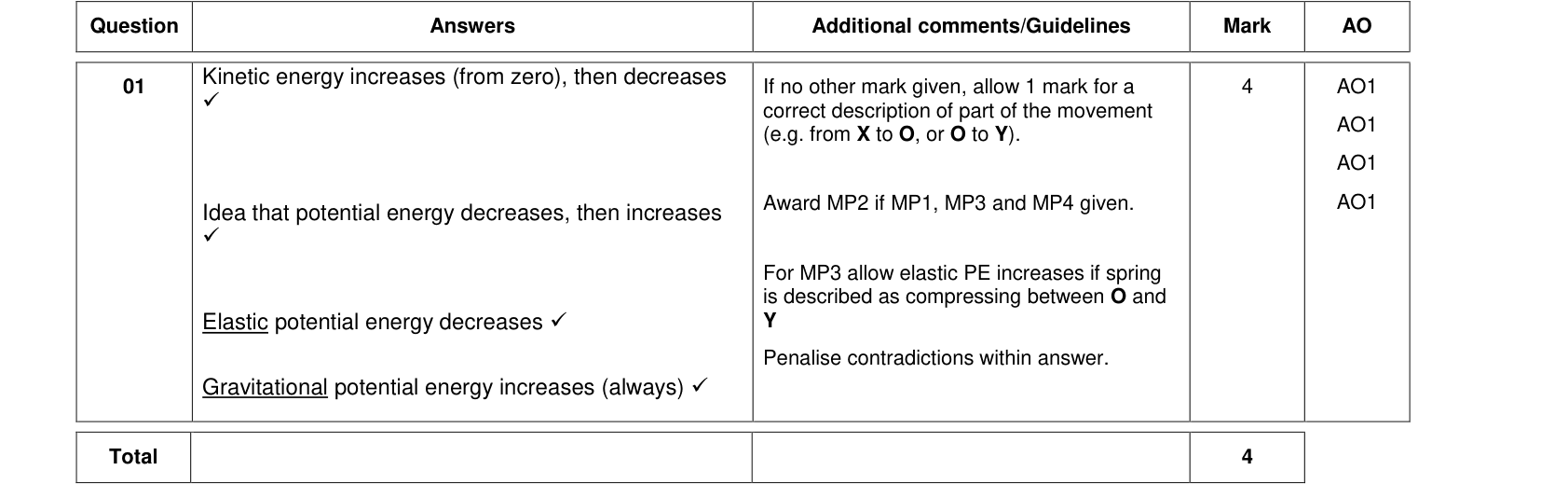
- A metal stretched within its elastic limit follows the same line when unloaded and returns to zero extension.
- A metal stretched beyond its elastic limit unloads along a line parallel to the loading line and is left with a permanent extension. The area between the loading and unloading curves is the work done in permanently deforming the material, which is dissipated as thermal energy.
- Rubber unloads along a different curve below the loading curve (hysteresis). It returns to its original length, but the area of the loop is energy transferred to thermal energy, so stretched rubber warms up.
Common mistake
The energy stored is $\tfrac12F\Delta L$ only for the straight-line (Hooke's law) region. Beyond it, find the area under the curve by counting squares.
Summary
- $\rho = m/V$. Hooke's law $F = k\Delta L$ up to the limit of proportionality; $k$ = gradient of the force–extension graph.
- Elastic deformation is reversible; plastic deformation is permanent.
- Stress $= F/A$ (Pa); strain $= \Delta L/L$ (no unit); breaking stress is the maximum stress.
- Energy stored = area under the $F$–$\Delta L$ graph $= \tfrac12F\Delta L = \tfrac12k\Delta L^2$.
- Ductile: large plastic region; brittle: fractures with little plastic deformation; rubber shows hysteresis.