Independence of horizontal and vertical motion
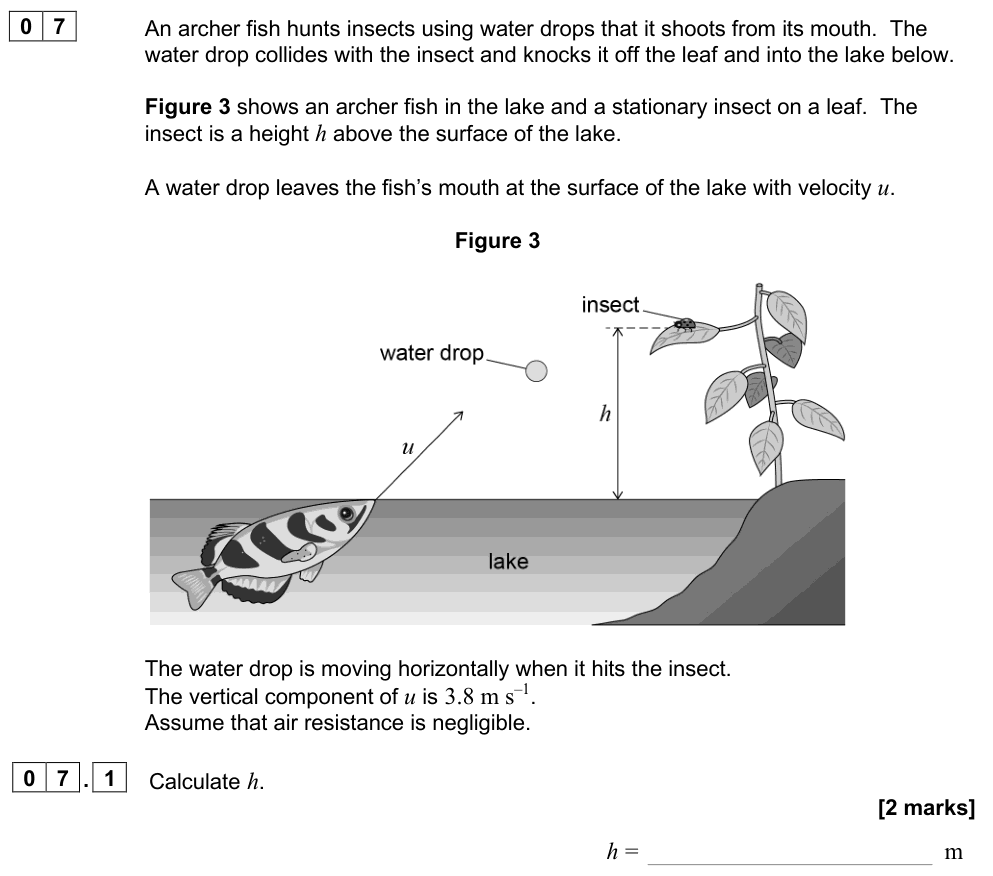
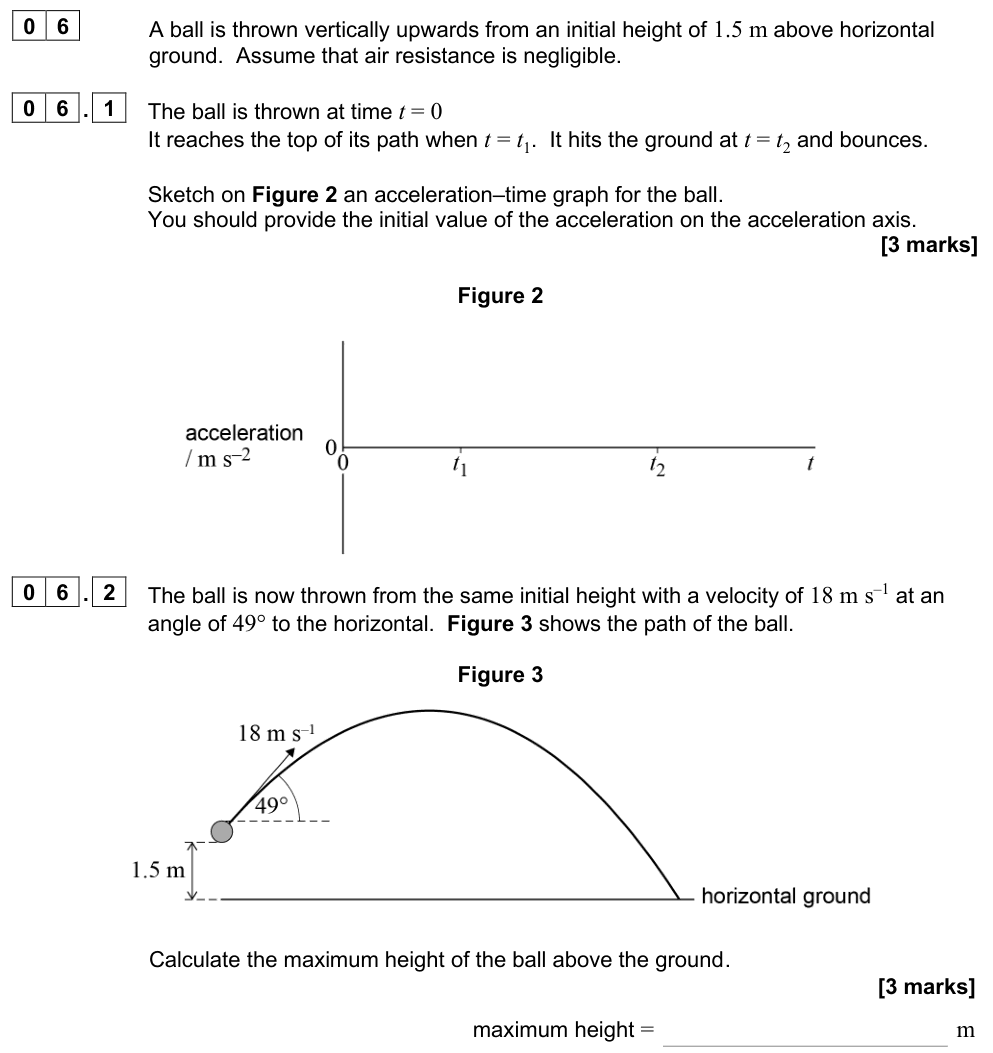
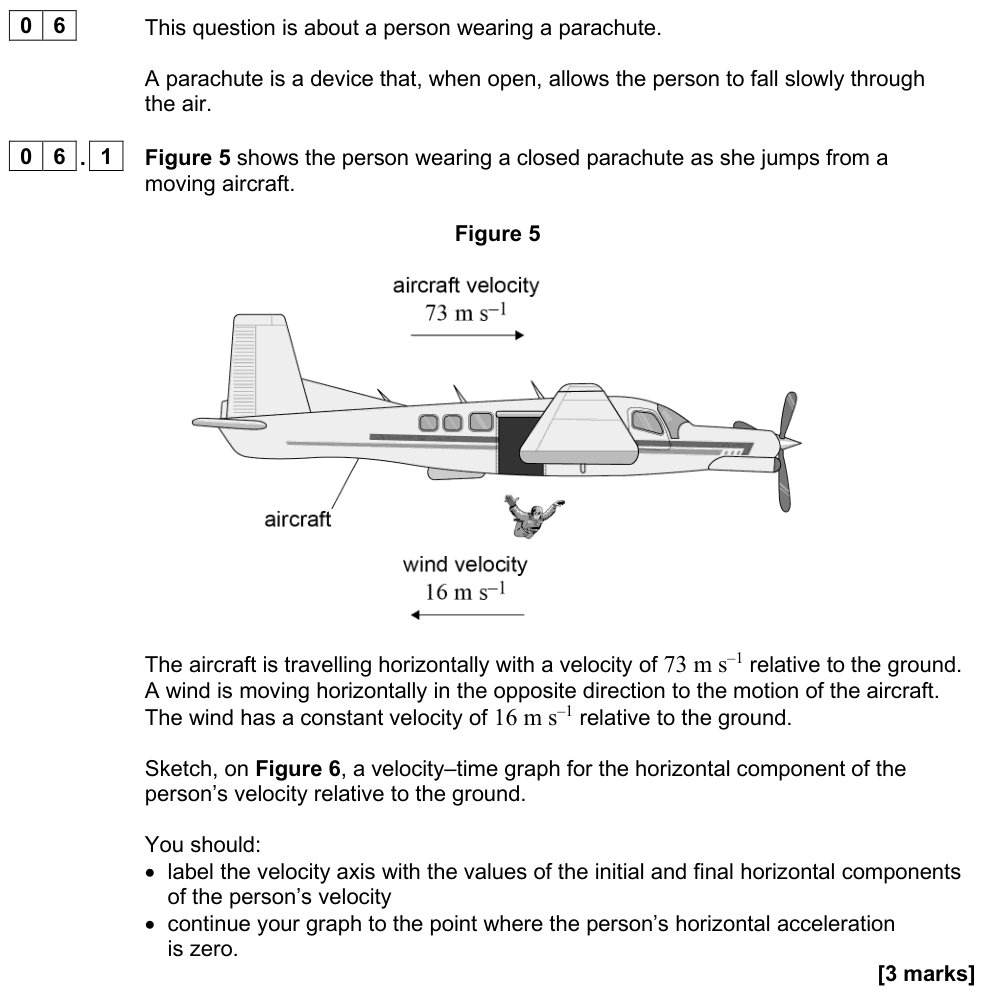
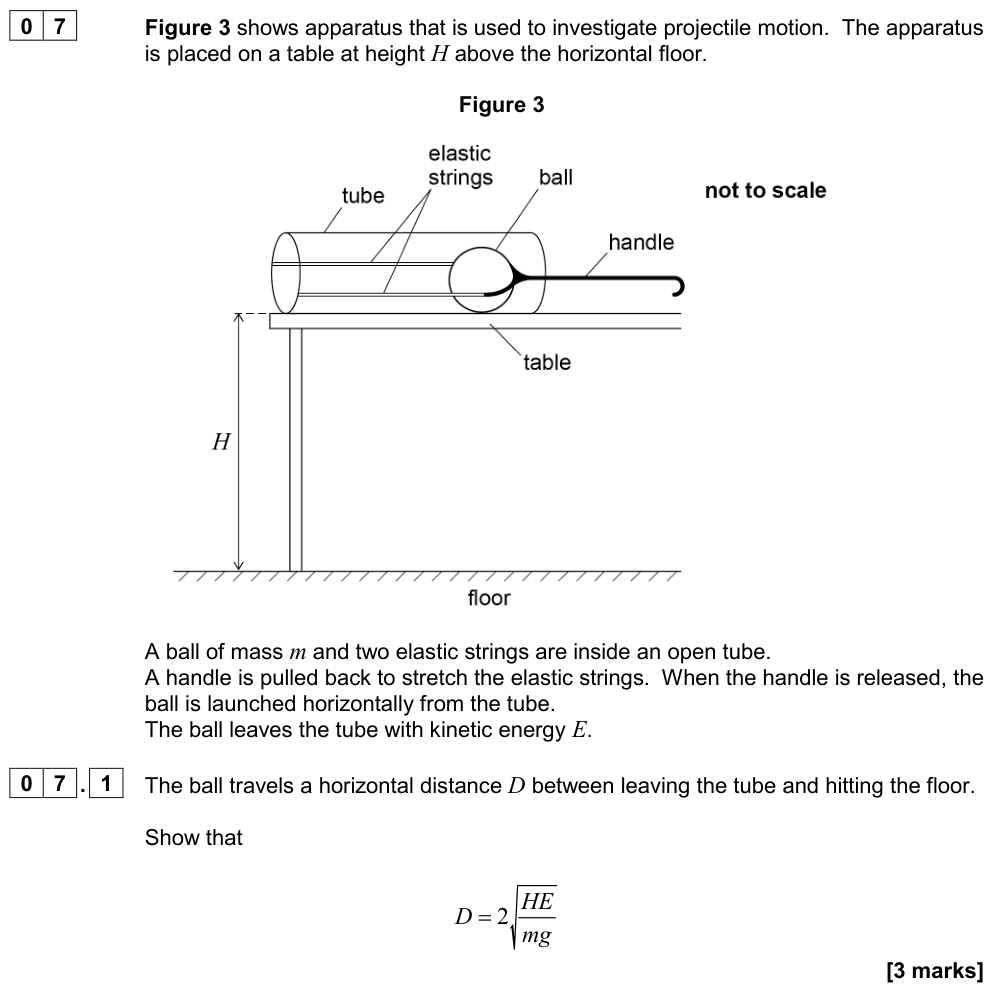
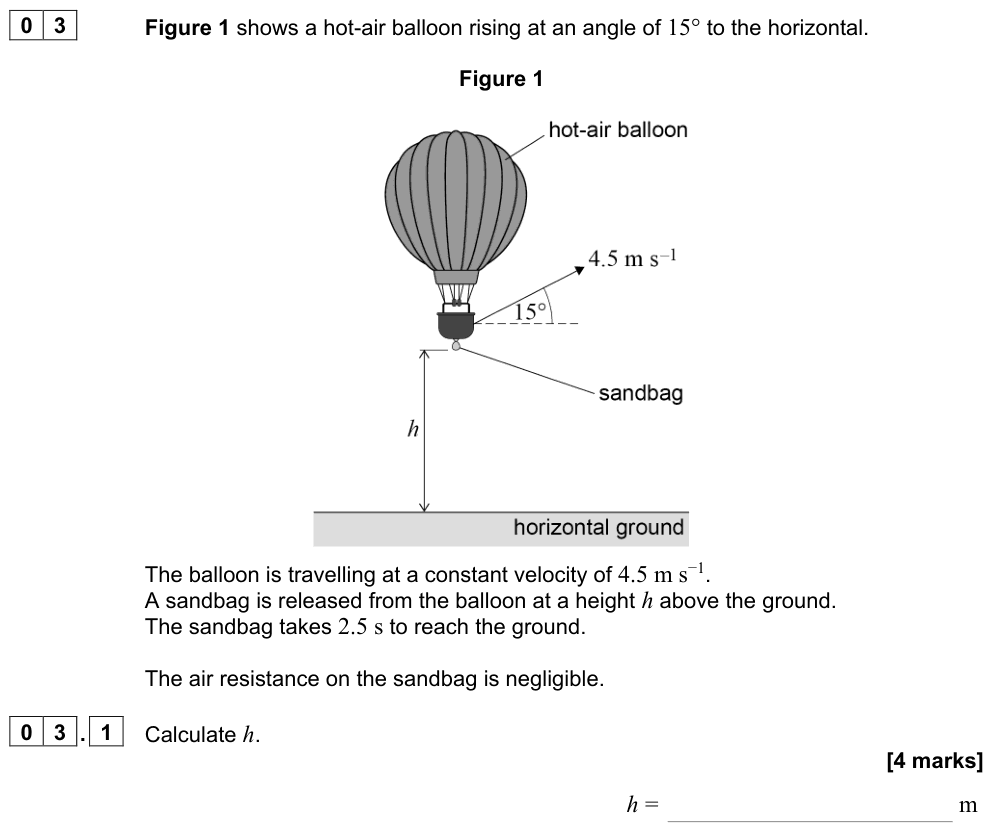
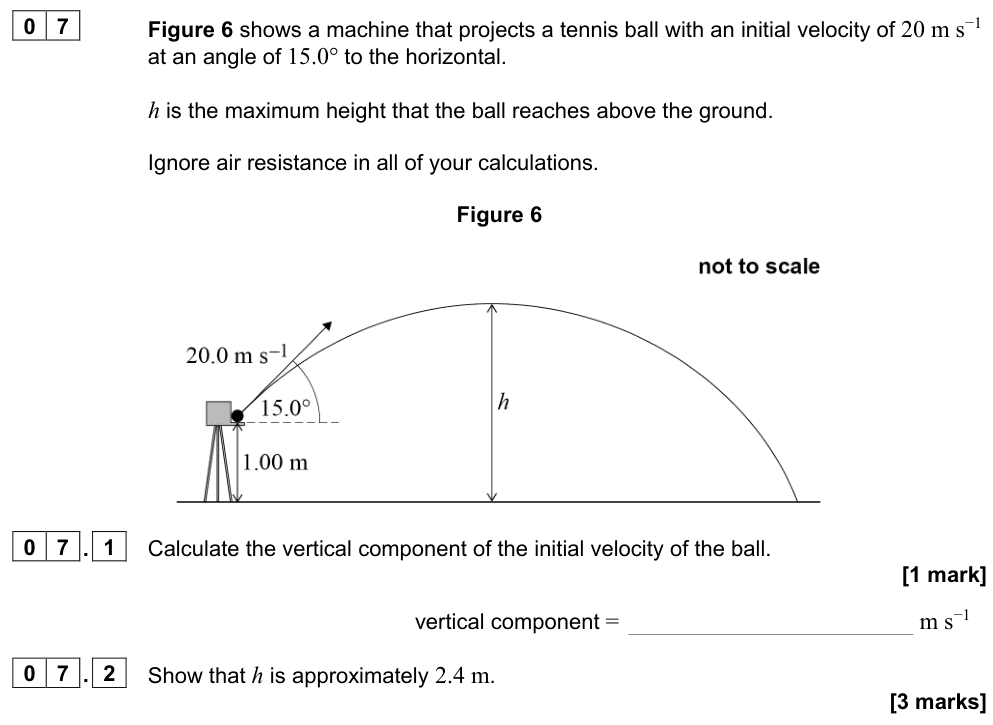
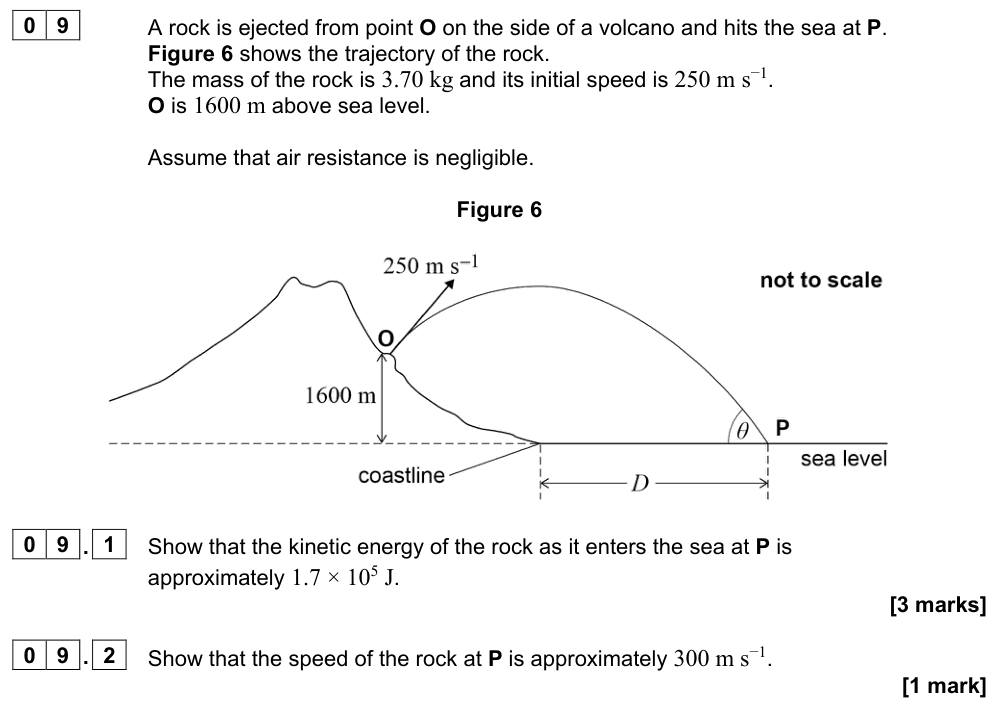
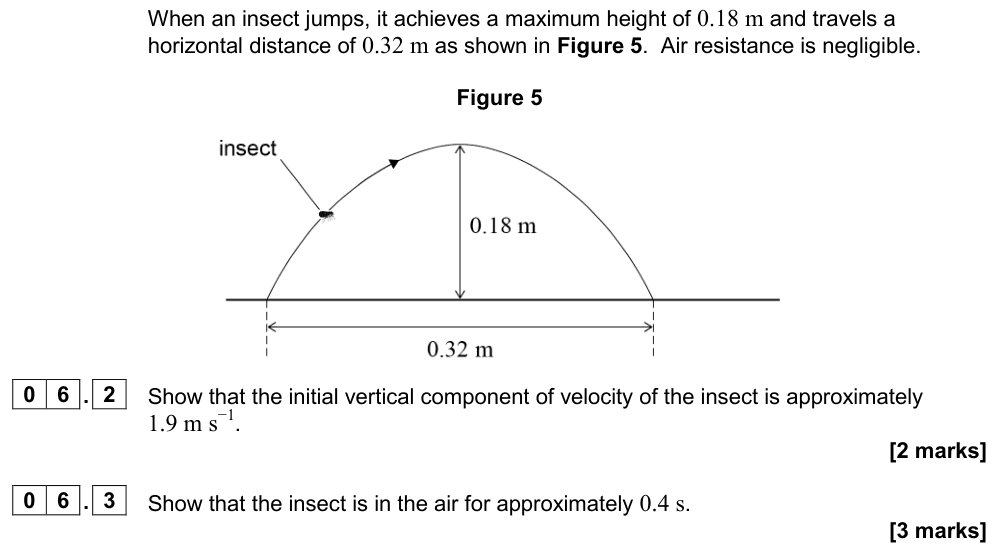
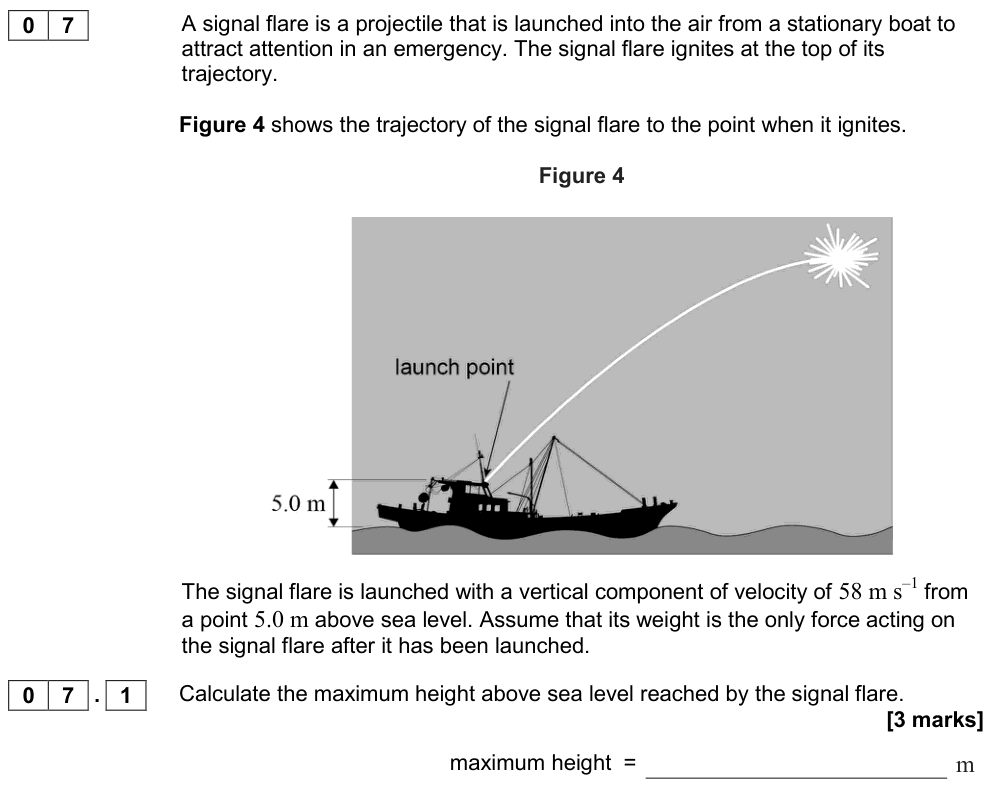
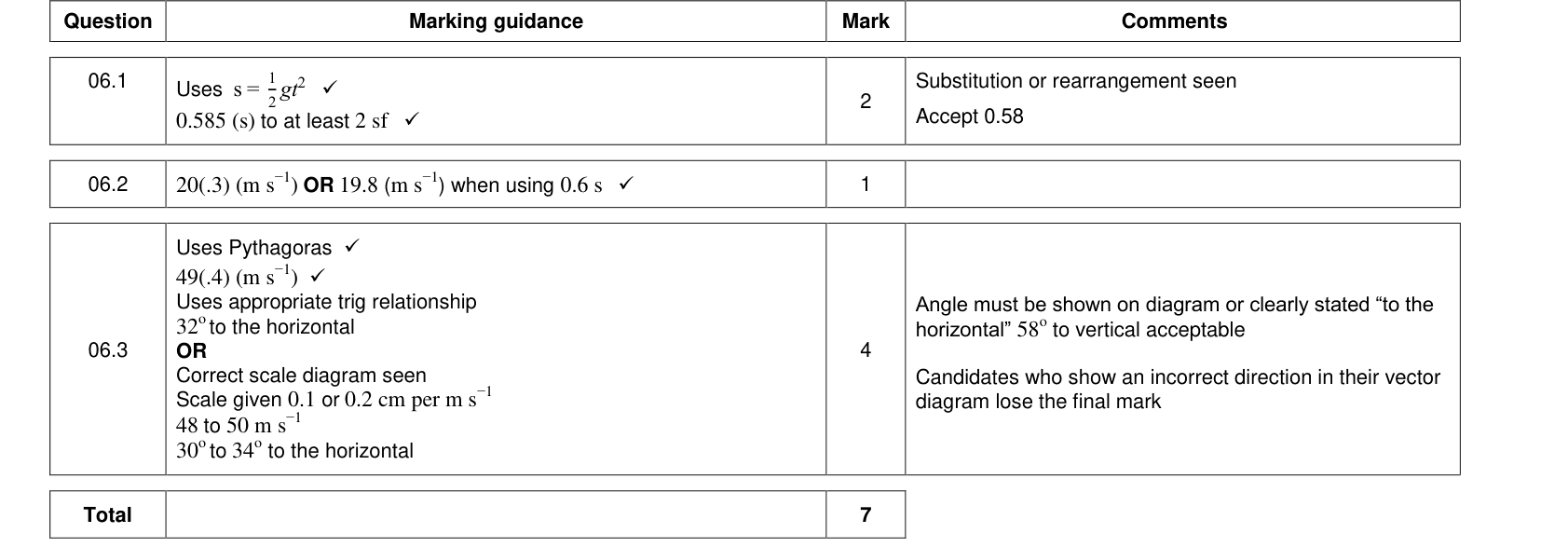
A projectile is any object moving freely under gravity after it has been thrown, kicked or launched. With air resistance negligible:
The key idea
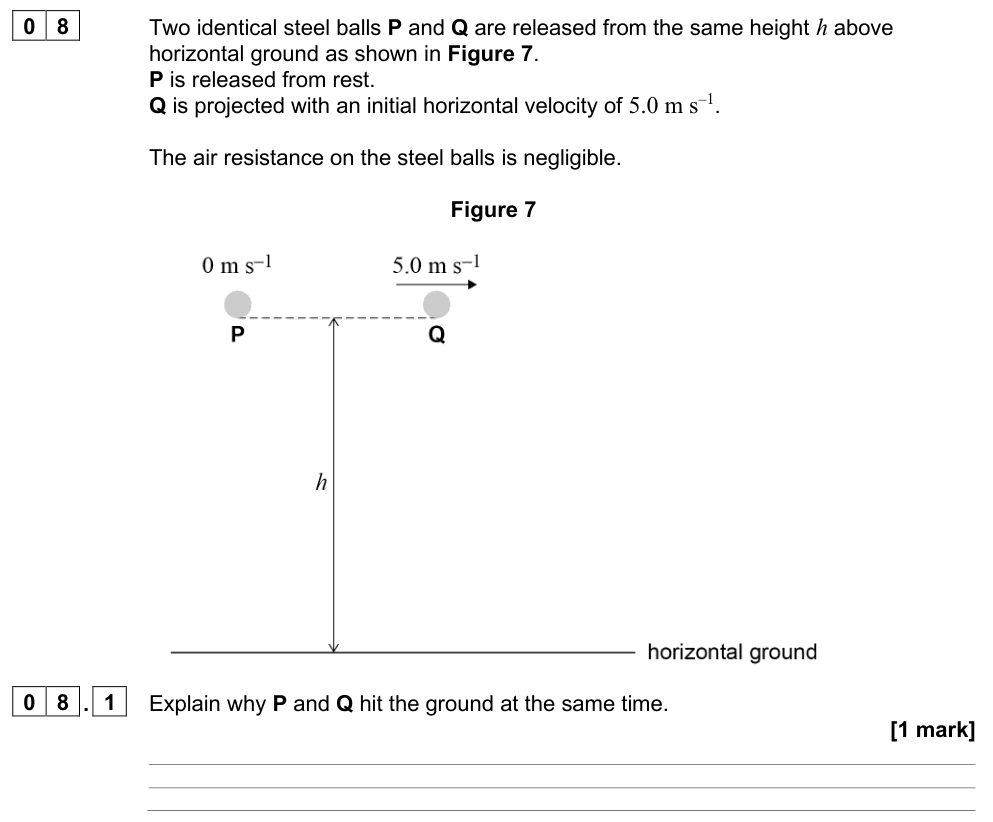
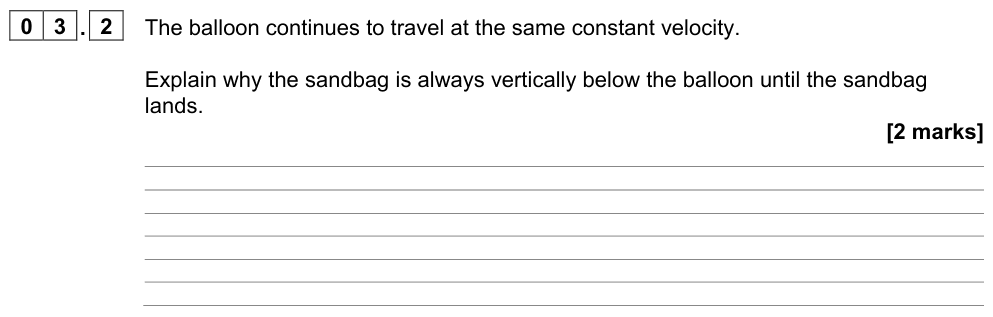
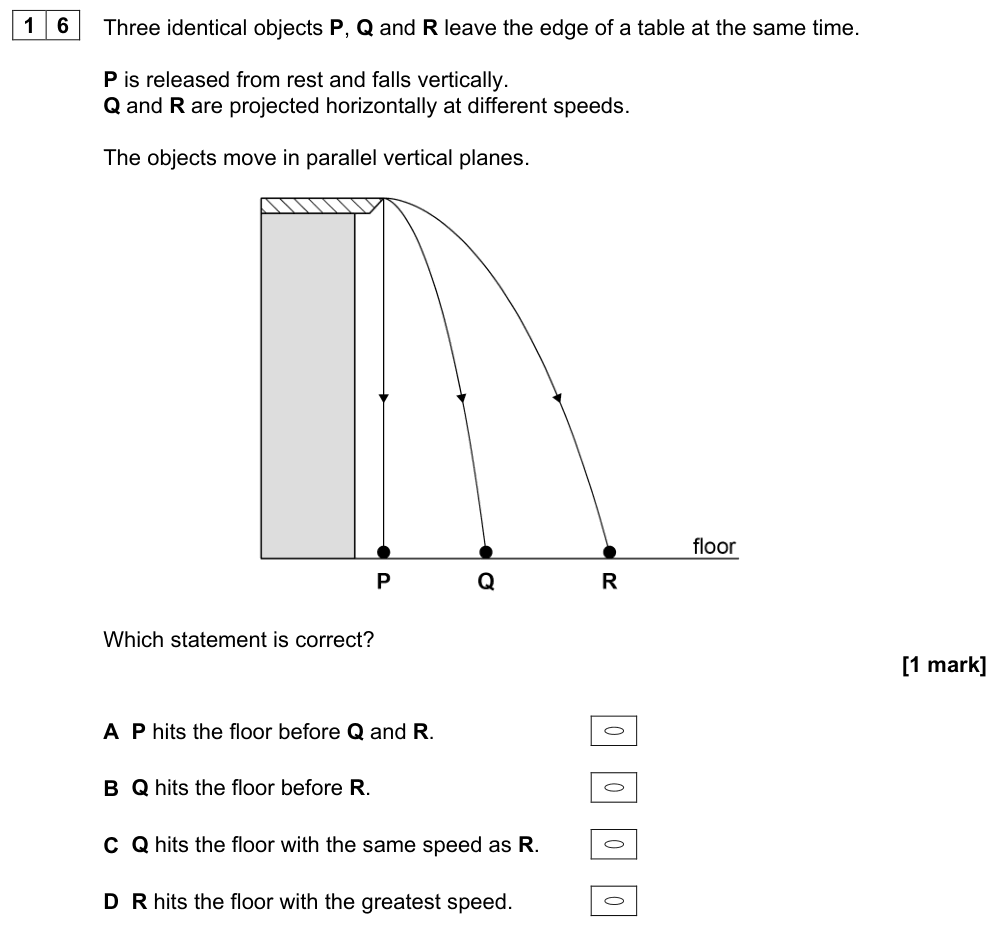
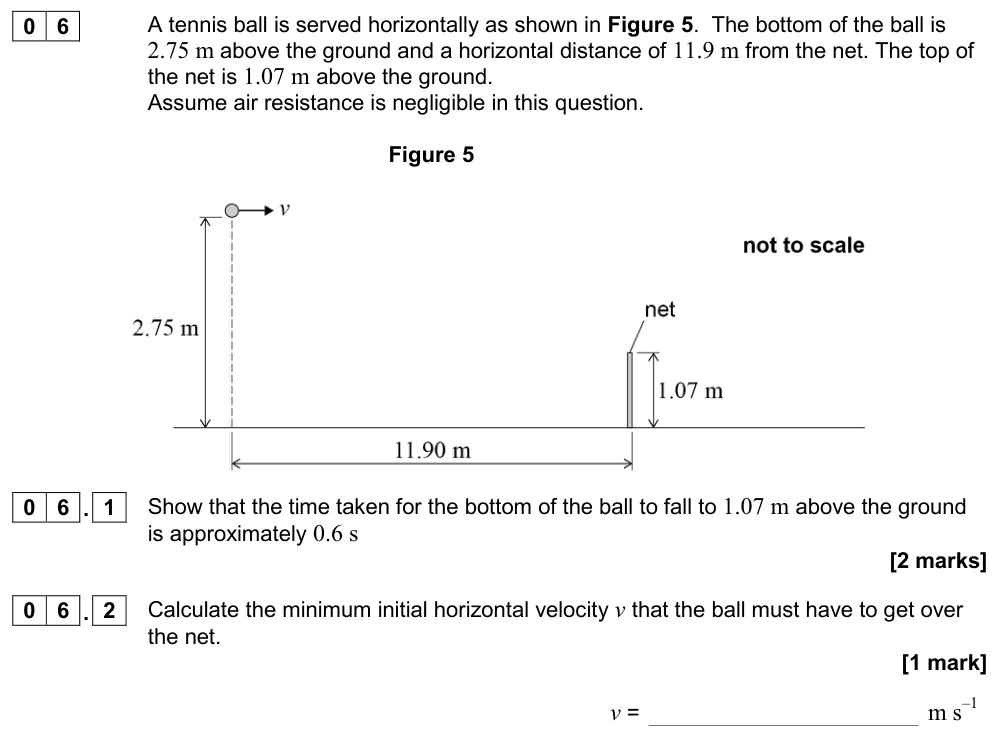
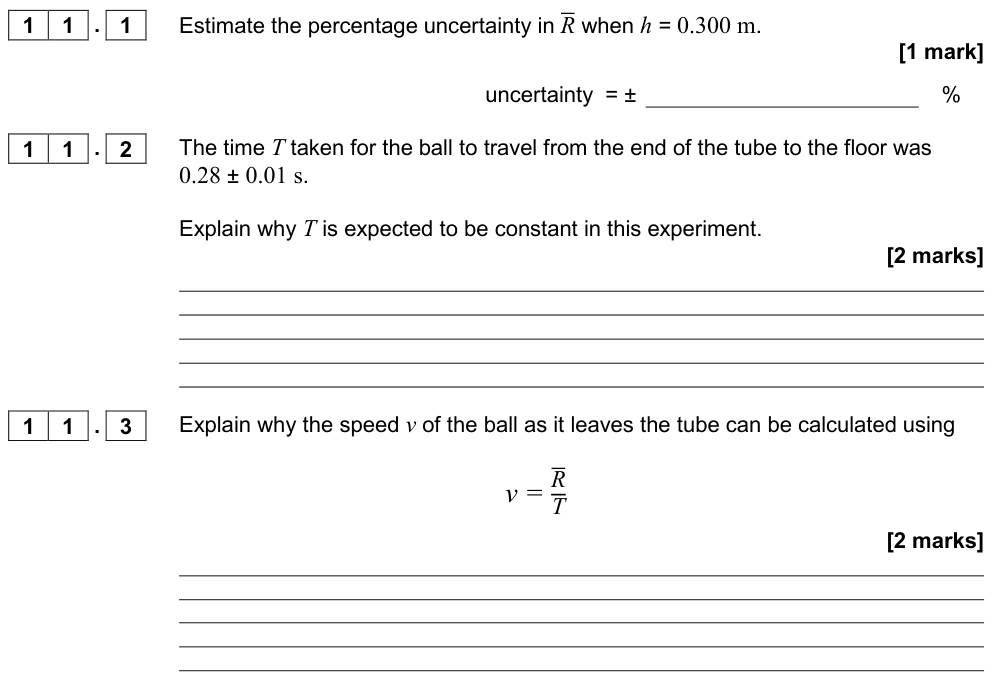
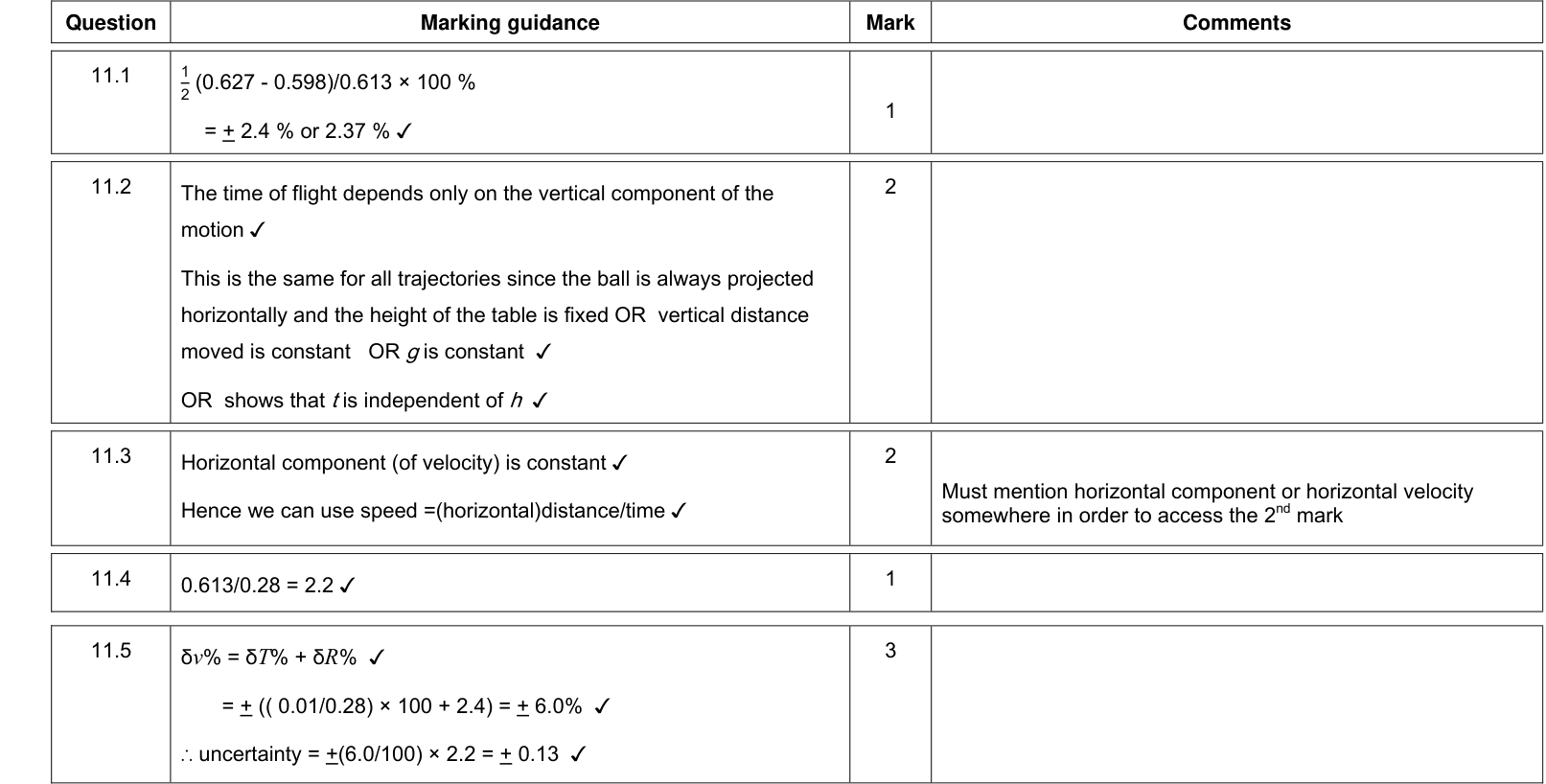
The horizontal and vertical motions are independent of each other.
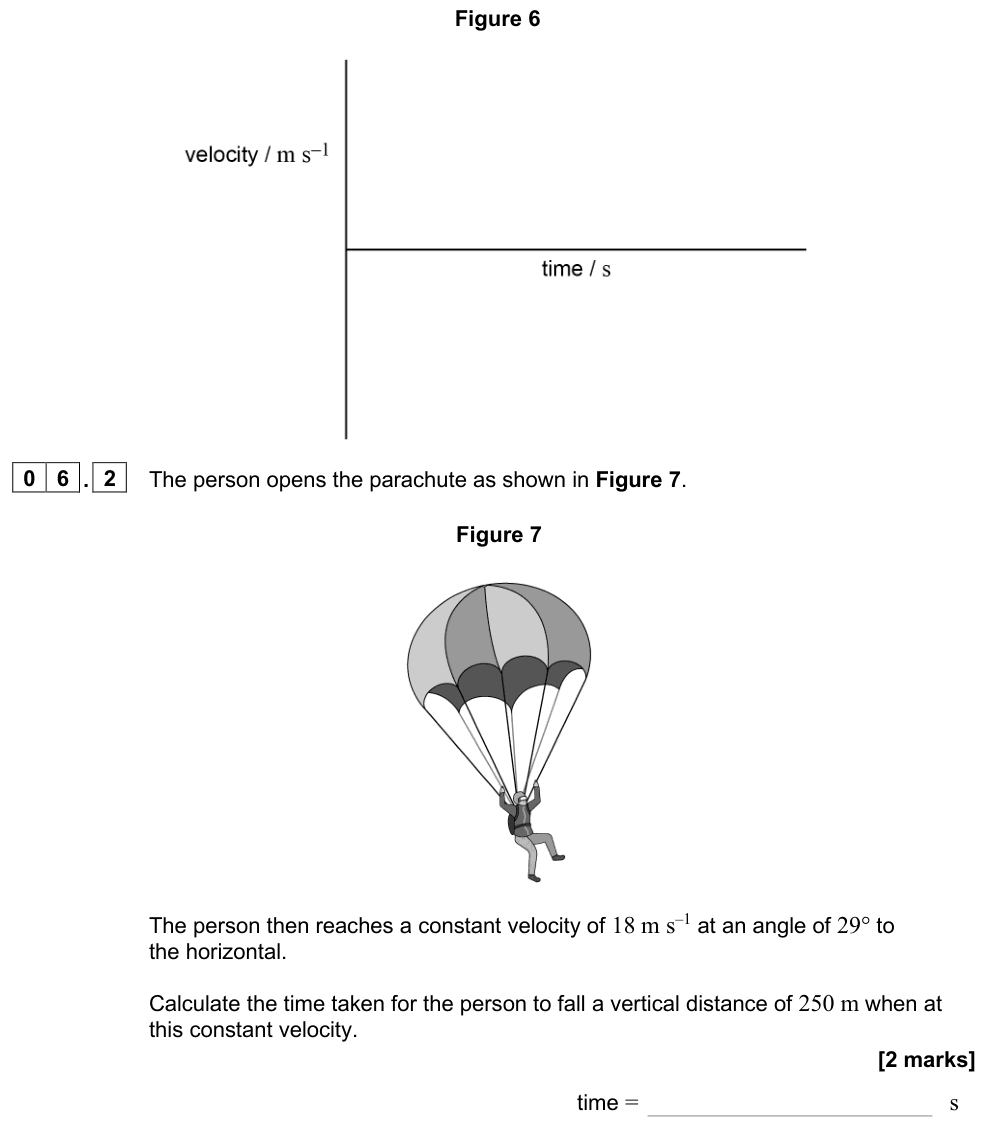
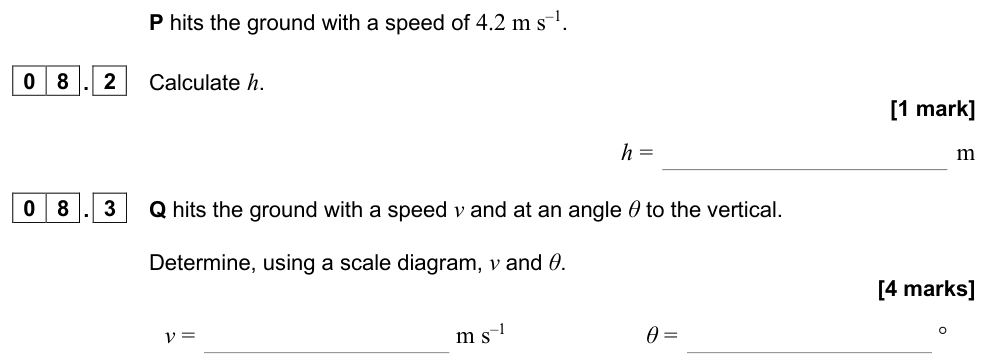
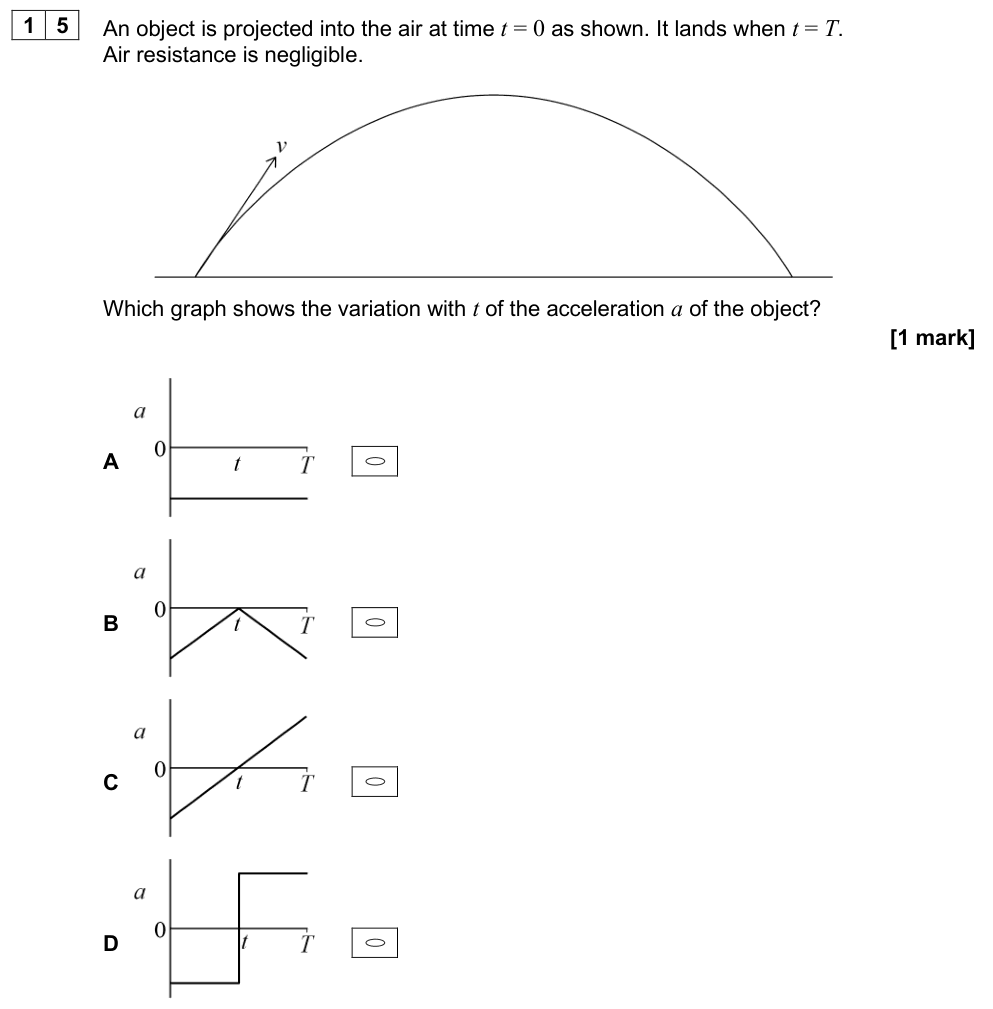
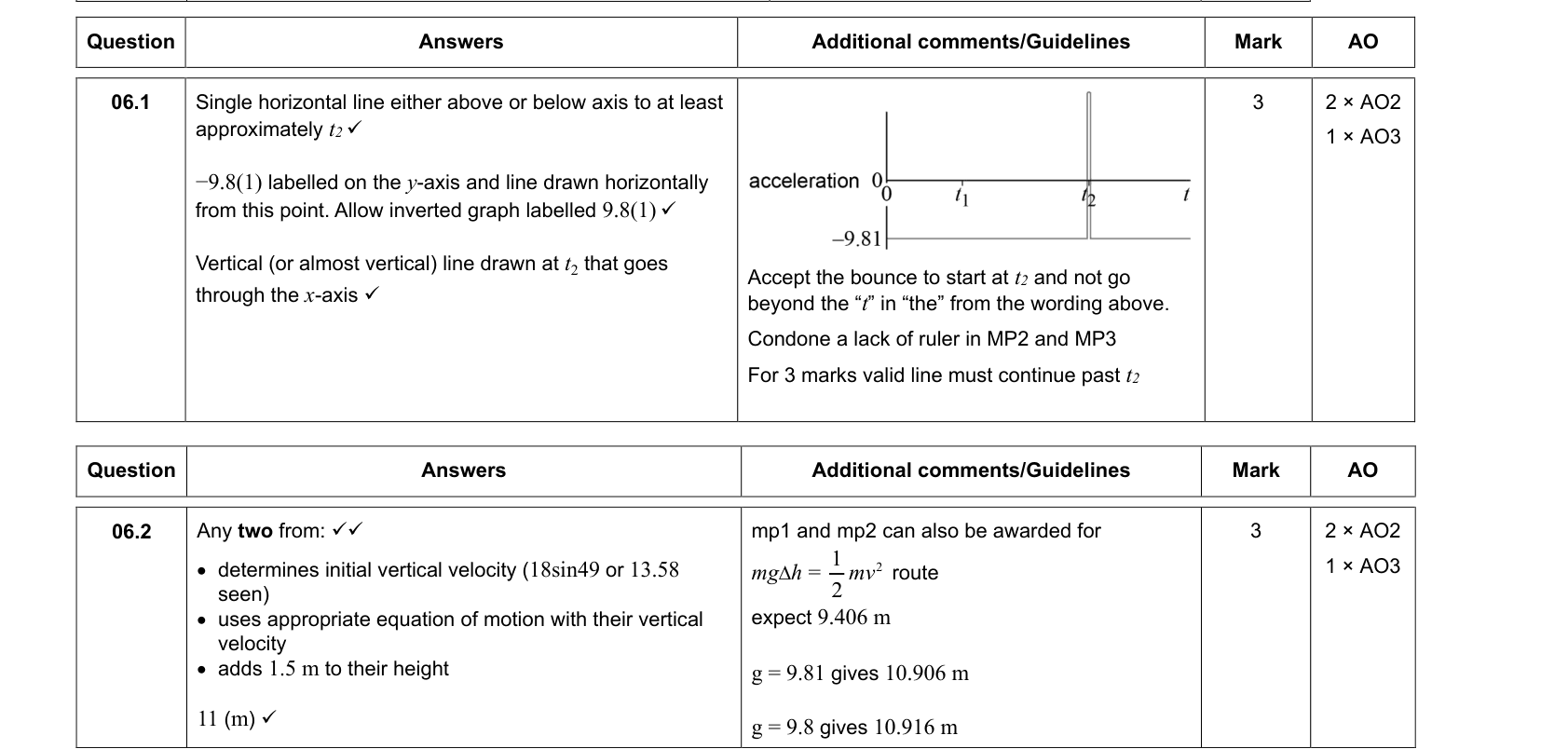
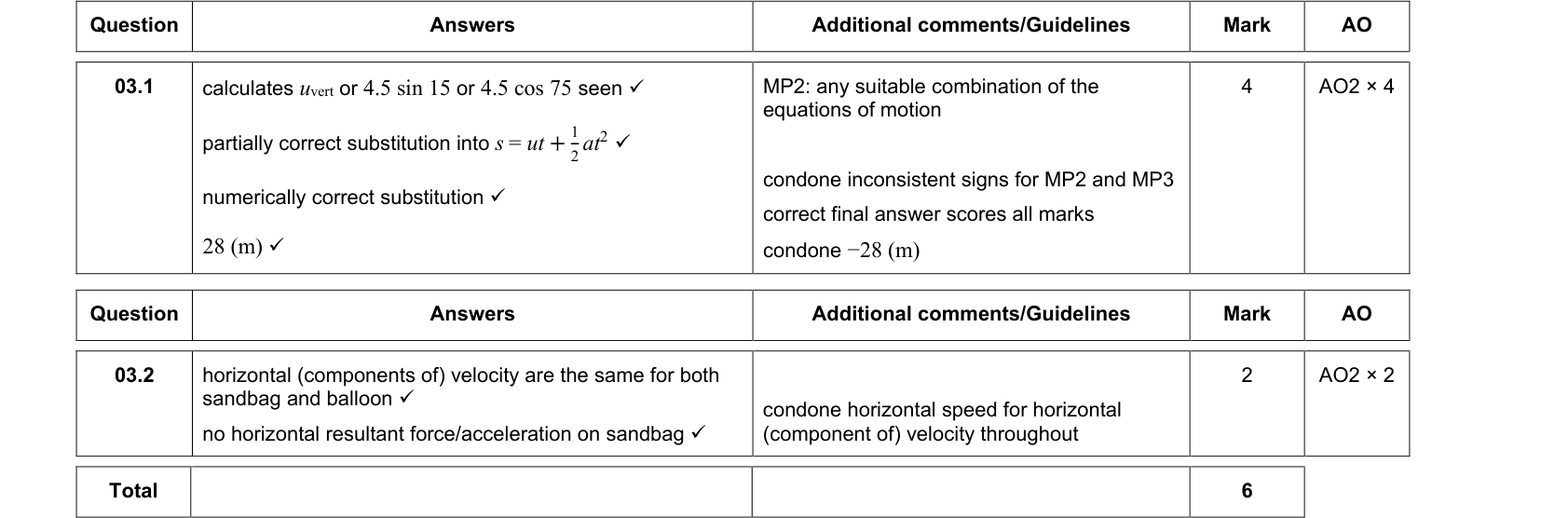
- Horizontally: no force acts, so the horizontal velocity is constant ($a_x = 0$).
- Vertically: gravity acts, so the vertical motion has constant acceleration $g = 9.81\ \text{m s}^{-2}$ downwards.
The two are linked only by the time of flight, which is the same for both.
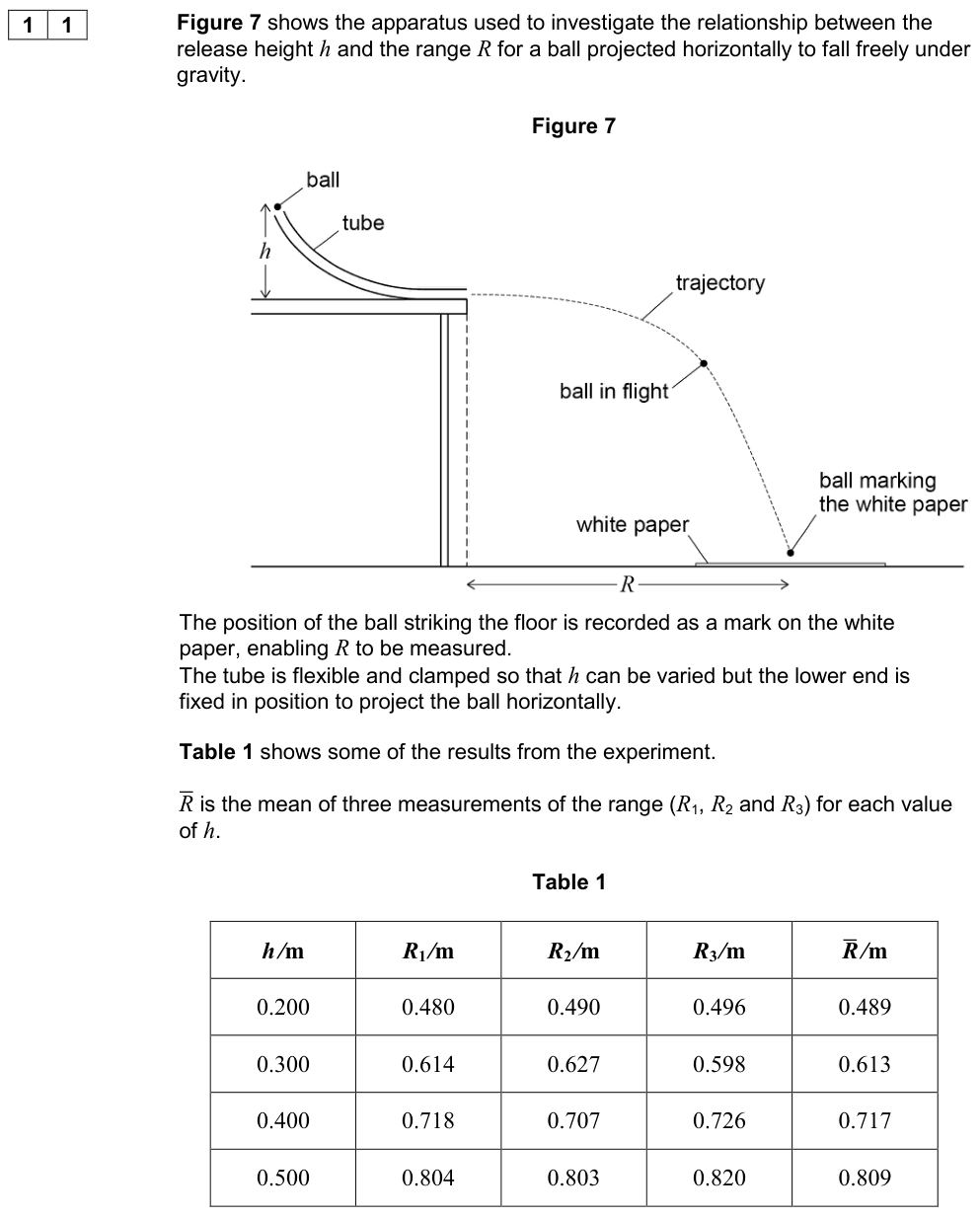
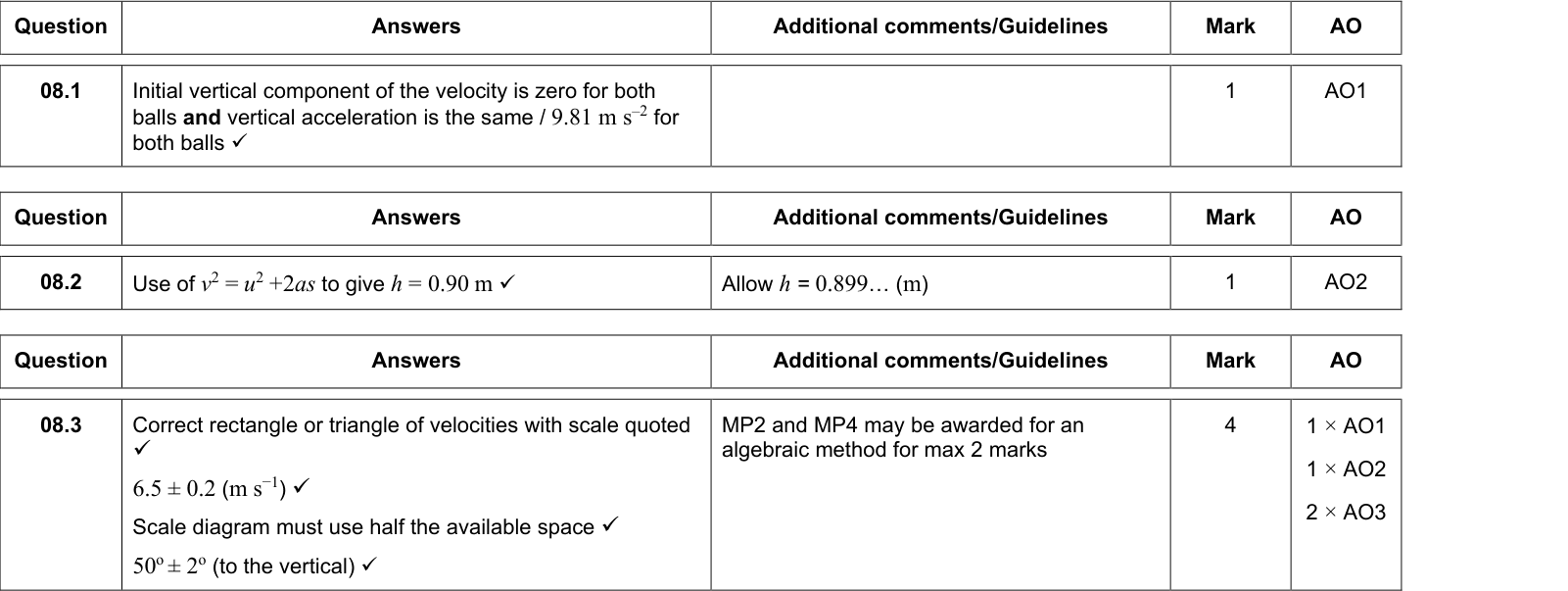
This is why a ball dropped from rest and a ball projected horizontally from the same height at the same moment hit the ground at the same time: their vertical motions are identical.
Solving projectile problems
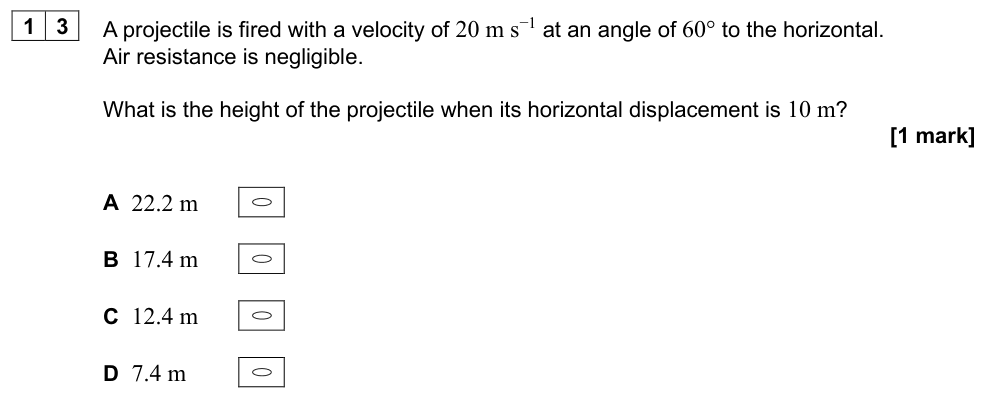
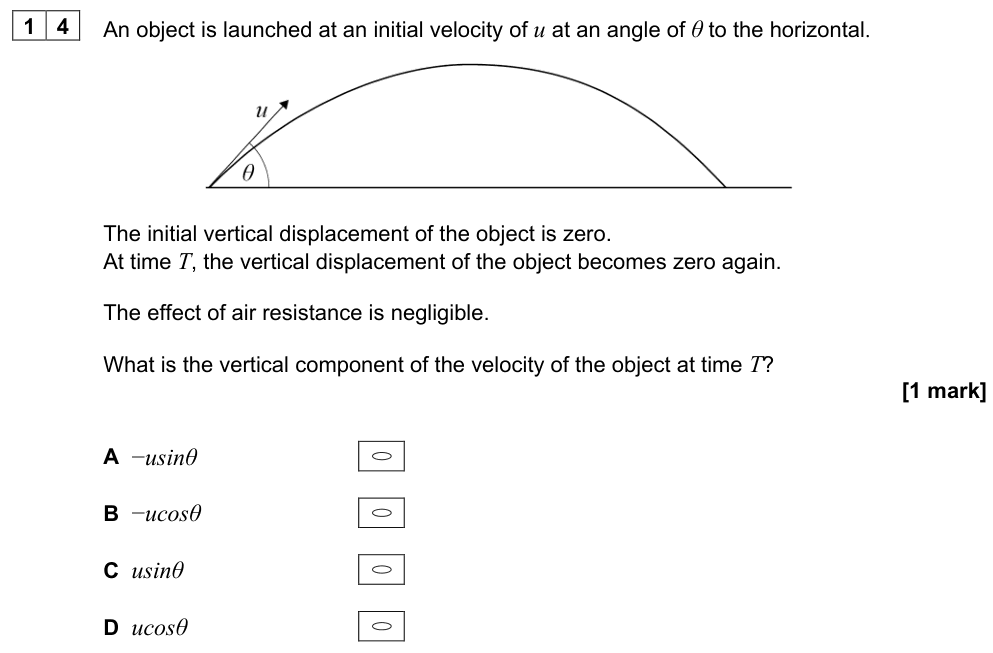
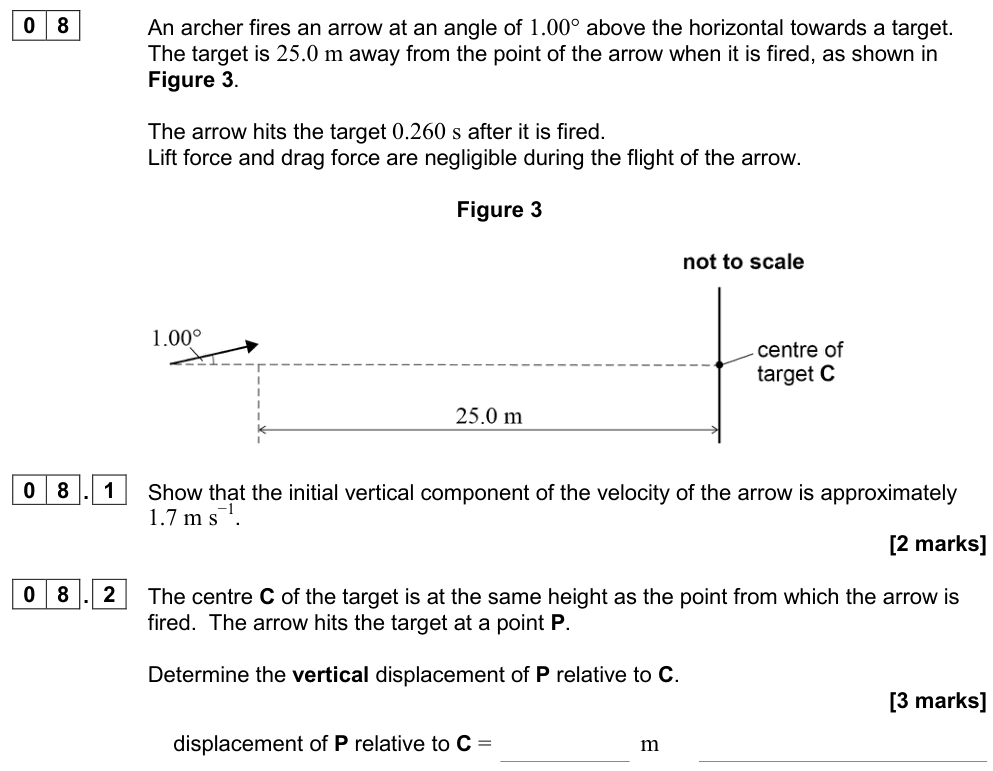
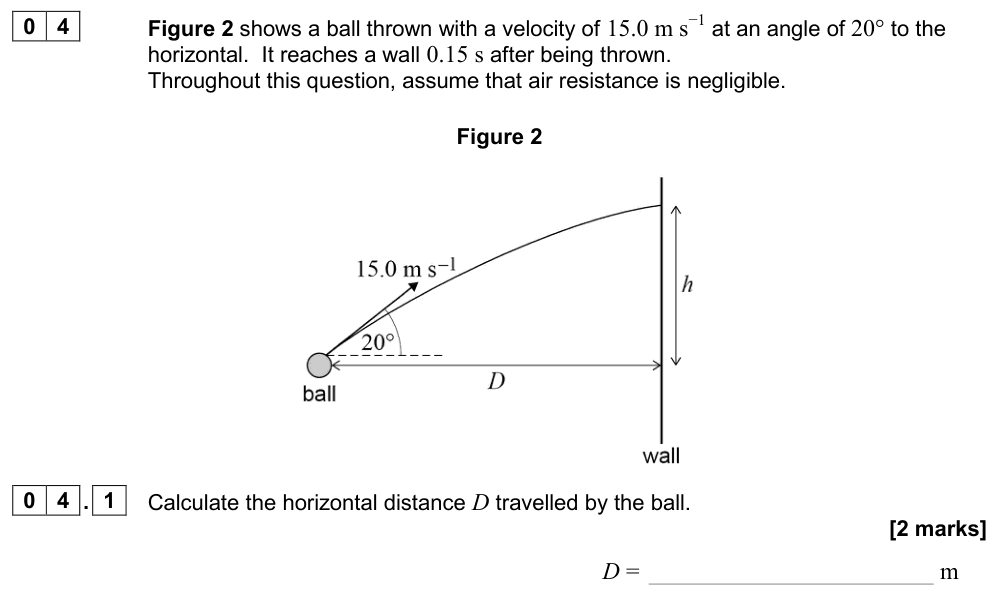
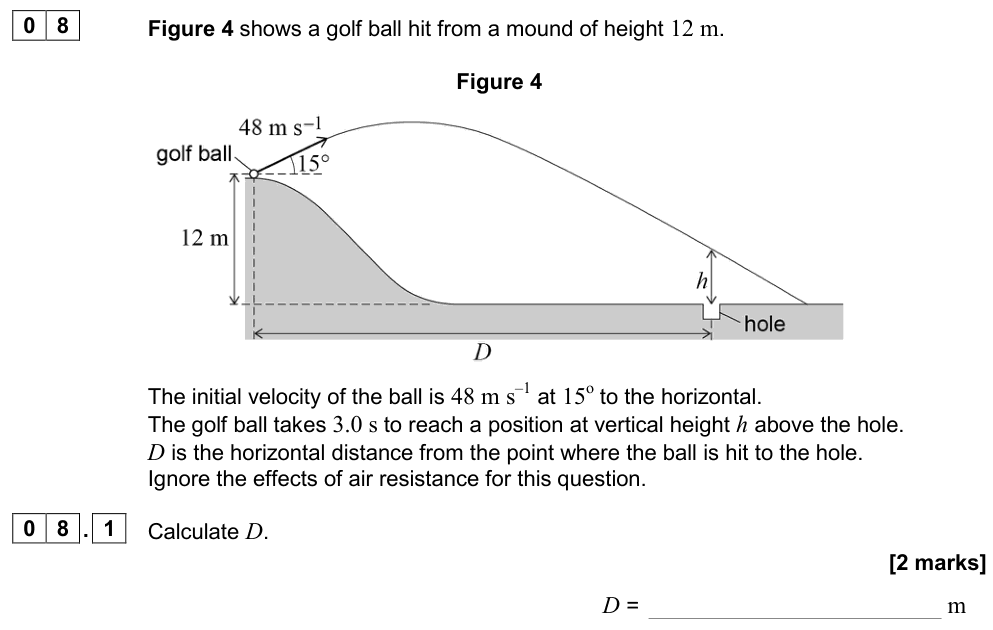
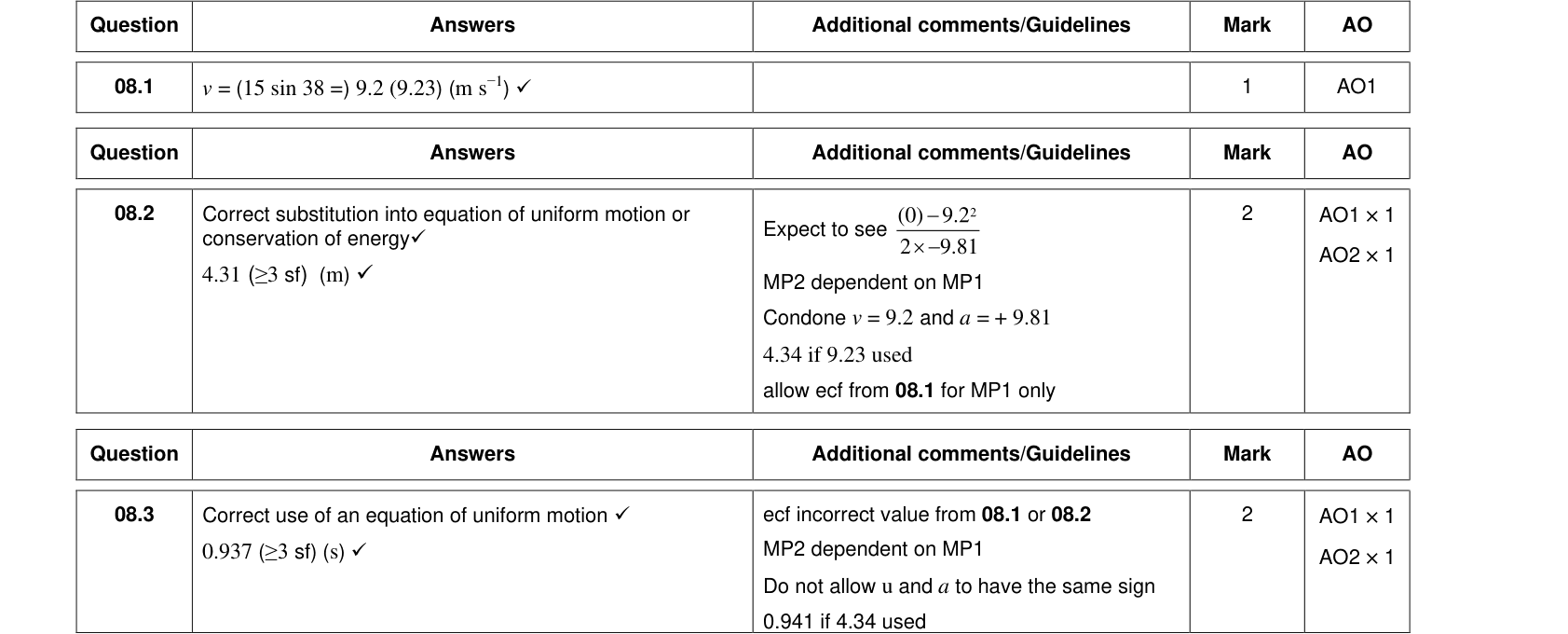
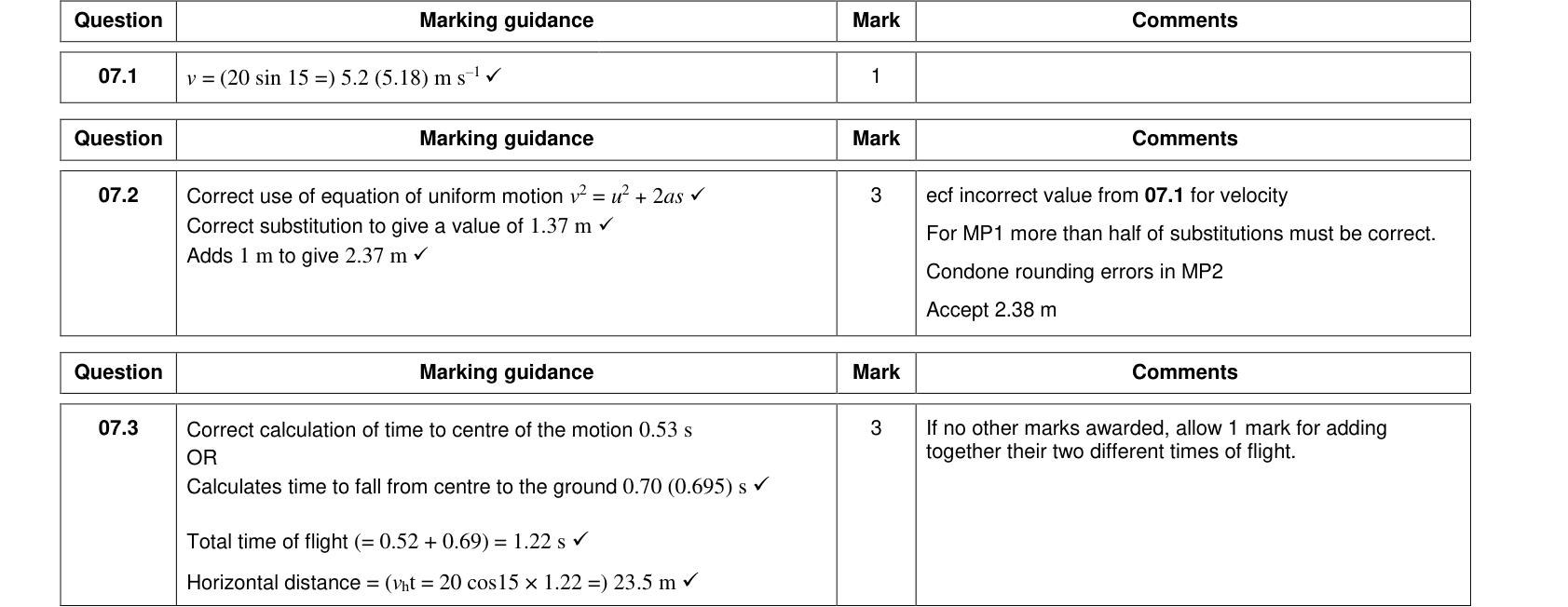
- Resolve the initial velocity $u$ at angle $\theta$ above the horizontal:
$$u_x = u\cos\theta \qquad u_y = u\sin\theta$$
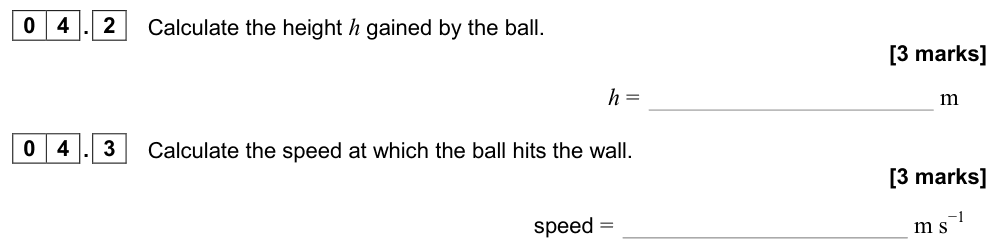
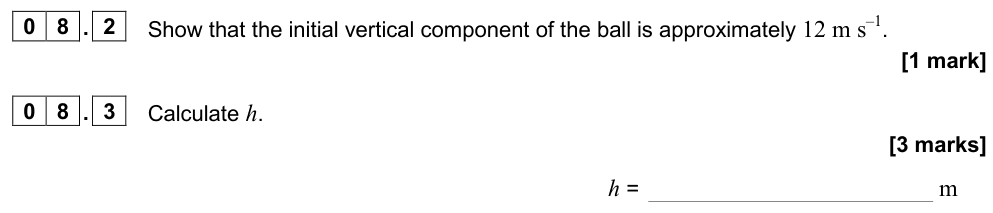
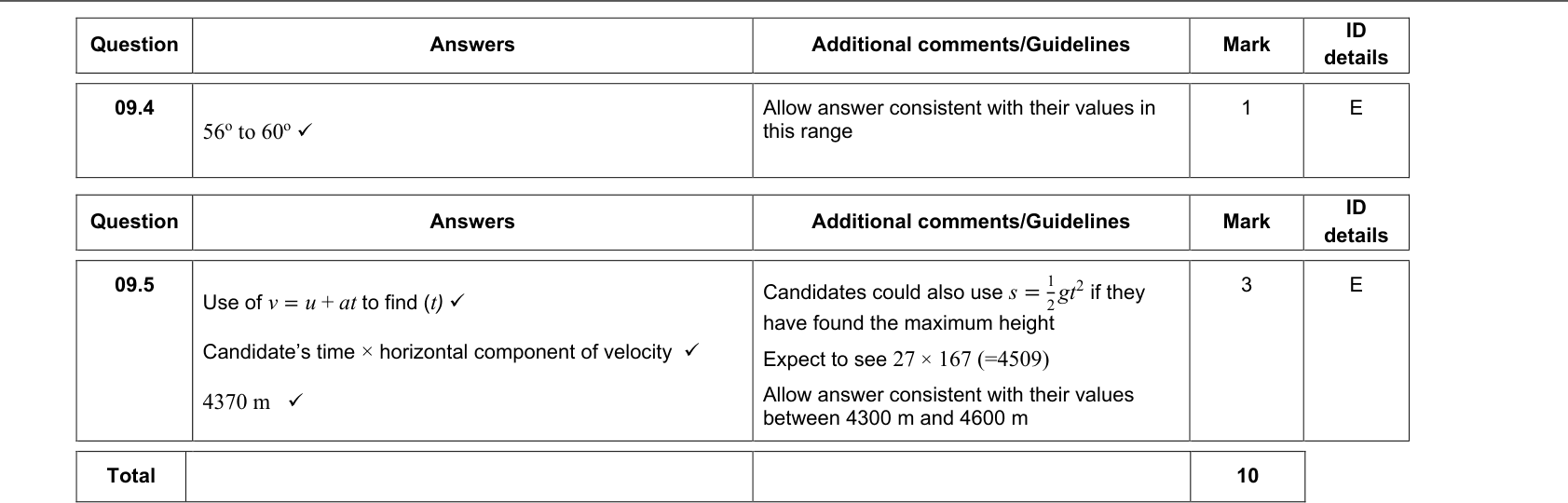
- Vertical motion (use suvat with $a = -9.81\ \text{m s}^{-2}$, up positive): find the time of flight, maximum height or vertical velocity.
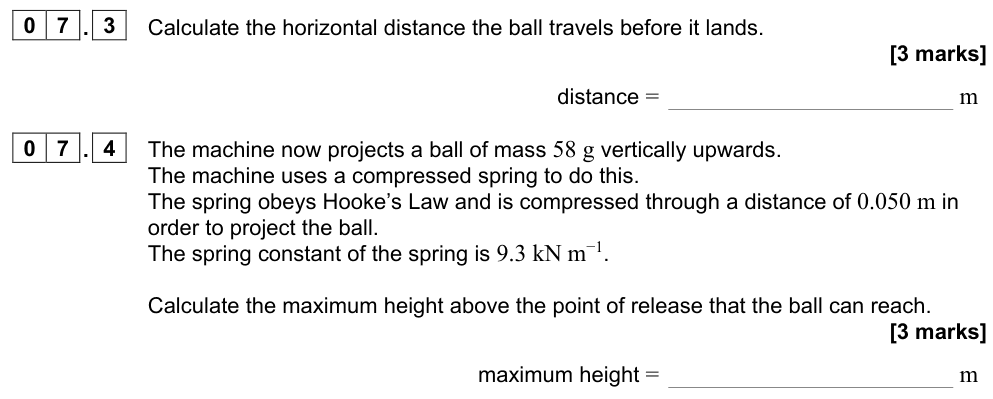
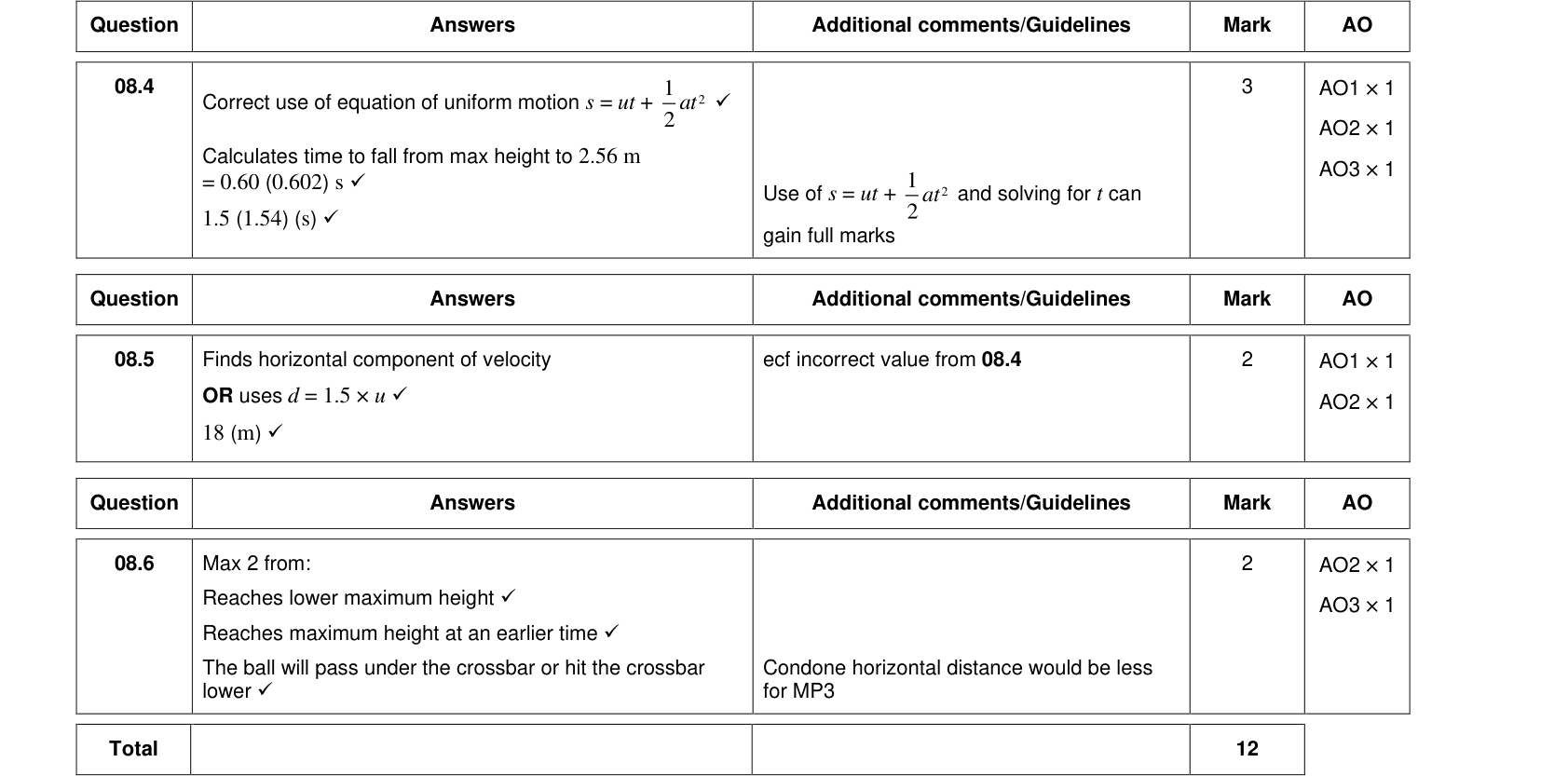
- Horizontal motion (constant velocity): horizontal distance $= u_x \times t$.
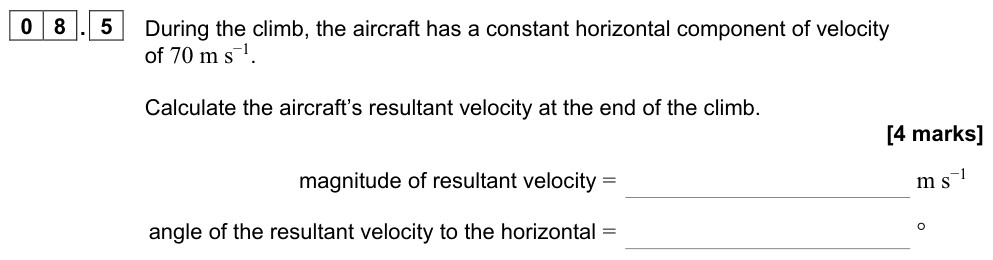
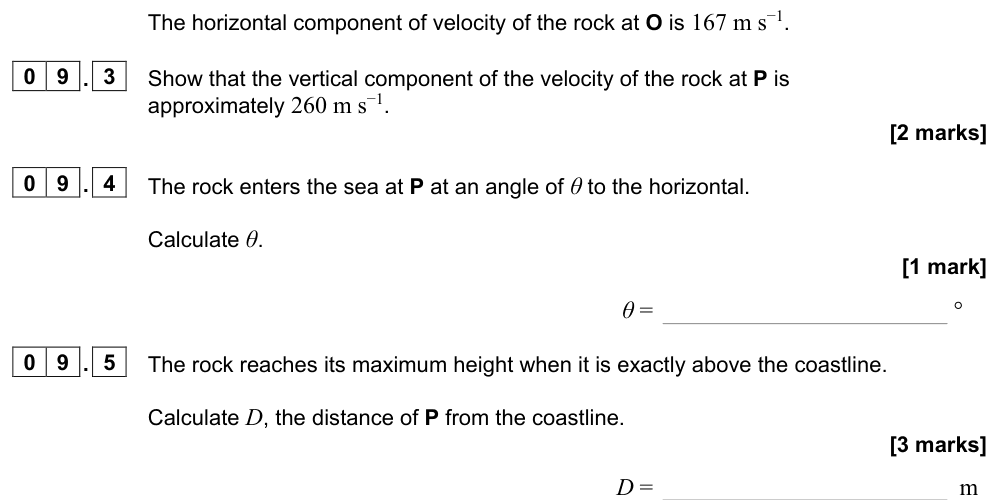
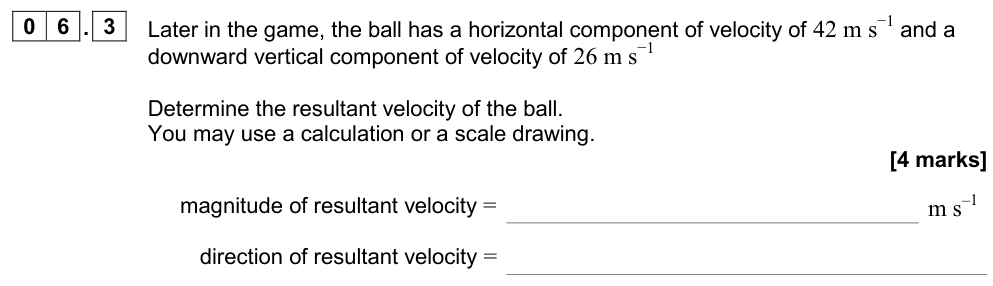
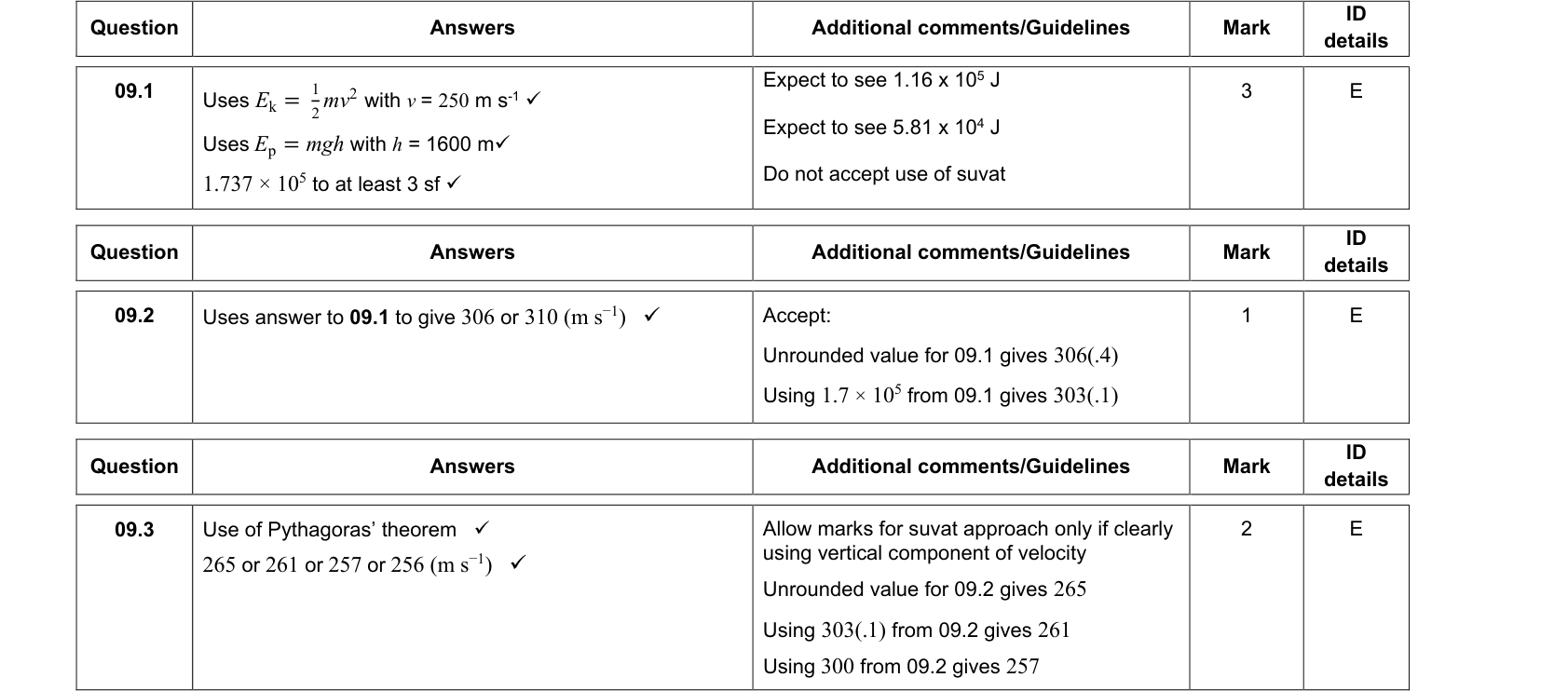
- Combine components at any instant if you need the velocity: $v = \sqrt{v_x^2 + v_y^2}$, at angle $\tan^{-1}(v_y/v_x)$ to the horizontal.
Worked example: horizontal launch
A ball rolls off a table 0.80 m high at $2.5\ \text{m s}^{-1}$. How far from the table does it land?
Vertical ($u_y = 0$, down positive): $0.80 = \tfrac12(9.81)t^2 \Rightarrow t = 0.40\ \text{s}$.
Horizontal: $x = 2.5 \times 0.40 = 1.0\ \text{m}$.
Worked example: angled launch
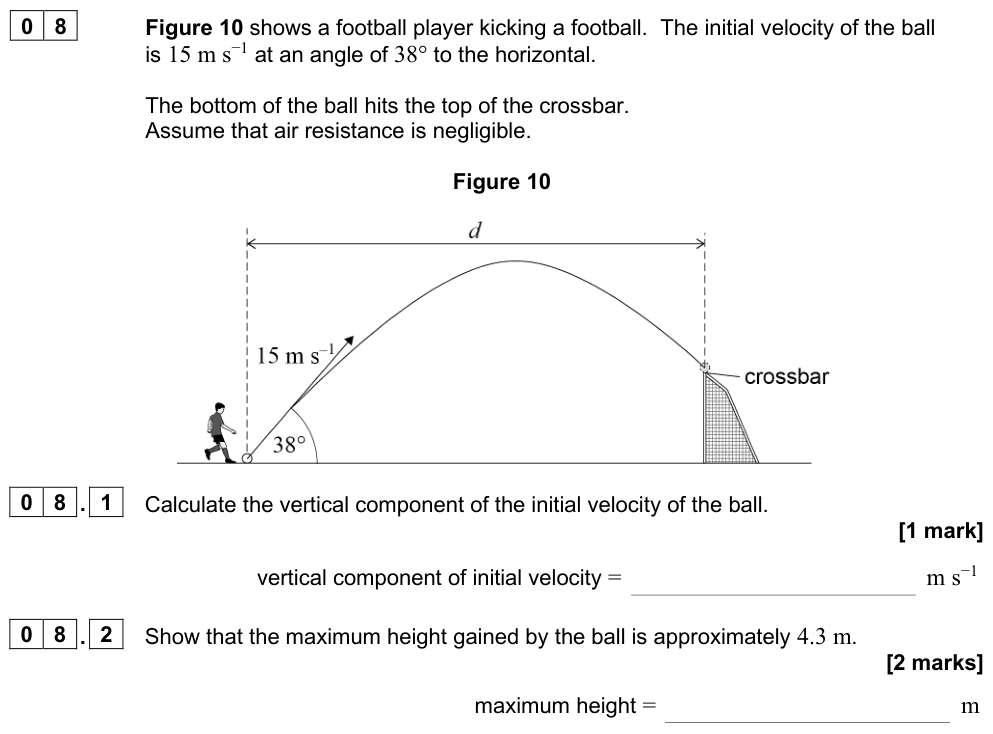
A football is kicked at $20\ \text{m s}^{-1}$ at $35^\circ$ above the horizontal on level ground.
$u_x = 20\cos35^\circ = 16.4\ \text{m s}^{-1}$; $u_y = 20\sin35^\circ = 11.5\ \text{m s}^{-1}$.
Time of flight (lands at $s_y = 0$): $0 = 11.5t - 4.905t^2 \Rightarrow t = 2.34\ \text{s}$.
Range: $16.4 \times 2.34 = 38\ \text{m}$.
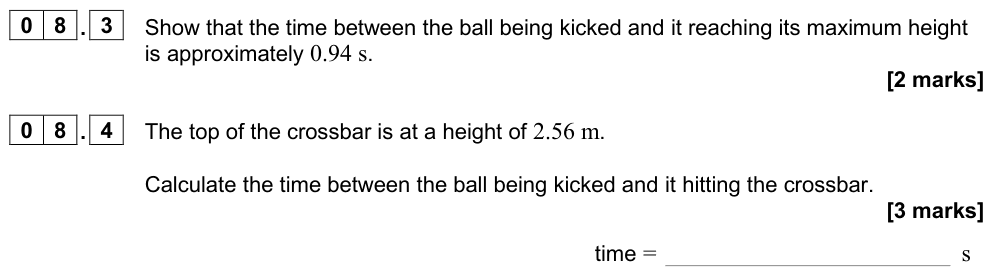
Maximum height (at the top $v_y = 0$): $0 = 11.5^2 - 2(9.81)h \Rightarrow h = 6.7\ \text{m}$.
Common mistake
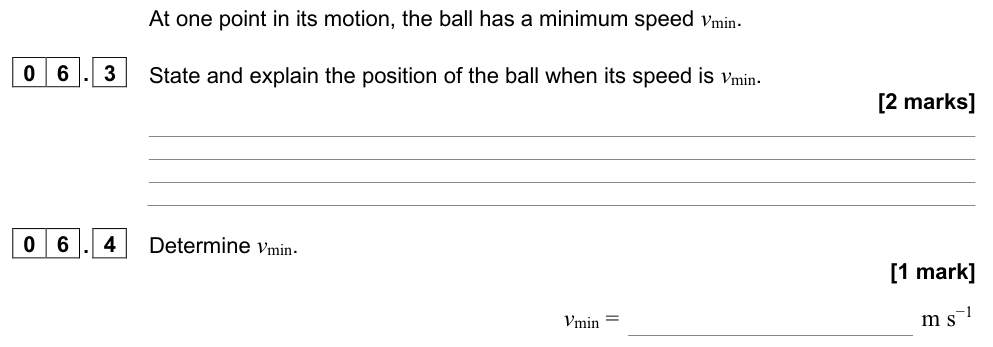
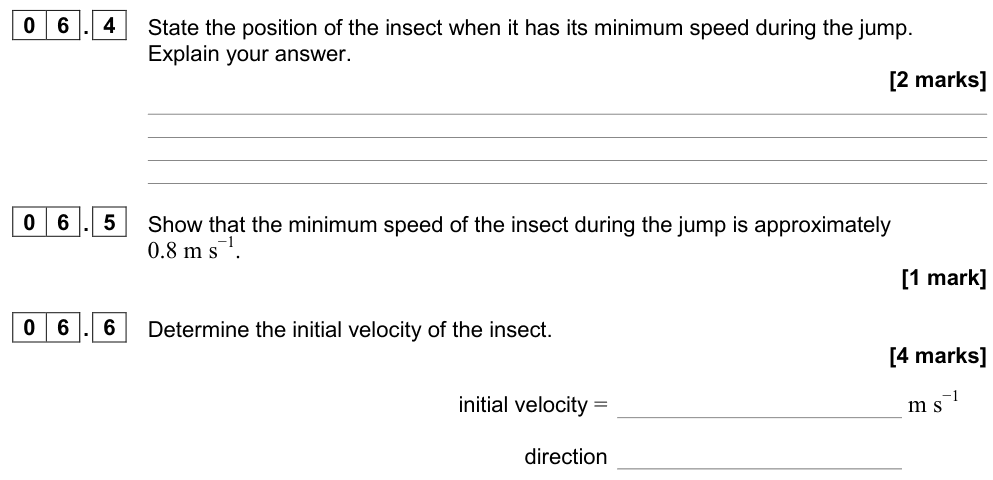
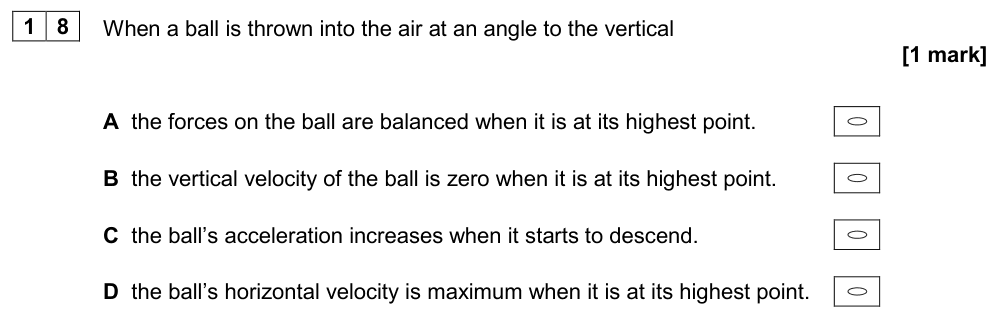
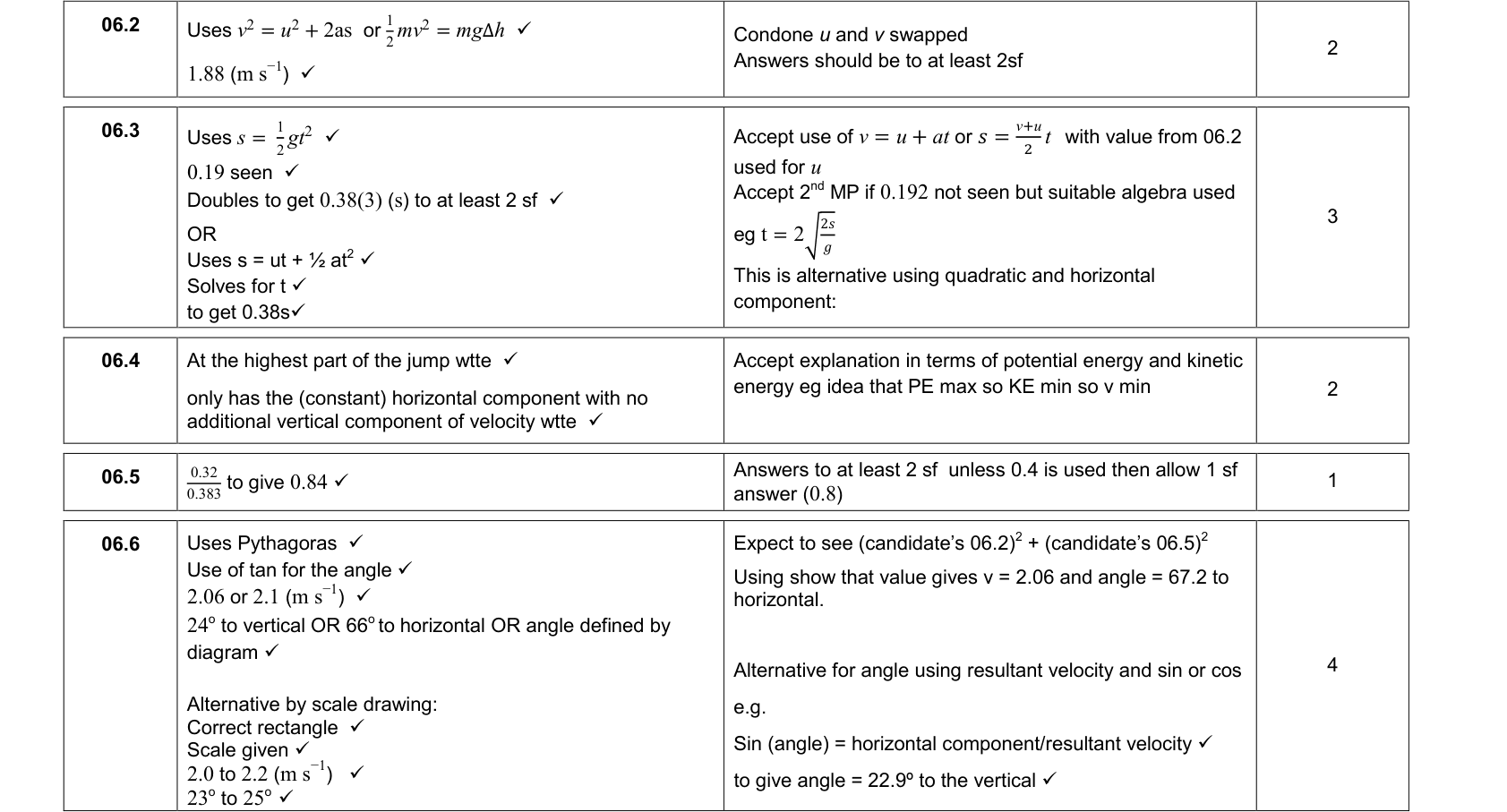
At the highest point the vertical velocity is zero but the horizontal velocity is not. The speed at the top is $u_x$, not zero. The acceleration is still $g$ downwards.
Friction
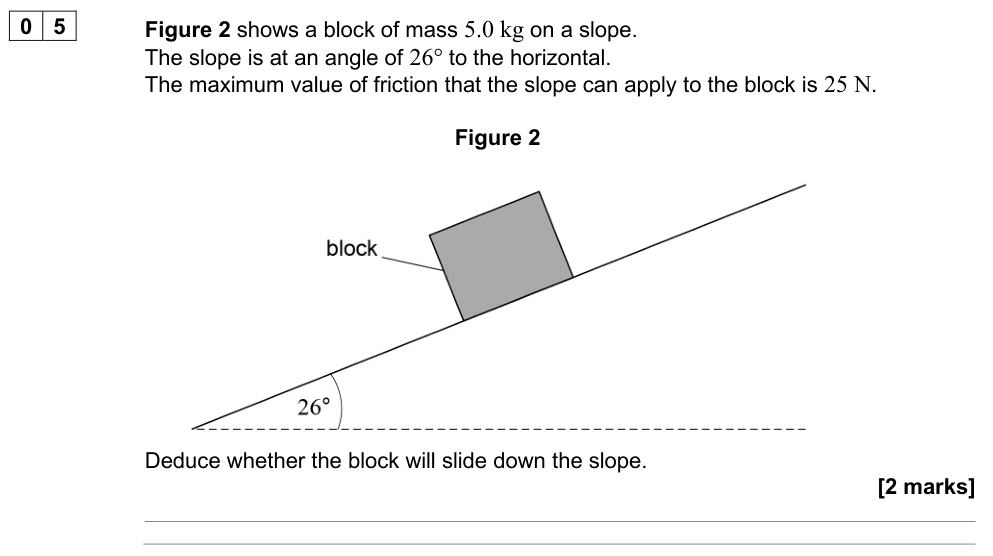
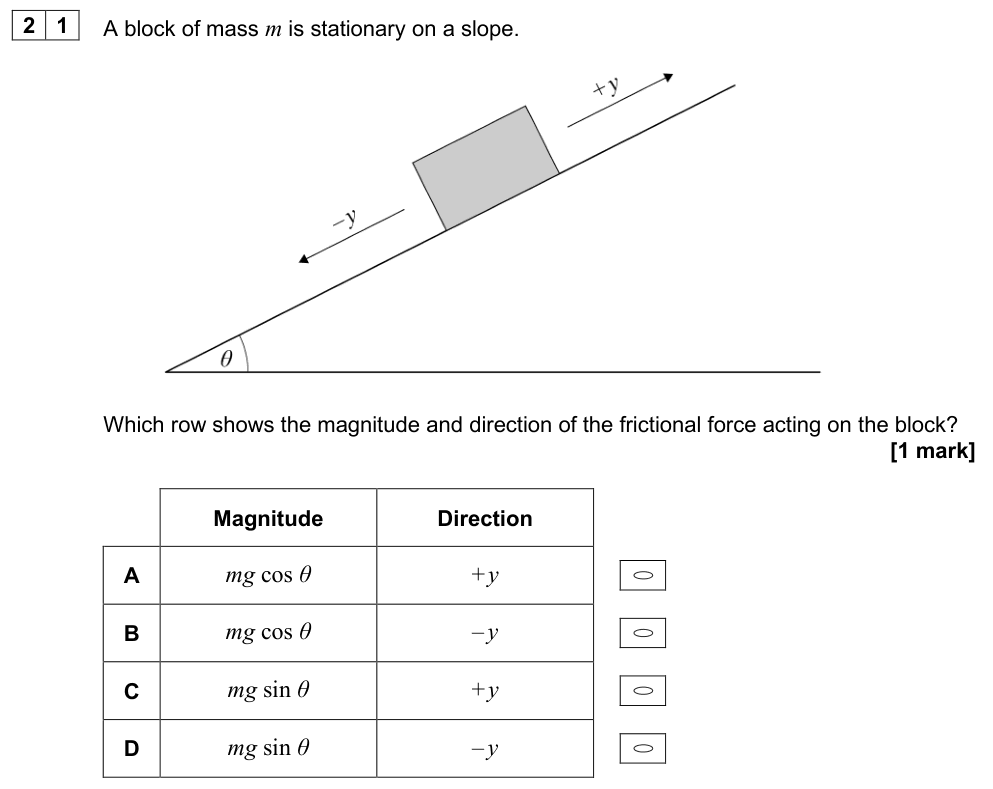
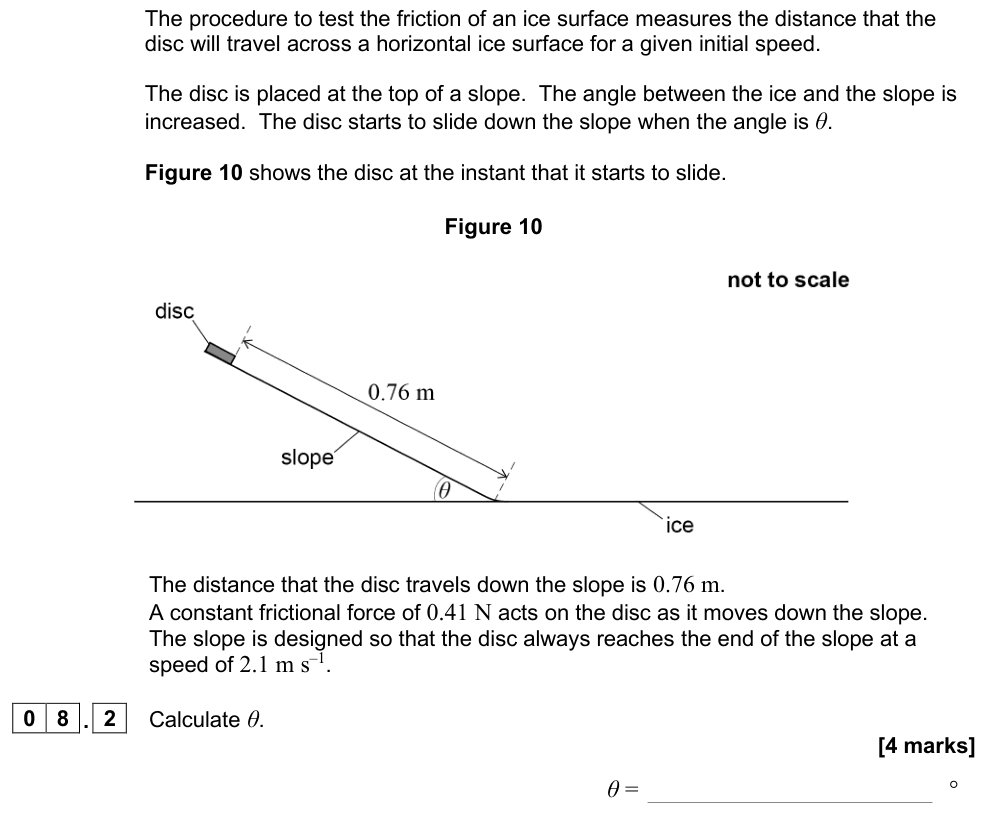
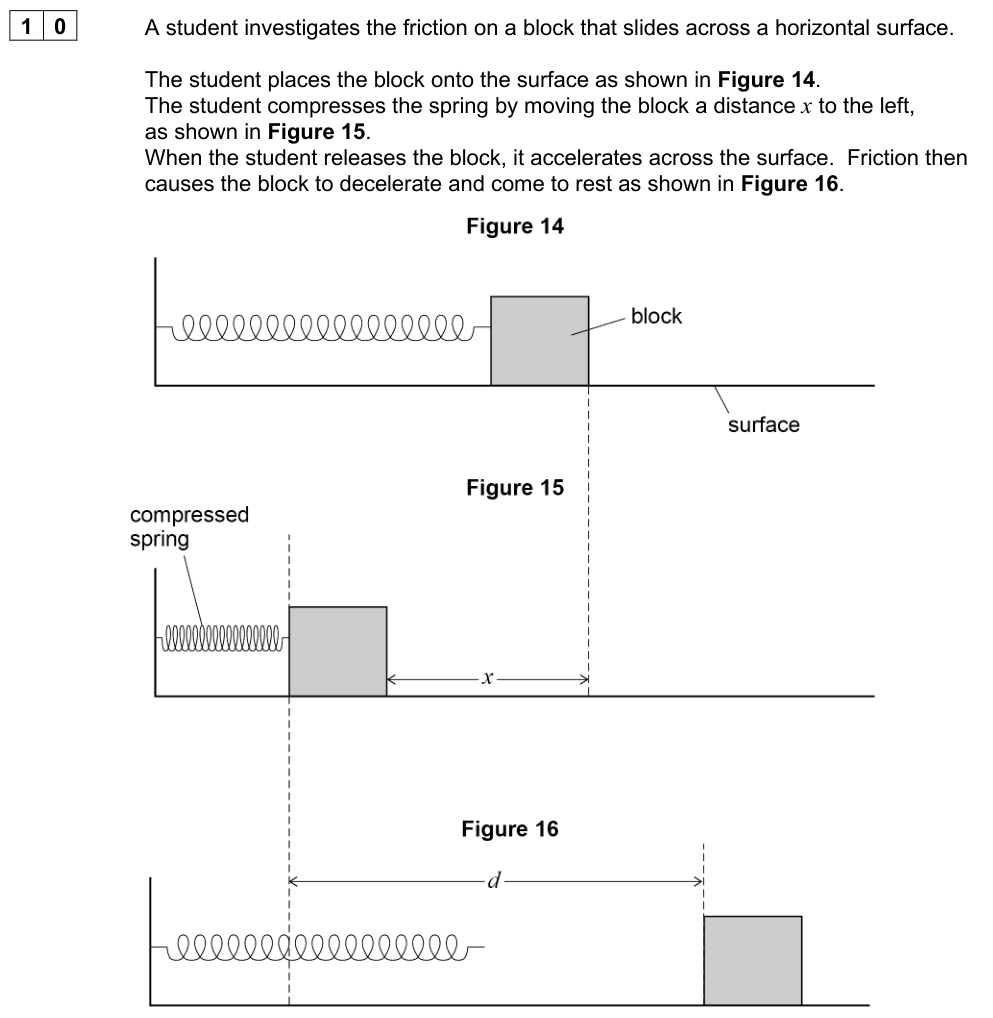
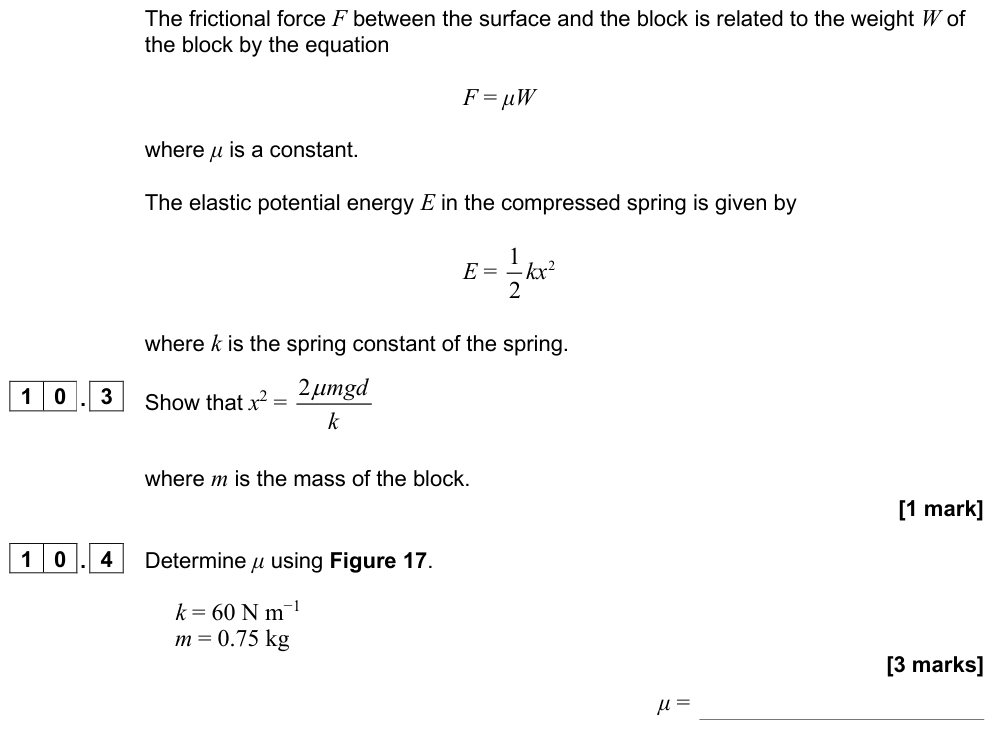
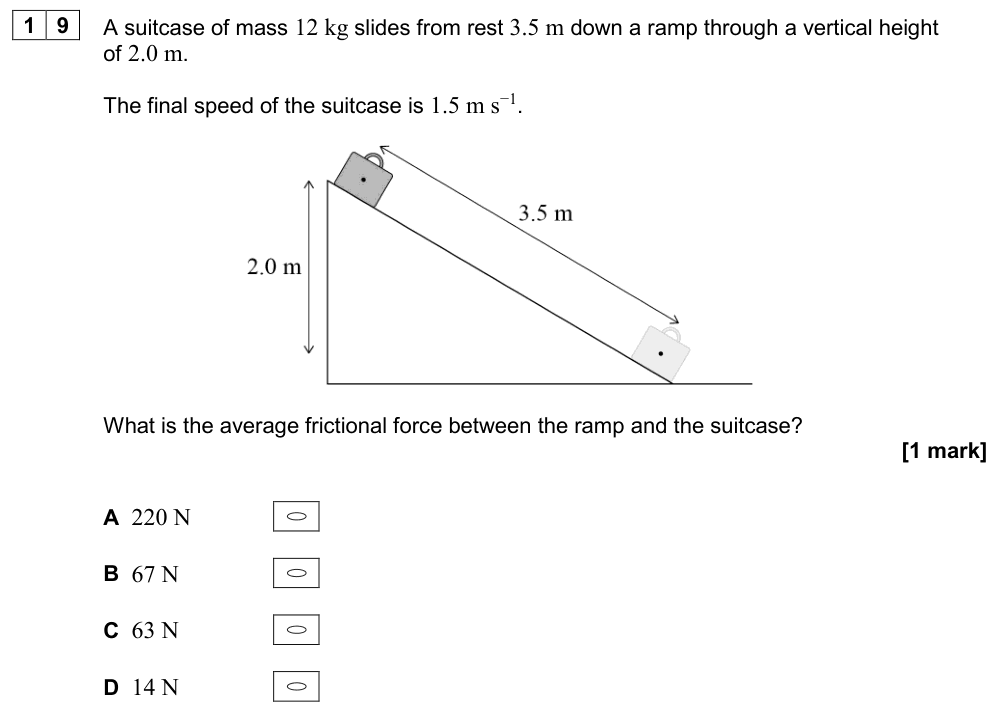
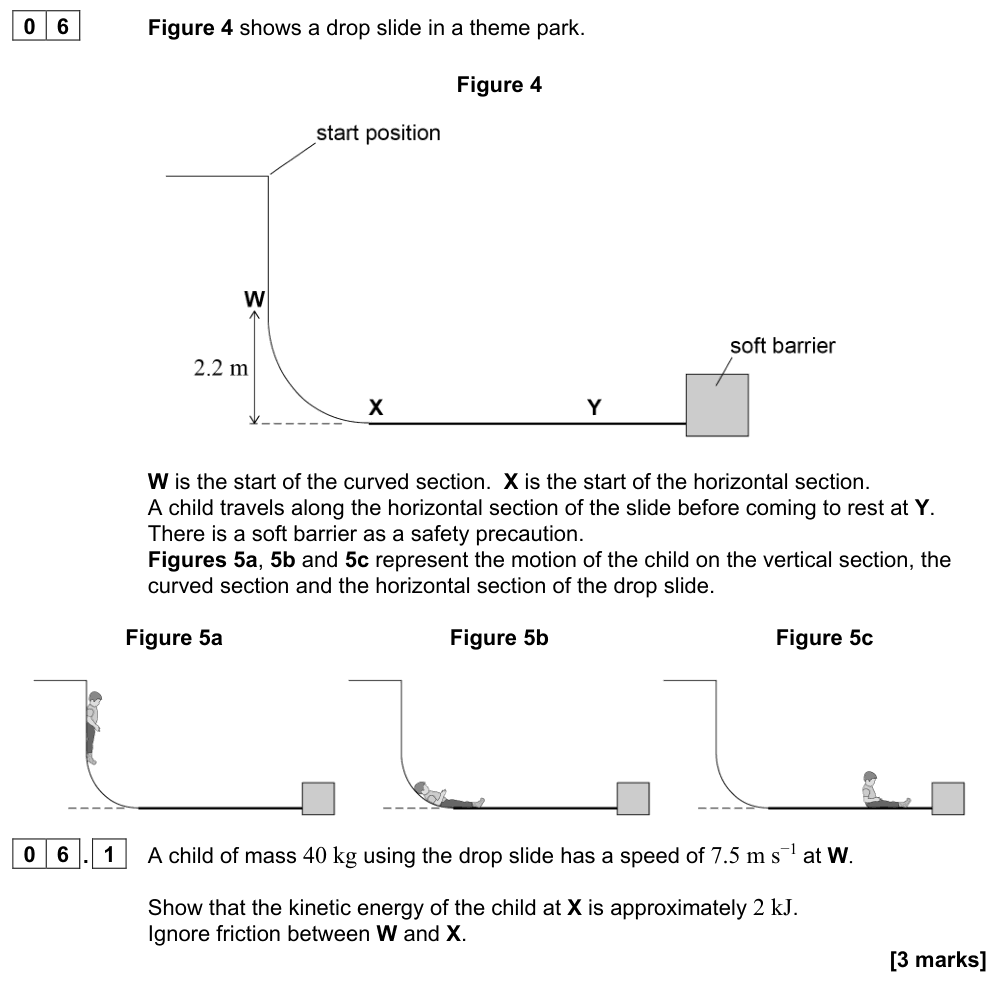
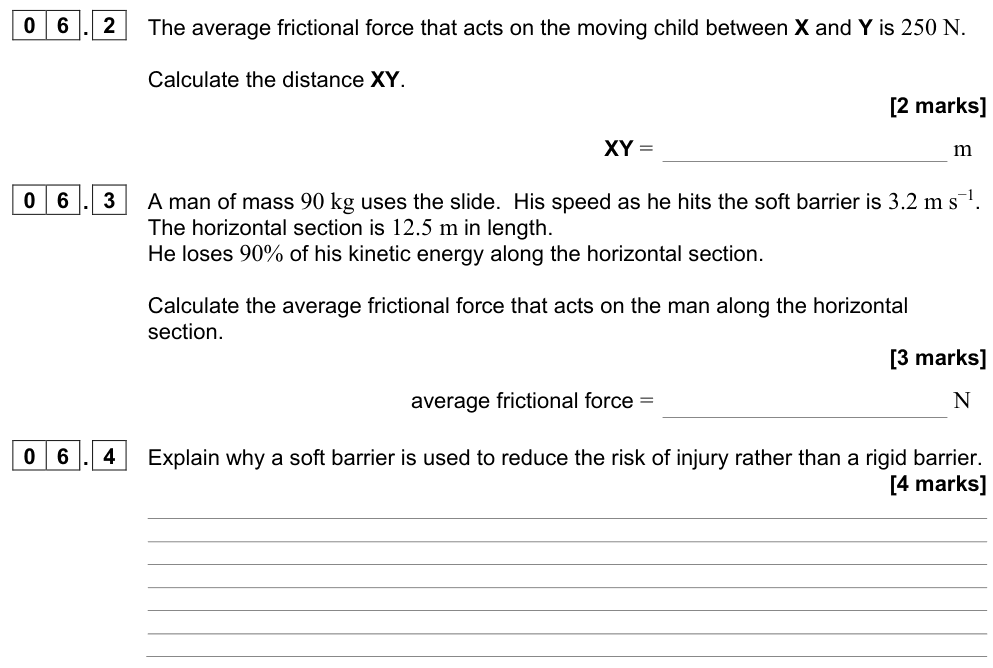
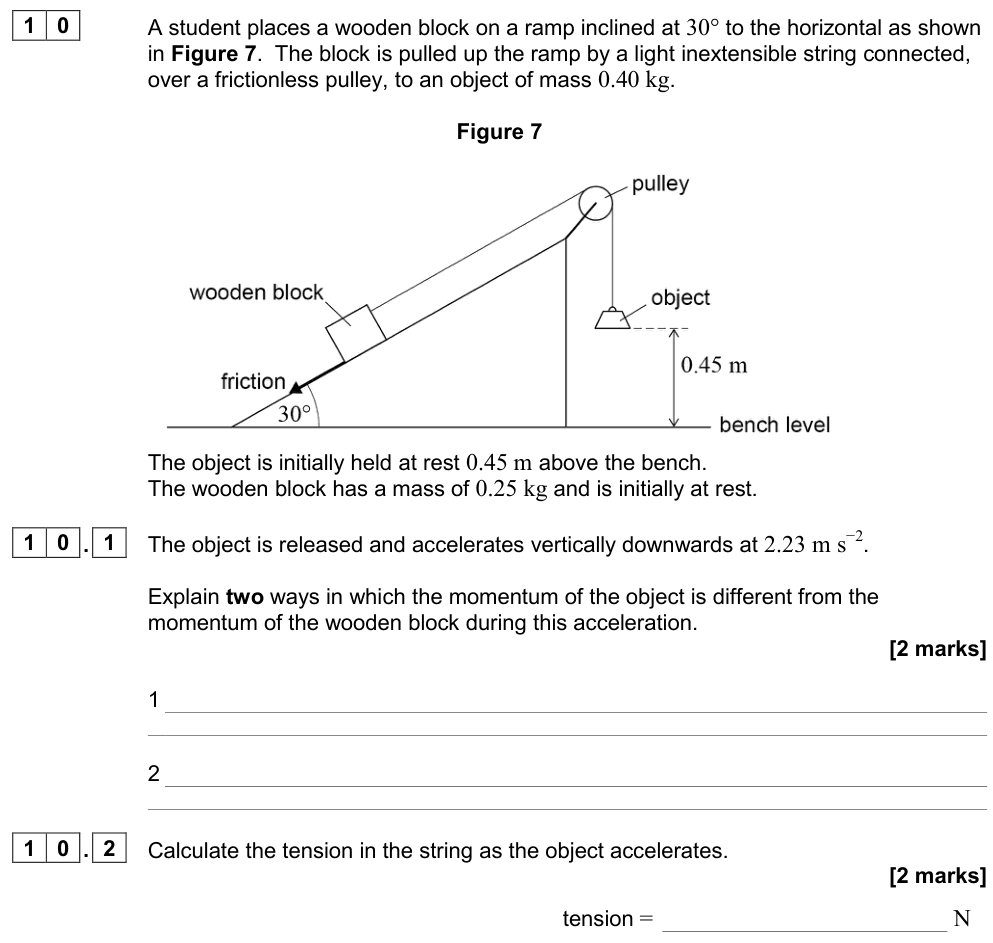
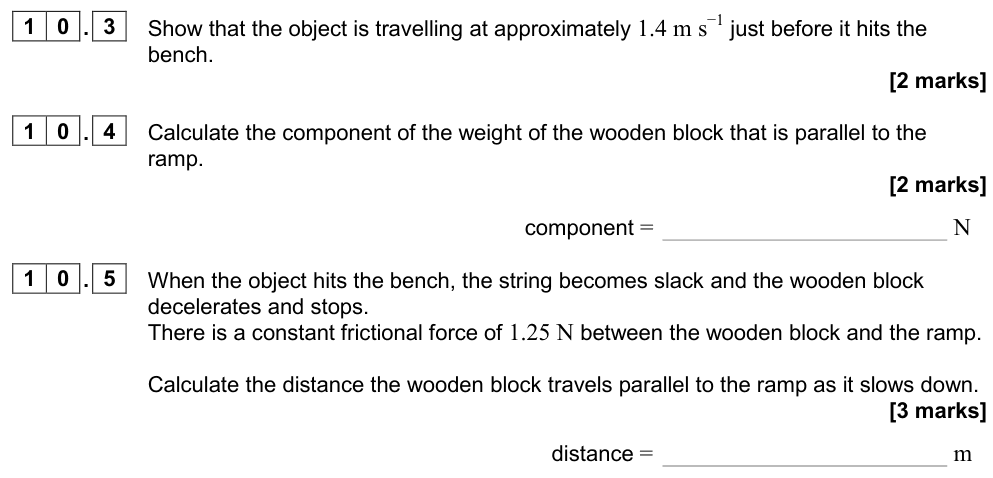
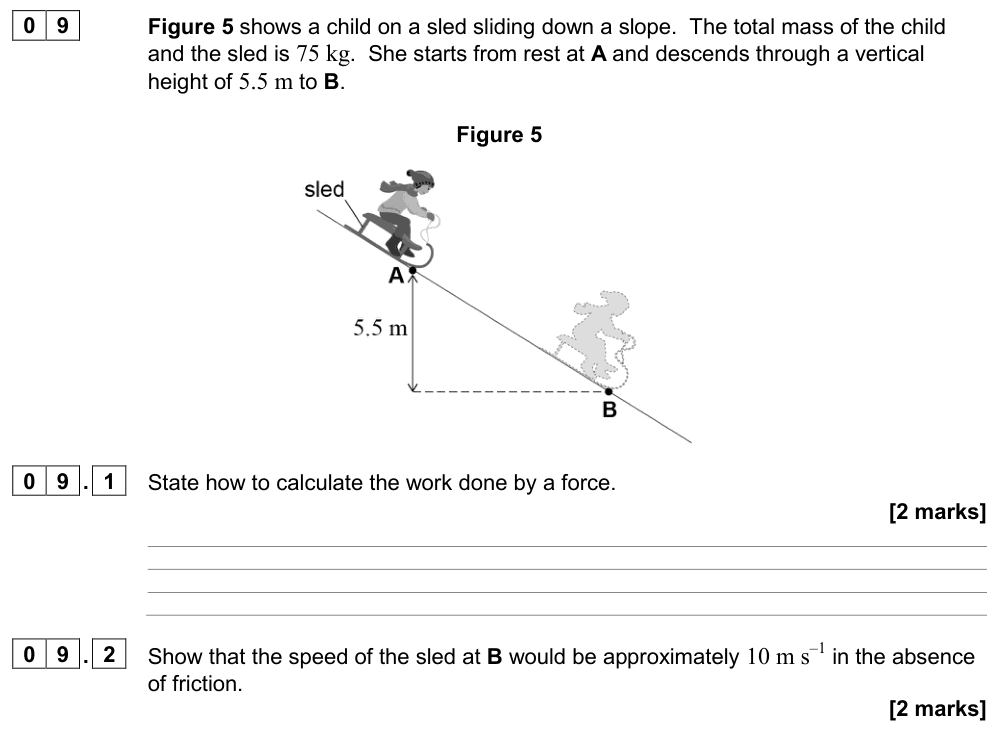
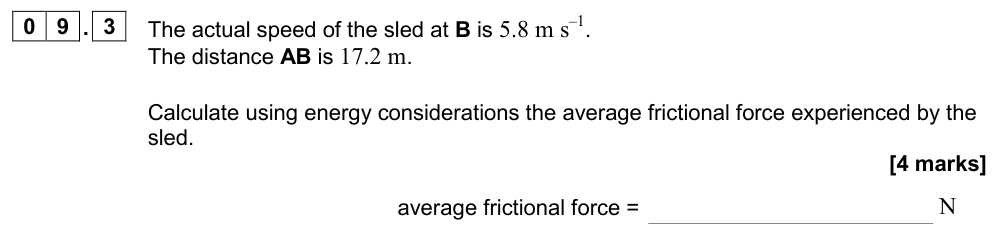
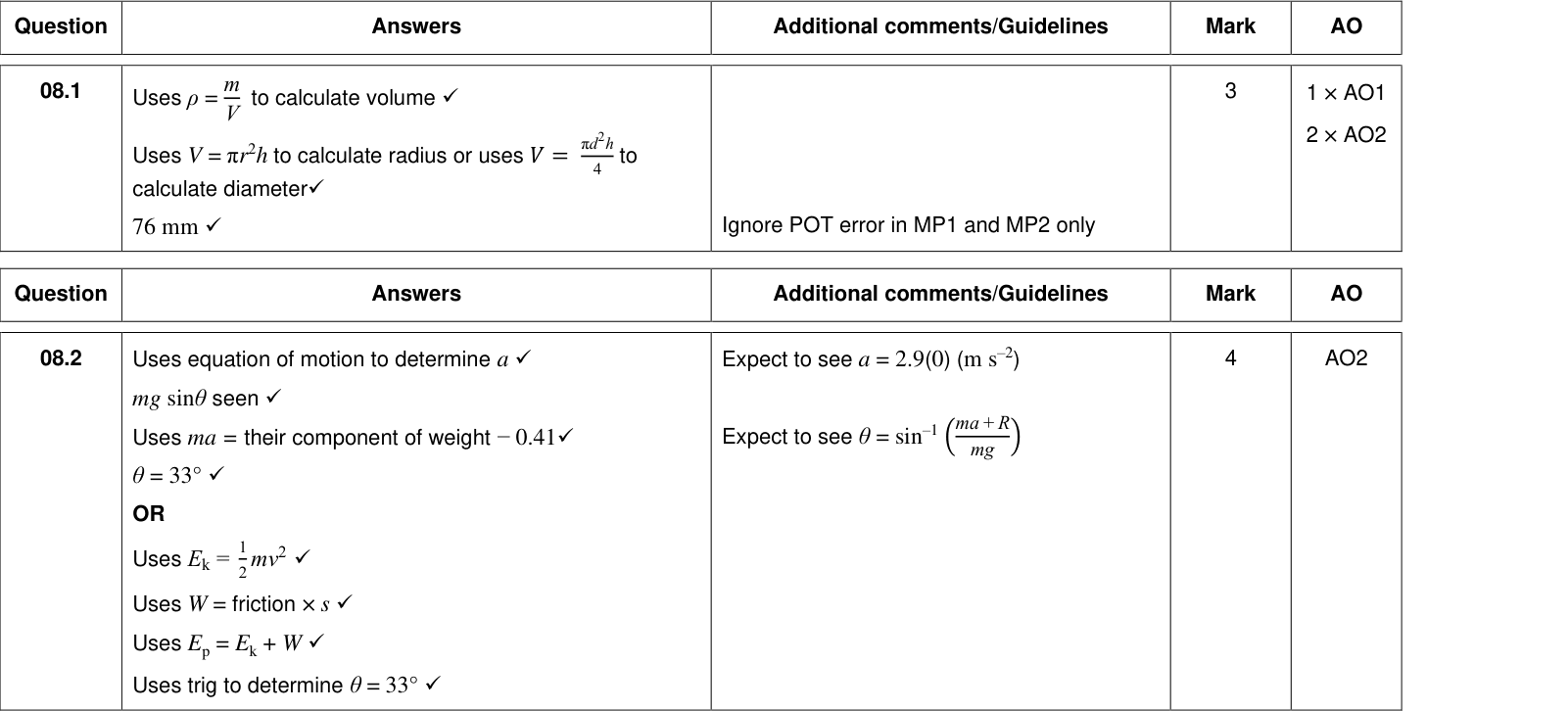
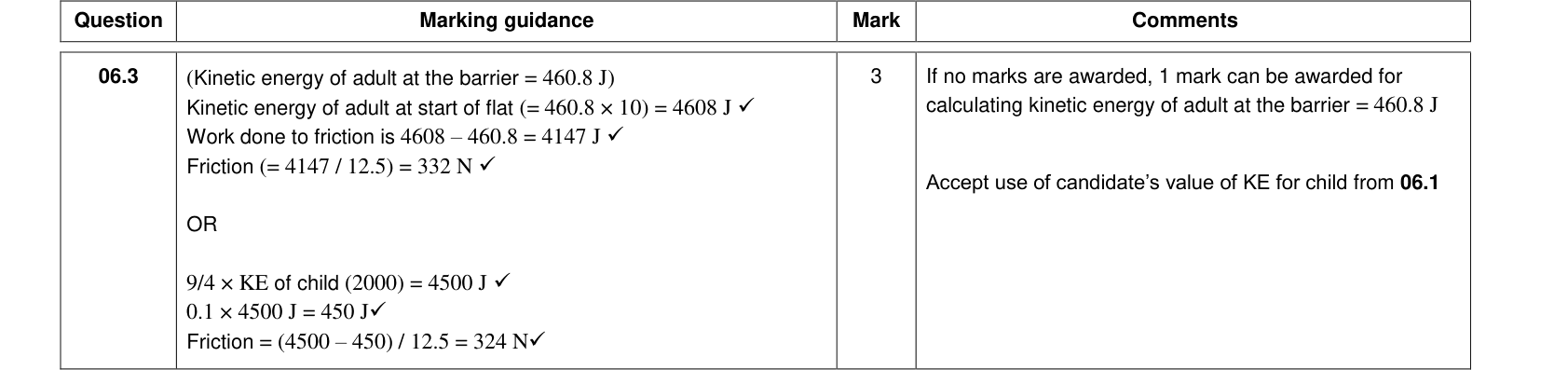
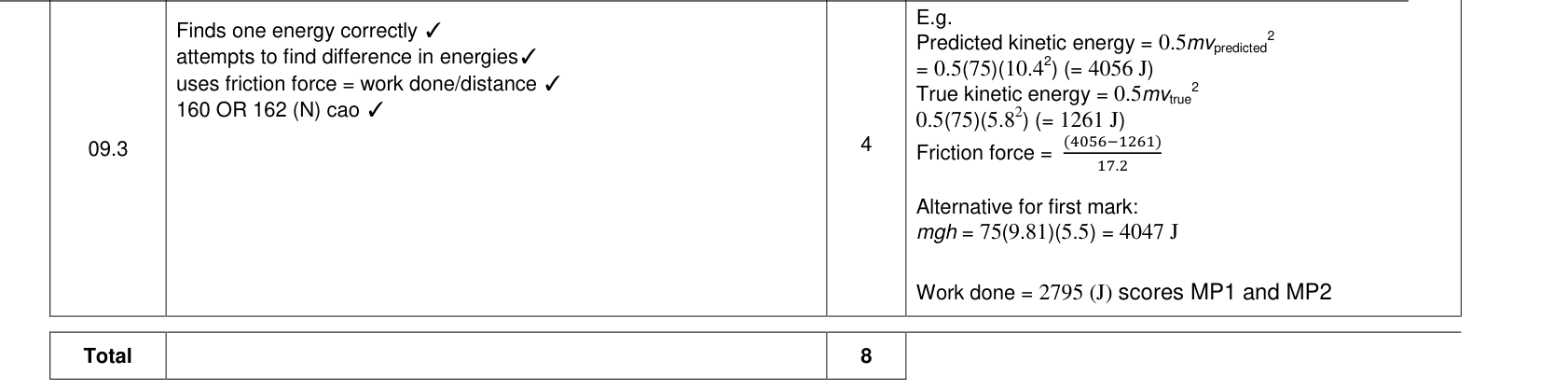
Friction is a force that opposes the relative motion (or attempted motion) of two surfaces in contact. It acts along the surface, opposite to the direction the object moves or would move.
- Friction converts kinetic energy into internal (thermal) energy and makes the surfaces warmer.
- Friction is not always a nuisance. It lets tyres grip the road, lets us walk, and makes brakes work.
- You only need a qualitative treatment of friction. Static and dynamic friction are not distinguished.
Lift and drag
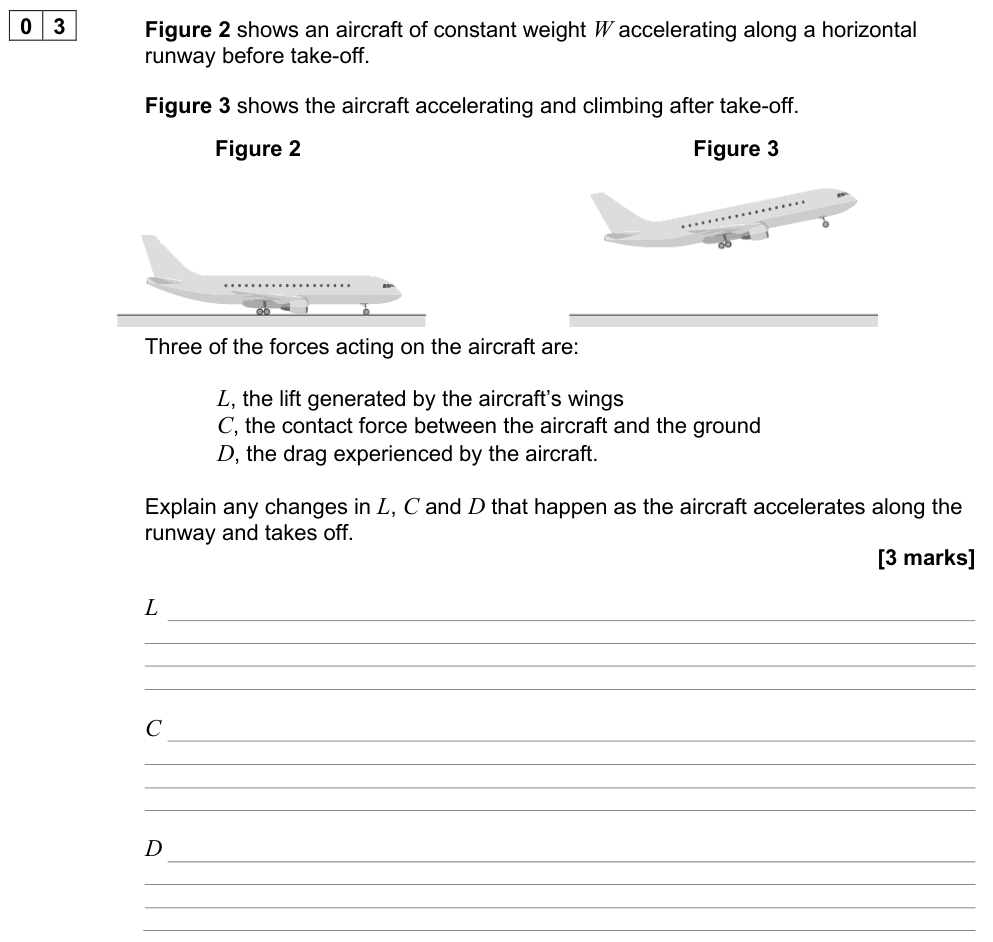
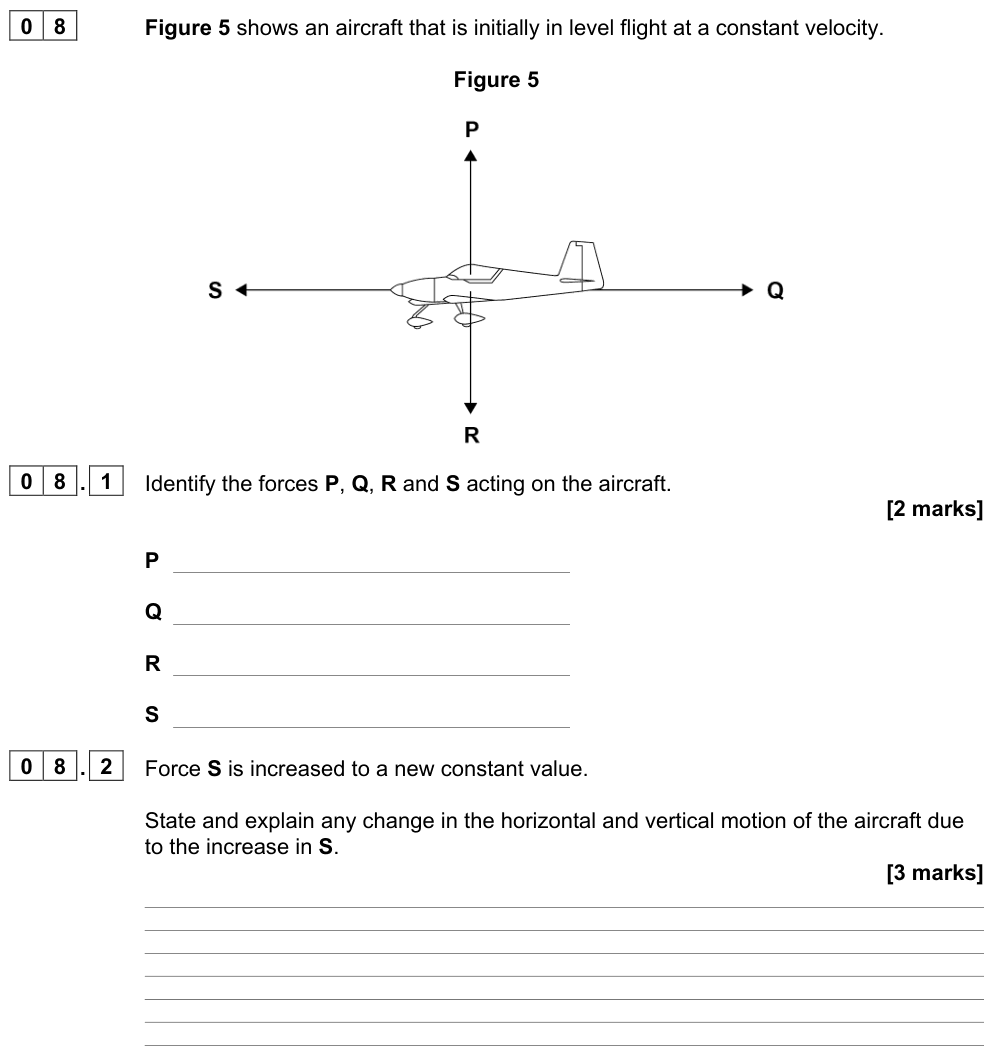
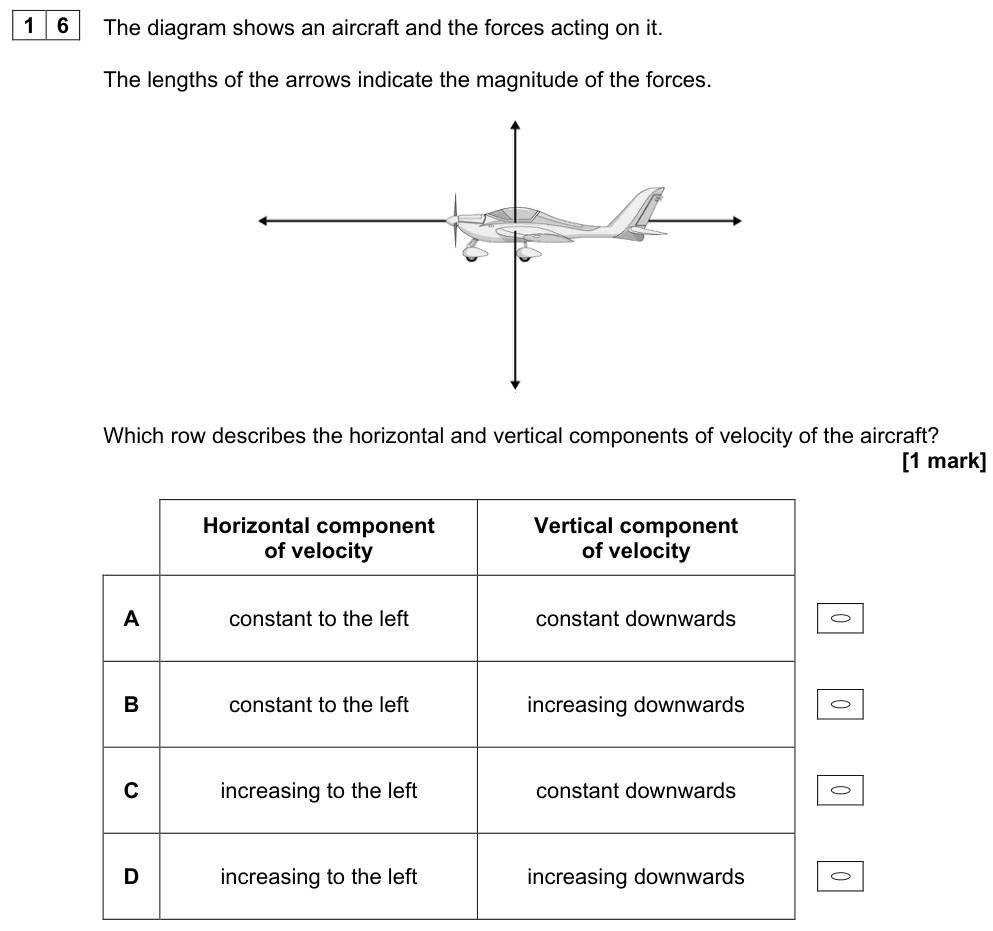
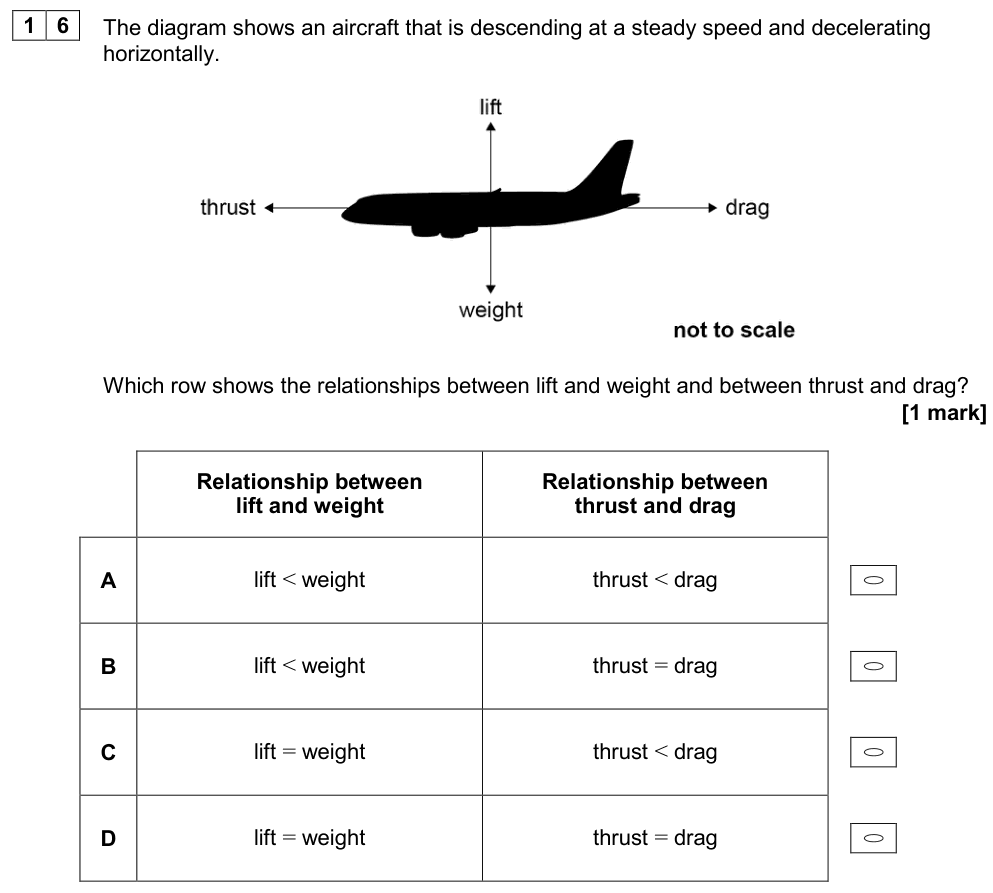
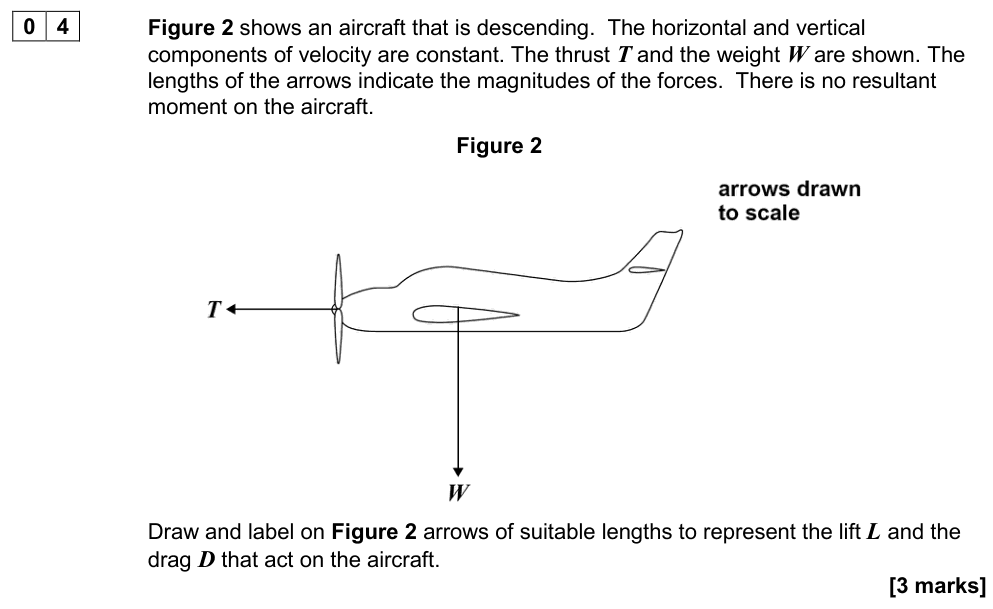
When an object moves through a fluid (a liquid or a gas) it experiences forces from the fluid:
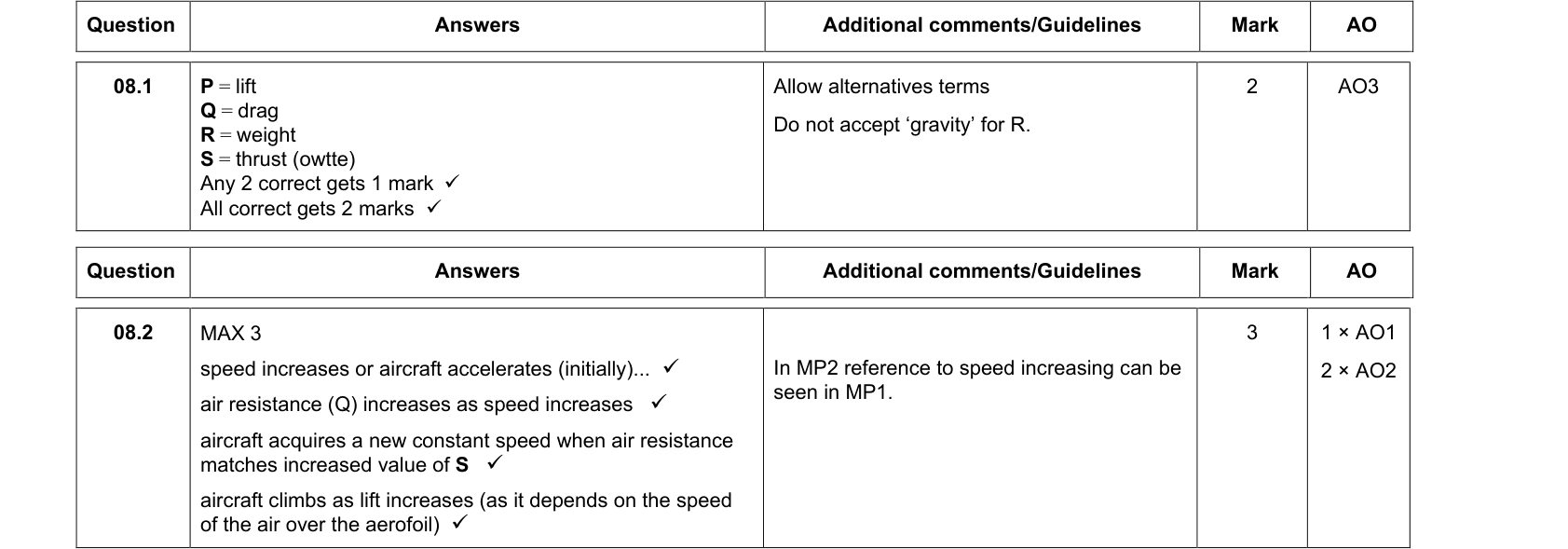
- Drag acts opposite to the velocity relative to the fluid. Air resistance is drag in air.
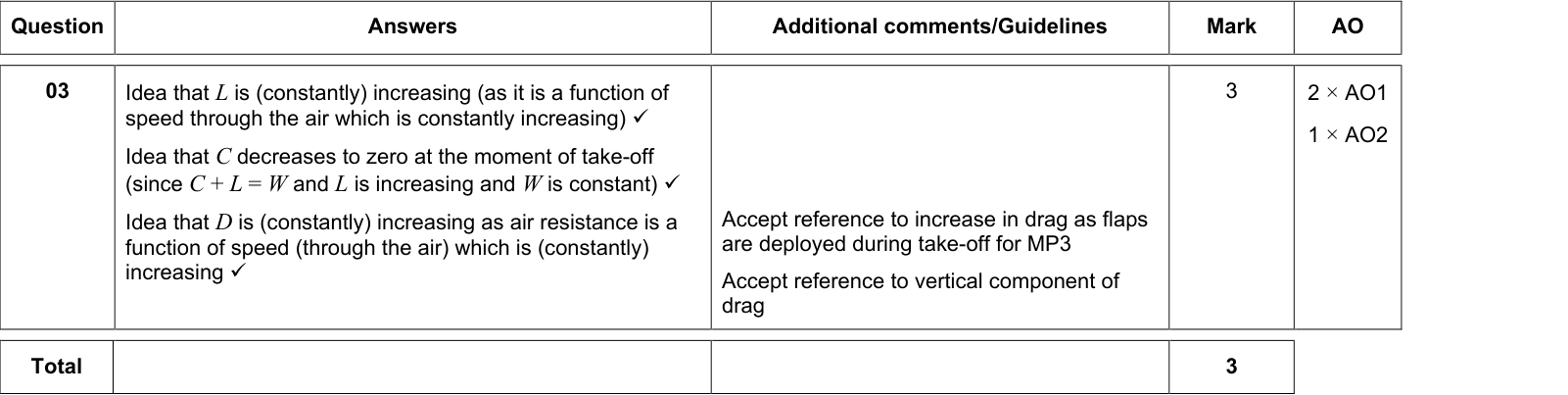
- Lift acts perpendicular to the flow of fluid past the object. Aircraft wings are shaped so that the air flowing past them exerts an upward lift force.
How drag depends on speed
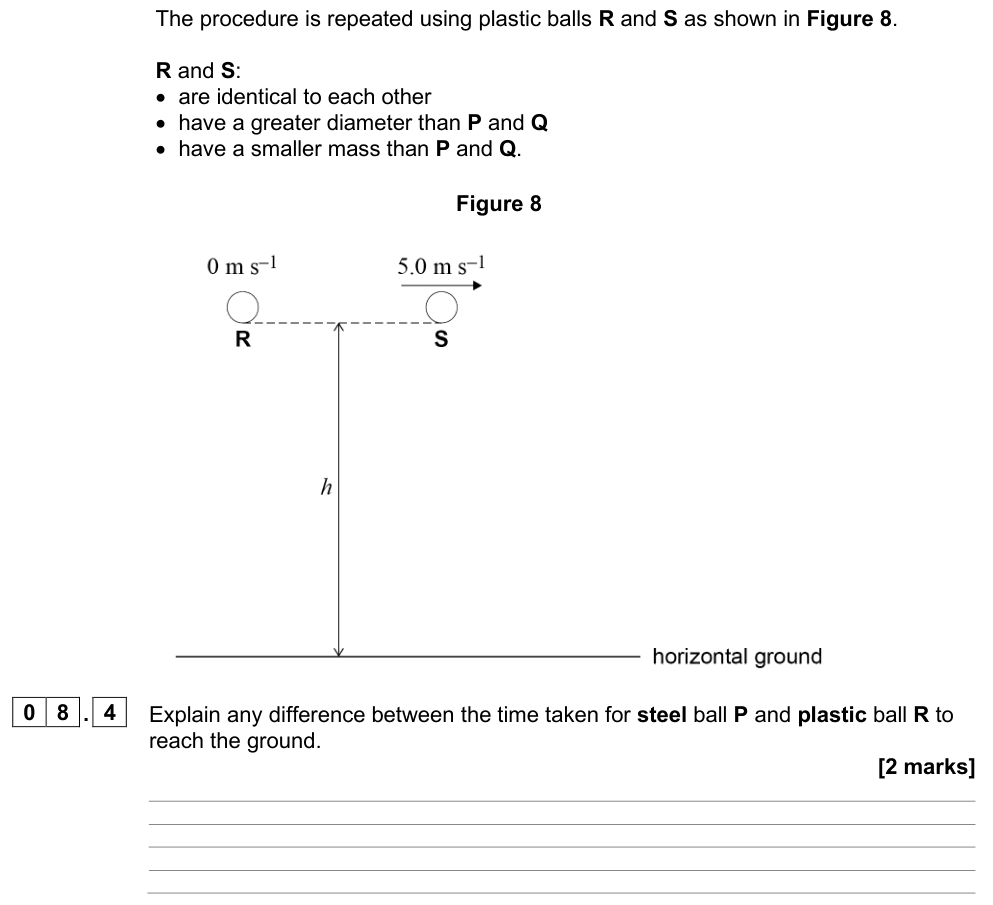
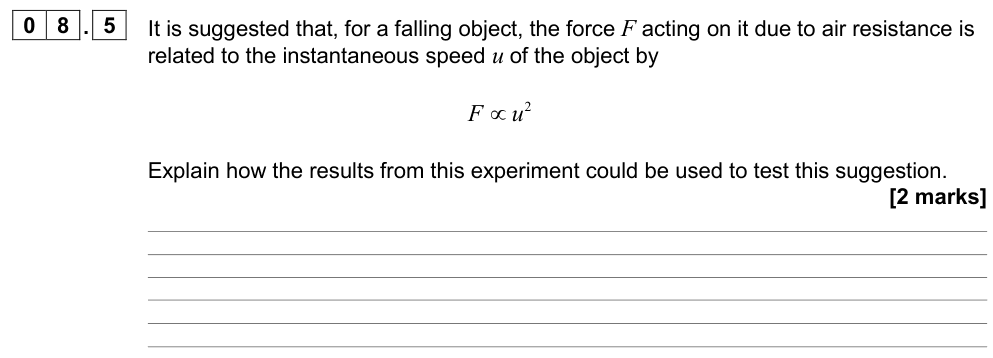
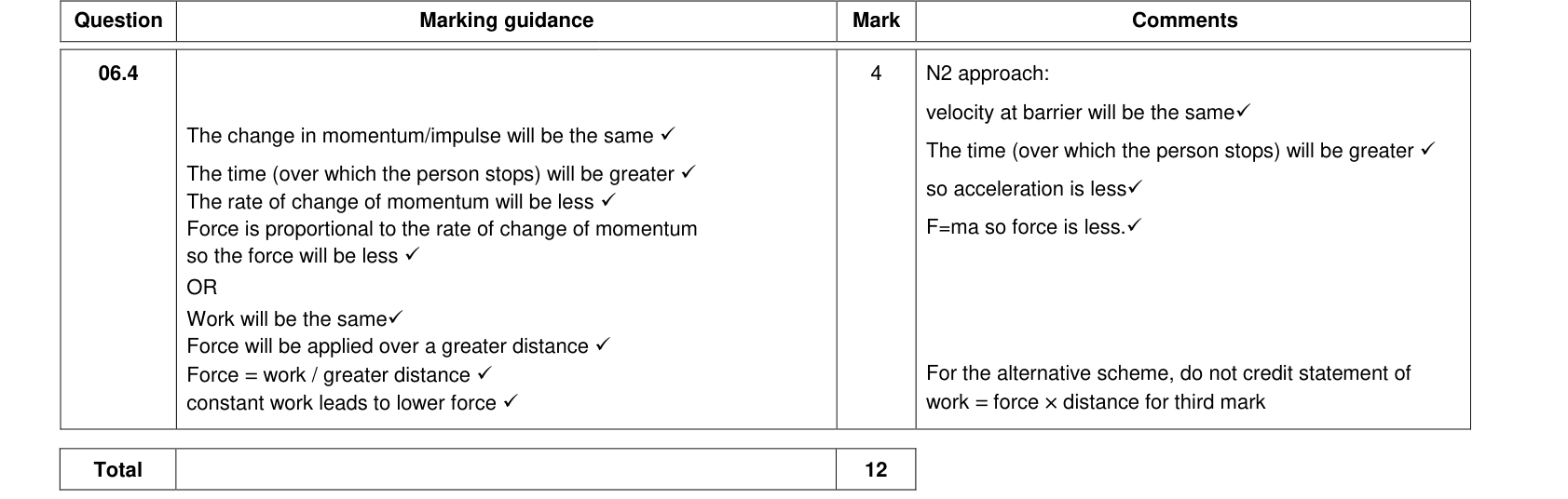
Air resistance increases with speed. Drag also increases with the cross-sectional area of the object and the density of the fluid, and depends on its shape (streamlining reduces drag).
Terminal speed
When an object falls through air:
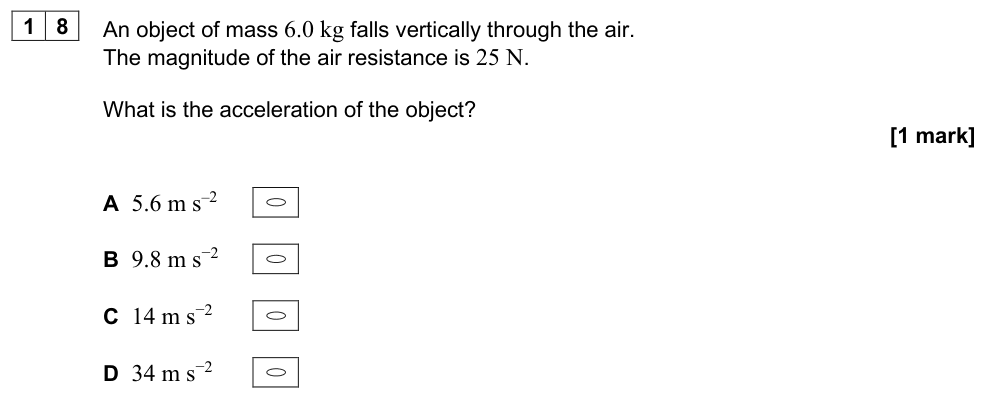
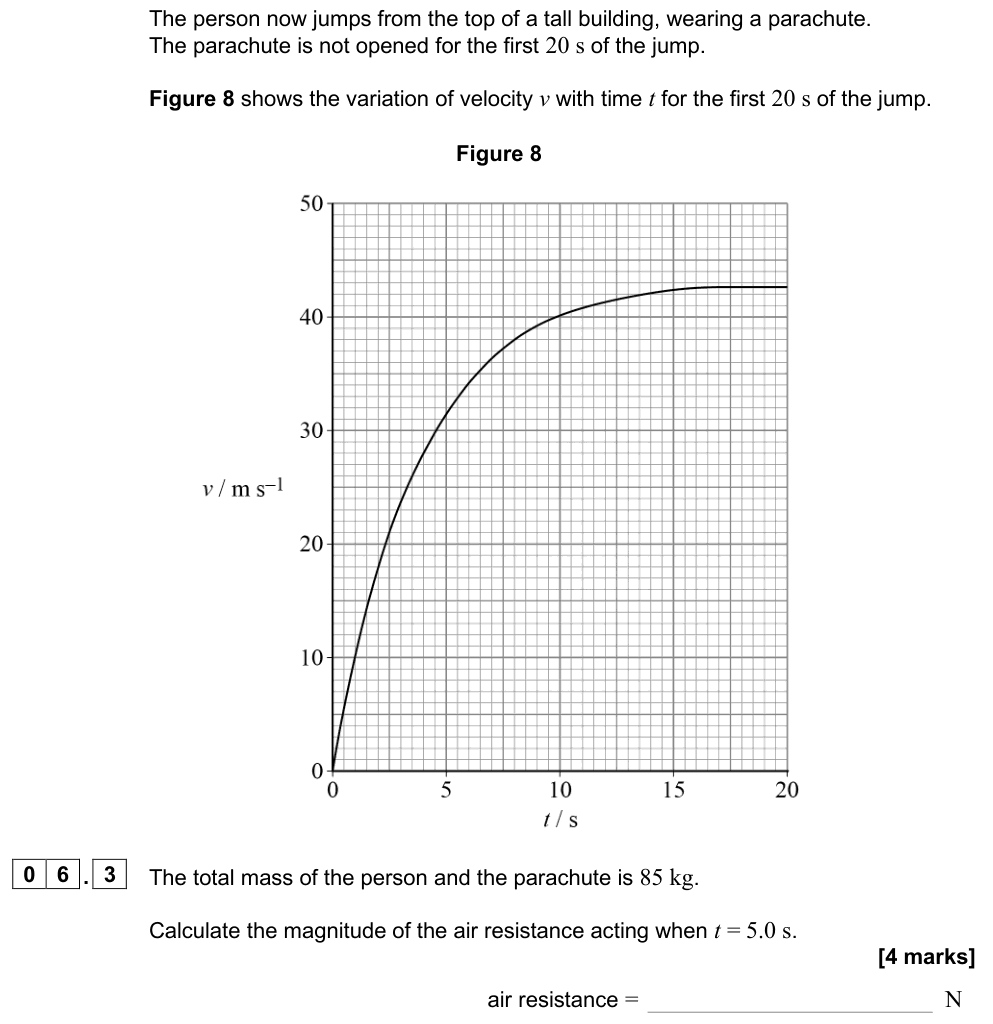
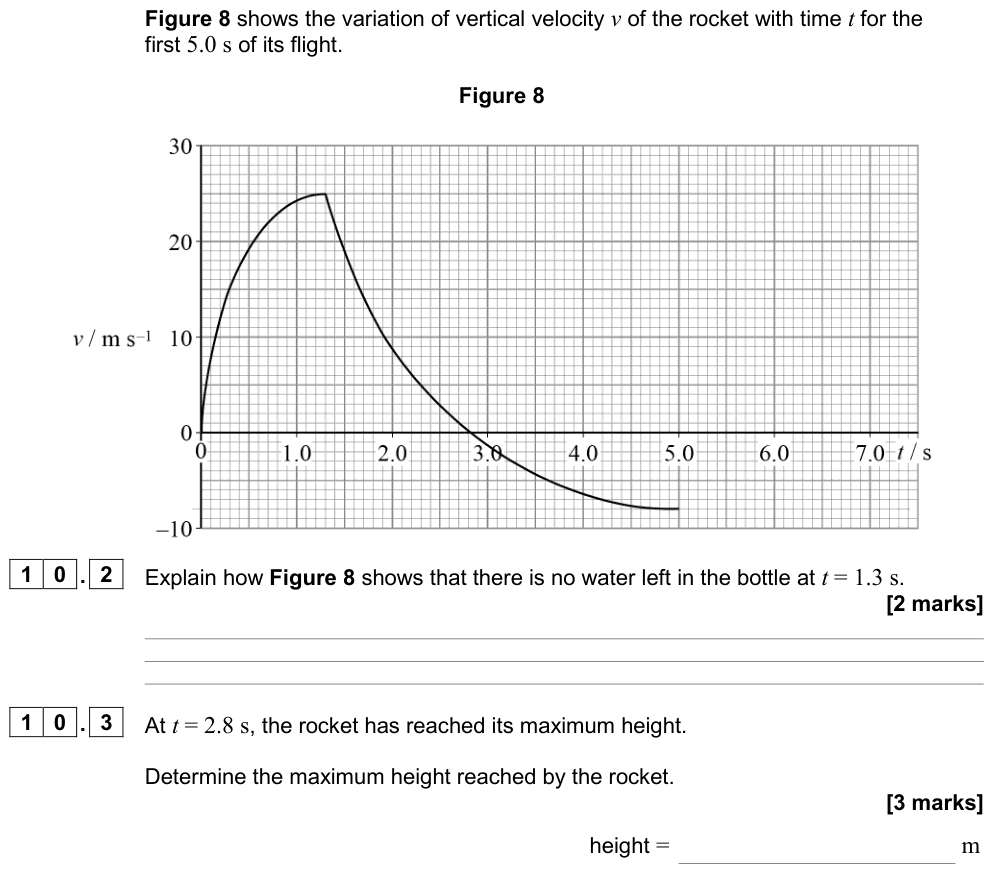
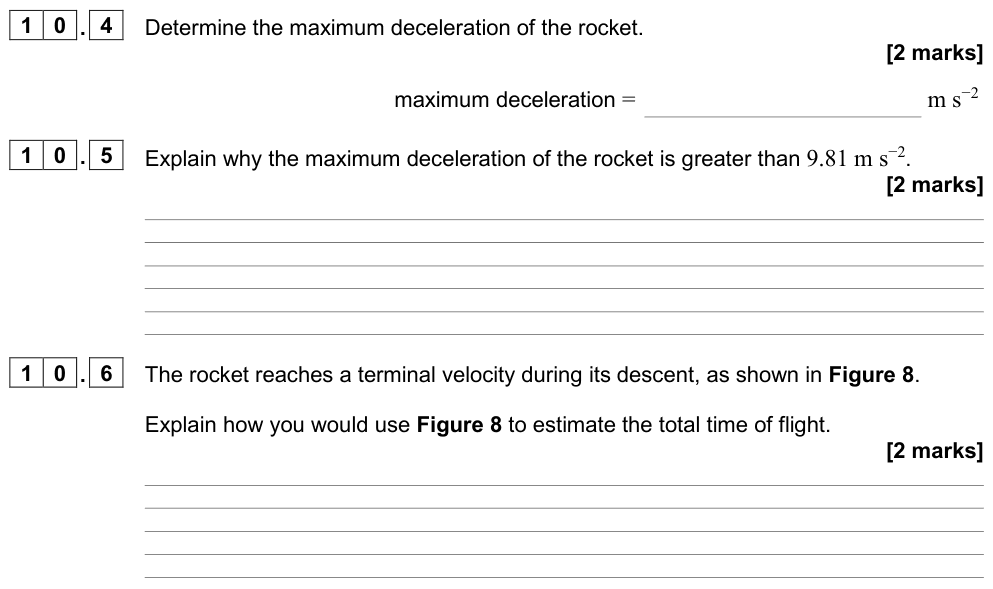
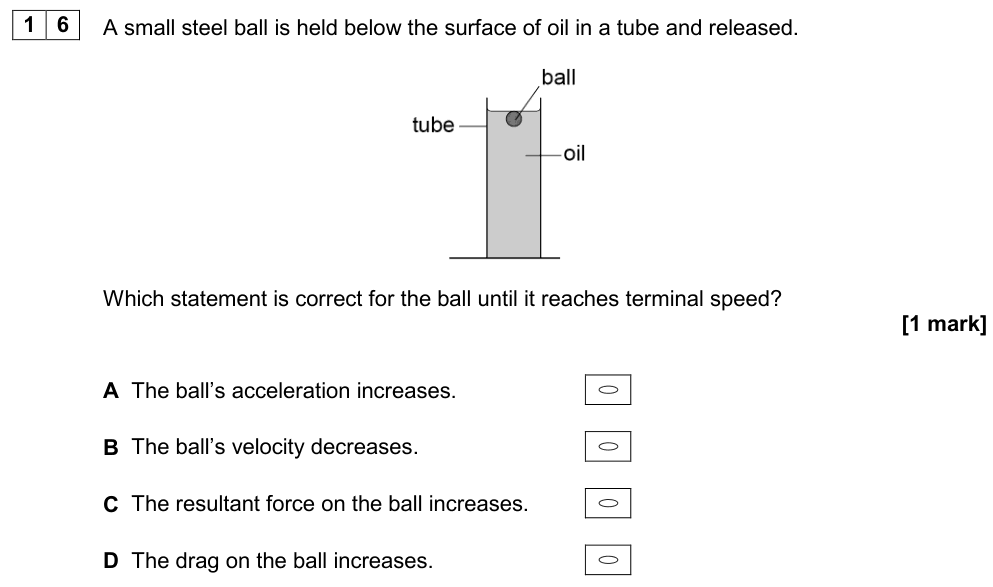
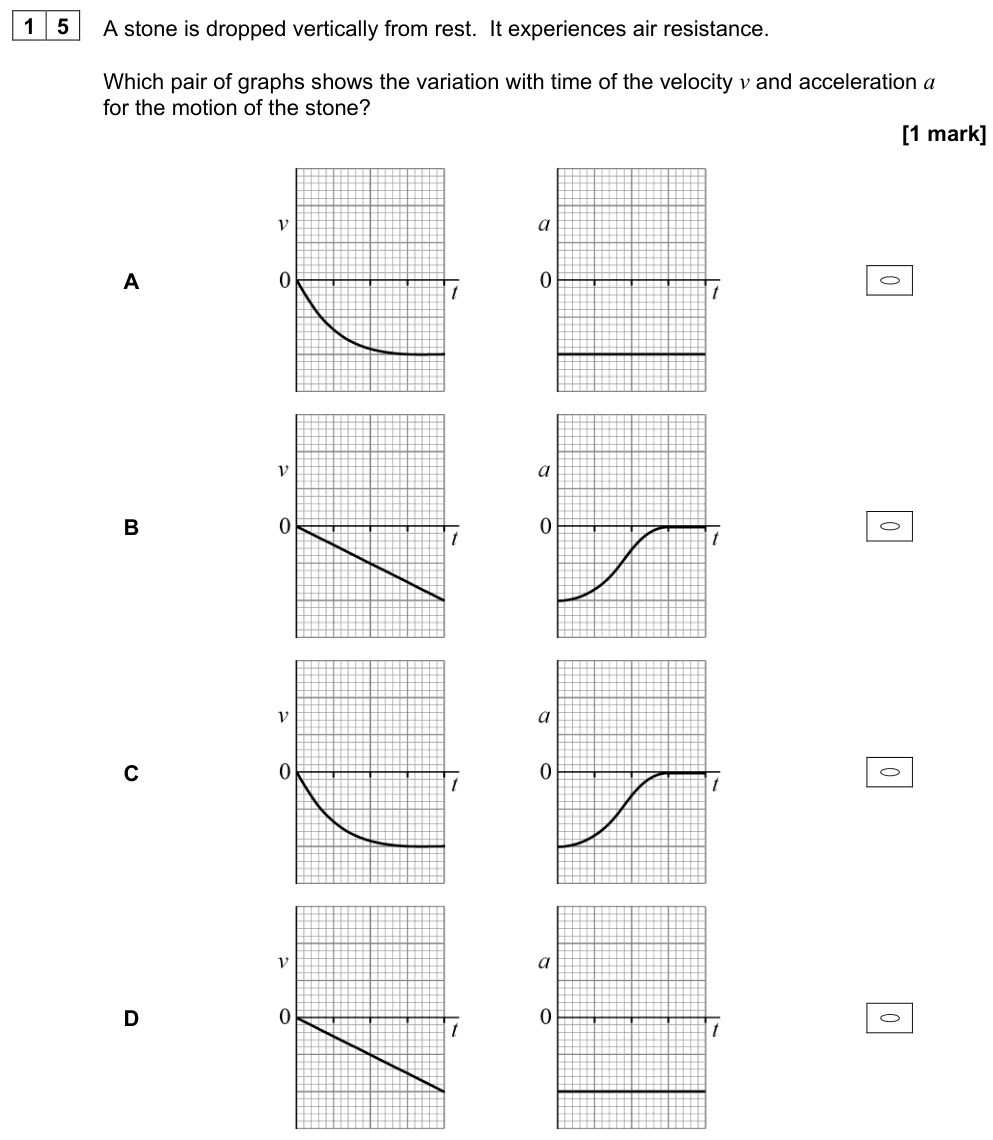
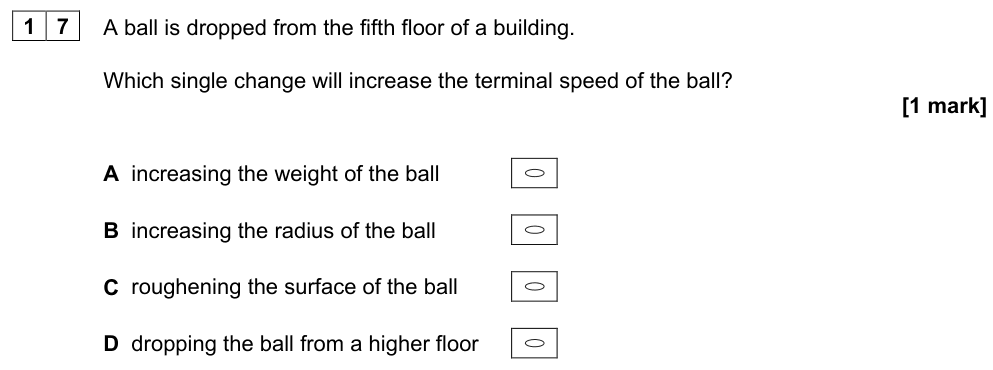
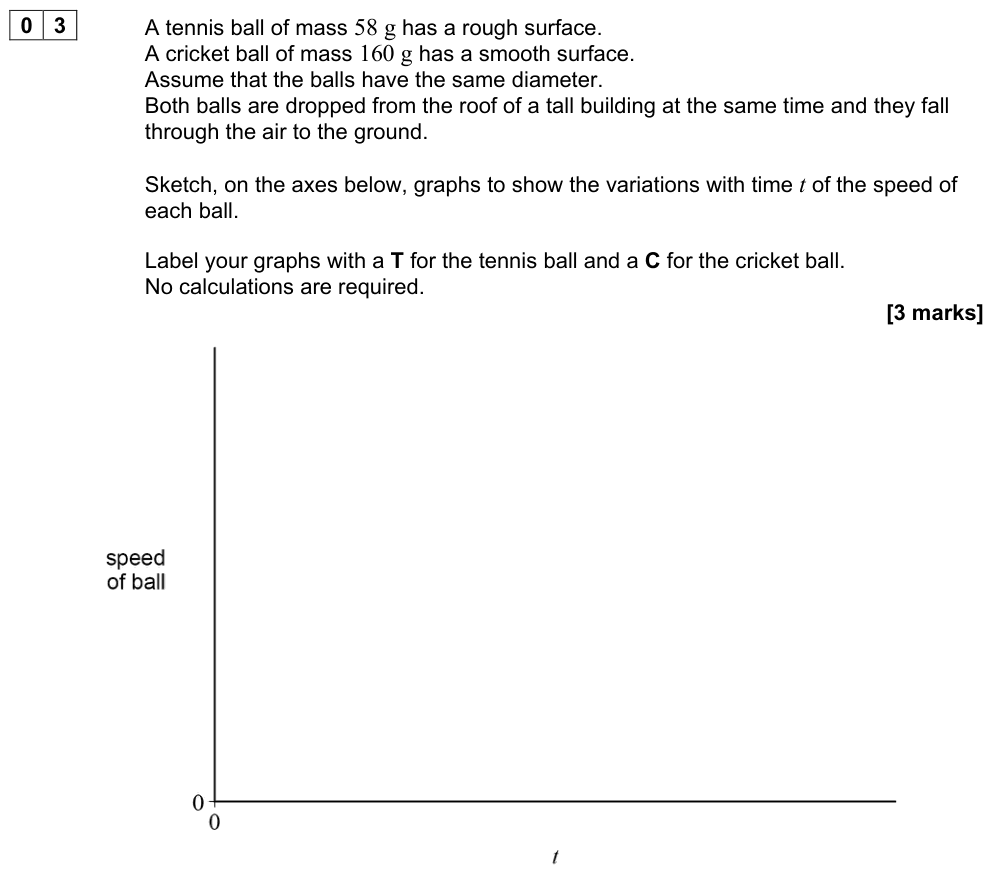
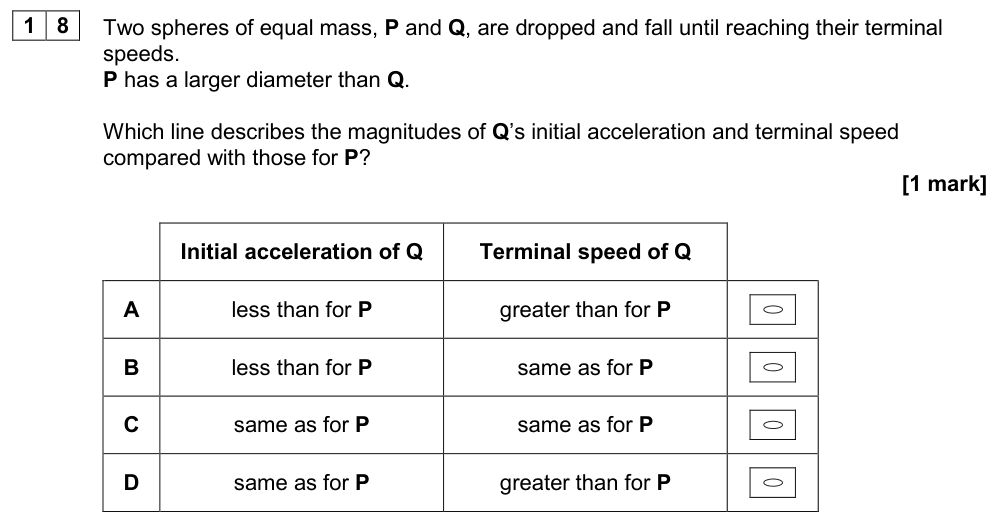
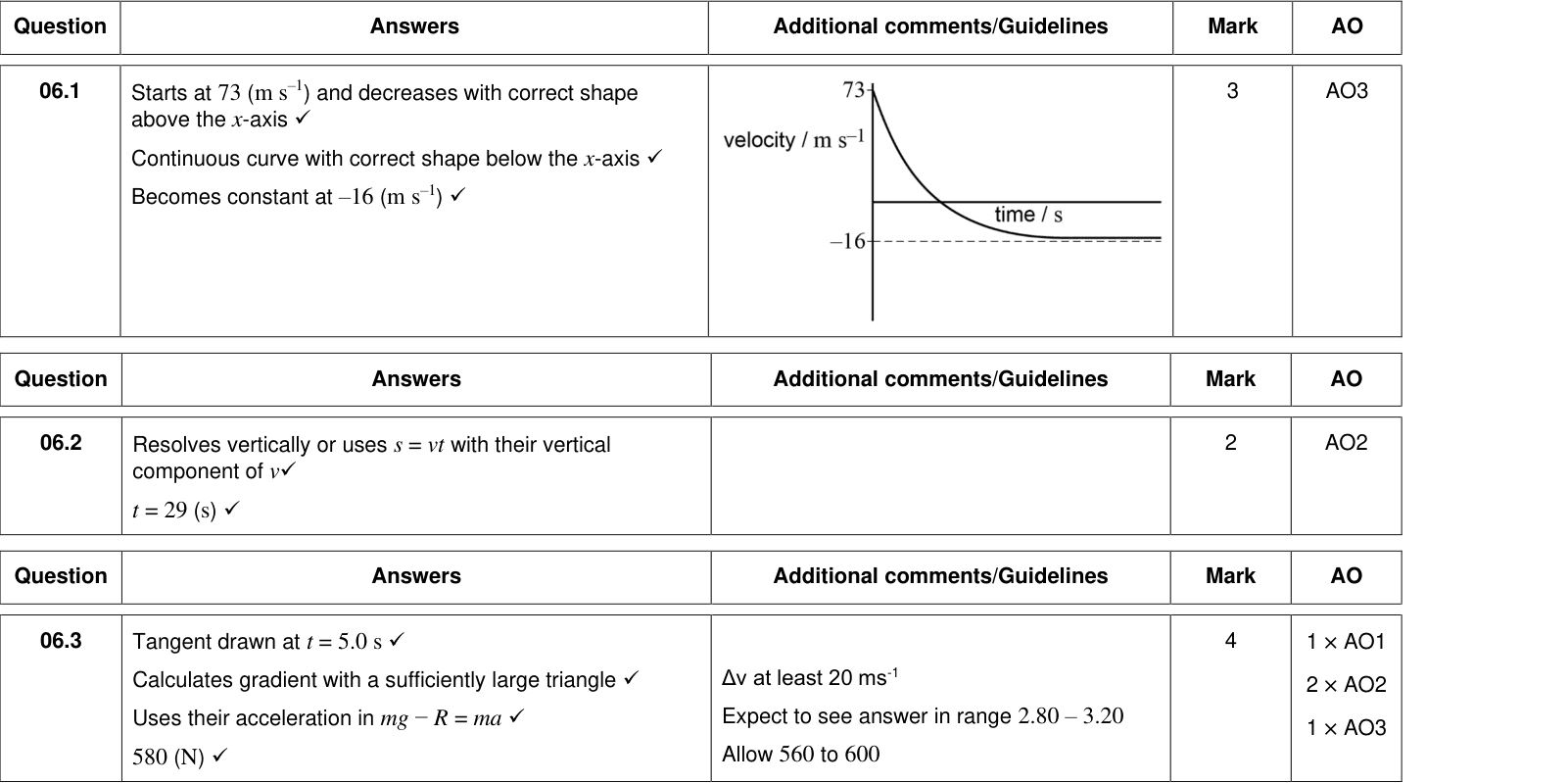
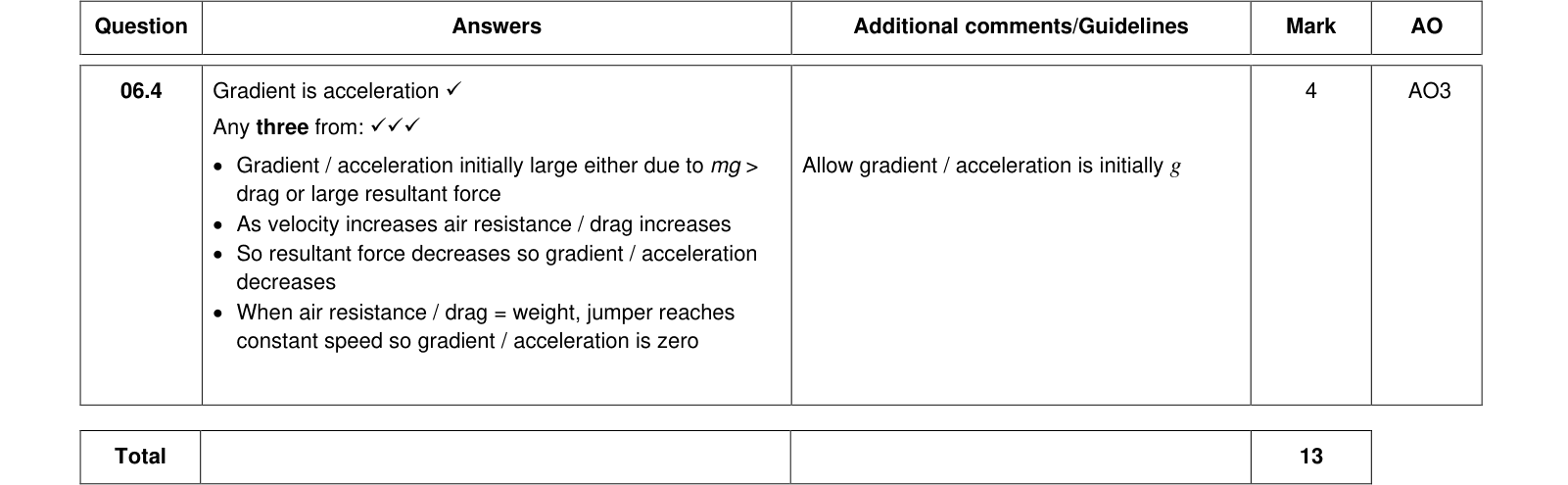
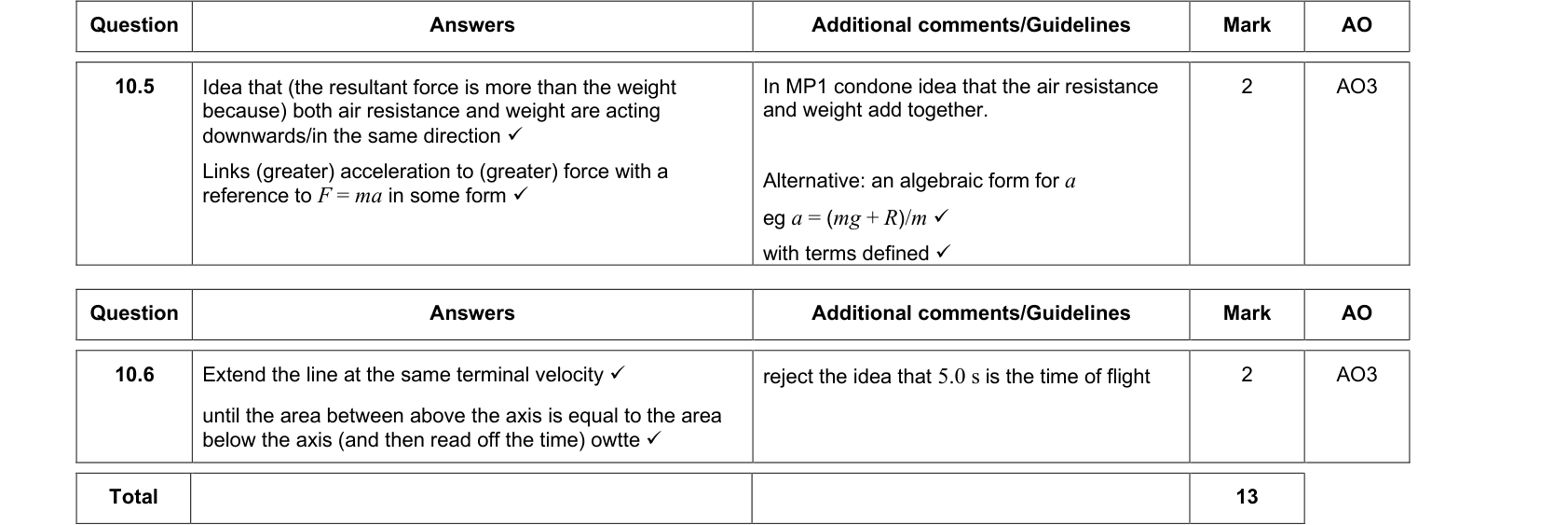
- At first the speed is low, so the drag is small and the resultant force is almost equal to the weight. The acceleration is close to $g$.
- As the speed increases the drag increases, so the resultant force decreases and the acceleration decreases.
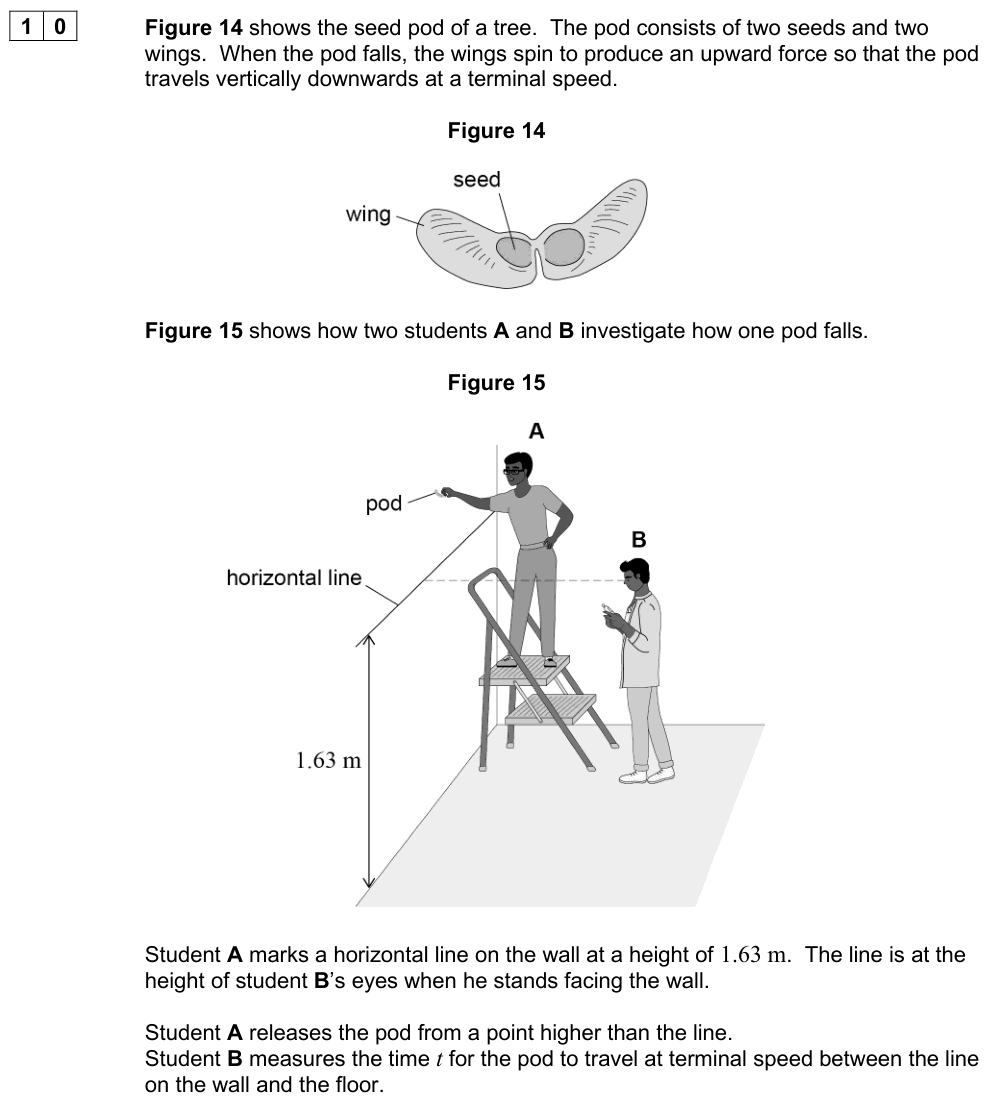
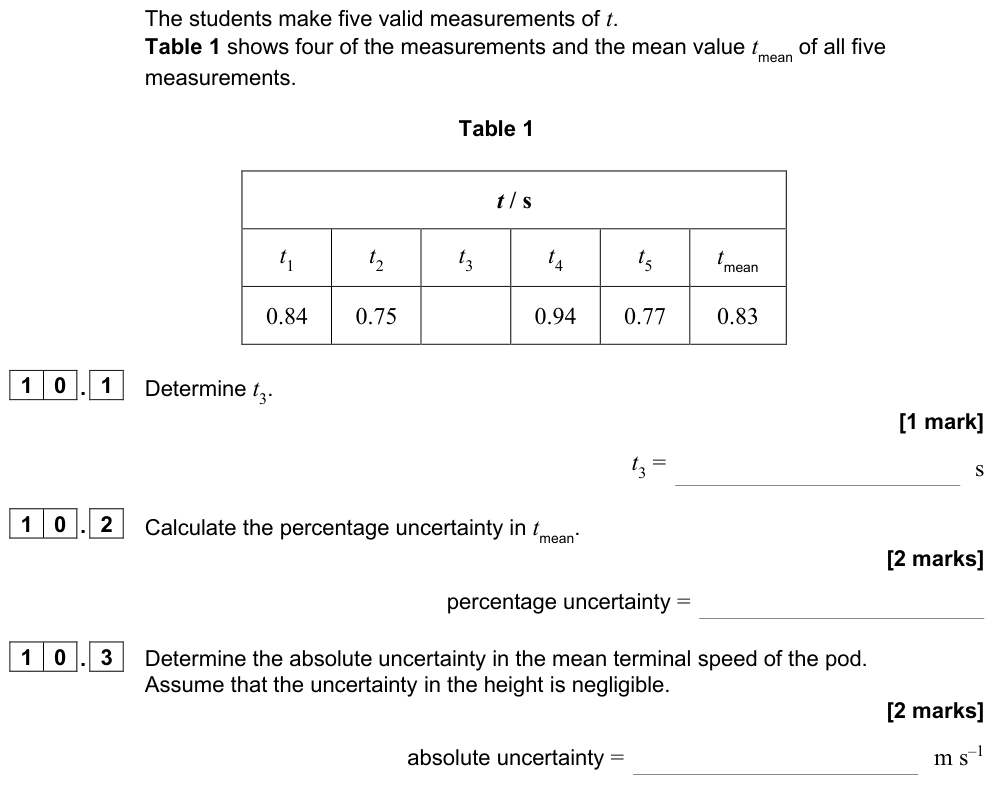
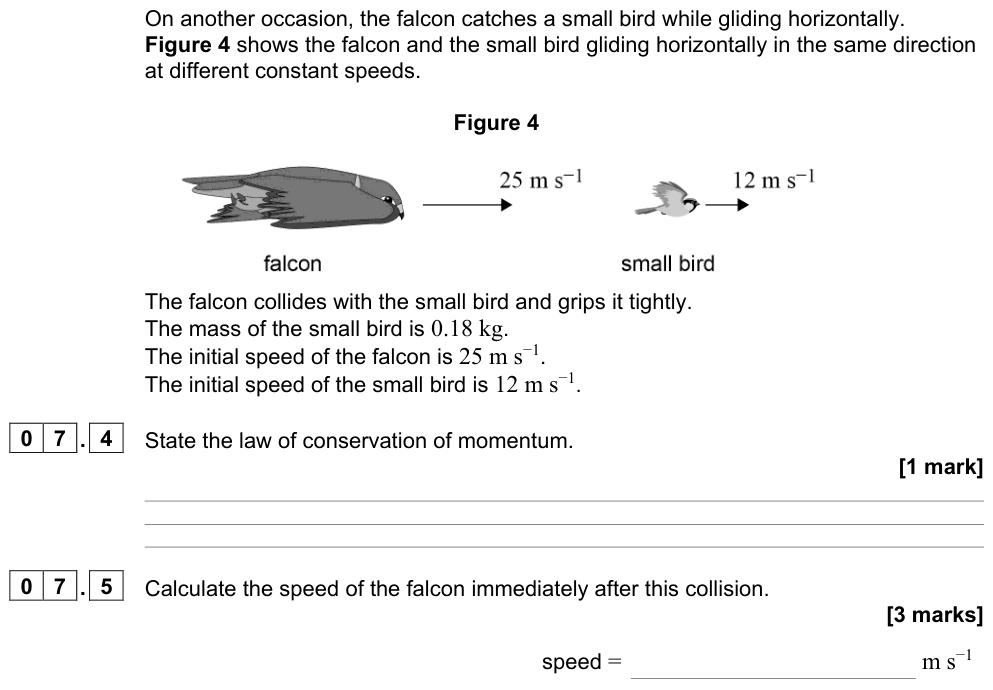
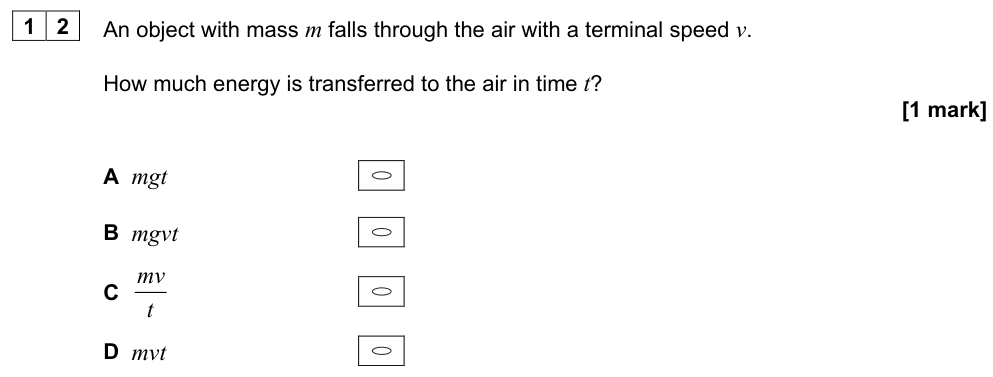
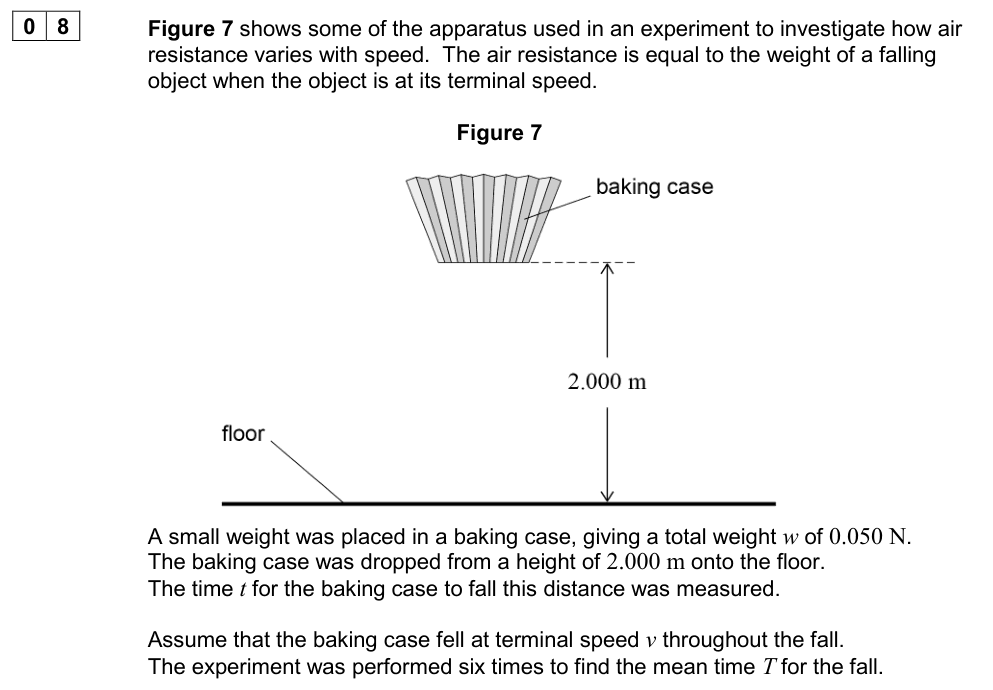
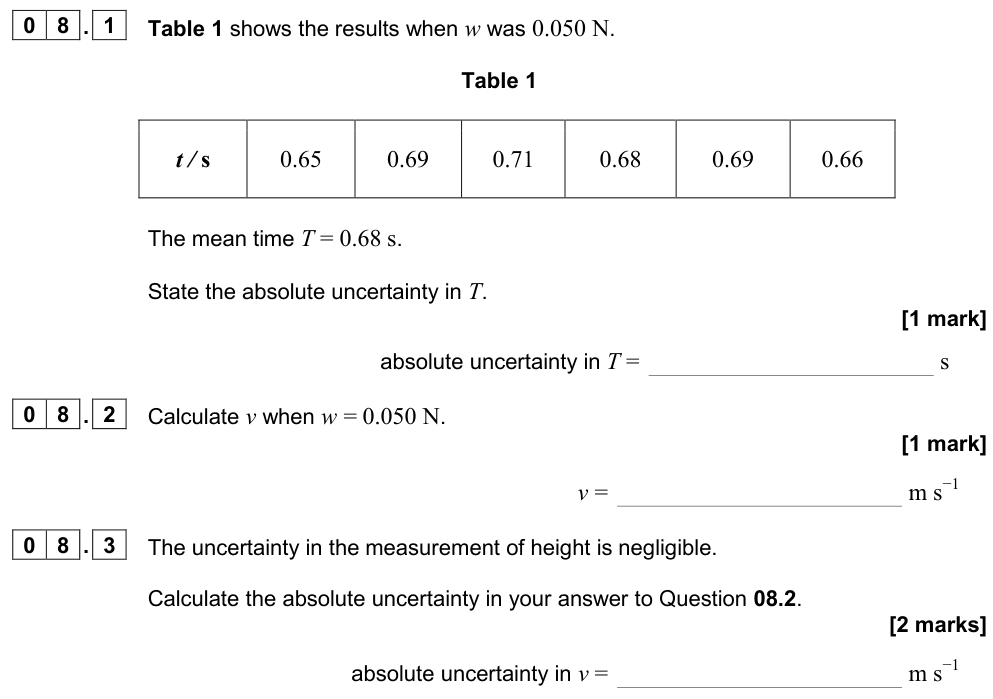
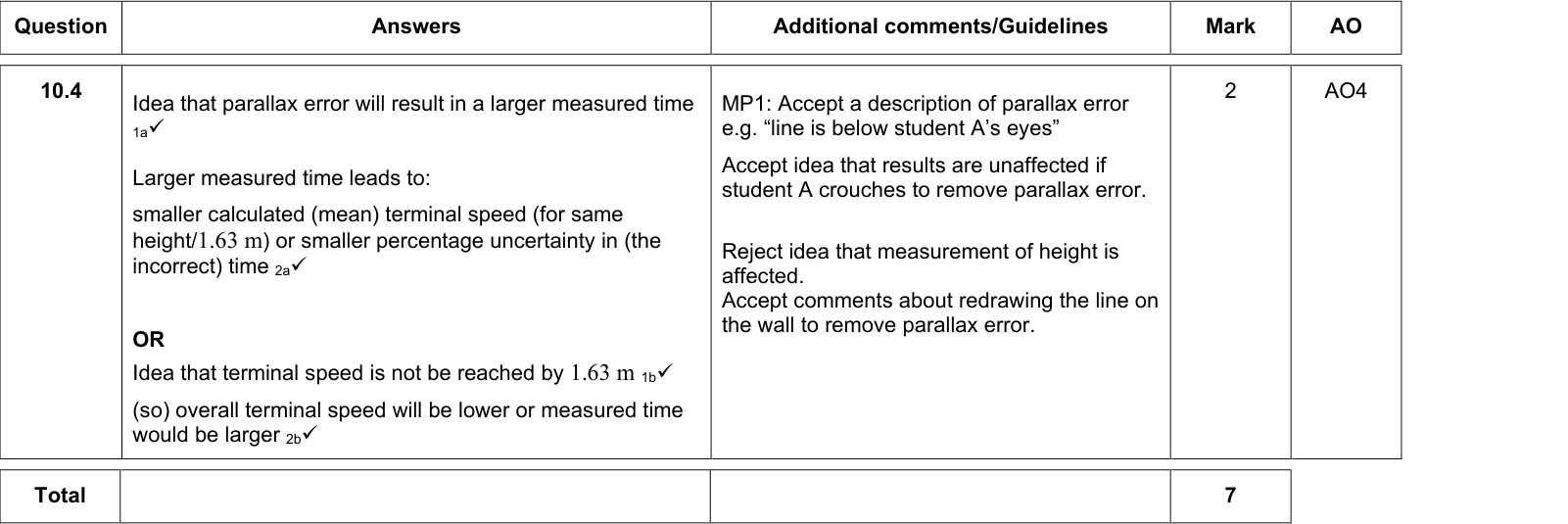
- Eventually drag = weight. The resultant force is zero, the acceleration is zero and the object falls at a constant terminal speed.
- A skydiver opening a parachute suddenly increases the drag. Drag is now greater than weight, so there is an upward resultant force and the skydiver decelerates until a new, lower terminal speed is reached.
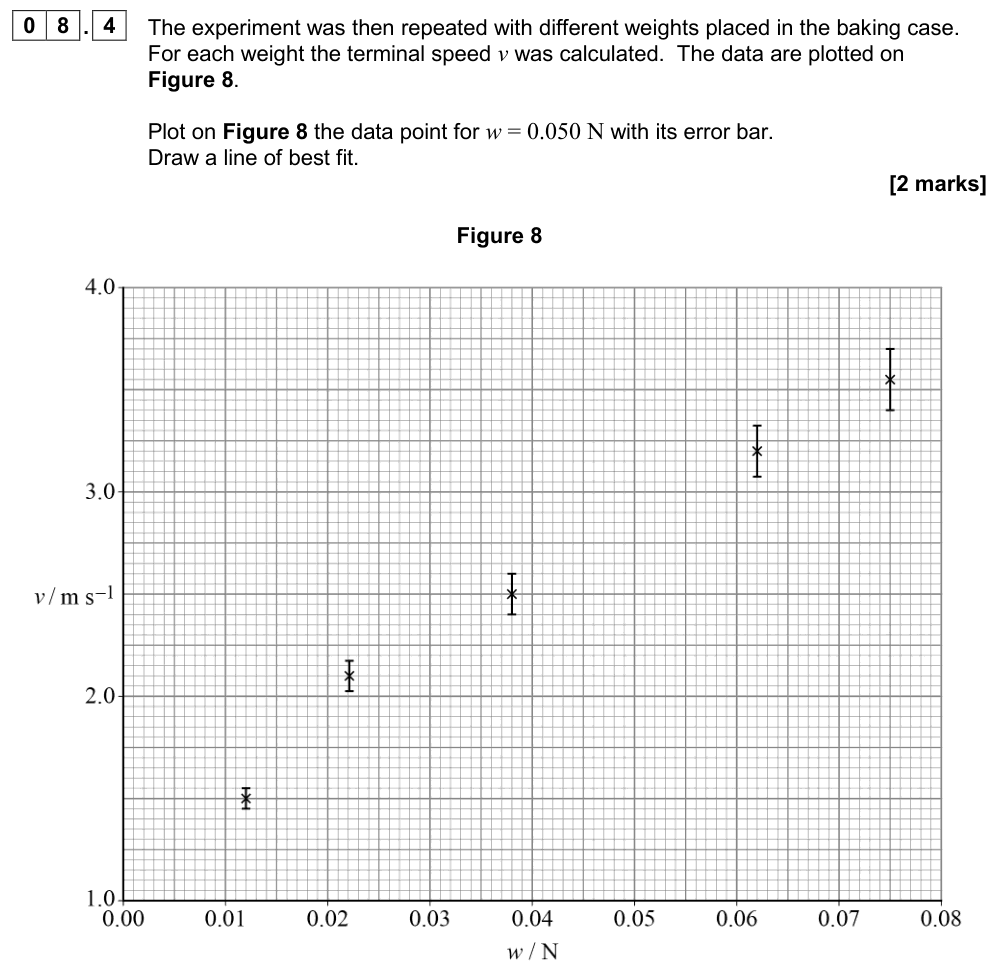
- A heavier object of the same shape has a higher terminal speed, because a larger drag (and so a higher speed) is needed to balance its weight.
Maximum speed of a vehicle
A car reaches its maximum (top) speed when the driving force from the engine equals the total resistive force (air resistance plus friction). The top speed can be increased by increasing the driving force (more powerful engine) or by reducing drag (streamlining, smaller frontal area).
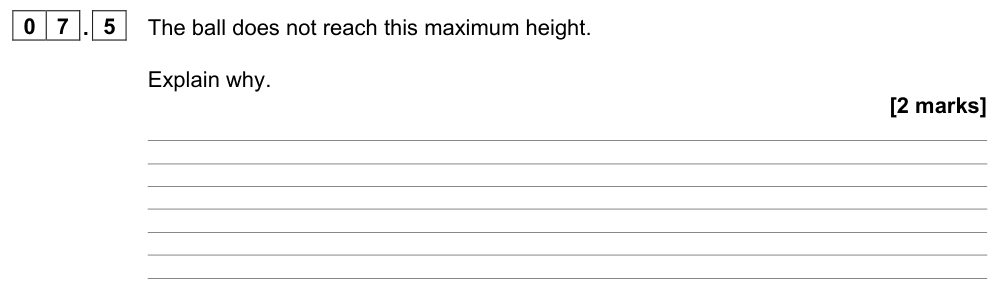
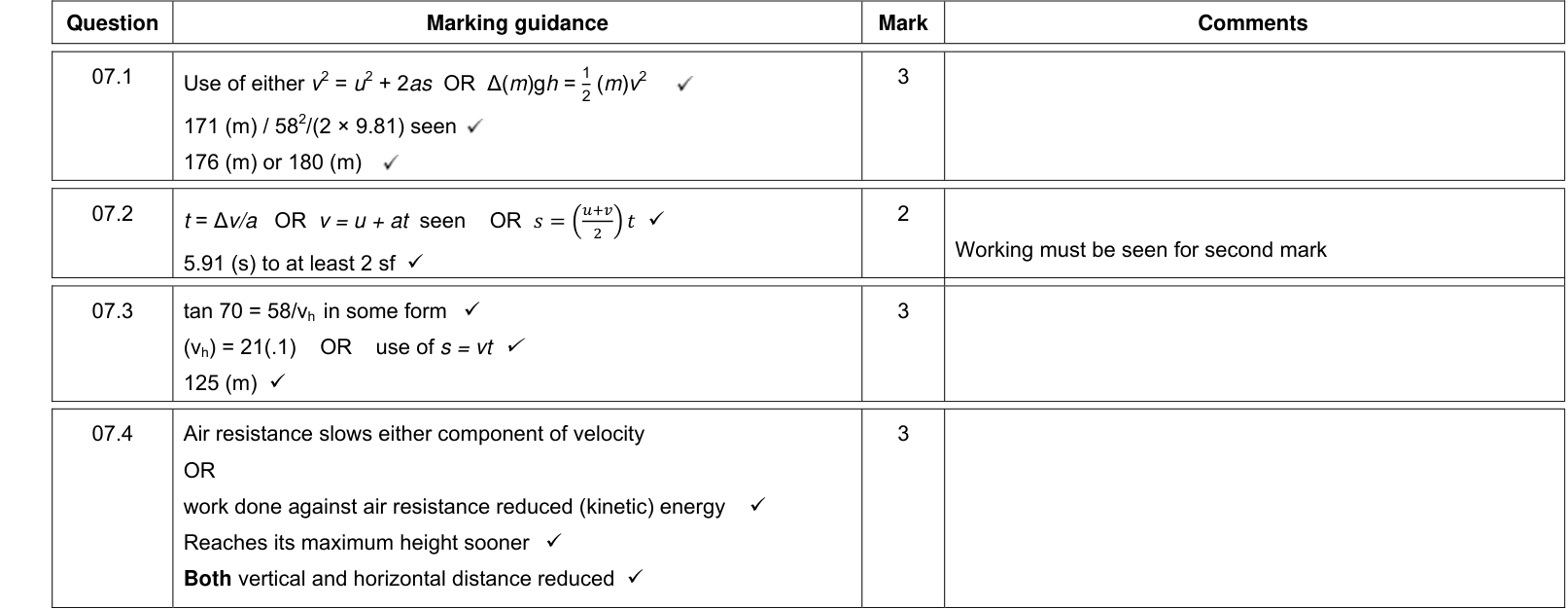
The effect of air resistance on a trajectory
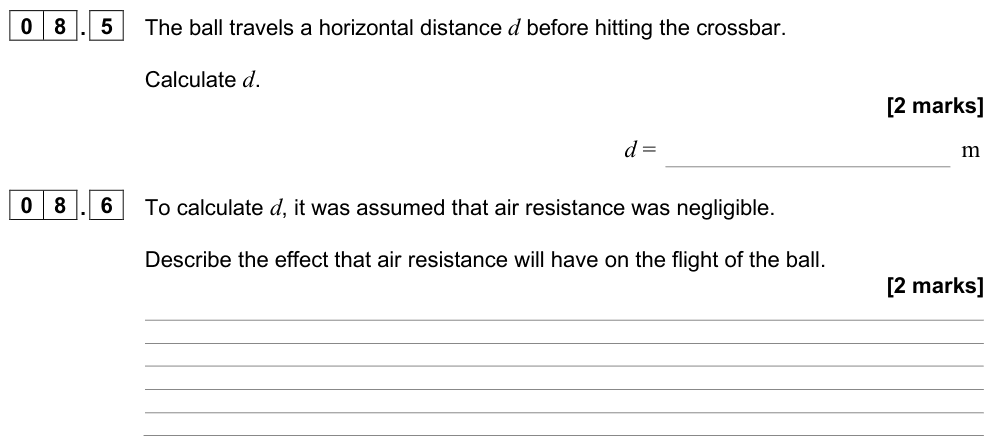
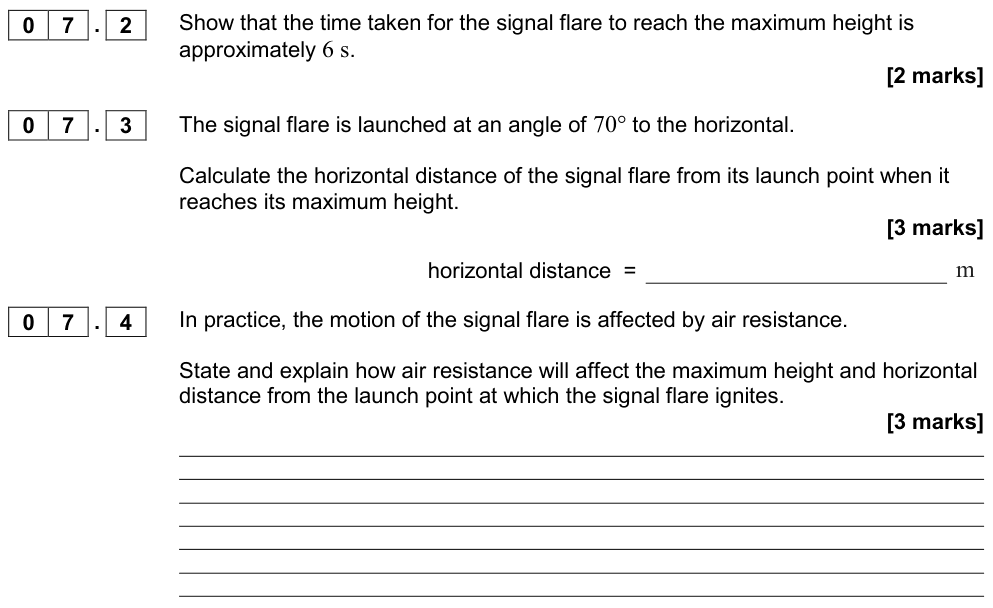
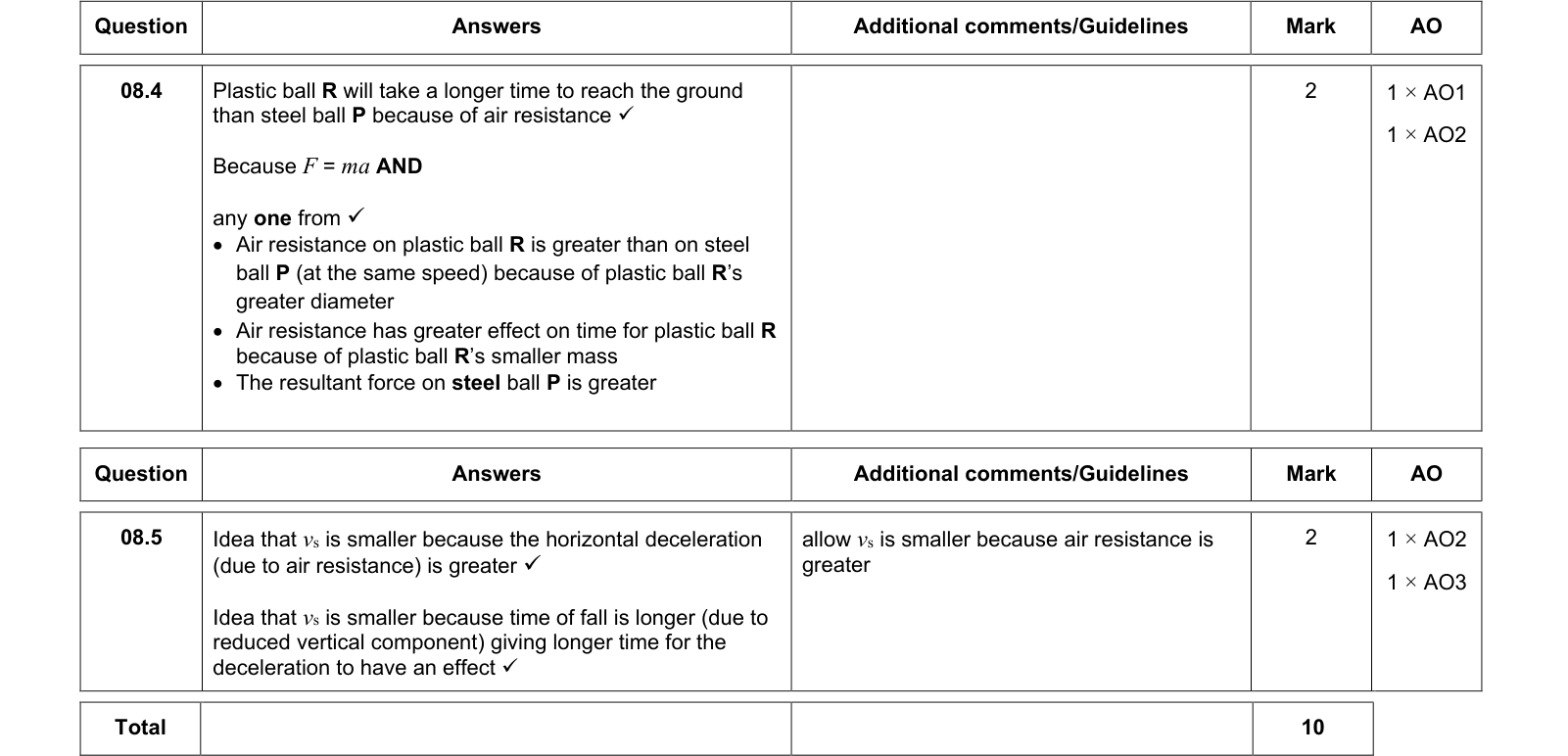
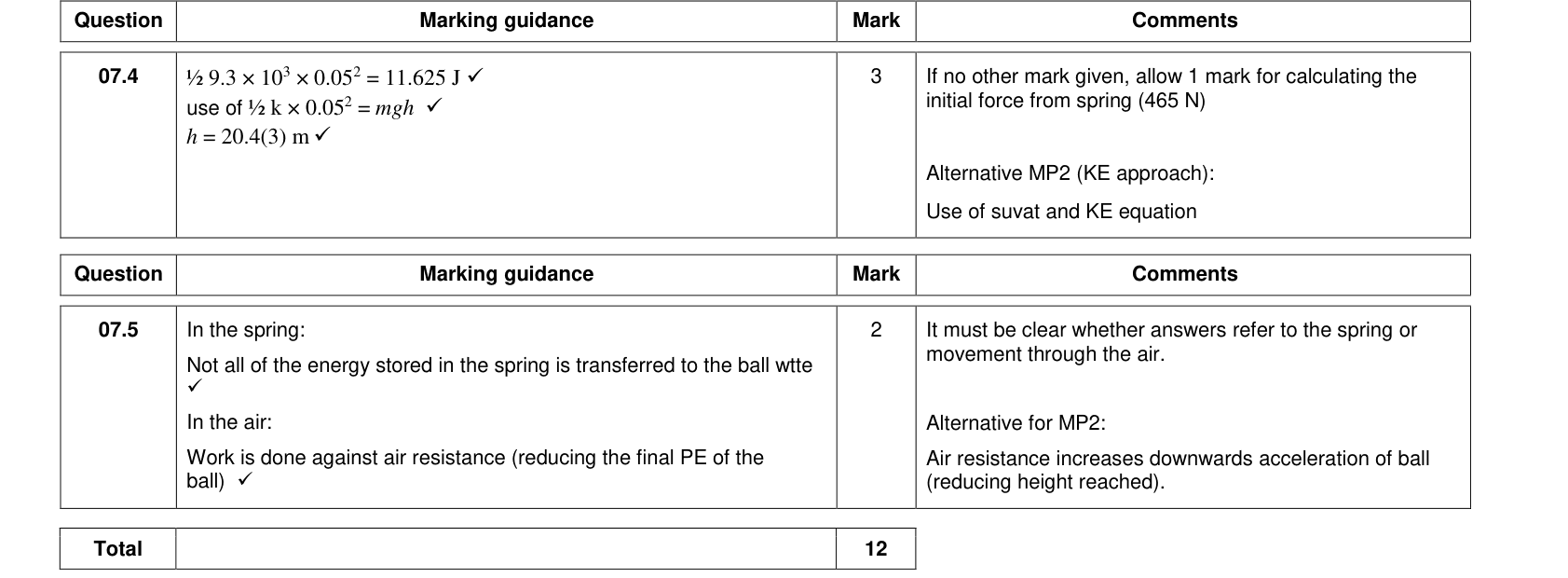
With air resistance the projectile:
- reaches a lower maximum height,
- has a shorter range,
- follows a path that is not symmetrical: the descent is steeper than the ascent,
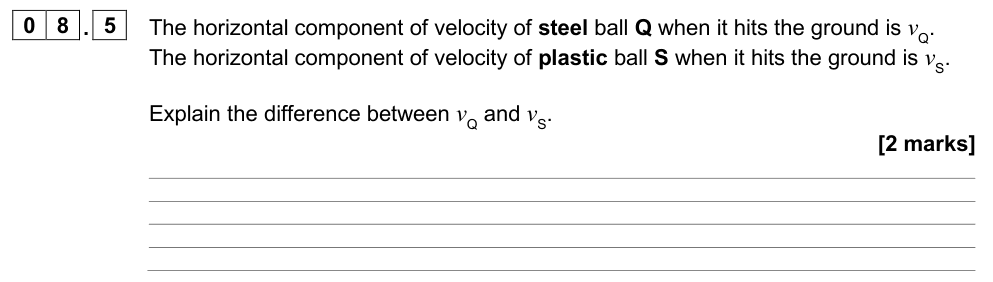
- has a horizontal velocity that decreases during the flight.
Try this with the Projectile simulation in the Interactive tab: switch air resistance on and compare the two paths.
Summary
- Projectiles: horizontal velocity constant; vertical motion has $a = g$ downwards; the time of flight links them.
- Resolve $u$ into $u\cos\theta$ and $u\sin\theta$; at the top $v_y = 0$ but $v_x \neq 0$.
- Friction opposes relative motion; drag opposes motion through a fluid; lift is perpendicular to the flow.
- Air resistance increases with speed; terminal speed is reached when drag = weight (resultant force zero).
- Air resistance reduces height and range and makes the path asymmetric.