Newton's first law
Newton's first law
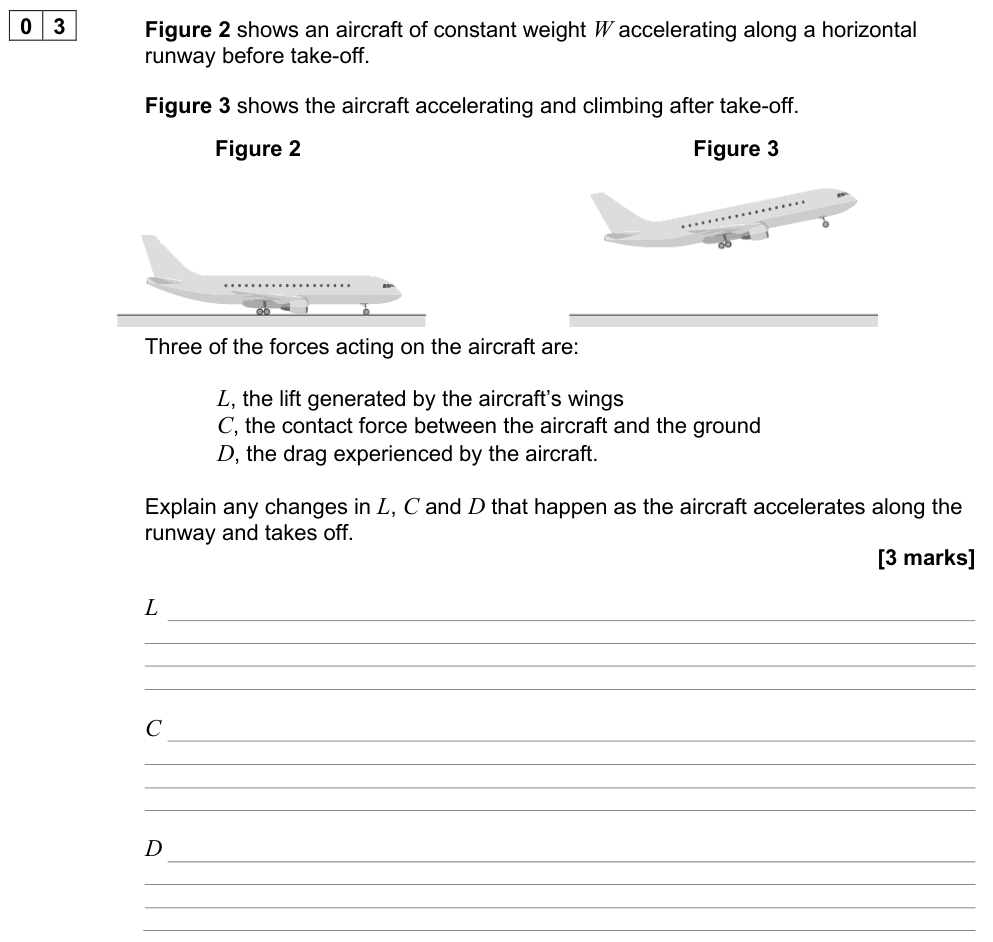
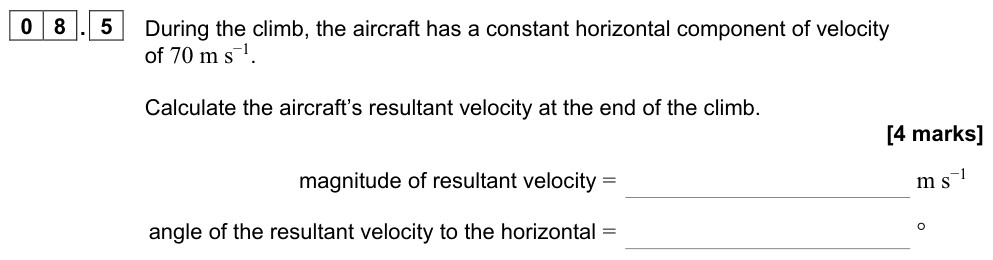
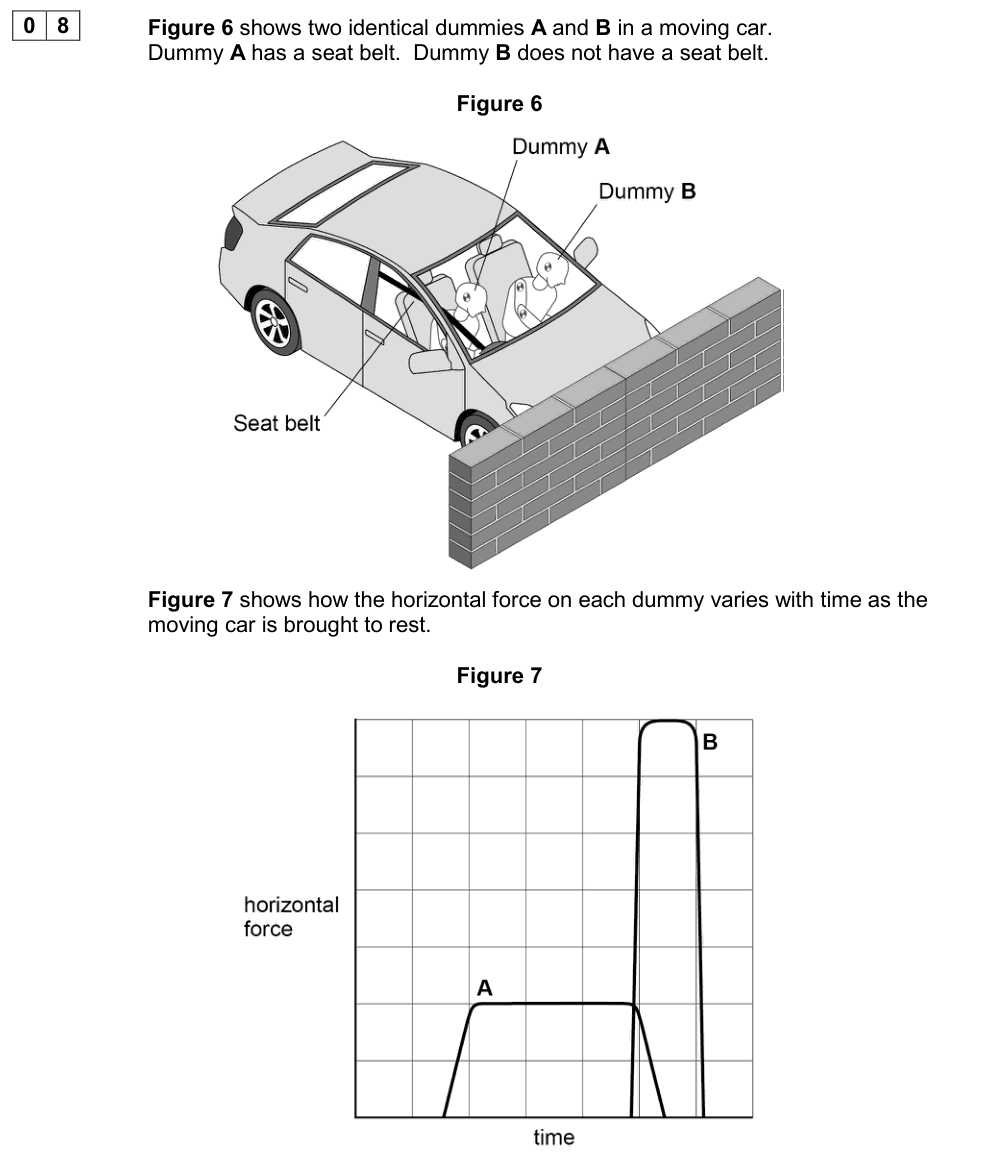
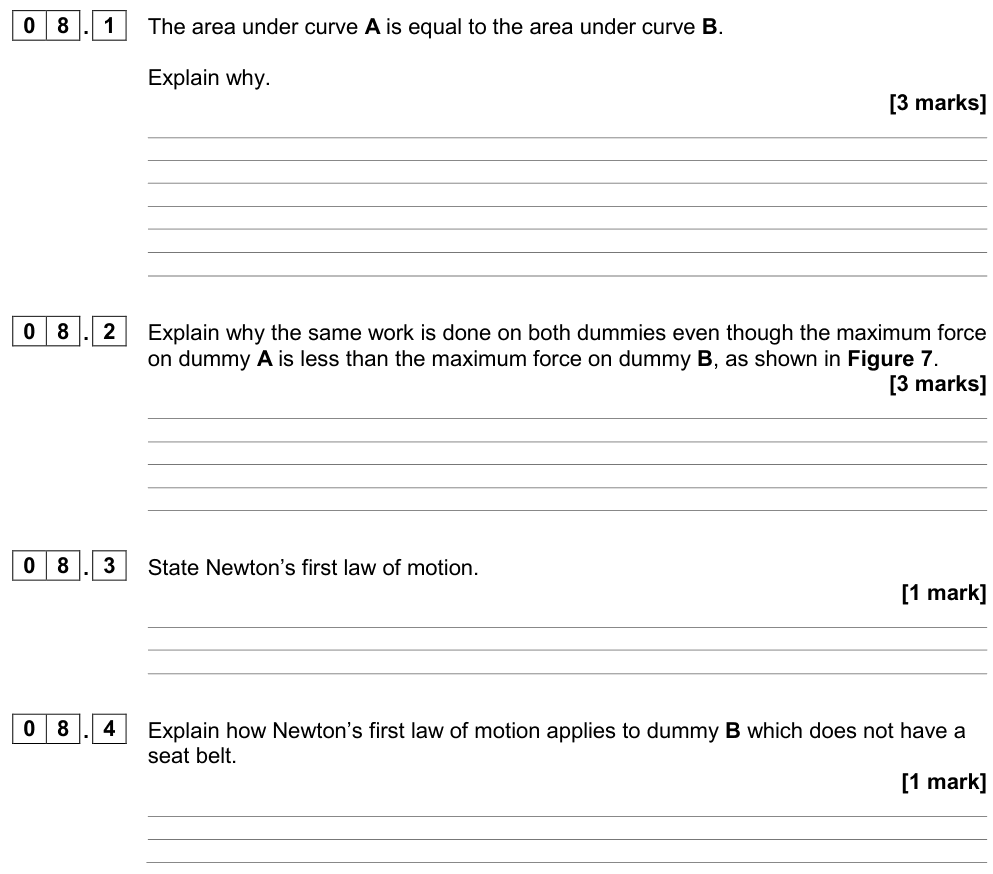
An object remains at rest or continues to move with constant velocity (constant speed in a straight line) unless acted on by a resultant force.
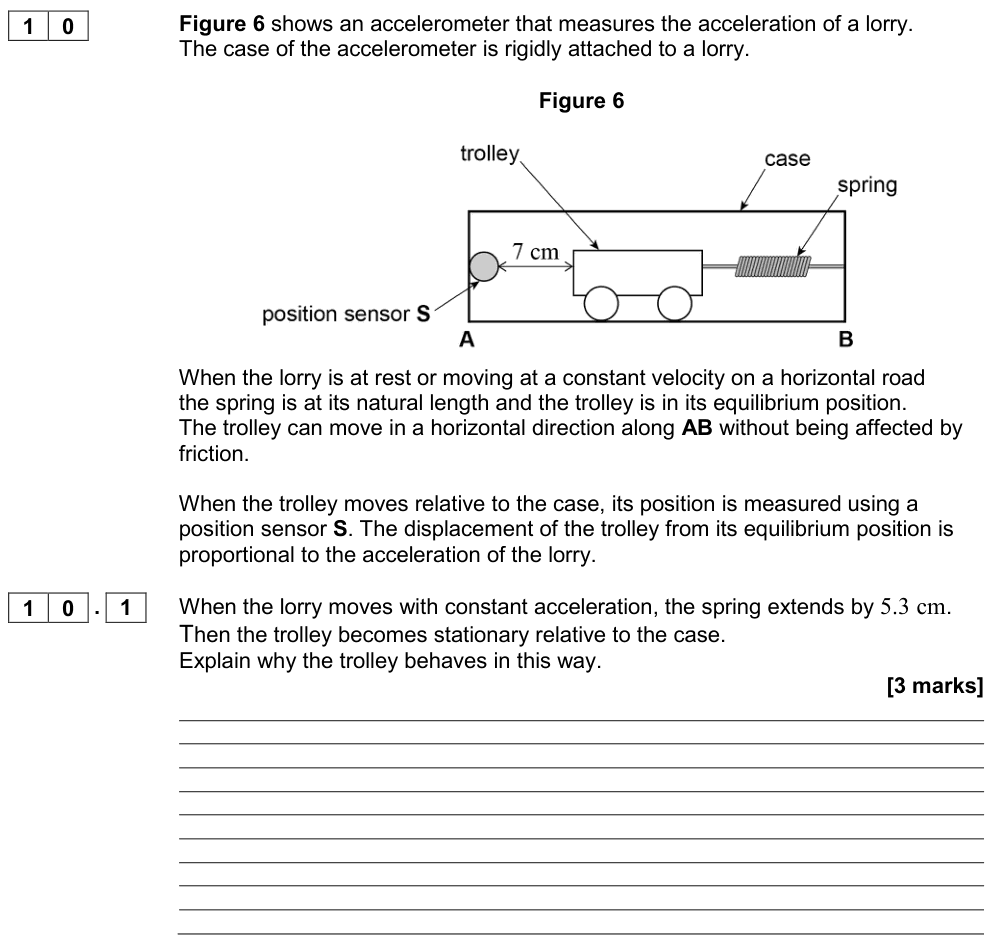
So if the resultant force on an object is zero, its velocity does not change. Conversely, if the velocity is changing (speeding up, slowing down or changing direction) there must be a resultant force.
The tendency of an object to keep its state of motion is called inertia. Mass is a measure of inertia: the bigger the mass, the harder it is to change the object's velocity.
Example: passengers in a braking bus
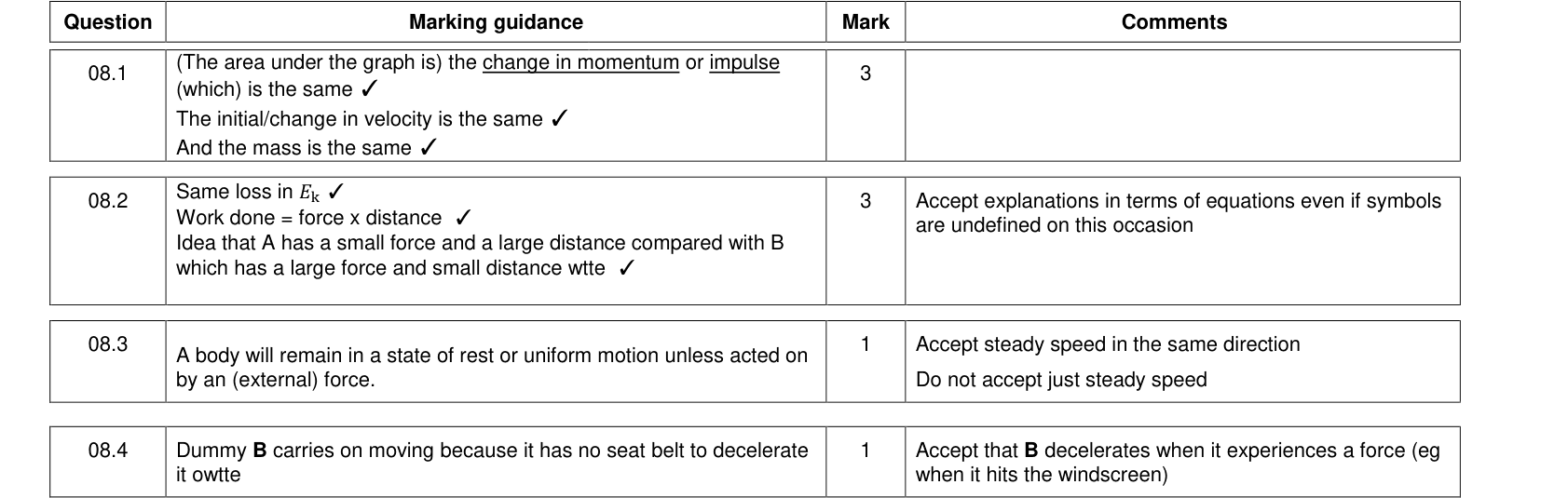
When a bus brakes, passengers lurch forward. The bus decelerates because of the braking force, but no forward or backward force acts on an unbelted passenger at first, so the passenger continues at the original velocity (first law) until a force (seat, pole, seat belt) acts on them.
Newton's second law
Newton's second law (constant mass)
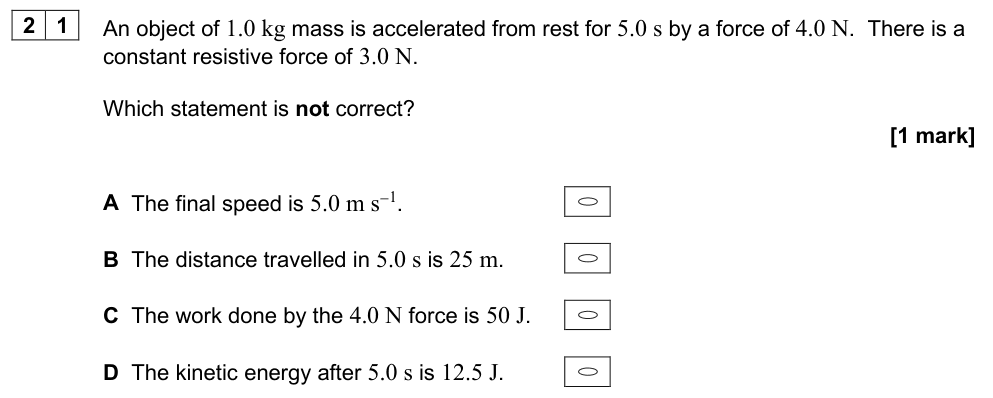
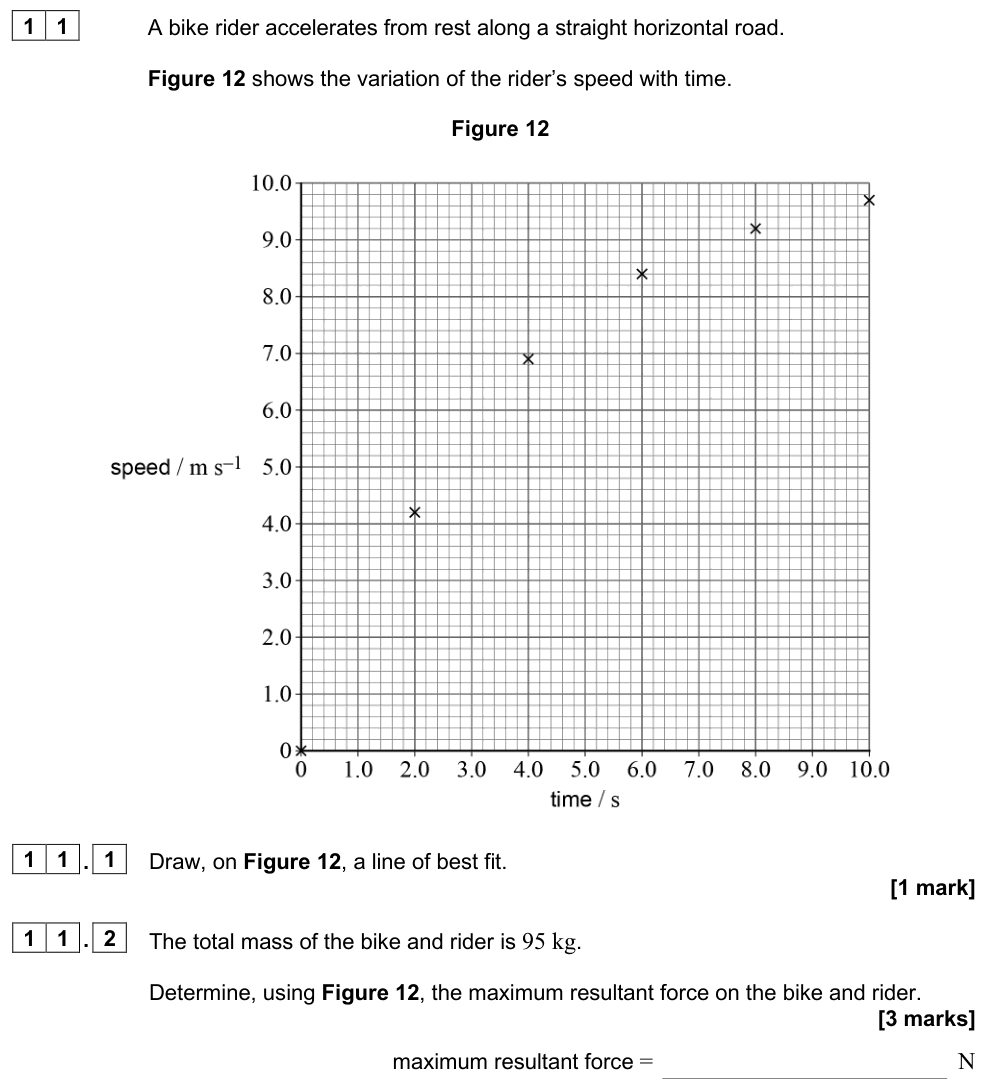
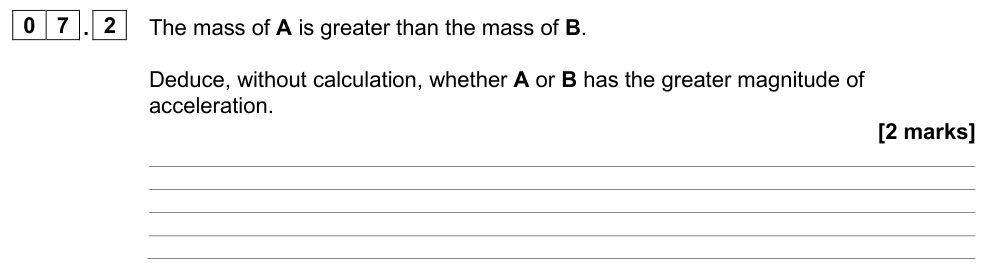
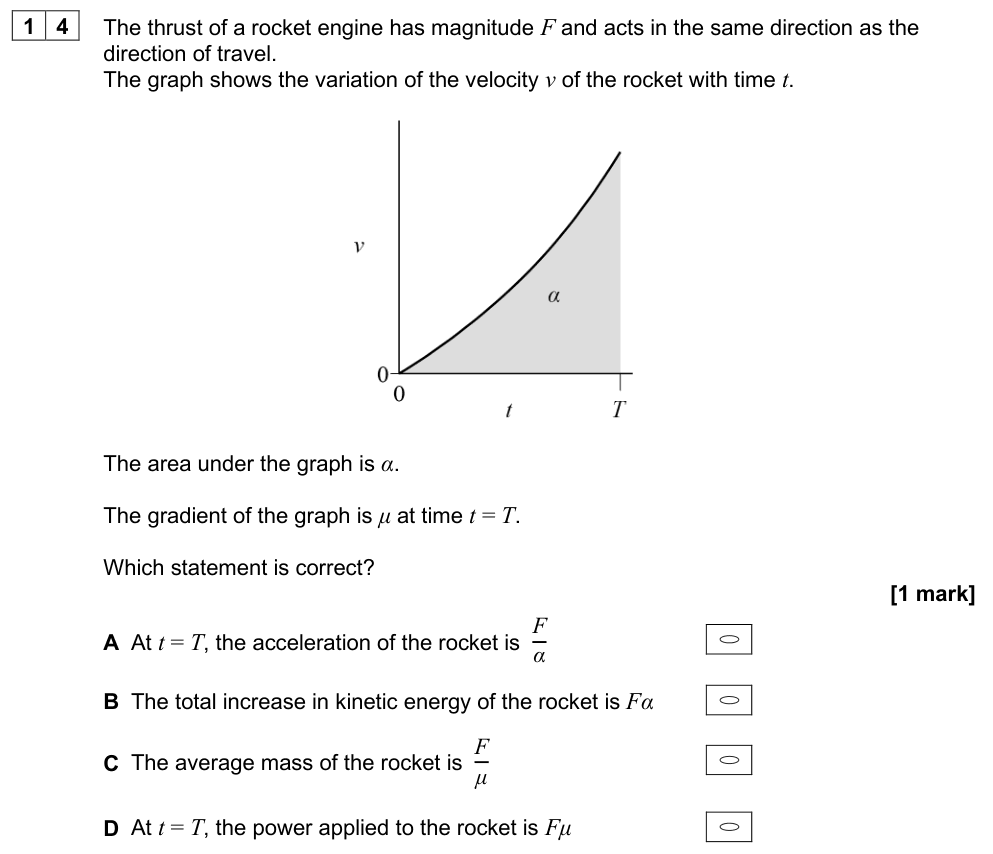
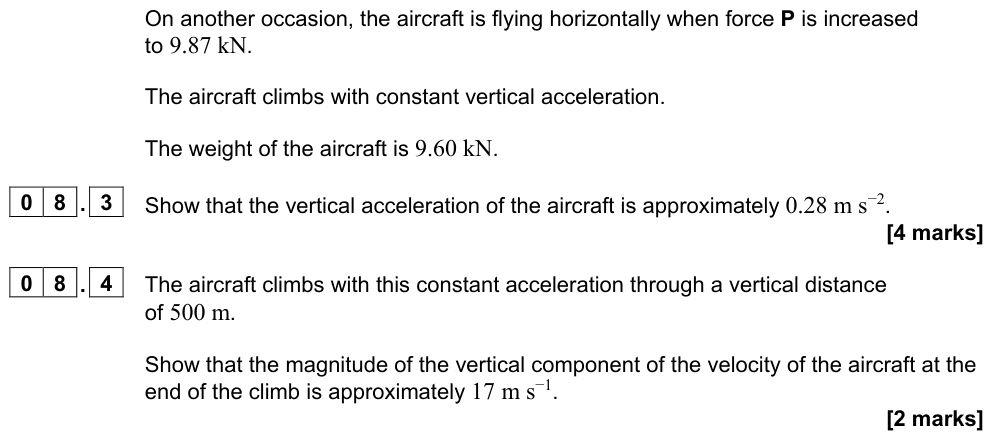
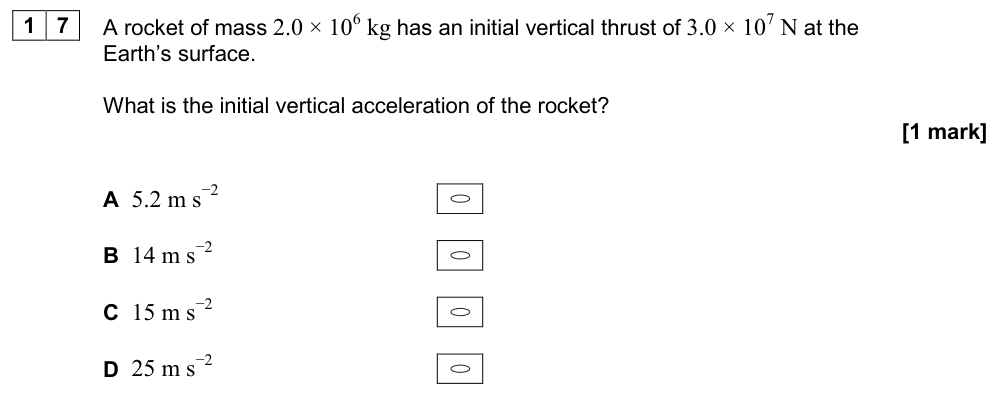
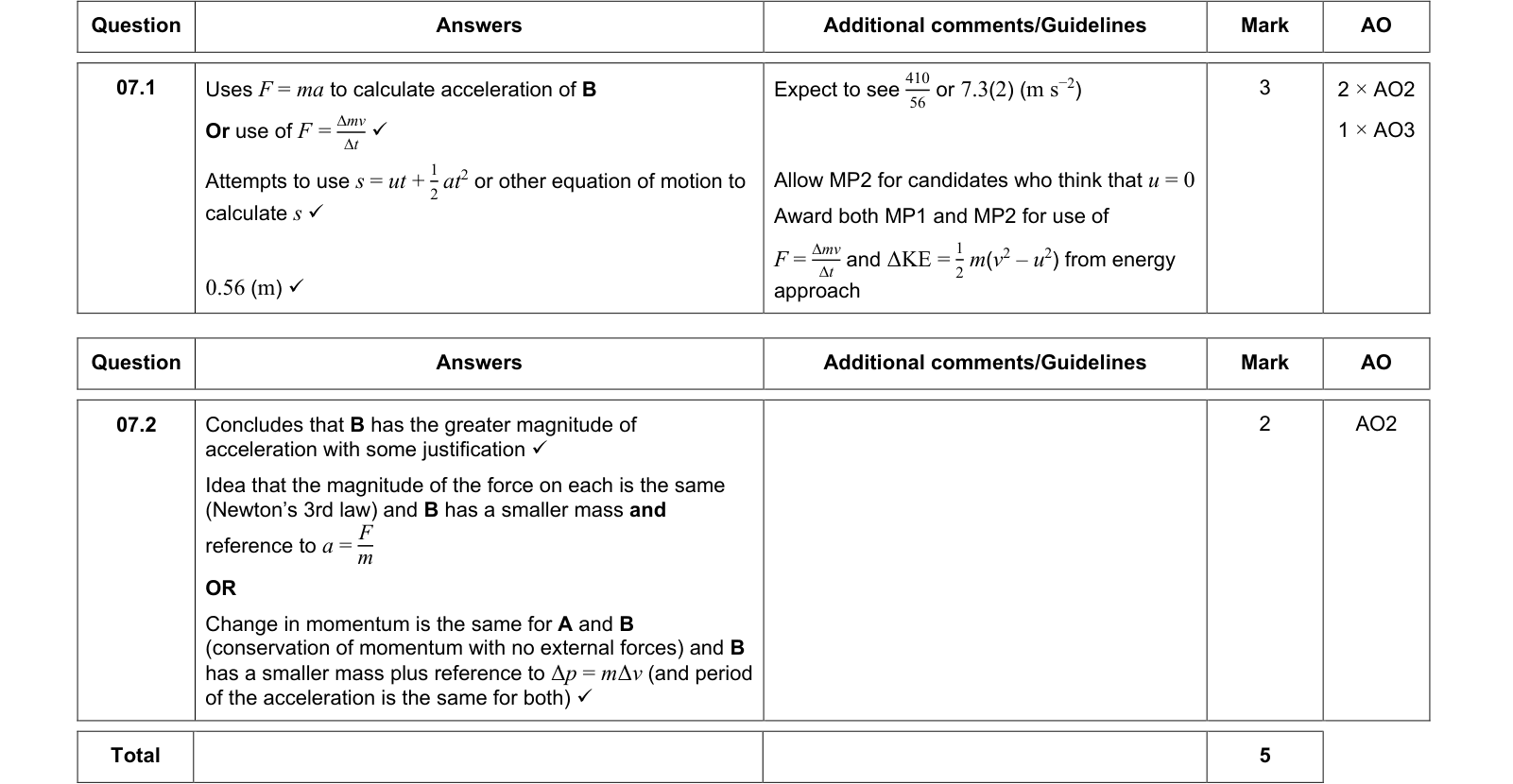
The acceleration of an object is directly proportional to the resultant force on it and inversely proportional to its mass, and is in the direction of the resultant force:
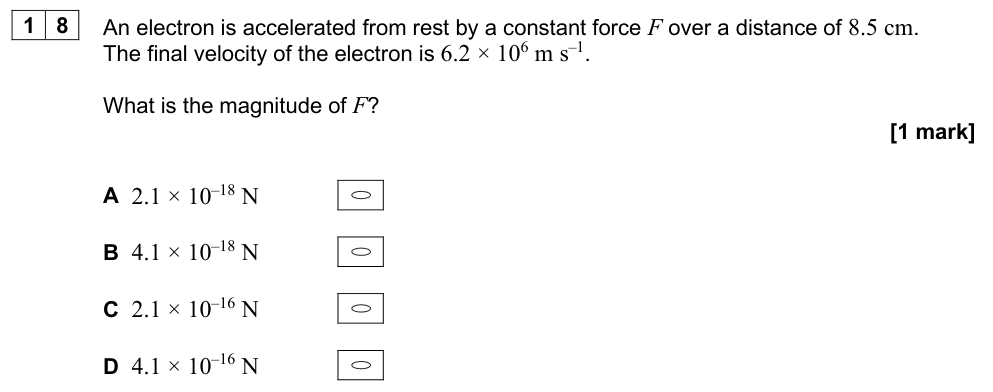
$$F = ma$$
where $F$ is the resultant force in N, $m$ is the mass in kg and $a$ is the acceleration in m s⁻².
One newton is the resultant force that gives a mass of 1 kg an acceleration of $1\ \text{m s}^{-2}$. A more general form of the second law, force = rate of change of momentum, is covered in the Momentum chapter.
Weight
The weight of an object is the gravitational force on it: $W = mg$. Mass is a scalar measured in kg and is the same everywhere. Weight is a force (a vector) measured in N and depends on the gravitational field strength $g$.
Free-body diagrams
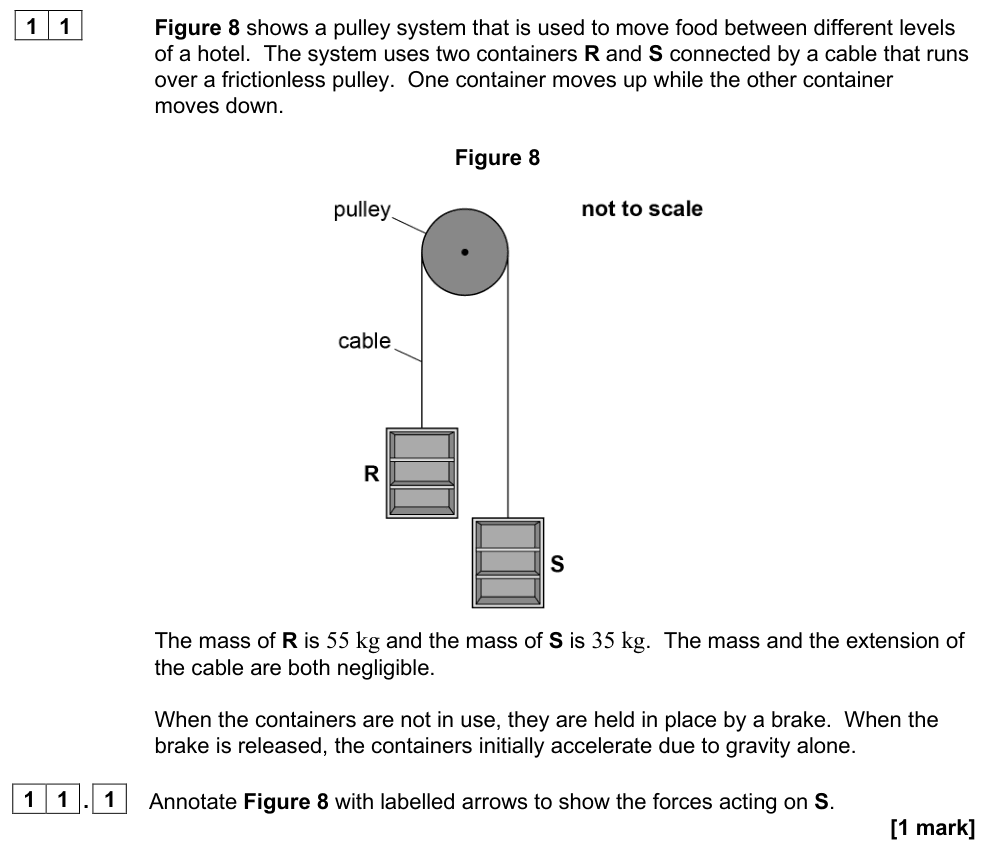
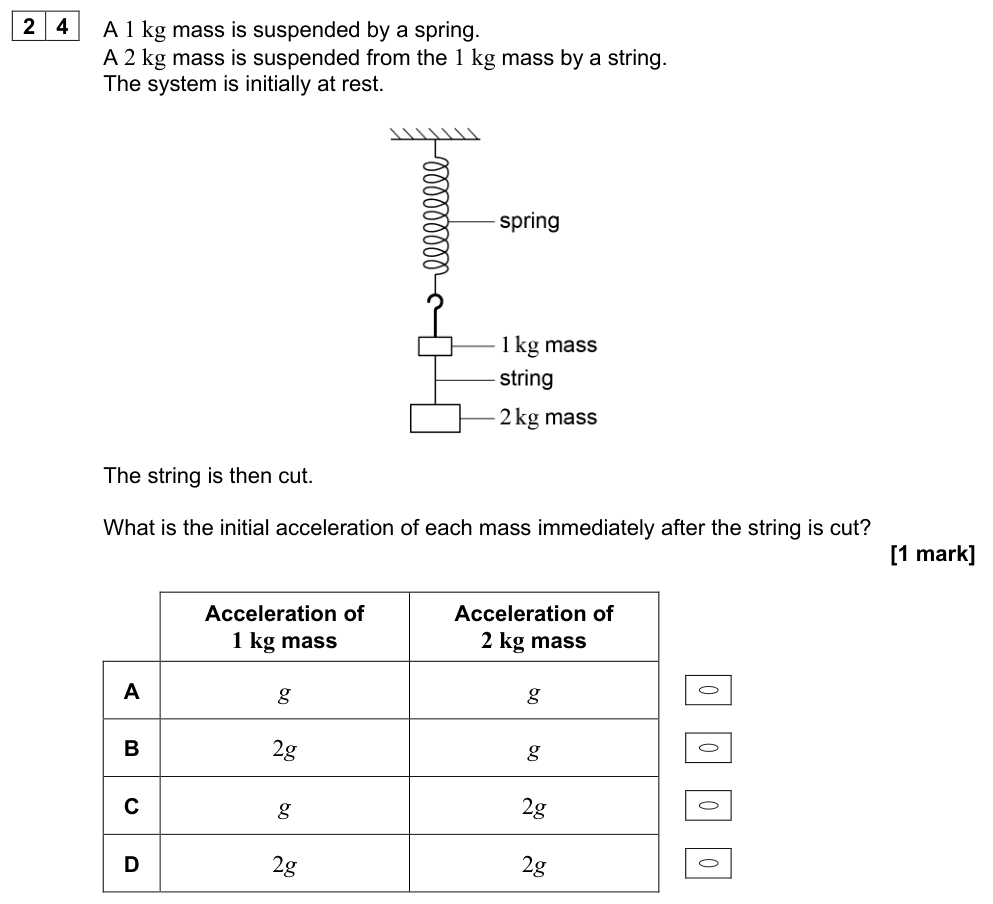
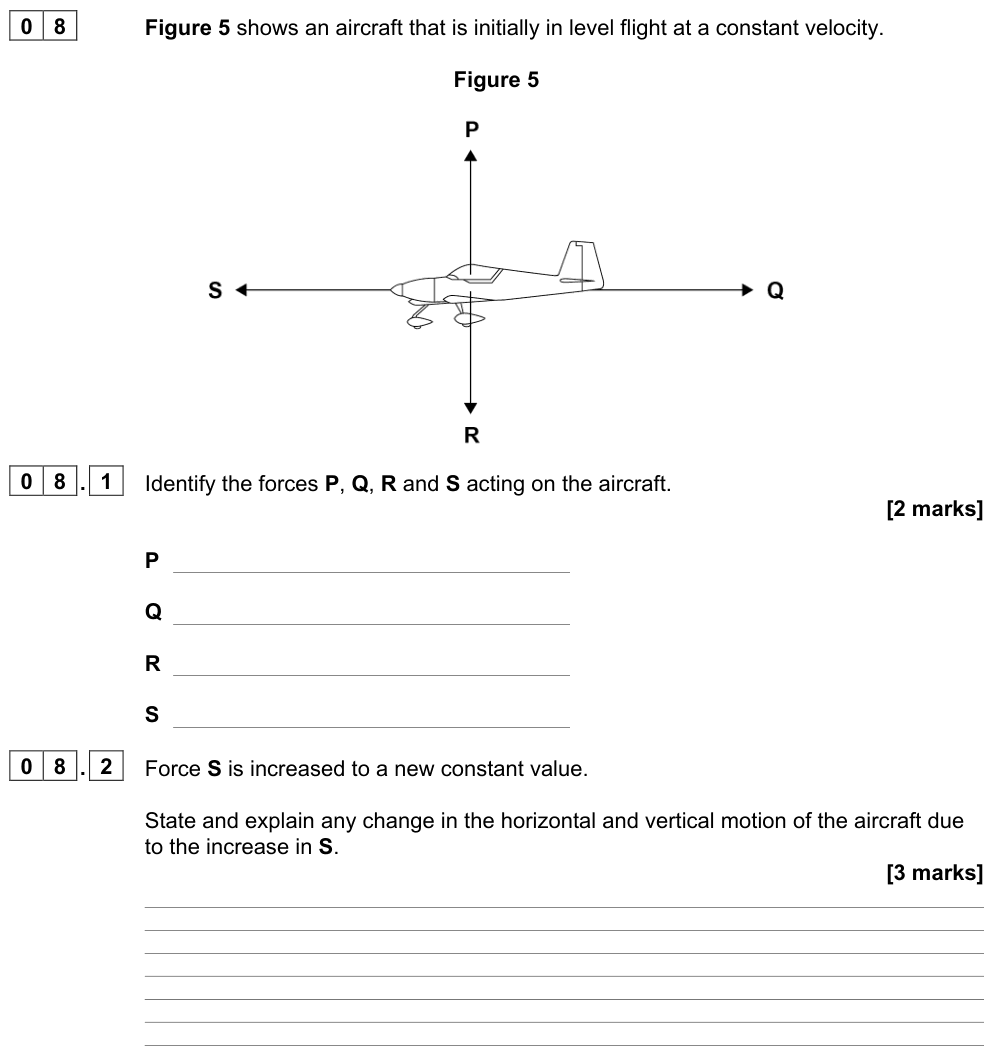
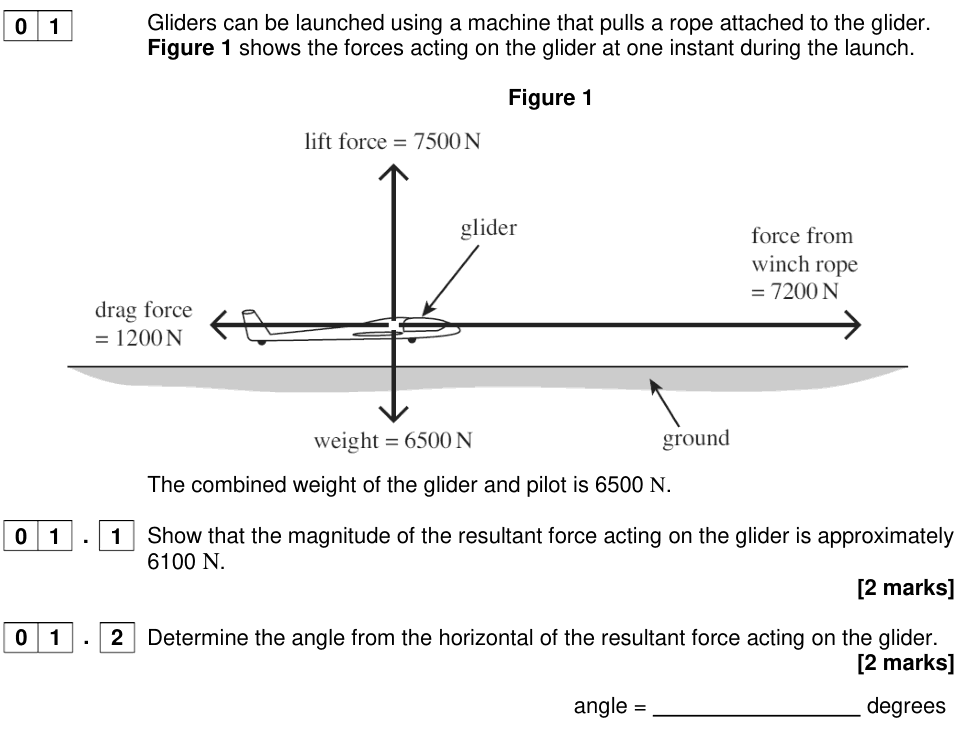
A free-body diagram shows one object and all the forces acting on it as arrows starting from the object. It does not show forces the object exerts on other things. To apply $F = ma$:
- Draw the free-body diagram.
- Choose a positive direction (usually the direction of acceleration).
- Find the resultant force along that direction (forces with − forces against).
- Apply $F_{\text{resultant}} = ma$.
Worked example: car with resistive forces
A car of mass 1200 kg has a driving force of 3000 N and total resistive forces of 1200 N. Find its acceleration.
$F_{\text{resultant}} = 3000 - 1200 = 1800\ \text{N}$, so $a = \dfrac{1800}{1200} = 1.5\ \text{m s}^{-2}$.
Lifts (elevators)
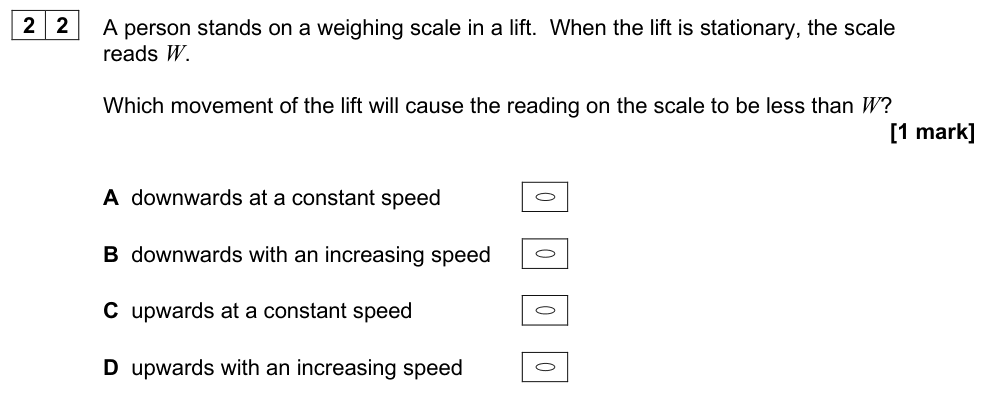
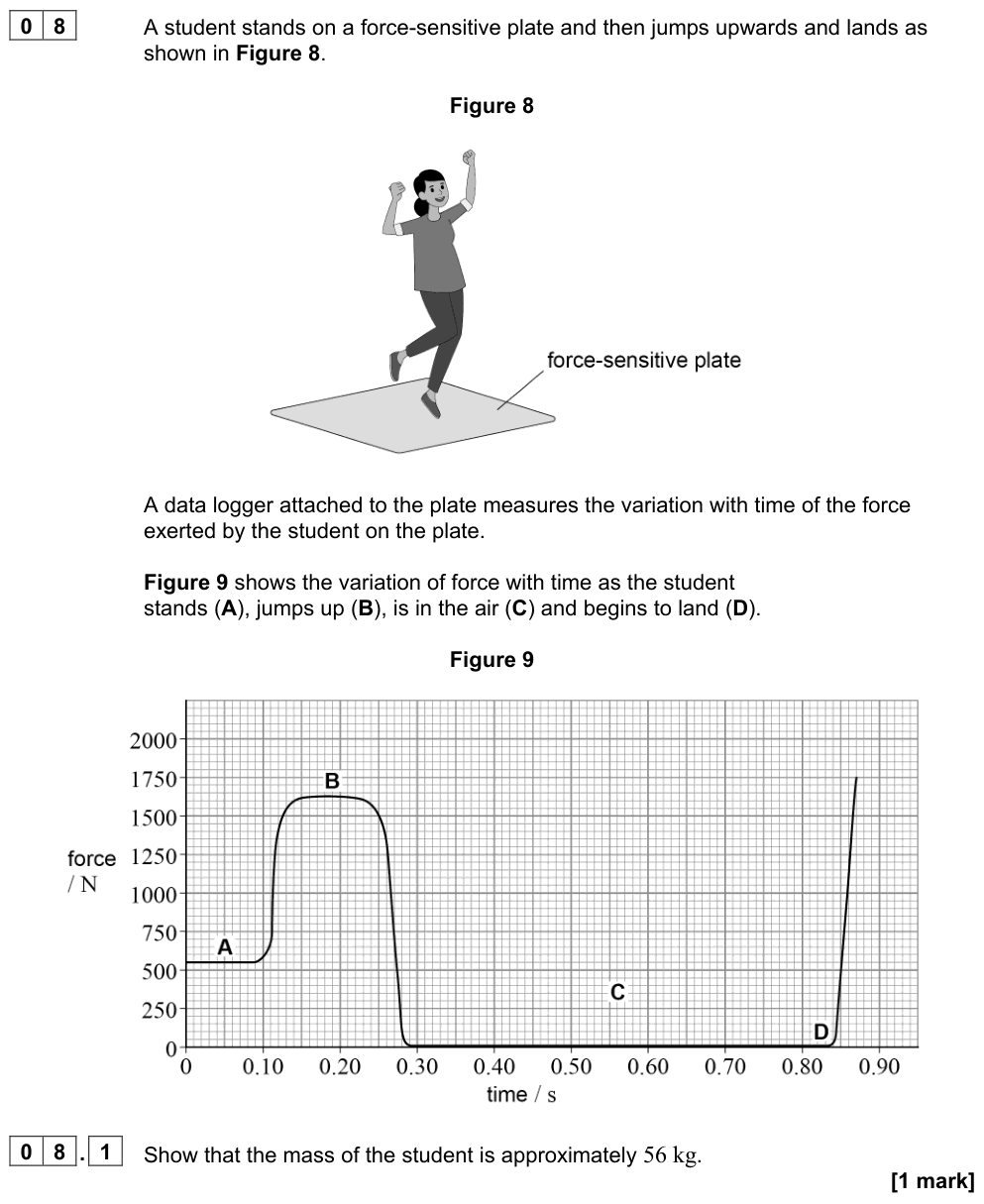
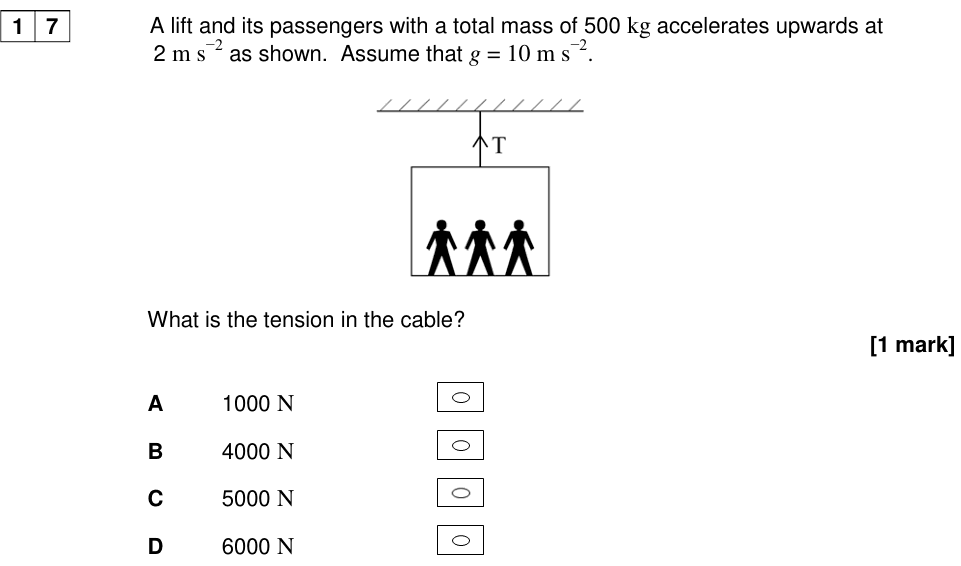
For a person of mass $m$ standing on scales in a lift, the scales read the normal reaction $R$. Take upwards as positive:
$$R - mg = ma \quad \Rightarrow \quad R = m(g + a)$$
| Motion of the lift | Acceleration | Scale reading $R$ |
|---|---|---|
| at rest or constant velocity (up or down) | 0 | $mg$ (true weight) |
| accelerating upwards / decelerating while moving down | upwards ($a > 0$) | greater than $mg$ |
| accelerating downwards / decelerating while moving up | downwards ($a < 0$) | less than $mg$ |
| free fall (cable snaps) | $-g$ | 0 (weightless) |
Worked example: lift
A 60 kg student stands on scales in a lift accelerating upwards at $1.5\ \text{m s}^{-2}$. $R = 60(9.81 + 1.5) = 679\ \text{N}$. The scales show a reading equivalent to a mass of $679/9.81 = 69$ kg.
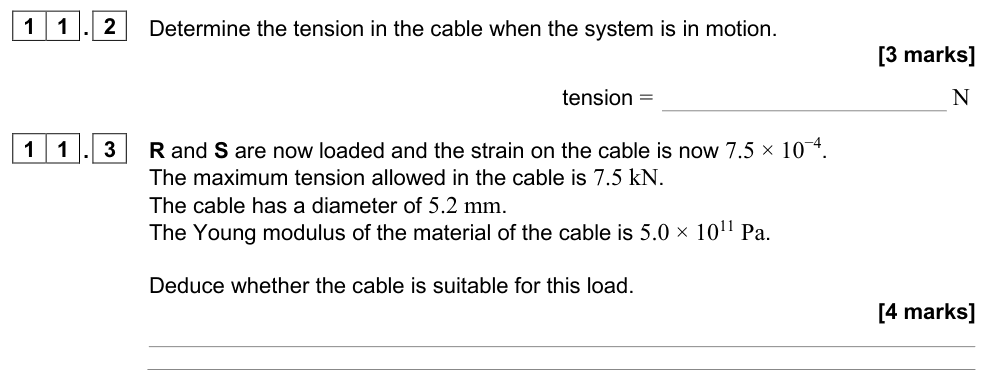
Connected objects
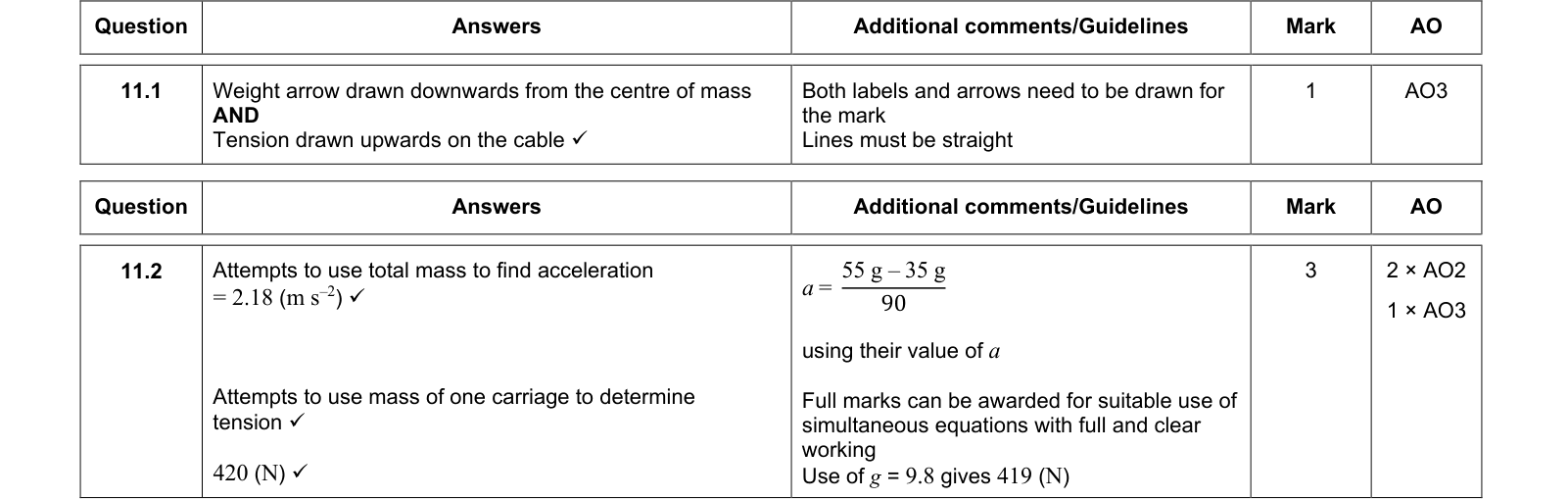
When objects are joined by a light, inextensible string or a tow bar they share the same acceleration. Either:
- treat the whole system as one object (internal tensions cancel) to find the acceleration, then
- apply $F = ma$ to one object to find the tension.
Worked example: car towing a trailer
A car (1000 kg) tows a trailer (500 kg). The driving force is 2400 N; ignore resistance.
Whole system: $a = \dfrac{2400}{1500} = 1.6\ \text{m s}^{-2}$.
Trailer only: $T = 500 \times 1.6 = 800\ \text{N}$ (the tow bar tension).
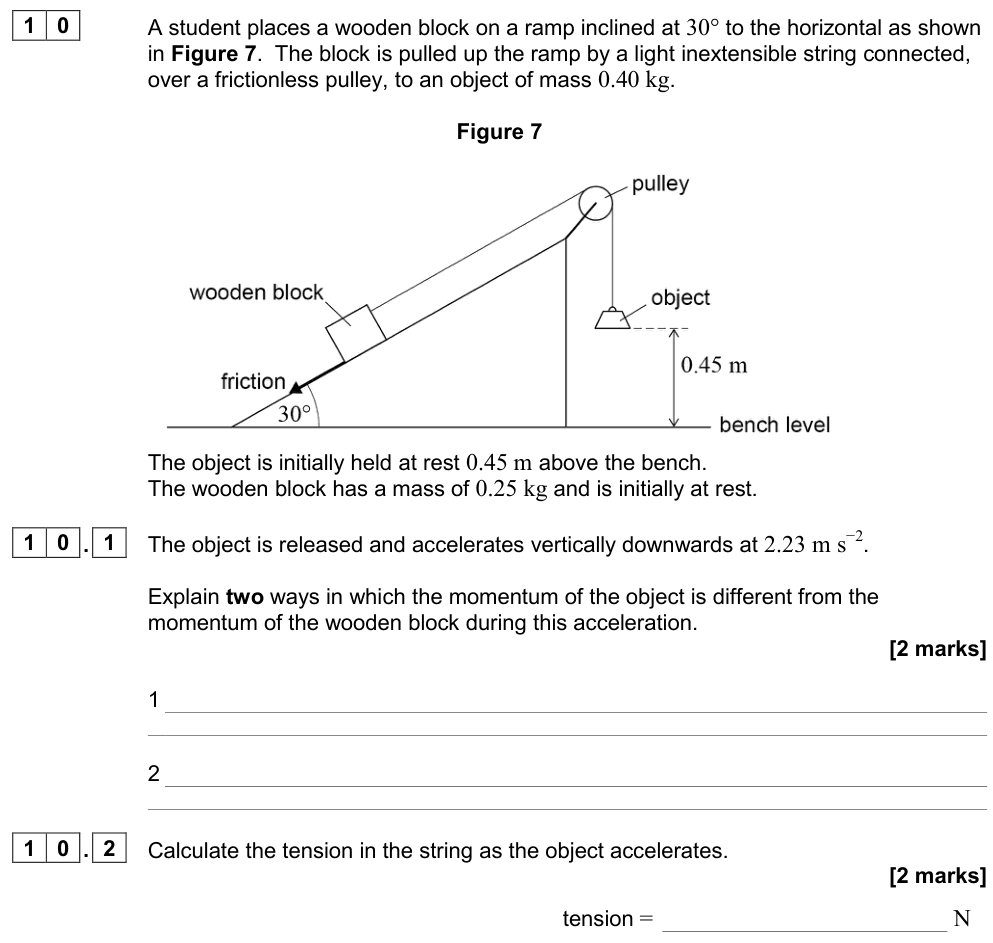
Worked example: block pulled over a pulley
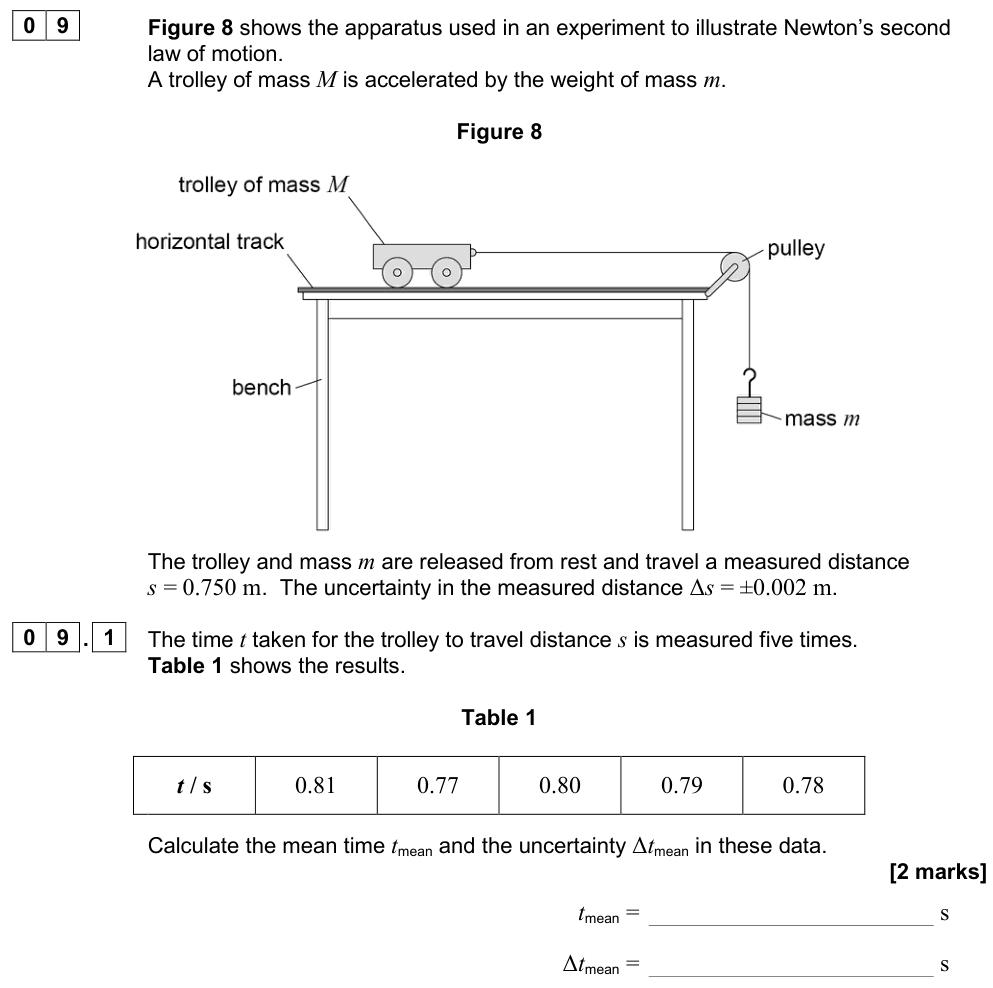
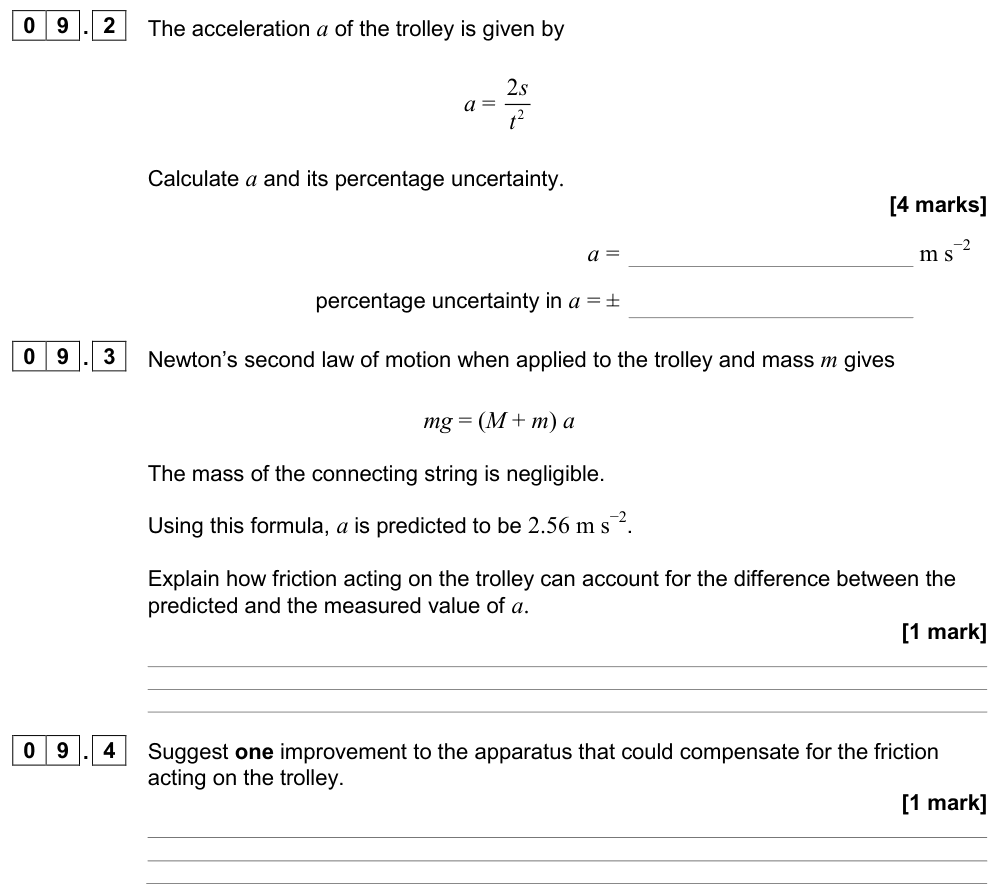
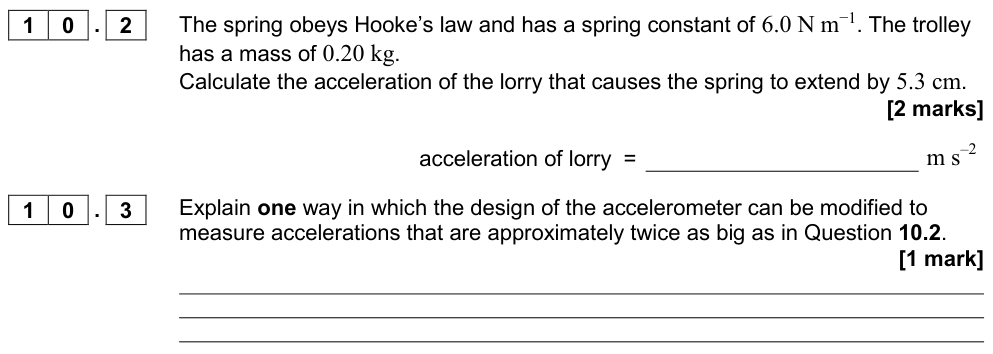
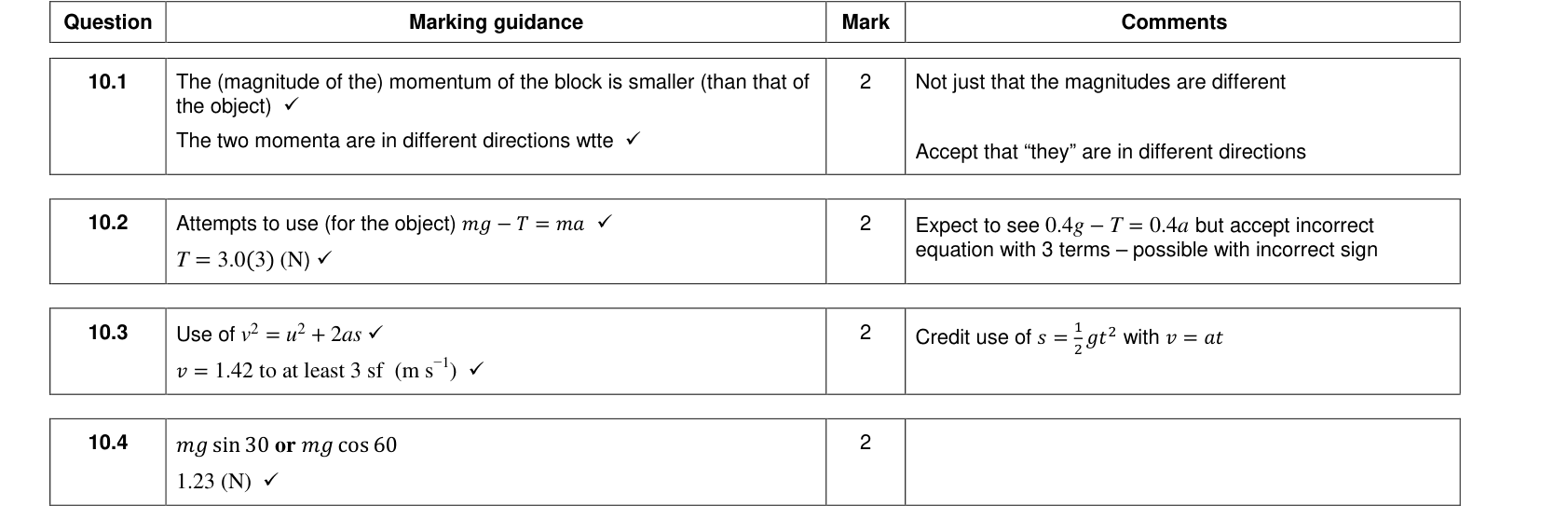
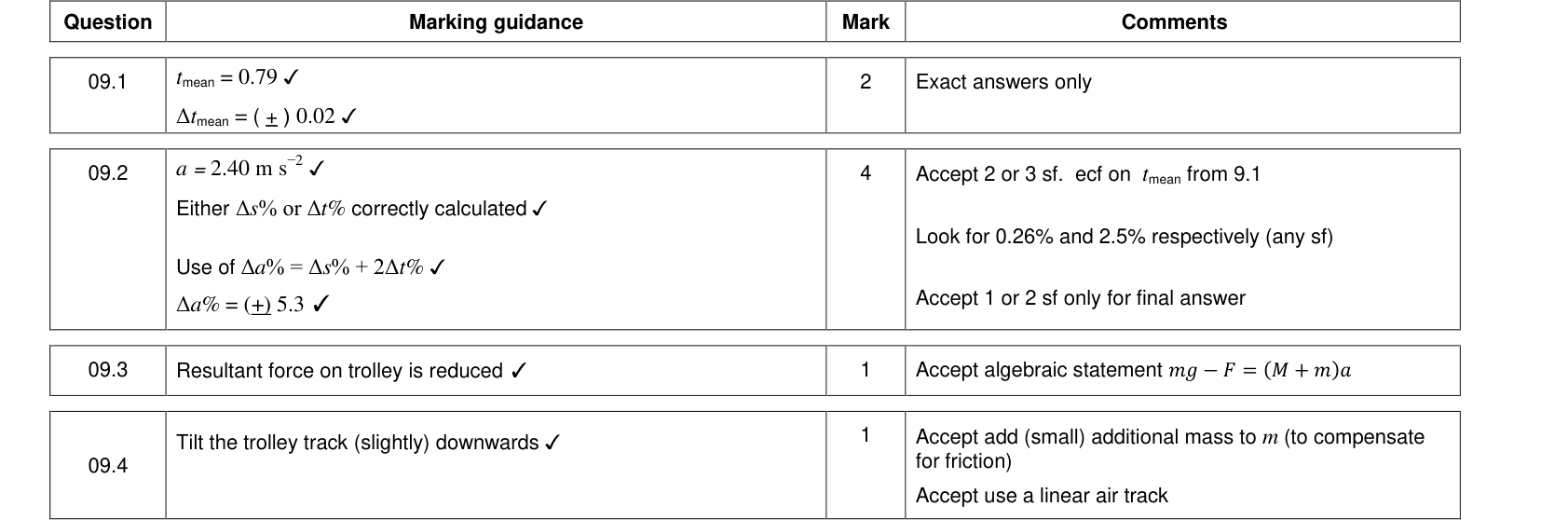
A 2.0 kg trolley on a smooth bench is pulled by a string over a pulley attached to a hanging 0.50 kg mass.
System: resultant force $= 0.50 \times 9.81 = 4.9\ \text{N}$ acting on total mass 2.5 kg, so $a = 1.96\ \text{m s}^{-2}$.
Hanging mass: $mg - T = ma \Rightarrow T = 0.50(9.81 - 1.96) = 3.9\ \text{N}$, less than its weight because it is accelerating downwards.
Objects on slopes
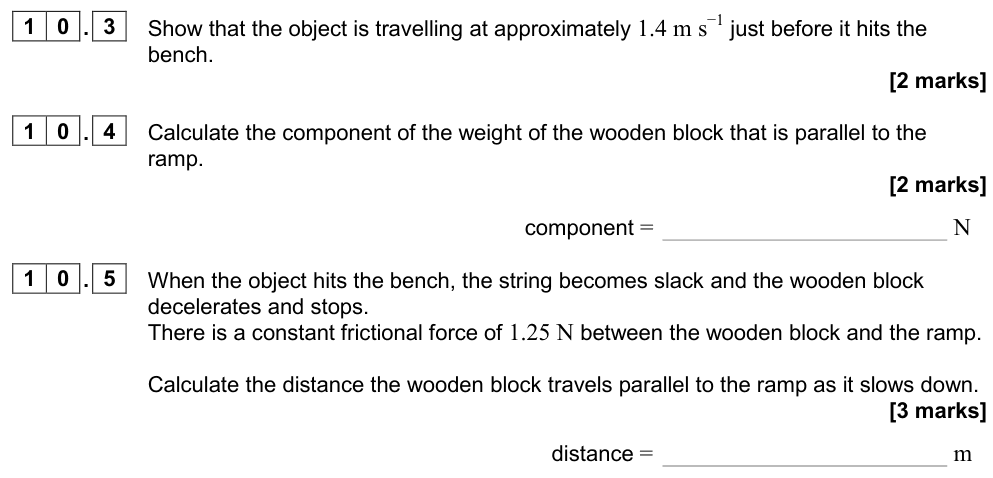
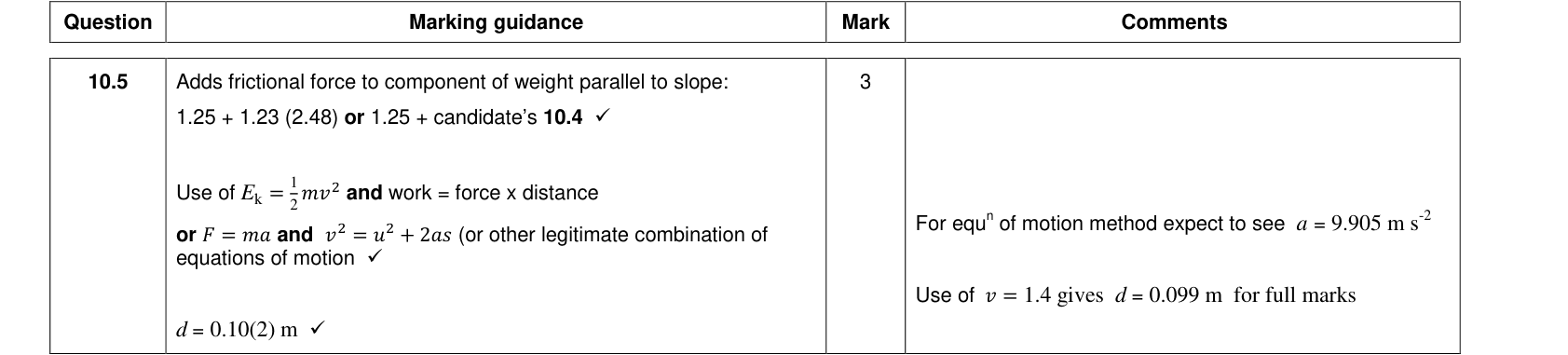
On a slope at angle $\theta$, the component of weight down the slope is $mg\sin\theta$. With friction $F_f$ opposing the motion:
$$ma = mg\sin\theta - F_f \quad \text{(sliding down)}$$
Newton's third law
Newton's third law
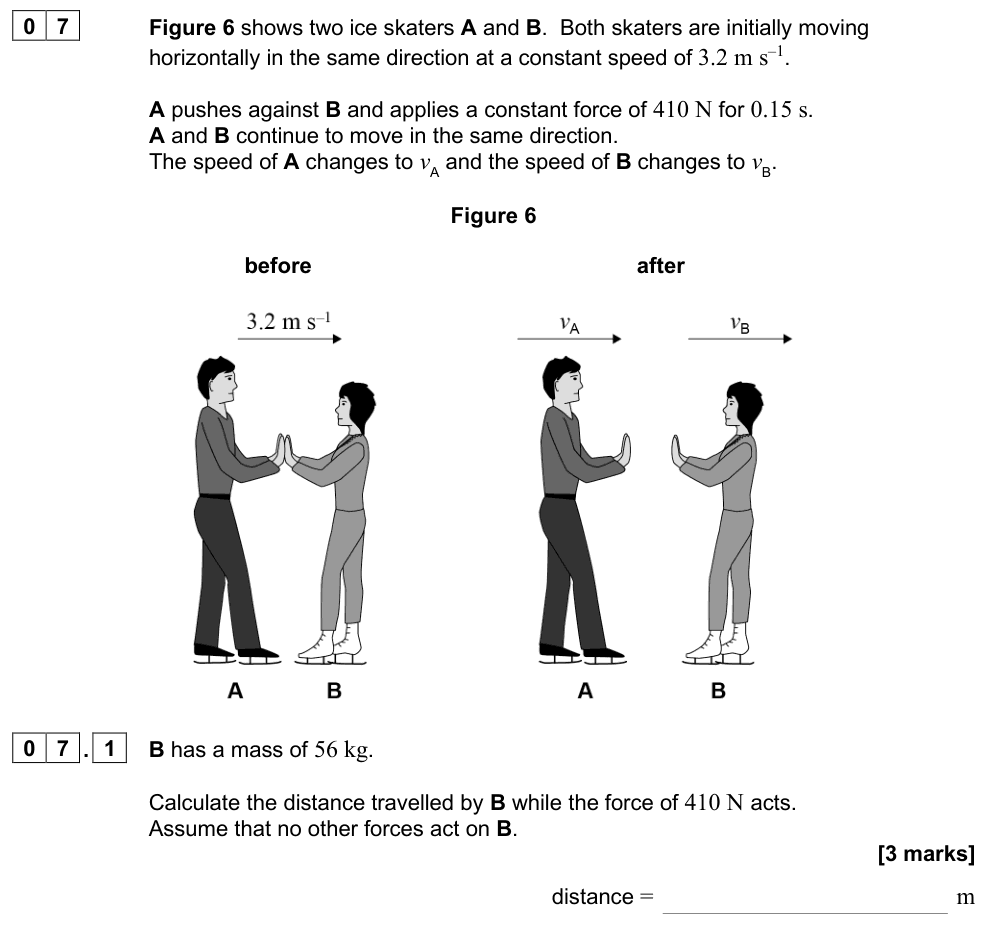
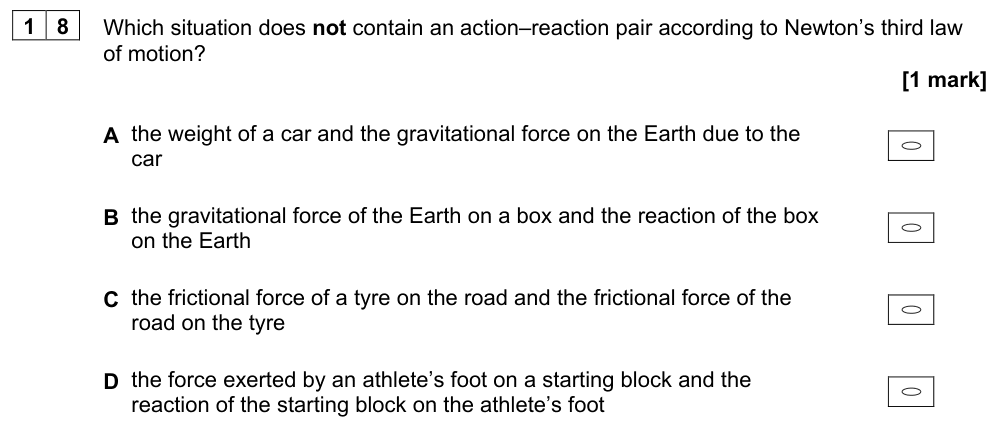
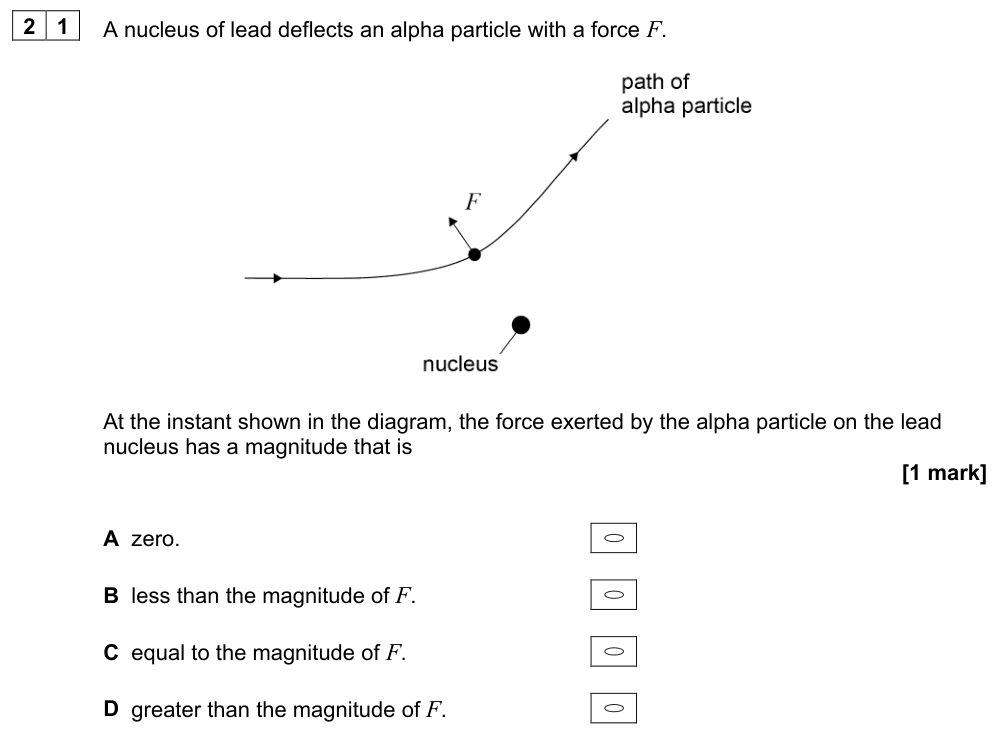
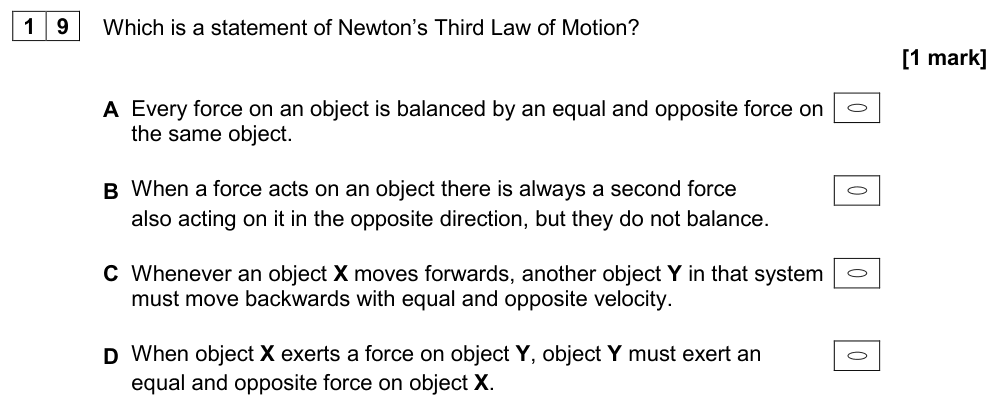
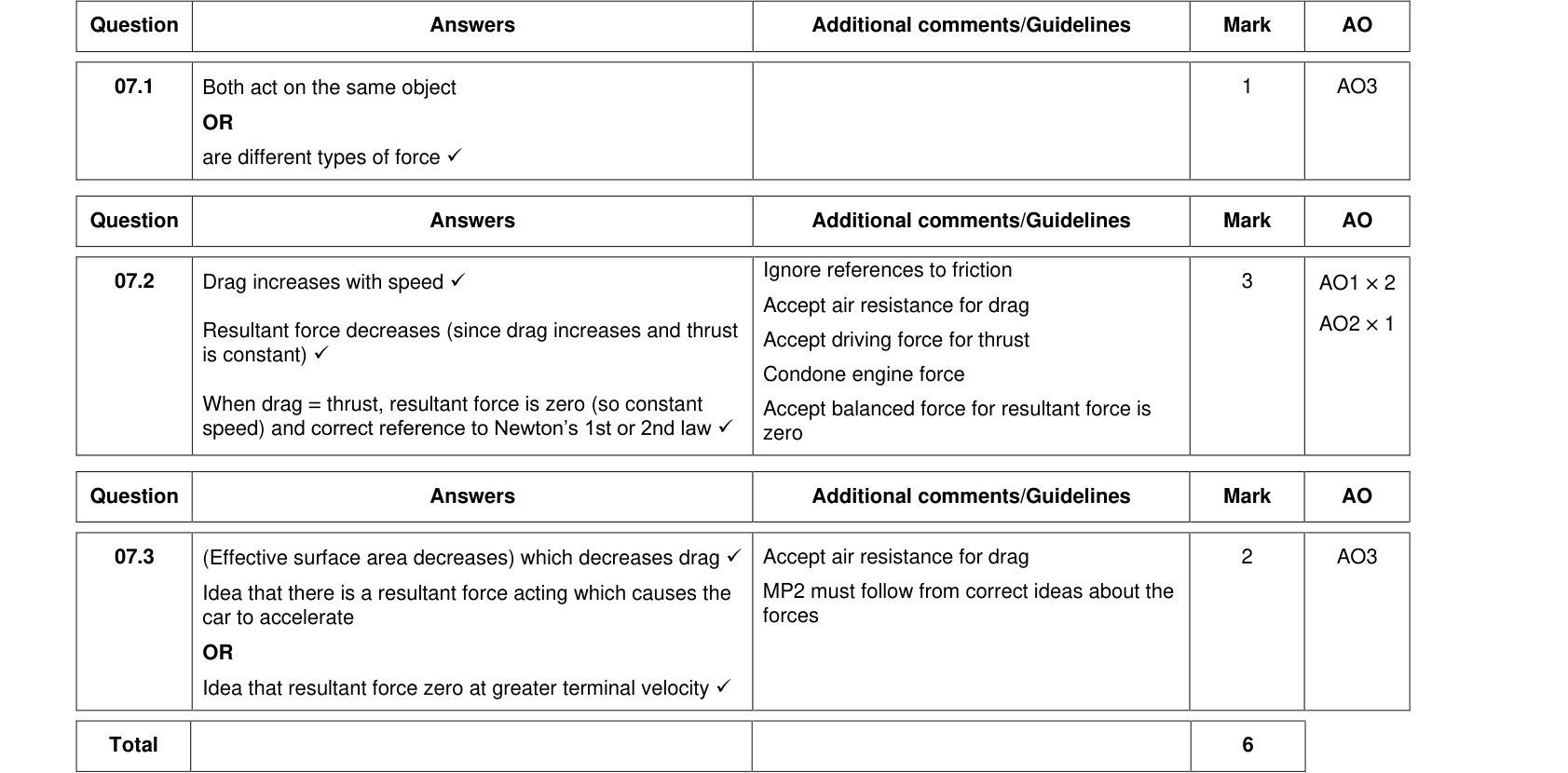
If body A exerts a force on body B, then body B exerts a force on body A that is equal in magnitude and opposite in direction.
The two forces in a third-law pair:
- act on different bodies (so they never cancel each other out),
- are the same type of force (both gravitational, both contact, both electrostatic…),
- are equal in size and opposite in direction,
- act at the same time and along the same line.
Common mistake
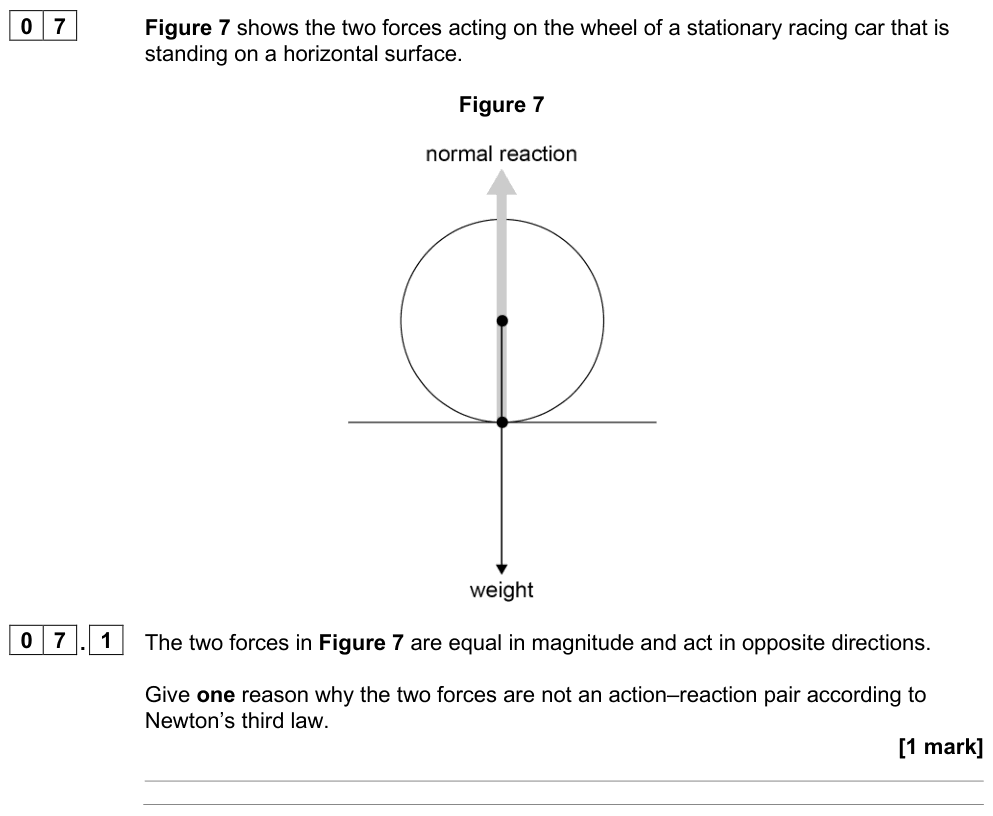
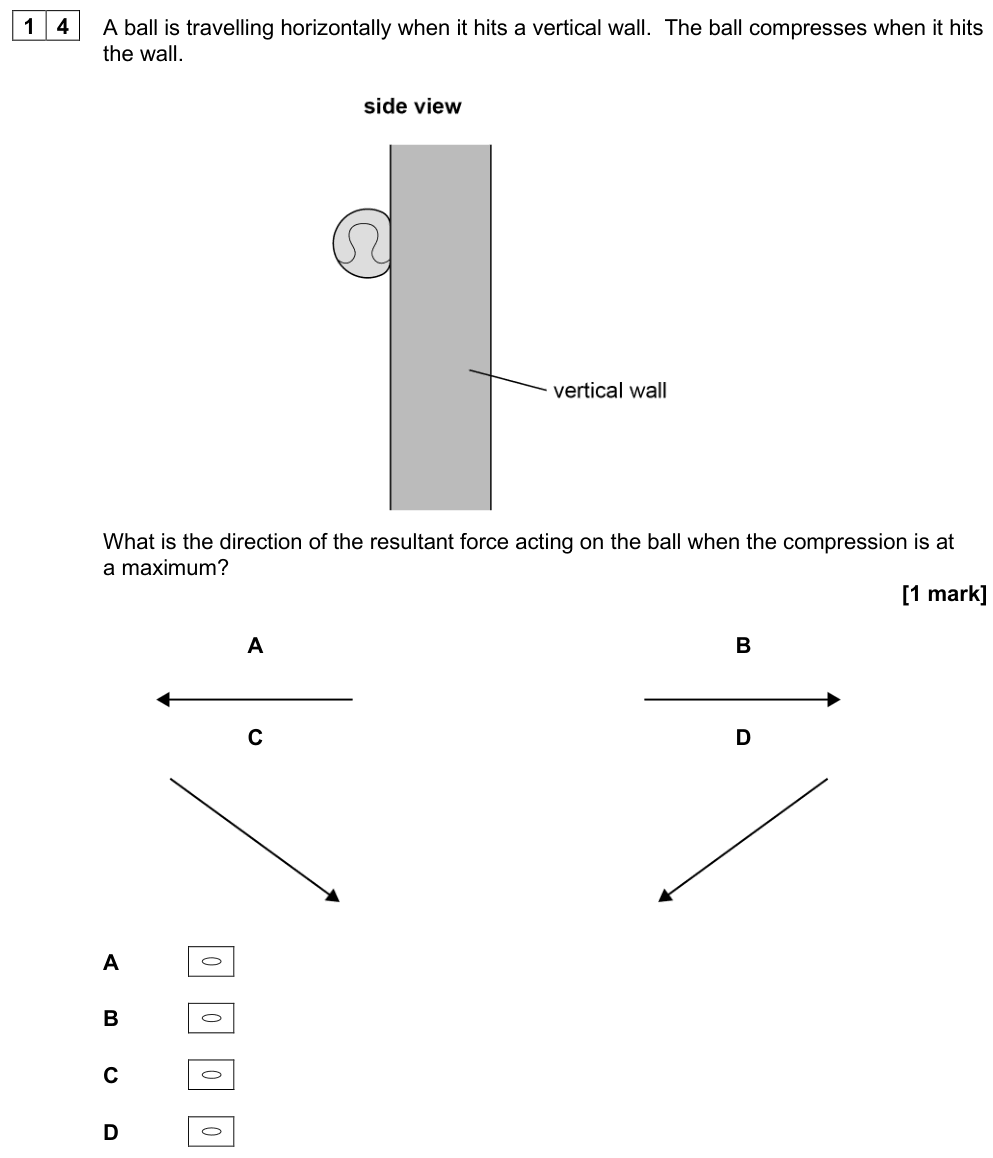
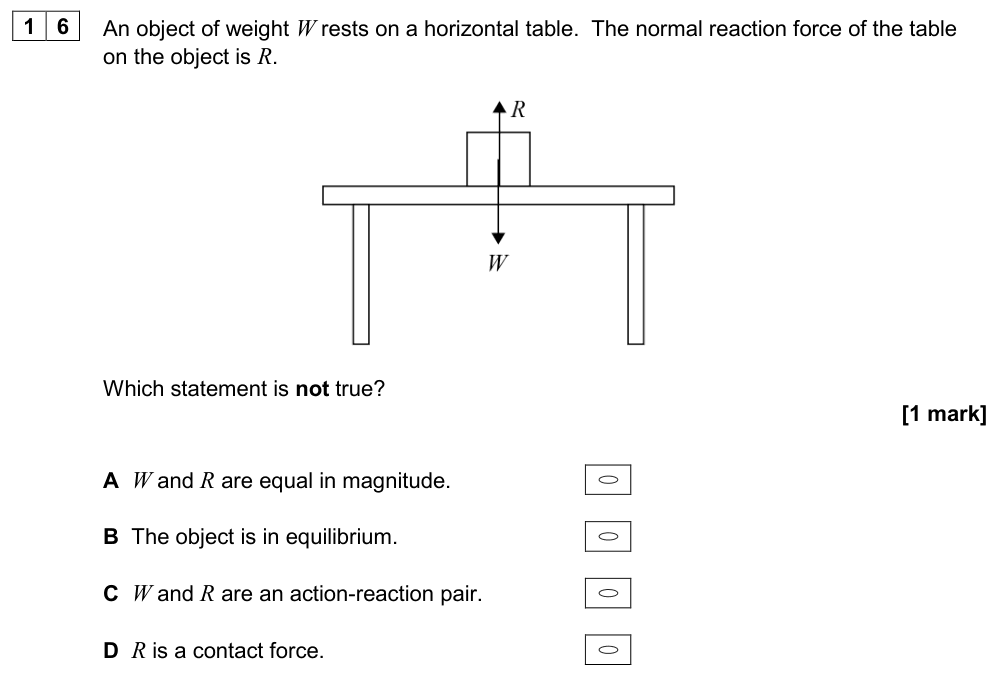
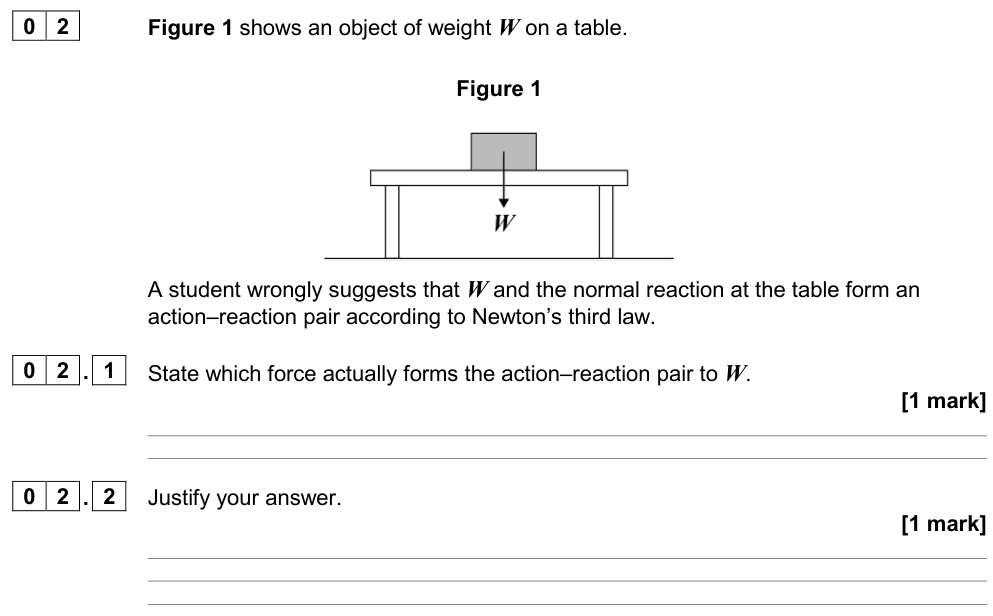
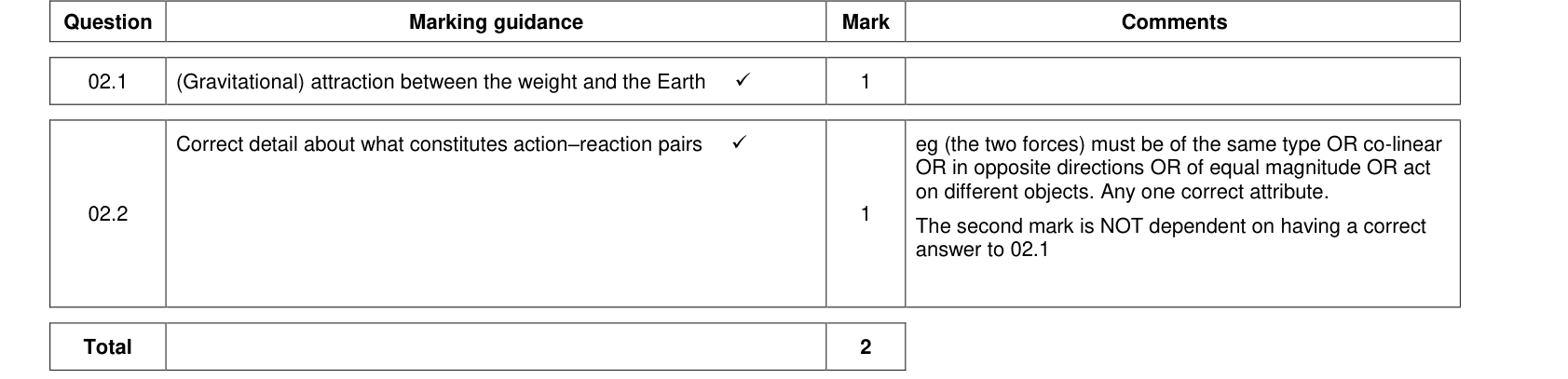
The weight of a book on a table and the normal reaction of the table on the book are not a third-law pair. They act on the same object (the book) and are different types of force. They are equal only because the book is in equilibrium (first law).
The true third-law partners are:
- Weight (Earth pulls book down, gravitational) ↔ book pulls Earth up (gravitational).
- Table pushes book up (contact) ↔ book pushes table down (contact).
Examples of third-law pairs
- A swimmer pushes water backwards; the water pushes the swimmer forwards.
- A rocket pushes exhaust gases backwards; the gases push the rocket forwards.
- A car's tyres push backwards on the road (friction); the road pushes the tyres forwards. This is the driving force.
Summary
- First law: no resultant force → no change in velocity. Inertia depends on mass.
- Second law: $F = ma$ with $F$ the resultant force; draw free-body diagrams.
- Lift: $R = m(g + a)$; apparent weight increases when accelerating upwards.
- Connected bodies share the same acceleration; find $a$ from the whole system and tension from one part.
- Third law: equal and opposite forces of the same type on different bodies.