The moment of a force
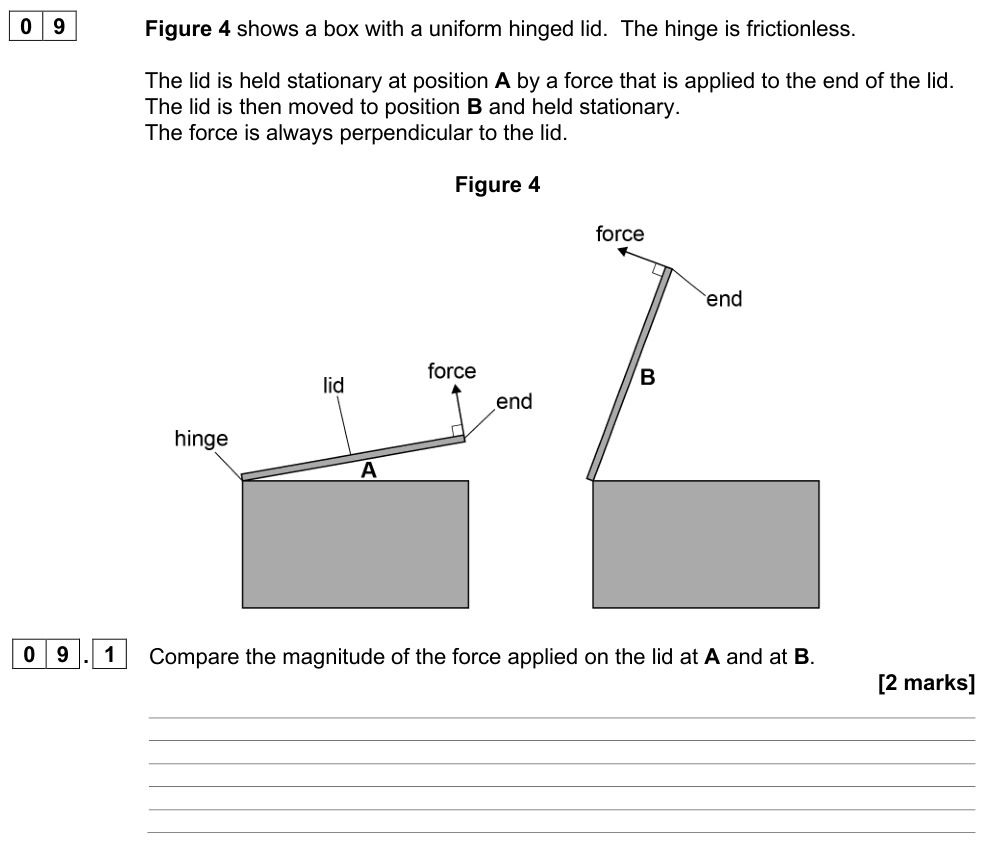
A force can make an object turn about a pivot. The turning effect is called the moment (or torque) of the force.
Moment of a force
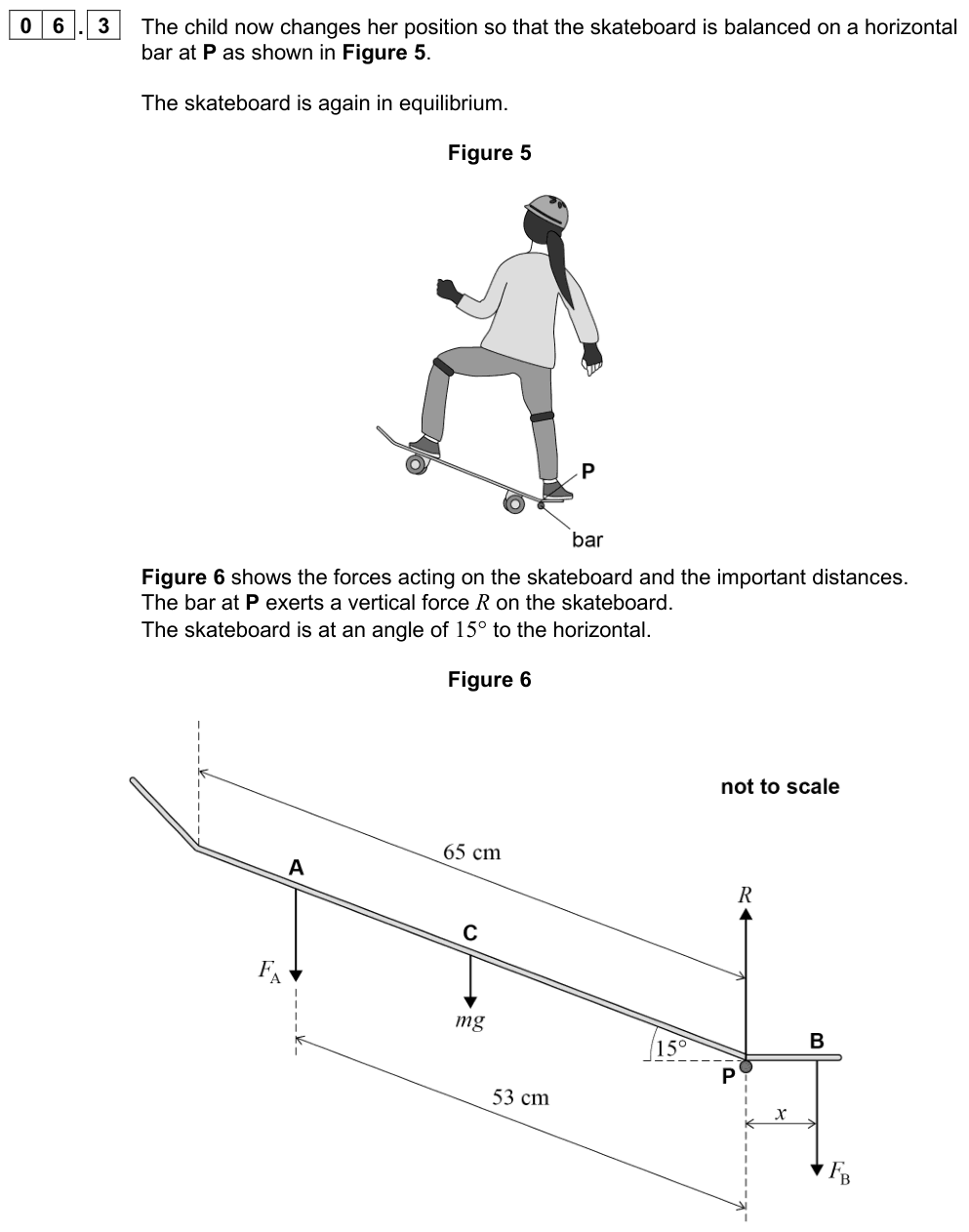
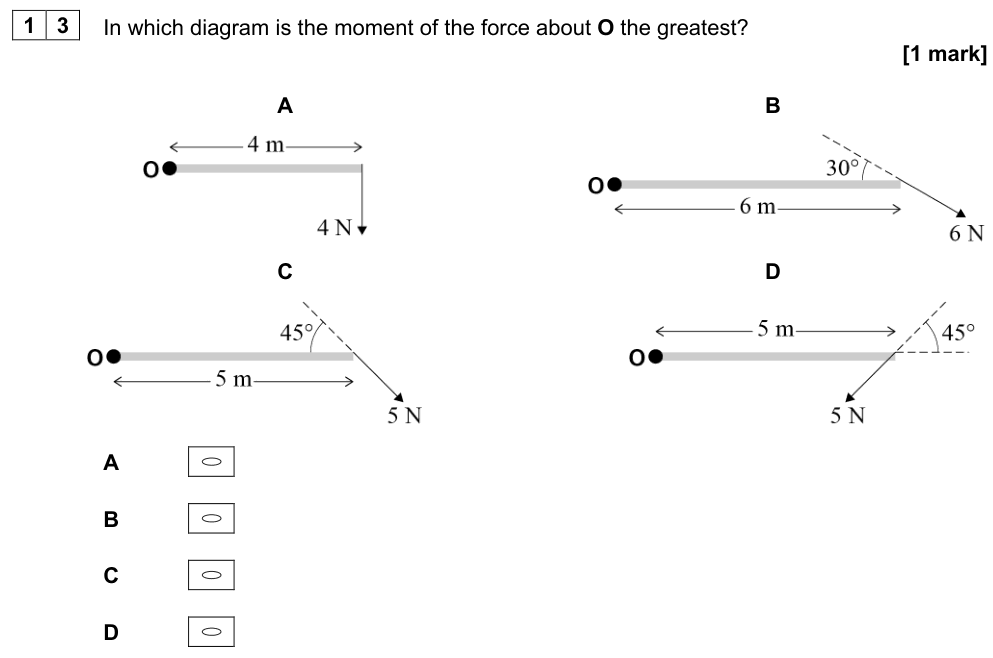
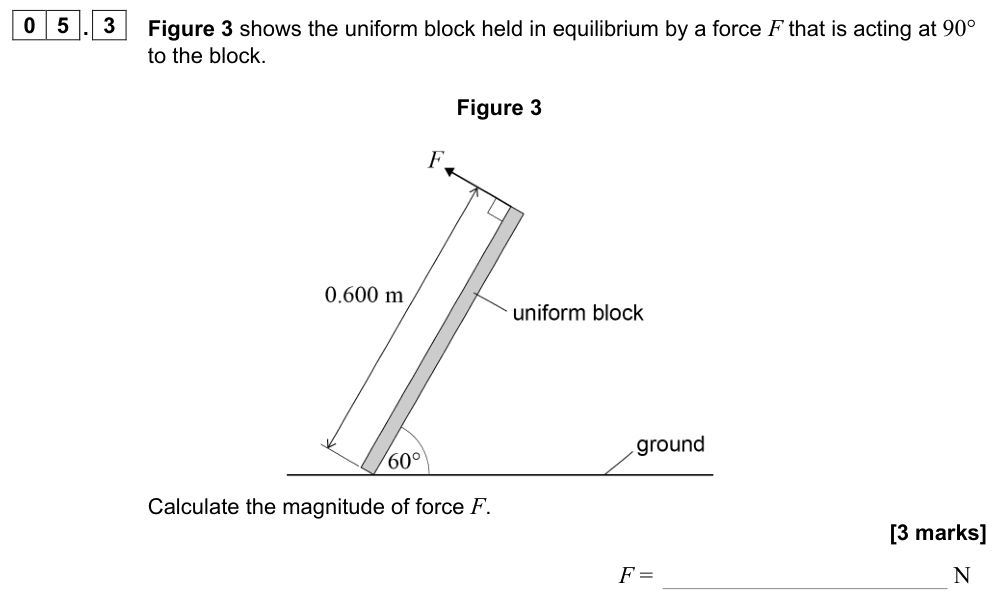
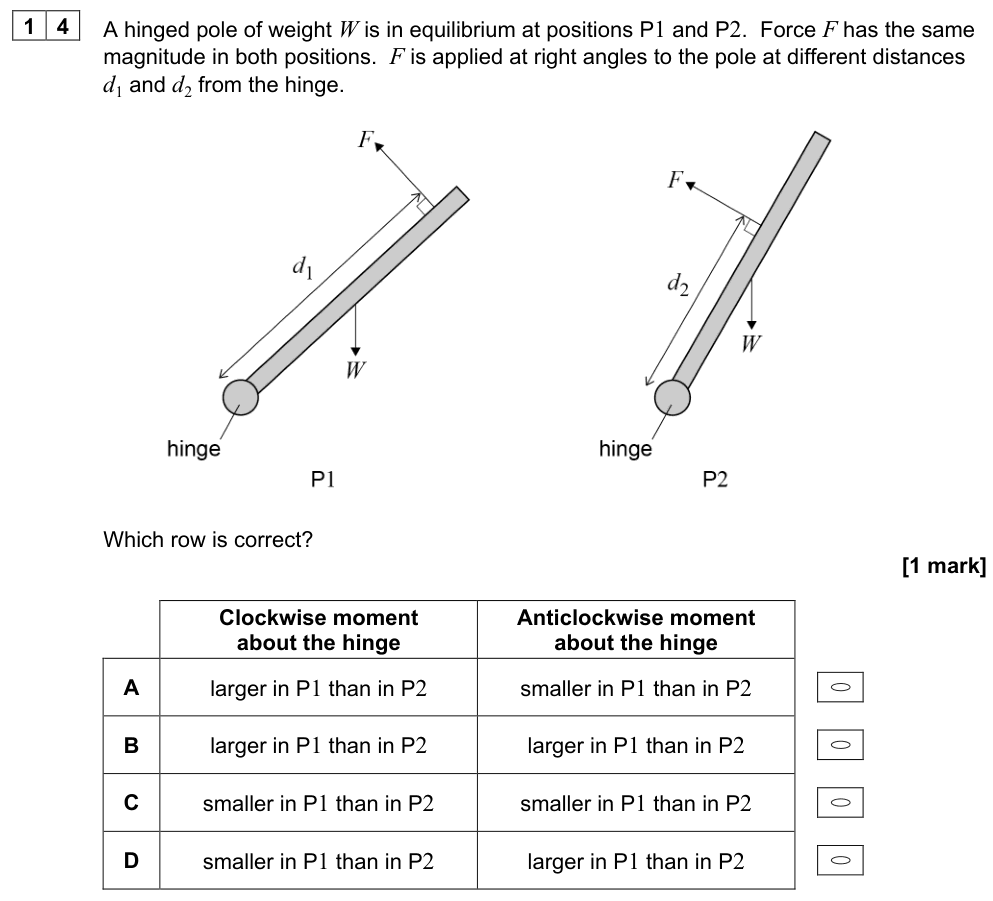
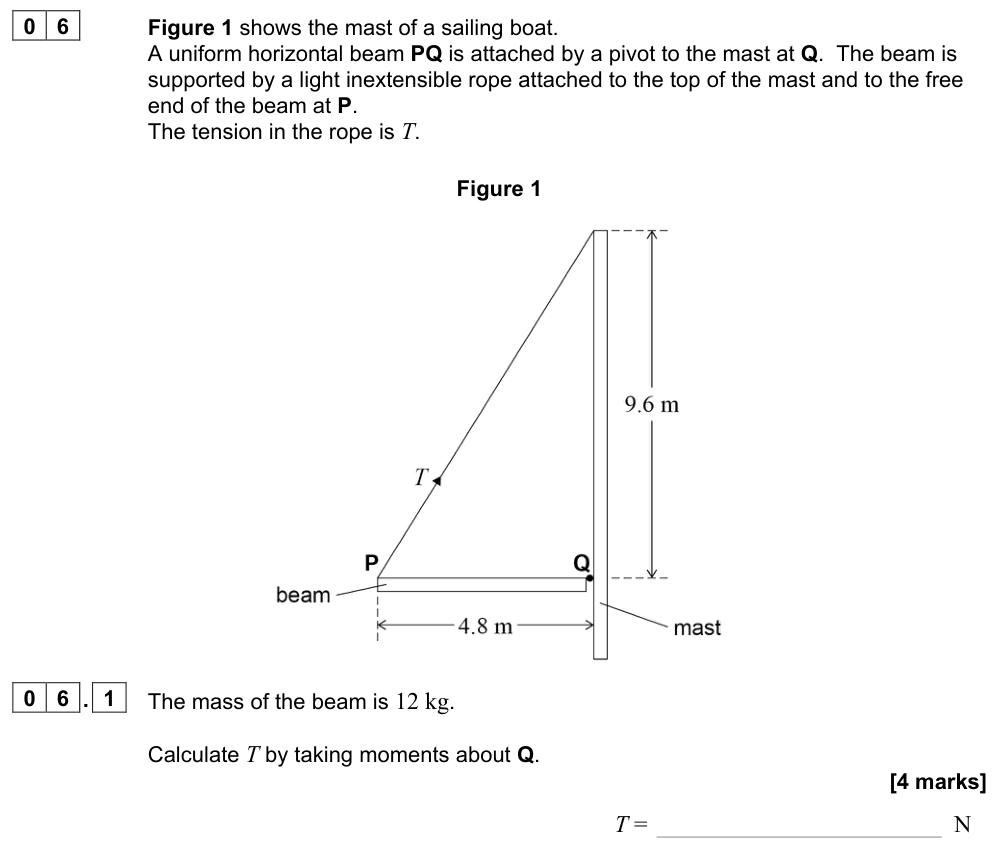
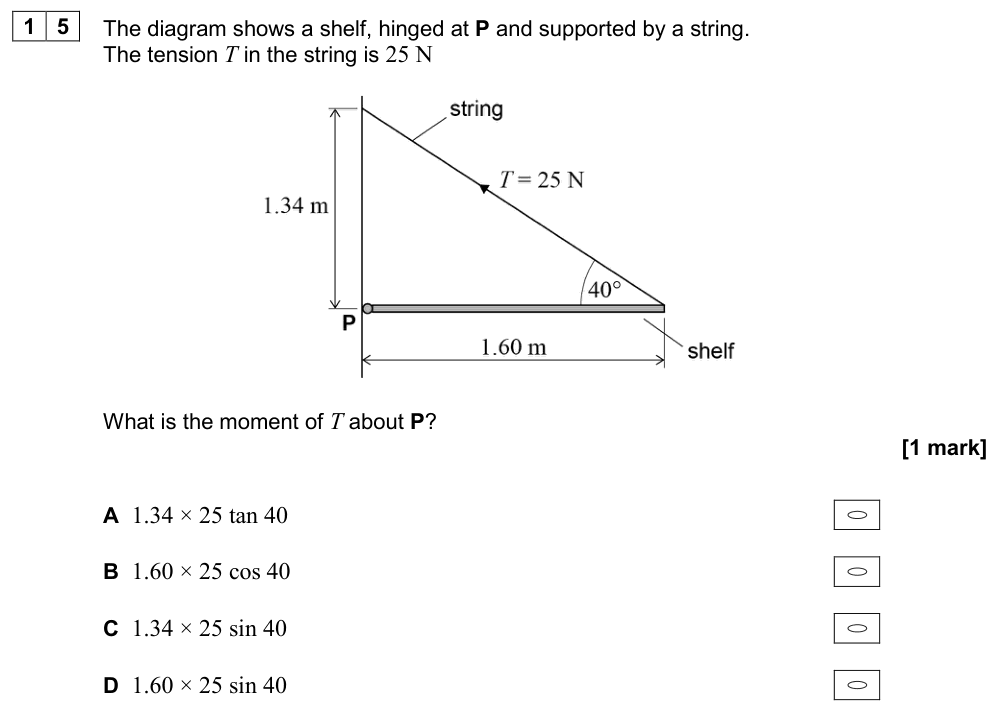
The moment of a force about a point = force × perpendicular distance from the point to the line of action of the force.
$$\text{moment} = F \times d \qquad \text{unit: N m}$$
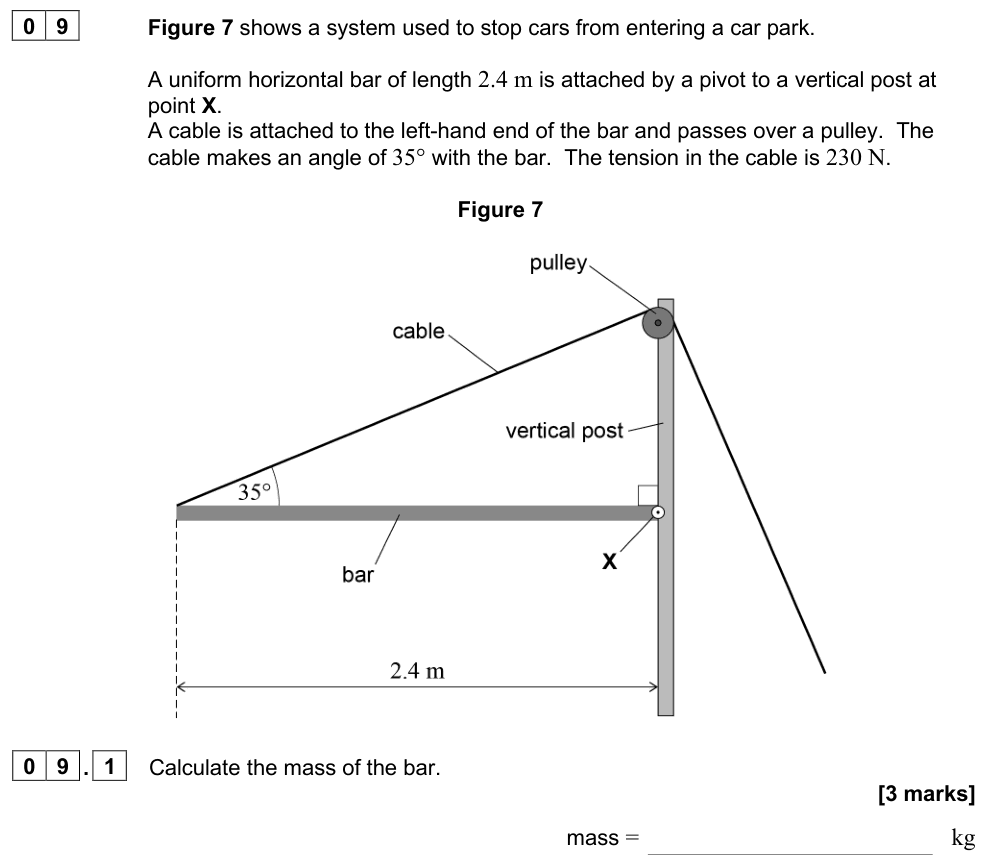
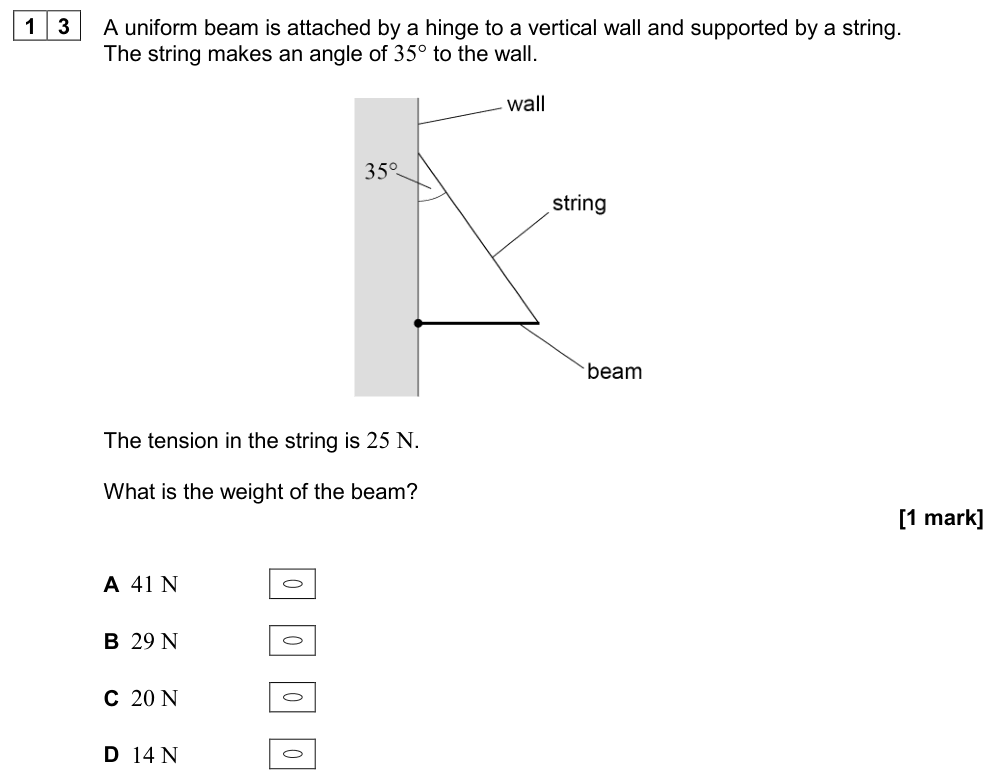
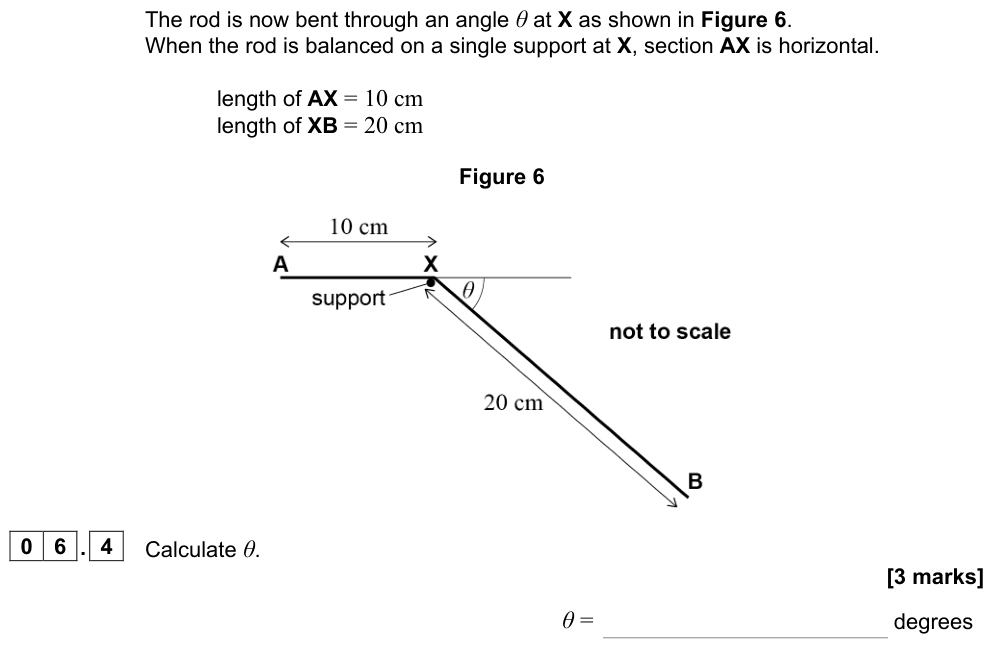
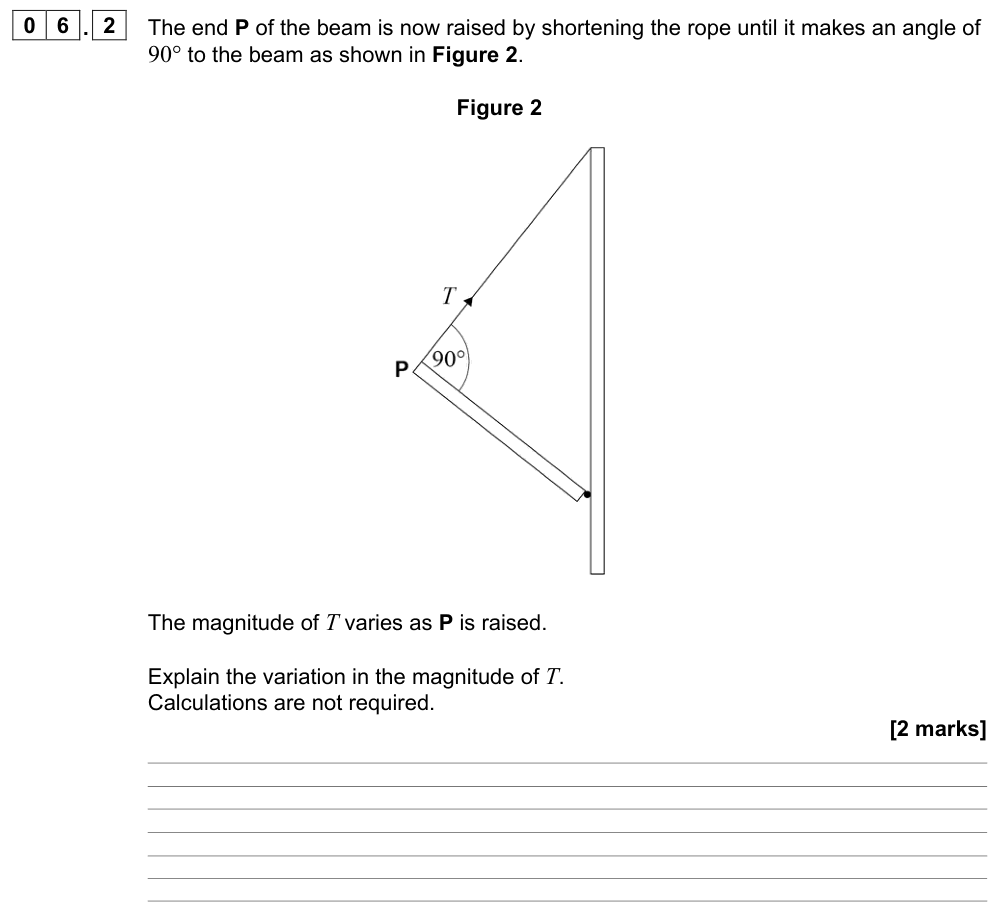
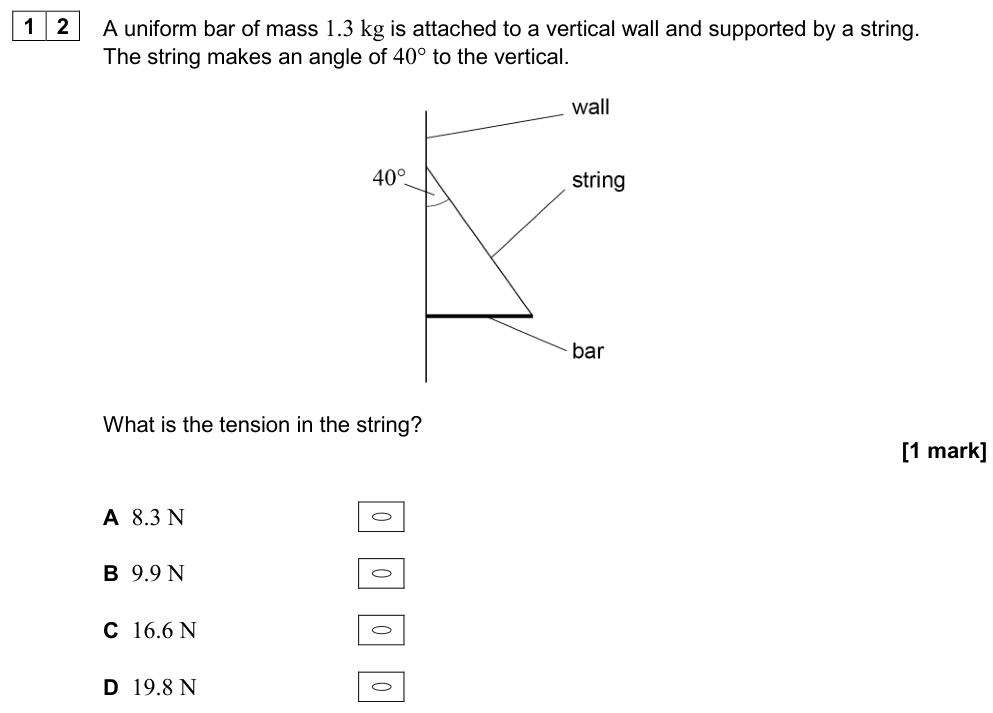
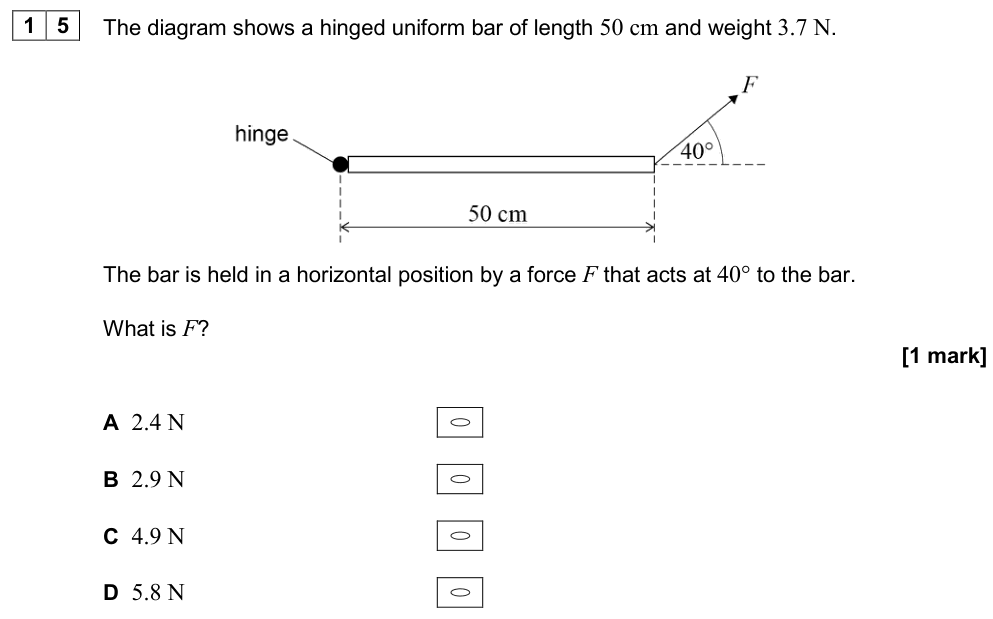
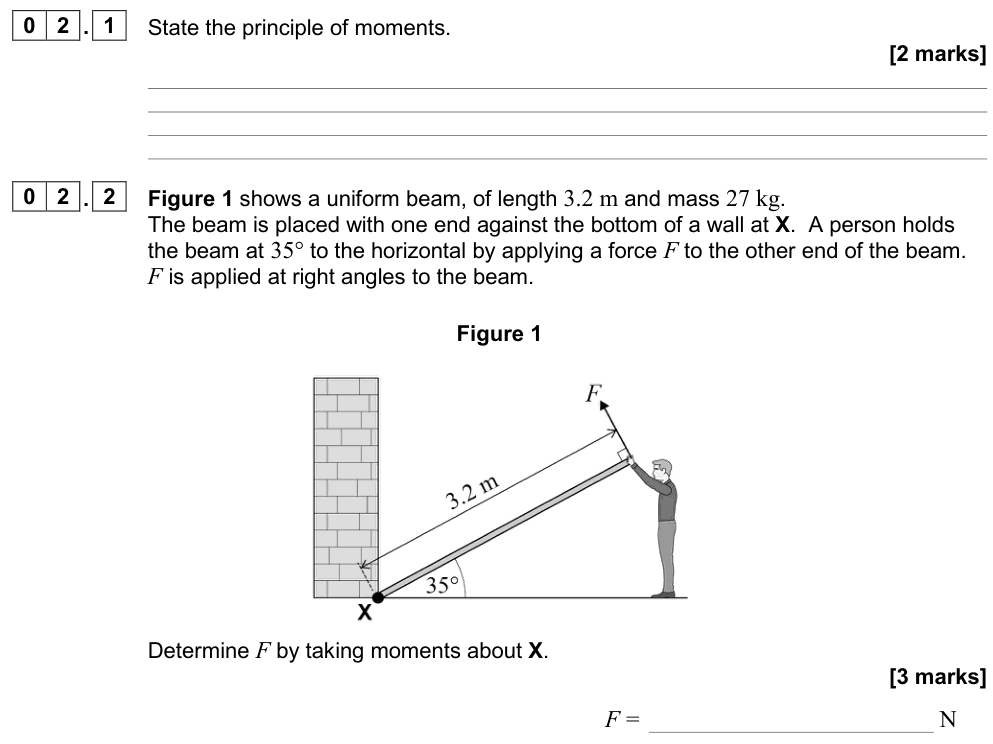
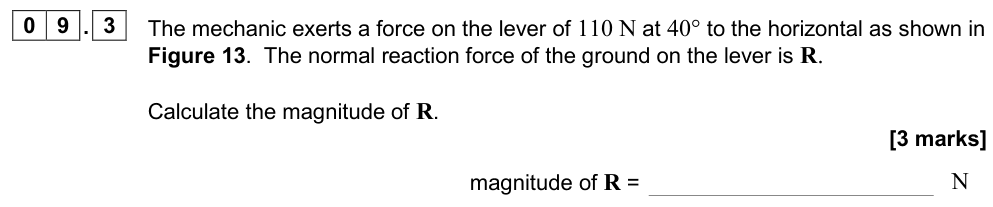
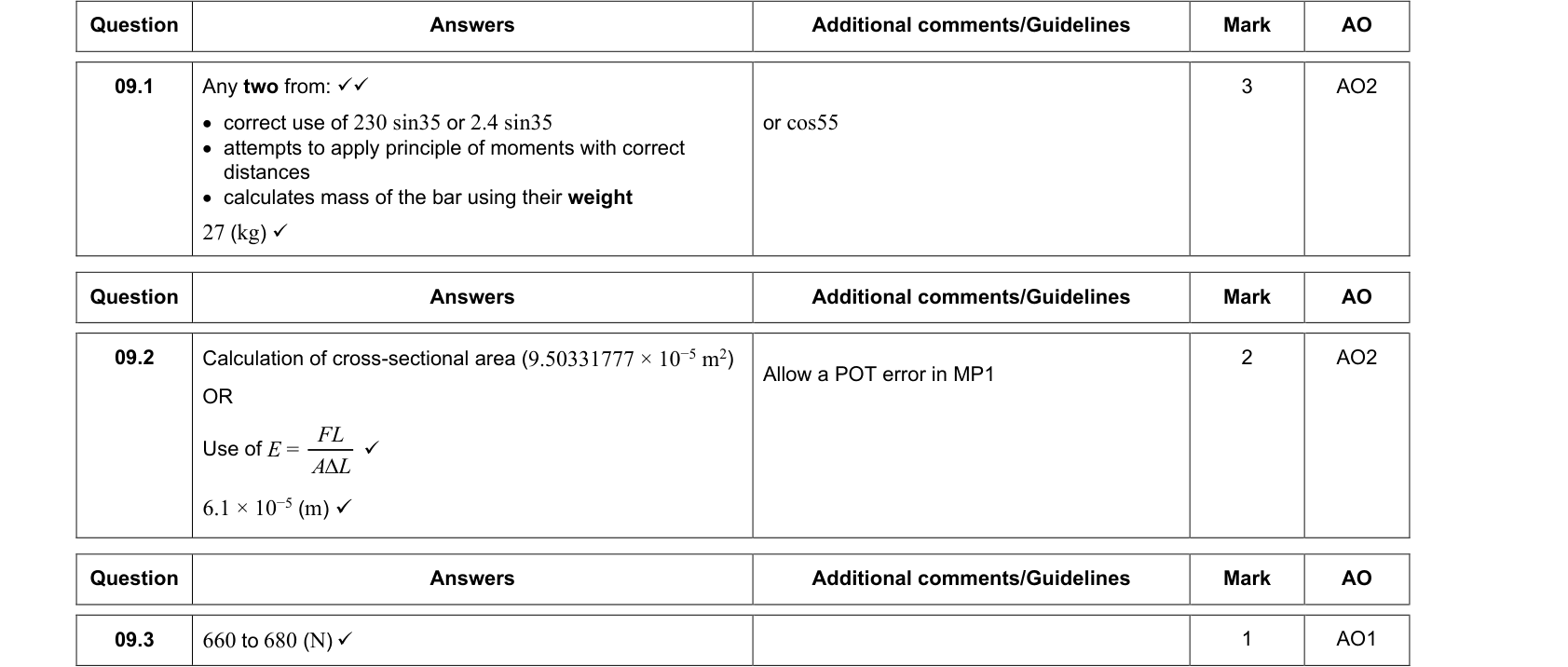
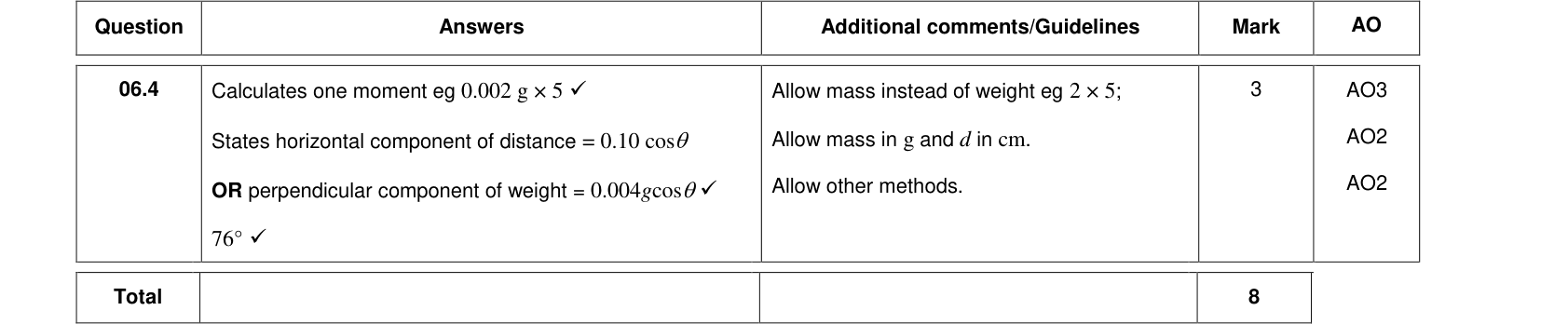
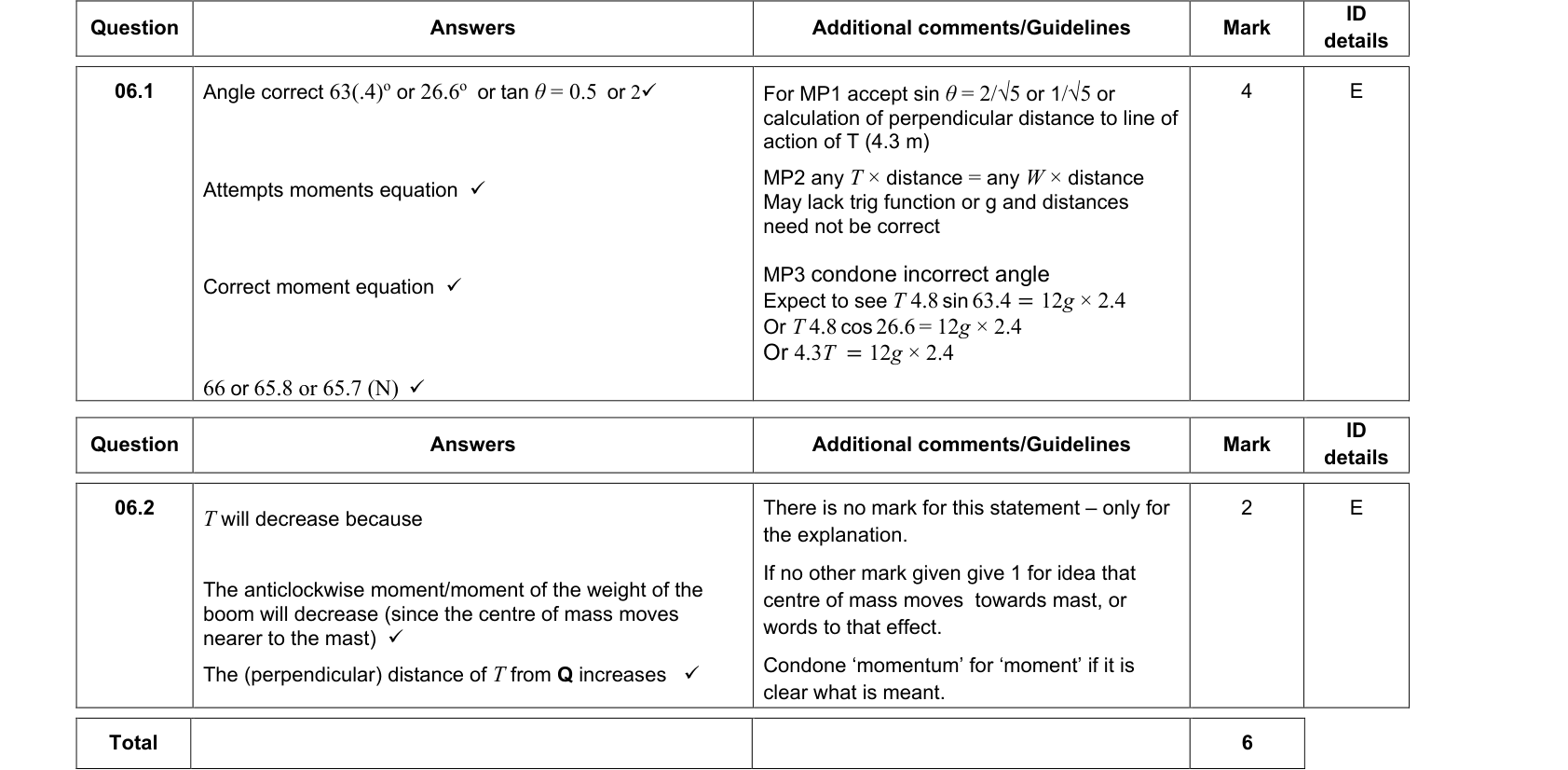
The perpendicular distance matters. If the force acts at an angle $\theta$ to a lever of length $L$, either:
- take the component of the force perpendicular to the lever, $F\sin\theta$, and multiply by $L$, or
- multiply the whole force $F$ by the perpendicular distance from the pivot to its line of action, $L\sin\theta$.
Both give the same answer: $\text{moment} = FL\sin\theta$.
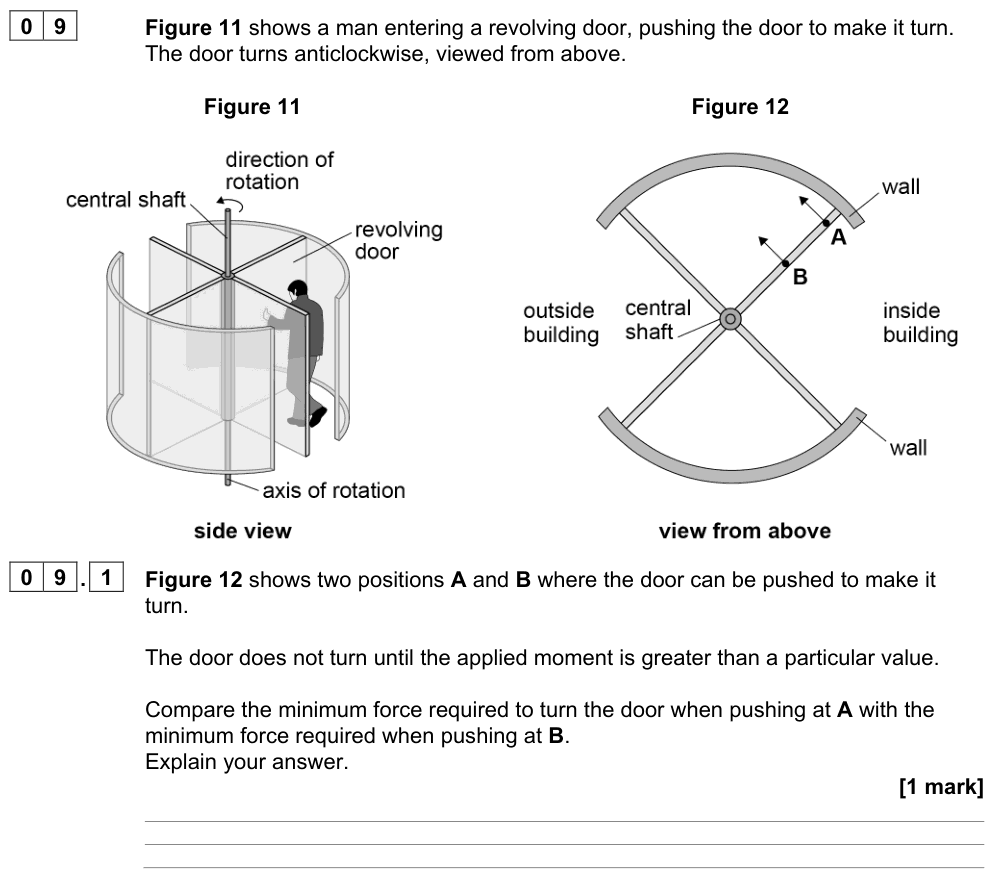
A force whose line of action passes through the pivot has zero moment about it. This is why you push a door at the edge furthest from the hinges, at right angles to the door.
The principle of moments
Principle of moments
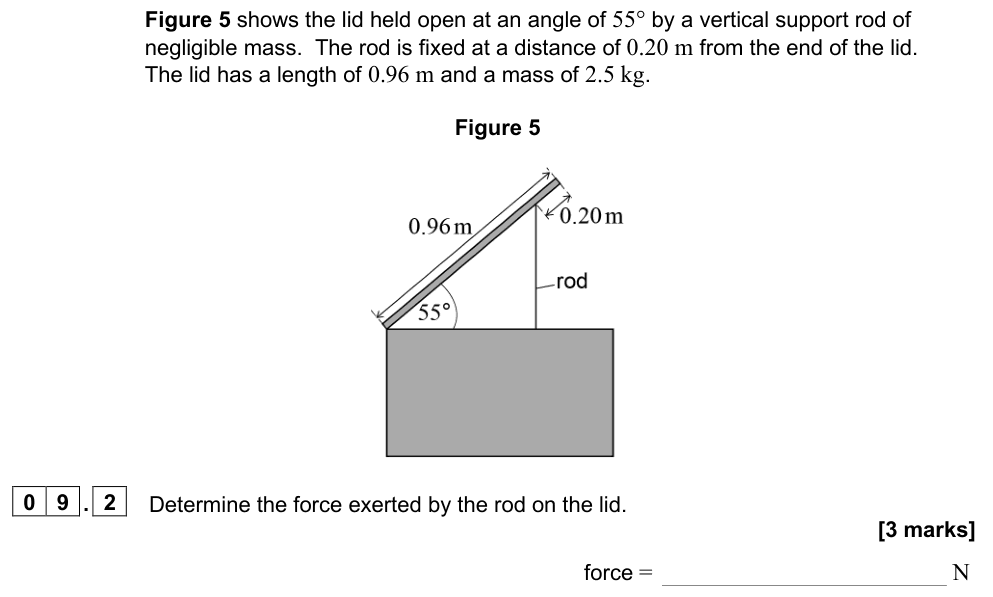
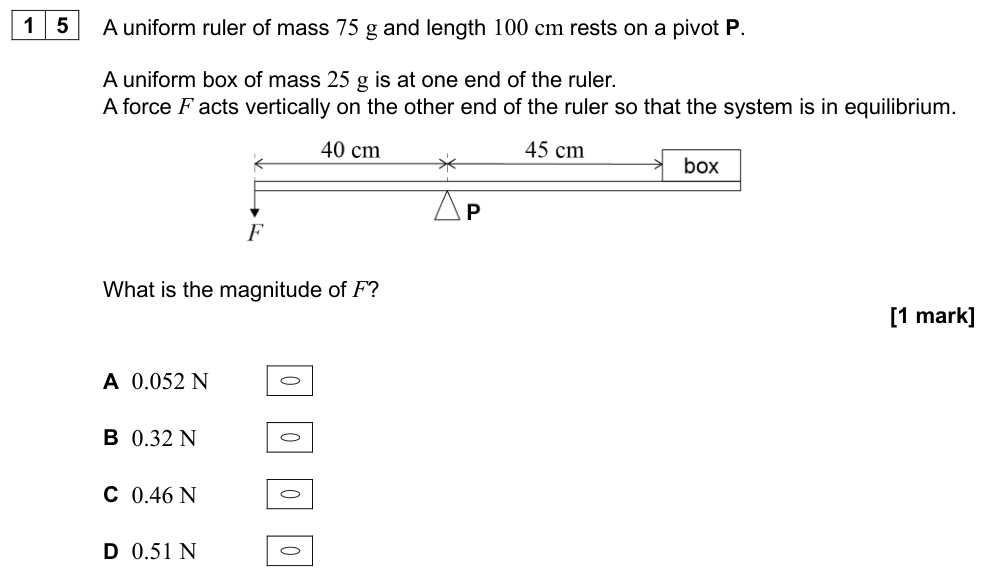
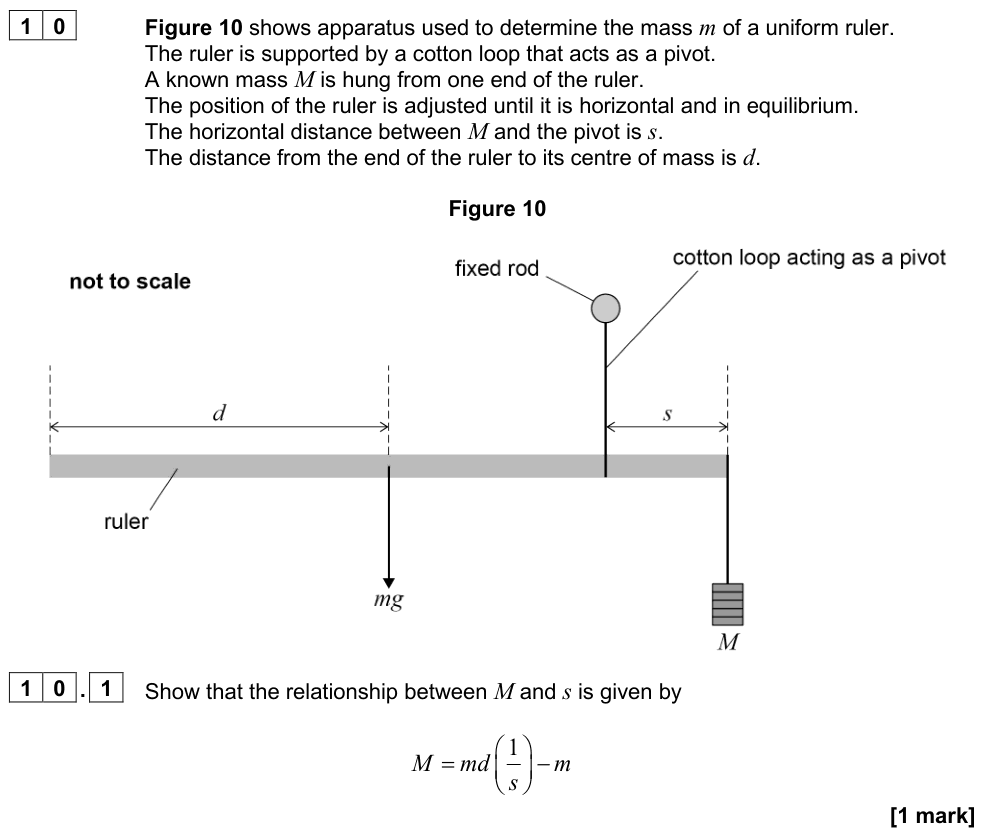
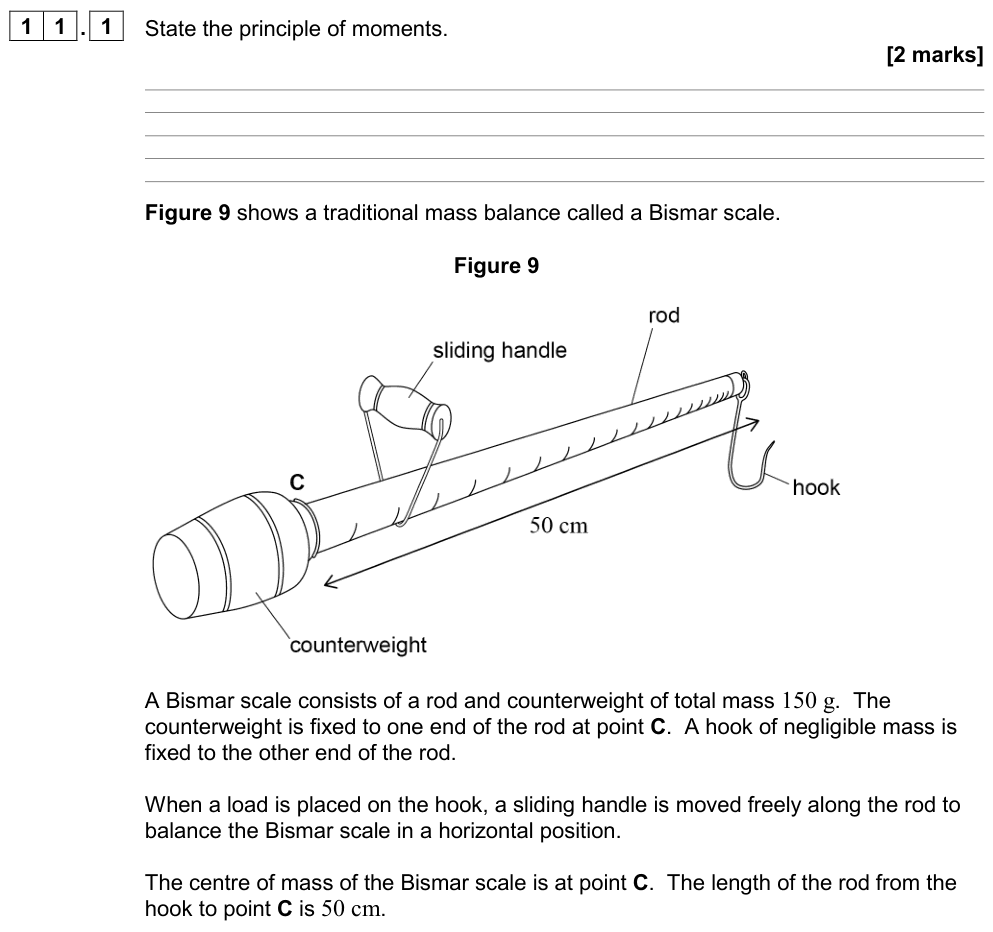
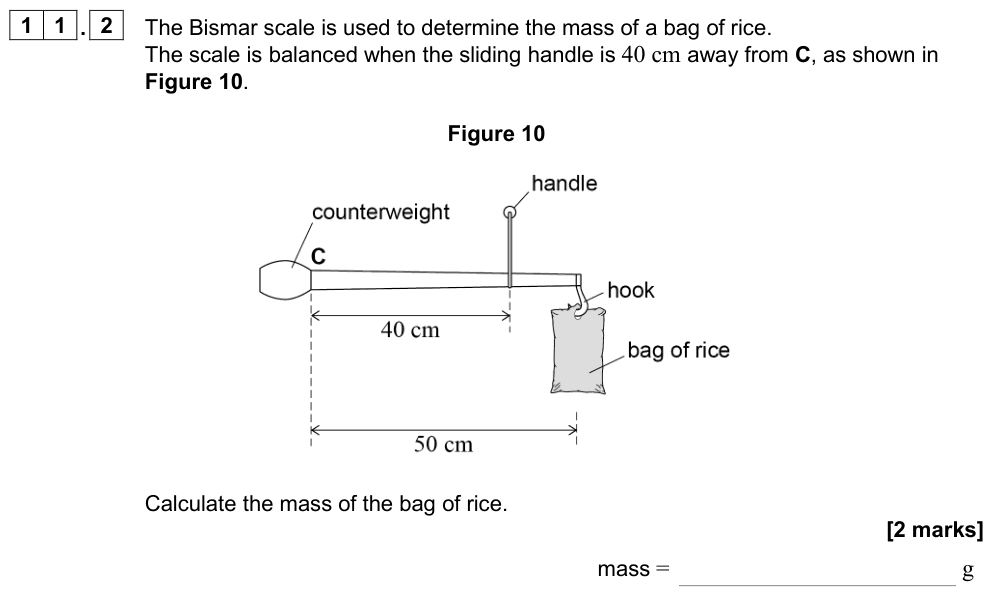
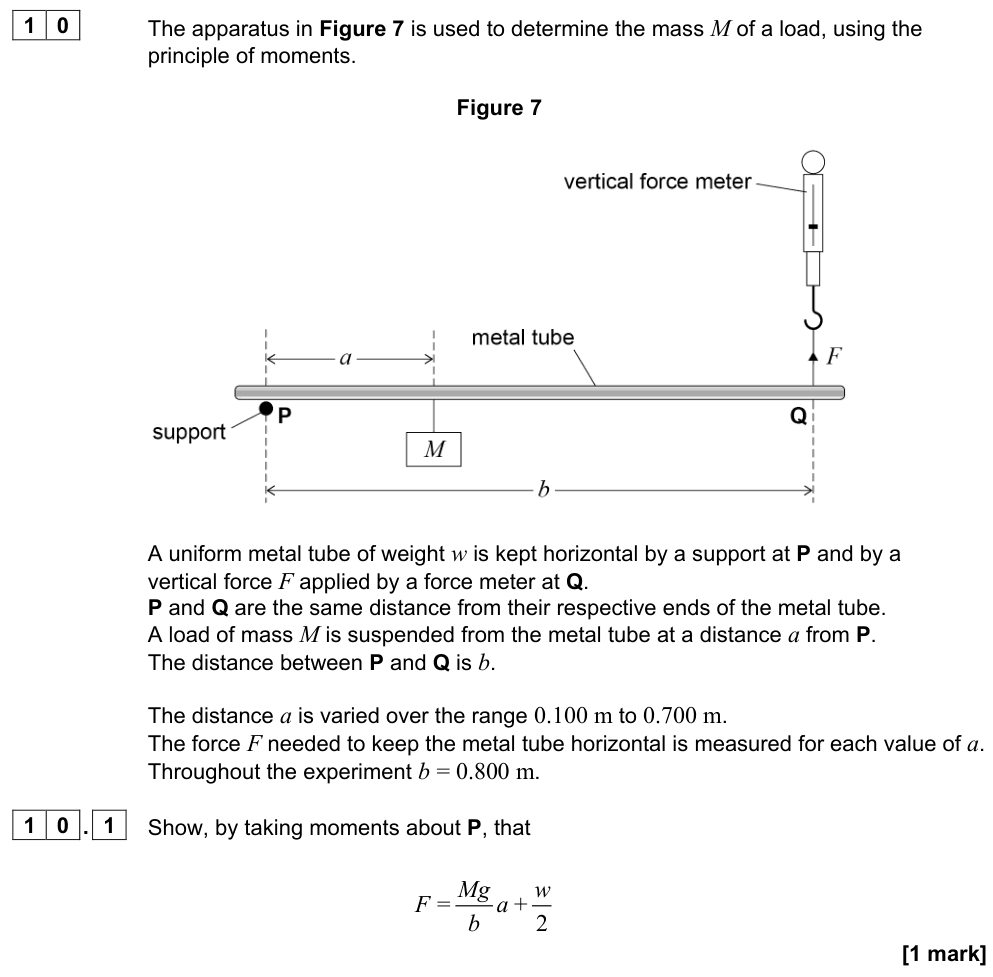
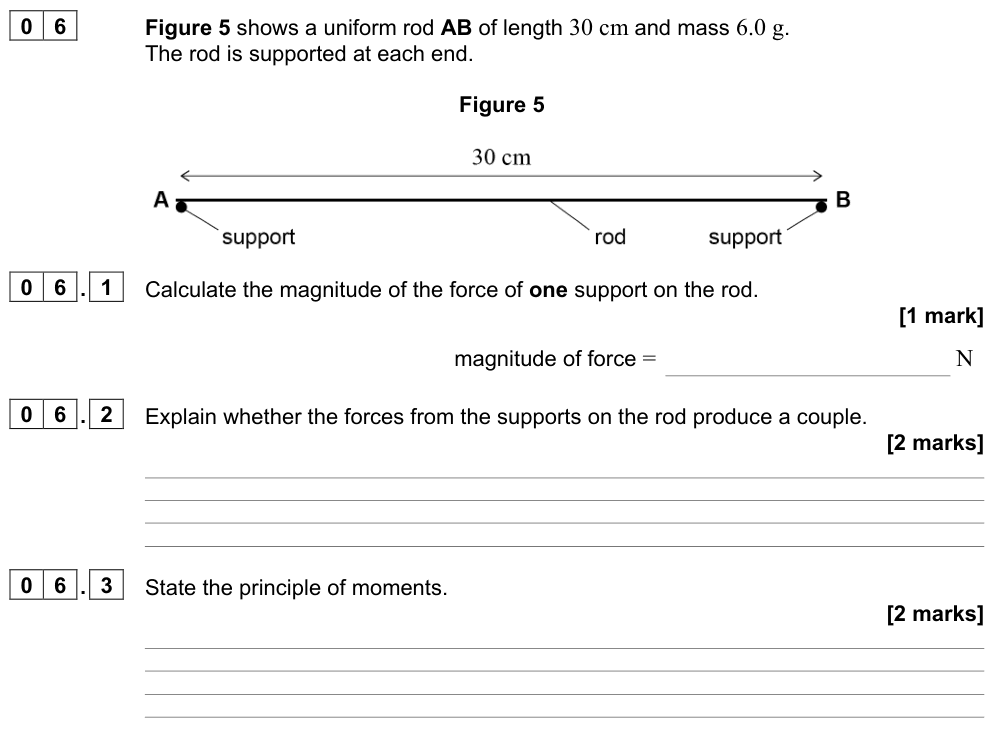
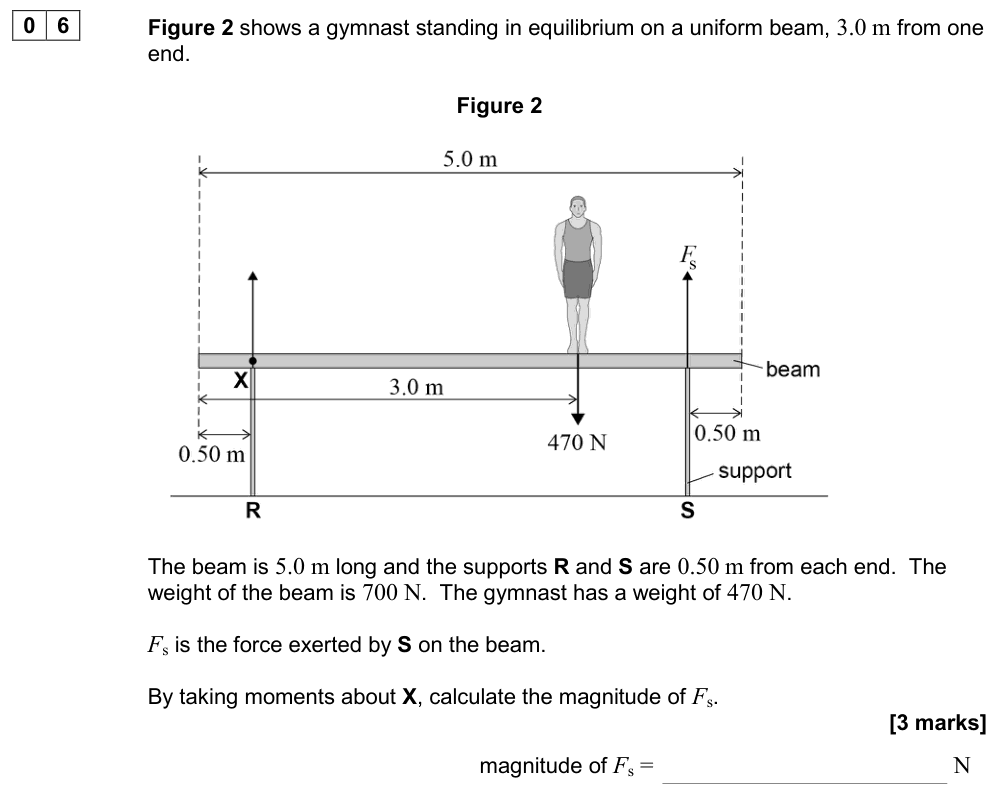
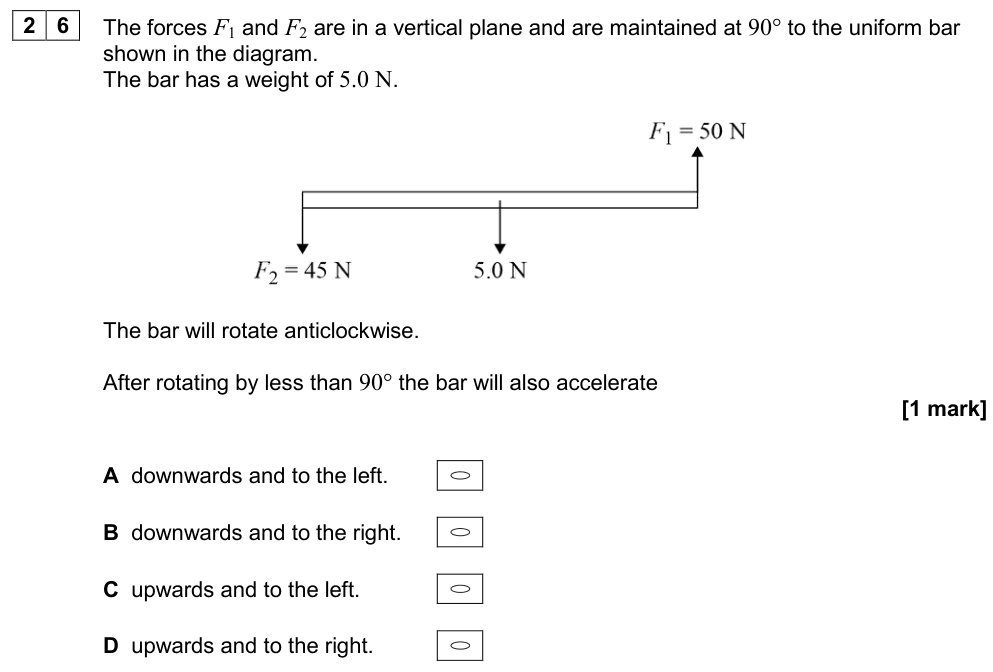
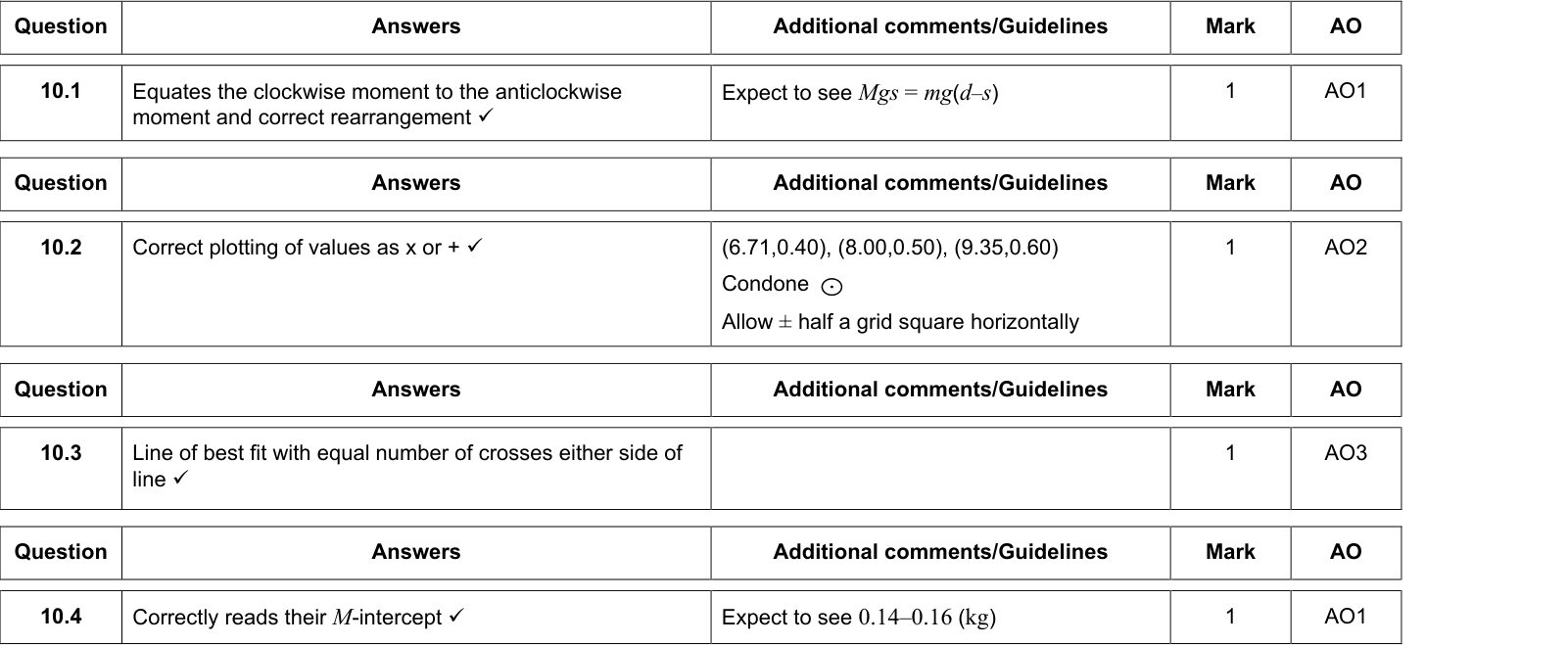
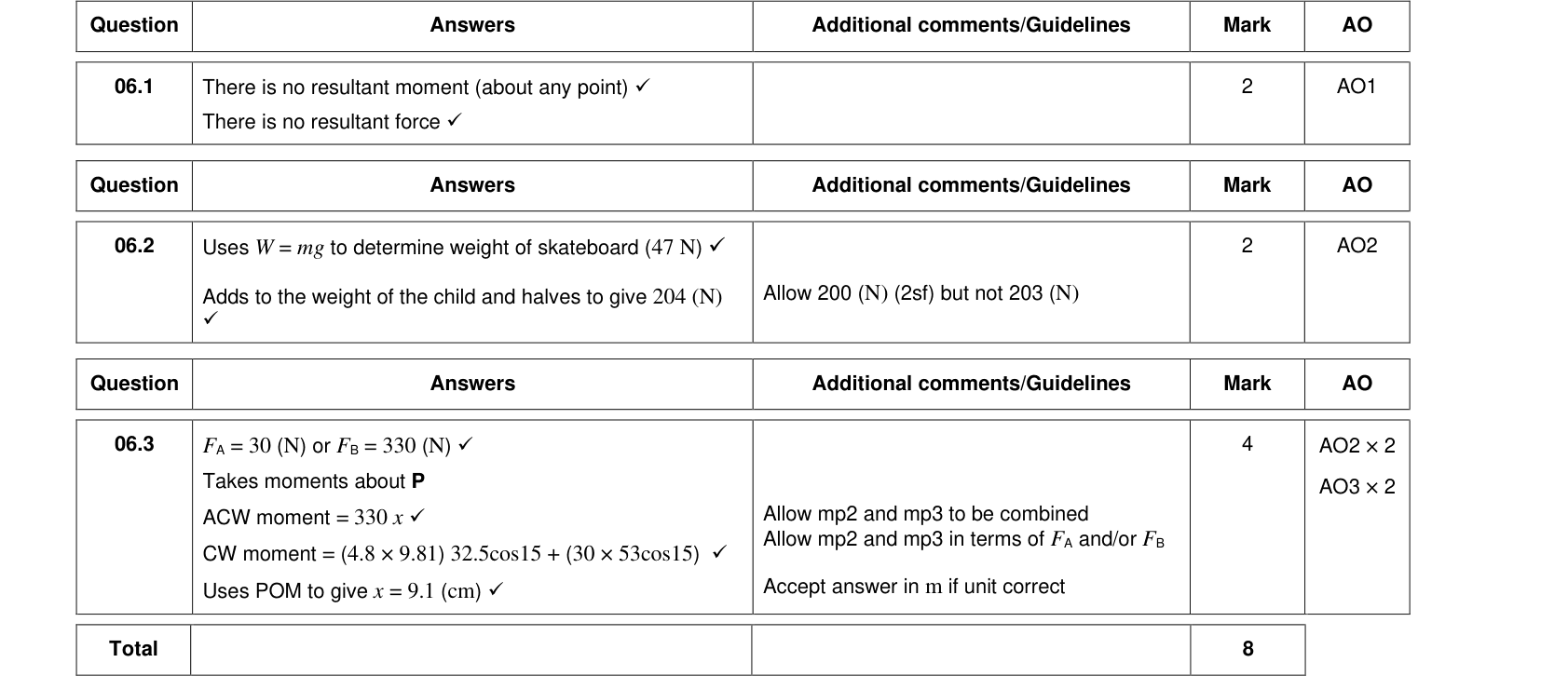
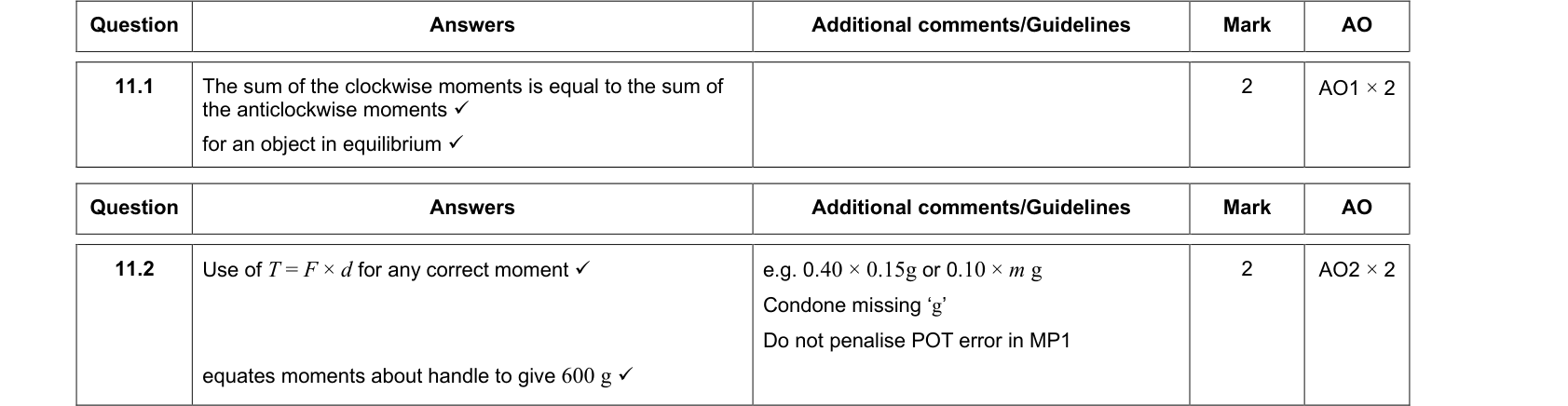
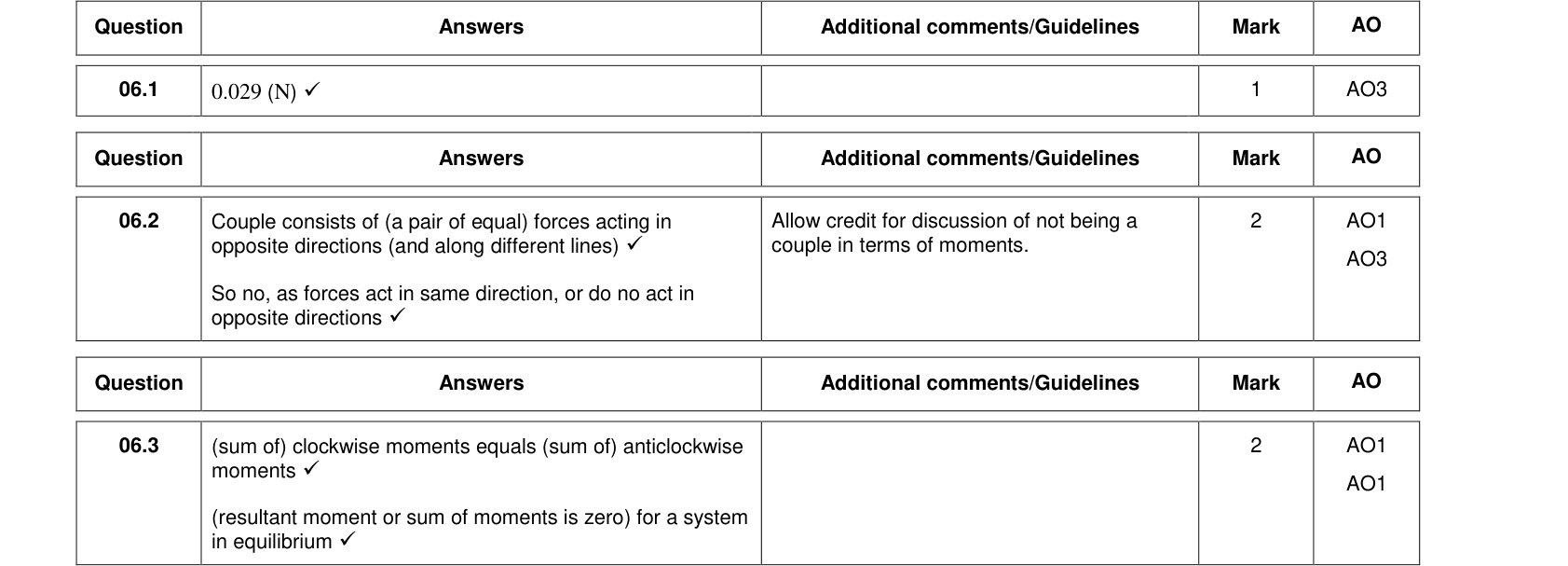
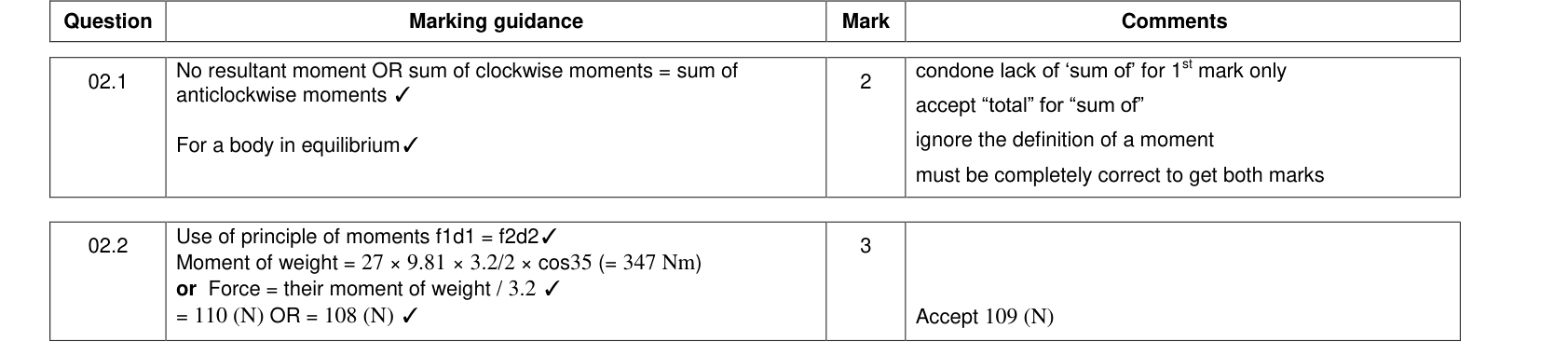
For an object in equilibrium, the sum of the clockwise moments about any point equals the sum of the anticlockwise moments about that same point.
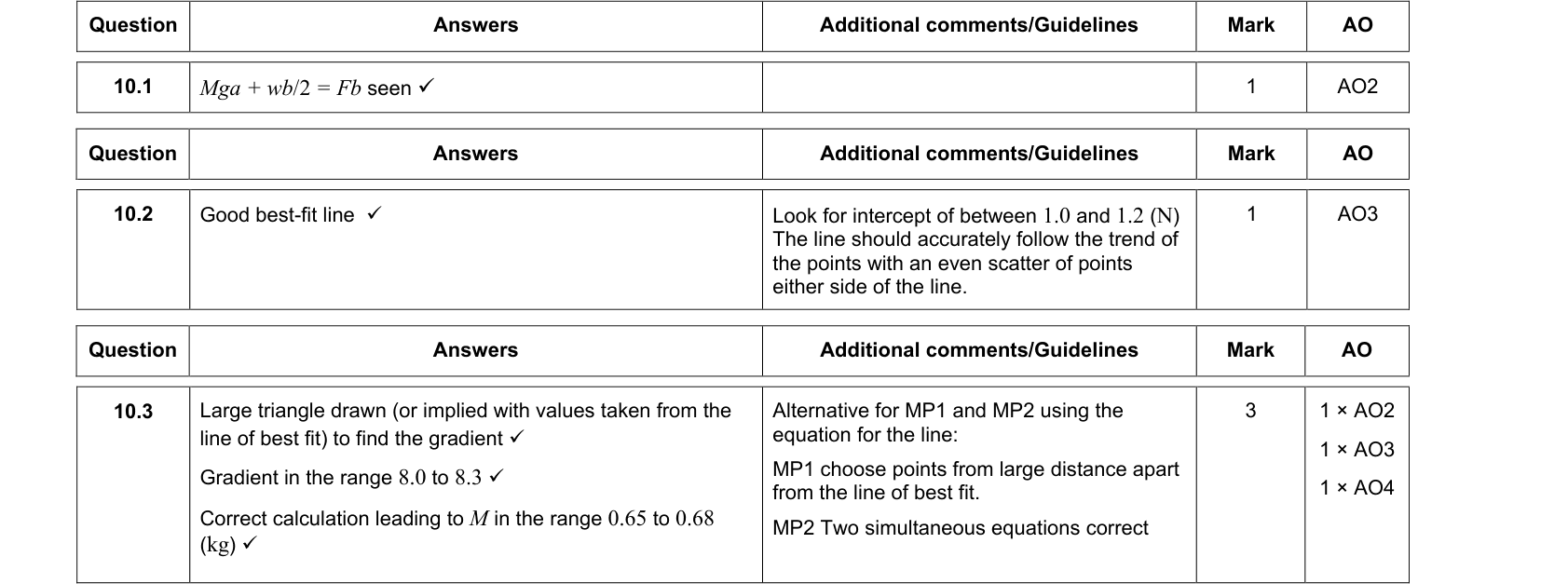
$$\sum \text{clockwise moments} = \sum \text{anticlockwise moments}$$
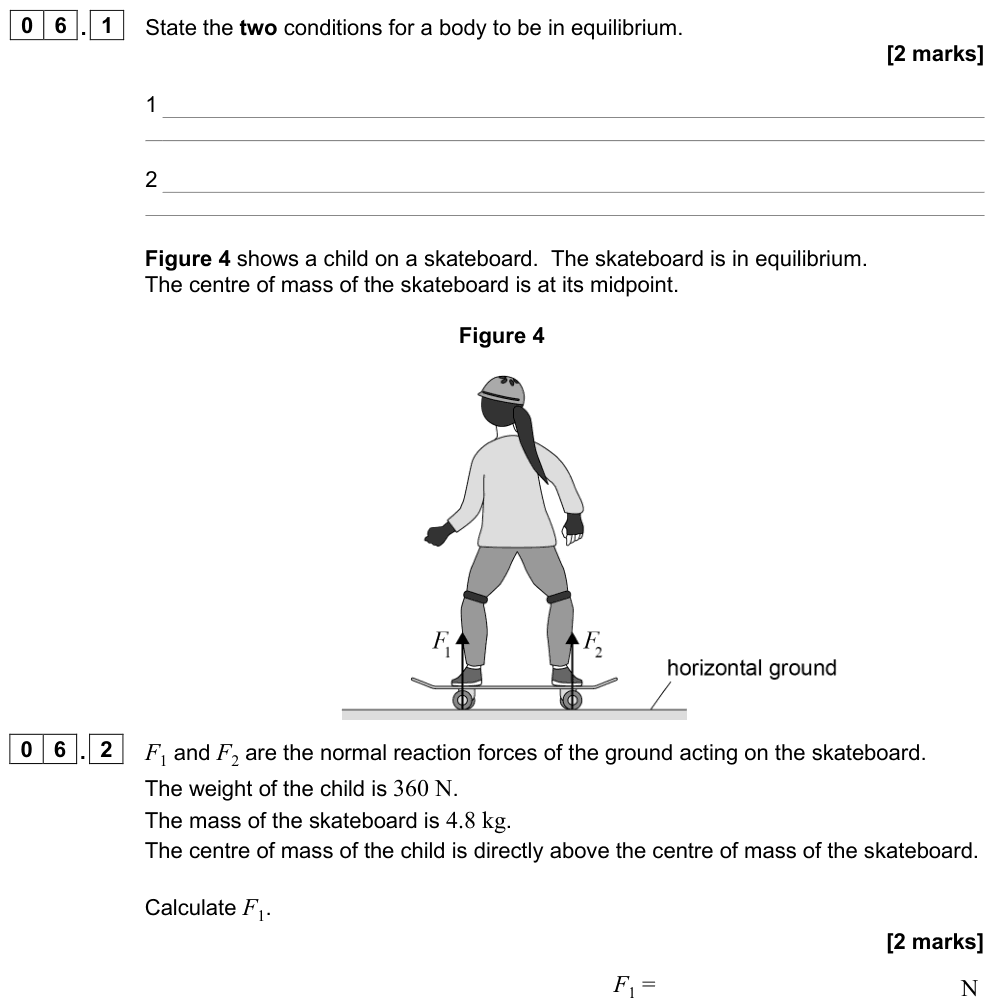
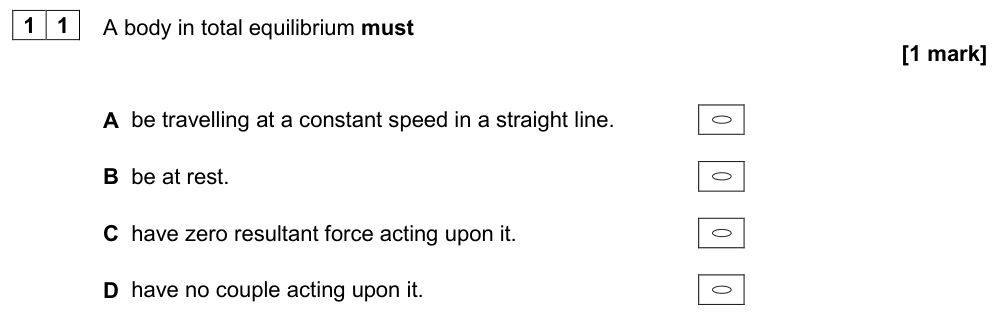
For complete equilibrium an object needs two conditions:
- Resultant force = 0 (no linear acceleration): upward forces = downward forces, and left = right.
- Resultant moment = 0 (no rotational acceleration) about any point.
Exam tip: choose the pivot cleverly
You can take moments about any point. Choose the point where an unknown force acts, because that force then has zero moment and drops out of the equation. Then use "upward forces = downward forces" to find the remaining unknown.
Worked example: a plank on two supports
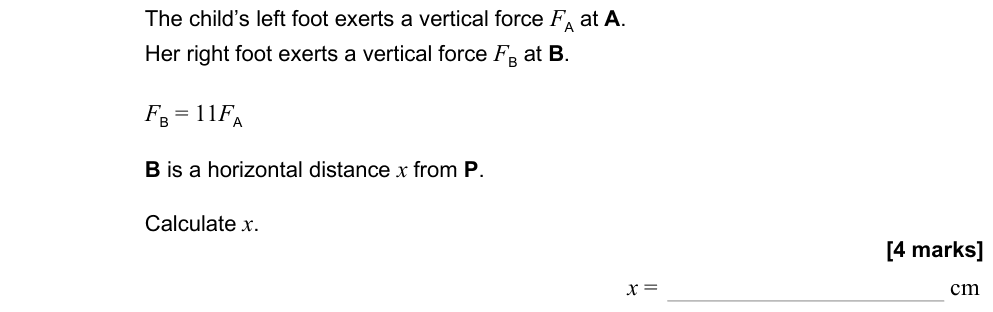
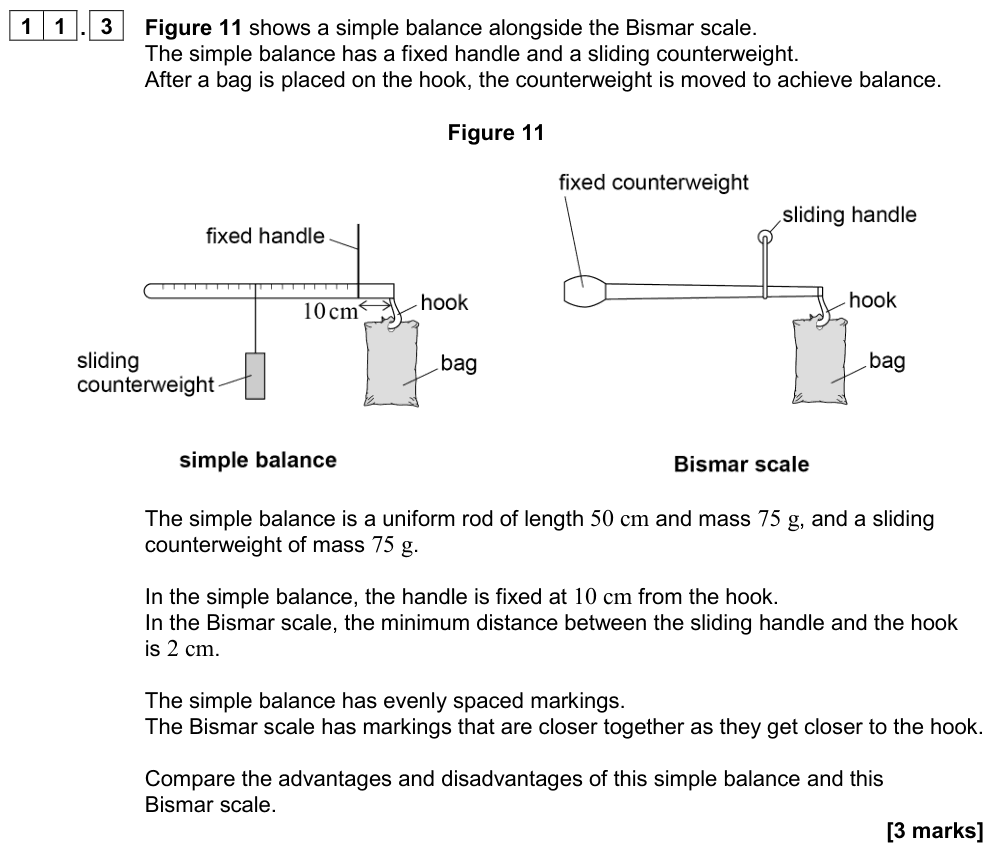
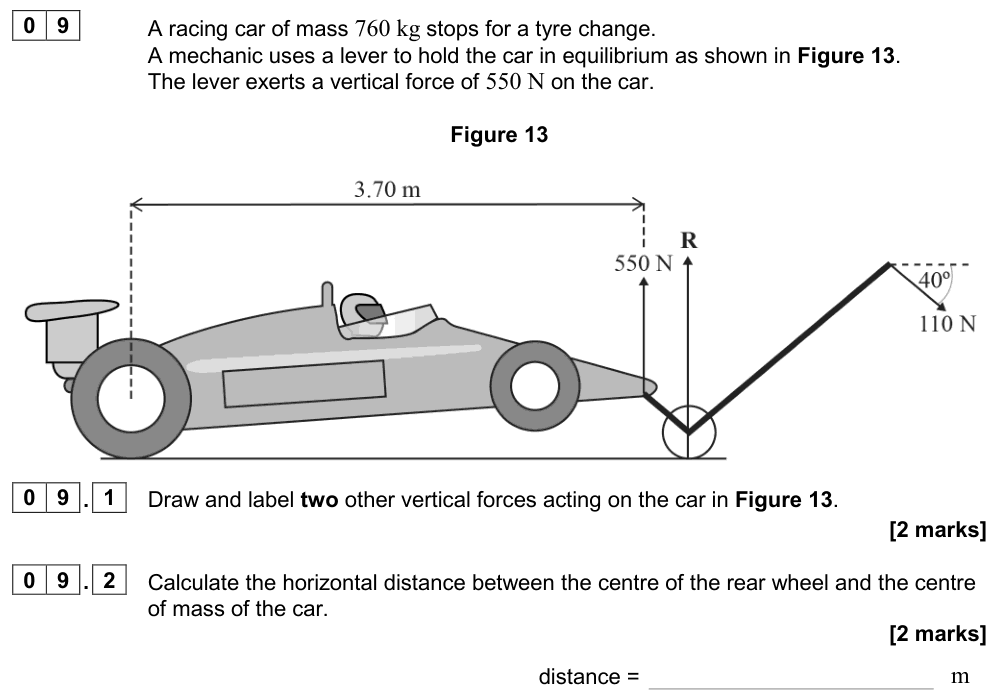
A uniform plank of length 4.0 m and weight 200 N rests on supports A (at one end) and B (1.0 m from the other end). A child of weight 400 N stands 3.5 m from A, which is 0.5 m beyond support B. Find the support forces.
Take moments about A (eliminates $R_A$). The plank's weight acts at its centre, 2.0 m from A. B is 3.0 m from A.
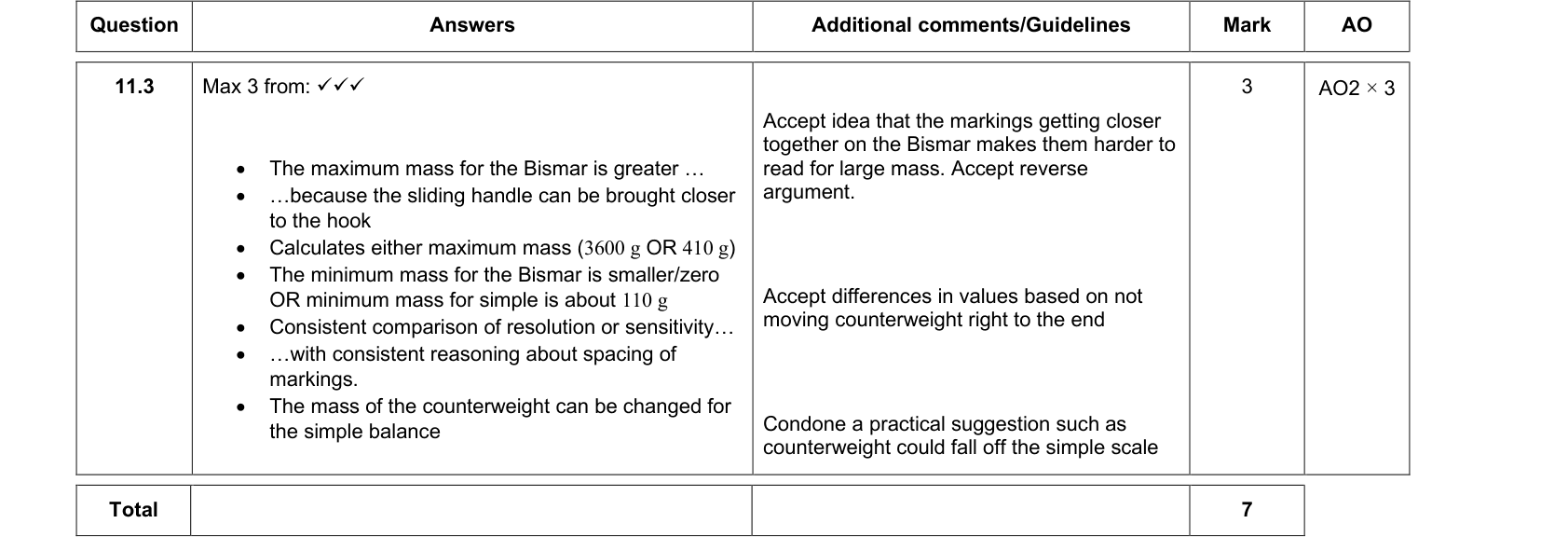
$$R_B \times 3.0 = 200 \times 2.0 + 400 \times 3.5 \Rightarrow R_B = \frac{400 + 1400}{3.0} = 600\ \text{N}$$
Vertical forces: $R_A + R_B = 600 \Rightarrow R_A = 0\ \text{N}$. The plank is just about to tip about B. Any further towards the end and it would topple.
Couples
Couple
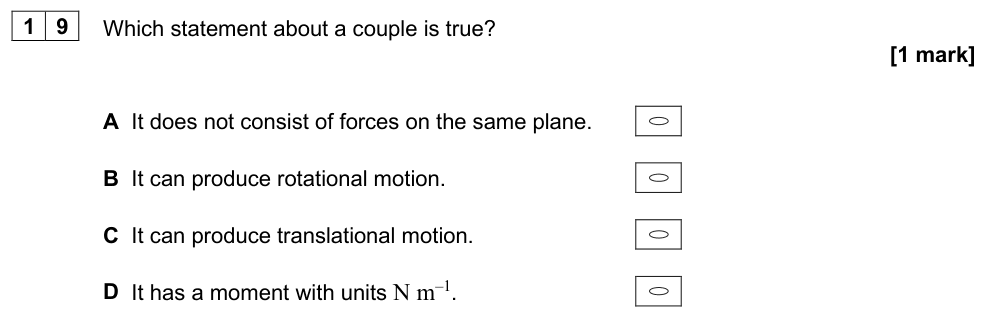
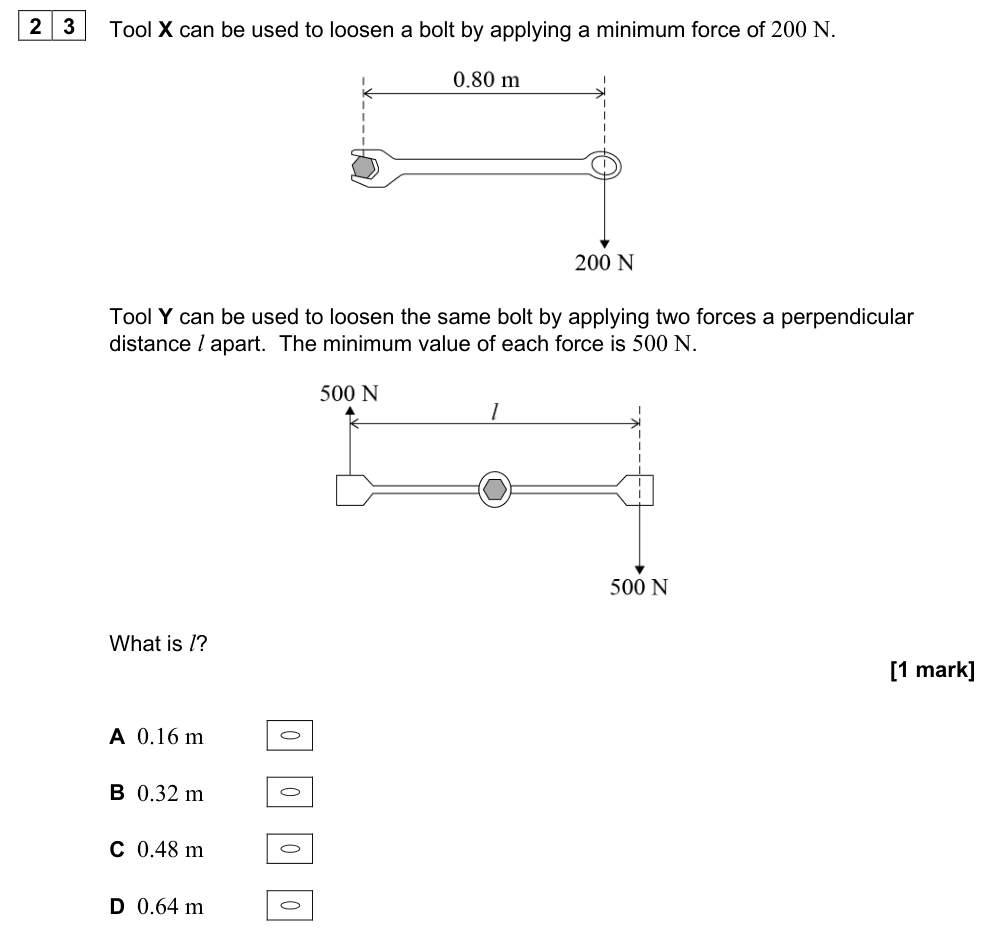
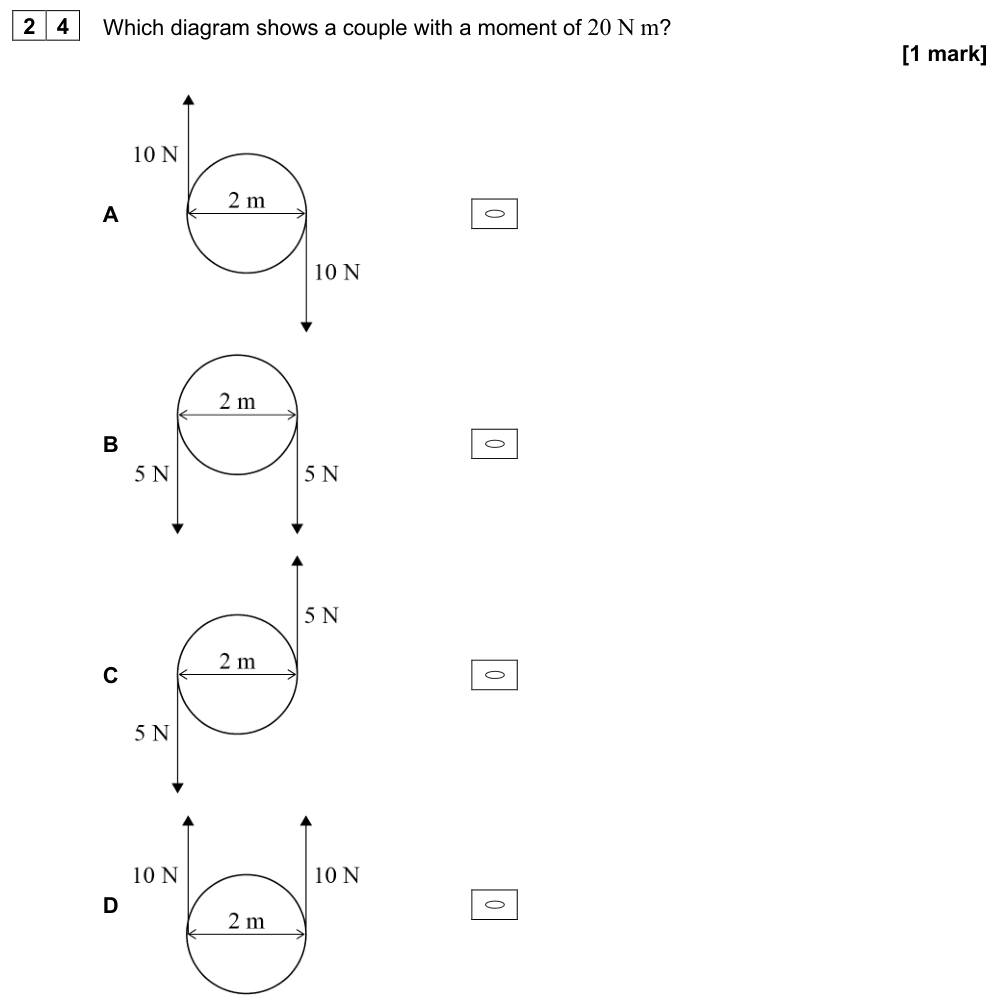
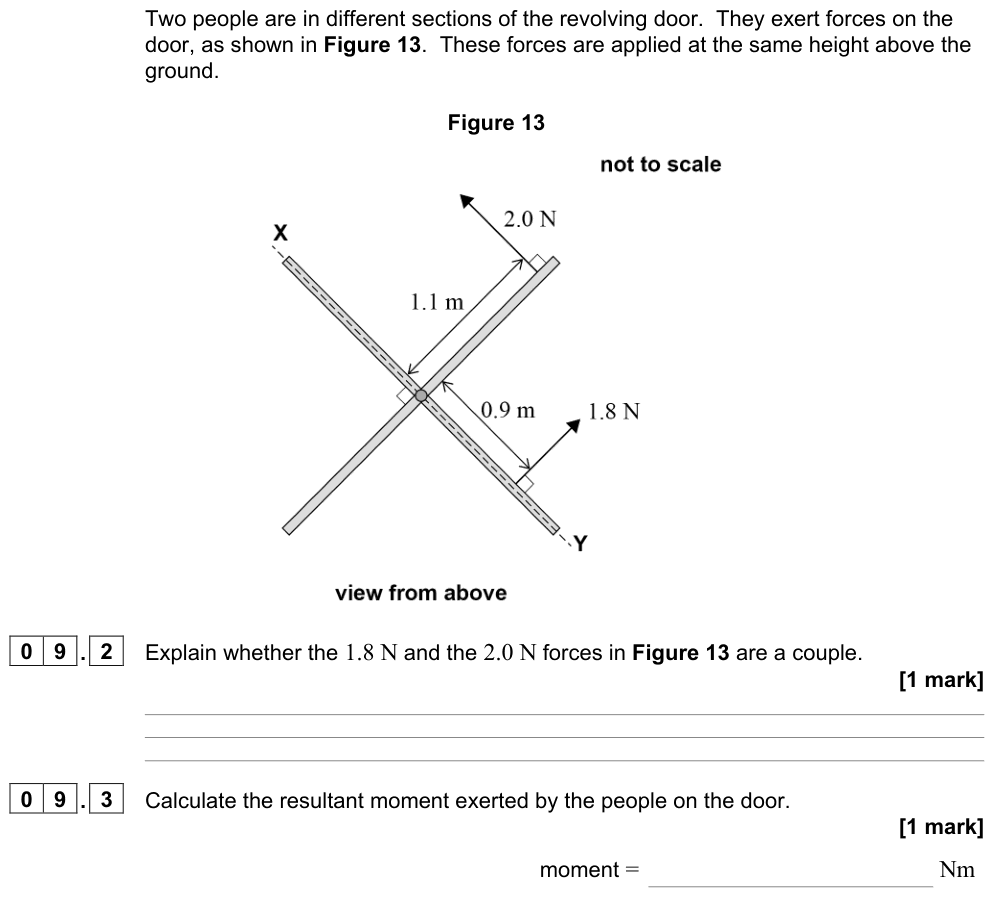
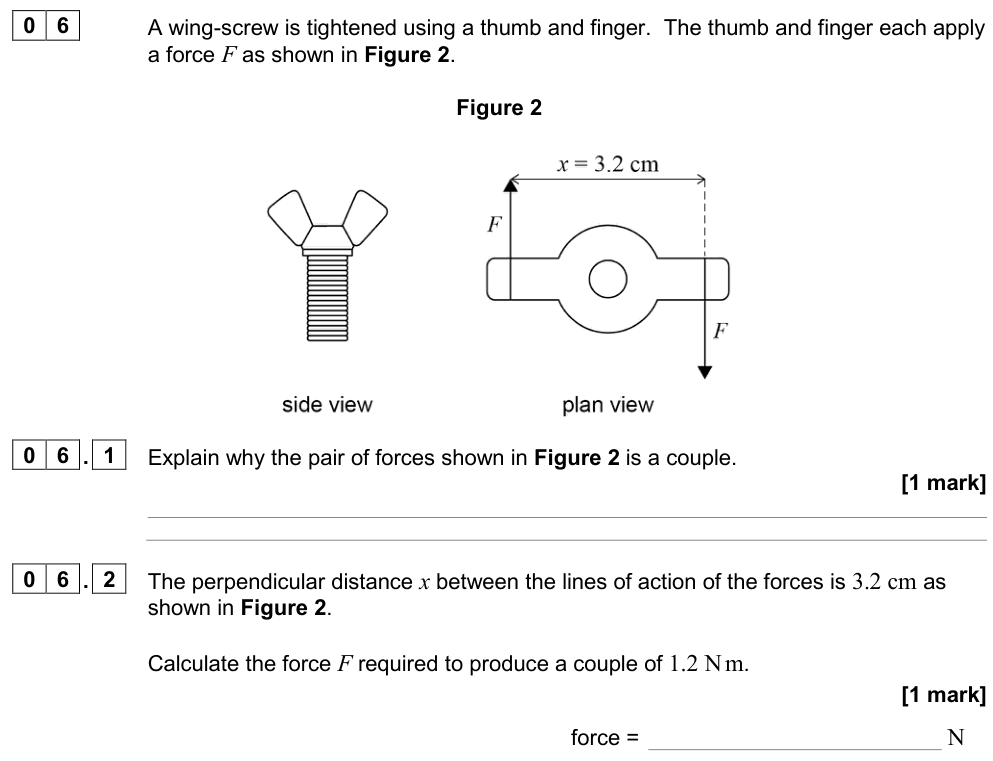
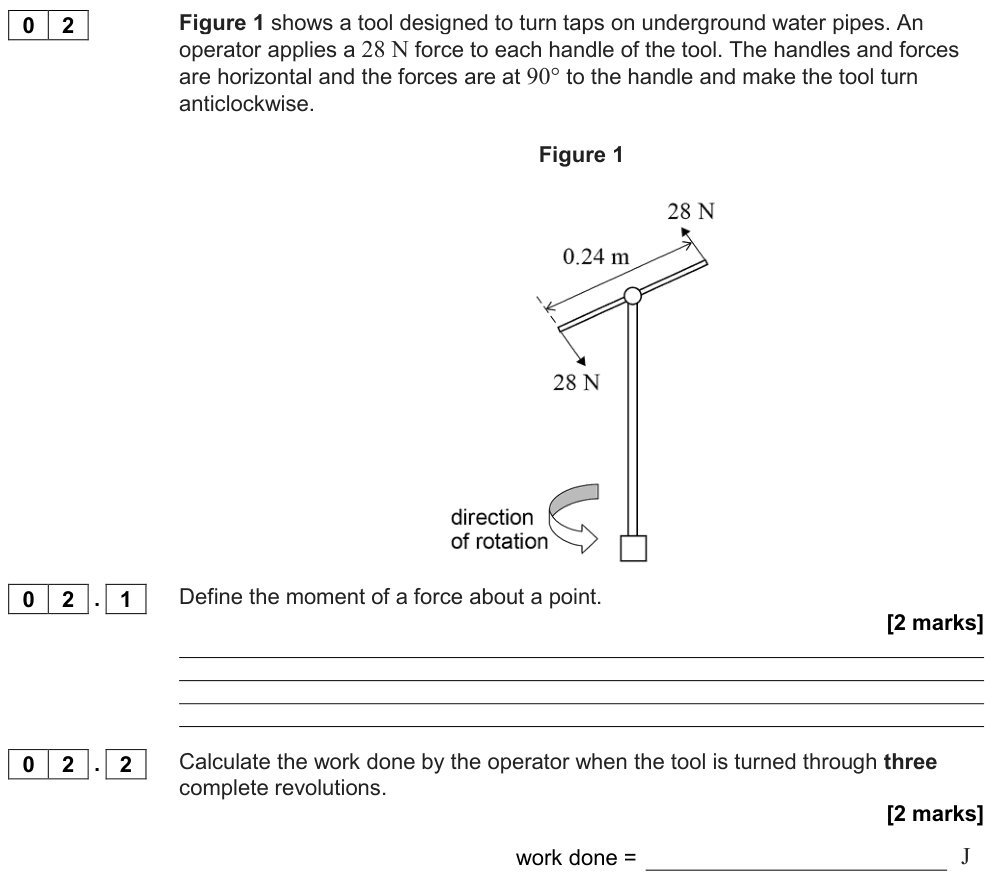
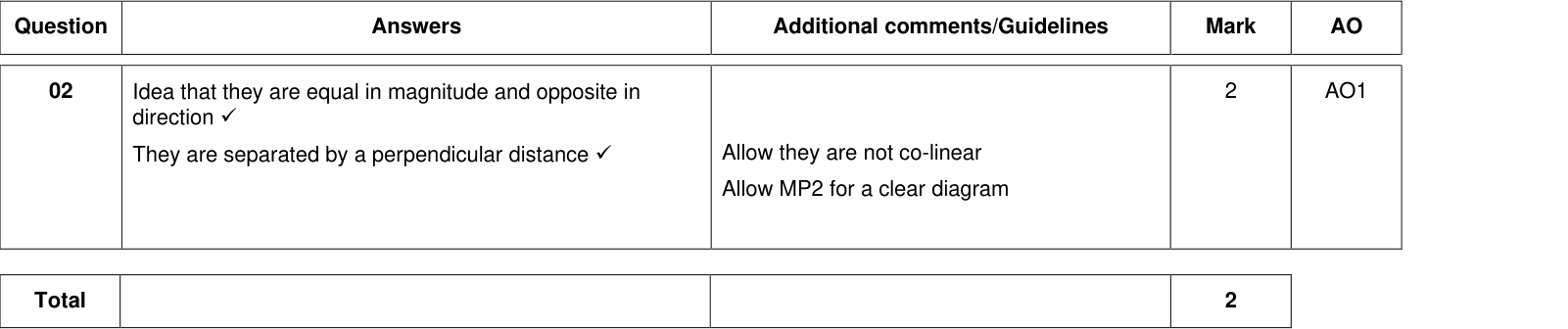
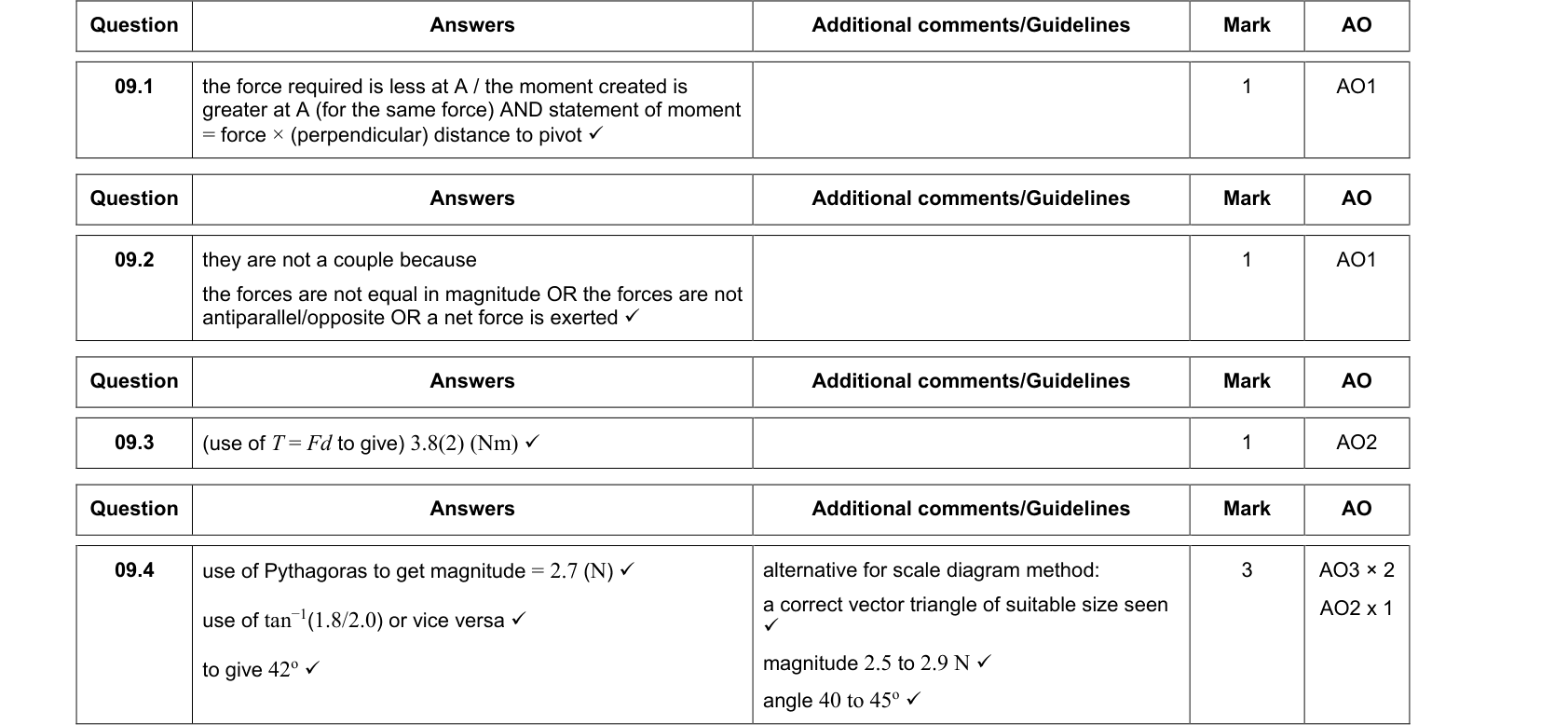
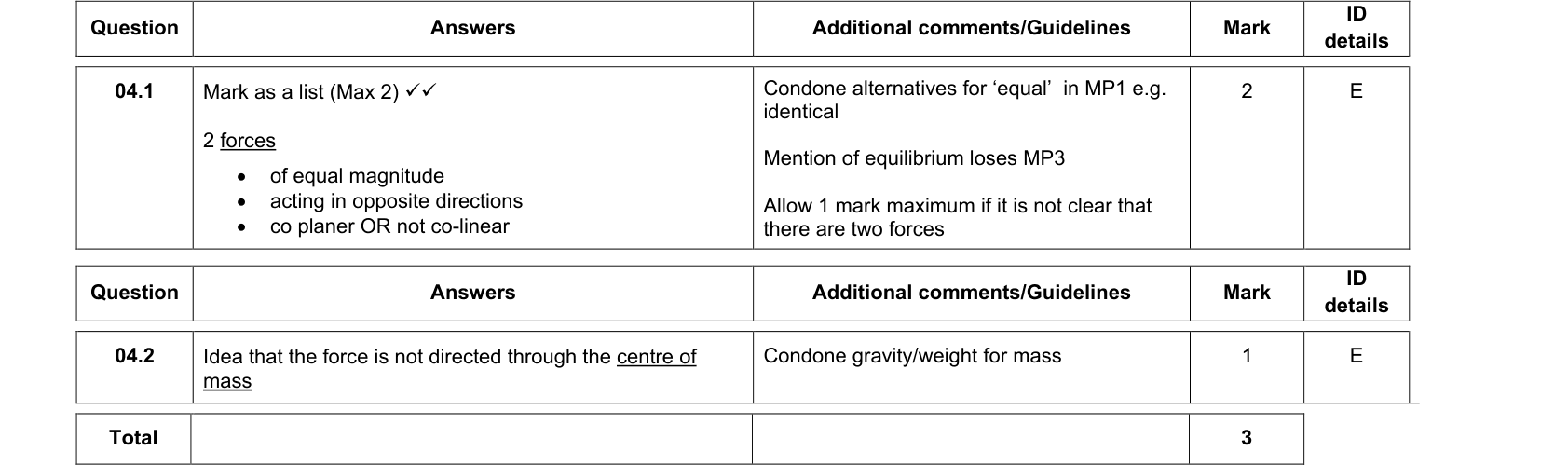
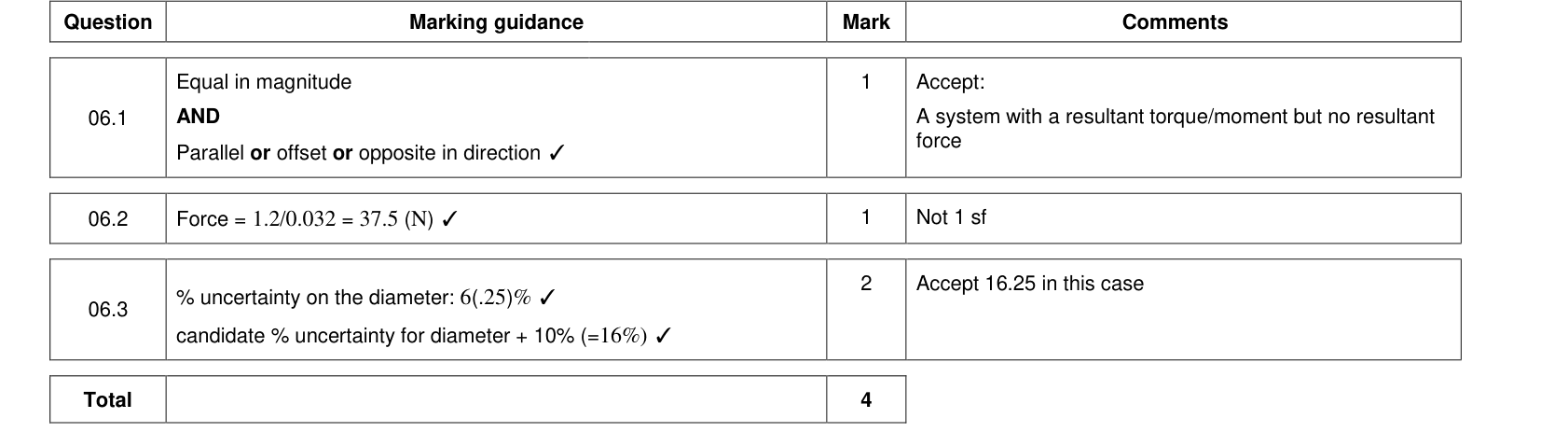
A couple is a pair of forces that are equal in magnitude, opposite in direction, parallel (not along the same line) and coplanar.
A couple produces rotation only. The resultant force is zero, so there is no linear acceleration. Examples: turning a steering wheel with both hands, turning a tap, twisting a screwdriver, the forces on a coil in an electric motor.
Moment of a couple
$$\text{moment of a couple (torque)} = F \times d$$
where $F$ is the size of one of the forces and $d$ is the perpendicular distance between their lines of action.
The moment of a couple is the same about any point, which is why it is often just called a torque.
Worked example: steering wheel
A driver applies forces of 15 N in opposite directions on either side of a steering wheel of diameter 0.38 m. Torque $= 15 \times 0.38 = 5.7\ \text{N m}$. (Not $2 \times 15 \times 0.38$: you multiply one force by the separation.)
Centre of mass
Centre of mass
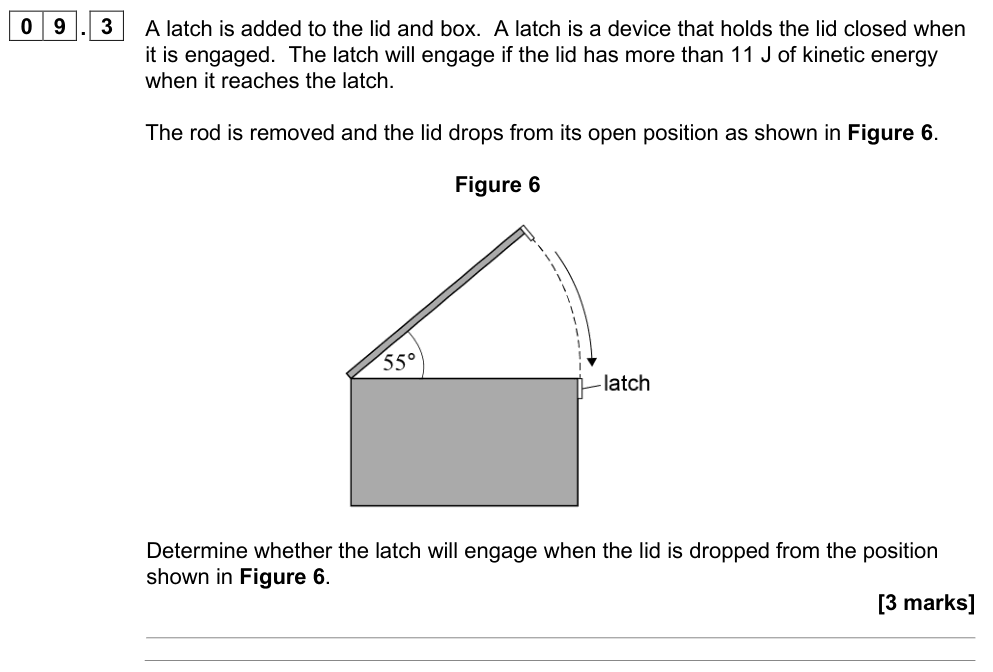
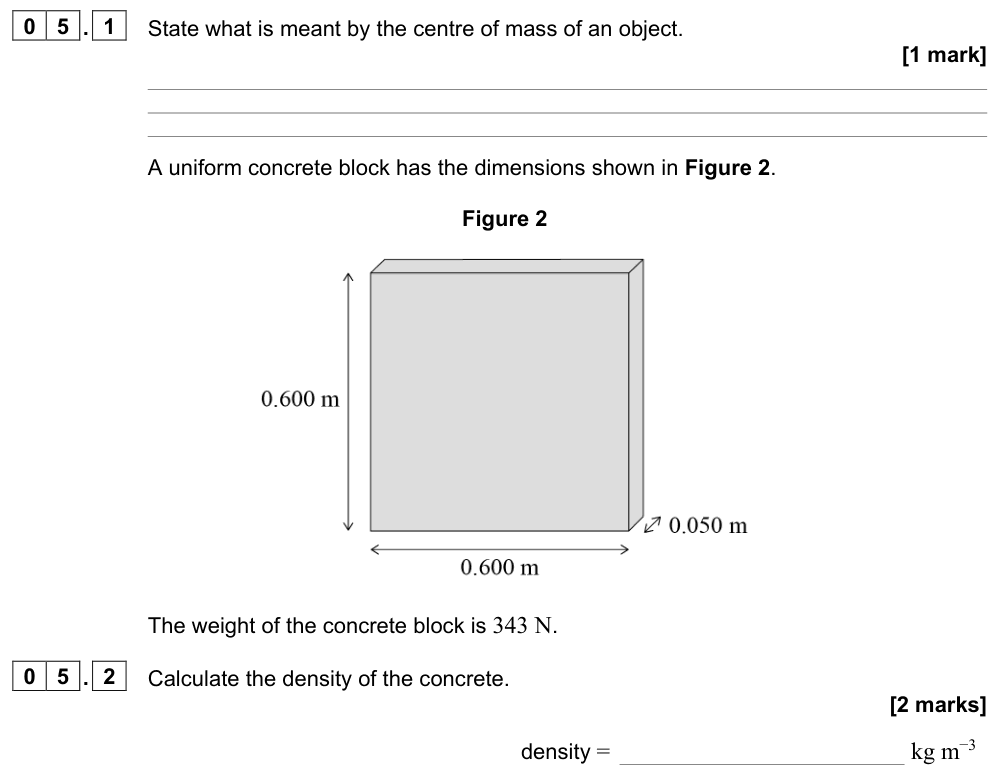
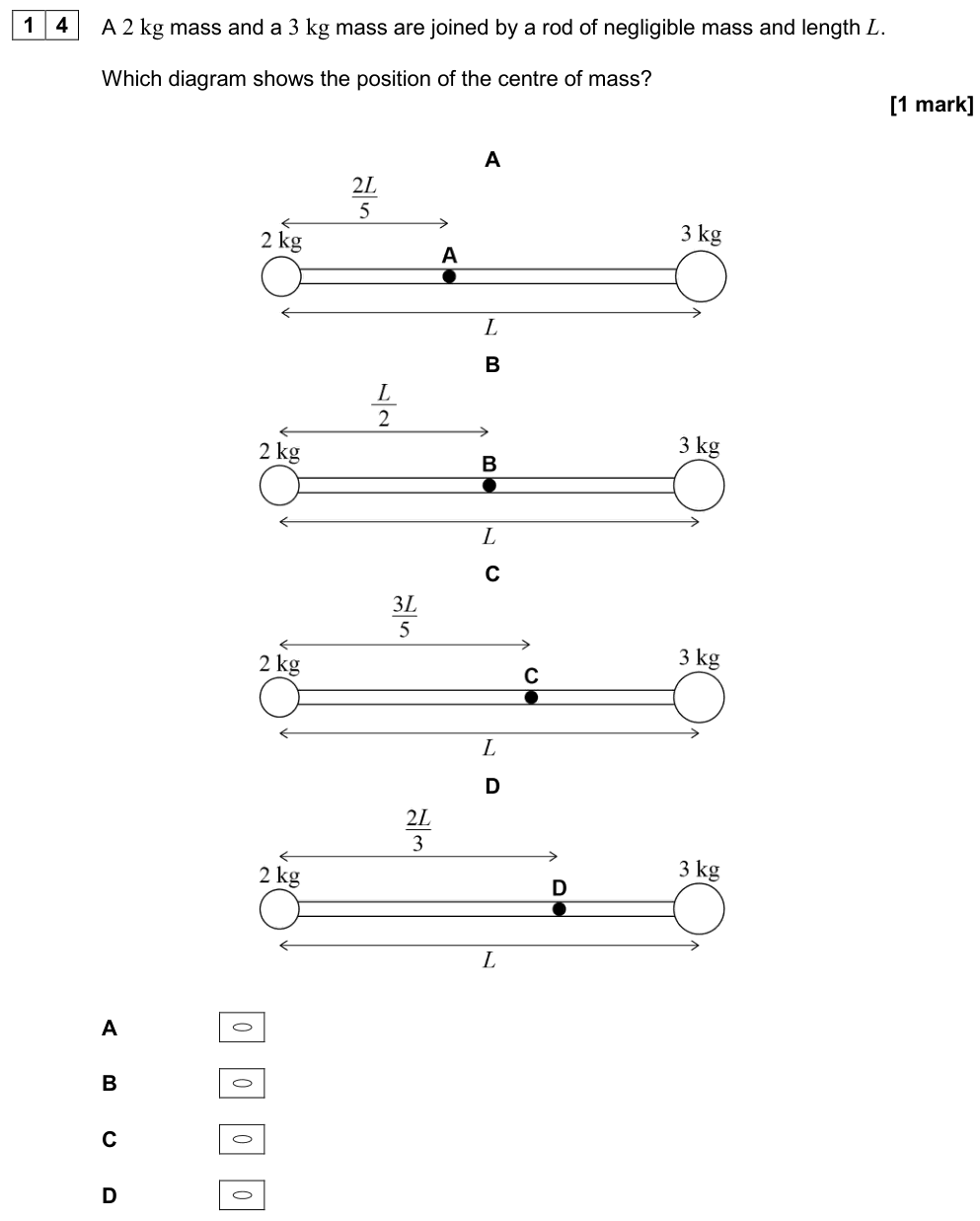
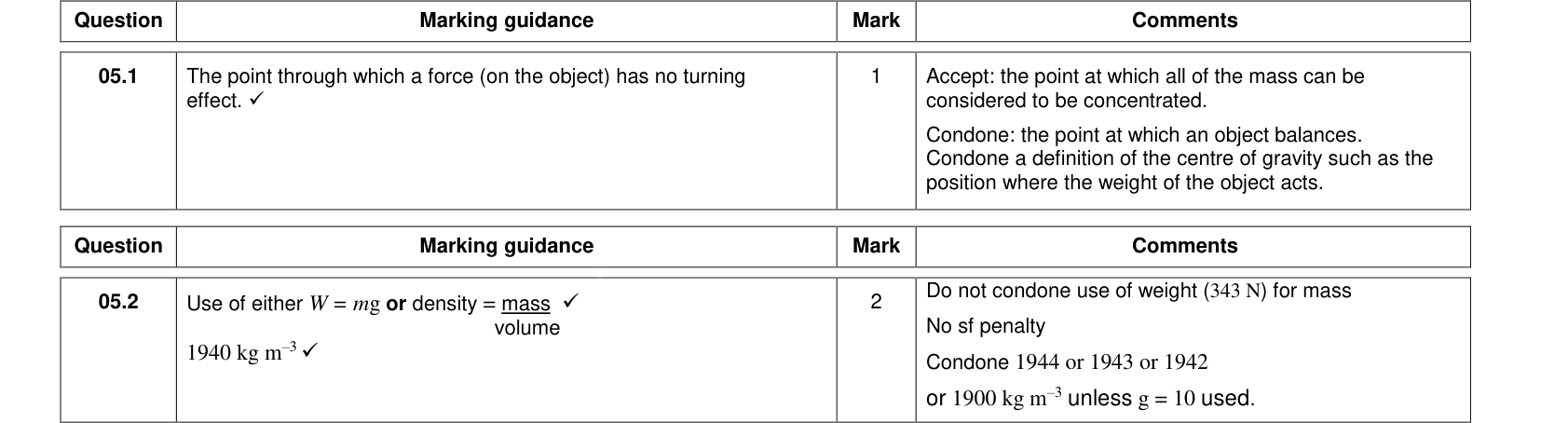
The centre of mass of an object is the single point through which its whole weight can be considered to act.
- For a uniform, regular solid (e.g. uniform rod, sphere, cube, cylinder) the centre of mass is at its geometric centre.
- A uniform beam's weight acts at its midpoint, which is why it appears in moments calculations at half the length.
- For an irregular flat object, find the centre of mass by hanging it from two different points with a plumb line. The centre of mass lies where the two vertical lines cross.
- The centre of mass does not have to be inside the object (e.g. a ring or a boomerang).
Stability and toppling
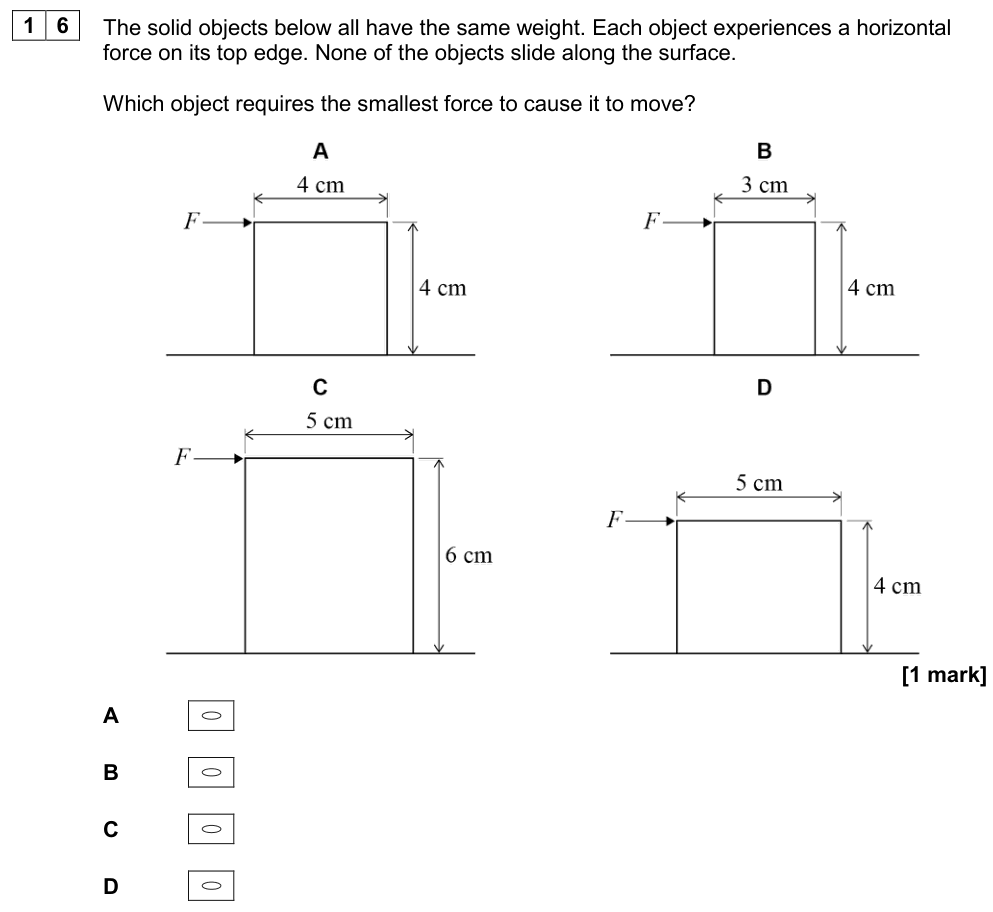
An object topples when its centre of mass moves outside its base, so that the line of action of its weight passes beyond the pivot edge. The weight then has a moment that turns the object further over, instead of back.
- An object is more stable if it has a low centre of mass and a wide base.
- At the point of toppling, the object pivots on one edge. All the normal reaction and friction act at that edge.
Worked example: will it topple?
A block 0.40 m wide and 1.2 m tall (centre of mass at its centre) stands on a slope. It topples when the vertical line through its centre of mass passes the lower edge, i.e. when $\tan\theta = \dfrac{0.20}{0.60}$, so $\theta = 18^\circ$ (if it does not slide first).
Try the Toppling diagram in the Interactive tab: tilt the block and watch the line of action of the weight.
Summary
- Moment = force × perpendicular distance from pivot to line of action (N m).
- Principle of moments: in equilibrium, clockwise moments = anticlockwise moments about any point.
- Equilibrium needs zero resultant force and zero resultant moment.
- A couple: two equal, opposite, parallel forces; moment = one force × perpendicular separation; causes rotation only.
- The weight acts at the centre of mass; an object topples when its centre of mass passes outside its base.